DECONSTRUCTION AND
DEMOLITION
Dr K M Soni, ADG(Retd.), CPWD,
New Delhi
DEMOLITION
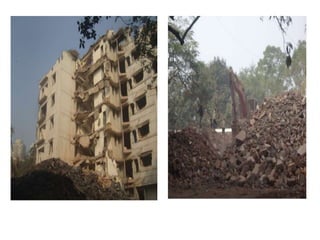
• Demolition is tearing down or destroying or
knocking down of buildings, Roads or other
man-made structures
• Demolition act is deliberate hence different
from disaster’s damage
• Demolition is manual and not natural as in
case of disasters
METHODS OF DEMOLITION
Depends upon;
• Area in which building is located
• Adjoining structures
• Availability of equipment and expertise for
demolition
• Availability of primary building materials
• Purpose of demolition
• Disposal of debris
DEMOLITION METHODS
• Manual demolition
• Implosion
• Demolition excavators / High Reach arm
• Wrecking balls
• Selective demolition
IMPLOSION
• Implosion means sudden collapse
• Implosion in demolition of buildings is controlled
way of destroying it
• A real scientific implosion happens when the pressure
inside and outside of an object vary so much that the
object is crushed, or collapses in on itself. In
demolition of buildings, the term is used for explosive
demolition though not exactly conforming to pressure
difference principle
• The implosion of a building involves careful small
explosions making the building collapsing towards the
middle as the structure collapses inwardly
IMPLOSION
Photo from: https://www.rt.com/news/199504-demolition-building-
imploded-video/
IMPLOSION
• Preferred for high rise and massive structures like skyscrapers
• Preferred when a building is surrounded by other buildings
• Preferred when collapse is required within the footprints or near
the footprints of the building if space is available
• Preferred when demolition is quickly required
• Principle is: when the support structure of a building at a certain
point is removed like columns, the section of the building above
that point will fall down on the part of the building below that
point
• The explosives are used as the trigger for the demolition and
gravity brings down the building
• Implosion means building materials forming rubble and causing
sudden dust
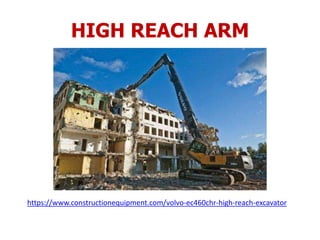
HIGH REACH ARM DEMOLITION
• In this type of demolition, a high reach arm, also
known as a long reach excavator, is used to gradually
demolish/tear down higher structures.
• It takes longer than other industrial types of
demolition
• Building is pulled down from top
• Suitable for mid rise structures
• Produces less dust and less risky than crane and ball
method
• Deconstruction can be applied along with demolition
HIGH REACH ARM
https://www.constructionequipment.com/volvo-ec460chr-high-reach-excavator
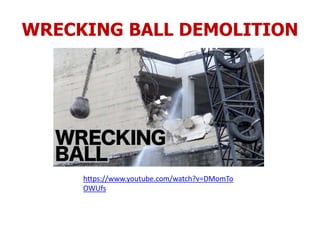
WRECKING BALL DEMOLITION
• A heavy steel ball, usually hung from a crane
is used for demolition through impact.
• Impact is created either by dropping the ball
or hitting to the structure
• It is not now used much due to availability of
high reach arm excavators
WRECKING BALL DEMOLITION
https://www.youtube.com/watch?v=DMomTo
OWUfs
SELECTIVE DEMOLITION
• Deconstruction technique is used first to recover
useable materials
• Materials which can be recycled are then taken out
• Finally selective demolition is carried out, also known
as strip-out
• It is gaining popularity because it allows reuse and
recycle of the building materials. Selective interior
and exterior demolition of wood, bricks, stones,
metals, fittings, and concrete allow for recycling and
future reuse to recover reusable (primary) and
recyclable(secondary) materials
• The process is labour intensive and time consuming
DECONSTRUCTION AND DEMOLITION
• Demolition is the tearing down or destroying
or knocking down the structures while
Deconstruction is the scientific way of
selective dismantling of building components
for reuse, and recycling of primary and
secondary materials.
DECONSTRUCTION AND DEMOLITION
• Demolition is quick but deconstruction is
environment friendly and energy efficient as
it saves embodied energy of building
materials and also water efficient as it saves
water used in manufacturing of the reusable
materials
• Method of deconstruction is like reverse
construction
DECONSTRUCTION
• Scientific Demolition
• Safe and economic
• Environment friendly
• Energy and water efficient
• In the method, demolished materials are
sorted out for reuse and recycling
• Helps in Waste management
DECONSTRUCTION
• Non structural/soft stripping
– Doors, windows, partitions, cupboards, flooring
stones, appliances, electrical wiring, metallic and
non metallic non structural items like false
ceiling, pelmets, finishing and decorative items
• Structural
– Structural members like slabs, beams, columns,
staircase
DECONSTRUCTION REQUIREMENTS
• Second hand material (Demolished) has to
have a market and saleability
• Storage space may be required
• Materials require removal of mortar and
paints etc and may require small equipment
and labour to make the materials received
from deconstruction usable
PROCEDURE
• Strip out materials of non structural
members and remove them with care
• Sort out them in different stacks
• Remove their undesired components like
fittings, mortar or paint etc
• Transport them
• Stake them or sell out
• Work out the economics
STRUCTURAL MEMBERS
• Removal of metallic items and brick partition
walls
• Removal of bricks/stones
• Dismantling of RCC structure
• Removal of reinforcement
• Removal of C&D waste for recycling
SCOPE OF DECONSTRUCTION
• Large scope of deconstruction as natural
materials are going to be costly and scarce in
future
• Deconstruction is environment friendly
• May be in future, rules are framed for using
materials obtained from
demolition/deconstruction mandatory to
some extent due to environment
considerations in redevelopment projects
Thanks for attending
Dr K M Soni, ADG (Retd.), CPWD, New Delhi
Also available on Youtube: KRISHNA MURARI Soni at
https://www.youtube.com/channel/UC_pPYxk0jI1ayqA5rO6fBOw

Deconstruction

  • 1.
    DECONSTRUCTION AND DEMOLITION Dr KM Soni, ADG(Retd.), CPWD, New Delhi
  • 2.
    DEMOLITION • Demolition istearing down or destroying or knocking down of buildings, Roads or other man-made structures • Demolition act is deliberate hence different from disaster’s damage • Demolition is manual and not natural as in case of disasters
  • 3.
    METHODS OF DEMOLITION Dependsupon; • Area in which building is located • Adjoining structures • Availability of equipment and expertise for demolition • Availability of primary building materials • Purpose of demolition • Disposal of debris
  • 4.
    DEMOLITION METHODS • Manualdemolition • Implosion • Demolition excavators / High Reach arm • Wrecking balls • Selective demolition
  • 5.
    IMPLOSION • Implosion meanssudden collapse • Implosion in demolition of buildings is controlled way of destroying it • A real scientific implosion happens when the pressure inside and outside of an object vary so much that the object is crushed, or collapses in on itself. In demolition of buildings, the term is used for explosive demolition though not exactly conforming to pressure difference principle • The implosion of a building involves careful small explosions making the building collapsing towards the middle as the structure collapses inwardly
  • 6.
  • 7.
    IMPLOSION • Preferred forhigh rise and massive structures like skyscrapers • Preferred when a building is surrounded by other buildings • Preferred when collapse is required within the footprints or near the footprints of the building if space is available • Preferred when demolition is quickly required • Principle is: when the support structure of a building at a certain point is removed like columns, the section of the building above that point will fall down on the part of the building below that point • The explosives are used as the trigger for the demolition and gravity brings down the building • Implosion means building materials forming rubble and causing sudden dust
  • 8.
    HIGH REACH ARMDEMOLITION • In this type of demolition, a high reach arm, also known as a long reach excavator, is used to gradually demolish/tear down higher structures. • It takes longer than other industrial types of demolition • Building is pulled down from top • Suitable for mid rise structures • Produces less dust and less risky than crane and ball method • Deconstruction can be applied along with demolition
  • 9.
  • 10.
    WRECKING BALL DEMOLITION •A heavy steel ball, usually hung from a crane is used for demolition through impact. • Impact is created either by dropping the ball or hitting to the structure • It is not now used much due to availability of high reach arm excavators
  • 11.
  • 12.
    SELECTIVE DEMOLITION • Deconstructiontechnique is used first to recover useable materials • Materials which can be recycled are then taken out • Finally selective demolition is carried out, also known as strip-out • It is gaining popularity because it allows reuse and recycle of the building materials. Selective interior and exterior demolition of wood, bricks, stones, metals, fittings, and concrete allow for recycling and future reuse to recover reusable (primary) and recyclable(secondary) materials • The process is labour intensive and time consuming
  • 14.
    DECONSTRUCTION AND DEMOLITION •Demolition is the tearing down or destroying or knocking down the structures while Deconstruction is the scientific way of selective dismantling of building components for reuse, and recycling of primary and secondary materials.
  • 15.
    DECONSTRUCTION AND DEMOLITION •Demolition is quick but deconstruction is environment friendly and energy efficient as it saves embodied energy of building materials and also water efficient as it saves water used in manufacturing of the reusable materials • Method of deconstruction is like reverse construction
  • 16.
    DECONSTRUCTION • Scientific Demolition •Safe and economic • Environment friendly • Energy and water efficient • In the method, demolished materials are sorted out for reuse and recycling • Helps in Waste management
  • 17.
    DECONSTRUCTION • Non structural/softstripping – Doors, windows, partitions, cupboards, flooring stones, appliances, electrical wiring, metallic and non metallic non structural items like false ceiling, pelmets, finishing and decorative items • Structural – Structural members like slabs, beams, columns, staircase
  • 18.
    DECONSTRUCTION REQUIREMENTS • Secondhand material (Demolished) has to have a market and saleability • Storage space may be required • Materials require removal of mortar and paints etc and may require small equipment and labour to make the materials received from deconstruction usable
  • 19.
    PROCEDURE • Strip outmaterials of non structural members and remove them with care • Sort out them in different stacks • Remove their undesired components like fittings, mortar or paint etc • Transport them • Stake them or sell out • Work out the economics
  • 20.
    STRUCTURAL MEMBERS • Removalof metallic items and brick partition walls • Removal of bricks/stones • Dismantling of RCC structure • Removal of reinforcement • Removal of C&D waste for recycling
  • 21.
    SCOPE OF DECONSTRUCTION •Large scope of deconstruction as natural materials are going to be costly and scarce in future • Deconstruction is environment friendly • May be in future, rules are framed for using materials obtained from demolition/deconstruction mandatory to some extent due to environment considerations in redevelopment projects
  • 22.
    Thanks for attending DrK M Soni, ADG (Retd.), CPWD, New Delhi Also available on Youtube: KRISHNA MURARI Soni at https://www.youtube.com/channel/UC_pPYxk0jI1ayqA5rO6fBOw