Tall Buildings - Core Design
Dr. Yasser Mahgoub
Introduction
High-rise commercial buildings are the icons of modern society.
These symbolize the power of commerce in the present world system.
They also add the 3rd dimension to the city.
In addition, at the micro level, having an office at an attractive high-rise
building gives additional advantage to the business in terms of better
customer confidence and corporate identity.
Definition
A high-rise building is defined as a building 35 meters or greater in height.
Generally constructed using a structural frame, provided with high-speed
elevators.
Rules of thumb
There are rules of thumb to determine the number of elevators required for Office
buildings:
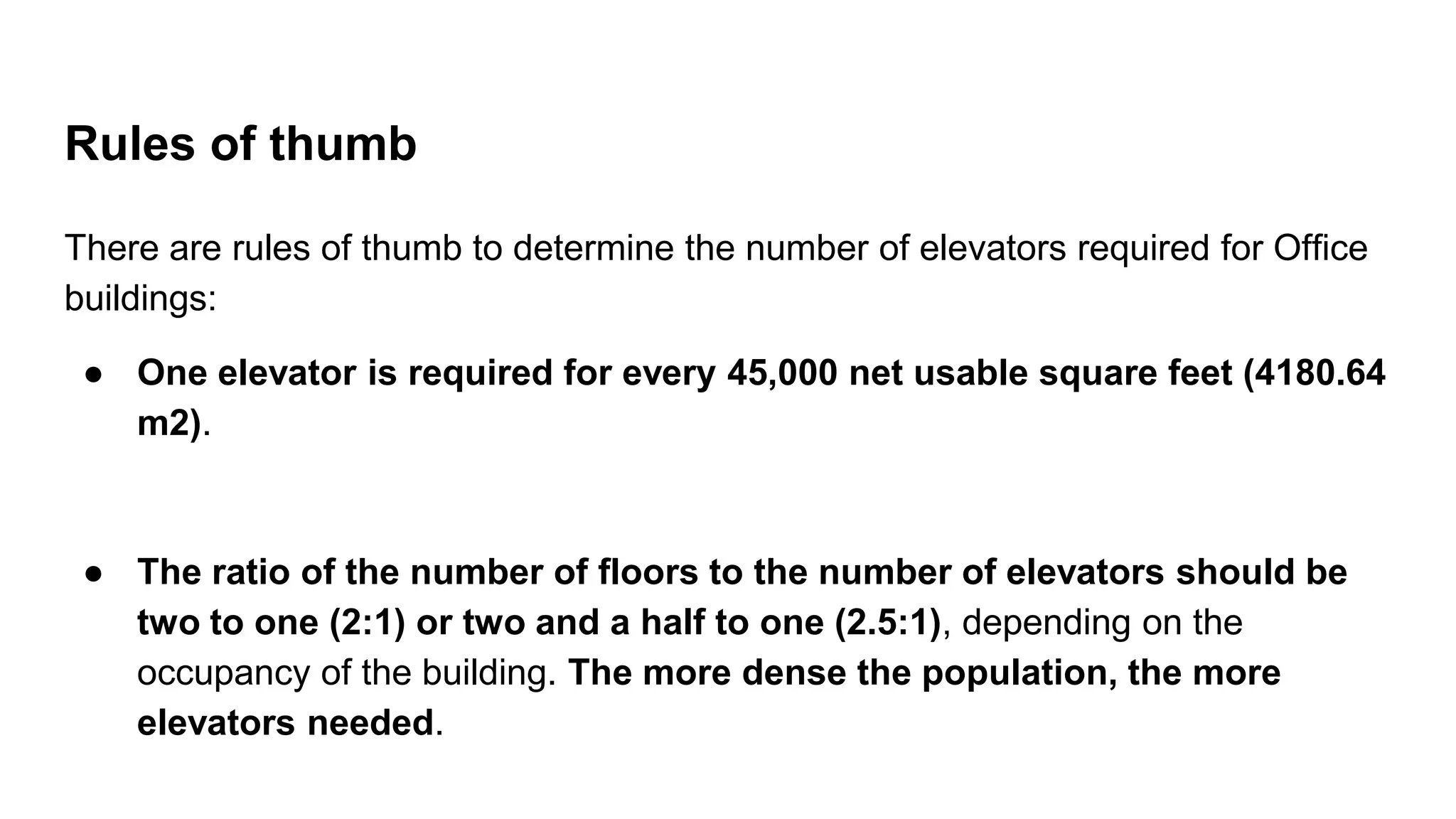
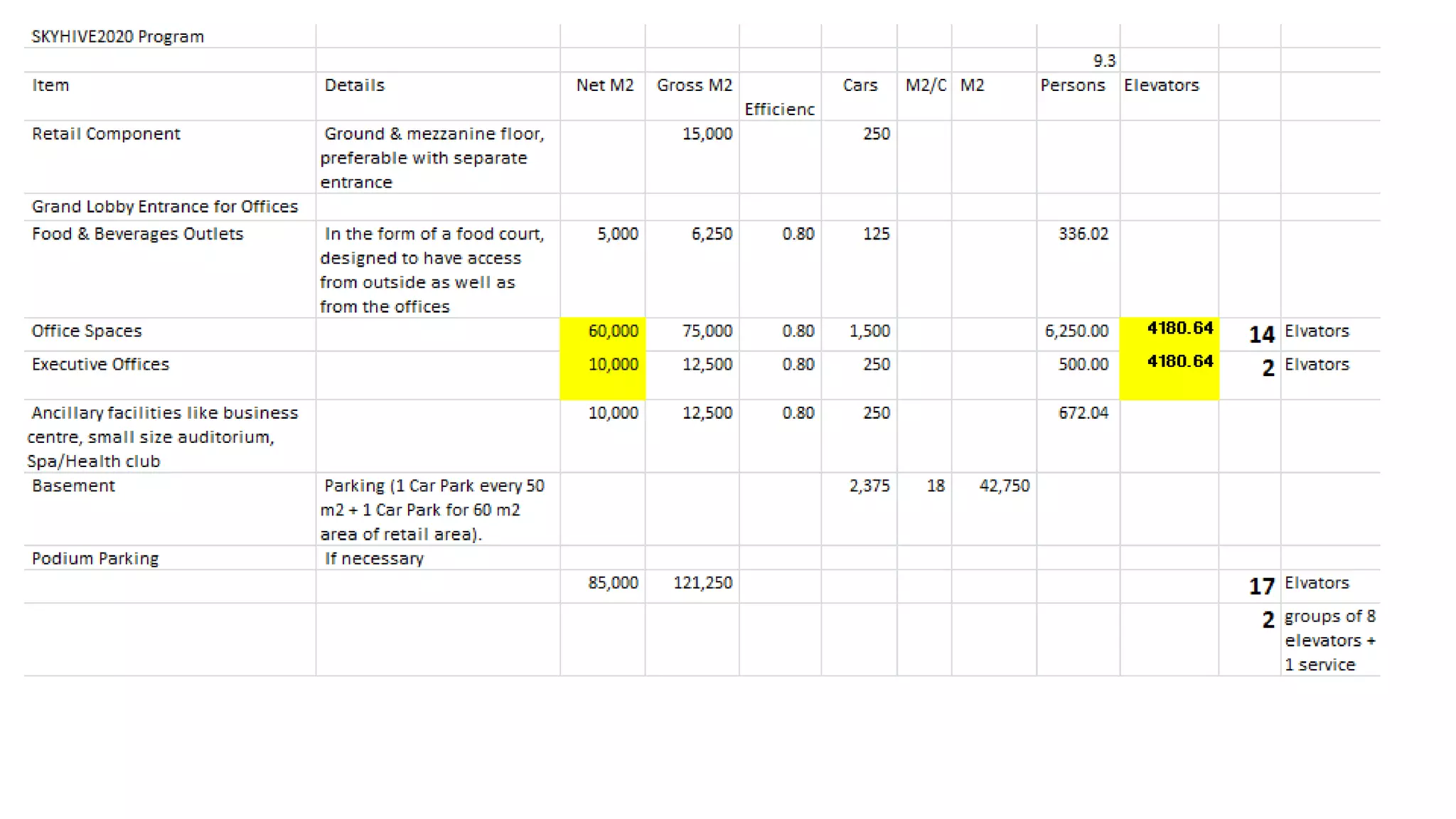
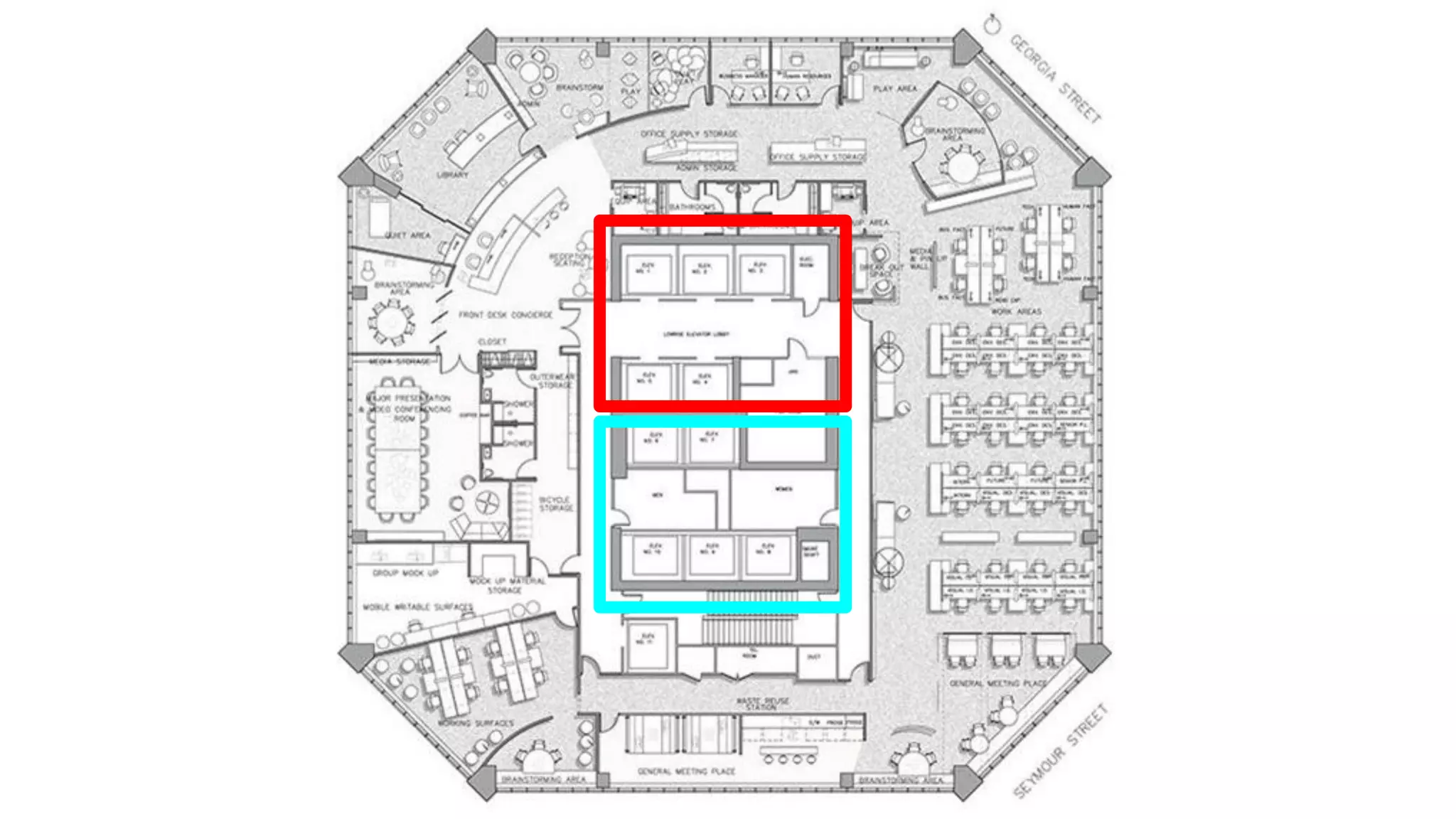
● One elevator is required for every 45,000 net usable square feet (4180.64
m2).
● The ratio of the number of floors to the number of elevators should be
two to one (2:1) or two and a half to one (2.5:1), depending on the
occupancy of the building. The more dense the population, the more
elevators needed.
Rules of thumb
● The number of elevators in a single group should not exceed eight (8)
and no single group should serve more than (16) levels.
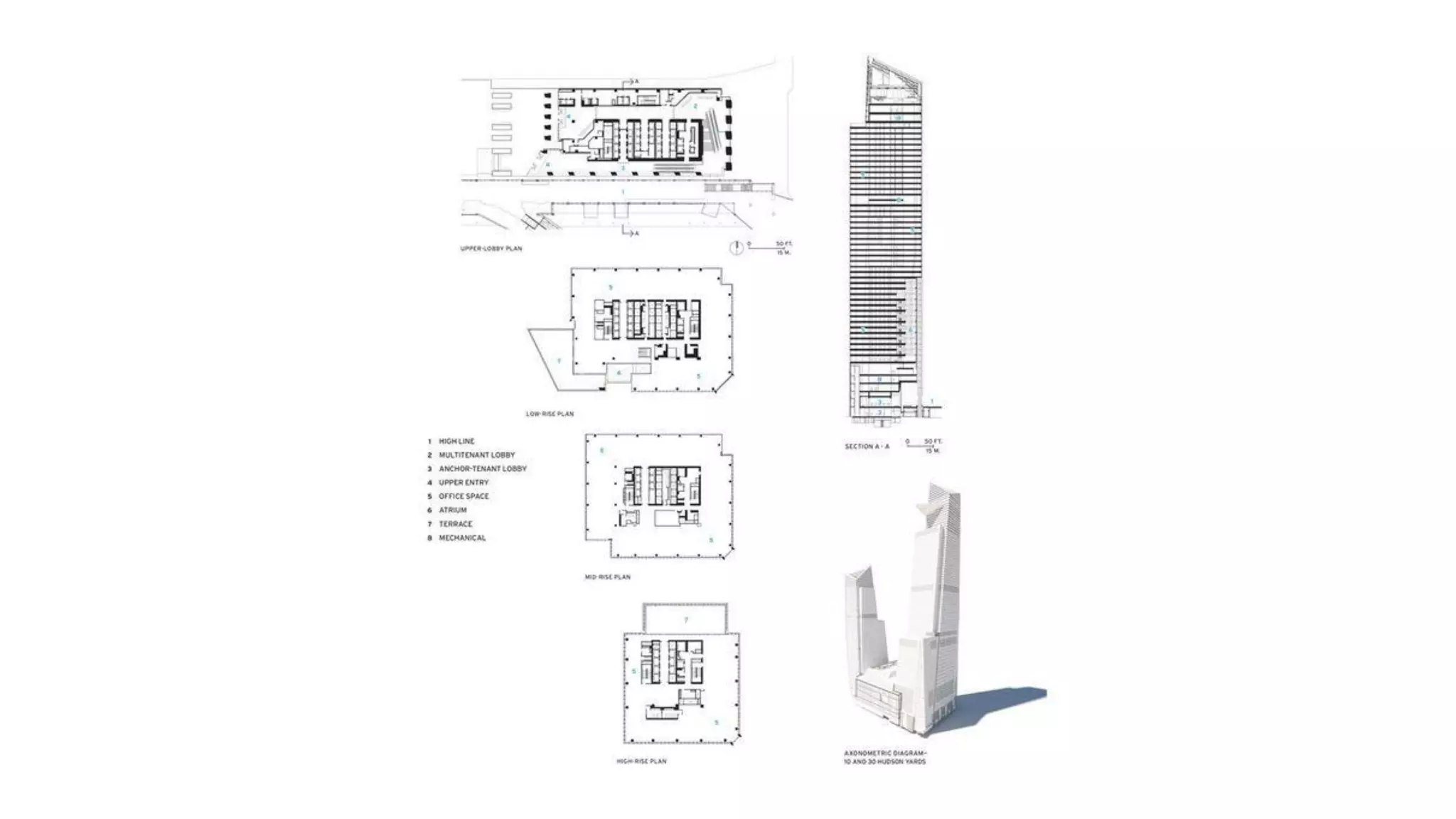
● If you have 32 floors, you will need 2 groups of elevators, each group of
8 elevators will serve 16 floors. There should be a service floor at level
16 that connects the two groups together.
Rules of thumb
● In buildings of four to eight floors, a separate service elevator should be
considered. Over nine floors, a service elevator is virtually required.
● Upper-floor, special-use areas, such as cafeterias, mail rooms, transfer
bridges, etc., can increase the required number of elevators.
Examples
INSTITUTIONAL BUILDINGS - THAILAND
● Architects: Hassell
● Area:46000.0 m²
● Year:2009
https://www.archdaily.com/170860/pttep-headquarters-hassell
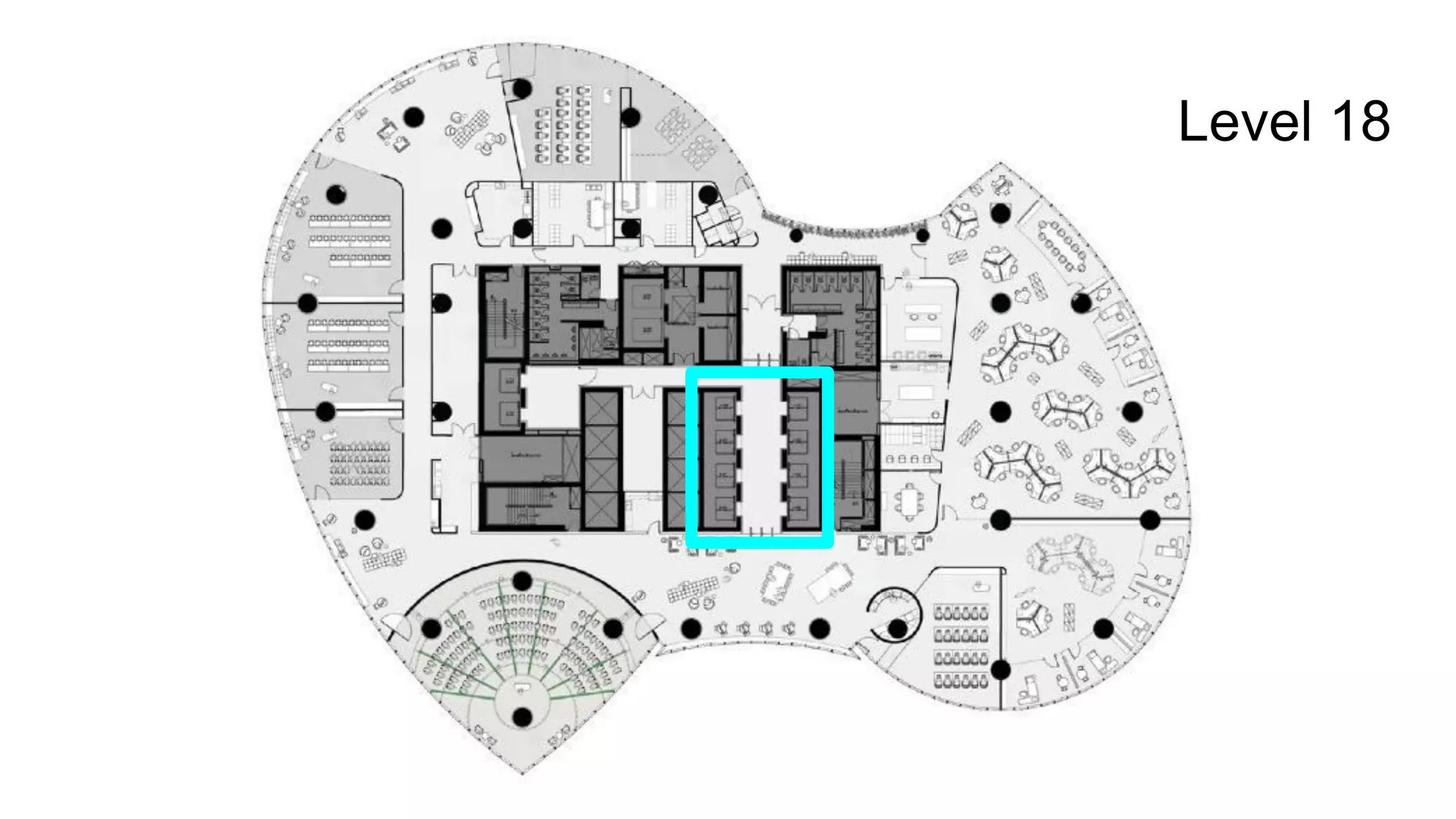
Level 18
Level 19
Level 25
Level 26
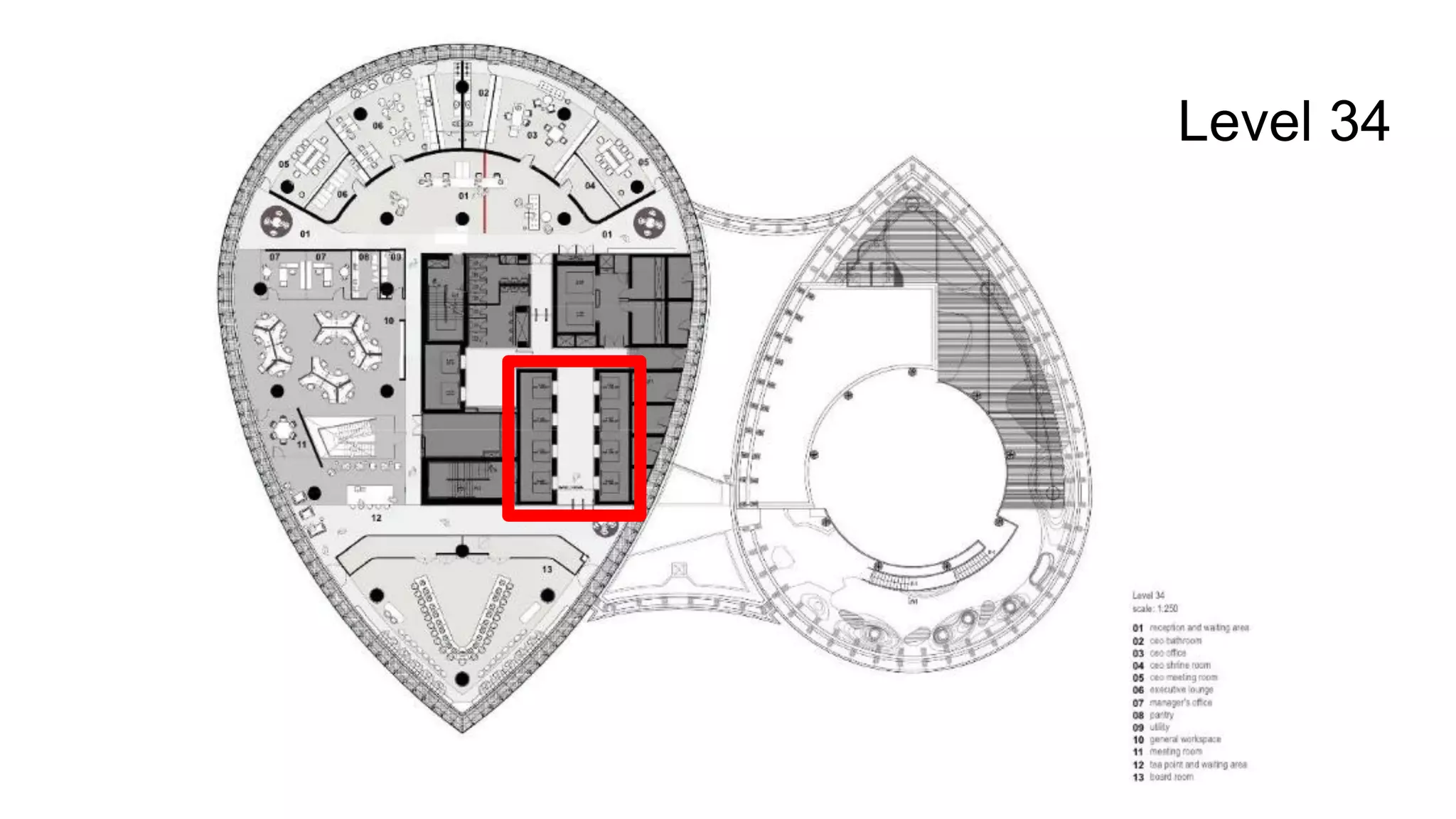
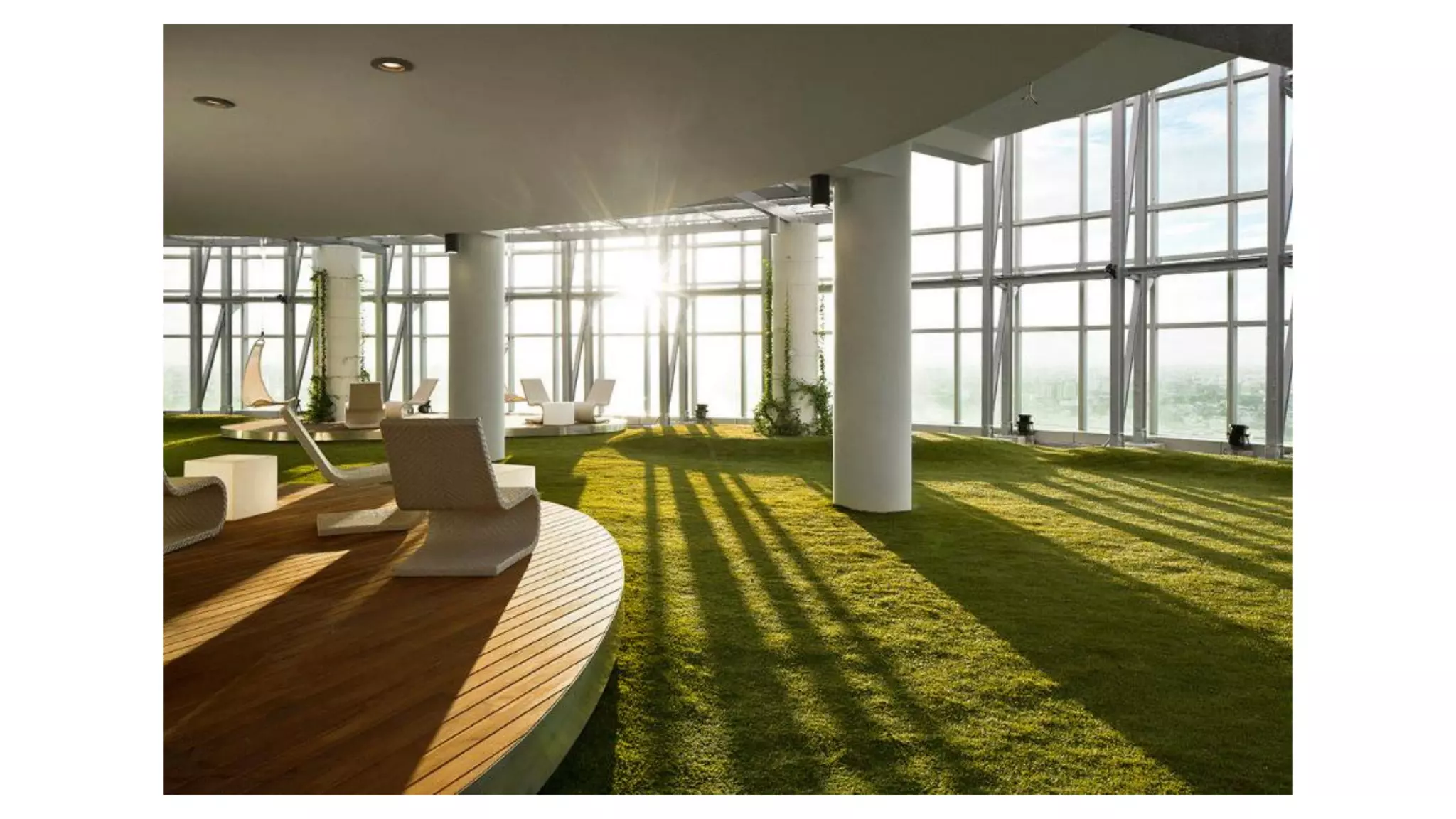
Level 34
Lecture 2
Office Buildings
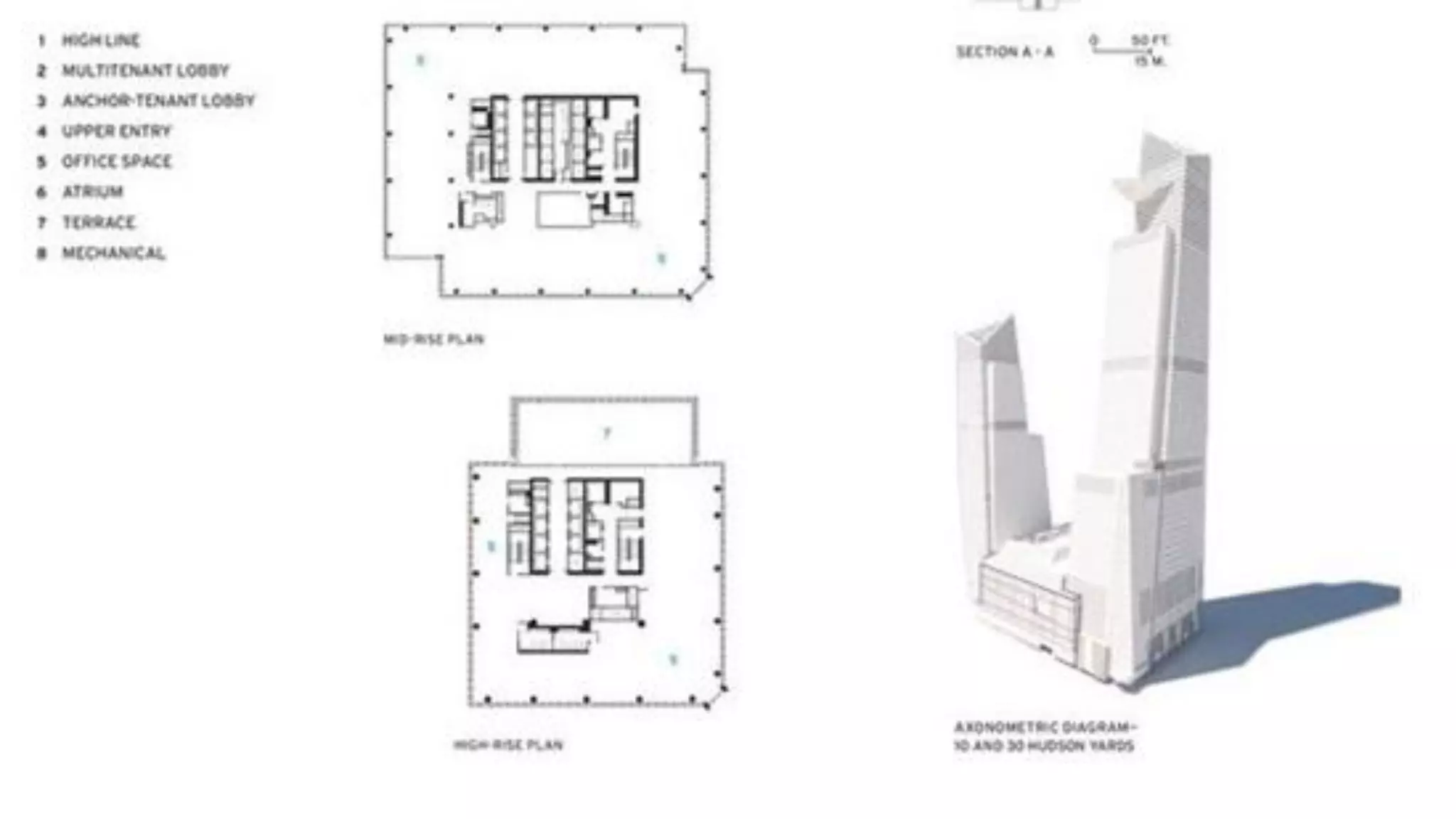
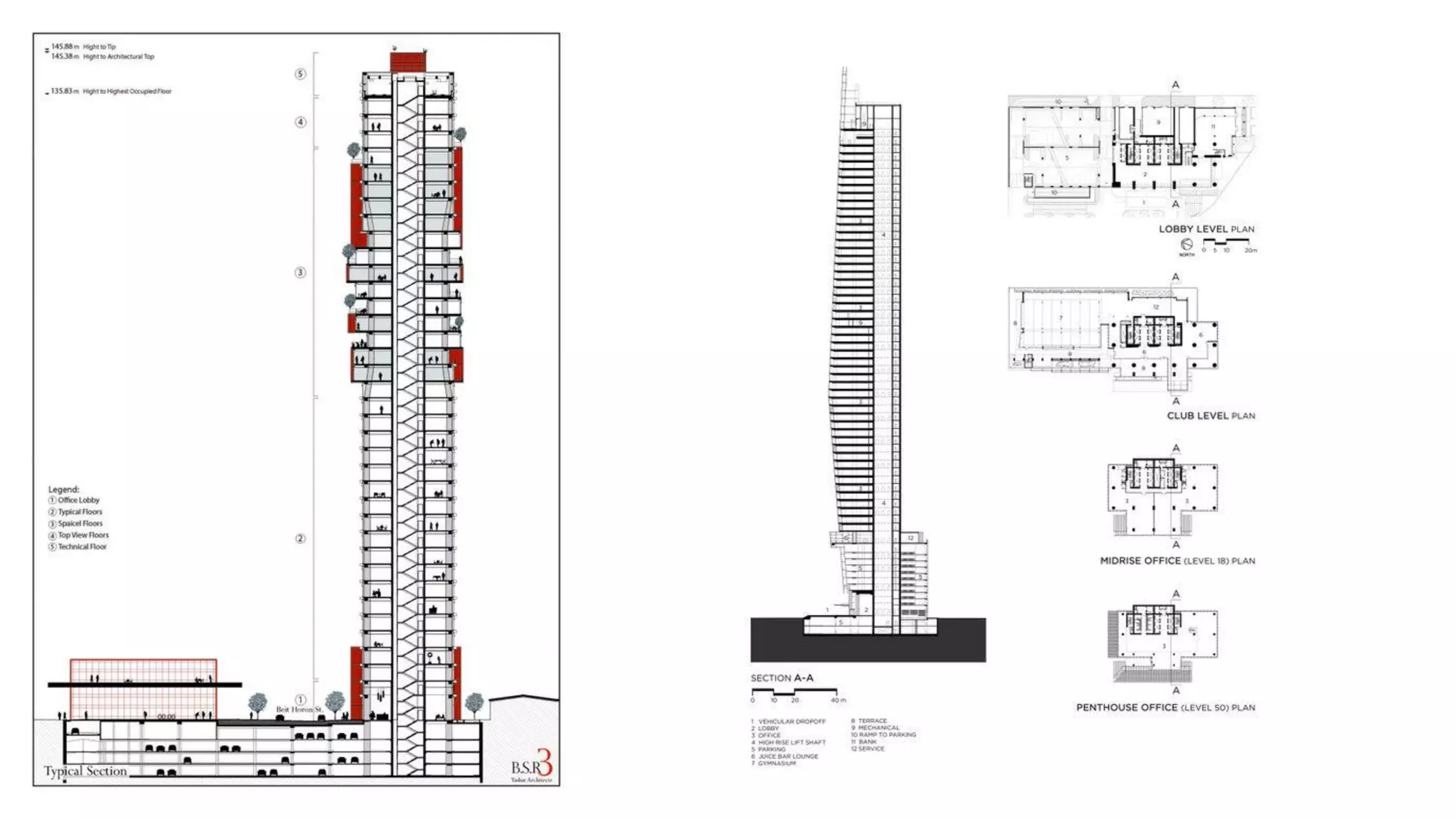
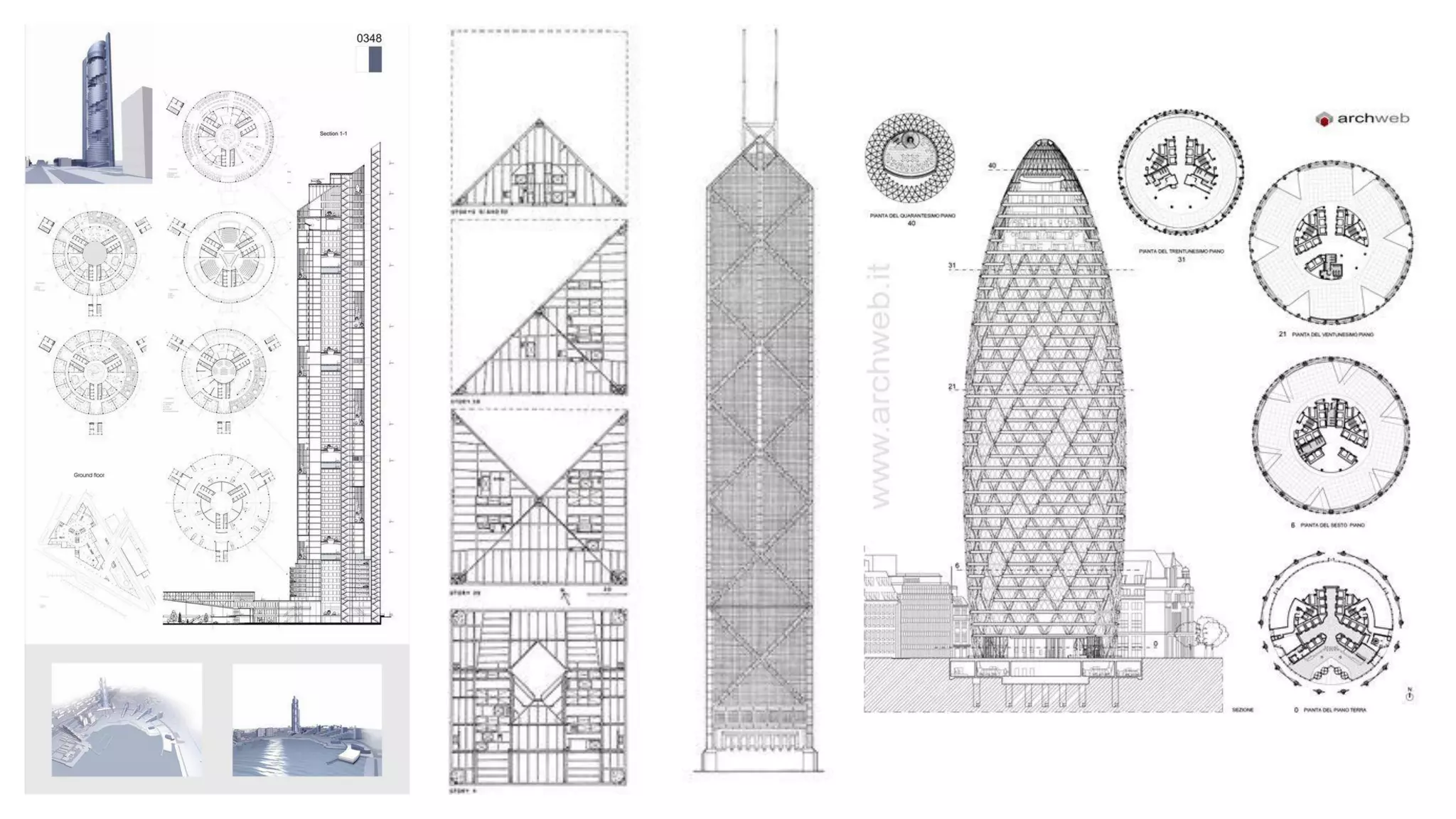
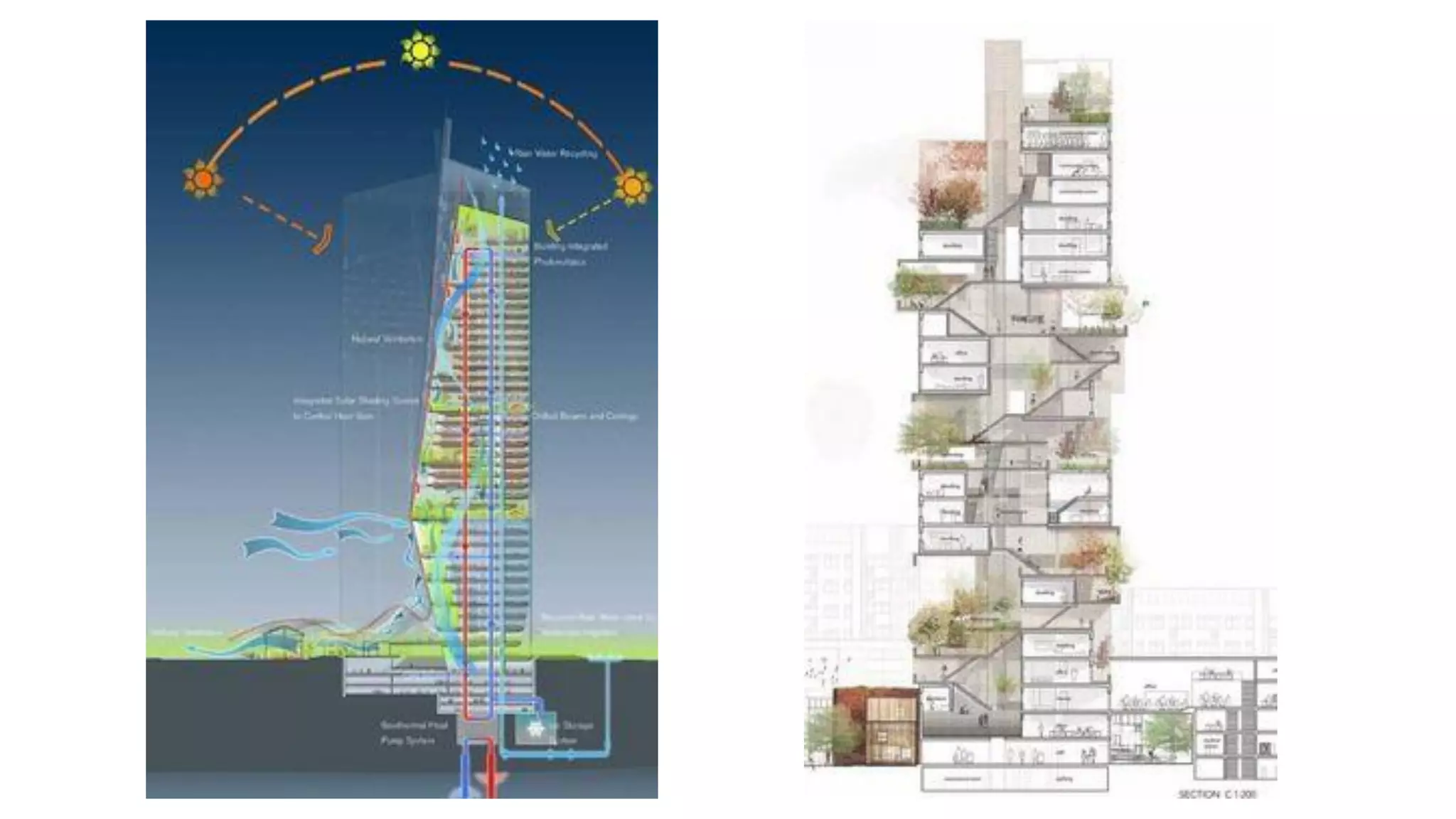
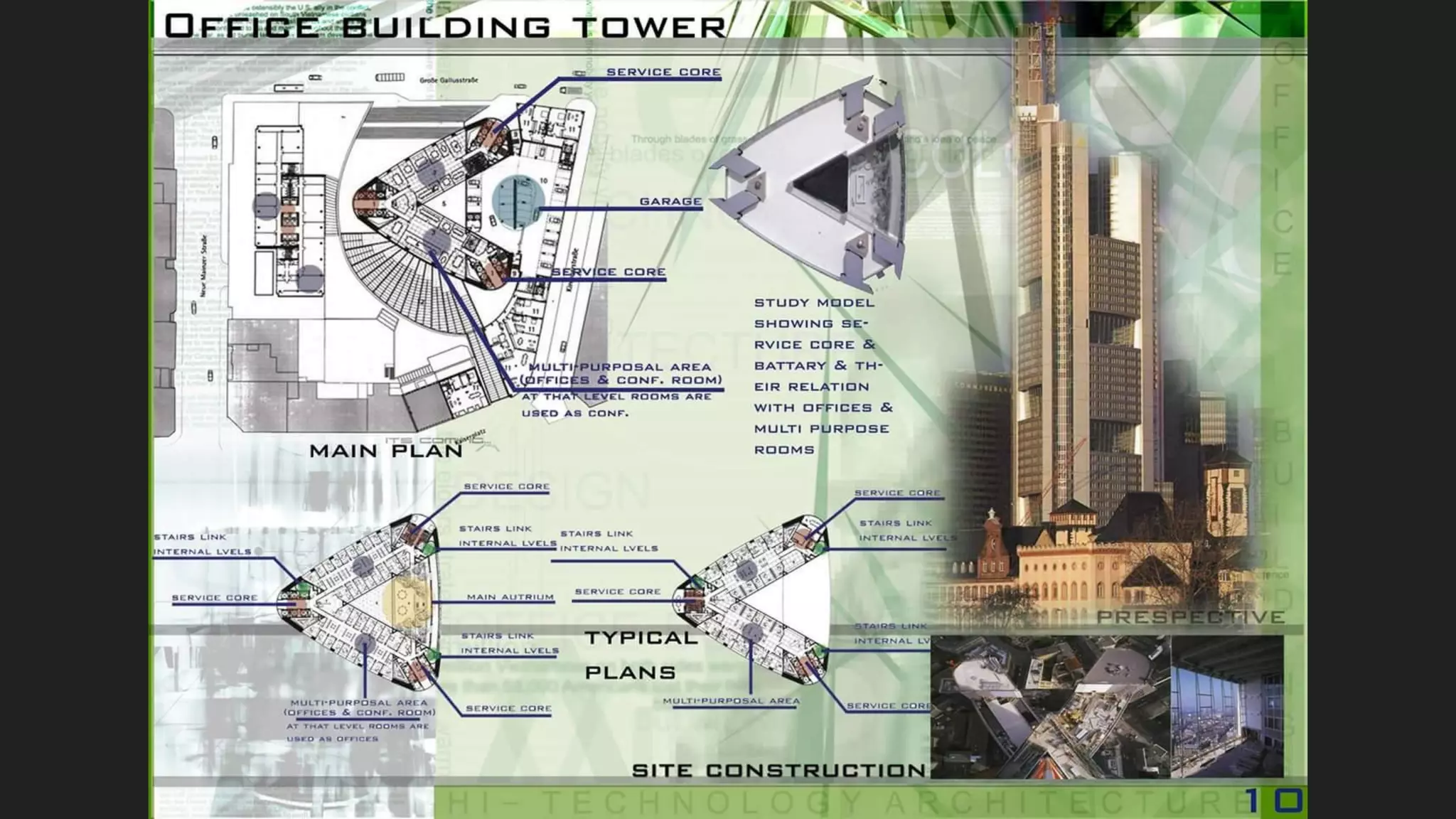
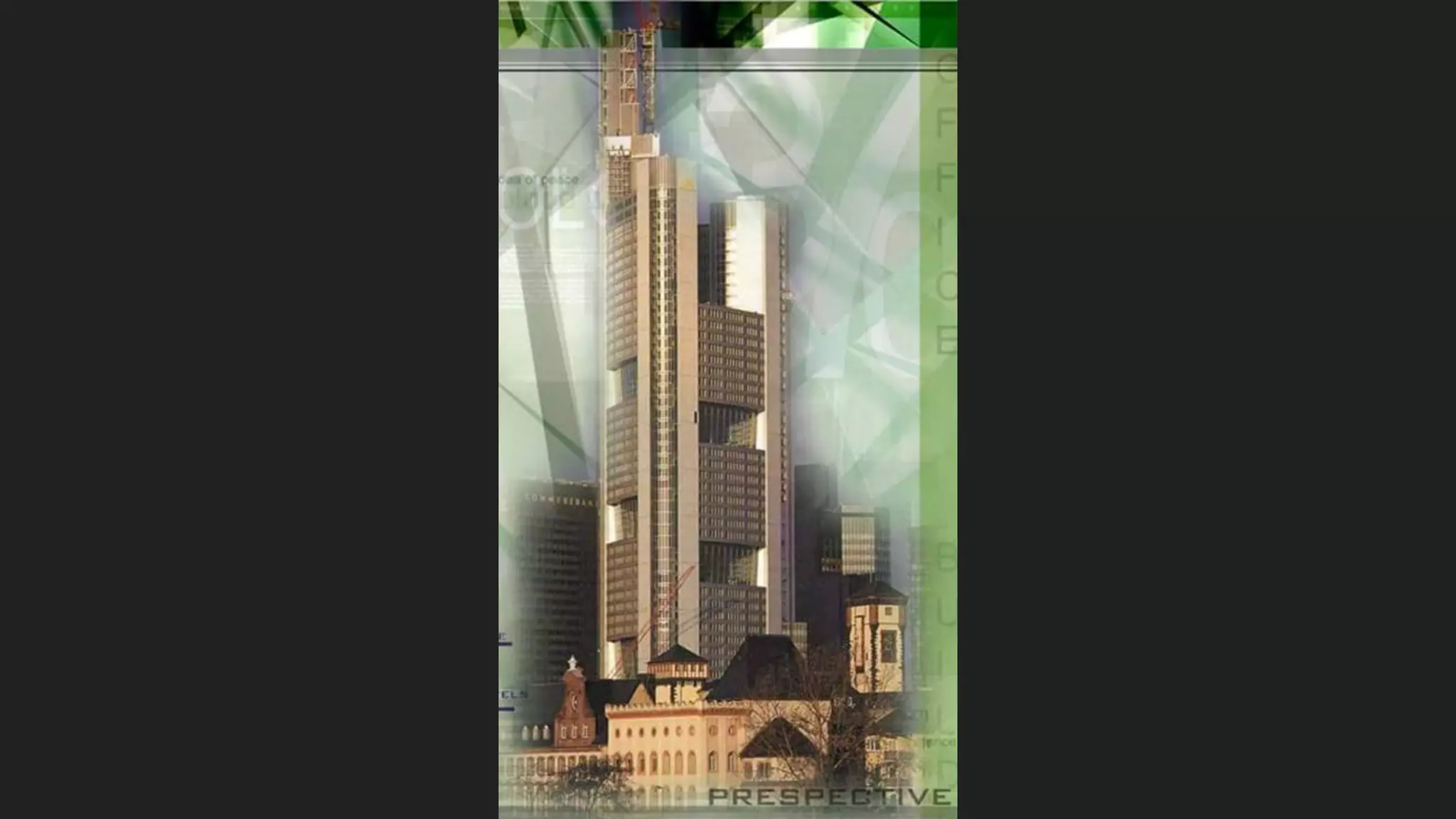
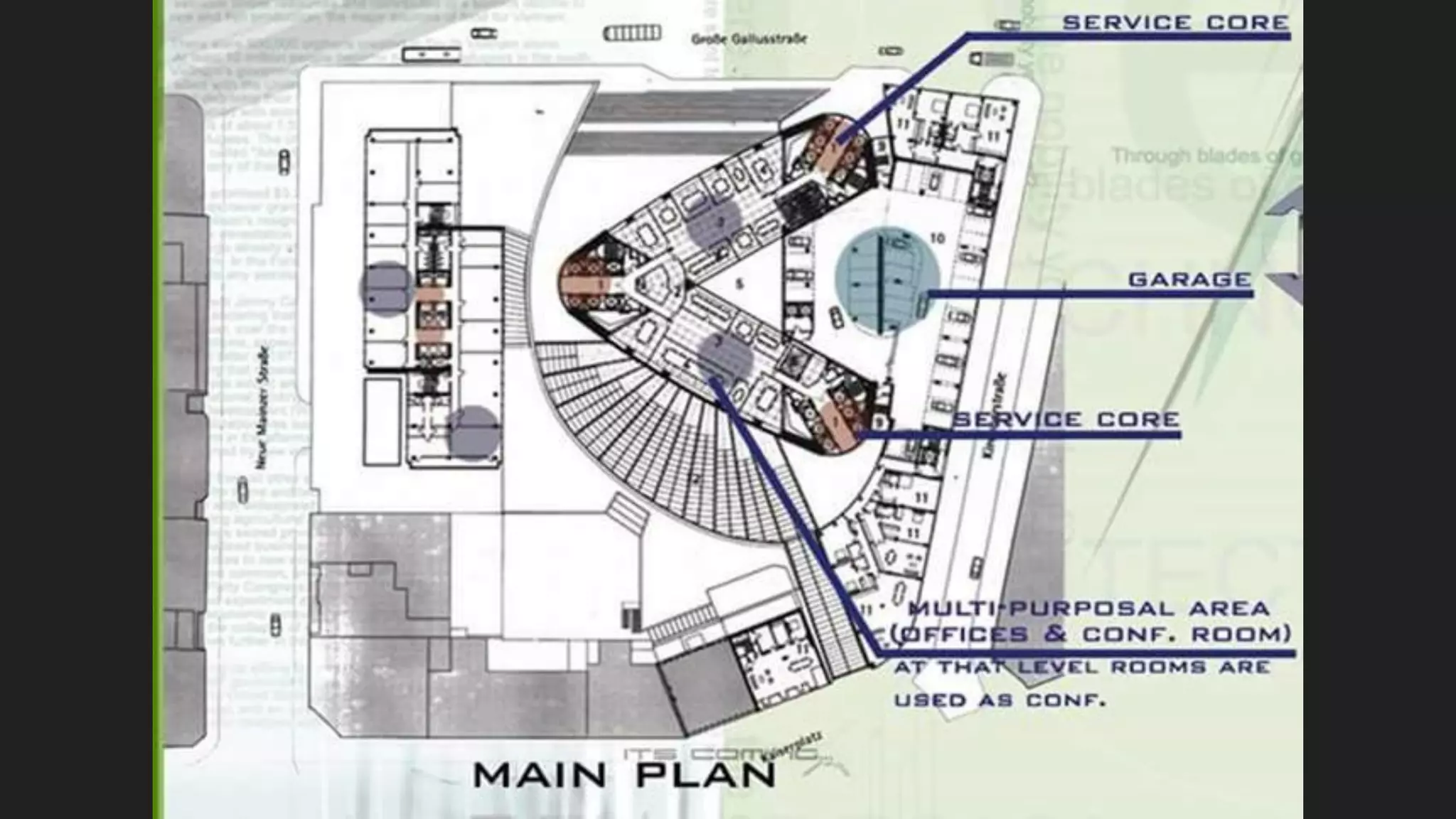
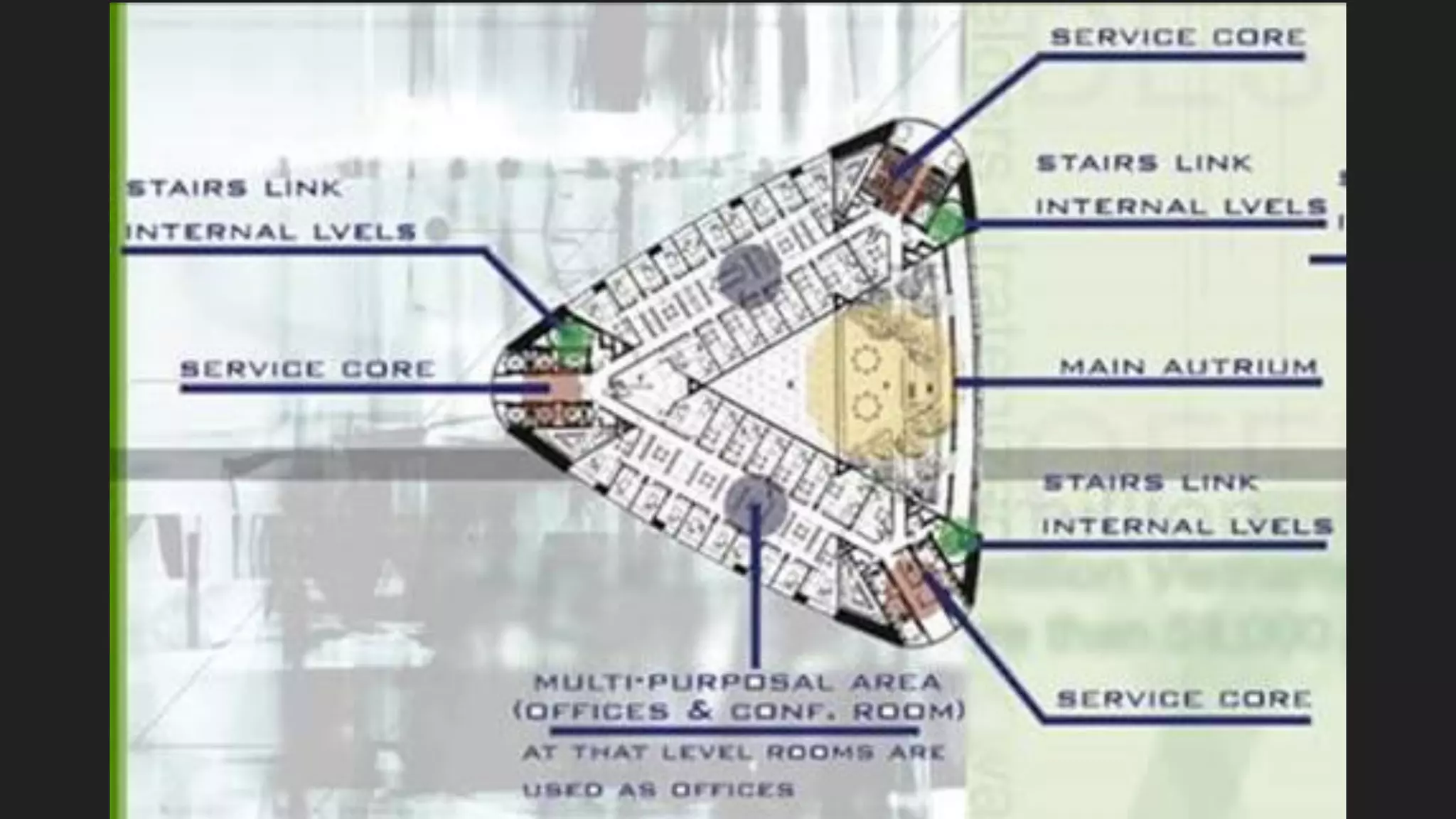
Tall Buildings Projects
Thank you.

Tall Buildings - Core Design

  • 1.
    Tall Buildings -Core Design Dr. Yasser Mahgoub
  • 2.
    Introduction High-rise commercial buildingsare the icons of modern society. These symbolize the power of commerce in the present world system. They also add the 3rd dimension to the city. In addition, at the micro level, having an office at an attractive high-rise building gives additional advantage to the business in terms of better customer confidence and corporate identity.
  • 3.
    Definition A high-rise buildingis defined as a building 35 meters or greater in height. Generally constructed using a structural frame, provided with high-speed elevators.
  • 4.
    Rules of thumb Thereare rules of thumb to determine the number of elevators required for Office buildings: ● One elevator is required for every 45,000 net usable square feet (4180.64 m2). ● The ratio of the number of floors to the number of elevators should be two to one (2:1) or two and a half to one (2.5:1), depending on the occupancy of the building. The more dense the population, the more elevators needed.
  • 5.
    Rules of thumb ●The number of elevators in a single group should not exceed eight (8) and no single group should serve more than (16) levels. ● If you have 32 floors, you will need 2 groups of elevators, each group of 8 elevators will serve 16 floors. There should be a service floor at level 16 that connects the two groups together.
  • 6.
    Rules of thumb ●In buildings of four to eight floors, a separate service elevator should be considered. Over nine floors, a service elevator is virtually required. ● Upper-floor, special-use areas, such as cafeterias, mail rooms, transfer bridges, etc., can increase the required number of elevators.
  • 8.
  • 9.
    INSTITUTIONAL BUILDINGS -THAILAND ● Architects: Hassell ● Area:46000.0 m² ● Year:2009 https://www.archdaily.com/170860/pttep-headquarters-hassell
  • 10.
  • 11.
  • 12.
  • 13.
  • 14.
  • 26.
  • 27.
  • 50.
  • 83.