Learning Outcomes – Decision Making Explain the satisfying model for decision making Describe the workings of the implicit favorite model for decision making Outline the maximizing or rational decision making model Discuss the various group decision techniques
Decision-Making The key to making a decision is to understand the problem.
Three Models for Decision-Making Satisficing Model Implicit Favorite Model Maximizing or Rational Decision-Making Model
The Satisficing Model Expand on alternatives Does alternative meet satisficing Criteria ? Select first alternative  that meets criteria and  is considered “ good enough” Problem identified Problem simplified Satisficing criteria set Identify alternatives Compare alternatives one at a time against criteria YES NO
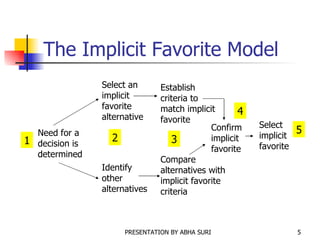
The Implicit Favorite Model Need for a decision is determined Select an  implicit  favorite alternative Identify other alternatives Establish criteria to match implicit favorite Compare alternatives with implicit favorite criteria Confirm implicit favorite Select implicit favorite 1 2 3 4 5
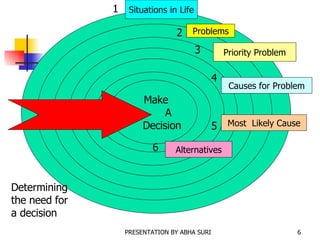
Problems Situations in Life Priority Problem Causes for Problem Most  Likely Cause Make  A  Decision Alternatives 1 2 3 4 5 6 Determining the need for a decision
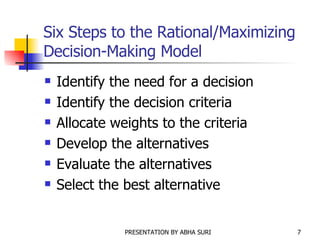
Six Steps to the Rational/Maximizing Decision-Making Model Identify the need for a decision Identify the decision criteria Allocate weights to the criteria Develop the alternatives Evaluate the alternatives Select the best alternative
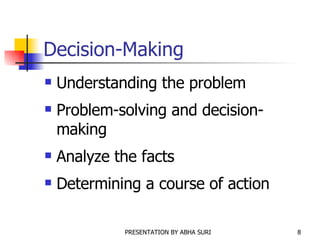
Decision-Making Understanding the problem Problem-solving and decision-making Analyze the facts Determining a course of action
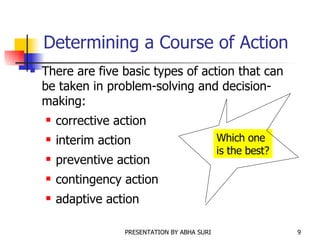
Determining a Course of Action There are five basic types of action that can be taken in problem-solving and decision-making: corrective action interim action preventive action contingency action adaptive action Which one is the best?
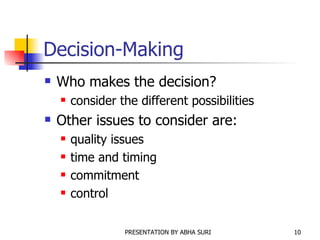
Decision-Making Who makes the decision? consider the different possibilities Other issues to consider are: quality issues time and timing  commitment control
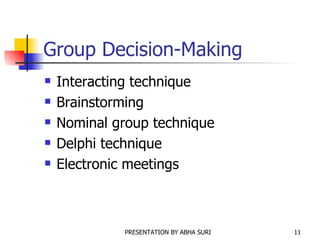
Group Decision-Making Interacting technique Brainstorming Nominal group technique Delphi technique Electronic meetings
Summary There are many ways to make decisions and solve problems.  This chapter looks at several of the more common ways available to the leader.  The  implicit favorite model  will serve one well if he or she already knows what he or she wants to do.  The  satisficing model  works well if time is a consideration and one only needs to determine the criteria and then selects the first solution that meets the criteria.  The  maximizing decision-making model  provides a means to prioritize and understand the problem, analyze the facts, and then determine a course of action.

Decision Making

  • 1.
    Learning Outcomes –Decision Making Explain the satisfying model for decision making Describe the workings of the implicit favorite model for decision making Outline the maximizing or rational decision making model Discuss the various group decision techniques
  • 2.
    Decision-Making The keyto making a decision is to understand the problem.
  • 3.
    Three Models forDecision-Making Satisficing Model Implicit Favorite Model Maximizing or Rational Decision-Making Model
  • 4.
    The Satisficing ModelExpand on alternatives Does alternative meet satisficing Criteria ? Select first alternative that meets criteria and is considered “ good enough” Problem identified Problem simplified Satisficing criteria set Identify alternatives Compare alternatives one at a time against criteria YES NO
  • 5.
    The Implicit FavoriteModel Need for a decision is determined Select an implicit favorite alternative Identify other alternatives Establish criteria to match implicit favorite Compare alternatives with implicit favorite criteria Confirm implicit favorite Select implicit favorite 1 2 3 4 5
  • 6.
    Problems Situations inLife Priority Problem Causes for Problem Most Likely Cause Make A Decision Alternatives 1 2 3 4 5 6 Determining the need for a decision
  • 7.
    Six Steps tothe Rational/Maximizing Decision-Making Model Identify the need for a decision Identify the decision criteria Allocate weights to the criteria Develop the alternatives Evaluate the alternatives Select the best alternative
  • 8.
    Decision-Making Understanding theproblem Problem-solving and decision-making Analyze the facts Determining a course of action
  • 9.
    Determining a Courseof Action There are five basic types of action that can be taken in problem-solving and decision-making: corrective action interim action preventive action contingency action adaptive action Which one is the best?
  • 10.
    Decision-Making Who makesthe decision? consider the different possibilities Other issues to consider are: quality issues time and timing commitment control
  • 11.
    Group Decision-Making Interactingtechnique Brainstorming Nominal group technique Delphi technique Electronic meetings
  • 12.
    Summary There aremany ways to make decisions and solve problems. This chapter looks at several of the more common ways available to the leader. The implicit favorite model will serve one well if he or she already knows what he or she wants to do. The satisficing model works well if time is a consideration and one only needs to determine the criteria and then selects the first solution that meets the criteria. The maximizing decision-making model provides a means to prioritize and understand the problem, analyze the facts, and then determine a course of action.