DECHLORINATION AND IT’S
TYPE
VIVEKANANDA ART’S AND SCIENCE COLLEGE
FOR WOMEN,
VEERACHIPALAIYAM,SANKARI, SALEM, TAMILNADU.
DEPARTMENT OF MICROBIOLOGY
SUBJECT : BIOREMEDIATION
SUBMITTED BY :
K.SHANMUGAPRIYA,
1’ST M.SC MICROBIOLOGY,
VIVEKANANDA ARTS AND SCIENCE COLLEGE
FOR WOMEN,
SANKAGIRI,SALEM, TAMILNADU.
GUIDED BY :
Dr.R.DINESH KUMAR,
ASSISTANT PROFESSOR,
DEPARTMENT OF MICROBIOLOGY,
VIVEKANANDA ARTS AND SCIENCE COLLEGE,
FOR WOMEN,
SANKAGIRI,SALEM, TAMILNADU.
DECHLORINATION :
• Bacterial enrichment cultures developed with Baltimore Harbor (BH)
sediments were found to reductively dechlorinate 2,3,5,6-
tetrachlorobiphenyl (2,3,5,6-CB) when incubated in a minimal
estuarine medium containing short-chain fatty acids under anaerobic
conditions with and without the addition of sediment.
• Primary enrichment cultures formed both meta and ortho
dechlorination products from 2,3,5,6-CB. The lag time preceding
dechlorination decreased from 30 to less than 20 days as the cultures
were sequentially transferred into estuarine medium containing
dried, sterile BH sediment.
TYPES OF DECHLORINATION :
• Sulfur dioxide is most commonly used for dechlorination and is the
major focus of this fact sheet.
• Some dechlorination alternatives include carbon adsorption, sodium
metabisulfite, sodium bisulfite, and hydrogen peroxide.
• Dechlorination can be achieved with sulphur dioxide (Section 12.18),
sodium bisulphite (NaHSO3) (Section 12.18) or sodium
metabisulphite (Na2S2O5) (Section 12.19) and, if required following
superchlorination (Section 11.10),
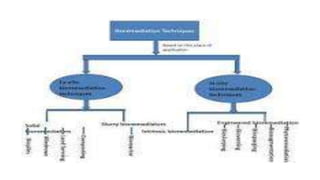
IN SITU DECHLORINATION :
• The remediation of polychlorinated biphenyls (PCBs) in soils and
sediments remains a particularly difficult problem to solve.
• The possibility of in situ degradation by microorganisms has been
pursued for many years since this approach has the potential to
provide a cost-effective and environmentally sustainable alternative
to dredging for treatment.
• Being hydrophobic, PCBs partition into organic material and
accumulate in anoxic environments well poised to support anaerobic
dechlorination of highly chlorinated congeners; products of which are
susceptible to complete aerobic degradation.
TYPES OF IN SITU DECHLORINATION:
• Typically, dechlorination is accomplished by adding sulfur dioxide or
sulfite salts (i.e., sodium sulfite, sodium bisulfite, or sodium
metabisulfite).
• Carbon adsorption is also an effective dechlorination method, but is
expensive compared to other methods.
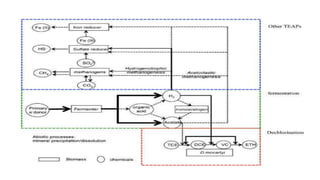
• The dechlorination rates are affected by simultaneous microbial-
driven processes and inhibitory reactions, such as fermentation of
organic substrates, competition for hydrogen by other H2.
ENGINEERED IN SITU DECHLORINATION :
1.PLAIN CHLORINATION : It this type of chlorination, the water is
chlorinated free from suspended particles without any chemical
treatment.
• The application of chlorine to raw water before any other treatment
to improve the coagulation & to remove the taste, odor, & color.
• Chlorination is a method of disinfecting water to make it fit for human
consumption through the addition of Chlorine or chlorine-containing
substances.
• Chlorination is the process of disinfecting water through the addition
of Chlorine.
2.PRE CHLORINATION :Pre-chlorination is used before coagulation-
sedimentation or filtration to reduce pathogen levels, to inhibit biofilm
or algal development within the plant, and to oxidize any inorganic
compounds (e.g. iron and manganese) before the main treatment
steps.
• The addition of chlorine in the collection system serving the
wastewater treatment plant or at the headworks of the water
treatment plant before other treatment processes.
• Prechlorination is commonly used to minimize operational problems
associated with biological growth as well as taste and odor control
during drinking water treatment.
• Pre-chlorination is found to remove tastes and odours and control
biological growth throughout the water treatment system, thus
preventing growth in the sedimentation.
3.POST CHLORINATION :if chlorination is done after the filtration
process it is called post chlorination. It is important for a safe supply of
drinking water.
• Its primary role is to provide a final dose of chlorine to maintain a
residual disinfectant in the water throughout the distribution system.
• This ensures the destruction of any remaining microorganisms and
safeguards against potential contamination.
• Post Chlorination is the final stage of the purification process that is
done before the water leaves the treatment plant. It mainly consists
of the incorporation of minimum levels of chlorine into the product
water down to diffusion.
4. DOUBLE CHLORINATION : both pre and post chlorination is done in
this process.
• Providing an excessive amount of chlorine. The concentration is kept
between 5 mg/l – 15 mg/l. They are done during epidemics and
disease outbreaks like amoebic dysentery caused by histolytica.
• Pre- and Post-chlorination processes are known together as Double
chlorination. Thus, chlorination is the process of disinfecting water
through the addition of Chlorine.
• Chlorination processes can be carried out in various ways depending
on the type of water being treated.
• This method was first used over a century ago, and is still used today.
It is a chemical disinfection method that uses various types of
chlorine or chlorine-containing.
5. BREAKPOINT CHLORINATION : Break point chlorination is adding
enough chlorine to eliminate problems associated with combined
chlorine. Specifically, breakpoint chlorination.
• The point at which enough free chlorine is added to break the
molecular bonds, specifically the combined chlorine molecules,
ammonia or nitrogen compounds.
• Breakpoint chlorination is the application of sufficient chlorine to
maintain a free available chlorine residual.
• The principal purpose of breakpoint chlorination is to ensure effective
disinfection by satisfying the chlorine demand of the water.
ADVANTAGES OF SUTI CHLORINATION :
• Prevents waterborne diseases. Maintains water quality during
distribution
• Provides residual protection. Cost-effective water treatment method.
• The advantages of this technology are the high effectiveness and
efficiency and less investment.
• Disinfection destroys or irreversibly inactivates most pathogens (e.g.,
bacteria, viruses and fungi) on surfaces (i.e., inanimate objects).
• It is generally not effective against bacterial spores. Efficacy will vary
with disinfectant product or method.
DISADVANTAGE OF SUTI CHLORINATION:
• Breathing high levels of chlorine causes fluid build-up in the lungs, a
condition known as pulmonary edema.
• The development of pulmonary edema may be delayed for several
hours after exposure to chlorine.
• Contact with compressed liquid chlorine may cause frostbite of the
skin and eyes.
• Such as formation of disinfection by-products and being ineffective
against some types of microbes.
SOLD-PHASE CHLORINATION:
• Chlorine kills pathogens and oxidises iron, manganese, and taste and
odour compounds in water. It can be added to water as a primary
disinfection
• Pre-chlorination, between sedimentation and filtration, or as a final
treatment step before distribution.
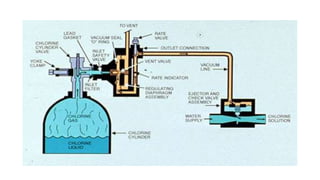
• Chlorination is the process of adding chlorine or chlorine compounds
such as sodium hypochlorite to water.
• The addition of chlorine or chlorine compounds to drinking water is
called chlorination.
SULRRY PHASE SYSTEM :
• Chlorination is the process of adding chlorine to drinking water to kill
parasites, bacteria, and viruses.
• Different processes can be used to achieve safe levels of chlorine in
drinking water.
• Many public water systems add chlorine (a process known as
“chlorination”) to their water supply for the purpose of disinfection.
• Disinfection kills or inactivates harmful microorganisms which can
cause illnesses such as typhoid, cholera, hepatitis and giardiasis.
ADVANTAGES OF EX-SITU CHLORINATION :
• The main advantage of ex situ treatments is that they generally
require shorter time periods, and there is more certainty about the
uniformity.
• Treatment because of the ability to screen, homogenize, and
continuously mix the contaminated media; however, ex situ processes
require excavation of soils.
• Reduce the risks of exposure and secondary contamination, minimize
the disturbance of the site, and lower the costs and time of
remediation.
DISADVANTAGE OF EX-SITU CHLORINATION :
• Unpleasant taste and odour.
• Formation of potentially harmful disinfection byproducts.
• Allergic reactions in some individuals.
• Corrosive to certain materials and equipment.
• Limited effectiveness against some parasites and viruses.
• During chlorine dioxide production processes, large amounts of
chlorine are formed.
• Free chlorine reacts with organic matter to form halogenated
disinfection byproducts.
THANK YOU…😊

Dechlorination and it's type

  • 1.
    DECHLORINATION AND IT’S TYPE VIVEKANANDAART’S AND SCIENCE COLLEGE FOR WOMEN, VEERACHIPALAIYAM,SANKARI, SALEM, TAMILNADU. DEPARTMENT OF MICROBIOLOGY SUBJECT : BIOREMEDIATION SUBMITTED BY : K.SHANMUGAPRIYA, 1’ST M.SC MICROBIOLOGY, VIVEKANANDA ARTS AND SCIENCE COLLEGE FOR WOMEN, SANKAGIRI,SALEM, TAMILNADU. GUIDED BY : Dr.R.DINESH KUMAR, ASSISTANT PROFESSOR, DEPARTMENT OF MICROBIOLOGY, VIVEKANANDA ARTS AND SCIENCE COLLEGE, FOR WOMEN, SANKAGIRI,SALEM, TAMILNADU.
  • 2.
    DECHLORINATION : • Bacterialenrichment cultures developed with Baltimore Harbor (BH) sediments were found to reductively dechlorinate 2,3,5,6- tetrachlorobiphenyl (2,3,5,6-CB) when incubated in a minimal estuarine medium containing short-chain fatty acids under anaerobic conditions with and without the addition of sediment. • Primary enrichment cultures formed both meta and ortho dechlorination products from 2,3,5,6-CB. The lag time preceding dechlorination decreased from 30 to less than 20 days as the cultures were sequentially transferred into estuarine medium containing dried, sterile BH sediment.
  • 3.
    TYPES OF DECHLORINATION: • Sulfur dioxide is most commonly used for dechlorination and is the major focus of this fact sheet. • Some dechlorination alternatives include carbon adsorption, sodium metabisulfite, sodium bisulfite, and hydrogen peroxide. • Dechlorination can be achieved with sulphur dioxide (Section 12.18), sodium bisulphite (NaHSO3) (Section 12.18) or sodium metabisulphite (Na2S2O5) (Section 12.19) and, if required following superchlorination (Section 11.10),
  • 5.
    IN SITU DECHLORINATION: • The remediation of polychlorinated biphenyls (PCBs) in soils and sediments remains a particularly difficult problem to solve. • The possibility of in situ degradation by microorganisms has been pursued for many years since this approach has the potential to provide a cost-effective and environmentally sustainable alternative to dredging for treatment. • Being hydrophobic, PCBs partition into organic material and accumulate in anoxic environments well poised to support anaerobic dechlorination of highly chlorinated congeners; products of which are susceptible to complete aerobic degradation.
  • 6.
    TYPES OF INSITU DECHLORINATION: • Typically, dechlorination is accomplished by adding sulfur dioxide or sulfite salts (i.e., sodium sulfite, sodium bisulfite, or sodium metabisulfite). • Carbon adsorption is also an effective dechlorination method, but is expensive compared to other methods. • The dechlorination rates are affected by simultaneous microbial- driven processes and inhibitory reactions, such as fermentation of organic substrates, competition for hydrogen by other H2.
  • 7.
    ENGINEERED IN SITUDECHLORINATION : 1.PLAIN CHLORINATION : It this type of chlorination, the water is chlorinated free from suspended particles without any chemical treatment. • The application of chlorine to raw water before any other treatment to improve the coagulation & to remove the taste, odor, & color. • Chlorination is a method of disinfecting water to make it fit for human consumption through the addition of Chlorine or chlorine-containing substances. • Chlorination is the process of disinfecting water through the addition of Chlorine.
  • 8.
    2.PRE CHLORINATION :Pre-chlorinationis used before coagulation- sedimentation or filtration to reduce pathogen levels, to inhibit biofilm or algal development within the plant, and to oxidize any inorganic compounds (e.g. iron and manganese) before the main treatment steps. • The addition of chlorine in the collection system serving the wastewater treatment plant or at the headworks of the water treatment plant before other treatment processes. • Prechlorination is commonly used to minimize operational problems associated with biological growth as well as taste and odor control during drinking water treatment. • Pre-chlorination is found to remove tastes and odours and control biological growth throughout the water treatment system, thus preventing growth in the sedimentation.
  • 9.
    3.POST CHLORINATION :ifchlorination is done after the filtration process it is called post chlorination. It is important for a safe supply of drinking water. • Its primary role is to provide a final dose of chlorine to maintain a residual disinfectant in the water throughout the distribution system. • This ensures the destruction of any remaining microorganisms and safeguards against potential contamination. • Post Chlorination is the final stage of the purification process that is done before the water leaves the treatment plant. It mainly consists of the incorporation of minimum levels of chlorine into the product water down to diffusion.
  • 10.
    4. DOUBLE CHLORINATION: both pre and post chlorination is done in this process. • Providing an excessive amount of chlorine. The concentration is kept between 5 mg/l – 15 mg/l. They are done during epidemics and disease outbreaks like amoebic dysentery caused by histolytica. • Pre- and Post-chlorination processes are known together as Double chlorination. Thus, chlorination is the process of disinfecting water through the addition of Chlorine. • Chlorination processes can be carried out in various ways depending on the type of water being treated. • This method was first used over a century ago, and is still used today. It is a chemical disinfection method that uses various types of chlorine or chlorine-containing.
  • 11.
    5. BREAKPOINT CHLORINATION: Break point chlorination is adding enough chlorine to eliminate problems associated with combined chlorine. Specifically, breakpoint chlorination. • The point at which enough free chlorine is added to break the molecular bonds, specifically the combined chlorine molecules, ammonia or nitrogen compounds. • Breakpoint chlorination is the application of sufficient chlorine to maintain a free available chlorine residual. • The principal purpose of breakpoint chlorination is to ensure effective disinfection by satisfying the chlorine demand of the water.
  • 13.
    ADVANTAGES OF SUTICHLORINATION : • Prevents waterborne diseases. Maintains water quality during distribution • Provides residual protection. Cost-effective water treatment method. • The advantages of this technology are the high effectiveness and efficiency and less investment. • Disinfection destroys or irreversibly inactivates most pathogens (e.g., bacteria, viruses and fungi) on surfaces (i.e., inanimate objects). • It is generally not effective against bacterial spores. Efficacy will vary with disinfectant product or method.
  • 14.
    DISADVANTAGE OF SUTICHLORINATION: • Breathing high levels of chlorine causes fluid build-up in the lungs, a condition known as pulmonary edema. • The development of pulmonary edema may be delayed for several hours after exposure to chlorine. • Contact with compressed liquid chlorine may cause frostbite of the skin and eyes. • Such as formation of disinfection by-products and being ineffective against some types of microbes.
  • 15.
    SOLD-PHASE CHLORINATION: • Chlorinekills pathogens and oxidises iron, manganese, and taste and odour compounds in water. It can be added to water as a primary disinfection • Pre-chlorination, between sedimentation and filtration, or as a final treatment step before distribution. • Chlorination is the process of adding chlorine or chlorine compounds such as sodium hypochlorite to water. • The addition of chlorine or chlorine compounds to drinking water is called chlorination.
  • 16.
    SULRRY PHASE SYSTEM: • Chlorination is the process of adding chlorine to drinking water to kill parasites, bacteria, and viruses. • Different processes can be used to achieve safe levels of chlorine in drinking water. • Many public water systems add chlorine (a process known as “chlorination”) to their water supply for the purpose of disinfection. • Disinfection kills or inactivates harmful microorganisms which can cause illnesses such as typhoid, cholera, hepatitis and giardiasis.
  • 17.
    ADVANTAGES OF EX-SITUCHLORINATION : • The main advantage of ex situ treatments is that they generally require shorter time periods, and there is more certainty about the uniformity. • Treatment because of the ability to screen, homogenize, and continuously mix the contaminated media; however, ex situ processes require excavation of soils. • Reduce the risks of exposure and secondary contamination, minimize the disturbance of the site, and lower the costs and time of remediation.
  • 19.
    DISADVANTAGE OF EX-SITUCHLORINATION : • Unpleasant taste and odour. • Formation of potentially harmful disinfection byproducts. • Allergic reactions in some individuals. • Corrosive to certain materials and equipment. • Limited effectiveness against some parasites and viruses. • During chlorine dioxide production processes, large amounts of chlorine are formed. • Free chlorine reacts with organic matter to form halogenated disinfection byproducts.
  • 21.