Subject : MicroalgalTechnology
Presented by
M.Kejapriya
I – M.Sc., Microbiology
Department of Microbiology
Vivekanandha arts and sceince college for women,
veerachipalayam, sankari.
 Phytoplankton blooms, micro-algal blooms,
toxic algae, red tides, or harmful algae, are all
terms for naturally occuring phenomena.
 About 300 species of micro algae are reported
at times to form mass occurrence, so called
blooms. Nearly one fourth of these species are
know to produce toxins.
 The scientific community refers to these events
with a generic term, “Harmful algal bloom”
(HAB), recognising that, because a wide range
of organisms is involved and some species
have toxic effects at low cell densities not all
 Algal blooms can reduce the ability of fish and
other aquatic life to find food and can cause
entire populations to leave an area or even die.
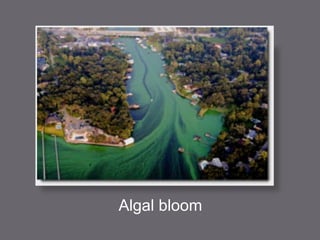
 Harmful algal blooms cause thick, green muck
that impacts clear water, recreation,
businesses and property values.
 Nutrient pollution fuels the growth of harmful
algal blooms which have negative impacts on
aquatic ecosystems.
Algal bloom
 Harmful algal blooms sometimes create toxins
that are detrimental to fish and other animals.
After being consumed by small fish and
shellfish, these toxins move up the food chain
and can impact larger animals like sea lions,
turtles, dolphins, birds and manatees.
 Even if algal blooms are not toxic, they can
negatively impact aquatic life by blocking out
sunlight and clogging fish gills.
 Nutrient pollution can create dead zones-areas
in water with little or no oxygen-where aquatic
life cannot survive. Also known as hypoxia,
these areas are caused by algal blooms
consuming oxygen as they die and
decompose.
 Aquatic animals-particularly young fish and
seafloor dwellers like crabs and clams-must
leave the affected area to survive.
 Over 166 dead zones have been documented
nation wide, affecting water bodies like the
Chesapeake Bay and the Gulf of Mexico.
 The Gulf of Mexico dead zone is the largest in
the United State, measured to be 5,840 square
miles in 2013. It occurs every summer because
of nutrient pollution from the Mississippi river
basin, an area that drains 31upstream states.
 The Mississippi river/Gulf of Mexico Hypoxia
Task Force coordinates nutrient management
in this area.
 Acid rain, caused by nutrient pollution in the air,
damages lakes, streams, estuaries, forests and
grasslands across the country.
 Air borne nitrogen compunds nitrogen oxides
contribute to the formation of other air
pollutants such as ground-level ozone, a
component of smog which can restrict visibility.
 Wind and weather can carry ozone many miles
from urbon to rural areas. Ozone pollution can
Some of the major harmful effects of algae to
human being are listed below:
HARMFUL TO LIVING STOCK
 The algae are harmful to humans in several
ways. Volvocales, Chlorococcales, Myxophyceae
and several others occur in such a great
abundance in water, that they colour the whole
water either green or blue green and cause the
death of fishes.
 The algae block the gills of the fishes and they
respire during night and make the respiration of
fishes difficult by complete depletion of oxygen.
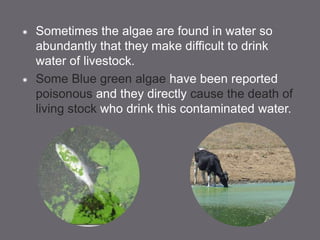
 Sometimes the algae are found in water so
abundantly that they make difficult to drink
water of livestock.
 Some Blue green algae have been reported
poisonous and they directly cause the death of
living stock who drink this contaminated water.
BLOCKING OF
PHOTOSYNTHESES
 The epiphytic algae which are
found upon other plants and trees
blocking photosynthesis and
indirectly harm the trees and
plants.
PARASITIC ALGAE
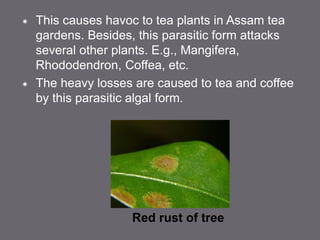
 The well known disease ‘red
rust of tea’ is not caused by any
parasitic fungus but an algal
form Cephaleuros virescens.
 This causes havoc to tea plants in Assam tea
gardens. Besides, this parasitic form attacks
several other plants. E.g., Mangifera,
Rhododendron, Coffea, etc.
 The heavy losses are caused to tea and coffee
by this parasitic algal form.
Red rust of tree
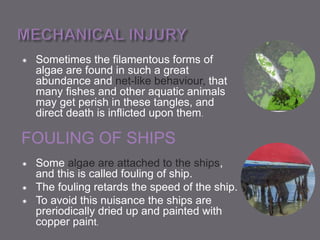
 Sometimes the filamentous forms of
algae are found in such a great
abundance and net-like behaviour, that
many fishes and other aquatic animals
may get perish in these tangles, and
direct death is inflicted upon them.
FOULING OF SHIPS
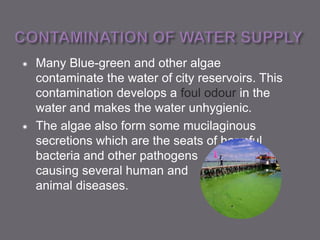
 Some algae are attached to the ships,
and this is called fouling of ship.
 The fouling retards the speed of the ship.
 To avoid this nuisance the ships are
preriodically dried up and painted with
copper paint.
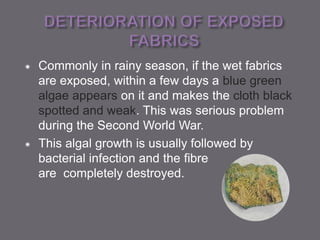
 Many Blue-green and other algae
contaminate the water of city reservoirs. This
contamination develops a foul odour in the
water and makes the water unhygienic.
 The algae also form some mucilaginous
secretions which are the seats of harmful
bacteria and other pathogens
causing several human and
animal diseases.
 Commonly in rainy season, if the wet fabrics
are exposed, within a few days a blue green
algae appears on it and makes the cloth black
spotted and weak. This was serious problem
during the Second World War.
 This algal growth is usually followed by
bacterial infection and the fibre
are completely destroyed.

NEGATIVE EFFECTS OF ALGAE.pptx

  • 1.
    Subject : MicroalgalTechnology Presentedby M.Kejapriya I – M.Sc., Microbiology Department of Microbiology Vivekanandha arts and sceince college for women, veerachipalayam, sankari.
  • 2.
     Phytoplankton blooms,micro-algal blooms, toxic algae, red tides, or harmful algae, are all terms for naturally occuring phenomena.  About 300 species of micro algae are reported at times to form mass occurrence, so called blooms. Nearly one fourth of these species are know to produce toxins.  The scientific community refers to these events with a generic term, “Harmful algal bloom” (HAB), recognising that, because a wide range of organisms is involved and some species have toxic effects at low cell densities not all
  • 3.
     Algal bloomscan reduce the ability of fish and other aquatic life to find food and can cause entire populations to leave an area or even die.  Harmful algal blooms cause thick, green muck that impacts clear water, recreation, businesses and property values.  Nutrient pollution fuels the growth of harmful algal blooms which have negative impacts on aquatic ecosystems.
  • 4.
  • 5.
     Harmful algalblooms sometimes create toxins that are detrimental to fish and other animals. After being consumed by small fish and shellfish, these toxins move up the food chain and can impact larger animals like sea lions, turtles, dolphins, birds and manatees.  Even if algal blooms are not toxic, they can negatively impact aquatic life by blocking out sunlight and clogging fish gills.
  • 6.
     Nutrient pollutioncan create dead zones-areas in water with little or no oxygen-where aquatic life cannot survive. Also known as hypoxia, these areas are caused by algal blooms consuming oxygen as they die and decompose.  Aquatic animals-particularly young fish and seafloor dwellers like crabs and clams-must leave the affected area to survive.
  • 7.
     Over 166dead zones have been documented nation wide, affecting water bodies like the Chesapeake Bay and the Gulf of Mexico.  The Gulf of Mexico dead zone is the largest in the United State, measured to be 5,840 square miles in 2013. It occurs every summer because of nutrient pollution from the Mississippi river basin, an area that drains 31upstream states.  The Mississippi river/Gulf of Mexico Hypoxia Task Force coordinates nutrient management in this area.
  • 8.
     Acid rain,caused by nutrient pollution in the air, damages lakes, streams, estuaries, forests and grasslands across the country.  Air borne nitrogen compunds nitrogen oxides contribute to the formation of other air pollutants such as ground-level ozone, a component of smog which can restrict visibility.  Wind and weather can carry ozone many miles from urbon to rural areas. Ozone pollution can
  • 9.
    Some of themajor harmful effects of algae to human being are listed below: HARMFUL TO LIVING STOCK  The algae are harmful to humans in several ways. Volvocales, Chlorococcales, Myxophyceae and several others occur in such a great abundance in water, that they colour the whole water either green or blue green and cause the death of fishes.  The algae block the gills of the fishes and they respire during night and make the respiration of fishes difficult by complete depletion of oxygen.
  • 10.
     Sometimes thealgae are found in water so abundantly that they make difficult to drink water of livestock.  Some Blue green algae have been reported poisonous and they directly cause the death of living stock who drink this contaminated water.
  • 11.
    BLOCKING OF PHOTOSYNTHESES  Theepiphytic algae which are found upon other plants and trees blocking photosynthesis and indirectly harm the trees and plants. PARASITIC ALGAE  The well known disease ‘red rust of tea’ is not caused by any parasitic fungus but an algal form Cephaleuros virescens.
  • 12.
     This causeshavoc to tea plants in Assam tea gardens. Besides, this parasitic form attacks several other plants. E.g., Mangifera, Rhododendron, Coffea, etc.  The heavy losses are caused to tea and coffee by this parasitic algal form. Red rust of tree
  • 13.
     Sometimes thefilamentous forms of algae are found in such a great abundance and net-like behaviour, that many fishes and other aquatic animals may get perish in these tangles, and direct death is inflicted upon them. FOULING OF SHIPS  Some algae are attached to the ships, and this is called fouling of ship.  The fouling retards the speed of the ship.  To avoid this nuisance the ships are preriodically dried up and painted with copper paint.
  • 14.
     Many Blue-greenand other algae contaminate the water of city reservoirs. This contamination develops a foul odour in the water and makes the water unhygienic.  The algae also form some mucilaginous secretions which are the seats of harmful bacteria and other pathogens causing several human and animal diseases.
  • 15.
     Commonly inrainy season, if the wet fabrics are exposed, within a few days a blue green algae appears on it and makes the cloth black spotted and weak. This was serious problem during the Second World War.  This algal growth is usually followed by bacterial infection and the fibre are completely destroyed.