DEALING WITH DIFFICULT PEOPLE Author:  Courtesy: Dr. Rick Brinkman  Soumindra Chatterjee Dr. Rick Kirschner SIVA SIVANI INSTITUTE OF MANAGEMENT
ABOUT THE AUTHORS Dr. Rick Brinkman & Dr. Rick Kirschner are professional speakers. Co – authors of the bestselling audio-video tapes and book  How to Deal with Difficult People  and the best selling book  Dealing with People You Can’t Stand. They have shared their insights with audiences worldwide through their company R & R Productions. Dr. R Brinkman   Dr. R Kirschner
ABOUT THE BOOK Identify ten bothersome behaviors Deal successfully with each of them Understand the thought and fears of difficult people An understanding of whom we are dealing with and what motivates them  Turn conflict into cooperation
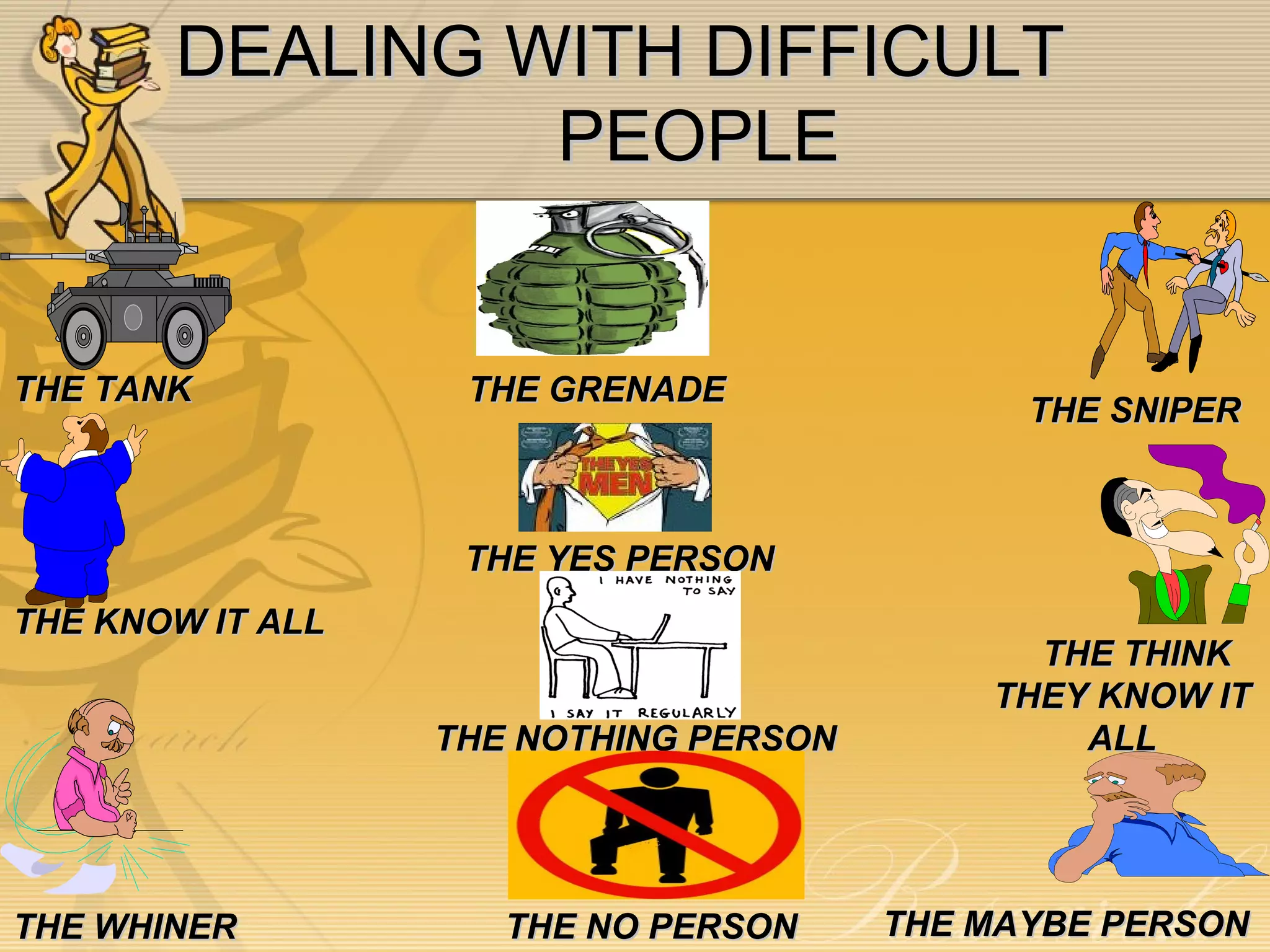
DEALING WITH DIFFICULT  PEOPLE THE TANK THE KNOW IT ALL THE WHINER THE SNIPER THE THINK THEY KNOW IT ALL THE MAYBE PERSON THE GRENADE THE YES PERSON THE NOTHING PERSON THE NO PERSON
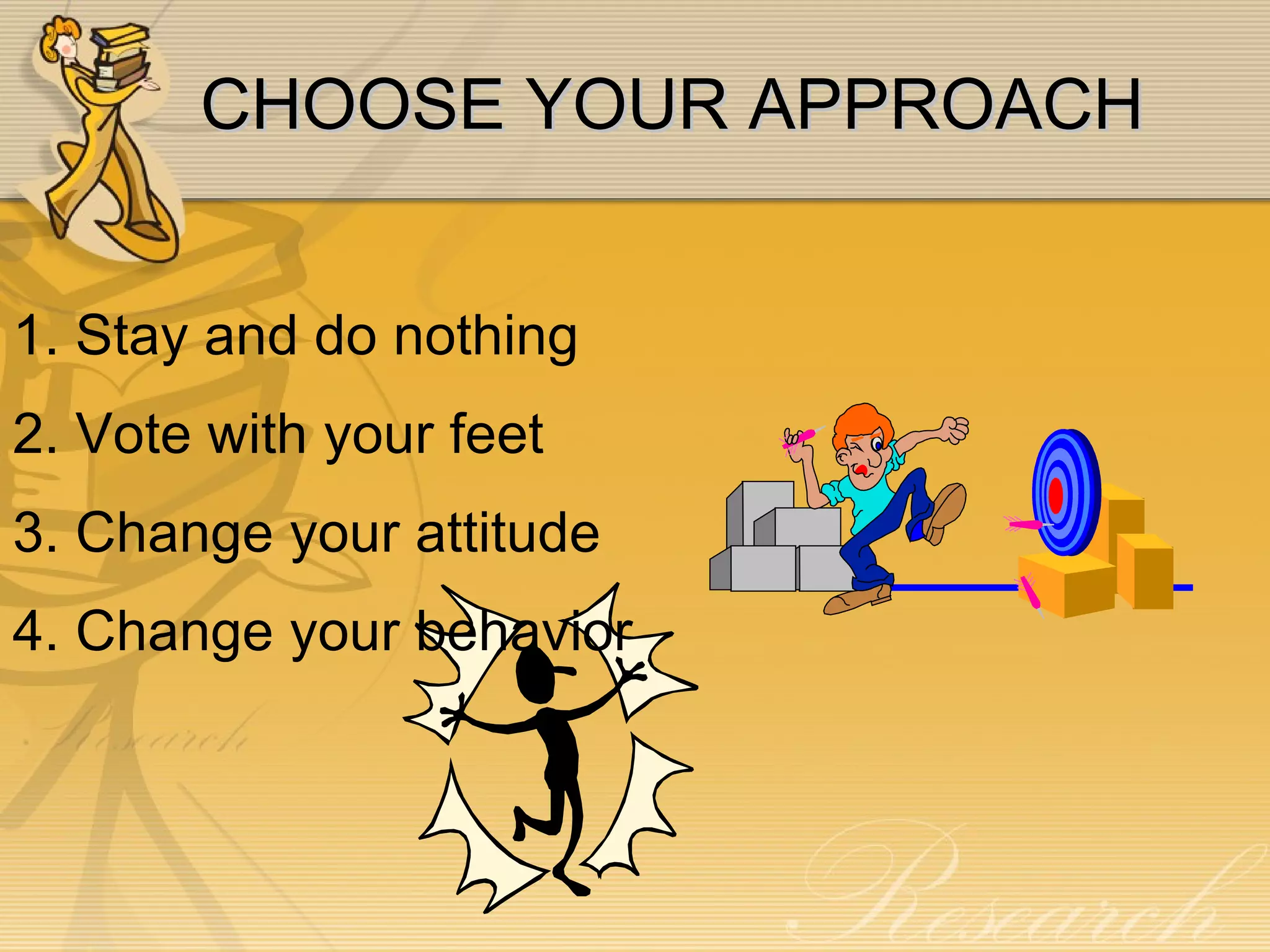
CHOOSE YOUR APPROACH 1. Stay and do nothing  2. Vote with your feet 3. Change your attitude 4. Change your behavior
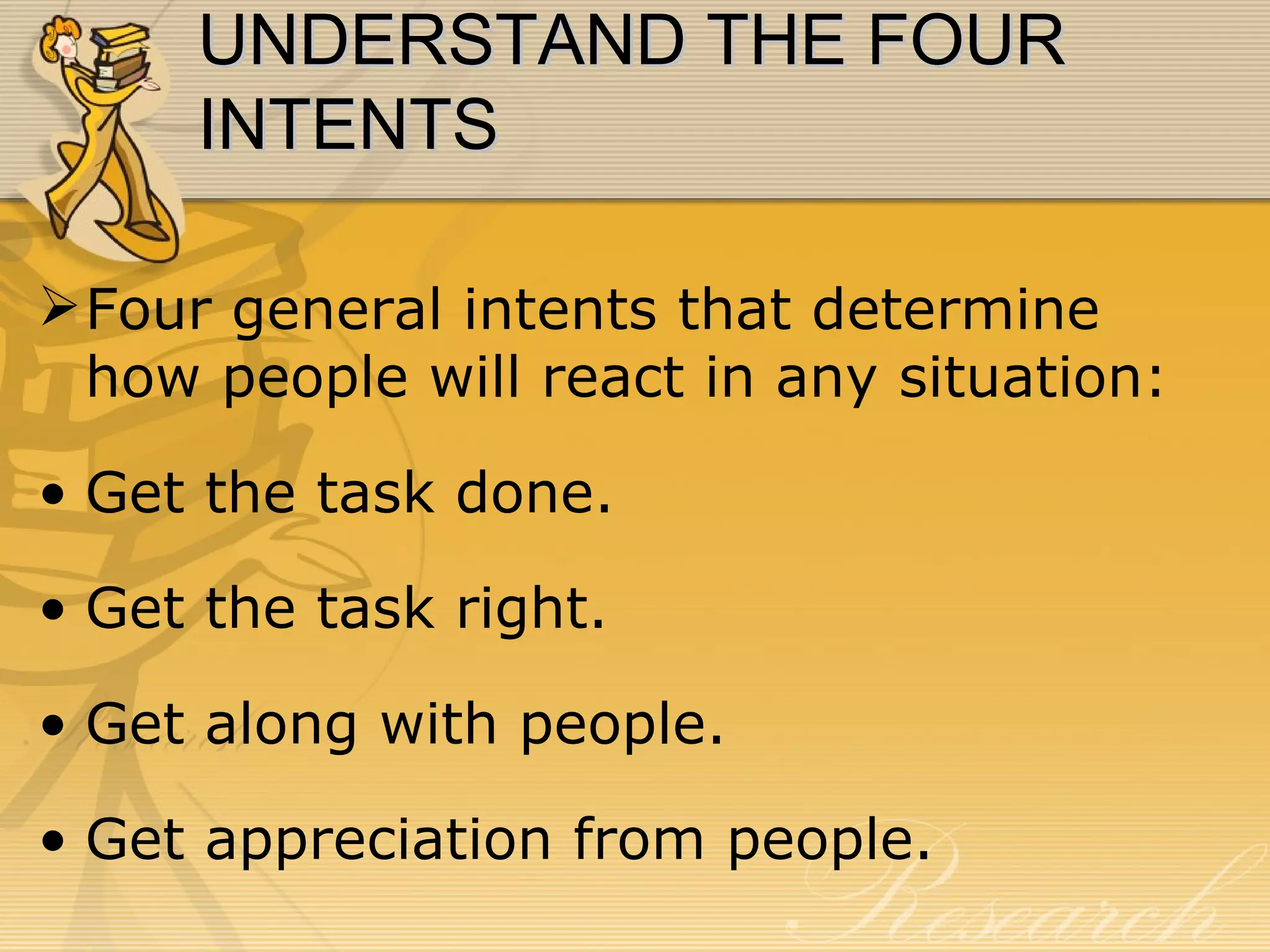
UNDERSTAND THE FOUR INTENTS Four general intents that determine how people will react in any situation: Get the task done. Get the task right. Get along with people. Get appreciation from people.
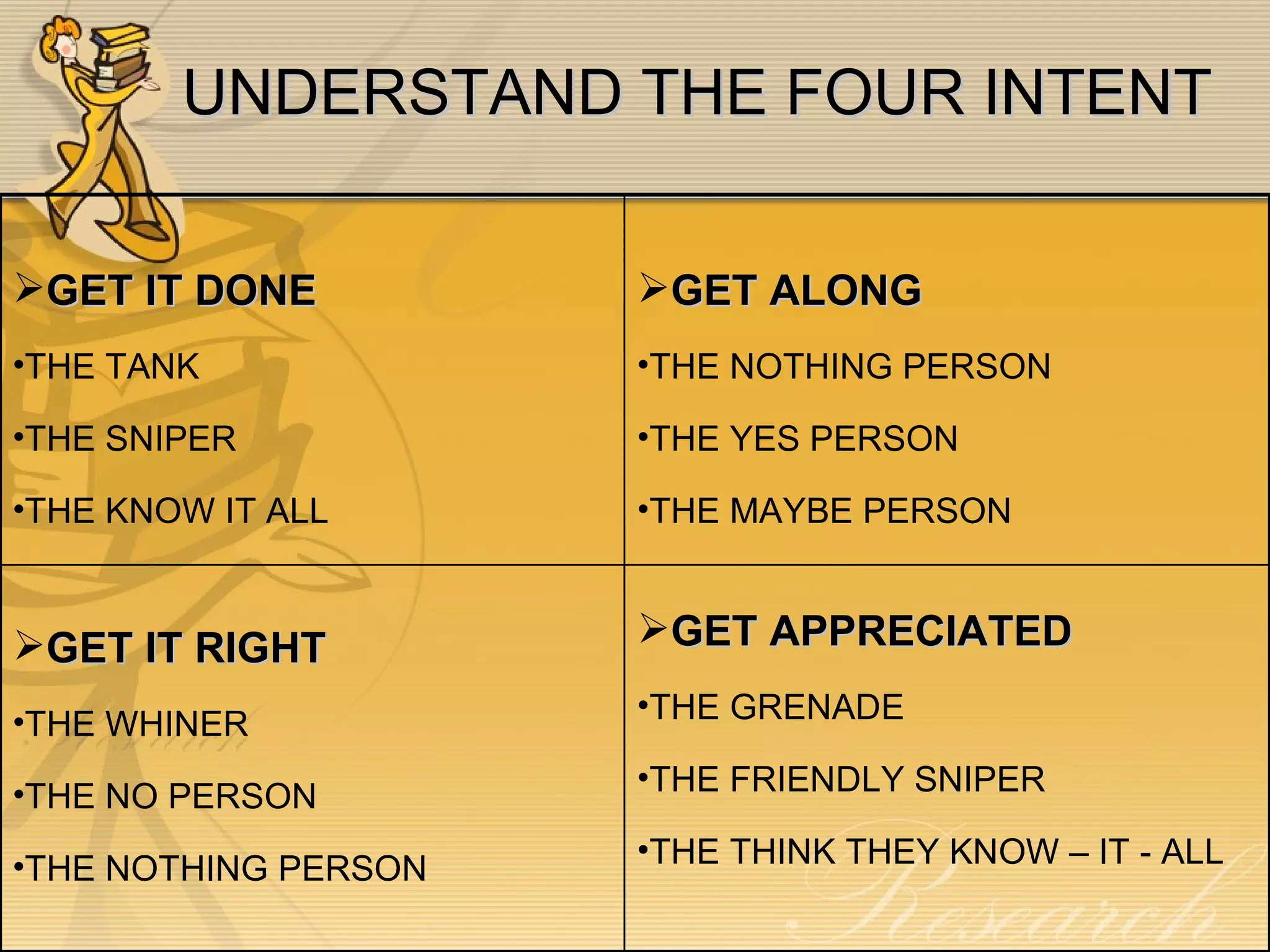
UNDERSTAND THE FOUR INTENT GET APPRECIATED THE GRENADE THE FRIENDLY SNIPER THE THINK THEY KNOW – IT - ALL GET IT RIGHT THE WHINER  THE NO PERSON THE NOTHING PERSON GET ALONG THE NOTHING PERSON THE YES PERSON THE MAYBE PERSON GET IT DONE THE TANK THE SNIPER THE KNOW IT ALL
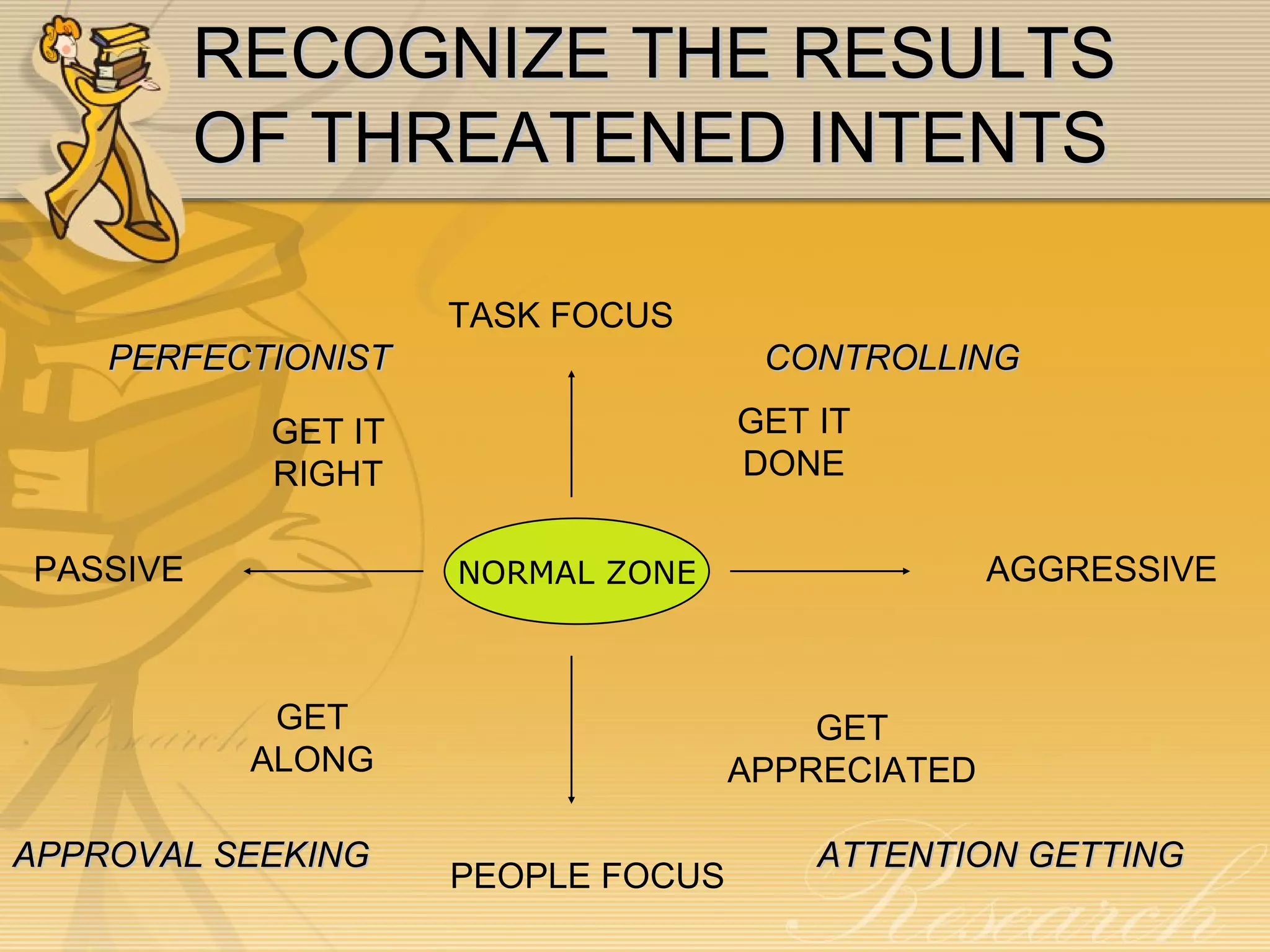
RECOGNIZE THE RESULTS OF THREATENED INTENTS NORMAL ZONE TASK FOCUS PEOPLE FOCUS GET IT DONE GET IT RIGHT GET ALONG GET APPRECIATED PASSIVE AGGRESSIVE PERFECTIONIST CONTROLLING APPROVAL SEEKING ATTENTION GETTING
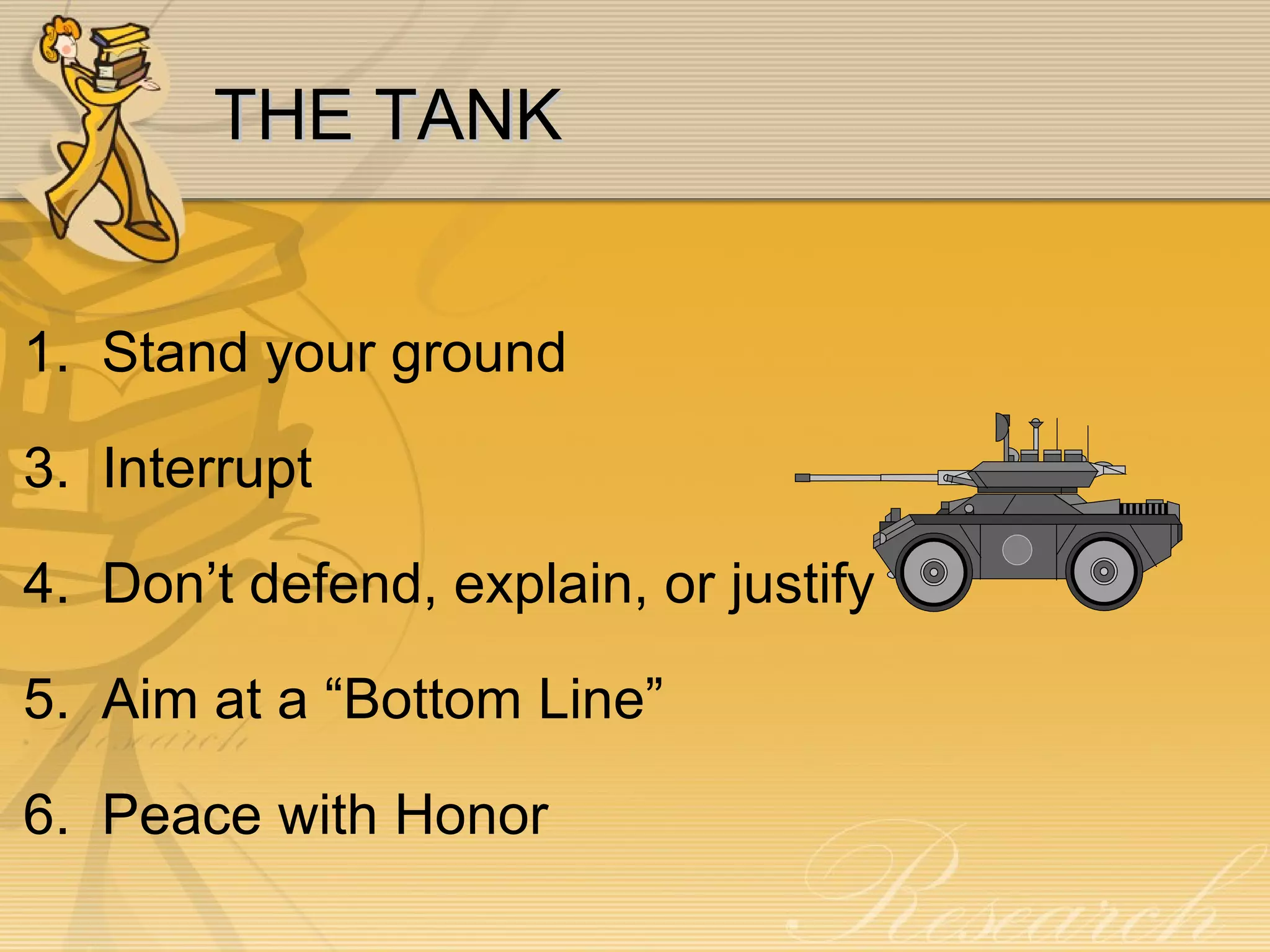
THE TANK 1.  Stand your ground 3.  Interrupt 4.  Don’t defend, explain, or justify 5.  Aim at a “Bottom Line” 6.  Peace with Honor
THE SNIPER 1.  Stop, Look, & Backtrack 2.  Ask the “Relevancy” question 3.  Distinguish between friendly sniper & malicious sniper 4.  If he/she will talk --  LISTEN ! 5. Suggest a friendly future Don’t overreact
THE KNOW-IT-ALL 1. Be prepared and know your stuff 2. Don’t resent the Know – It - All 3. Present views politely 5. Acknowledge his/her competence
THE THINK THEY KNOW IT ALL 1.  Give them a little attention 2.  Ask for specifics 3.  State facts as you know them 4.  Provide a way out 5.  Handle alone whenever possible
THE WHINER 1.  Listen 2.  Prepare to interrupt – get specific 3.  Acknowledge the complaint 4.  Don’t ask Whiners why they’re complaining 5.  Use limiting responses 6.  Move to problem solving
THE MAYBE PERSON 1.  Help them voice concerns 2.  Provide face-to-face support when possible 3.  Use a decision – making process 4.  Re – assure and follow through
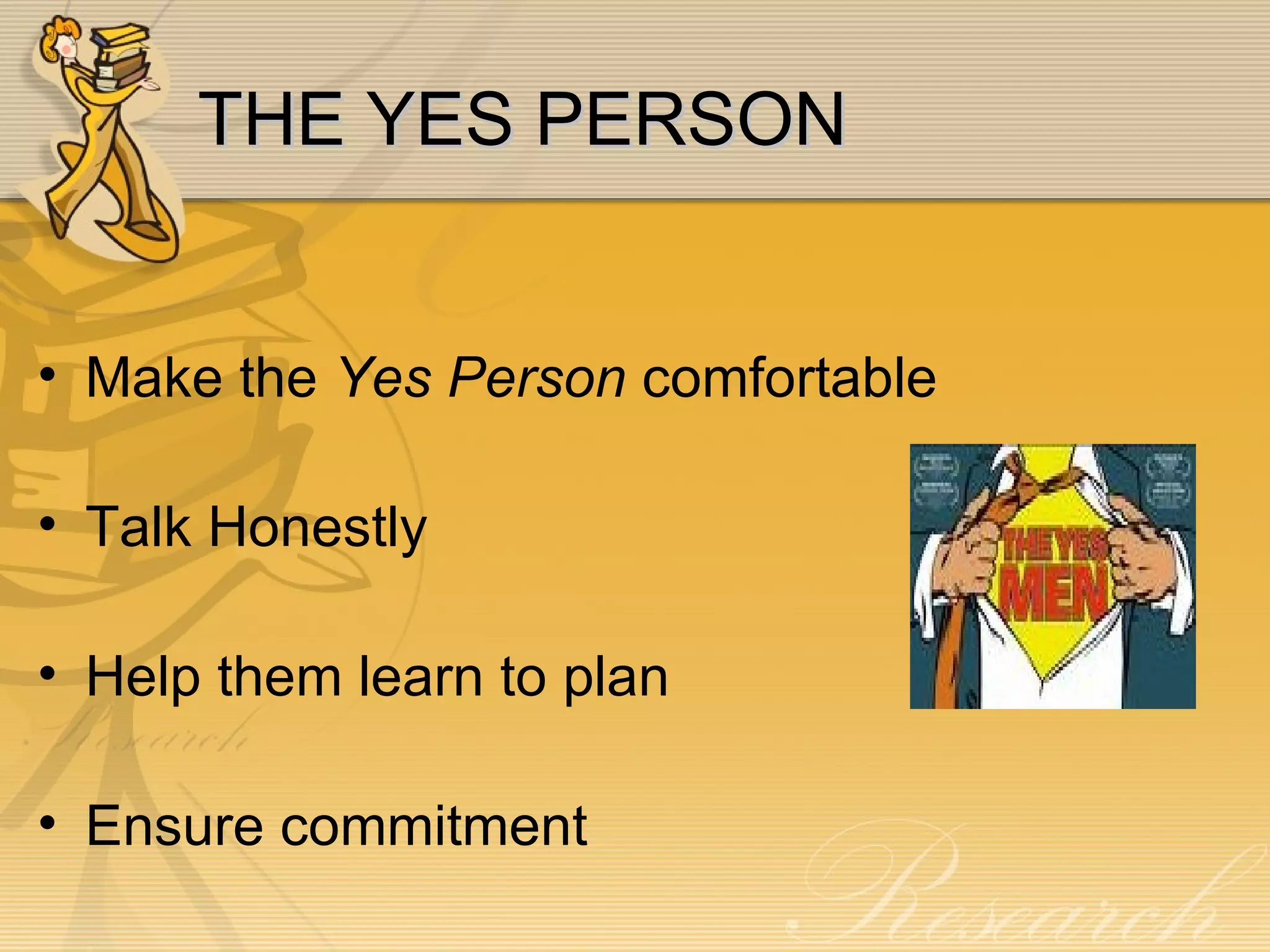
THE YES PERSON Make the  Yes Person  comfortable Talk Honestly Help them learn to plan Ensure commitment
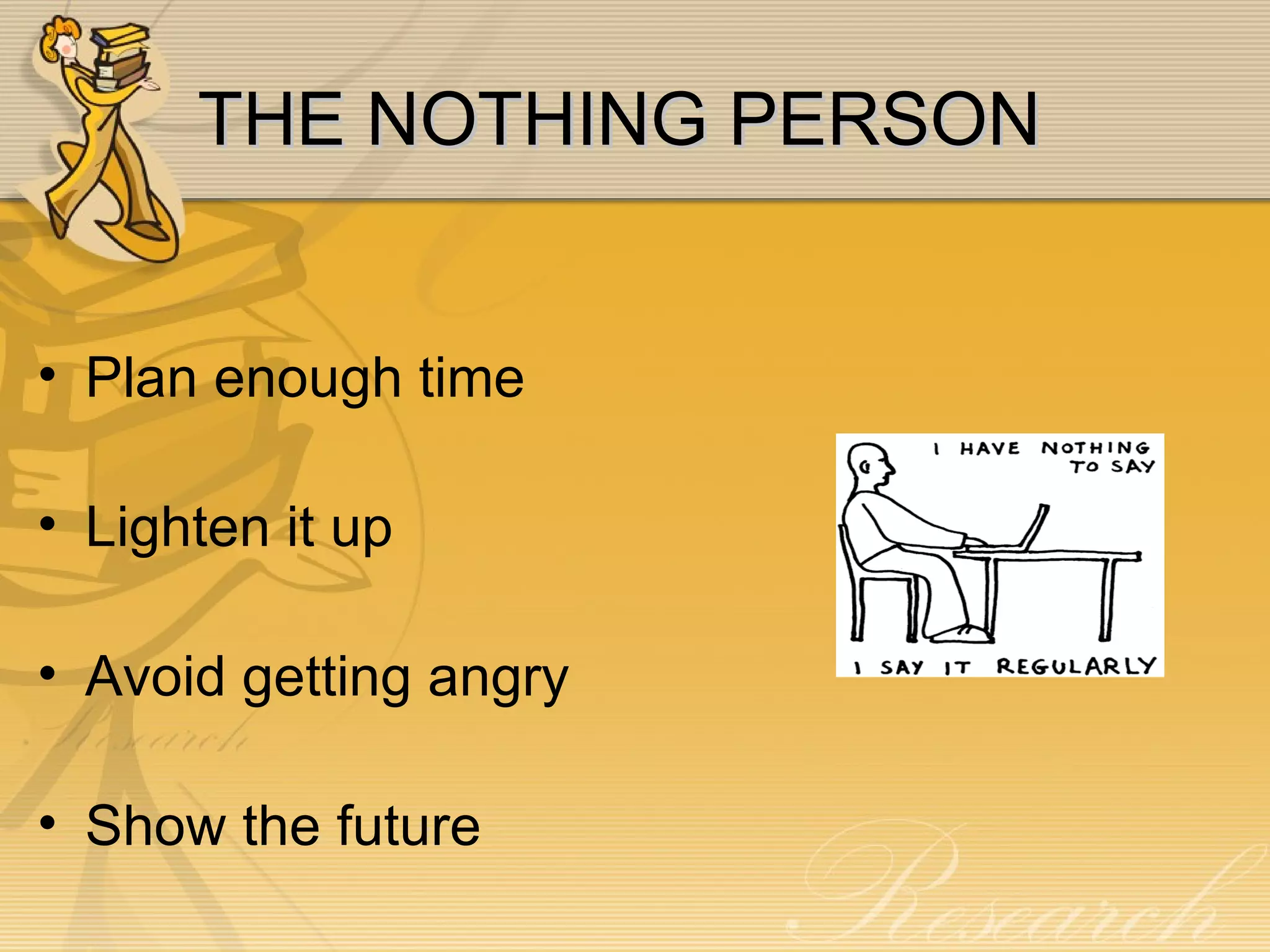
THE NOTHING PERSON Plan enough time Lighten it up Avoid getting angry Show the future
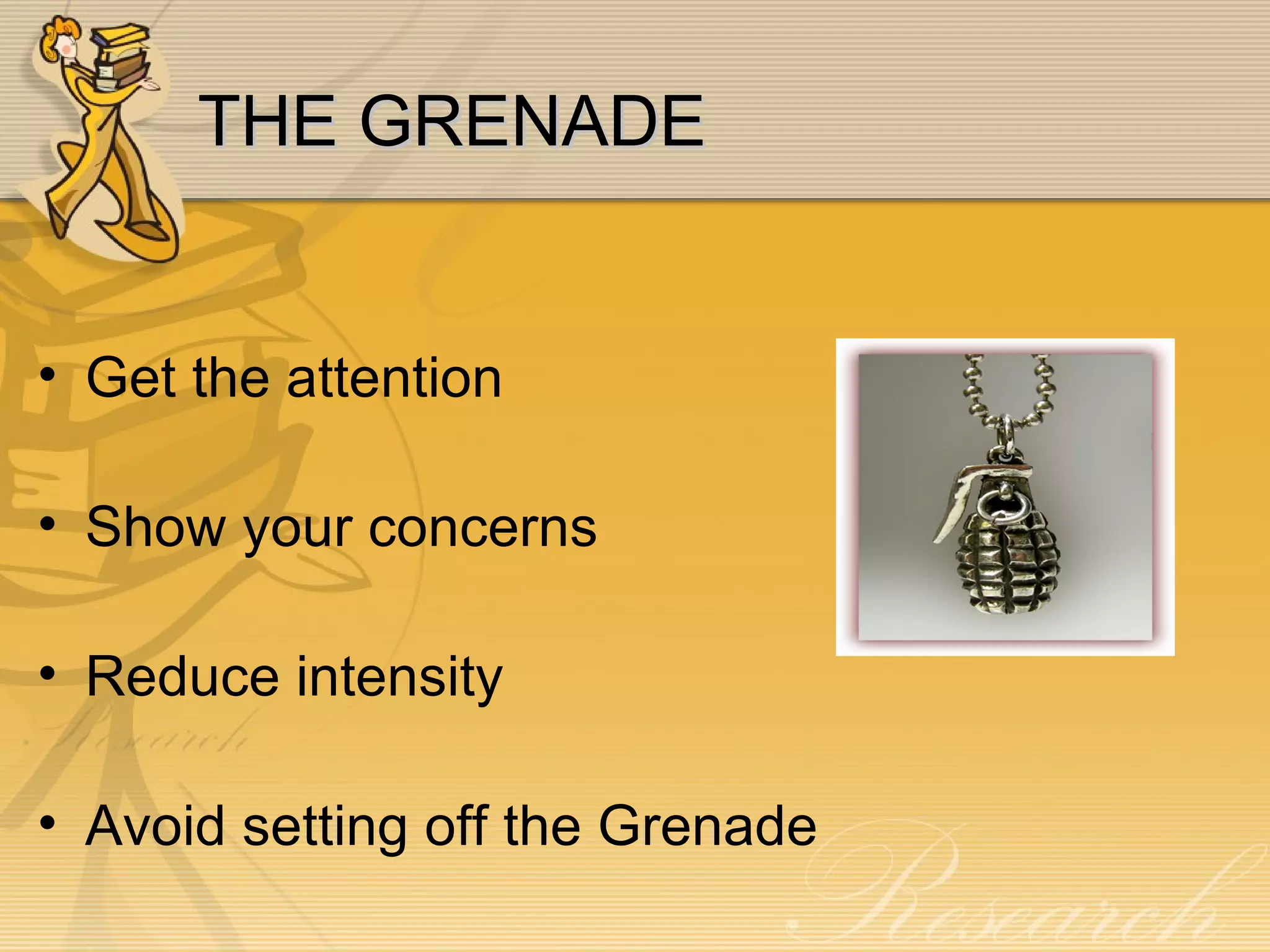
THE GRENADE Get the attention Show your concerns Reduce intensity Avoid setting off the Grenade
THE NO PERSON Go with the flow Use them as a resource Give them time to think Appreciate the NO person
CONCLUSION Even if we can’t change difficult people, we can communicate with them in such a way that they change themselves. It’s a matter of knowing how to get through to them when they’re behaving badly.
 
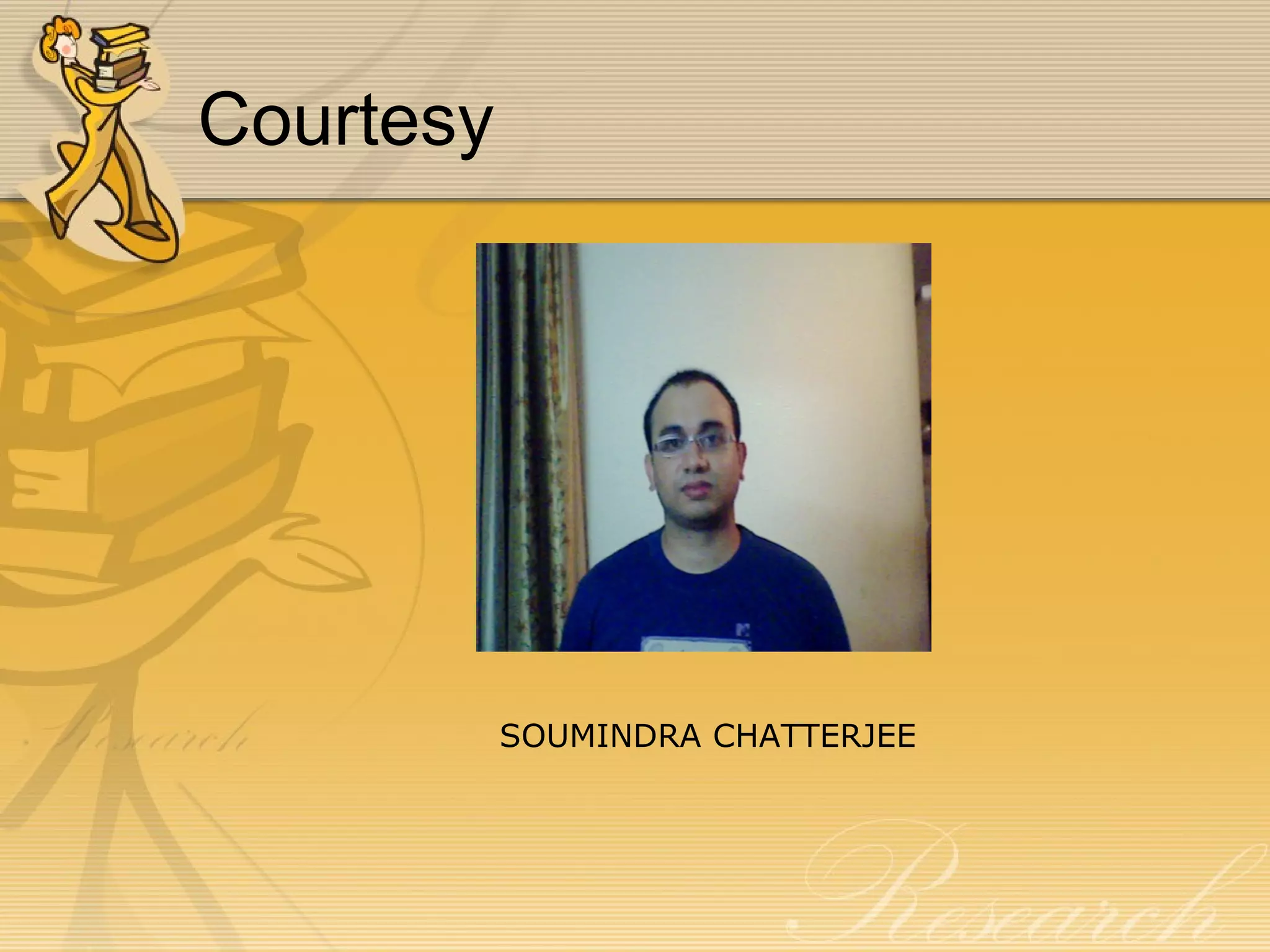
Courtesy SOUMINDRA CHATTERJEE

DEALING WITH DIFFICULT PEOPLE

  • 1.
    DEALING WITH DIFFICULTPEOPLE Author: Courtesy: Dr. Rick Brinkman Soumindra Chatterjee Dr. Rick Kirschner SIVA SIVANI INSTITUTE OF MANAGEMENT
  • 2.
    ABOUT THE AUTHORSDr. Rick Brinkman & Dr. Rick Kirschner are professional speakers. Co – authors of the bestselling audio-video tapes and book How to Deal with Difficult People and the best selling book Dealing with People You Can’t Stand. They have shared their insights with audiences worldwide through their company R & R Productions. Dr. R Brinkman Dr. R Kirschner
  • 3.
    ABOUT THE BOOKIdentify ten bothersome behaviors Deal successfully with each of them Understand the thought and fears of difficult people An understanding of whom we are dealing with and what motivates them Turn conflict into cooperation
  • 4.
    DEALING WITH DIFFICULT PEOPLE THE TANK THE KNOW IT ALL THE WHINER THE SNIPER THE THINK THEY KNOW IT ALL THE MAYBE PERSON THE GRENADE THE YES PERSON THE NOTHING PERSON THE NO PERSON
  • 5.
    CHOOSE YOUR APPROACH1. Stay and do nothing 2. Vote with your feet 3. Change your attitude 4. Change your behavior
  • 6.
    UNDERSTAND THE FOURINTENTS Four general intents that determine how people will react in any situation: Get the task done. Get the task right. Get along with people. Get appreciation from people.
  • 7.
    UNDERSTAND THE FOURINTENT GET APPRECIATED THE GRENADE THE FRIENDLY SNIPER THE THINK THEY KNOW – IT - ALL GET IT RIGHT THE WHINER THE NO PERSON THE NOTHING PERSON GET ALONG THE NOTHING PERSON THE YES PERSON THE MAYBE PERSON GET IT DONE THE TANK THE SNIPER THE KNOW IT ALL
  • 8.
    RECOGNIZE THE RESULTSOF THREATENED INTENTS NORMAL ZONE TASK FOCUS PEOPLE FOCUS GET IT DONE GET IT RIGHT GET ALONG GET APPRECIATED PASSIVE AGGRESSIVE PERFECTIONIST CONTROLLING APPROVAL SEEKING ATTENTION GETTING
  • 9.
    THE TANK 1. Stand your ground 3. Interrupt 4. Don’t defend, explain, or justify 5. Aim at a “Bottom Line” 6. Peace with Honor
  • 10.
    THE SNIPER 1. Stop, Look, & Backtrack 2. Ask the “Relevancy” question 3. Distinguish between friendly sniper & malicious sniper 4. If he/she will talk -- LISTEN ! 5. Suggest a friendly future Don’t overreact
  • 11.
    THE KNOW-IT-ALL 1.Be prepared and know your stuff 2. Don’t resent the Know – It - All 3. Present views politely 5. Acknowledge his/her competence
  • 12.
    THE THINK THEYKNOW IT ALL 1. Give them a little attention 2. Ask for specifics 3. State facts as you know them 4. Provide a way out 5. Handle alone whenever possible
  • 13.
    THE WHINER 1. Listen 2. Prepare to interrupt – get specific 3. Acknowledge the complaint 4. Don’t ask Whiners why they’re complaining 5. Use limiting responses 6. Move to problem solving
  • 14.
    THE MAYBE PERSON1. Help them voice concerns 2. Provide face-to-face support when possible 3. Use a decision – making process 4. Re – assure and follow through
  • 15.
    THE YES PERSONMake the Yes Person comfortable Talk Honestly Help them learn to plan Ensure commitment
  • 16.
    THE NOTHING PERSONPlan enough time Lighten it up Avoid getting angry Show the future
  • 17.
    THE GRENADE Getthe attention Show your concerns Reduce intensity Avoid setting off the Grenade
  • 18.
    THE NO PERSONGo with the flow Use them as a resource Give them time to think Appreciate the NO person
  • 19.
    CONCLUSION Even ifwe can’t change difficult people, we can communicate with them in such a way that they change themselves. It’s a matter of knowing how to get through to them when they’re behaving badly.
  • 20.
  • 21.