PRESENTED BY :- 
UJJWAL SINHA
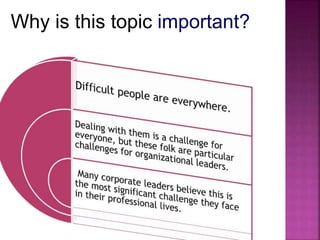
Why is this topic important?
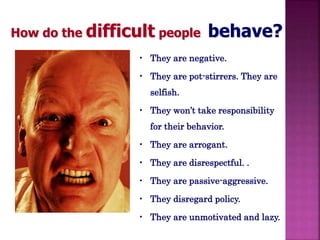
How do the difficult people behave? 
• They are negative. 
• They are pot-stirrers. They are 
selfish. 
• They won’t take responsibility 
for their behavior. 
• They are arrogant. 
• They are disrespectful. . 
• They are passive-aggressive. 
• They disregard policy. 
• They are unmotivated and lazy.
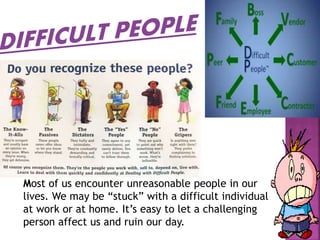
Most of us encounter unreasonable people in our 
lives. We may be “stuck” with a difficult individual 
at work or at home. It’s easy to let a challenging 
person affect us and ruin our day.
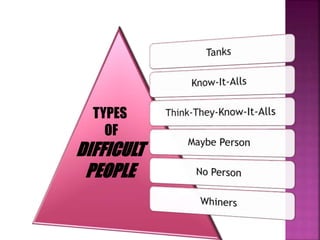
TYPES 
OF 
DIFFICULT 
PEOPLE
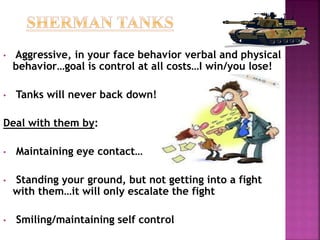
• Aggressive, in your face behavior verbal and physical 
behavior…goal is control at all costs…I win/you lose! 
• Tanks will never back down! 
Deal with them by: 
• Maintaining eye contact… 
• Standing your ground, but not getting into a fight 
with them…it will only escalate the fight 
• Smiling/maintaining self control
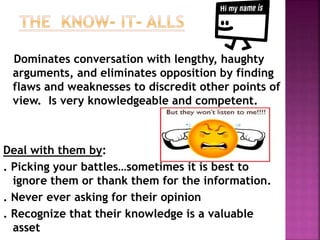
Dominates conversation with lengthy, haughty 
arguments, and eliminates opposition by finding 
flaws and weaknesses to discredit other points of 
view. Is very knowledgeable and competent. 
Deal with them by: 
. Picking your battles…sometimes it is best to 
ignore them or thank them for the information. 
. Never ever asking for their opinion 
. Recognize that their knowledge is a valuable 
asset
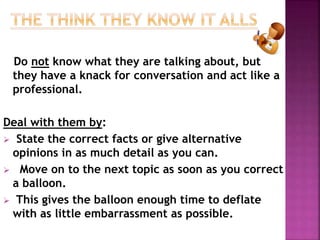
Do not know what they are talking about, but 
they have a knack for conversation and act like a 
professional. 
Deal with them by: 
 State the correct facts or give alternative 
opinions in as much detail as you can. 
 Move on to the next topic as soon as you correct 
a balloon. 
 This gives the balloon enough time to deflate 
with as little embarrassment as possible.
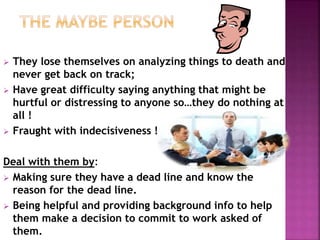
 They lose themselves on analyzing things to death and 
never get back on track; 
 Have great difficulty saying anything that might be 
hurtful or distressing to anyone so…they do nothing at 
all ! 
 Fraught with indecisiveness ! 
Deal with them by: 
 Making sure they have a dead line and know the 
reason for the dead line. 
 Being helpful and providing background info to help 
them make a decision to commit to work asked of 
them.
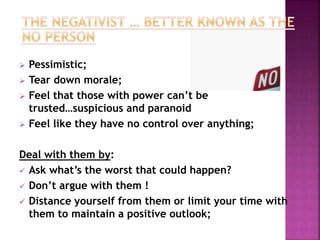
 Pessimistic; 
 Tear down morale; 
 Feel that those with power can’t be 
trusted…suspicious and paranoid 
 Feel like they have no control over anything; 
Deal with them by: 
 Ask what’s the worst that could happen? 
 Don’t argue with them ! 
 Distance yourself from them or limit your time with 
them to maintain a positive outlook;
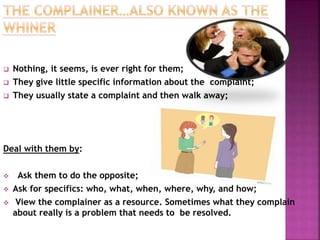
 Nothing, it seems, is ever right for them; 
 They give little specific information about the complaint; 
 They usually state a complaint and then walk away; 
Deal with them by: 
 Ask them to do the opposite; 
 Ask for specifics: who, what, when, where, why, and how; 
 View the complainer as a resource. Sometimes what they complain 
about really is a problem that needs to be resolved.
• Label them. 
• Neutralize them 
• Predict them. 
• Inform them 
• Ignore them. 
• Avoid them. 
• Expose them. 
• Circumvent them. 
• Use them. 
• Confront them. 
• Rehabilitate them. 
• Discourage them. 
• Ridicule them. 
• Isolate them.
Difficult people are everywhere. Maybe 
you're one of them? Or maybe, everyone is 
difficult during certain moments of their life. 
Either way, eventually you'll need to work 
or compromise with a person that you think 
is difficult 
In conclusion, to know how to handle 
unreasonable and difficult people is to truly 
master the art of communication. As you 
utilize these skills, you may experience less 
grief, greater confidence, better 
relationships, and higher communication 
prowess. You are on your way to 
leadership success….!!
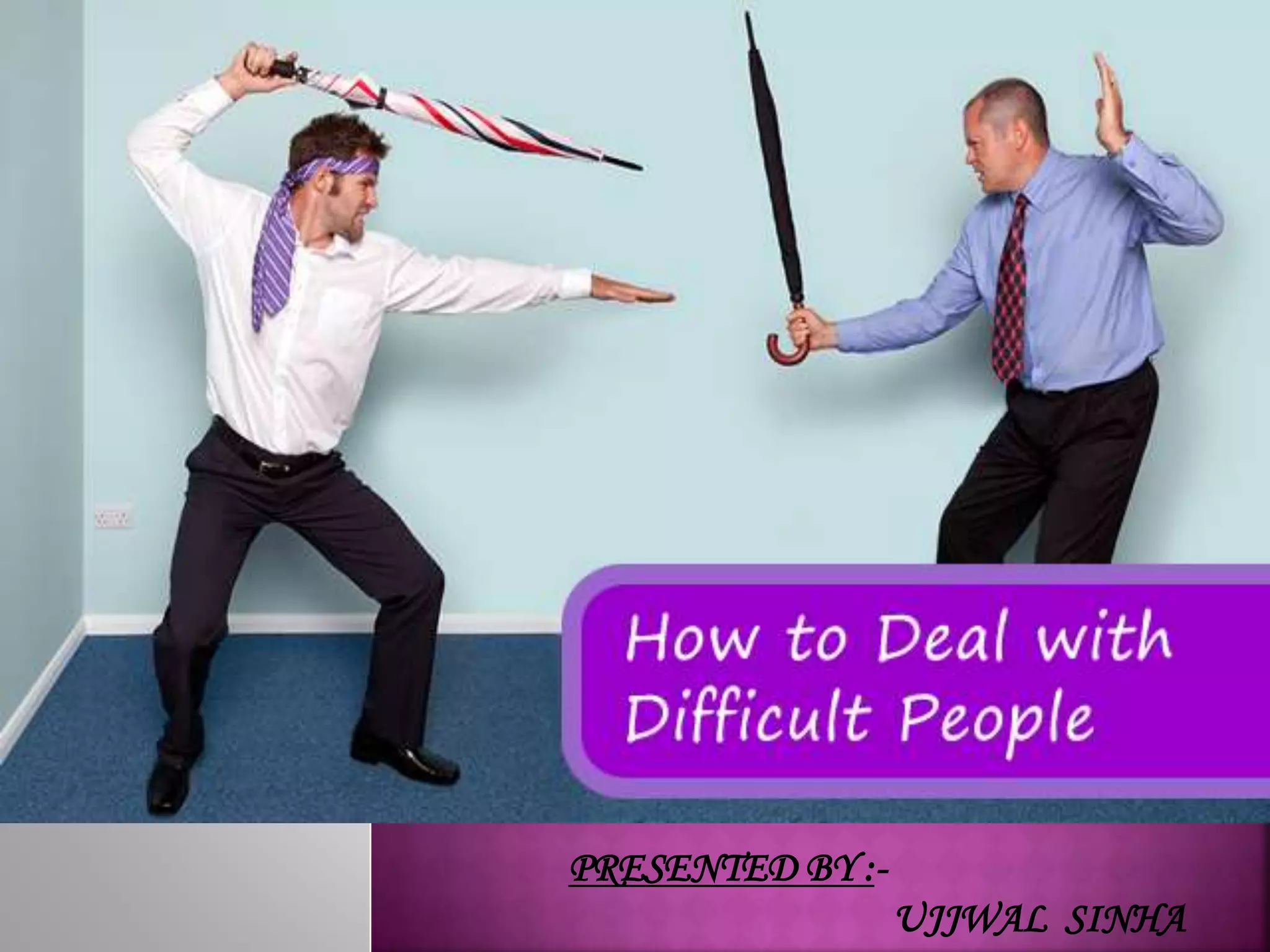
HOW TO DEAL WITH DIFFICULT PEOPLE

HOW TO DEAL WITH DIFFICULT PEOPLE

  • 1.
    PRESENTED BY :- UJJWAL SINHA
  • 2.
    Why is thistopic important?
  • 3.
    How do thedifficult people behave? • They are negative. • They are pot-stirrers. They are selfish. • They won’t take responsibility for their behavior. • They are arrogant. • They are disrespectful. . • They are passive-aggressive. • They disregard policy. • They are unmotivated and lazy.
  • 4.
    Most of usencounter unreasonable people in our lives. We may be “stuck” with a difficult individual at work or at home. It’s easy to let a challenging person affect us and ruin our day.
  • 5.
  • 6.
    • Aggressive, inyour face behavior verbal and physical behavior…goal is control at all costs…I win/you lose! • Tanks will never back down! Deal with them by: • Maintaining eye contact… • Standing your ground, but not getting into a fight with them…it will only escalate the fight • Smiling/maintaining self control
  • 7.
    Dominates conversation withlengthy, haughty arguments, and eliminates opposition by finding flaws and weaknesses to discredit other points of view. Is very knowledgeable and competent. Deal with them by: . Picking your battles…sometimes it is best to ignore them or thank them for the information. . Never ever asking for their opinion . Recognize that their knowledge is a valuable asset
  • 8.
    Do not knowwhat they are talking about, but they have a knack for conversation and act like a professional. Deal with them by:  State the correct facts or give alternative opinions in as much detail as you can.  Move on to the next topic as soon as you correct a balloon.  This gives the balloon enough time to deflate with as little embarrassment as possible.
  • 9.
     They losethemselves on analyzing things to death and never get back on track;  Have great difficulty saying anything that might be hurtful or distressing to anyone so…they do nothing at all !  Fraught with indecisiveness ! Deal with them by:  Making sure they have a dead line and know the reason for the dead line.  Being helpful and providing background info to help them make a decision to commit to work asked of them.
  • 10.
     Pessimistic; Tear down morale;  Feel that those with power can’t be trusted…suspicious and paranoid  Feel like they have no control over anything; Deal with them by:  Ask what’s the worst that could happen?  Don’t argue with them !  Distance yourself from them or limit your time with them to maintain a positive outlook;
  • 11.
     Nothing, itseems, is ever right for them;  They give little specific information about the complaint;  They usually state a complaint and then walk away; Deal with them by:  Ask them to do the opposite;  Ask for specifics: who, what, when, where, why, and how;  View the complainer as a resource. Sometimes what they complain about really is a problem that needs to be resolved.
  • 12.
    • Label them. • Neutralize them • Predict them. • Inform them • Ignore them. • Avoid them. • Expose them. • Circumvent them. • Use them. • Confront them. • Rehabilitate them. • Discourage them. • Ridicule them. • Isolate them.
  • 13.
    Difficult people areeverywhere. Maybe you're one of them? Or maybe, everyone is difficult during certain moments of their life. Either way, eventually you'll need to work or compromise with a person that you think is difficult In conclusion, to know how to handle unreasonable and difficult people is to truly master the art of communication. As you utilize these skills, you may experience less grief, greater confidence, better relationships, and higher communication prowess. You are on your way to leadership success….!!