Dealing With “Difficult” People
– A Guide to Conflict
Resolution
Presented by:
Madonna Riley, PHR
July 29, 2010
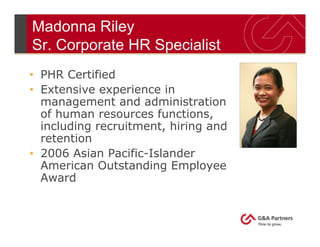
Madonna Riley
Sr. Corporate HR Specialist
• PHR Certified
• Extensive experience in
management and administration
of human resources functions,
including recruitment, hiring and
retention
• 2006 Asian Pacific-Islander
American Outstanding Employee
Award
Session Objectives
At the end of this session you should
be able to:
• Recognize the effects of conflict
• Identify causes of conflict
• Deal with “difficult” personalities
• Communicate effectively to avoid conflict
• Resolve and manage conflicts
What Is Conflict?
Conflict – a disagreement; a dispute;
the clash of interests, ideas or
personalities
What Is Conflict?
• Within groups or between individuals
• Personal or work-related
• Can be productive
• Can be resolved
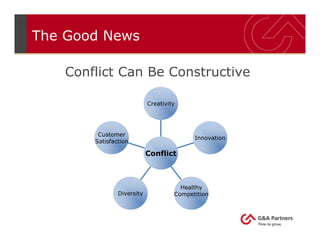
The Good News
Conflict Can Be Constructive
Customer
Satisfaction
Diversity
Healthy
Competition
Innovation
Creativity
Conflict
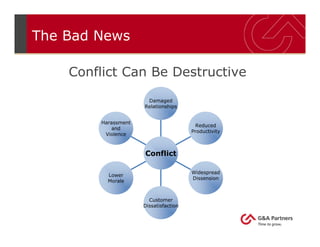
The Bad News
Conflict Can Be Destructive
Harassment
and
Violence
Lower
Morale
Customer
Dissatisfaction
Widespread
Dissension
Reduced
Productivity
Damaged
Relationships
Conflict
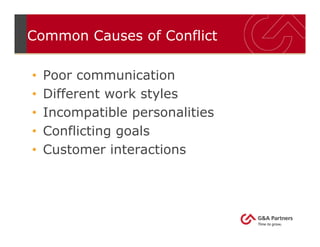
Common Causes of Conflict
• Poor communication
• Different work styles
• Incompatible personalities
• Conflicting goals
• Customer interactions
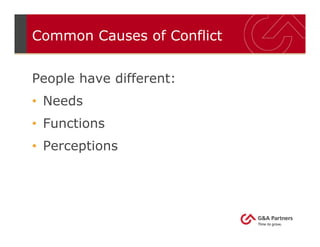
Common Causes of Conflict
People have different:
• Needs
• Functions
• Perceptions
Why Are “Difficult” People
Difficult?
Start with yourself:
Could YOU be the
problem?
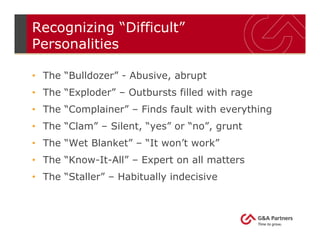
Recognizing “Difficult”
Personalities
• The “Bulldozer” - Abusive, abrupt
• The “Exploder” – Outbursts filled with rage
• The “Complainer” – Finds fault with everything
• The “Clam” – Silent, “yes” or “no”, grunt
• The “Wet Blanket” – “It won’t work”
• The “Know-It-All” – Expert on all matters
• The “Staller” – Habitually indecisive
Dealing With “Difficult”
People
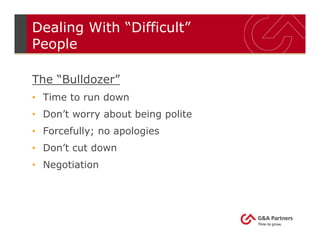
The “Bulldozer”
• Time to run down
• Don’t worry about being polite
• Forcefully; no apologies
• Don’t cut down
• Negotiation
Dealing With “Difficult”
People
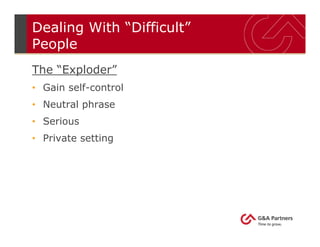
The “Exploder”
• Gain self-control
• Neutral phrase
• Serious
• Private setting
Dealing With “Difficult”
People
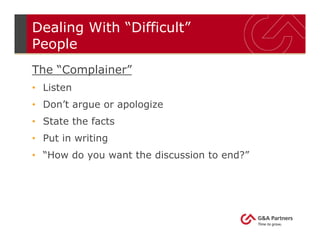
The “Complainer”
• Listen
• Don’t argue or apologize
• State the facts
• Put in writing
• “How do you want the discussion to end?”
Dealing With “Difficult”
People
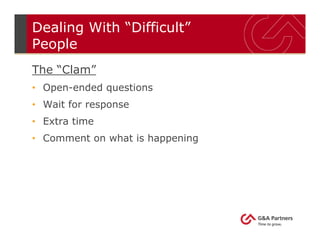
The “Clam”
• Open-ended questions
• Wait for response
• Extra time
• Comment on what is happening
Dealing With “Difficult”
People
The “Wet Blanket”
• Be alert
• Optimistic but realistic
• Don’t argue
• Don’t offer solutions
• Raise questions
Dealing With “Difficult”
People
The “Know-It-All”
• Be prepared
• Listen and paraphrase
• Don’t over-generalize
• Watch your responses
Dealing With “Difficult”
People
The “Staller”
• Be open
• Acknowledge past problem
• Give support
• Assign responsibility
Effective Communication
Sending Clear Messages
• Think first
• Make “I” statements
• Avoid “you” statements
• Practice difficult messages
Effective Communication
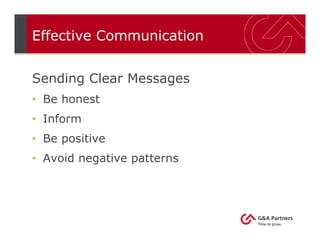
Sending Clear Messages
• Be honest
• Inform
• Be positive
• Avoid negative patterns
Effective Communication
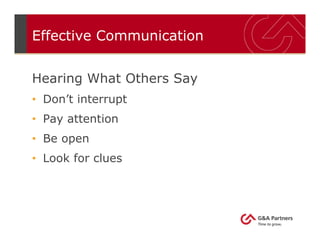
Hearing What Others Say
• Don’t interrupt
• Pay attention
• Be open
• Look for clues
Effective Communication
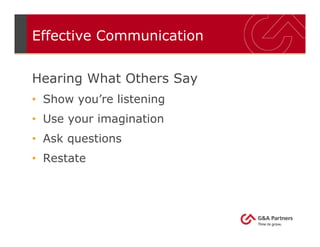
Hearing What Others Say
• Show you’re listening
• Use your imagination
• Ask questions
• Restate
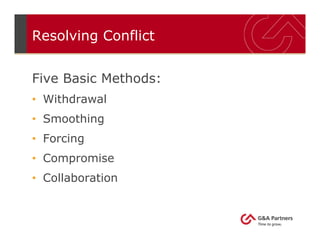
Resolving Conflict
Five Basic Methods:
• Withdrawal
• Smoothing
• Forcing
• Compromise
• Collaboration
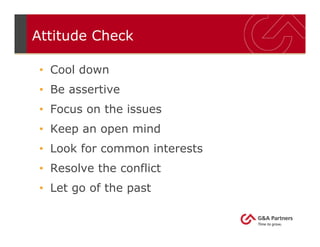
Attitude Check
• Cool down
• Be assertive
• Focus on the issues
• Keep an open mind
• Look for common interests
• Resolve the conflict
• Let go of the past
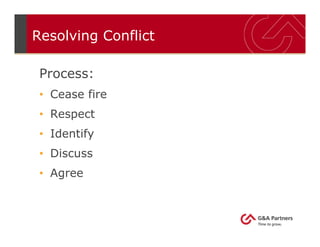
Resolving Conflict
Process:
• Cease fire
• Respect
• Identify
• Discuss
• Agree
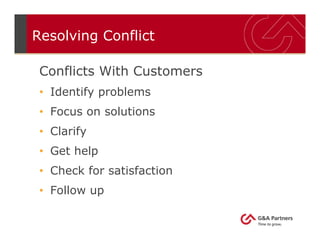
Resolving Conflict
Conflicts With Customers
• Identify problems
• Focus on solutions
• Clarify
• Get help
• Check for satisfaction
• Follow up
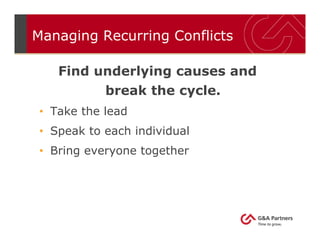
Managing Recurring Conflicts
Find underlying causes and
break the cycle.
• Take the lead
• Speak to each individual
• Bring everyone together
Mediating Conflicts
• There to help
• Affecting work
• Ask how conflict can be ended
• Win-win solution
• Commitment
Questions?
Thank You!
G&A Partners is a Houston-based HR and administrative
services company that manages human resources, benefits,
payroll, accounting and risk management for growing
businesses. G&A maintains offices in Houston, Dallas, San
Antonio, Austin, College Station, Corpus Christi, Arizona and
Utah. For more information about the company, visit
www.gnapartners.com or call 713.784.1181.

Dealing with "Difficult" People: A Guide to Conflict Resolution

  • 1.
    Dealing With “Difficult”People – A Guide to Conflict Resolution Presented by: Madonna Riley, PHR July 29, 2010
  • 2.
    Madonna Riley Sr. CorporateHR Specialist • PHR Certified • Extensive experience in management and administration of human resources functions, including recruitment, hiring and retention • 2006 Asian Pacific-Islander American Outstanding Employee Award
  • 3.
    Session Objectives At theend of this session you should be able to: • Recognize the effects of conflict • Identify causes of conflict • Deal with “difficult” personalities • Communicate effectively to avoid conflict • Resolve and manage conflicts
  • 4.
    What Is Conflict? Conflict– a disagreement; a dispute; the clash of interests, ideas or personalities
  • 5.
    What Is Conflict? •Within groups or between individuals • Personal or work-related • Can be productive • Can be resolved
  • 6.
    The Good News ConflictCan Be Constructive Customer Satisfaction Diversity Healthy Competition Innovation Creativity Conflict
  • 7.
    The Bad News ConflictCan Be Destructive Harassment and Violence Lower Morale Customer Dissatisfaction Widespread Dissension Reduced Productivity Damaged Relationships Conflict
  • 8.
    Common Causes ofConflict • Poor communication • Different work styles • Incompatible personalities • Conflicting goals • Customer interactions
  • 9.
    Common Causes ofConflict People have different: • Needs • Functions • Perceptions
  • 10.
    Why Are “Difficult”People Difficult? Start with yourself: Could YOU be the problem?
  • 11.
    Recognizing “Difficult” Personalities • The“Bulldozer” - Abusive, abrupt • The “Exploder” – Outbursts filled with rage • The “Complainer” – Finds fault with everything • The “Clam” – Silent, “yes” or “no”, grunt • The “Wet Blanket” – “It won’t work” • The “Know-It-All” – Expert on all matters • The “Staller” – Habitually indecisive
  • 12.
    Dealing With “Difficult” People The“Bulldozer” • Time to run down • Don’t worry about being polite • Forcefully; no apologies • Don’t cut down • Negotiation
  • 13.
    Dealing With “Difficult” People The“Exploder” • Gain self-control • Neutral phrase • Serious • Private setting
  • 14.
    Dealing With “Difficult” People The“Complainer” • Listen • Don’t argue or apologize • State the facts • Put in writing • “How do you want the discussion to end?”
  • 15.
    Dealing With “Difficult” People The“Clam” • Open-ended questions • Wait for response • Extra time • Comment on what is happening
  • 16.
    Dealing With “Difficult” People The“Wet Blanket” • Be alert • Optimistic but realistic • Don’t argue • Don’t offer solutions • Raise questions
  • 17.
    Dealing With “Difficult” People The“Know-It-All” • Be prepared • Listen and paraphrase • Don’t over-generalize • Watch your responses
  • 18.
    Dealing With “Difficult” People The“Staller” • Be open • Acknowledge past problem • Give support • Assign responsibility
  • 19.
    Effective Communication Sending ClearMessages • Think first • Make “I” statements • Avoid “you” statements • Practice difficult messages
  • 20.
    Effective Communication Sending ClearMessages • Be honest • Inform • Be positive • Avoid negative patterns
  • 21.
    Effective Communication Hearing WhatOthers Say • Don’t interrupt • Pay attention • Be open • Look for clues
  • 22.
    Effective Communication Hearing WhatOthers Say • Show you’re listening • Use your imagination • Ask questions • Restate
  • 23.
    Resolving Conflict Five BasicMethods: • Withdrawal • Smoothing • Forcing • Compromise • Collaboration
  • 24.
    Attitude Check • Cooldown • Be assertive • Focus on the issues • Keep an open mind • Look for common interests • Resolve the conflict • Let go of the past
  • 25.
    Resolving Conflict Process: • Ceasefire • Respect • Identify • Discuss • Agree
  • 26.
    Resolving Conflict Conflicts WithCustomers • Identify problems • Focus on solutions • Clarify • Get help • Check for satisfaction • Follow up
  • 27.
    Managing Recurring Conflicts Findunderlying causes and break the cycle. • Take the lead • Speak to each individual • Bring everyone together
  • 28.
    Mediating Conflicts • Thereto help • Affecting work • Ask how conflict can be ended • Win-win solution • Commitment
  • 29.
  • 30.
    Thank You! G&A Partnersis a Houston-based HR and administrative services company that manages human resources, benefits, payroll, accounting and risk management for growing businesses. G&A maintains offices in Houston, Dallas, San Antonio, Austin, College Station, Corpus Christi, Arizona and Utah. For more information about the company, visit www.gnapartners.com or call 713.784.1181.