Welcome to Data
Communication Presentation
Group Member
Name ID
Md. Nasir Uddin Mahamud 152-15-6226
Md. Touhidur Rahman 152-15-6232
Tusher Chandra Ghosh 152-15-6237
Md. Mithu Mia 152-15-6243
Md. Atiqul Islam 152-15-6244
Introduction
Open Systems Interconnection Basic Reference Model
(OSI Reference Model or OSI Model) is an abstract
description for layered communications and computer
network protocol design. It divides network architecture into
seven layers which, are the Application, Presentation,
Session, Transport, Network, Data-Link, and Physical
Layers.
 It was first introduced in the late 1970s.
 The current standard was published in 1996.
 The OSI model depicts how data communications
should take place.
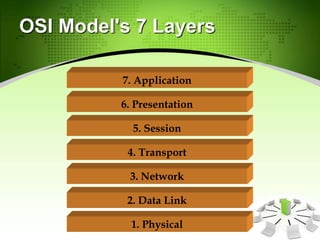
OSI Model's 7 Layers
7. Application
6. Presentation
5. Session
4. Transport
3. Network
2. Data Link
1. Physical
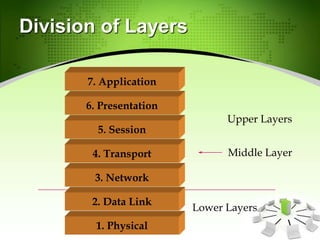
Division of Layers
Upper Layers
Lower Layers
Middle Layer
7. Application
6. Presentation
5. Session
4. Transport
3. Network
2. Data Link
1. Physical
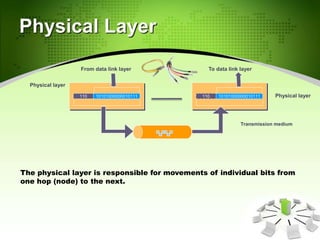
Physical Layer
The physical layer is responsible for movements of individual bits from
one hop (node) to the next.
10101000000010111110
From data link layer
10101000000010111110
To data link layer
Physical layer
Physical layer
Transmission medium
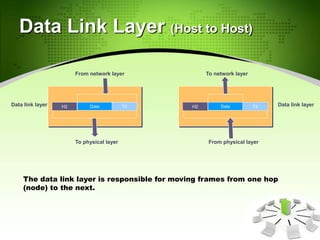
Data Link Layer (Host to Host)
The data link layer is responsible for moving frames from one hop
(node) to the next.
DataH2 T2
From network layer
DataH2 T2
To network layer
To physical layer From physical layer
Data link layer Data link layer
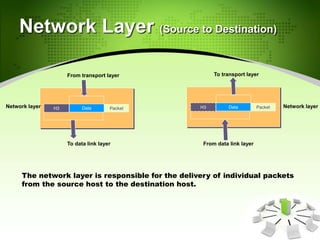
Network Layer (Source to Destination)
The network layer is responsible for the delivery of individual packets
from the source host to the destination host.
DataH3 Packet
From transport layer
To data link layer
DataH3 Packet
To transport layer
From data link layer
Network layer Network layer
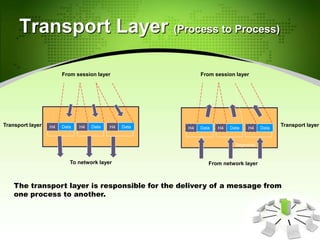
Transport Layer (Process to Process)
The transport layer is responsible for the delivery of a message from
one process to another.
Segments
DataH4
From session layer
To network layer
Transport layer DataH4 DataH4
Segments
DataH4
From session layer
From network layer
Transport layerDataH4 DataH4
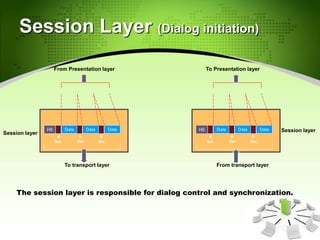
Session Layer (Dialog initiation)
The session layer is responsible for dialog control and synchronization.
DataH5
From Presentation layer
To transport layer
Data Data
Syn Syn Syn
DataH5
To Presentation layer
From transport layer
Data Data
Syn Syn Syn
Session layer
Session layer
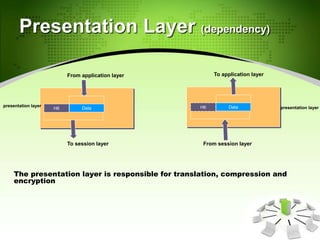
Presentation Layer (dependency)
The presentation layer is responsible for translation, compression and
encryption
DataH6
From application layer
To session layer
DataH6
To application layer
From session layer
presentation layer presentation layer
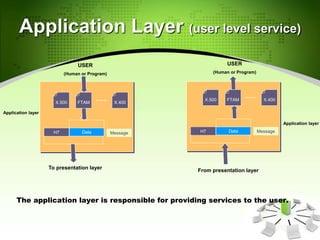
Application Layer (user level service)
DataH7
USER
(Human or Program)
To presentation layer
DataH7
Application layer
Application layer
Message Message
The application layer is responsible for providing services to the user.
X.500 FTAM X.400
X.500 FTAM X.400
From presentation layer
USER
(Human or Program)
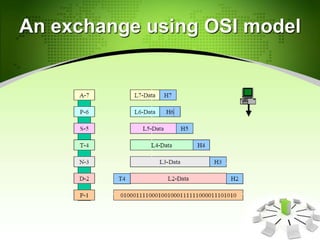
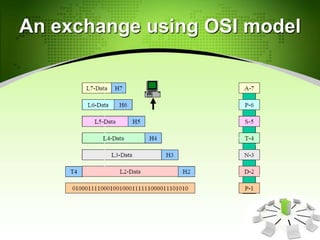
An exchange using OSI model
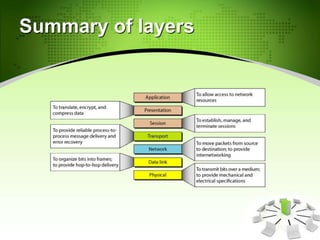
Summary of layers
Data communication presentation

Data communication presentation

  • 1.
  • 2.
    Group Member Name ID Md.Nasir Uddin Mahamud 152-15-6226 Md. Touhidur Rahman 152-15-6232 Tusher Chandra Ghosh 152-15-6237 Md. Mithu Mia 152-15-6243 Md. Atiqul Islam 152-15-6244
  • 3.
    Introduction Open Systems InterconnectionBasic Reference Model (OSI Reference Model or OSI Model) is an abstract description for layered communications and computer network protocol design. It divides network architecture into seven layers which, are the Application, Presentation, Session, Transport, Network, Data-Link, and Physical Layers.  It was first introduced in the late 1970s.  The current standard was published in 1996.  The OSI model depicts how data communications should take place.
  • 4.
    OSI Model's 7Layers 7. Application 6. Presentation 5. Session 4. Transport 3. Network 2. Data Link 1. Physical
  • 5.
    Division of Layers UpperLayers Lower Layers Middle Layer 7. Application 6. Presentation 5. Session 4. Transport 3. Network 2. Data Link 1. Physical
  • 6.
    Physical Layer The physicallayer is responsible for movements of individual bits from one hop (node) to the next. 10101000000010111110 From data link layer 10101000000010111110 To data link layer Physical layer Physical layer Transmission medium
  • 7.
    Data Link Layer(Host to Host) The data link layer is responsible for moving frames from one hop (node) to the next. DataH2 T2 From network layer DataH2 T2 To network layer To physical layer From physical layer Data link layer Data link layer
  • 8.
    Network Layer (Sourceto Destination) The network layer is responsible for the delivery of individual packets from the source host to the destination host. DataH3 Packet From transport layer To data link layer DataH3 Packet To transport layer From data link layer Network layer Network layer
  • 9.
    Transport Layer (Processto Process) The transport layer is responsible for the delivery of a message from one process to another. Segments DataH4 From session layer To network layer Transport layer DataH4 DataH4 Segments DataH4 From session layer From network layer Transport layerDataH4 DataH4
  • 10.
    Session Layer (Dialoginitiation) The session layer is responsible for dialog control and synchronization. DataH5 From Presentation layer To transport layer Data Data Syn Syn Syn DataH5 To Presentation layer From transport layer Data Data Syn Syn Syn Session layer Session layer
  • 11.
    Presentation Layer (dependency) Thepresentation layer is responsible for translation, compression and encryption DataH6 From application layer To session layer DataH6 To application layer From session layer presentation layer presentation layer
  • 12.
    Application Layer (userlevel service) DataH7 USER (Human or Program) To presentation layer DataH7 Application layer Application layer Message Message The application layer is responsible for providing services to the user. X.500 FTAM X.400 X.500 FTAM X.400 From presentation layer USER (Human or Program)
  • 13.
  • 14.
  • 15.