Cyber Security and
Privacy
Contents
 Introduction
 Hacking
 Information Gathering Techniques
 Website Information Gathering Techniques
 Personal Information Gathering and Email Hacking
 Social Engineering
 Internet Banking Hacking
 Virus
 Prevention – Email Hacking
 Prevention – Social Engineering
 Prevention – Internet Banking Threats
 Conclusion
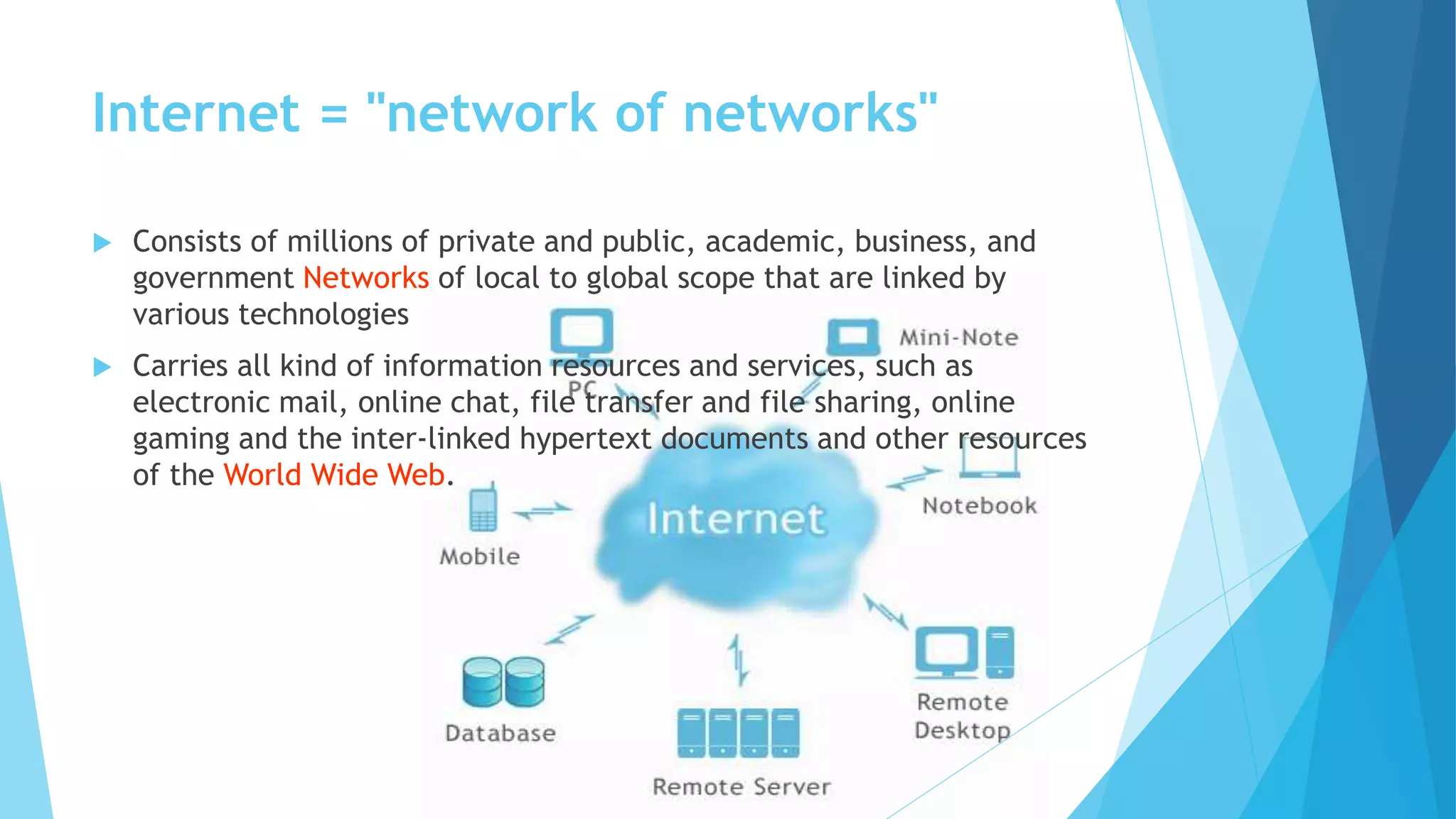
Internet = "network of networks"
 Consists of millions of private and public, academic, business, and
government Networks of local to global scope that are linked by
various technologies
 Carries all kind of information resources and services, such as
electronic mail, online chat, file transfer and file sharing, online
gaming and the inter-linked hypertext documents and other resources
of the World Wide Web.
Hacking
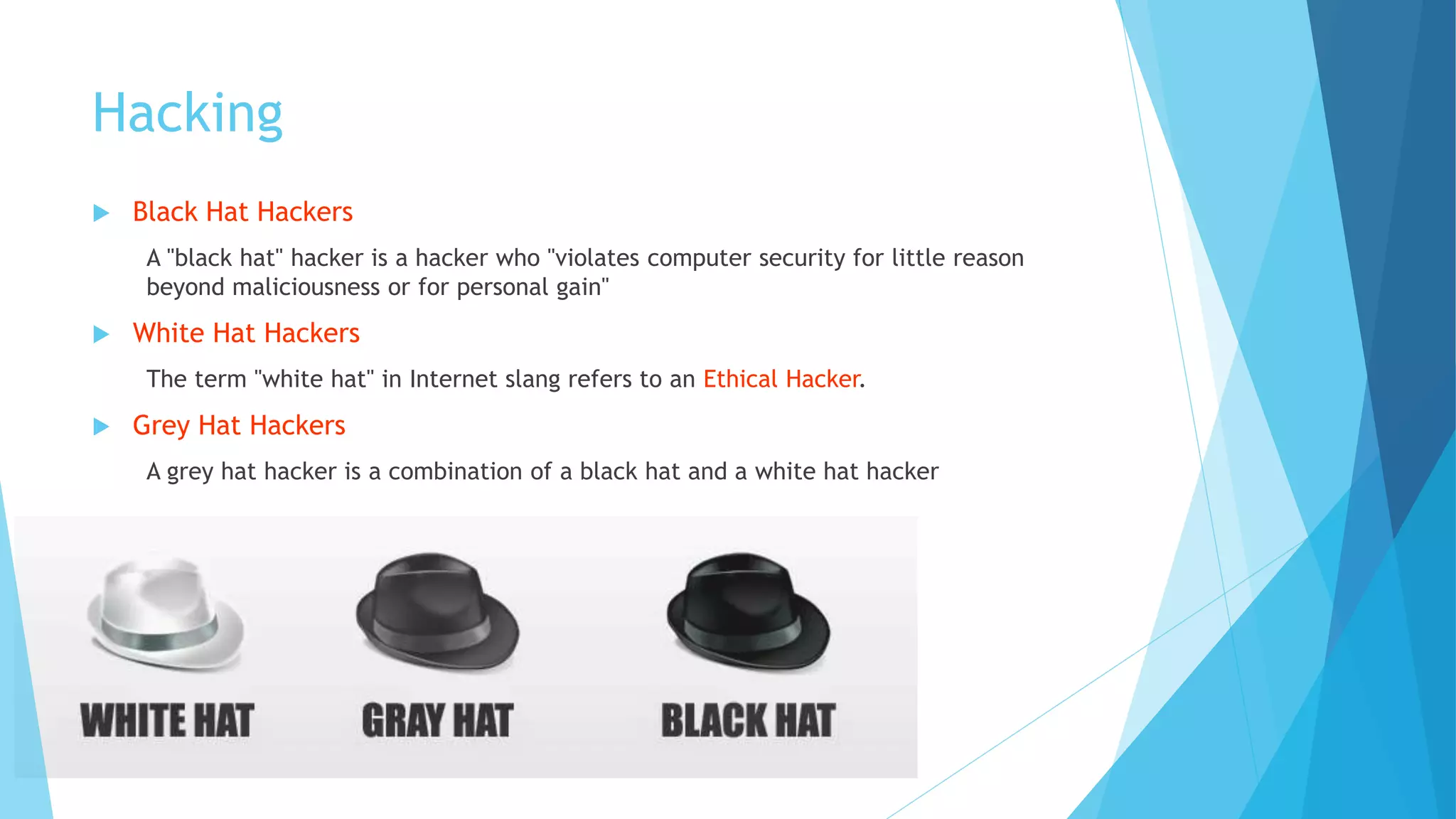
 Black Hat Hackers
A "black hat" hacker is a hacker who "violates computer security for little reason
beyond maliciousness or for personal gain"
 White Hat Hackers
The term "white hat" in Internet slang refers to an Ethical Hacker.
 Grey Hat Hackers
A grey hat hacker is a combination of a black hat and a white hat hacker
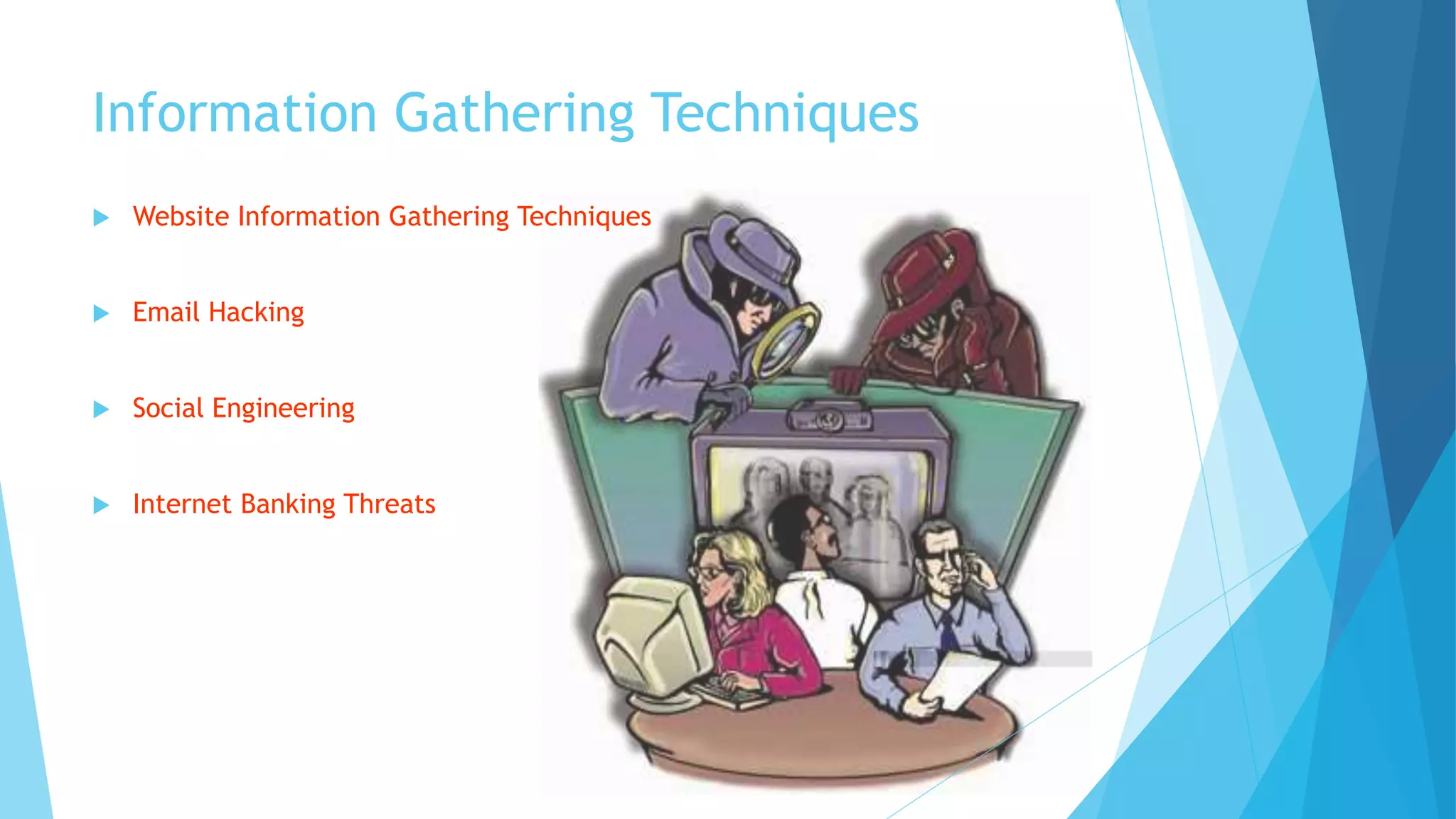
Information Gathering Techniques
 Website Information Gathering Techniques
 Email Hacking
 Social Engineering
 Internet Banking Threats
Website Information Gathering Techniques
 Footprinting
 Whois
 Web Archive – The Wayback Machine
 Search Engine
Virus
 Computer Virus is a program or piece of code that is loaded onto your
computer without your knowledge and runs against your wishes.
These programs can be created manual coding or using various Tools
 Worm is a program or algorithm that replicates itself over a computer
network and usually perform malicious action such as using
computer’s/network’s resources.
 Trojan Horse is a program that seems to be doing one thing but is actually
doing another. It can be used to set up a back door in a computer system,
enabling the intruder to gain access later. (The name refers to the horse from
the Trojan War).
 Web Scripts is a program executed from client/server side while accessing a
multimedia website.
Personal Information Gathering and
Email Hacking
 Spamming is the use of electronic messaging systems to send unsolicited
messages (spam), especially advertising, as well as sending messages
repeatedly on the same site
 Keylogger also known as a keystroke logger or system monitor. it can be a
program or a hardware installed in the system, which log each key strokes
and map it to a text file and send it to the creator or share it to a location.
 Phishing is the attempt to acquire sensitive information such as usernames,
passwords, and credit card details (and sometimes, indirectly, money) by
pretending as a trustworthy entity in an electronic communication.
It is one of the biggest Cyber Crime.
 Secret Questions is a security measure used to verify whether the user is the
authored owner.
Social Engineering- The Art of Human
Hacking
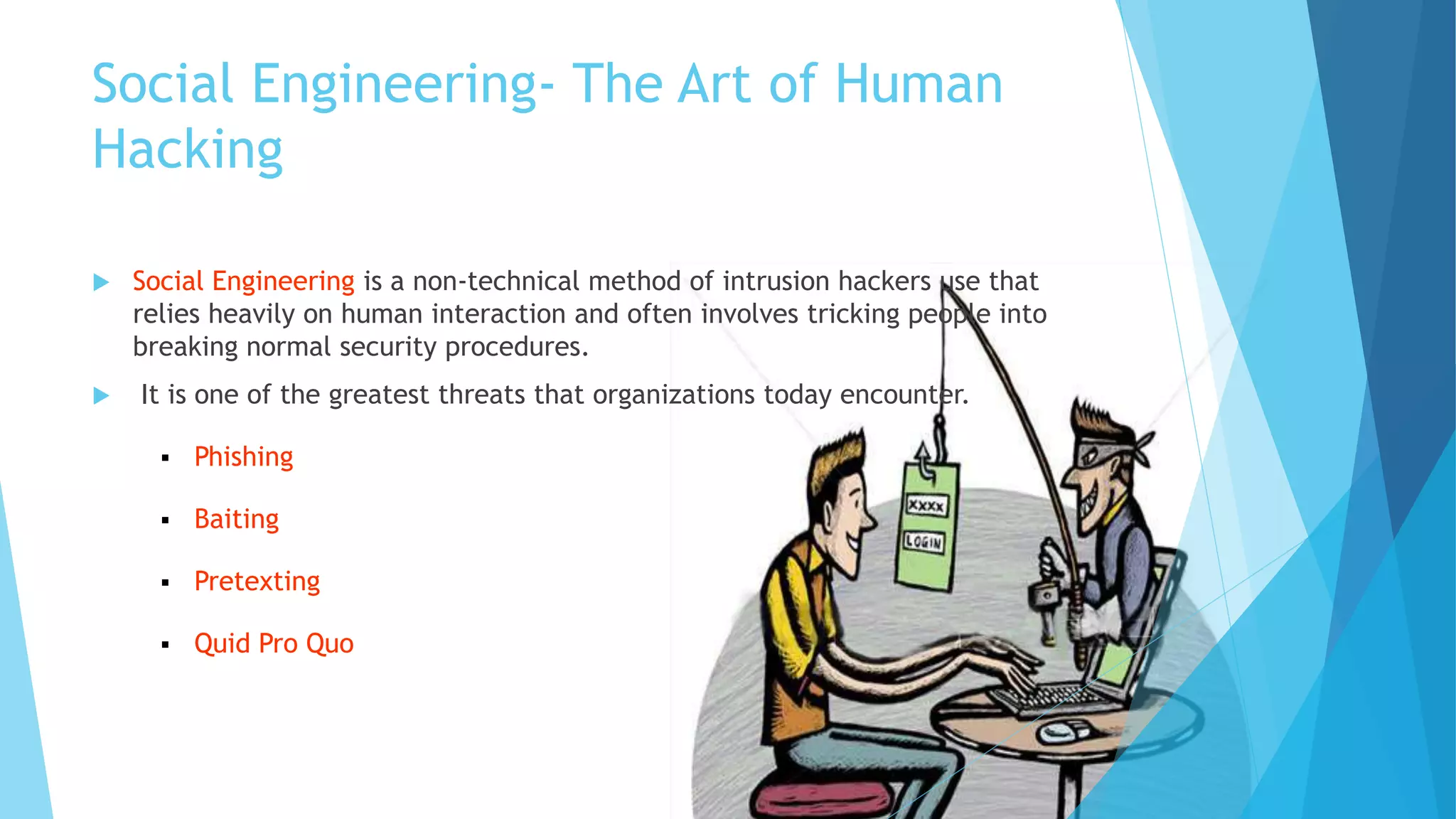
 Social Engineering is a non-technical method of intrusion hackers use that
relies heavily on human interaction and often involves tricking people into
breaking normal security procedures.
 It is one of the greatest threats that organizations today encounter.
 Phishing
 Baiting
 Pretexting
 Quid Pro Quo
Prevention –Email Hacking
 Use osk instead of our physical keyboard.
 Create a dedicated free mail address to use in the Risky sites.
 Never use your Personal Email password while registering in known/unknown
web portals.
 Never Reply to spams.
 Use Bcc: and remove addresses when forwarding mails.
 Use “[at]” instead of @. eg: myemail[at]gmail.com.
 Don’t make mailto: links when building websites.
 Don’t create an Easy to guess email address and password.
Prevention – Social Engineering
 Be Suspicious of unsolicited phone calls, visits, or email messages from
individuals asking about internal/personal information.
 Do not Provide personal information, information about the company(such as
internal network) unless Authority of person is verified
 Before transmitting personal information over the internet, check the
connection is Secure and check the url is correct
 If Unsure if an email message is legitimate, contact the person or company by
another means to verify
 3rd Party test - Ethical Hacker
Prevention - Internet Banking Threats
 Use osk instead of our physical keyboard to login to banking sites.
 Go for the OTP instead of security password.
 Before transmitting personal information over the internet, check the
connection is Secure and check the url is correct.
 Never Response to anonymous call asking for your Account No, Credit Card No,
Transaction OTP etc.
 Change your online banking passwords several times throughout the year—and
throw password1234 out the window. Make sure your login is a long mix of
numbers and letters, capitals and lower case.
 Keep up with patches and maintain the latest updates for your Antivirus
software.
References
 Hacking Crux 2 - Rahul Tyagi
 https://www.google.co.in
 http://www.howstuffworks.com
Questions?
Thanks!

Cyber security and privacy

  • 1.
  • 2.
    Contents  Introduction  Hacking Information Gathering Techniques  Website Information Gathering Techniques  Personal Information Gathering and Email Hacking  Social Engineering  Internet Banking Hacking  Virus  Prevention – Email Hacking  Prevention – Social Engineering  Prevention – Internet Banking Threats  Conclusion
  • 3.
    Internet = "networkof networks"  Consists of millions of private and public, academic, business, and government Networks of local to global scope that are linked by various technologies  Carries all kind of information resources and services, such as electronic mail, online chat, file transfer and file sharing, online gaming and the inter-linked hypertext documents and other resources of the World Wide Web.
  • 4.
    Hacking  Black HatHackers A "black hat" hacker is a hacker who "violates computer security for little reason beyond maliciousness or for personal gain"  White Hat Hackers The term "white hat" in Internet slang refers to an Ethical Hacker.  Grey Hat Hackers A grey hat hacker is a combination of a black hat and a white hat hacker
  • 5.
    Information Gathering Techniques Website Information Gathering Techniques  Email Hacking  Social Engineering  Internet Banking Threats
  • 6.
    Website Information GatheringTechniques  Footprinting  Whois  Web Archive – The Wayback Machine  Search Engine
  • 7.
    Virus  Computer Virusis a program or piece of code that is loaded onto your computer without your knowledge and runs against your wishes. These programs can be created manual coding or using various Tools  Worm is a program or algorithm that replicates itself over a computer network and usually perform malicious action such as using computer’s/network’s resources.  Trojan Horse is a program that seems to be doing one thing but is actually doing another. It can be used to set up a back door in a computer system, enabling the intruder to gain access later. (The name refers to the horse from the Trojan War).  Web Scripts is a program executed from client/server side while accessing a multimedia website.
  • 8.
    Personal Information Gatheringand Email Hacking  Spamming is the use of electronic messaging systems to send unsolicited messages (spam), especially advertising, as well as sending messages repeatedly on the same site  Keylogger also known as a keystroke logger or system monitor. it can be a program or a hardware installed in the system, which log each key strokes and map it to a text file and send it to the creator or share it to a location.  Phishing is the attempt to acquire sensitive information such as usernames, passwords, and credit card details (and sometimes, indirectly, money) by pretending as a trustworthy entity in an electronic communication. It is one of the biggest Cyber Crime.  Secret Questions is a security measure used to verify whether the user is the authored owner.
  • 9.
    Social Engineering- TheArt of Human Hacking  Social Engineering is a non-technical method of intrusion hackers use that relies heavily on human interaction and often involves tricking people into breaking normal security procedures.  It is one of the greatest threats that organizations today encounter.  Phishing  Baiting  Pretexting  Quid Pro Quo
  • 10.
    Prevention –Email Hacking Use osk instead of our physical keyboard.  Create a dedicated free mail address to use in the Risky sites.  Never use your Personal Email password while registering in known/unknown web portals.  Never Reply to spams.  Use Bcc: and remove addresses when forwarding mails.  Use “[at]” instead of @. eg: myemail[at]gmail.com.  Don’t make mailto: links when building websites.  Don’t create an Easy to guess email address and password.
  • 11.
    Prevention – SocialEngineering  Be Suspicious of unsolicited phone calls, visits, or email messages from individuals asking about internal/personal information.  Do not Provide personal information, information about the company(such as internal network) unless Authority of person is verified  Before transmitting personal information over the internet, check the connection is Secure and check the url is correct  If Unsure if an email message is legitimate, contact the person or company by another means to verify  3rd Party test - Ethical Hacker
  • 12.
    Prevention - InternetBanking Threats  Use osk instead of our physical keyboard to login to banking sites.  Go for the OTP instead of security password.  Before transmitting personal information over the internet, check the connection is Secure and check the url is correct.  Never Response to anonymous call asking for your Account No, Credit Card No, Transaction OTP etc.  Change your online banking passwords several times throughout the year—and throw password1234 out the window. Make sure your login is a long mix of numbers and letters, capitals and lower case.  Keep up with patches and maintain the latest updates for your Antivirus software.
  • 13.
    References  Hacking Crux2 - Rahul Tyagi  https://www.google.co.in  http://www.howstuffworks.com
  • 14.
  • 15.