Downloaded 493 times





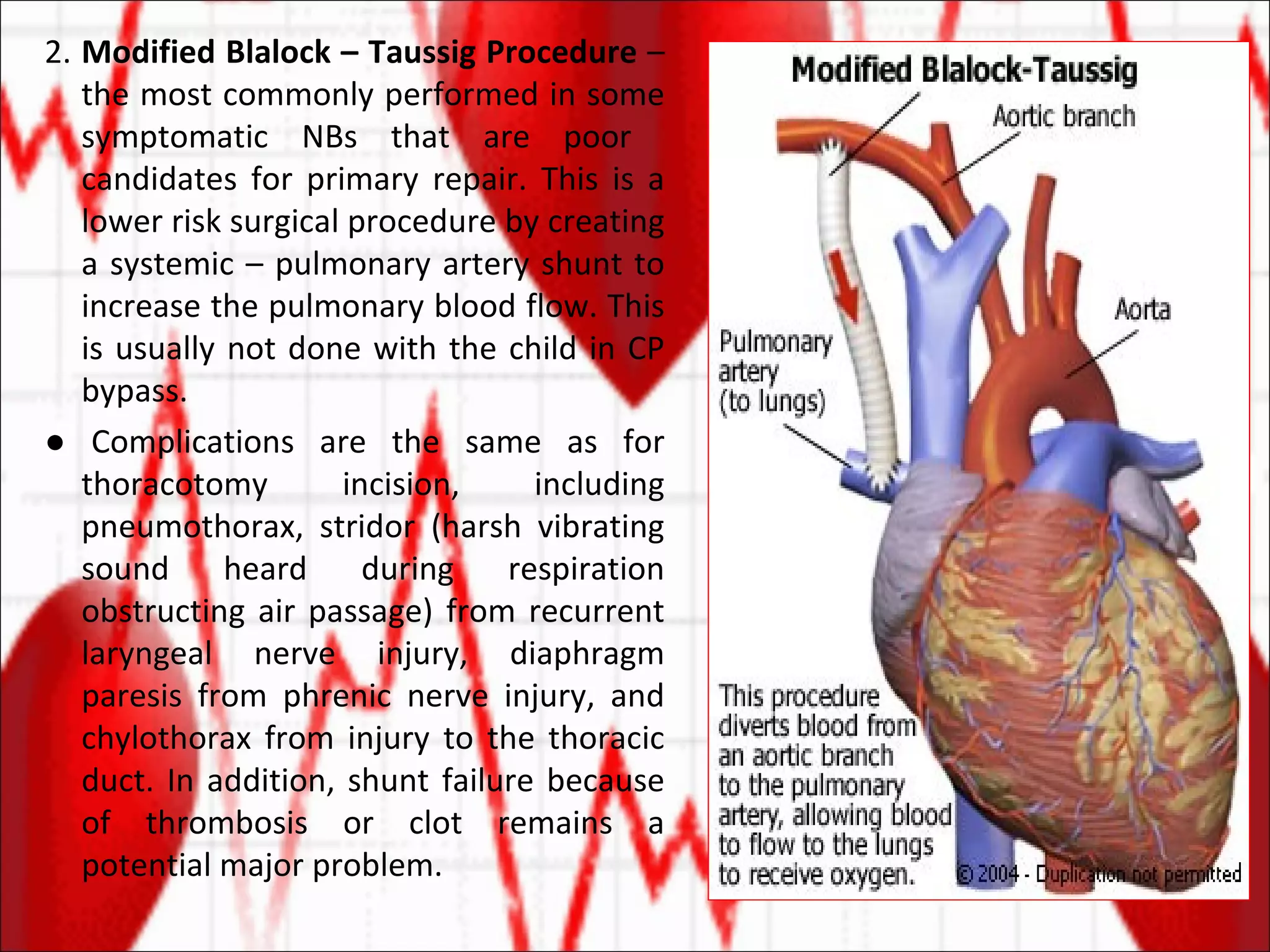

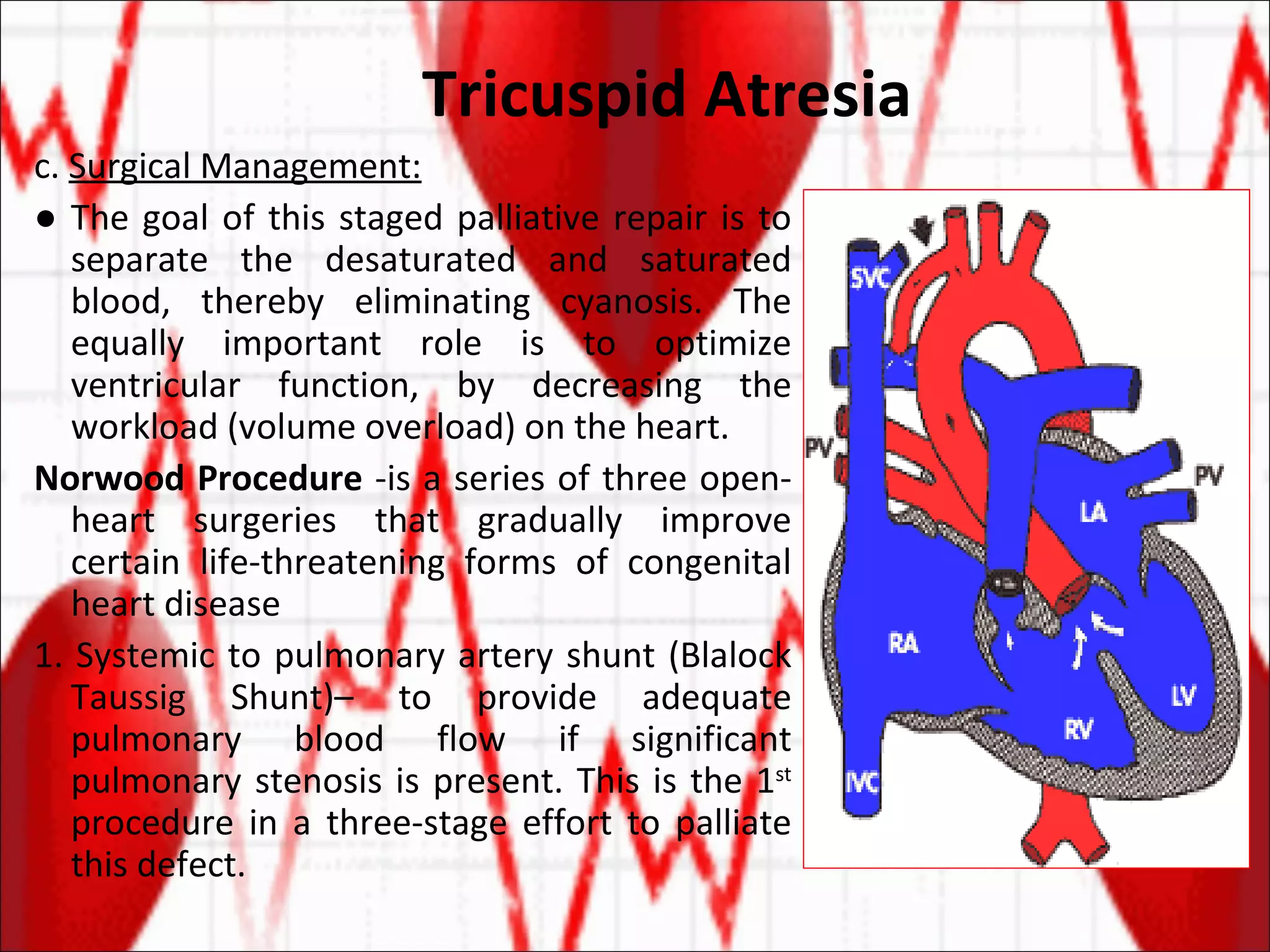
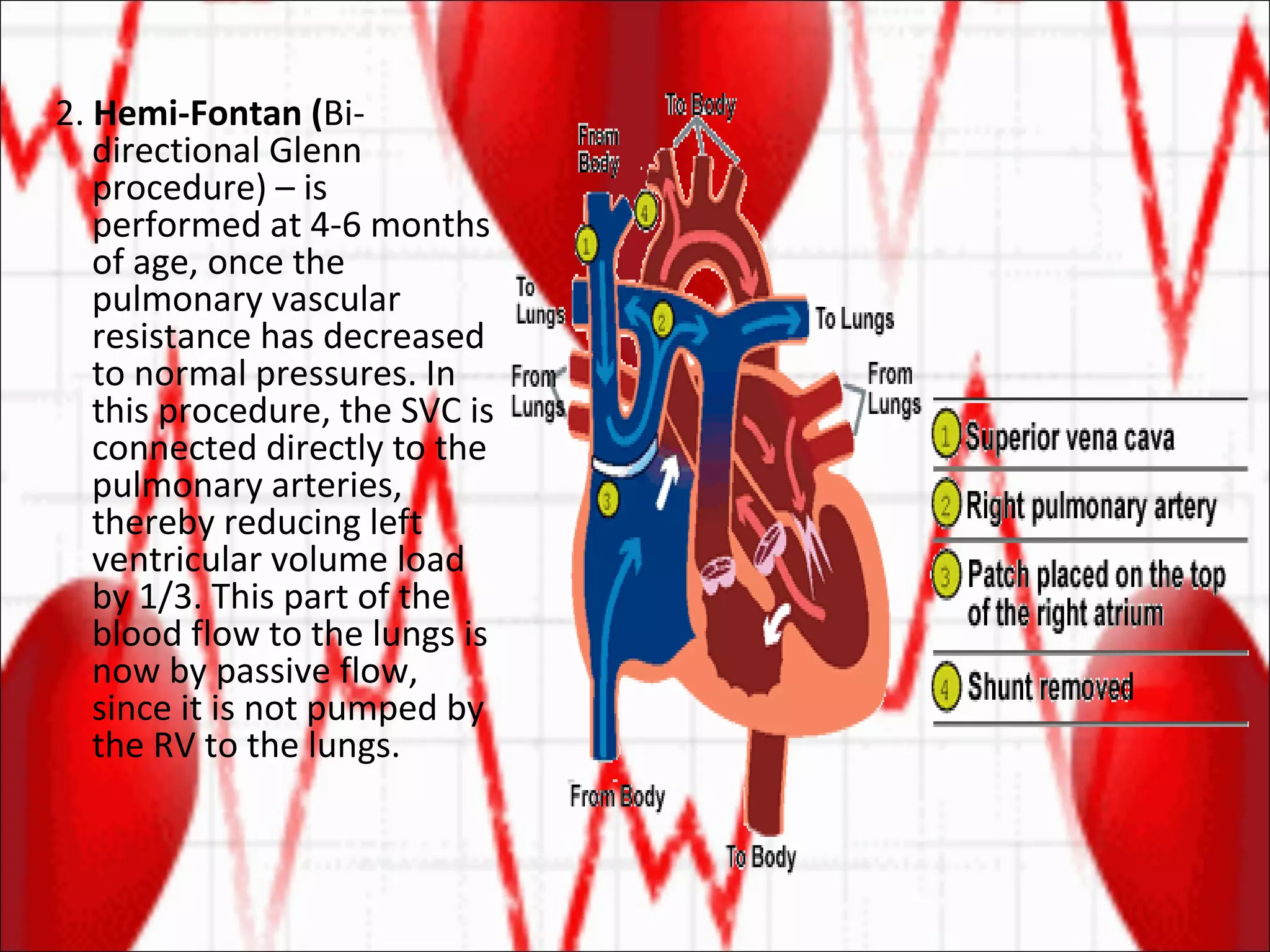
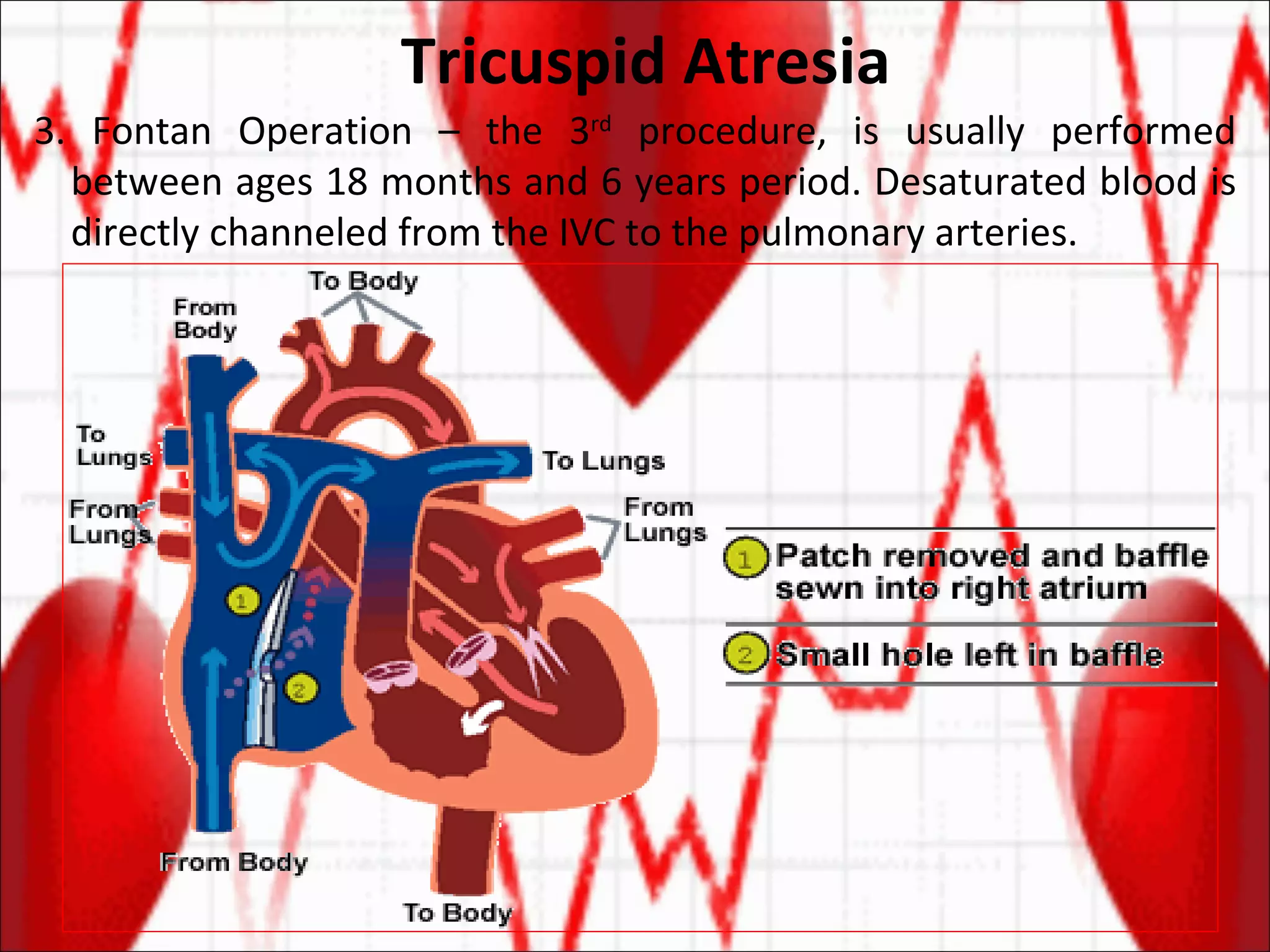
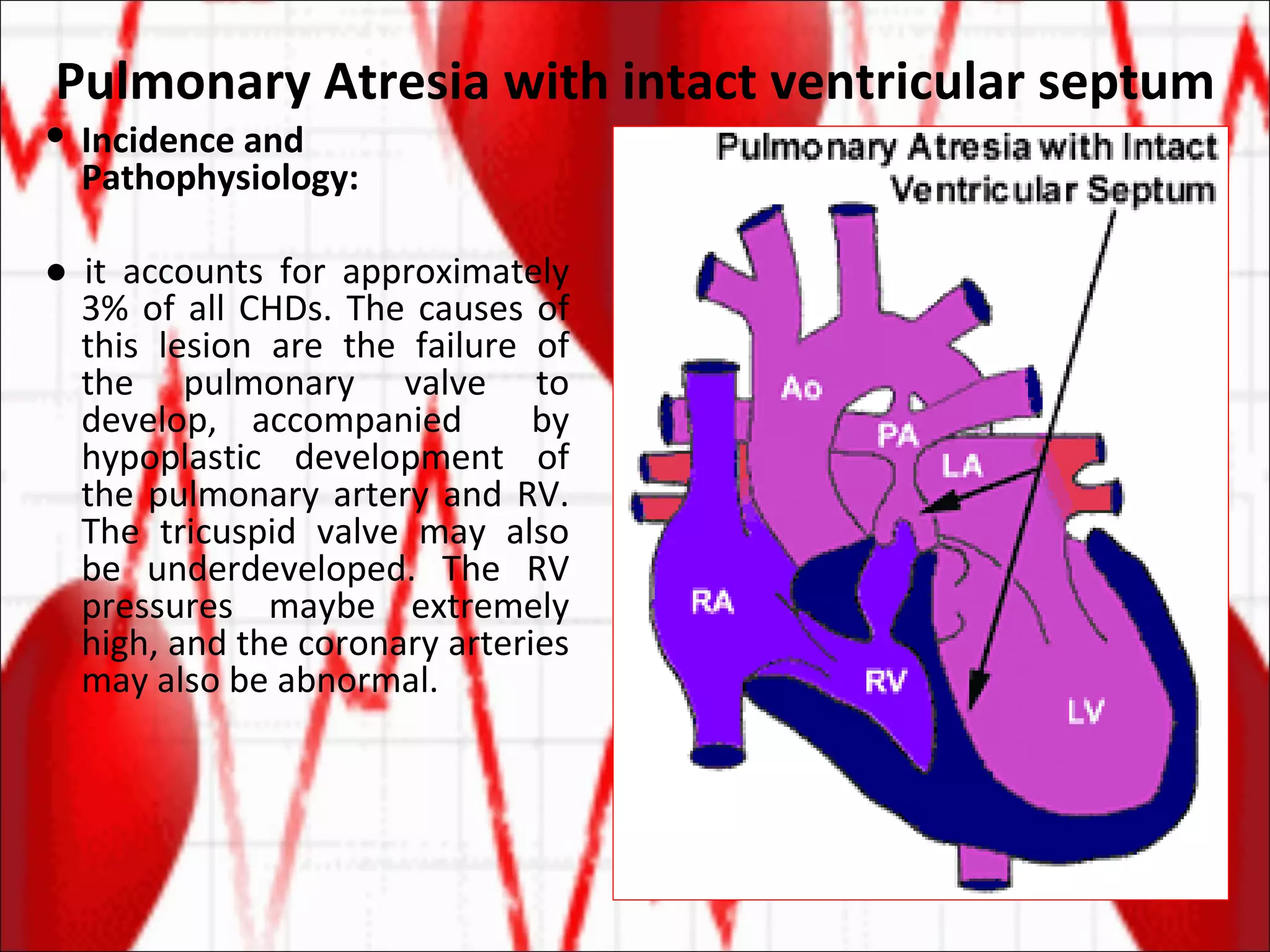
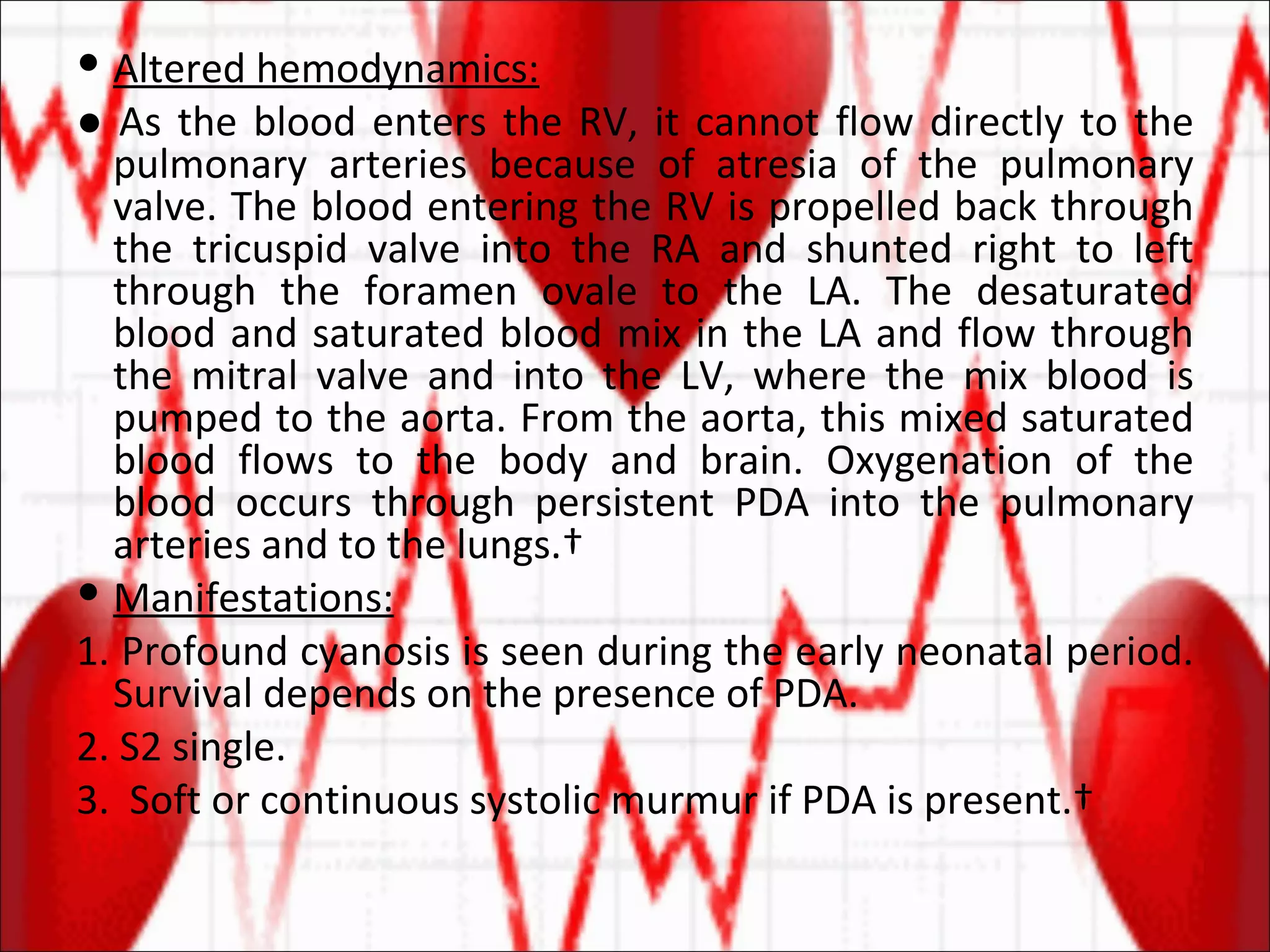
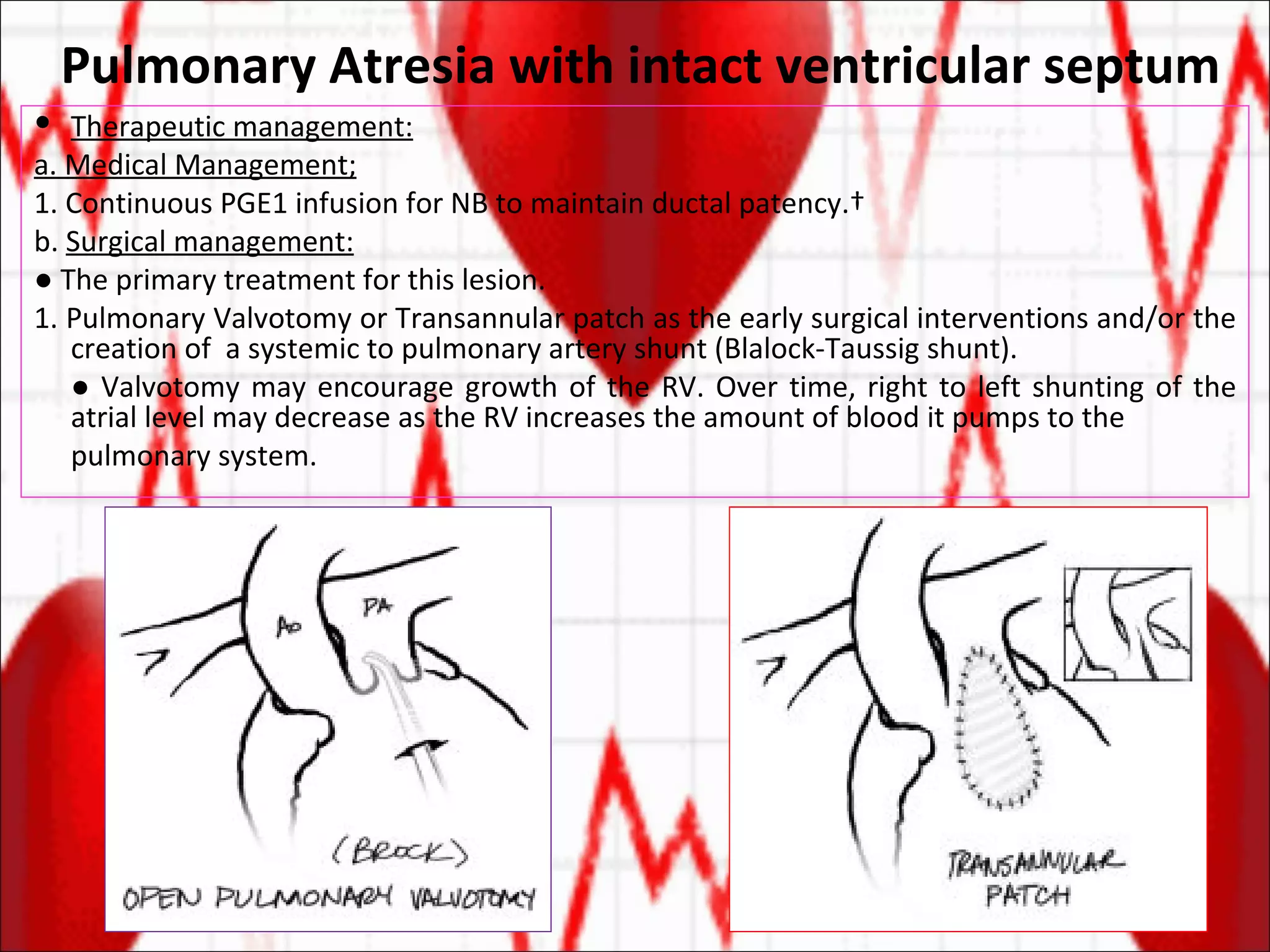
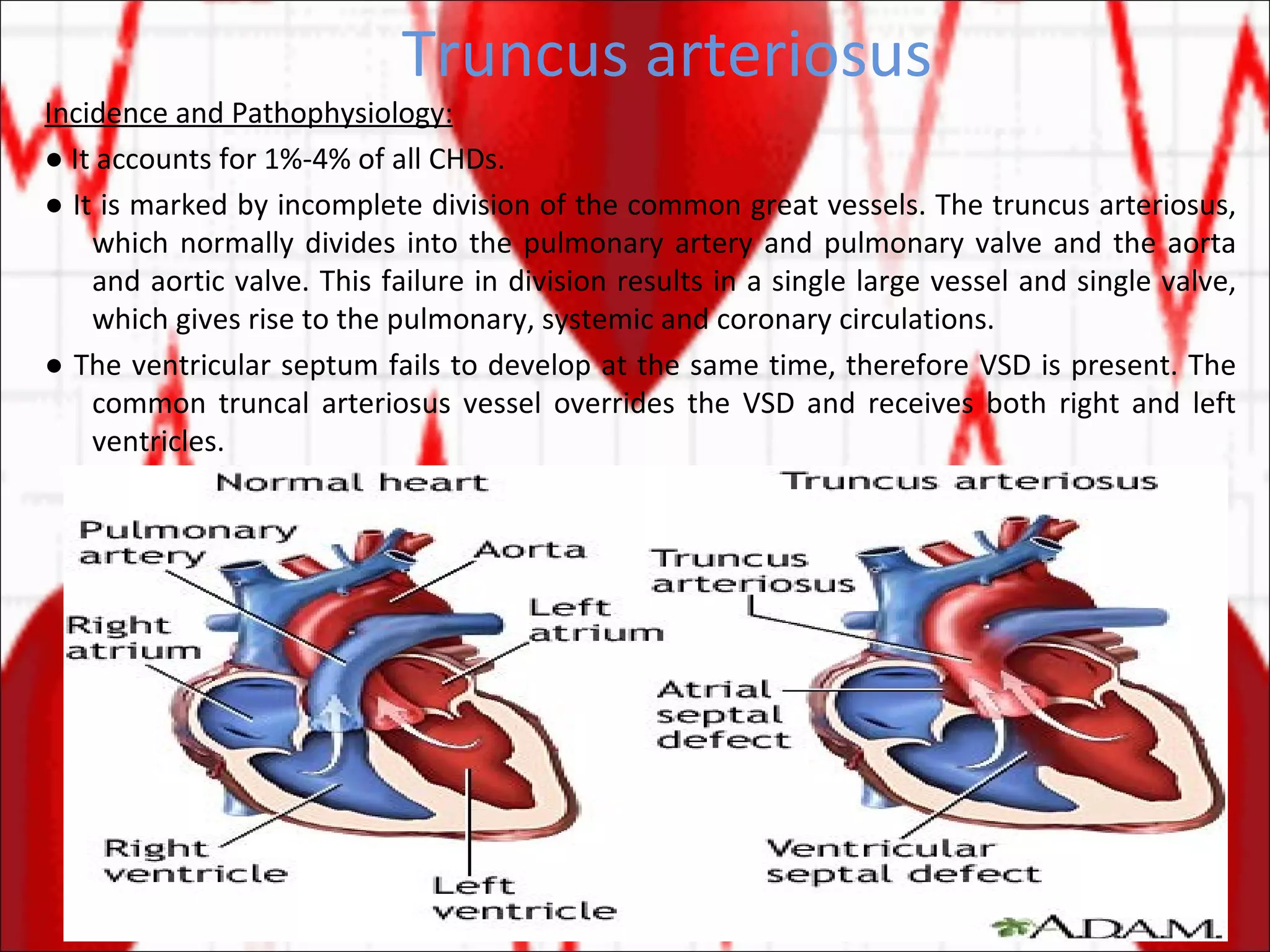
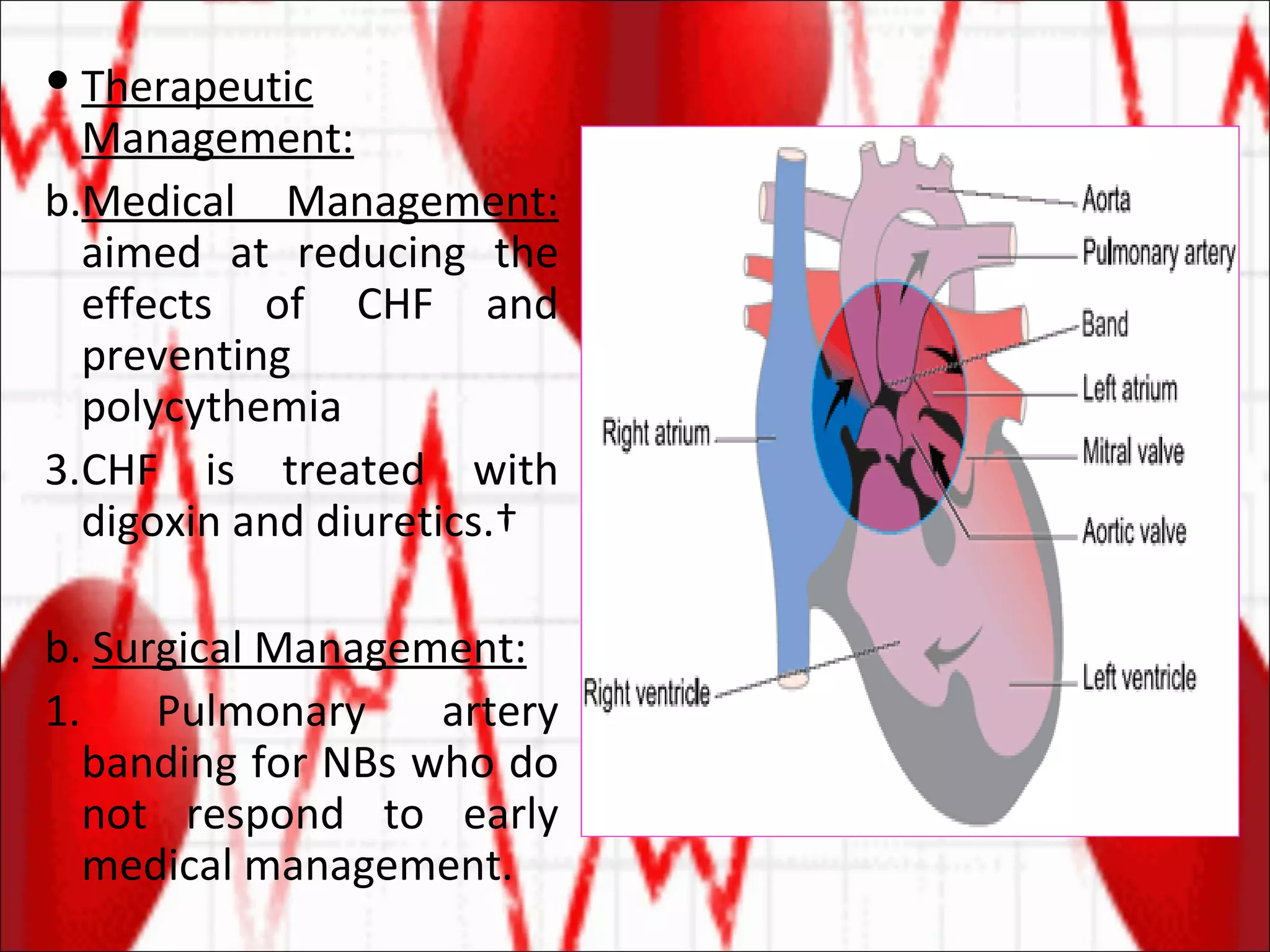
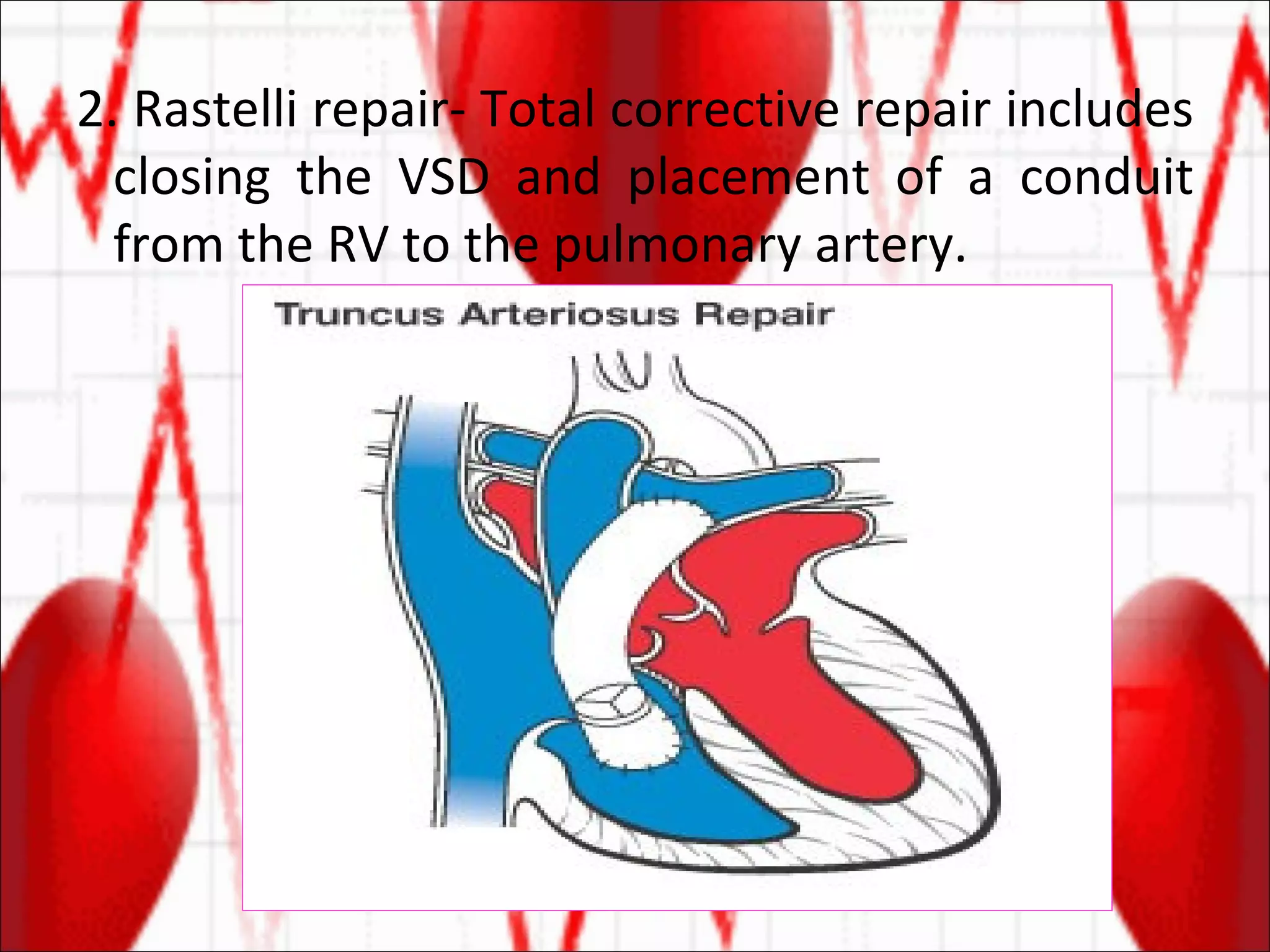
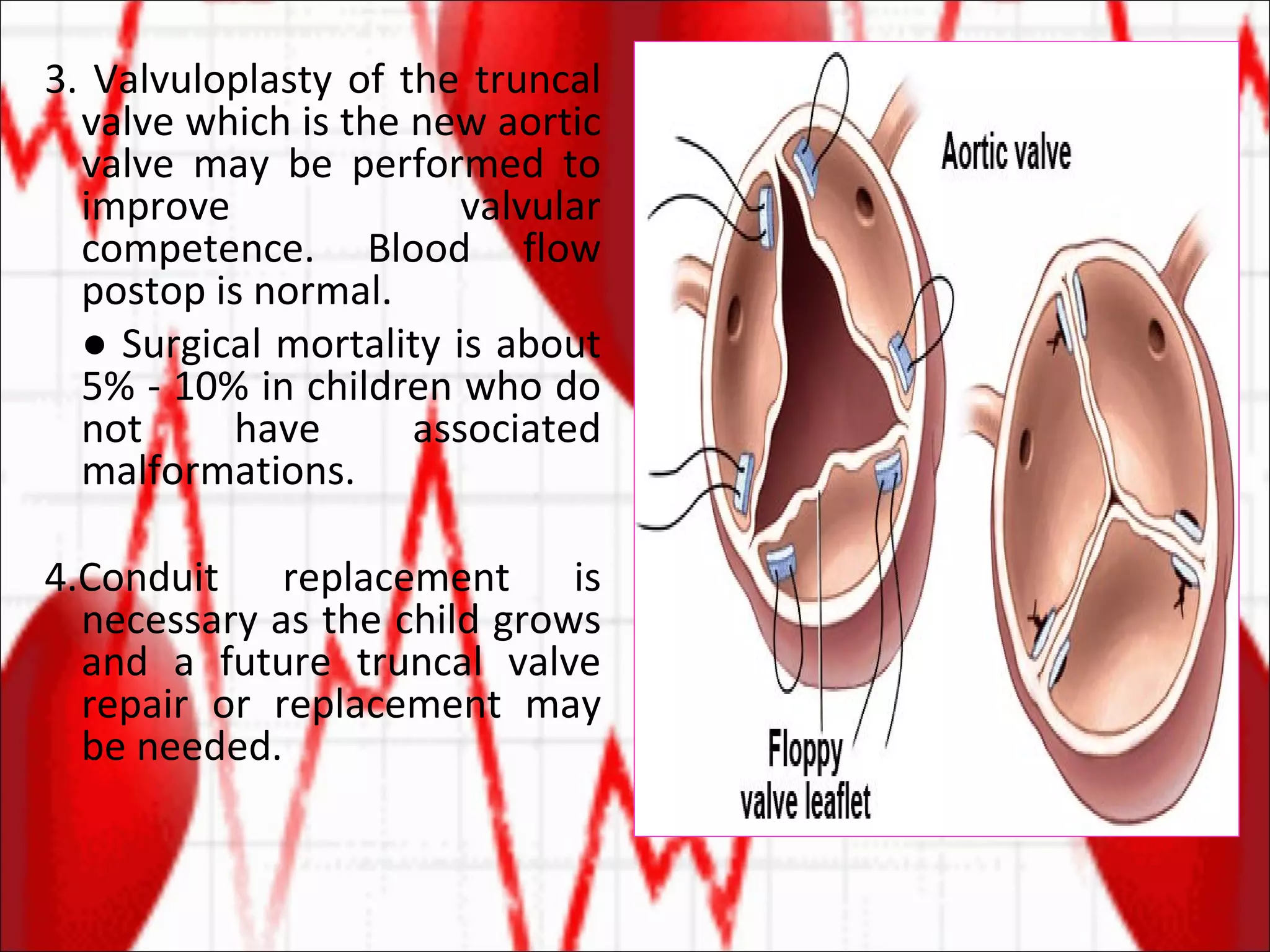
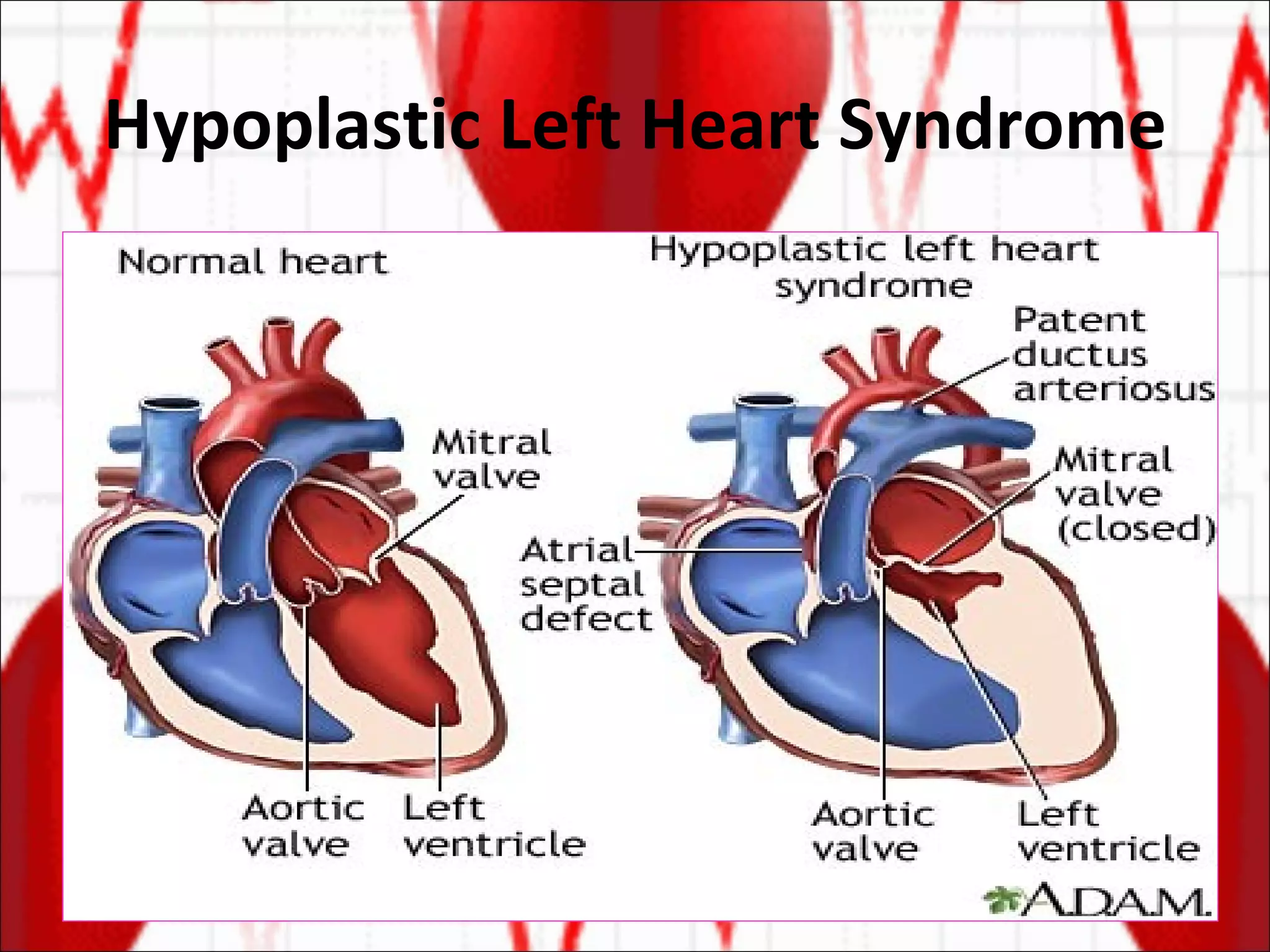

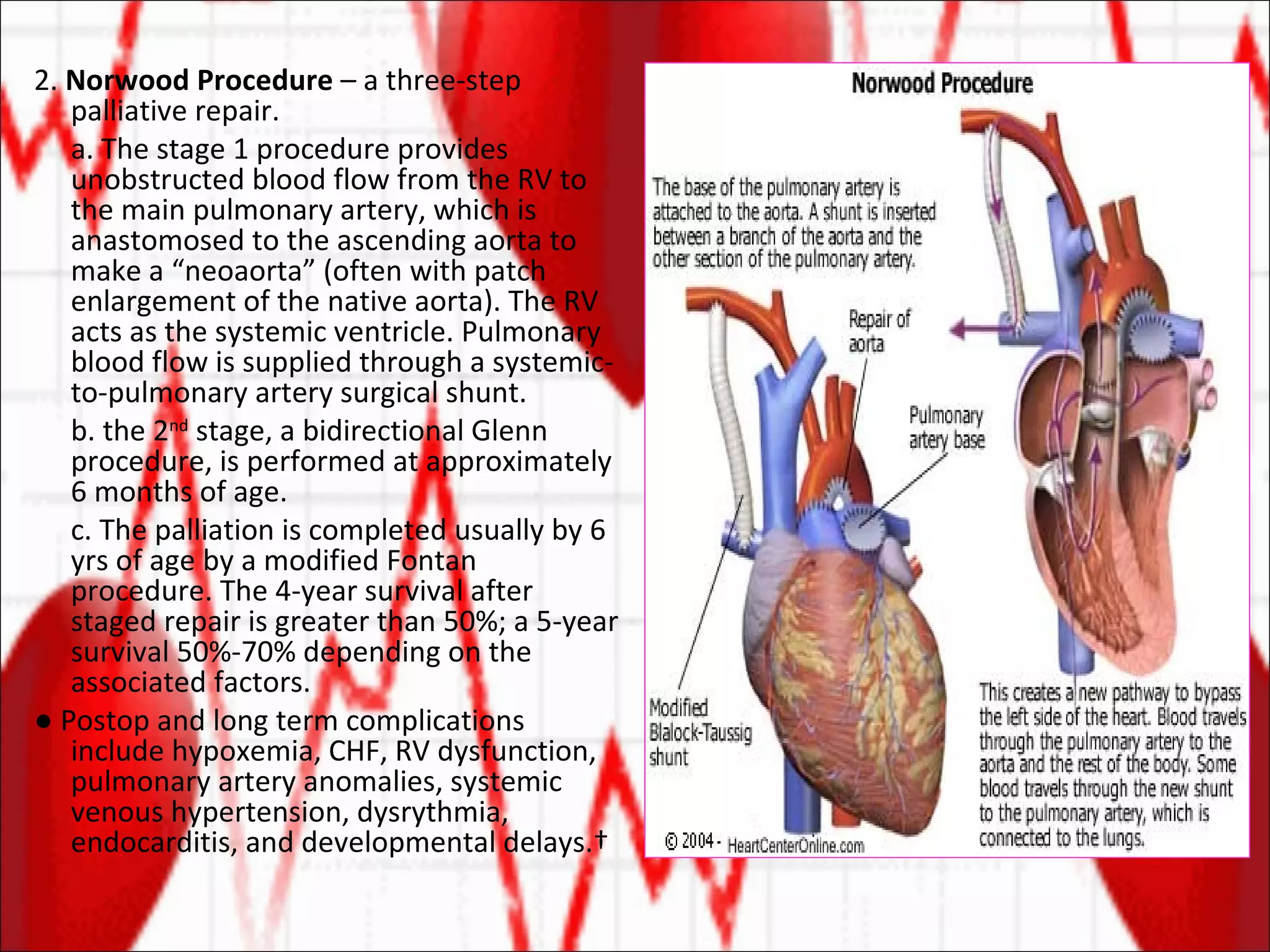
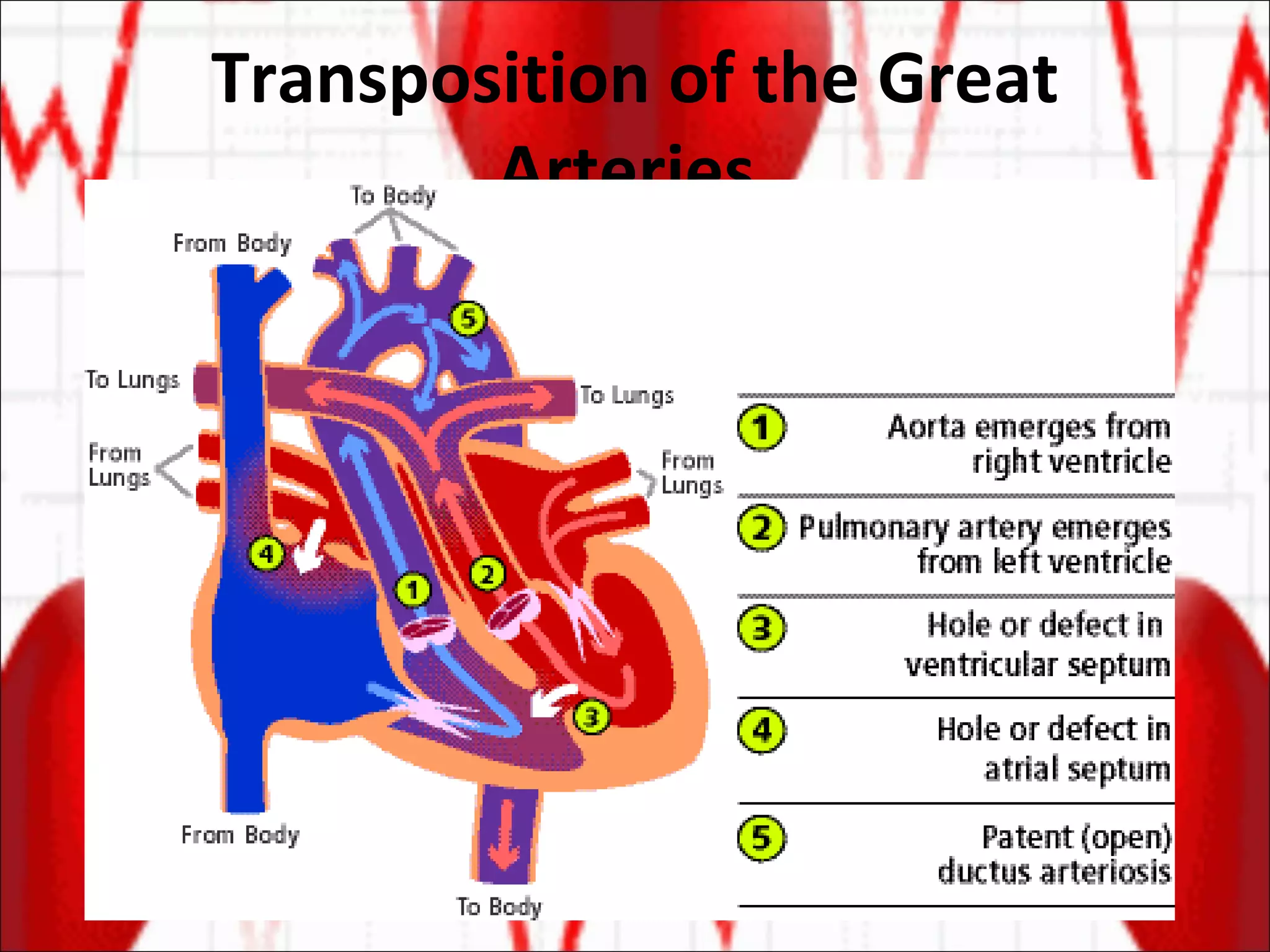








Cyanotic heart defects allow unoxygenated blood to enter the systemic circulation, causing cyanosis (blue skin). Infants with defects dependent on a patent ductus arteriosus for blood flow can deteriorate quickly as the ductus closes, requiring medical intervention. Prostaglandin E1 preserves ductal patency and improves oxygen levels. Long-term management may involve surgical procedures like shunt placement or defect repair. Uncorrected defects can lead to complications such as polycythemia, anemia, clotting issues and hypercyanotic episodes.


![cyanotic congenital heart disease[1].pptx](https://cdn.slidesharecdn.com/ss_thumbnails/cyanoticcongenitalheartdisease1-250421184527-f500caa9-thumbnail.jpg?width=640&height=640&fit=bounds)


