Downloaded 43 times
![Every language has its own unique set of
phonotactic constraints. Sound
combinations that could not possibly be
English words might very well be words in
another language.
For instance both English and Georgian
have the sound segments [t], [A], [m].
In English we have Tom but no mot, mta
or tma; although mot could be a word.
In Georgian we have mta, mountain;
and tma hair, but no tom or mot.](https://image.slidesharecdn.com/sequentialconstraintsofphonemes-mssangkula-180420010616/75/Sequential-constraints-of-phonemes-ms-sangkula-9-2048.jpg)
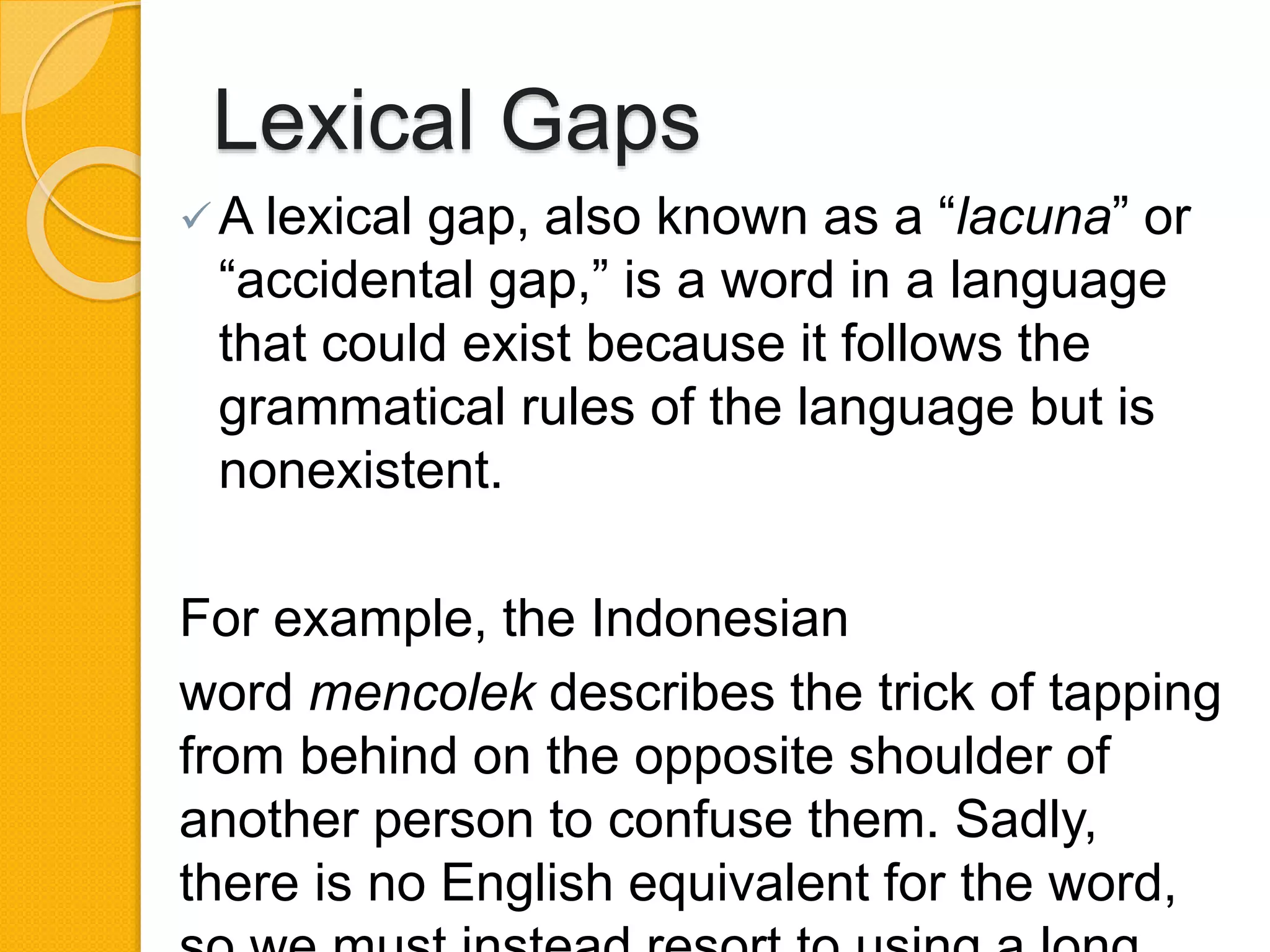
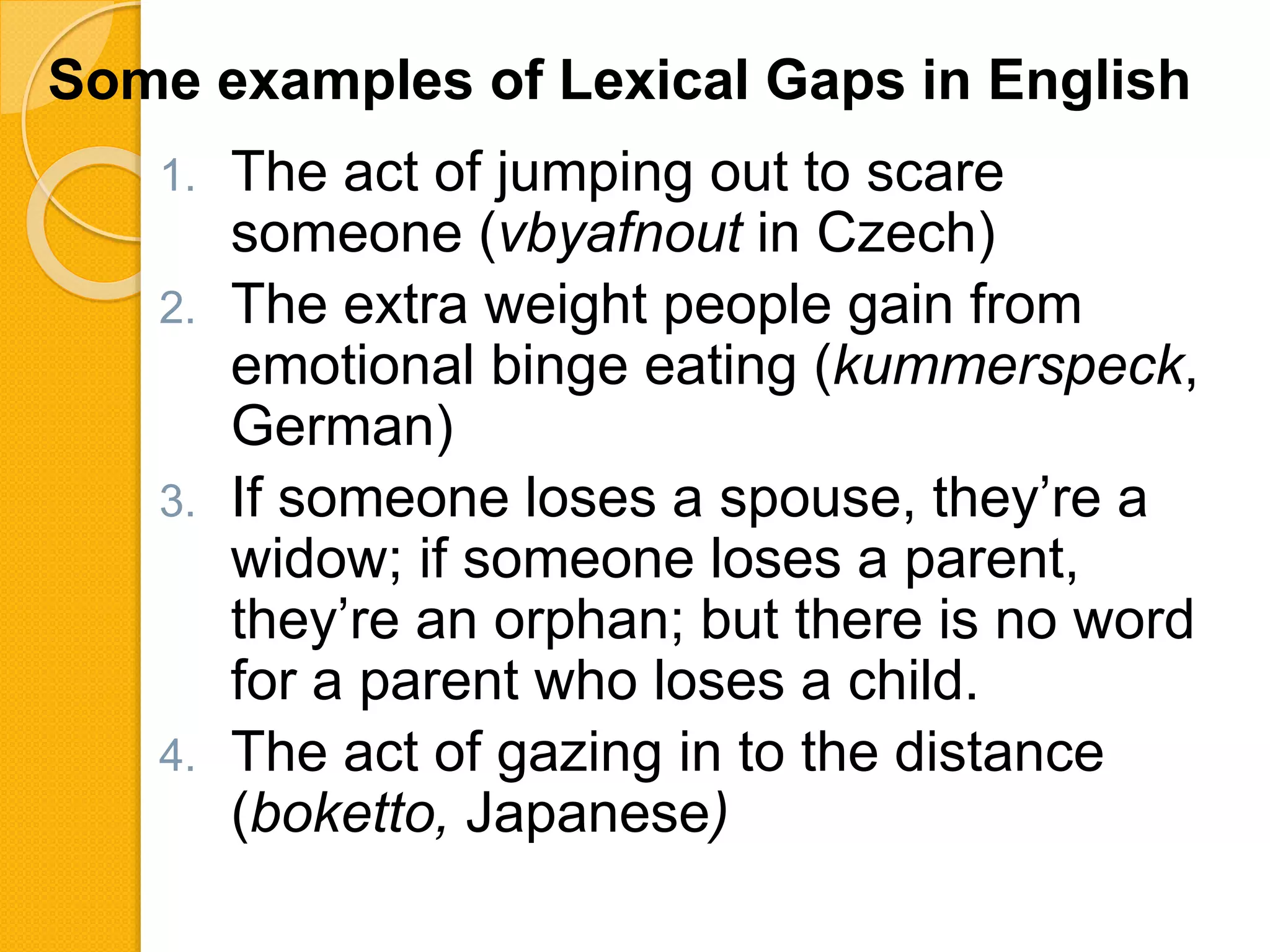
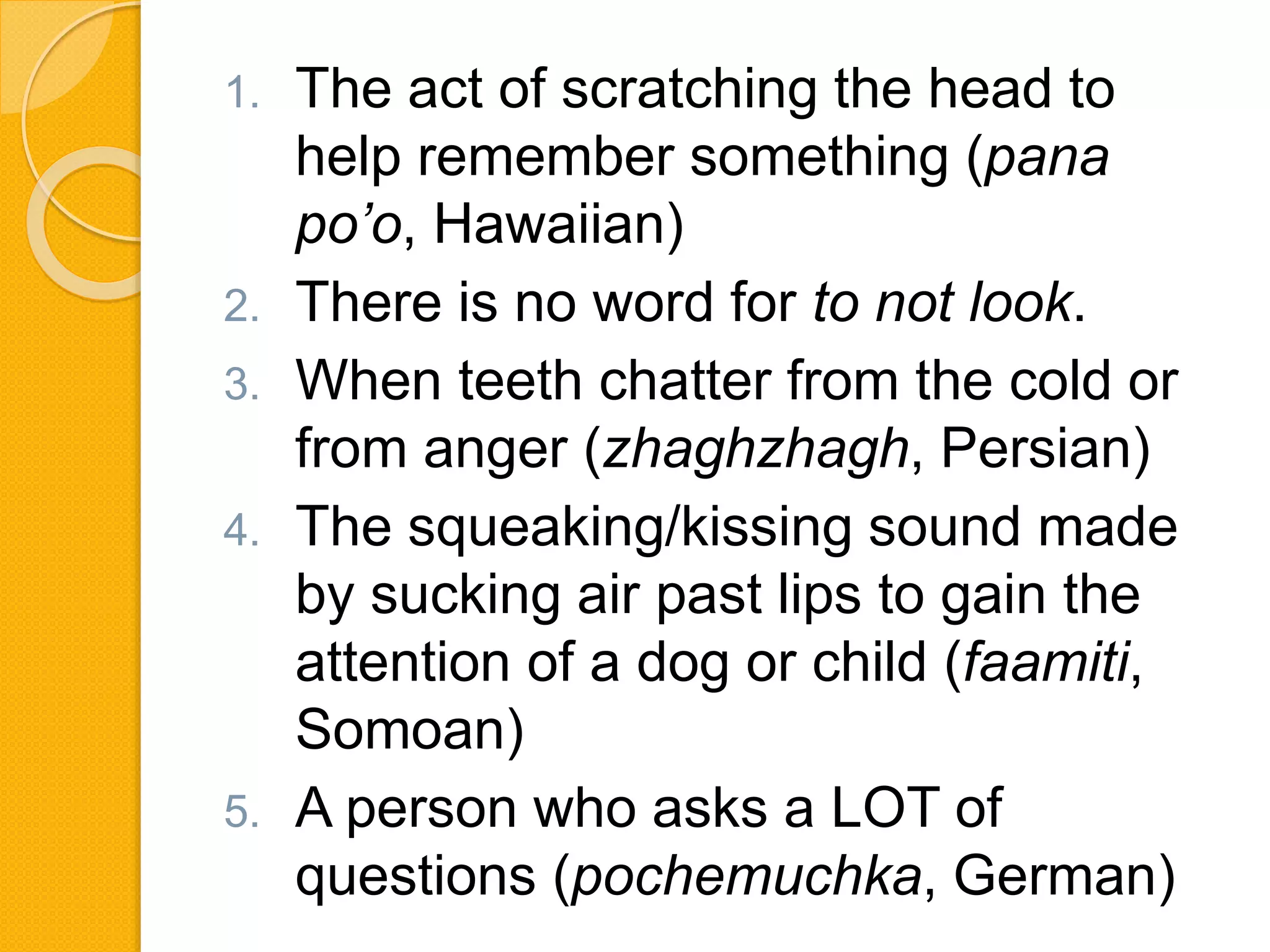
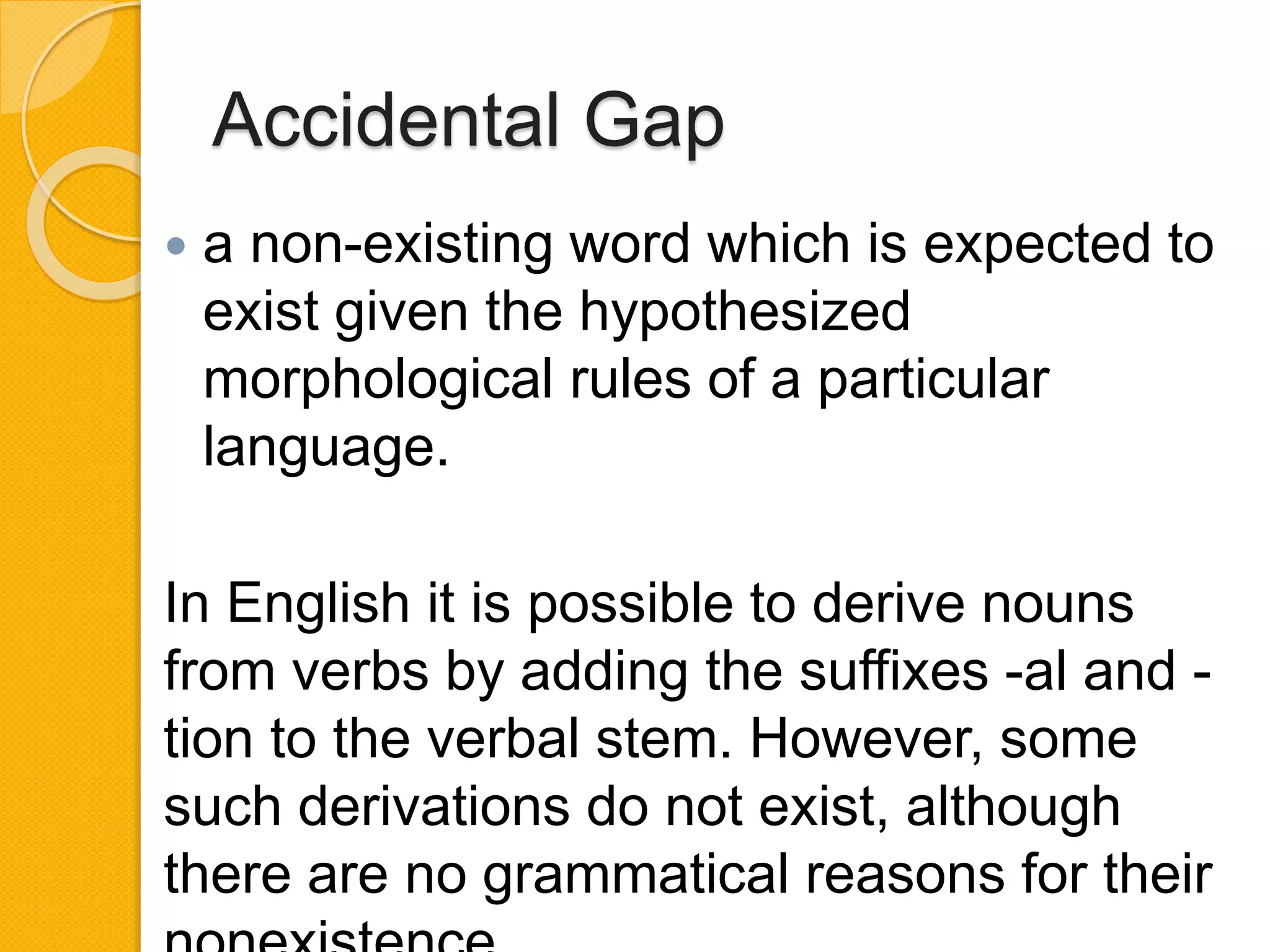
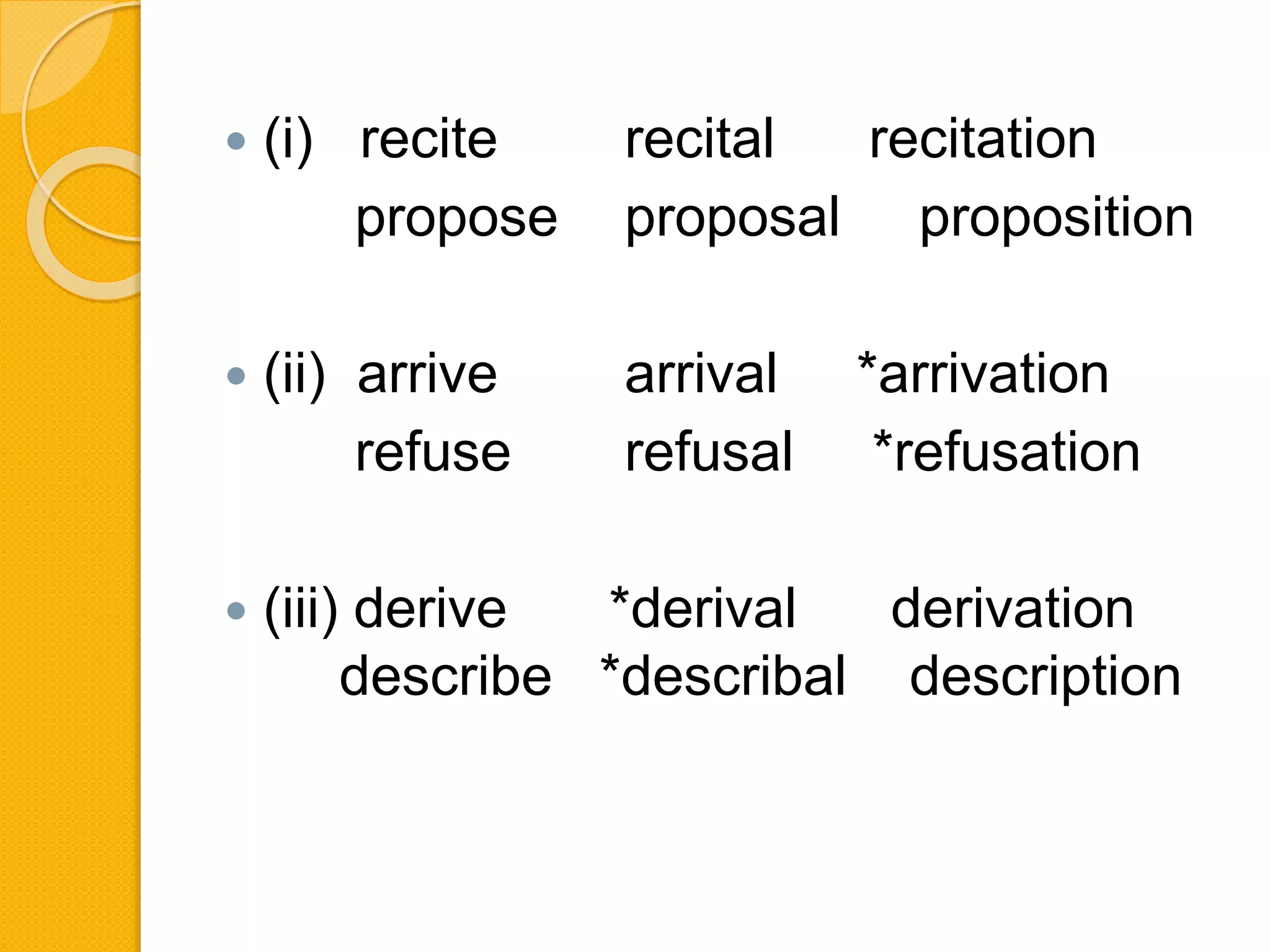
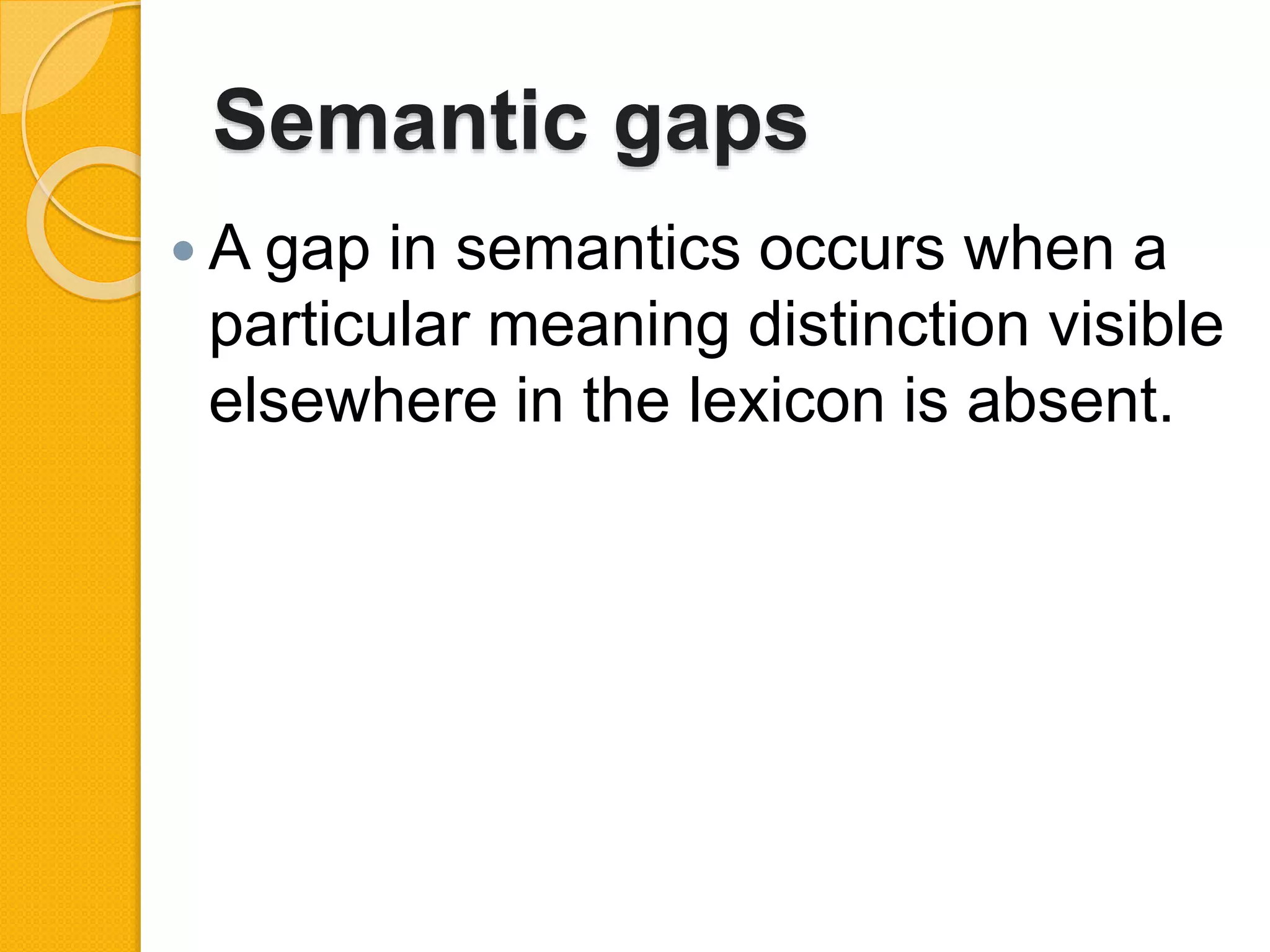
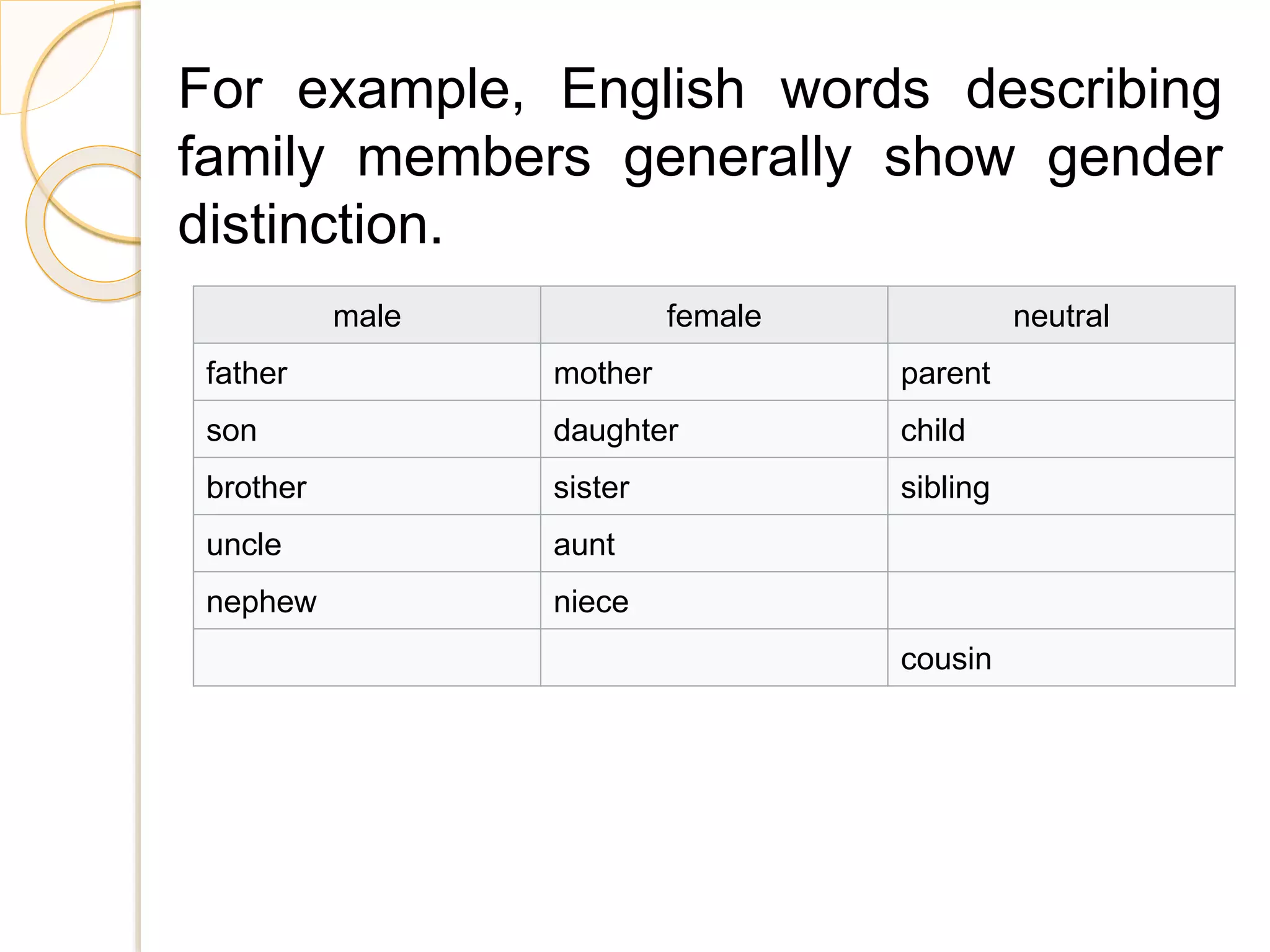

This document discusses phonotactic constraints, which are rules that determine what sound combinations are possible in a given language. It provides examples of sounds that can and cannot be combined in English words, such as disallowing a stop consonant after another consonant. The document also explores why languages have these constraints and how they vary between languages. It examines lexical gaps, which are words that could exist based on a language's rules but do not, and accidental gaps in word formation.


