Downloaded 995 times


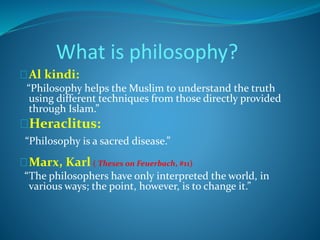
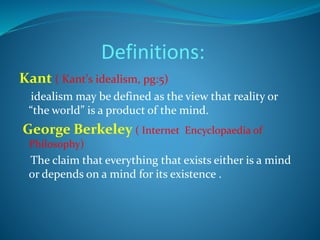
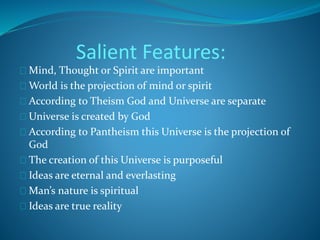

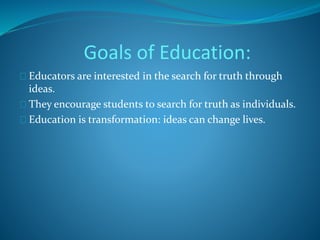
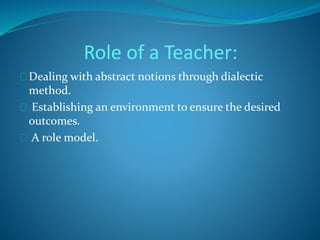
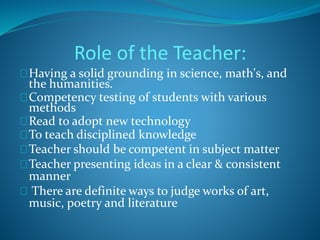
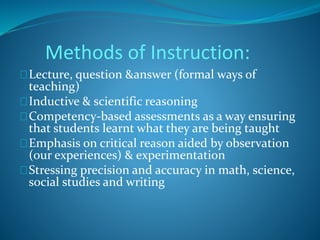
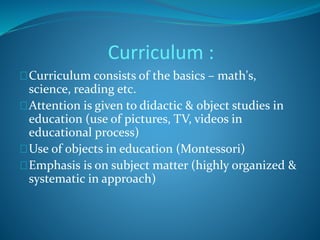
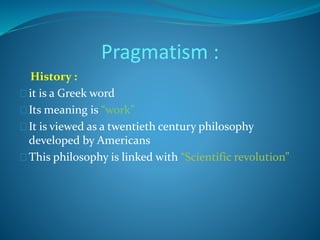
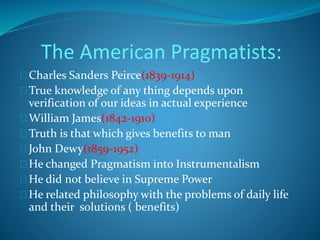
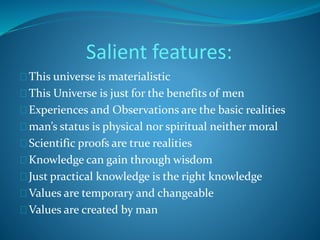
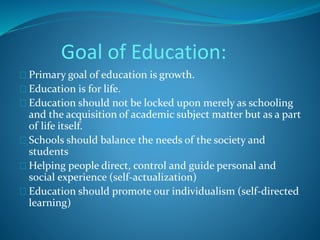
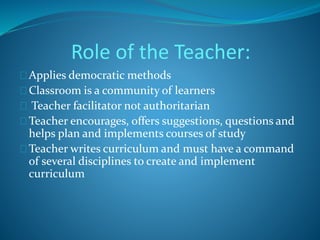
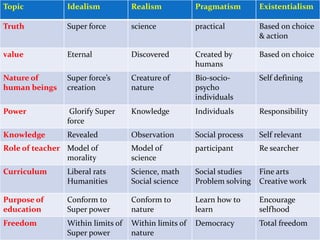


This document summarizes and compares four major philosophical foundations of education: idealism, realism, pragmatism, and existentialism. For each philosophy, it outlines the key thinkers, salient features, goals of education, the role of the teacher, methods of instruction, and curriculum. The philosophies differ in their views of truth, values, the nature of human beings, the purpose of knowledge, and the role of freedom in education. Idealism sees truth as revealed by a supreme force, realism views it as discovered through science, pragmatism sees it as practical and based on action, and existentialism believes truth is based on individual choice.


