WEB APPLICATION SECURITY:
PROTECTING YOUR WEB
APPLICATION
Stephen Coty
Chief Security Evangelist, Alert Logic
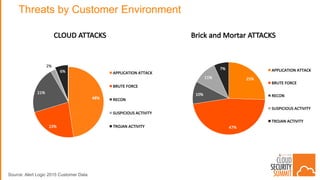
Threats by Customer Environment
Source: Alert Logic 2015 Customer Data
48%
23%
21%
2%
6%
CLOUD	ATTACKS
APPLICATION	ATTACK
BRUTE	FORCE
RECON
SUSPICIOUS	ACTIVITY
TROJAN	ACTIVITY
25%
47%
10%
11%
7%
Brick	and	Mortar	ATTACKS
APPLICATION	ATTACK
BRUTE	FORCE
RECON
SUSPICIOUS	ACTIVITY
TROJAN	ACTIVITY
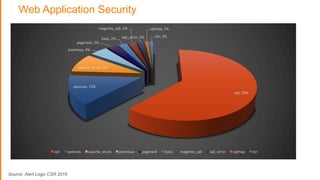
Web Application Security
sqli,	59%
openvas,	13%
apache_struts,	9%
joomlaua,	4%
pagerank,	2%
havij,	2%
magento_sqli,	2%
sqli_error,	2%
sqlmap,	1%
tor,	1%
sqli openvas apache_struts joomlaua pagerank havij magento_sqli sqli_error sqlmap tor
Source: Alert Logic CSR 2016
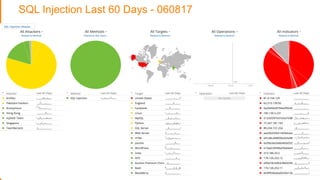
SQL Injection Last 60 Days - 060817
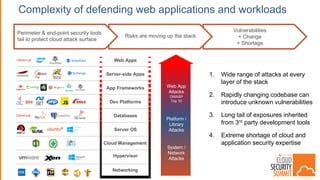
Vulnerabilities
+ Change
+ Shortage
Complexity of defending web applications and workloads
Risks are moving up the stack
1. Wide range of attacks at every
layer of the stack
2. Rapidly changing codebase can
introduce unknown vulnerabilities
3. Long tail of exposures inherited
from 3rd party development tools
4. Extreme shortage of cloud and
application security expertise
Web App
Attacks
OWASP
Top 10
Platform /
Library
Attacks
System /
Network
Attacks
Perimeter & end-point security tools
fail to protect cloud attack surface
Web Apps
Server-side Apps
App Frameworks
Dev Platforms
Server OS
Hypervisor
Databases
Networking
Cloud Management
Web Application Security
Web Apps
Server-side Apps
App Frameworks
Dev Platforms
Server OS
Hypervisor
Databases
Networking
Cloud Management
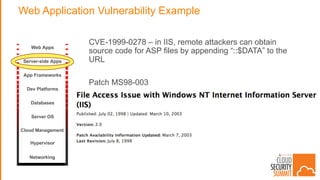
Web Application Vulnerability Example
CVE-1999-0278 – in IIS, remote attackers can obtain
source code for ASP files by appending “::$DATA” to the
URL
Patch MS98-003
Web Apps
Server-side Apps
App Frameworks
Dev Platforms
Server OS
Hypervisor
Databases
Networking
Cloud Management
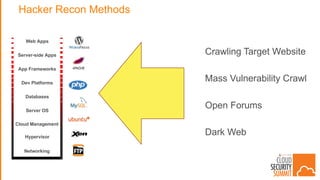
HACKER RECON METHODS
Hacker Recon Methods
Crawling Target Website
Mass Vulnerability Crawl
Open Forums
Dark Web
Web Apps
Server-side Apps
App Frameworks
Dev Platforms
Server OS
Hypervisor
Databases
Networking
Cloud Management
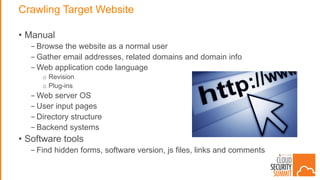
Crawling Target Website
• Manual
- Browse the website as a normal user
- Gather email addresses, related domains and domain info
- Web application code language
o Revision
o Plug-ins
- Web server OS
- User input pages
- Directory structure
- Backend systems
• Software tools
- Find hidden forms, software version, js files, links and comments
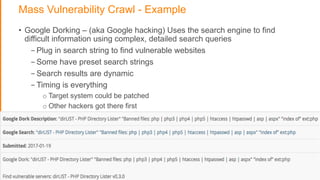
Mass Vulnerability Crawl - Example
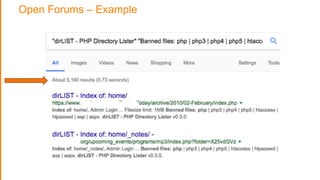
• Google Dorking – (aka Google hacking) Uses the search engine to find
difficult information using complex, detailed search queries
- Plug in search string to find vulnerable websites
- Some have preset search strings
- Search results are dynamic
- Timing is everything
o Target system could be patched
o Other hackers got there first
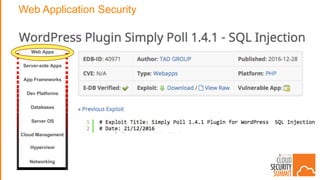
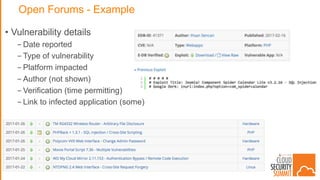
Open Forums - Example
• Vulnerability details
- Date reported
- Type of vulnerability
- Platform impacted
- Author (not shown)
- Verification (time permitting)
- Link to infected application (some)
Open Forums – Example
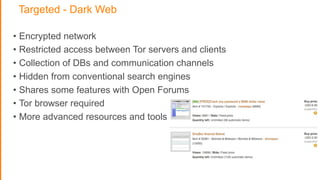
Targeted - Dark Web
• Encrypted network
• Restricted access between Tor servers and clients
• Collection of DBs and communication channels
• Hidden from conventional search engines
• Shares some features with Open Forums
• Tor browser required
• More advanced resources and tools
ATTACK METHODOLOGIES
Attack Methodology
• Attack of opportunity
- Hacker finds vulnerability within skillset
- Target system and organization irrelevant
• Targeted attack
- Specific to people or organization
- System resources
• Low cost of entry
- Open list of vulnerabilities
- Targets easy to find
- Hacker’s skill-set varies
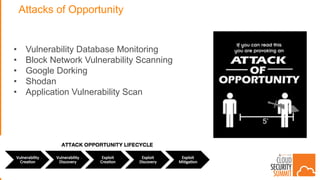
Attacks of Opportunity
• Vulnerability Database Monitoring
• Block Network Vulnerability Scanning
• Google Dorking
• Shodan
• Application Vulnerability Scan
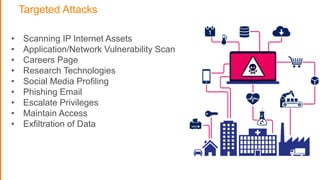
Targeted Attacks
• Scanning IP Internet Assets
• Application/Network Vulnerability Scan
• Careers Page
• Research Technologies
• Social Media Profiling
• Phishing Email
• Escalate Privileges
• Maintain Access
• Exfiltration of Data
FROM WEB APPS TO
PRIVILEGED ACCESS
From Web Apps to Privileged Access
• How hacking a web app can lead to system compromise
- Code analysis
o Review of code to reveal unintended system information
- System scanning
o Other software could have vulnerabilities
- Session Hijacking
o Exploiting a current, valid session
- Social Engineering
o Deception used to manipulate behavior
From Web Apps to Privileged Access
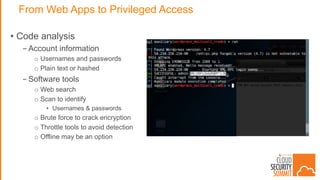
• Code analysis
- Account information
o Usernames and passwords
o Plain text or hashed
- Software tools
o Web search
o Scan to identify
• Usernames & passwords
o Brute force to crack encryption
o Throttle tools to avoid detection
o Offline may be an option
From Web Apps to Privileged Access
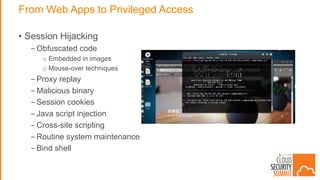
• Session Hijacking
- Obfuscated code
o Embedded in images
o Mouse-over techniques
- Proxy replay
- Malicious binary
- Session cookies
- Java script injection
- Cross-site scripting
- Routine system maintenance
- Bind shell
REMEDIATION STRATEGIES
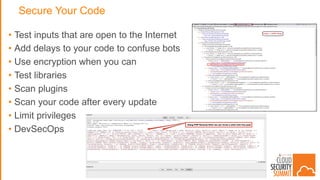
Secure Your Code
• Test inputs that are open to the Internet
• Add delays to your code to confuse bots
• Use encryption when you can
• Test libraries
• Scan plugins
• Scan your code after every update
• Limit privileges
• DevSecOps
Create Access Management Policies
• Identify data infrastructure that requires access
• Define roles and responsibilities
• Simplify access controls
• Key Management System (KMS)
• Continually audit access
• Start with a least privilege access model
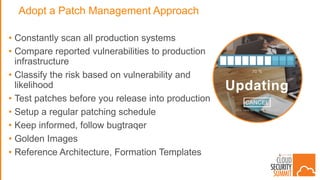
Adopt a Patch Management Approach
• Constantly scan all production systems
• Compare reported vulnerabilities to production
infrastructure
• Classify the risk based on vulnerability and
likelihood
• Test patches before you release into production
• Setup a regular patching schedule
• Keep informed, follow bugtraqer
• Golden Images
• Reference Architecture, Formation Templates
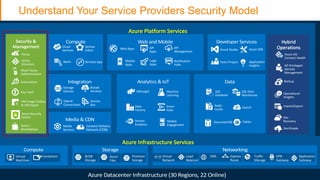
Understand Your Service Providers Security Model
Azure	Platform	Services
Security	&	
Management
Azure	Infrastructure	Services
Web	Apps
Mobile
Apps
API
Management
API
Apps
Logic
Apps
Notification
Hubs
Content	Delivery
Network	(CDN)
Media
Services
HDInsight Machine
Learning
Stream
Analytics
Data
Factory
Event
Hubs
Mobile
Engagement
Active
Directory
Multi-Factor
Authentication
Portal
Key	Vault
Biztalk
Services
Hybrid
Connections
Service
Bus
Storage
Queues
Store	/
Marketplace
Hybrid
Operations
Backup
StorSimple
Site
Recovery
Import/Export
SQL
Database
DocumentDB
Redis
Cache
Search
Tables
SQL	Data
Warehouse
Azure	AD	
Connect	Health
AD	Privileged
Identity	
Management
Operational
Insights
Cloud
Services
Batch Remote	App
Service
Fabric Visual	Studio
Application
Insights
Azure	SDK
Team	Project
VM	Image	Gallery
&	VM	Depot
Azure	Security
Center
Automation
Security Management and Monitoring Strategy
• Monitoring for malicious activity
• Scanning Services
• Forensic investigations
• Compliance needs
• System performance
• All sources of log data is collected
• Data types (OS, CMS, DB, Web)
• WAF
• Correlation logic
• IAM behavior
• IDS Network traffic
• FIM Logs
• Focused security research
• Security content creation
• Review process
• Live monitoring
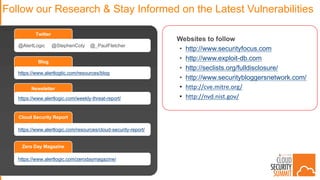
Follow our Research & Stay Informed on the Latest Vulnerabilities
Blog
https://www.alertlogtic.com/resources/blog
Newsletter
https://www.alertlogic.com/weekly-threat-report/
Cloud Security Report
https://www.alertlogic.com/resources/cloud-security-report/
Zero Day Magazine
https://www.alertlogic.com/zerodaymagazine/
Twitter
@AlertLogic @StephenCoty @_PaulFletcher
Websites to follow
• http://www.securityfocus.com
• http://www.exploit-db.com
• http://seclists.org/fulldisclosure/
• http://www.securitybloggersnetwork.com/
• http://cve.mitre.org/
• http://nvd.nist.gov/
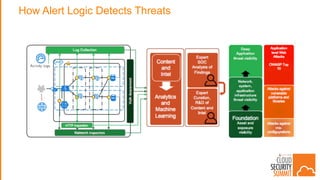
How Alert Logic Detects Threats

Css sf azure_8-9-17-protecting_web_apps_stephen coty_al

  • 1.
    WEB APPLICATION SECURITY: PROTECTINGYOUR WEB APPLICATION Stephen Coty Chief Security Evangelist, Alert Logic
  • 2.
    Threats by CustomerEnvironment Source: Alert Logic 2015 Customer Data 48% 23% 21% 2% 6% CLOUD ATTACKS APPLICATION ATTACK BRUTE FORCE RECON SUSPICIOUS ACTIVITY TROJAN ACTIVITY 25% 47% 10% 11% 7% Brick and Mortar ATTACKS APPLICATION ATTACK BRUTE FORCE RECON SUSPICIOUS ACTIVITY TROJAN ACTIVITY
  • 3.
    Web Application Security sqli, 59% openvas, 13% apache_struts, 9% joomlaua, 4% pagerank, 2% havij, 2% magento_sqli, 2% sqli_error, 2% sqlmap, 1% tor, 1% sqliopenvas apache_struts joomlaua pagerank havij magento_sqli sqli_error sqlmap tor Source: Alert Logic CSR 2016
  • 4.
    SQL Injection Last60 Days - 060817
  • 5.
    Vulnerabilities + Change + Shortage Complexityof defending web applications and workloads Risks are moving up the stack 1. Wide range of attacks at every layer of the stack 2. Rapidly changing codebase can introduce unknown vulnerabilities 3. Long tail of exposures inherited from 3rd party development tools 4. Extreme shortage of cloud and application security expertise Web App Attacks OWASP Top 10 Platform / Library Attacks System / Network Attacks Perimeter & end-point security tools fail to protect cloud attack surface Web Apps Server-side Apps App Frameworks Dev Platforms Server OS Hypervisor Databases Networking Cloud Management
  • 6.
    Web Application Security WebApps Server-side Apps App Frameworks Dev Platforms Server OS Hypervisor Databases Networking Cloud Management
  • 7.
    Web Application VulnerabilityExample CVE-1999-0278 – in IIS, remote attackers can obtain source code for ASP files by appending “::$DATA” to the URL Patch MS98-003 Web Apps Server-side Apps App Frameworks Dev Platforms Server OS Hypervisor Databases Networking Cloud Management
  • 8.
  • 9.
    Hacker Recon Methods CrawlingTarget Website Mass Vulnerability Crawl Open Forums Dark Web Web Apps Server-side Apps App Frameworks Dev Platforms Server OS Hypervisor Databases Networking Cloud Management
  • 10.
    Crawling Target Website •Manual - Browse the website as a normal user - Gather email addresses, related domains and domain info - Web application code language o Revision o Plug-ins - Web server OS - User input pages - Directory structure - Backend systems • Software tools - Find hidden forms, software version, js files, links and comments
  • 11.
    Mass Vulnerability Crawl- Example • Google Dorking – (aka Google hacking) Uses the search engine to find difficult information using complex, detailed search queries - Plug in search string to find vulnerable websites - Some have preset search strings - Search results are dynamic - Timing is everything o Target system could be patched o Other hackers got there first
  • 12.
    Open Forums -Example • Vulnerability details - Date reported - Type of vulnerability - Platform impacted - Author (not shown) - Verification (time permitting) - Link to infected application (some)
  • 13.
  • 14.
    Targeted - DarkWeb • Encrypted network • Restricted access between Tor servers and clients • Collection of DBs and communication channels • Hidden from conventional search engines • Shares some features with Open Forums • Tor browser required • More advanced resources and tools
  • 15.
  • 16.
    Attack Methodology • Attackof opportunity - Hacker finds vulnerability within skillset - Target system and organization irrelevant • Targeted attack - Specific to people or organization - System resources • Low cost of entry - Open list of vulnerabilities - Targets easy to find - Hacker’s skill-set varies
  • 17.
    Attacks of Opportunity •Vulnerability Database Monitoring • Block Network Vulnerability Scanning • Google Dorking • Shodan • Application Vulnerability Scan
  • 18.
    Targeted Attacks • ScanningIP Internet Assets • Application/Network Vulnerability Scan • Careers Page • Research Technologies • Social Media Profiling • Phishing Email • Escalate Privileges • Maintain Access • Exfiltration of Data
  • 19.
    FROM WEB APPSTO PRIVILEGED ACCESS
  • 20.
    From Web Appsto Privileged Access • How hacking a web app can lead to system compromise - Code analysis o Review of code to reveal unintended system information - System scanning o Other software could have vulnerabilities - Session Hijacking o Exploiting a current, valid session - Social Engineering o Deception used to manipulate behavior
  • 21.
    From Web Appsto Privileged Access • Code analysis - Account information o Usernames and passwords o Plain text or hashed - Software tools o Web search o Scan to identify • Usernames & passwords o Brute force to crack encryption o Throttle tools to avoid detection o Offline may be an option
  • 22.
    From Web Appsto Privileged Access • Session Hijacking - Obfuscated code o Embedded in images o Mouse-over techniques - Proxy replay - Malicious binary - Session cookies - Java script injection - Cross-site scripting - Routine system maintenance - Bind shell
  • 23.
  • 24.
    Secure Your Code •Test inputs that are open to the Internet • Add delays to your code to confuse bots • Use encryption when you can • Test libraries • Scan plugins • Scan your code after every update • Limit privileges • DevSecOps
  • 25.
    Create Access ManagementPolicies • Identify data infrastructure that requires access • Define roles and responsibilities • Simplify access controls • Key Management System (KMS) • Continually audit access • Start with a least privilege access model
  • 26.
    Adopt a PatchManagement Approach • Constantly scan all production systems • Compare reported vulnerabilities to production infrastructure • Classify the risk based on vulnerability and likelihood • Test patches before you release into production • Setup a regular patching schedule • Keep informed, follow bugtraqer • Golden Images • Reference Architecture, Formation Templates
  • 27.
    Understand Your ServiceProviders Security Model Azure Platform Services Security & Management Azure Infrastructure Services Web Apps Mobile Apps API Management API Apps Logic Apps Notification Hubs Content Delivery Network (CDN) Media Services HDInsight Machine Learning Stream Analytics Data Factory Event Hubs Mobile Engagement Active Directory Multi-Factor Authentication Portal Key Vault Biztalk Services Hybrid Connections Service Bus Storage Queues Store / Marketplace Hybrid Operations Backup StorSimple Site Recovery Import/Export SQL Database DocumentDB Redis Cache Search Tables SQL Data Warehouse Azure AD Connect Health AD Privileged Identity Management Operational Insights Cloud Services Batch Remote App Service Fabric Visual Studio Application Insights Azure SDK Team Project VM Image Gallery & VM Depot Azure Security Center Automation
  • 28.
    Security Management andMonitoring Strategy • Monitoring for malicious activity • Scanning Services • Forensic investigations • Compliance needs • System performance • All sources of log data is collected • Data types (OS, CMS, DB, Web) • WAF • Correlation logic • IAM behavior • IDS Network traffic • FIM Logs • Focused security research • Security content creation • Review process • Live monitoring
  • 29.
    Follow our Research& Stay Informed on the Latest Vulnerabilities Blog https://www.alertlogtic.com/resources/blog Newsletter https://www.alertlogic.com/weekly-threat-report/ Cloud Security Report https://www.alertlogic.com/resources/cloud-security-report/ Zero Day Magazine https://www.alertlogic.com/zerodaymagazine/ Twitter @AlertLogic @StephenCoty @_PaulFletcher Websites to follow • http://www.securityfocus.com • http://www.exploit-db.com • http://seclists.org/fulldisclosure/ • http://www.securitybloggersnetwork.com/ • http://cve.mitre.org/ • http://nvd.nist.gov/
  • 30.
    How Alert LogicDetects Threats