Thank you.The Intersection of Security &
DevOps
Ryan Holland – Sr. Director of Cloud Arch., Alert Logic
Summary
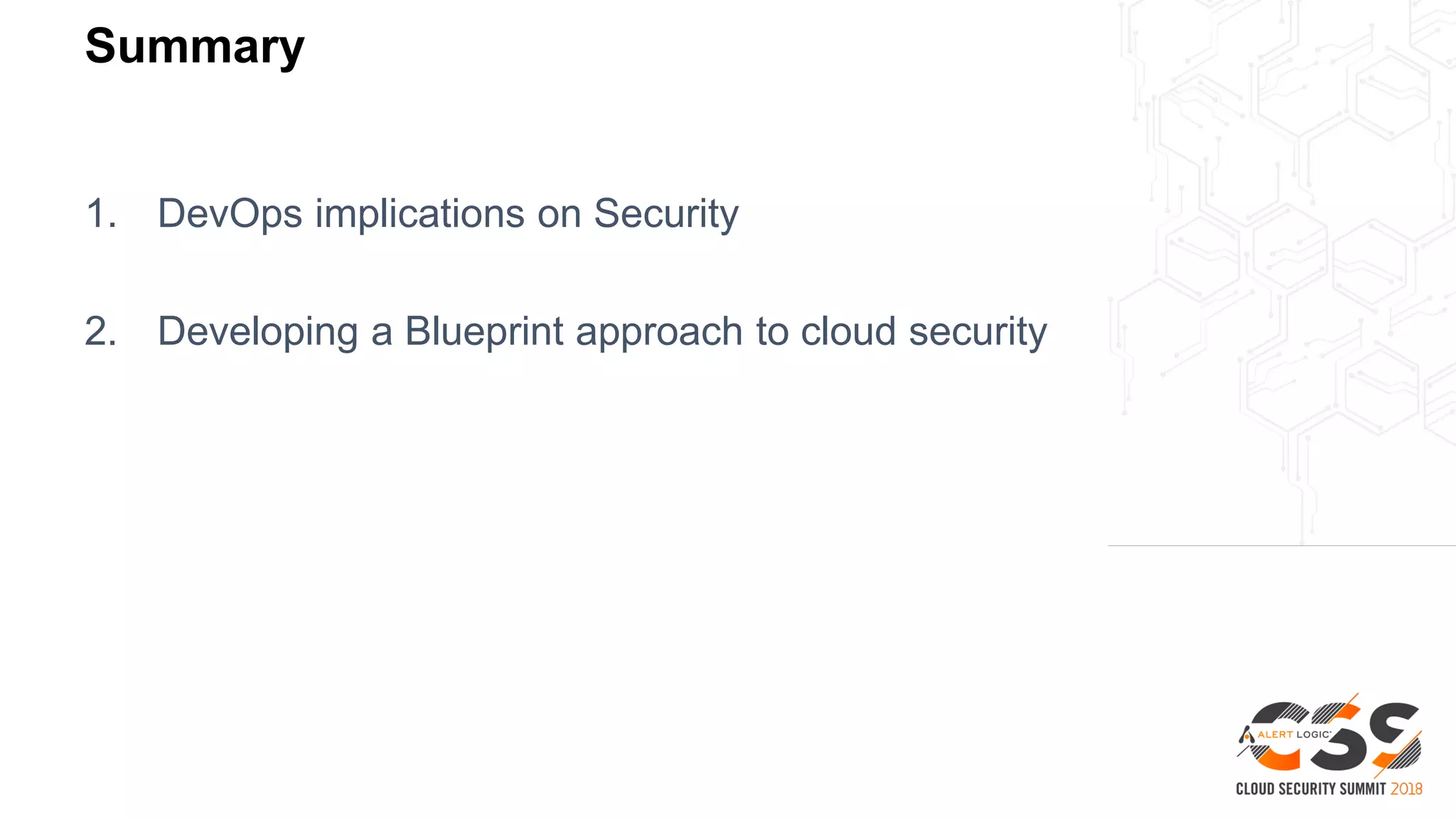
1. DevOps implications on Security
2. Developing a Blueprint approach to cloud security
What Drives Cloud Adoption?
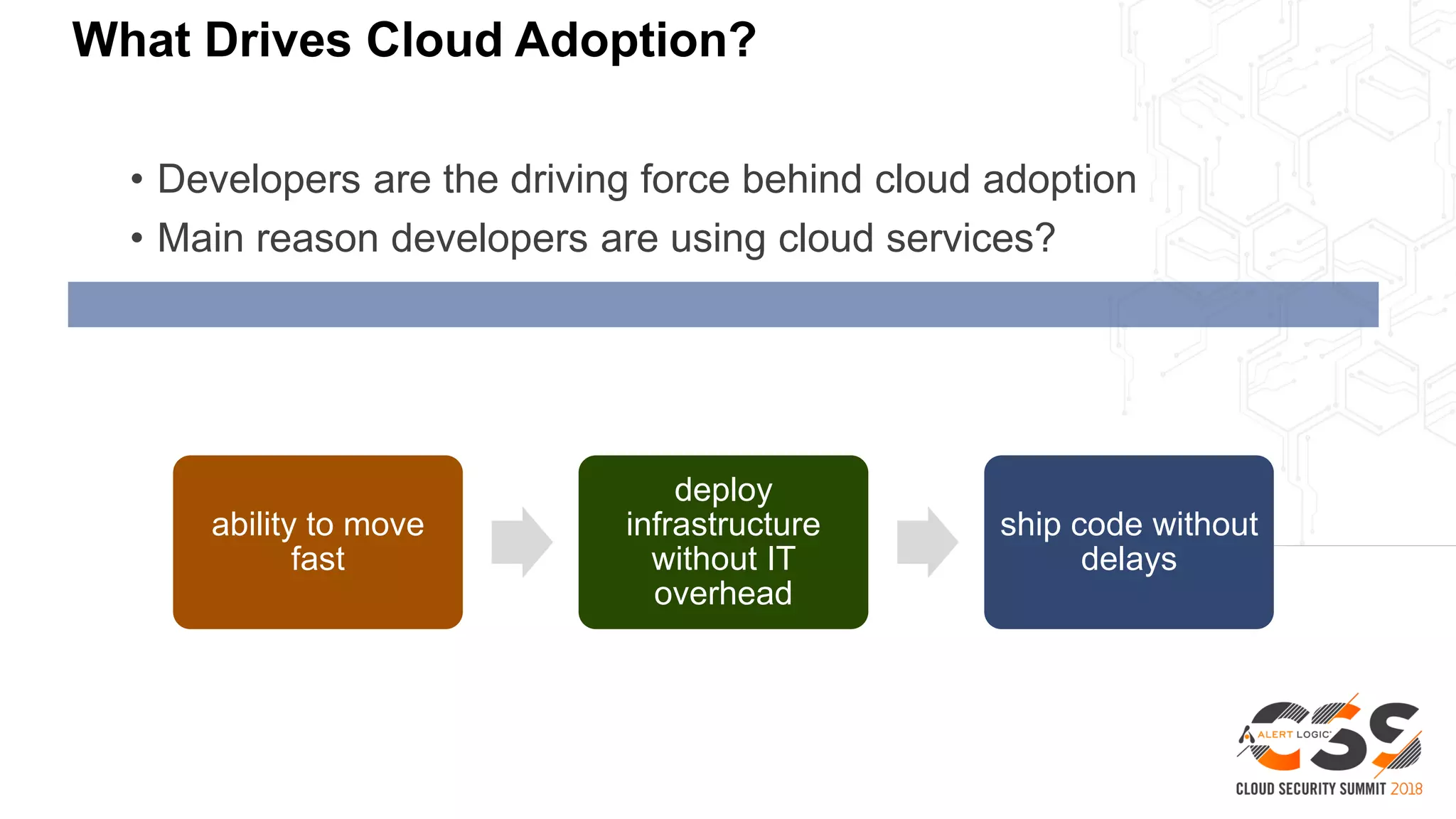
• Developers are the driving force behind cloud adoption
• Main reason developers are using cloud services?
Innovation
ability to move
fast
deploy
infrastructure
without IT
overhead
ship code without
delays
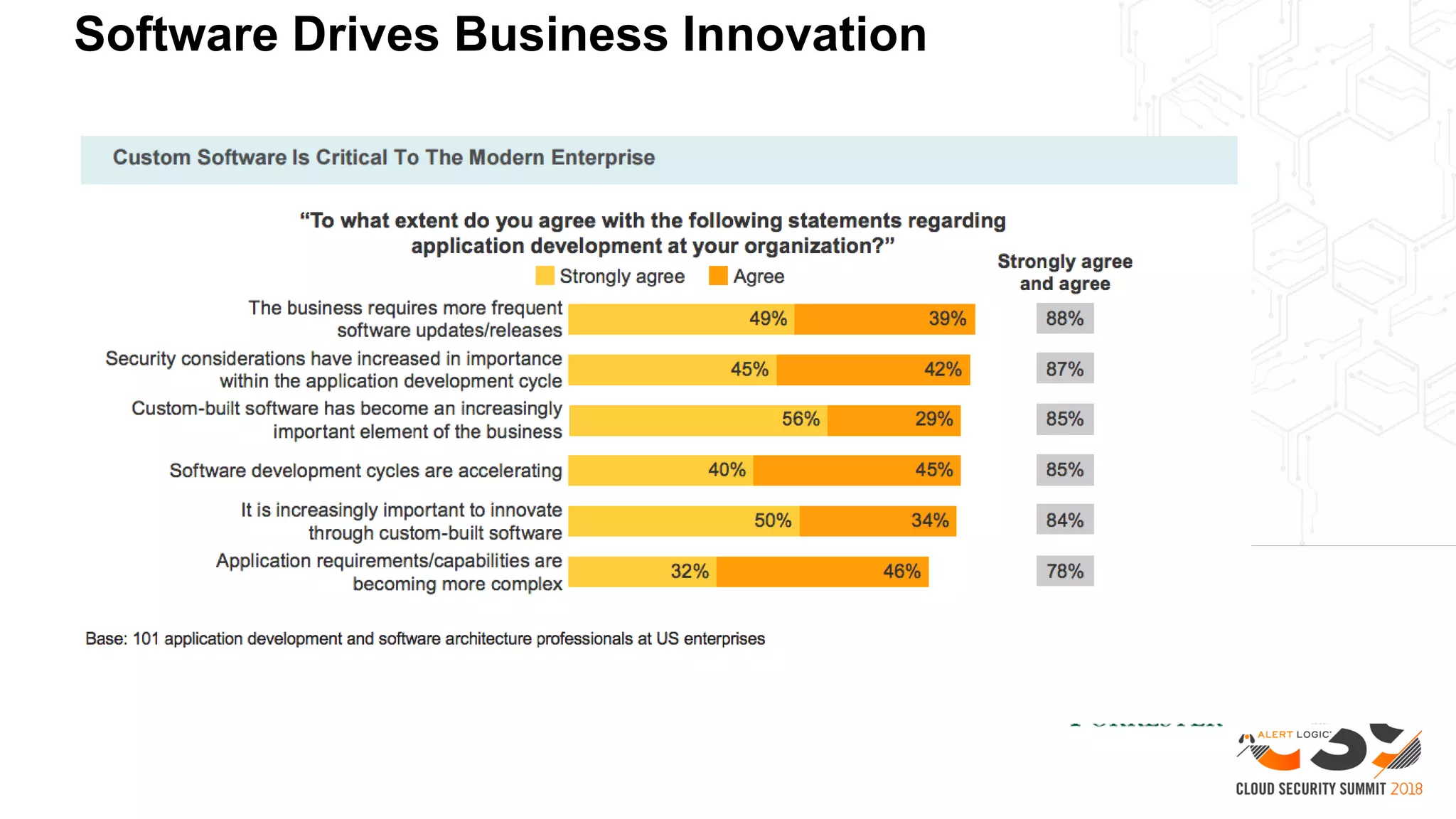
Software Drives Business Innovation
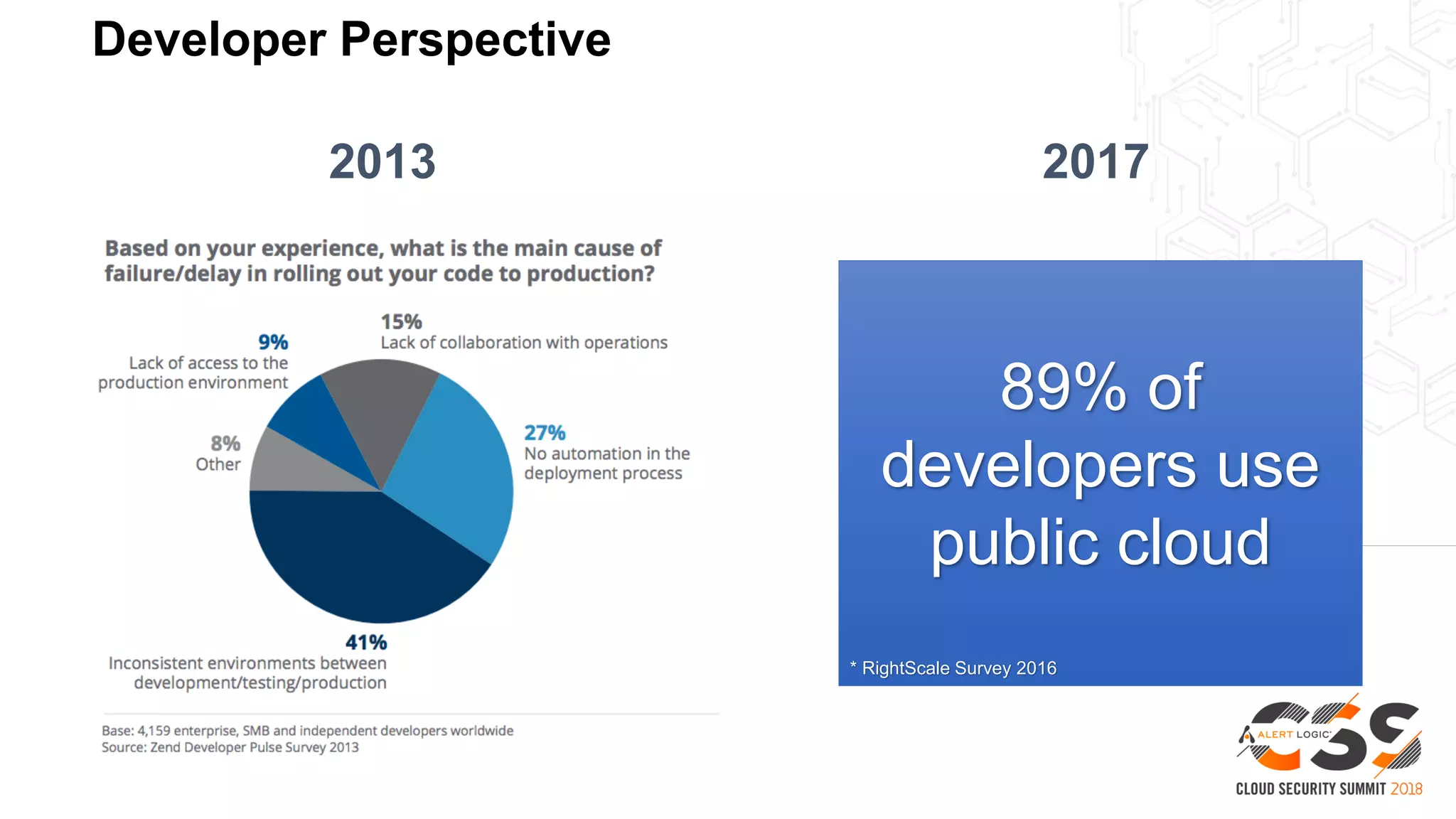
Developer Perspective
2013 2017
89% of
developers use
public cloud
* RightScale Survey 2016
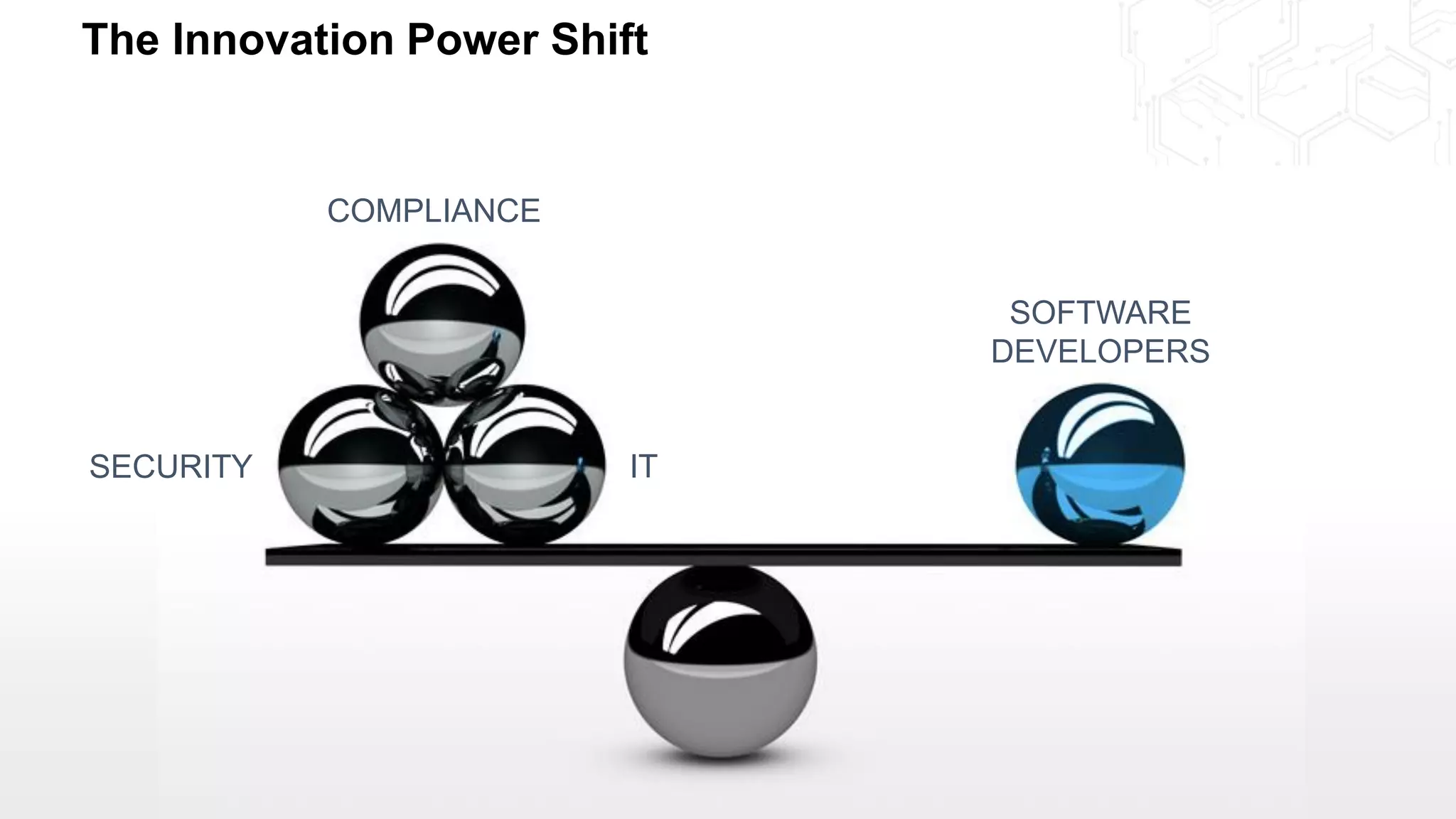
The Innovation Power Shift
ITSECURITY
COMPLIANCE
SOFTWARE
DEVELOPERS
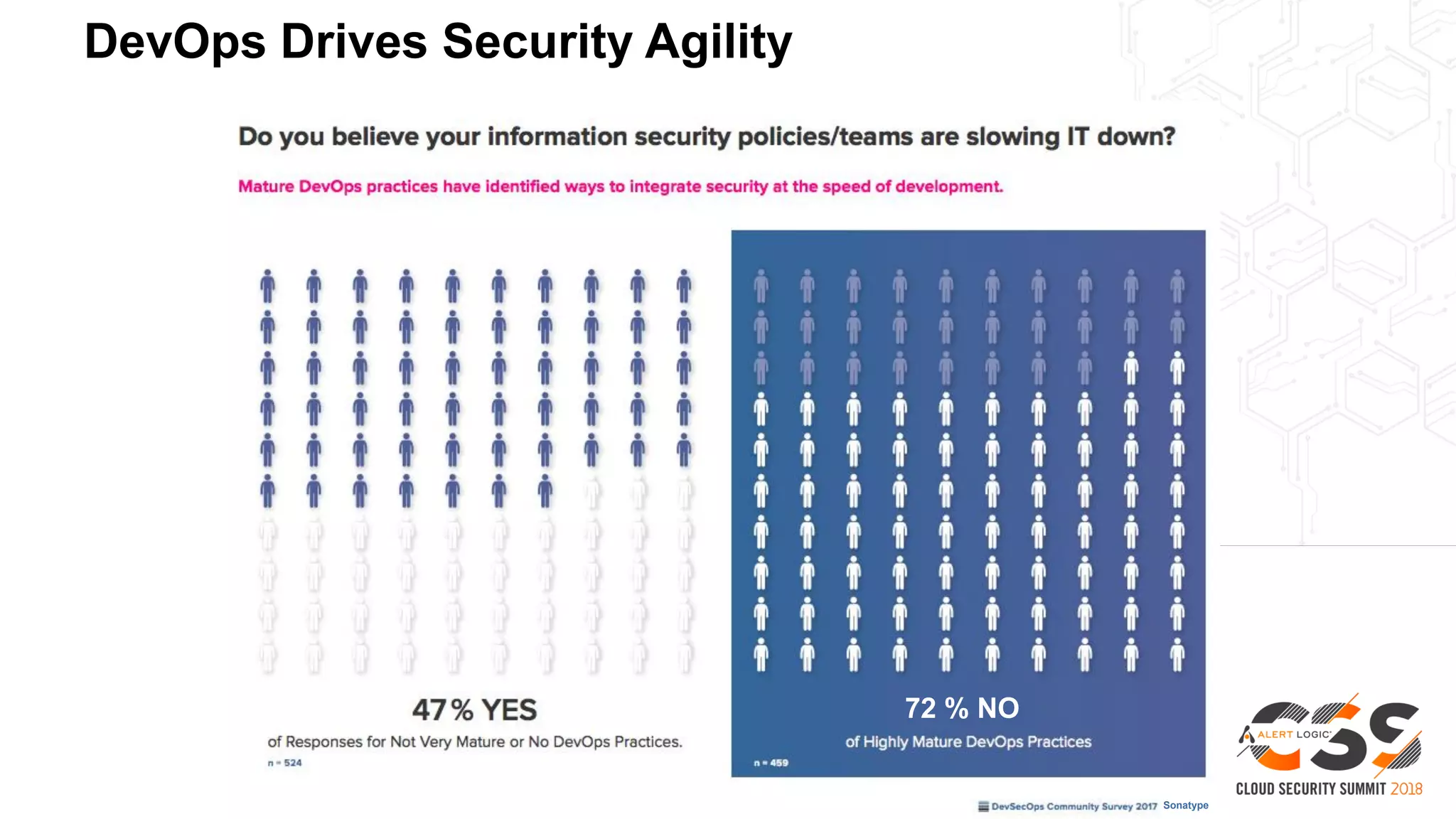
DevOps Drives Security Agility
Sonatype
72 % NO
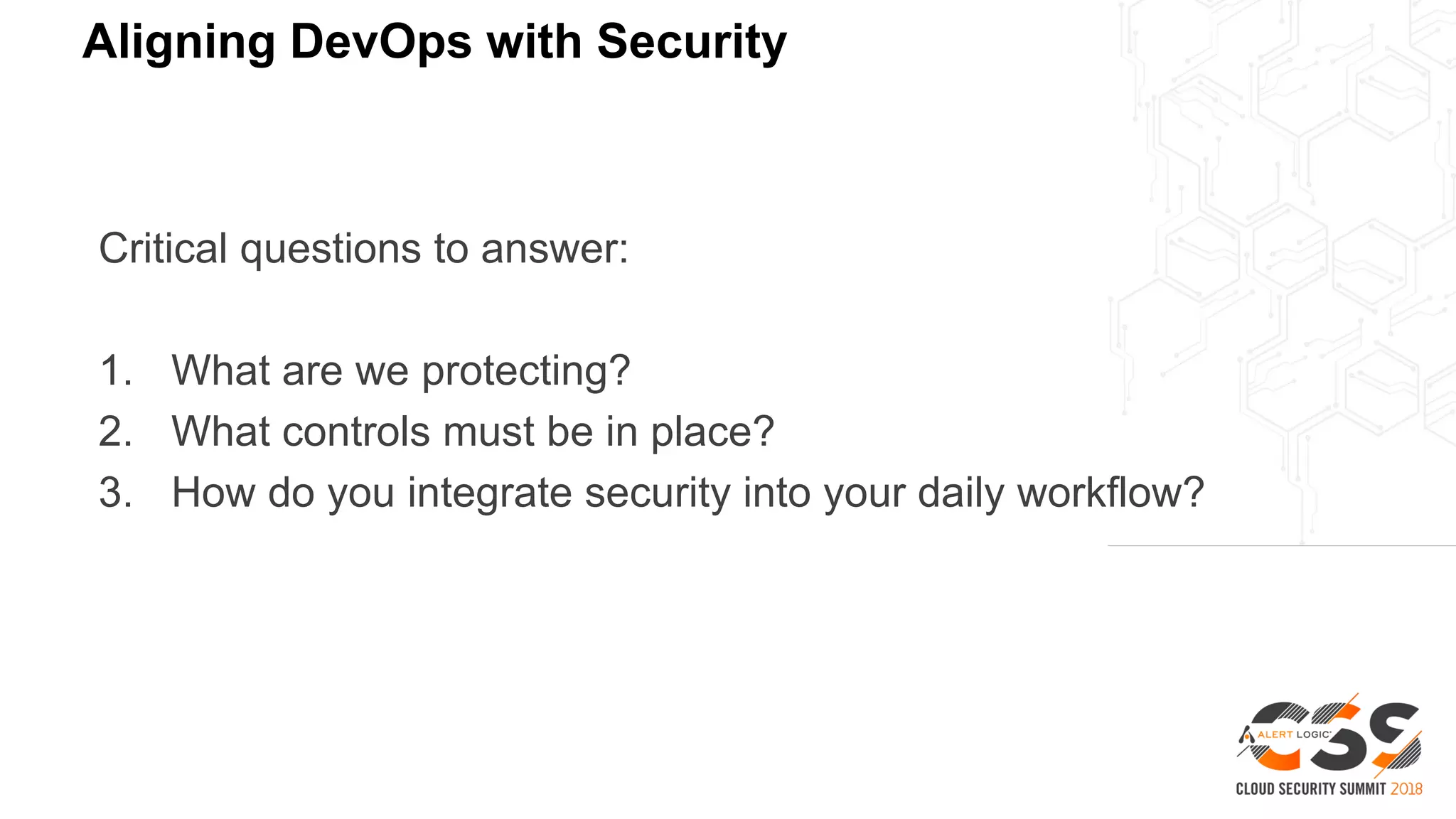
Aligning DevOps with Security
Critical questions to answer:
1. What are we protecting?
2. What controls must be in place?
3. How do you integrate security into your daily workflow?
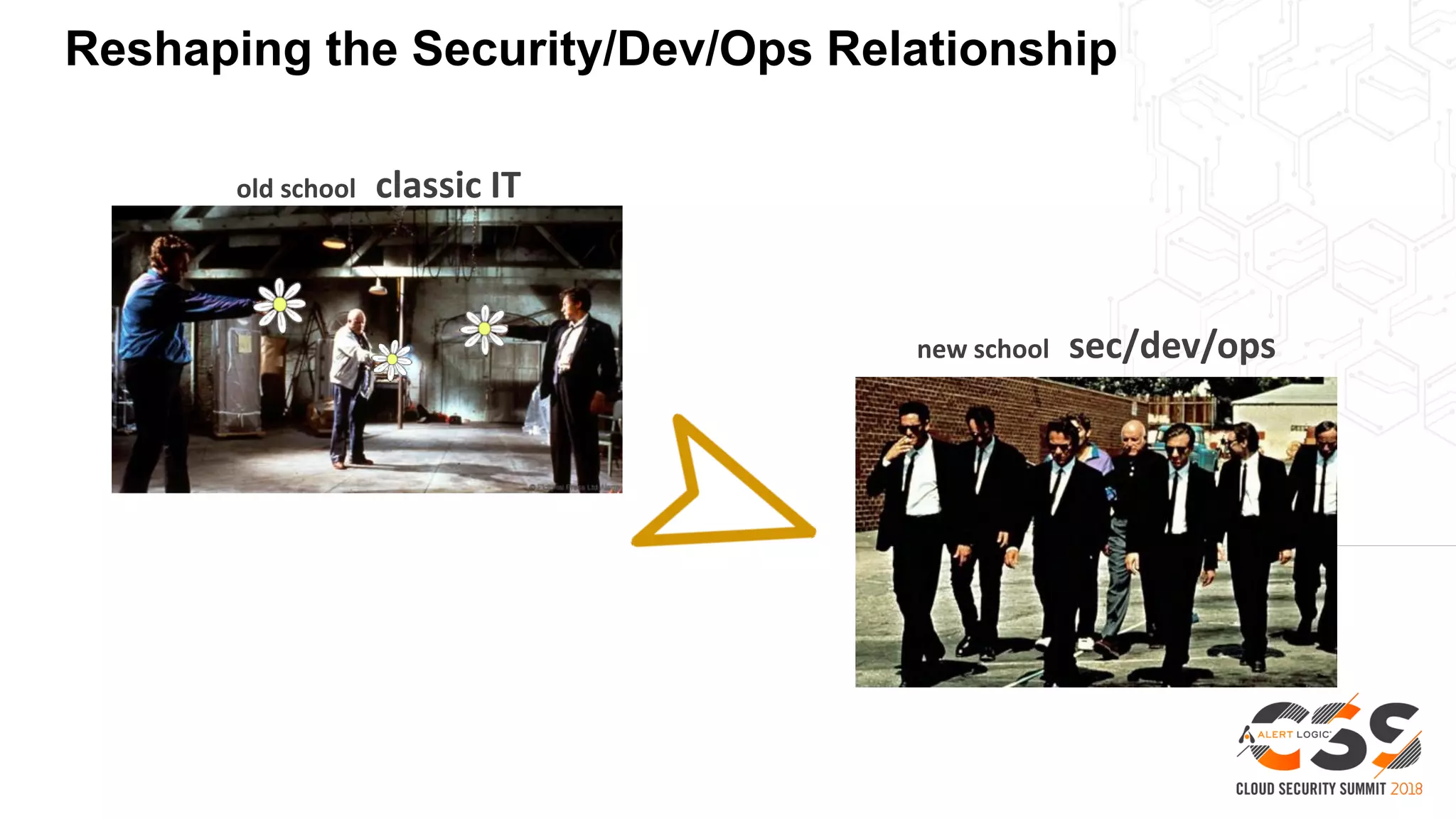
Reshaping the Security/Dev/Ops Relationship
old school classic IT
new school sec/dev/ops
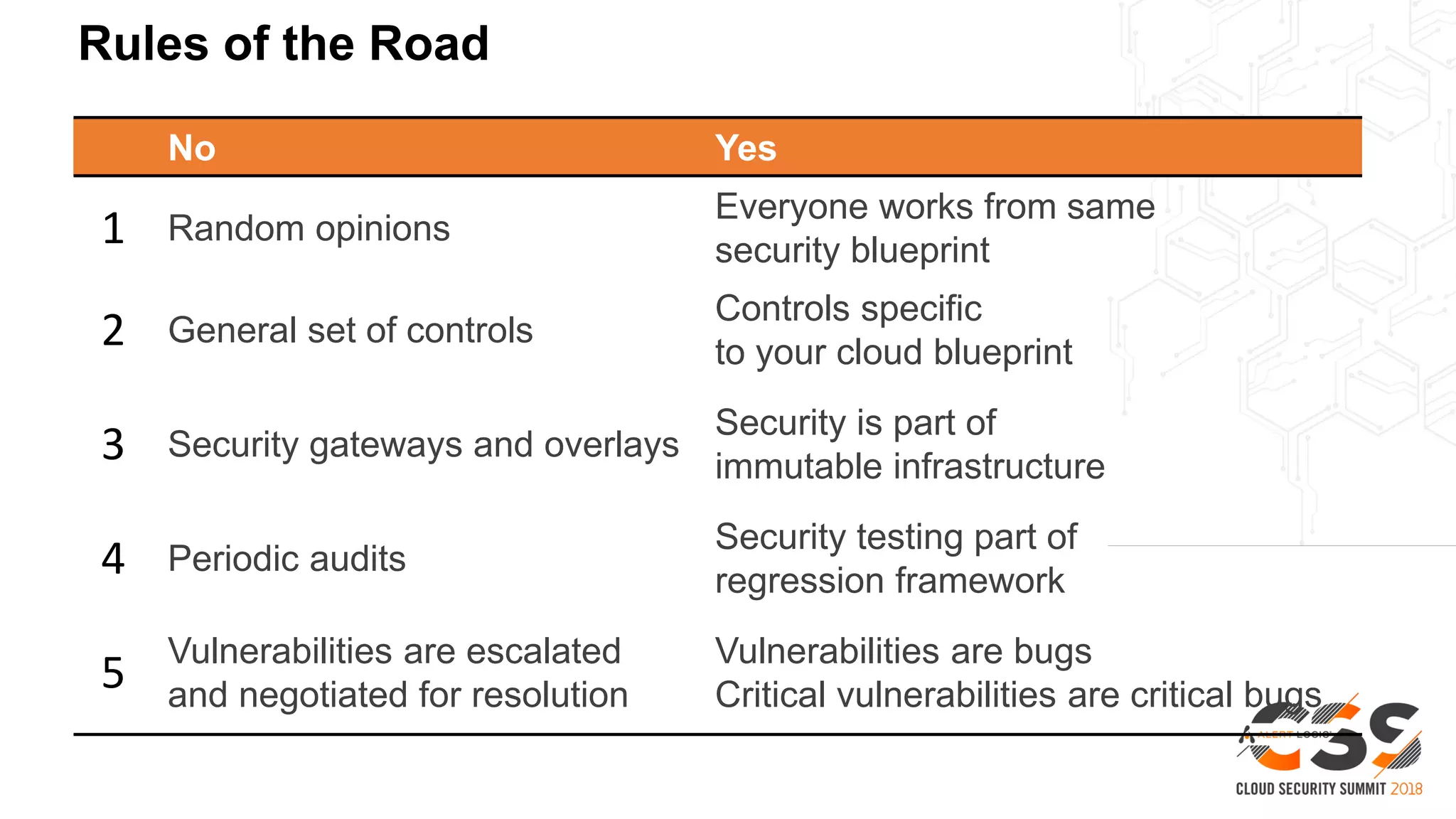
Rules of the Road
No Yes
1 Random opinions
Everyone works from same
security blueprint
2 General set of controls
Controls specific
to your cloud blueprint
3 Security gateways and overlays
Security is part of
immutable infrastructure
4 Periodic audits
Security testing part of
regression framework
5
Vulnerabilities are escalated
and negotiated for resolution
Vulnerabilities are bugs
Critical vulnerabilities are critical bugs
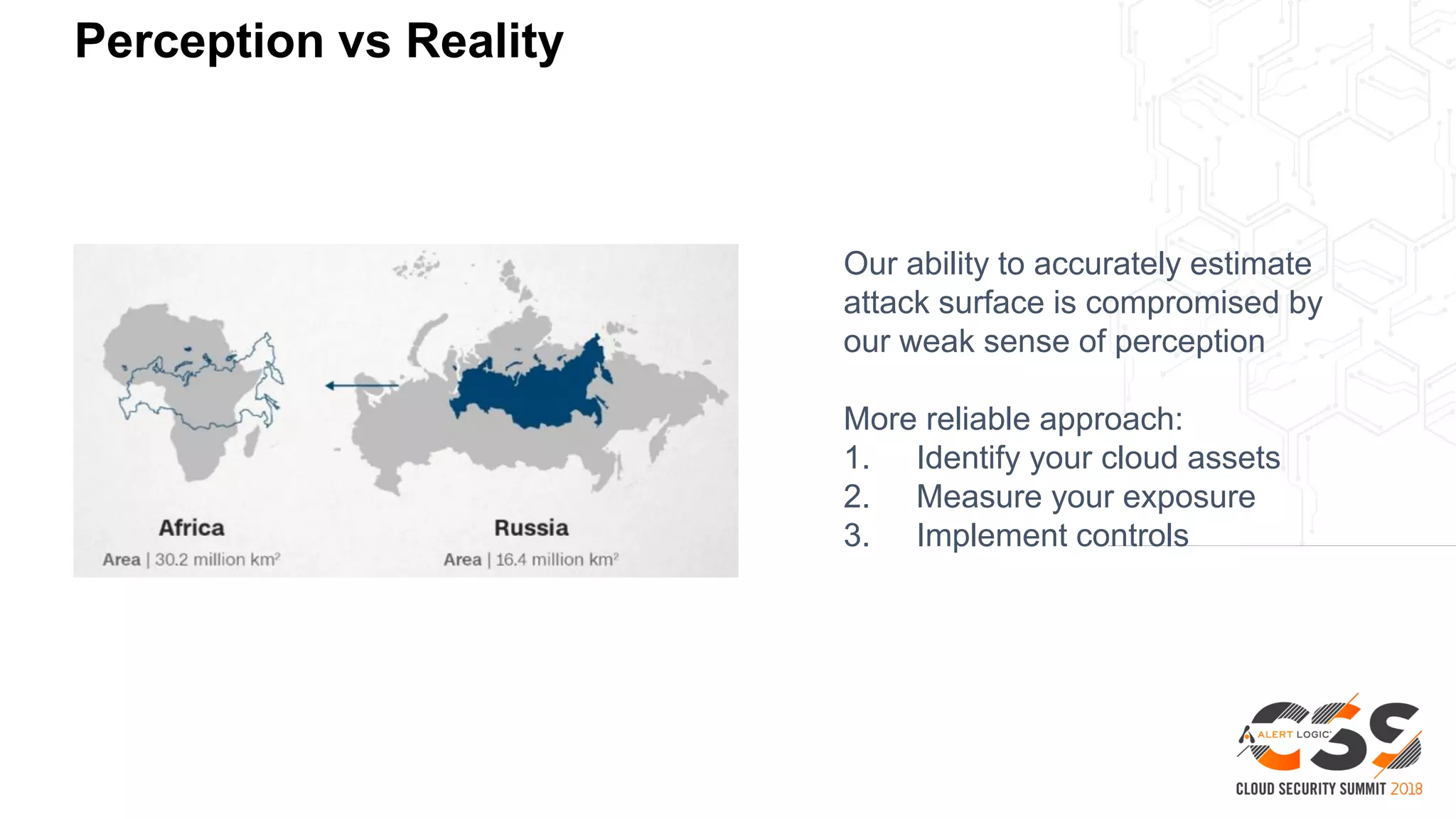
Perception vs Reality
Our ability to accurately estimate
attack surface is compromised by
our weak sense of perception
More reliable approach:
1. Identify your cloud assets
2. Measure your exposure
3. Implement controls
Blueprint Model for
DevOps Security
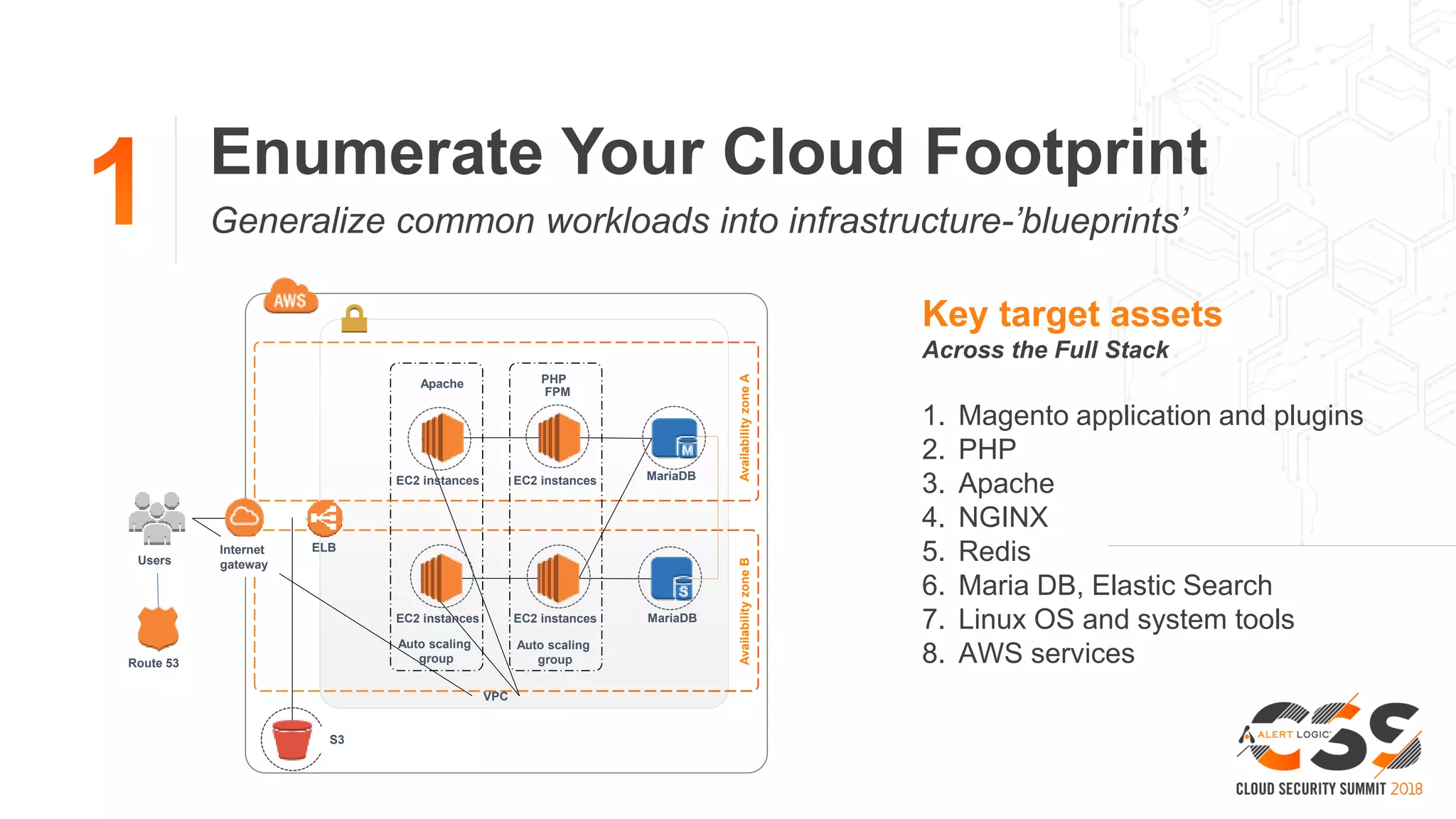
Enumerate Your Cloud Footprint
Generalize common workloads into infrastructure-’blueprints’
Blueprint Driven Approach
Key target assets
Across the Full Stack
1. Magento application and plugins
2. PHP
3. Apache
4. NGINX
5. Redis
6. Maria DB, Elastic Search
7. Linux OS and system tools
8. AWS services
EC2 instances
EC2 instances
VPC
Route 53
Users
Internet
gateway
ELB
MariaDB
MariaDB
AvailabilityzoneAAvailabilityzoneB
Auto scaling
group
Apache PHP
Auto scaling
group
EC2 instances
EC2 instances
FPM
S3
Threat model
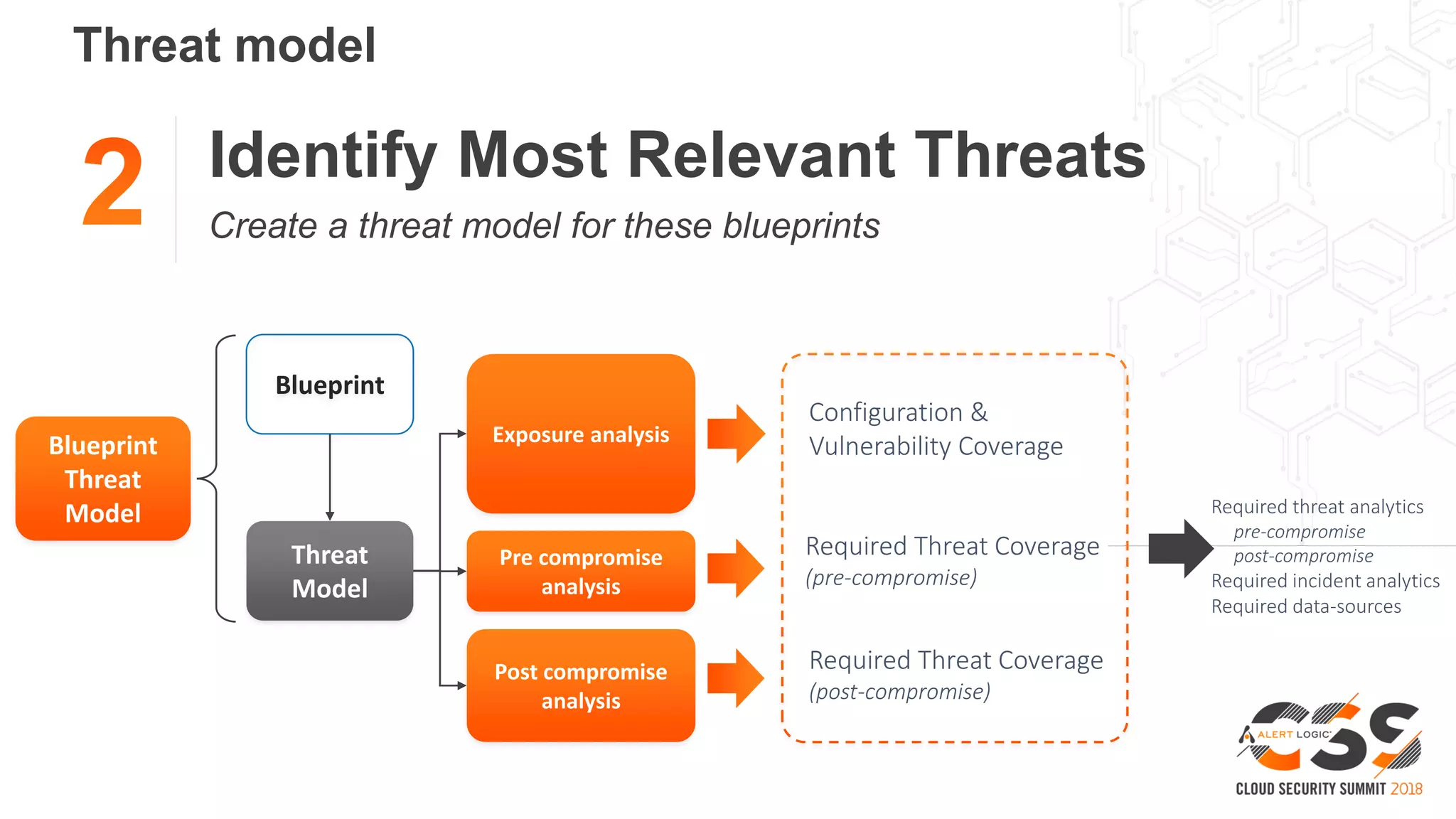
Identify Most Relevant Threats
Create a threat model for these blueprints
Blueprint
Threat
Model
Blueprint
Threat
Model
Exposure analysis
Post compromise
analysis
Configuration &
Vulnerability Coverage
Required Threat Coverage
(pre-compromise)
Required Threat Coverage
(post-compromise)
Required threat analytics
pre-compromise
post-compromise
Required incident analytics
Required data-sources
Pre compromise
analysis
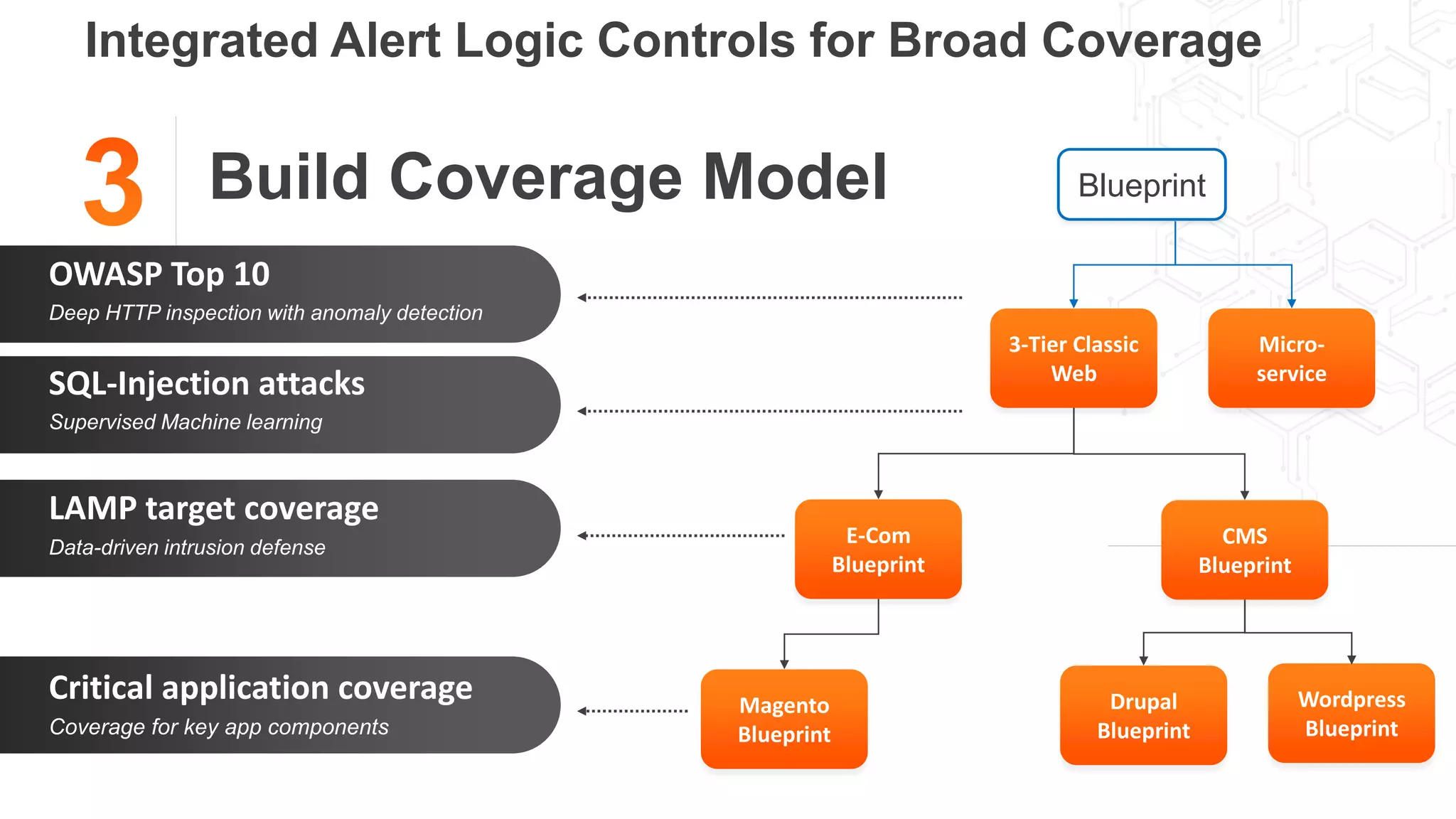
Integrated Alert Logic Controls for Broad Coverage
Build Coverage Model Blueprint
3-Tier Classic
Web
Micro-
service
E-Com
Blueprint
CMS
Blueprint
Magento
Blueprint
Wordpress
Blueprint
Drupal
Blueprint
OWASP Top 10
SQL-Injection attacks
LAMP target coverage
Critical application coverage
Deep HTTP inspection with anomaly detection
Supervised Machine learning
Data-driven intrusion defense
Coverage for key app components
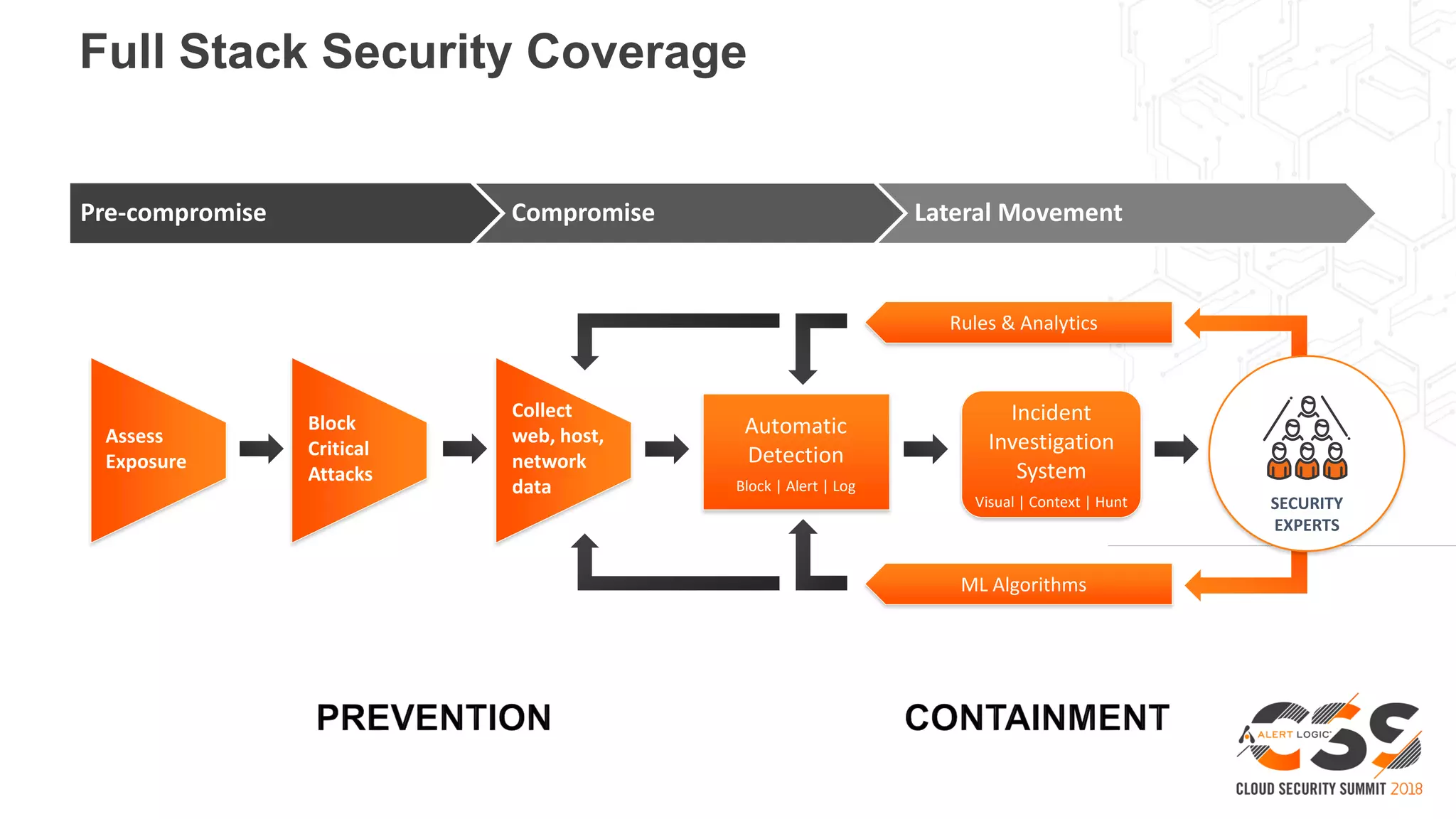
Full Stack Security Coverage
Pre-compromise Compromise Lateral Movement
Incident
Investigation
System
Visual | Context | Hunt
Collect
web, host,
network
data
Automatic
Detection
Block | Alert | Log
ML Algorithms
Rules & Analytics
SECURITY
EXPERTS
Assess
Exposure
Block
Critical
Attacks
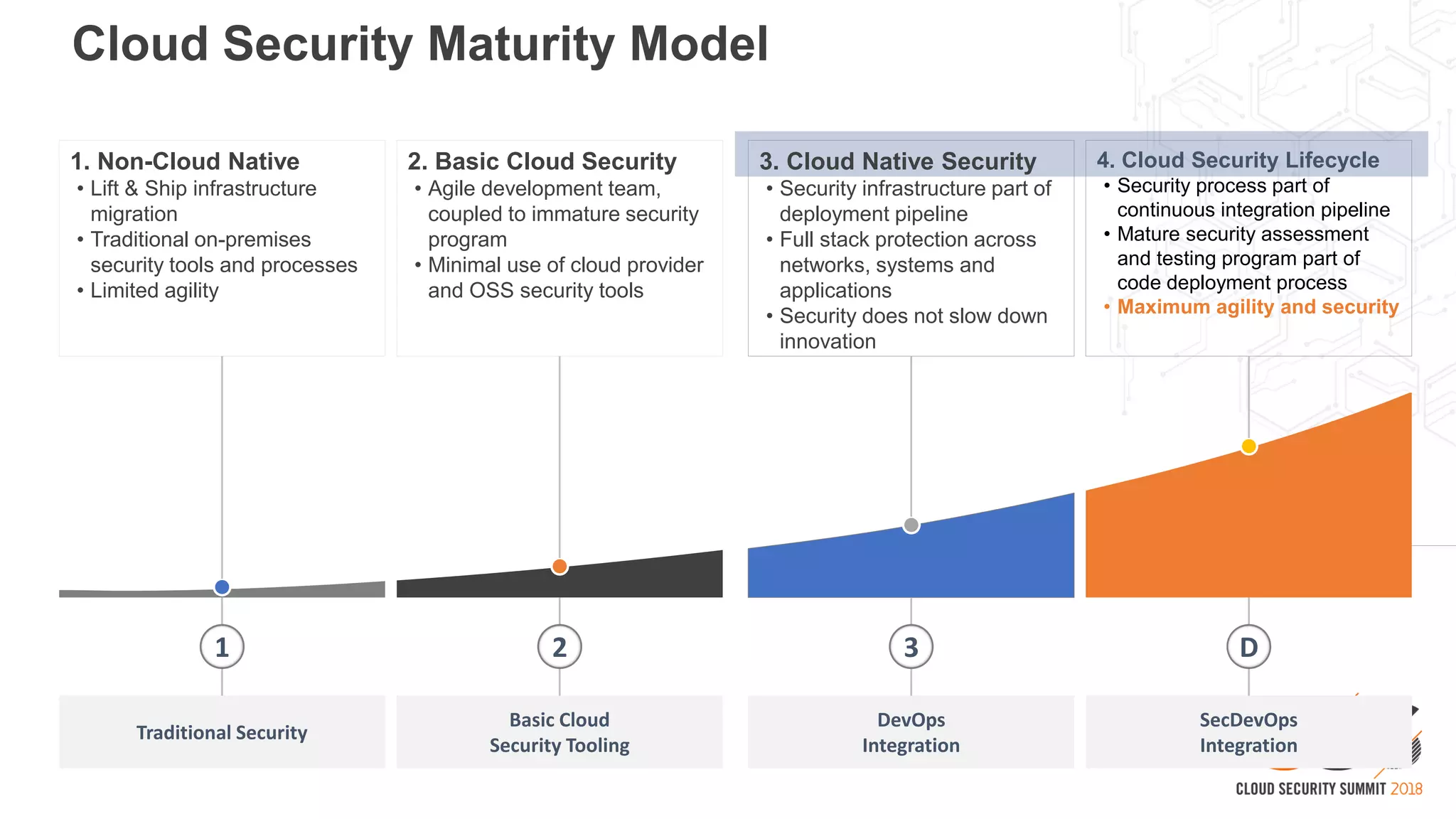
Cloud Security Maturity Model
Basic Cloud
Security Tooling
2
2. Basic Cloud Security
• Agile development team,
coupled to immature security
program
• Minimal use of cloud provider
and OSS security tools
Traditional Security
1. Non-Cloud Native
• Lift & Ship infrastructure
migration
• Traditional on-premises
security tools and processes
• Limited agility
1
DevOps
Integration
3
3. Cloud Native Security
• Security infrastructure part of
deployment pipeline
• Full stack protection across
networks, systems and
applications
• Security does not slow down
innovation
SecDevOps
Integration
D
4. Cloud Security Lifecycle
• Security process part of
continuous integration pipeline
• Mature security assessment
and testing program part of
code deployment process
• Maximum agility and security

The Intersection of Security and DevOps

  • 1.
    Thank you.The Intersectionof Security & DevOps Ryan Holland – Sr. Director of Cloud Arch., Alert Logic
  • 2.
    Summary 1. DevOps implicationson Security 2. Developing a Blueprint approach to cloud security
  • 3.
    What Drives CloudAdoption? • Developers are the driving force behind cloud adoption • Main reason developers are using cloud services? Innovation ability to move fast deploy infrastructure without IT overhead ship code without delays
  • 4.
  • 5.
    Developer Perspective 2013 2017 89%of developers use public cloud * RightScale Survey 2016
  • 6.
    The Innovation PowerShift ITSECURITY COMPLIANCE SOFTWARE DEVELOPERS
  • 7.
    DevOps Drives SecurityAgility Sonatype 72 % NO
  • 8.
    Aligning DevOps withSecurity Critical questions to answer: 1. What are we protecting? 2. What controls must be in place? 3. How do you integrate security into your daily workflow?
  • 9.
    Reshaping the Security/Dev/OpsRelationship old school classic IT new school sec/dev/ops
  • 10.
    Rules of theRoad No Yes 1 Random opinions Everyone works from same security blueprint 2 General set of controls Controls specific to your cloud blueprint 3 Security gateways and overlays Security is part of immutable infrastructure 4 Periodic audits Security testing part of regression framework 5 Vulnerabilities are escalated and negotiated for resolution Vulnerabilities are bugs Critical vulnerabilities are critical bugs
  • 11.
    Perception vs Reality Ourability to accurately estimate attack surface is compromised by our weak sense of perception More reliable approach: 1. Identify your cloud assets 2. Measure your exposure 3. Implement controls
  • 12.
  • 13.
    Enumerate Your CloudFootprint Generalize common workloads into infrastructure-’blueprints’ Blueprint Driven Approach Key target assets Across the Full Stack 1. Magento application and plugins 2. PHP 3. Apache 4. NGINX 5. Redis 6. Maria DB, Elastic Search 7. Linux OS and system tools 8. AWS services EC2 instances EC2 instances VPC Route 53 Users Internet gateway ELB MariaDB MariaDB AvailabilityzoneAAvailabilityzoneB Auto scaling group Apache PHP Auto scaling group EC2 instances EC2 instances FPM S3
  • 14.
    Threat model Identify MostRelevant Threats Create a threat model for these blueprints Blueprint Threat Model Blueprint Threat Model Exposure analysis Post compromise analysis Configuration & Vulnerability Coverage Required Threat Coverage (pre-compromise) Required Threat Coverage (post-compromise) Required threat analytics pre-compromise post-compromise Required incident analytics Required data-sources Pre compromise analysis
  • 15.
    Integrated Alert LogicControls for Broad Coverage Build Coverage Model Blueprint 3-Tier Classic Web Micro- service E-Com Blueprint CMS Blueprint Magento Blueprint Wordpress Blueprint Drupal Blueprint OWASP Top 10 SQL-Injection attacks LAMP target coverage Critical application coverage Deep HTTP inspection with anomaly detection Supervised Machine learning Data-driven intrusion defense Coverage for key app components
  • 16.
    Full Stack SecurityCoverage Pre-compromise Compromise Lateral Movement Incident Investigation System Visual | Context | Hunt Collect web, host, network data Automatic Detection Block | Alert | Log ML Algorithms Rules & Analytics SECURITY EXPERTS Assess Exposure Block Critical Attacks
  • 17.
    Cloud Security MaturityModel Basic Cloud Security Tooling 2 2. Basic Cloud Security • Agile development team, coupled to immature security program • Minimal use of cloud provider and OSS security tools Traditional Security 1. Non-Cloud Native • Lift & Ship infrastructure migration • Traditional on-premises security tools and processes • Limited agility 1 DevOps Integration 3 3. Cloud Native Security • Security infrastructure part of deployment pipeline • Full stack protection across networks, systems and applications • Security does not slow down innovation SecDevOps Integration D 4. Cloud Security Lifecycle • Security process part of continuous integration pipeline • Mature security assessment and testing program part of code deployment process • Maximum agility and security