Threat Modeling the CI/CD Pipeline to Improve Software Supply Chain Security (Raw Slides)
The document discusses threat modeling in CI/CD pipelines to enhance software supply chain security, highlighting risks like software build pipeline vulnerabilities and compromised infrastructure, as evidenced by incidents like SolarWinds. It outlines challenges in identifying attack surfaces, the importance of automated testing, and the role of open source components in software security. Recommendations include fostering meaningful vendor conversations and employing threat models to identify and address security gaps within the pipeline.
Concerns regarding open source components, including policies and potential backdoors in dependencies.
How builds are managed, the frequency of builds, and trust issues with source code and open source components.
Types of automated testing, security testing techniques (SAST, DAST, IAST, SCA), and their implementation.Focus on detection methods for software backdoors and the importance of packaging and distribution.
Examination of software packaging types, distribution methods, and the significance of build verification.
Exercises to analyze netflow data from build environments and the follow-through of code changes.
Step-by-step process to track a code change, emphasizing authentication and security checks at each stage.
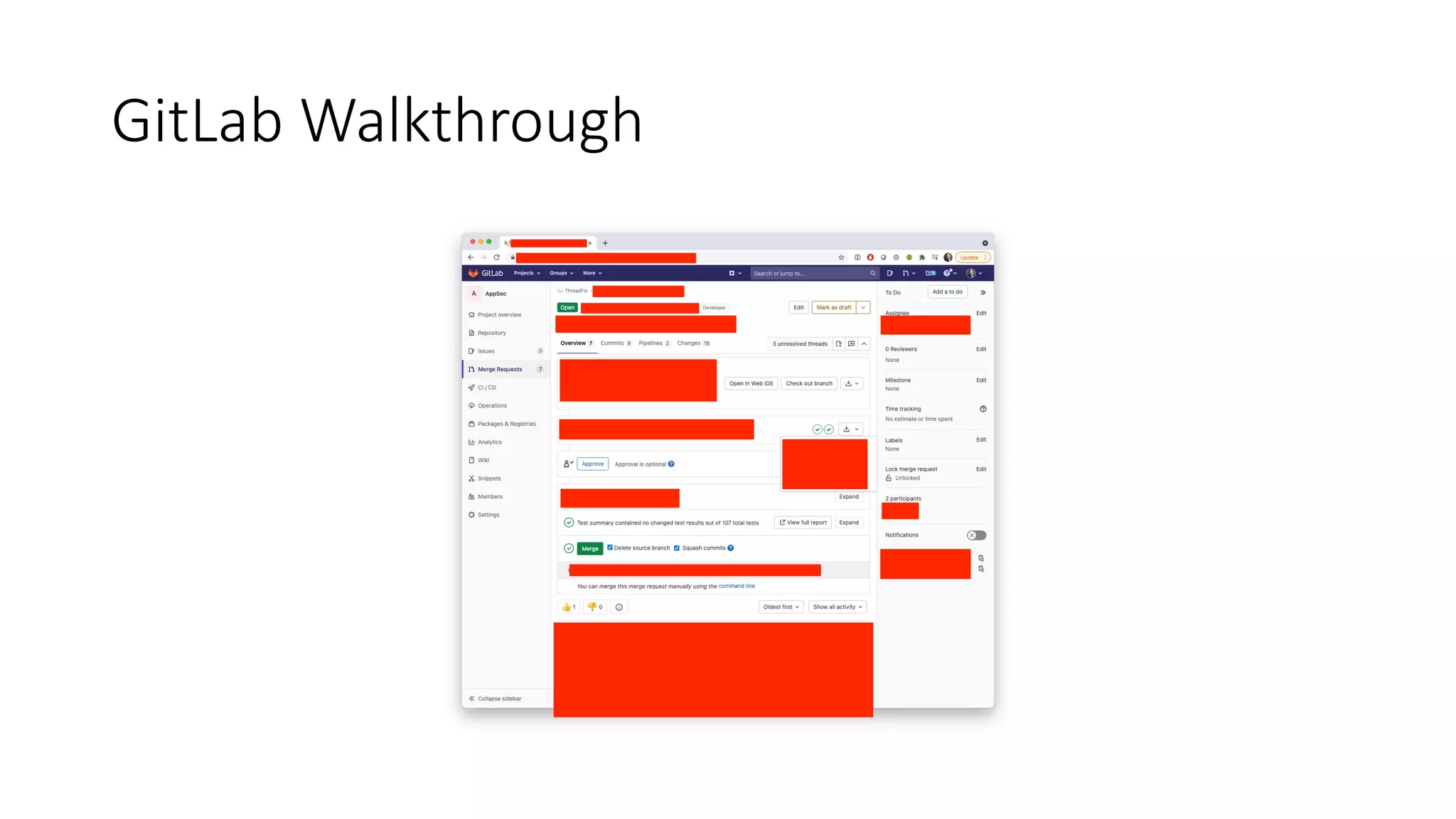
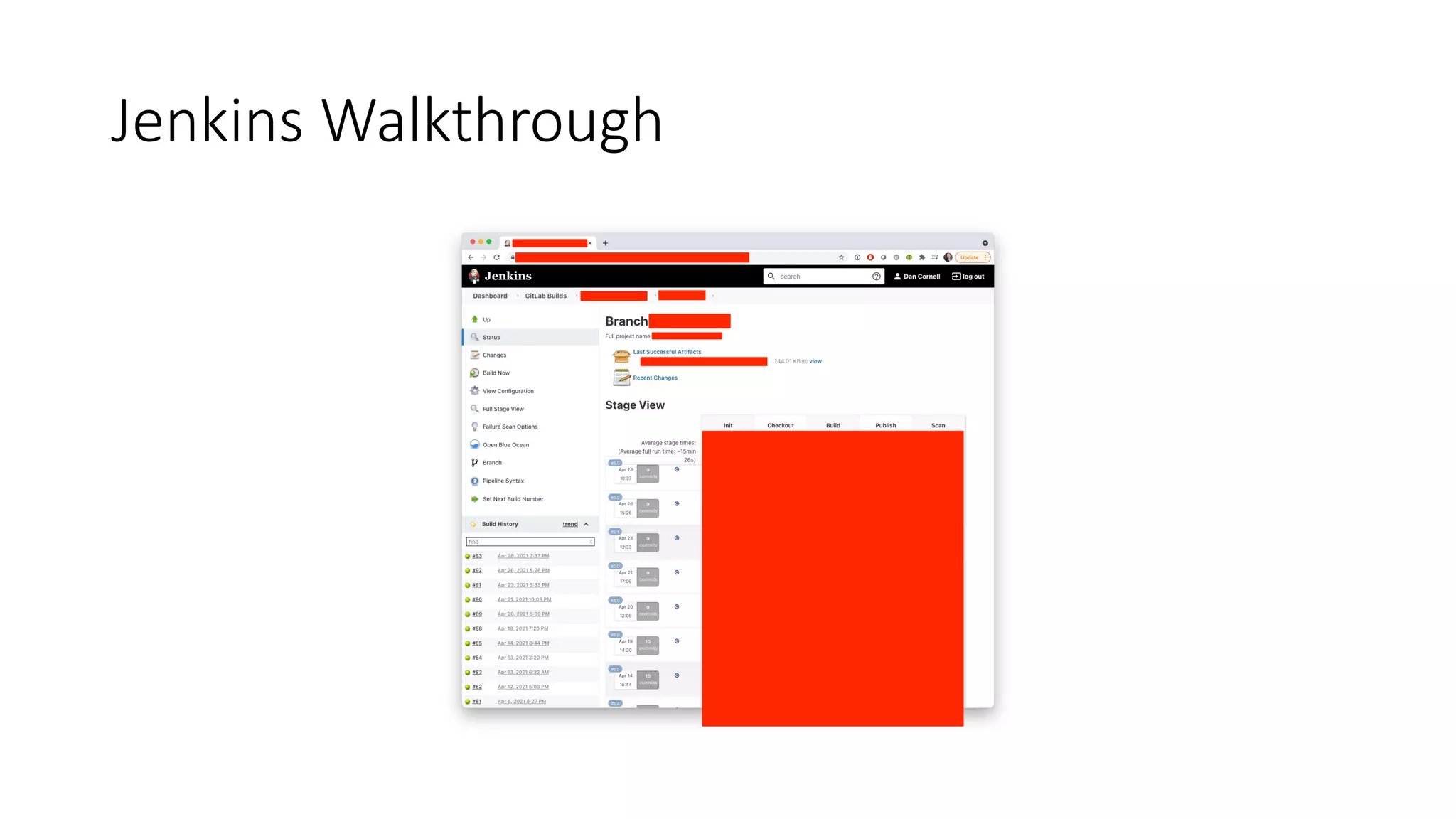
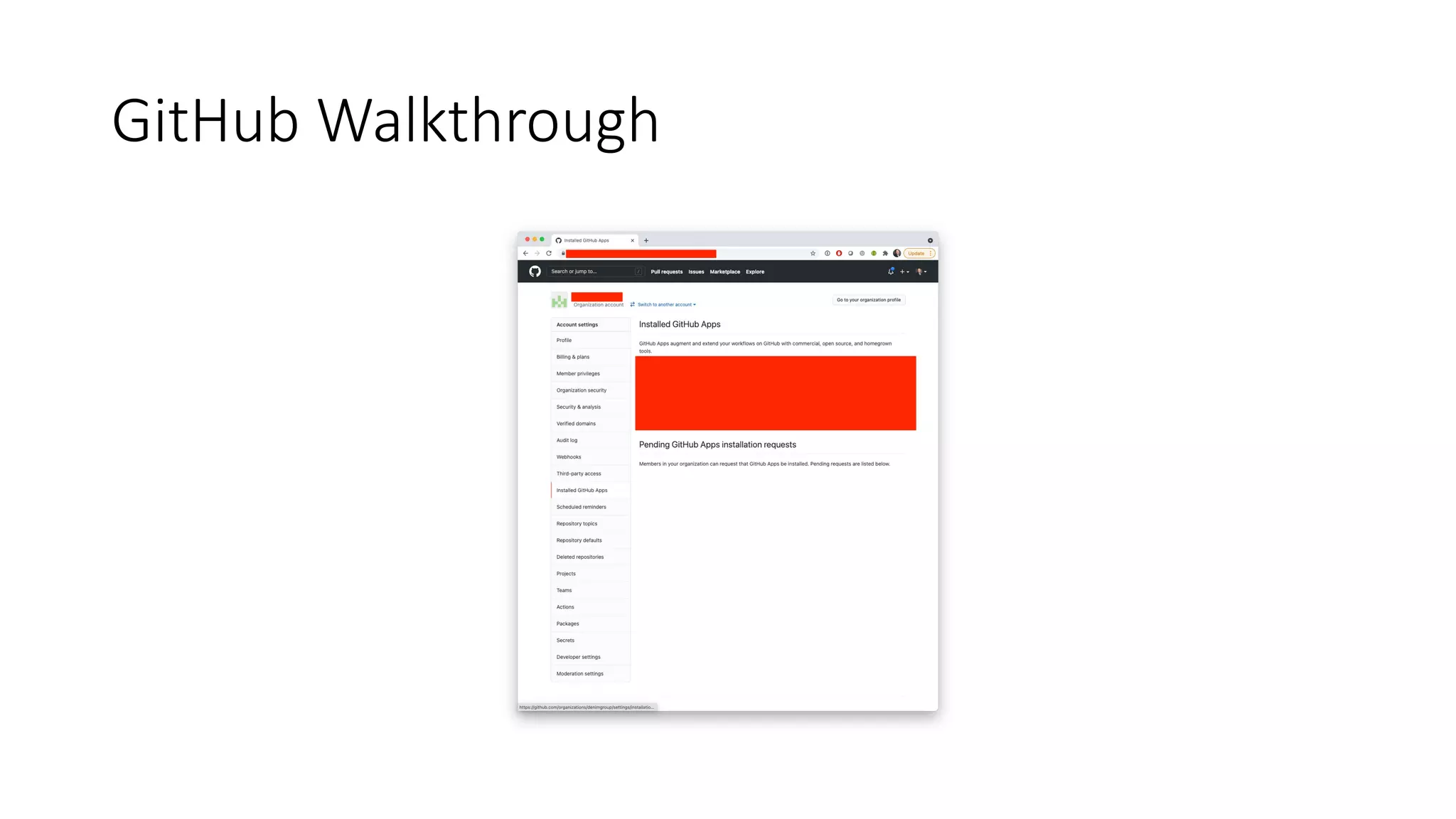
Walkthroughs of CI/CD tools: GitLab, Jenkins, and GitHub for practical insights into their usage.
Implementing parallel build pipelines to enhance security and comparing outputs from different toolchains.
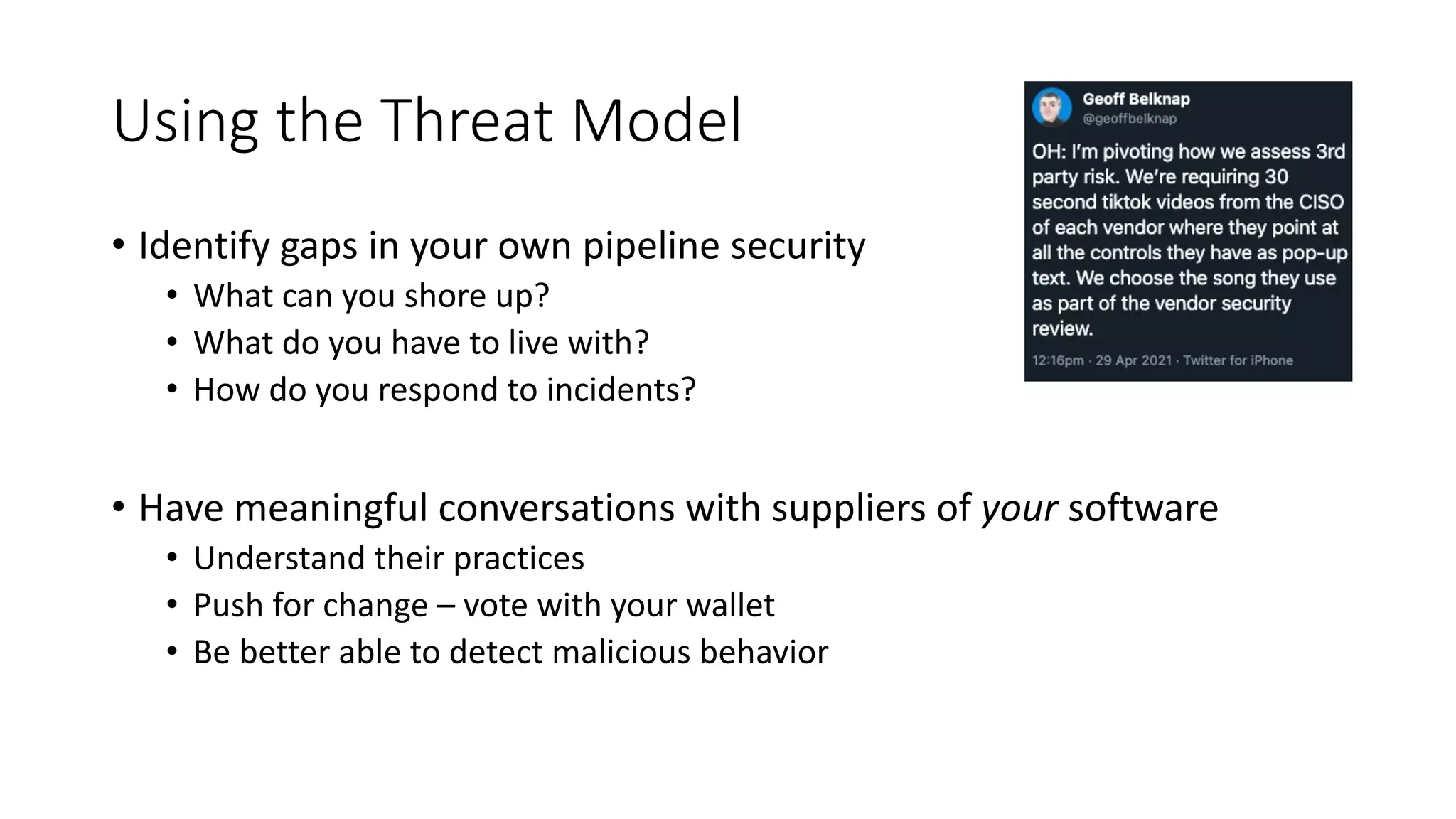
Utilizing threat models to identify security gaps, incident response, supplier engagement, and proactive detection.
Addressing the importance of vendor management in maintaining security in software supply chains and concluding Q&A.
Threat Modeling the CI/CD Pipeline to Improve Software Supply Chain Security (Raw Slides)
1.
Threat Modeling theCI/CD
Pipeline to Improve Software
Supply Chain Security
Dan Cornell
CTO, Denim Group
2.
Agenda
• Risk Exposurefrom Software Build Pipeline
• Constituents and Stakeholders
• Drivers for Change
• Threat Modeling Overview
• Supporting Infrastructure
• Pipeline Threat Model
• Using the Threat Model
• Questions
3.
Notable Incidents
• SolarWinds
•Compromised server in build infrastructure
• CodeCov
• Compromised container server
• Potentially spawning Executive Order, other government activity
4.
Fundamental Disconnect
• Wehave developed tremendous tooling and automation that allows
us to create secure, reliable software at a scale not previously
considered
• The way we deploy and deliver this tooling puts us in a situation
where we can't actually trust anything that comes out of it
• Oops
Availability Impact
• Developmentpipeline infrastructure is hyper-connected
• Release delays
• Absence or misbehavior of supporting services
9.
Threat Modeling Overview
•Full overview beyond the scope of this talk
• Some background for reference
• https://www.denimgroup.com/resources/blog/2014/07/modeling-builders-breakers/
• Let's learn as we go
10.
Supporting Infrastructure
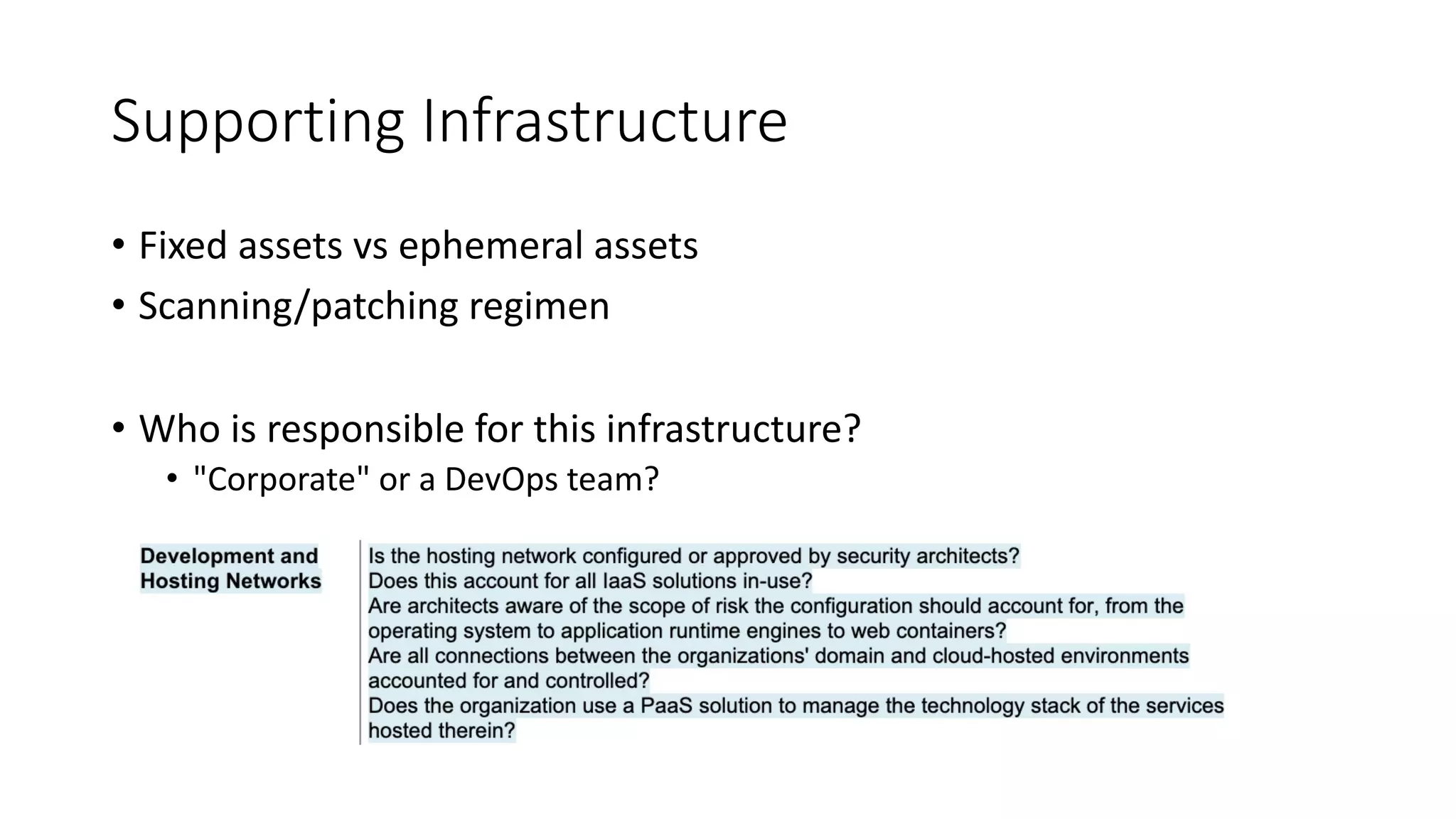
• Fixedassets vs ephemeral assets
• Scanning/patching regimen
• Who is responsible for this infrastructure?
• "Corporate" or a DevOps team?
11.
The Perimeter isthe Problem
• Critical part of threat modeling process – what is in/what is out?
• For modern CI/CD pipelines: turns out to be maddeningly hard
(impossible) to determine the boundary
• Many steps with lots of moving parts
• Dynamic attack surface: tomorrow may be different than today
• DevOps team members can often add stages/tools/elements with minimal supervision
• Fractal complexity
• Approach: Start with code commit and follow the workflow
General/Overarching Concerns
• Lotsof network traffic
• Protect with TLS to guard Confidentiality, Integrity
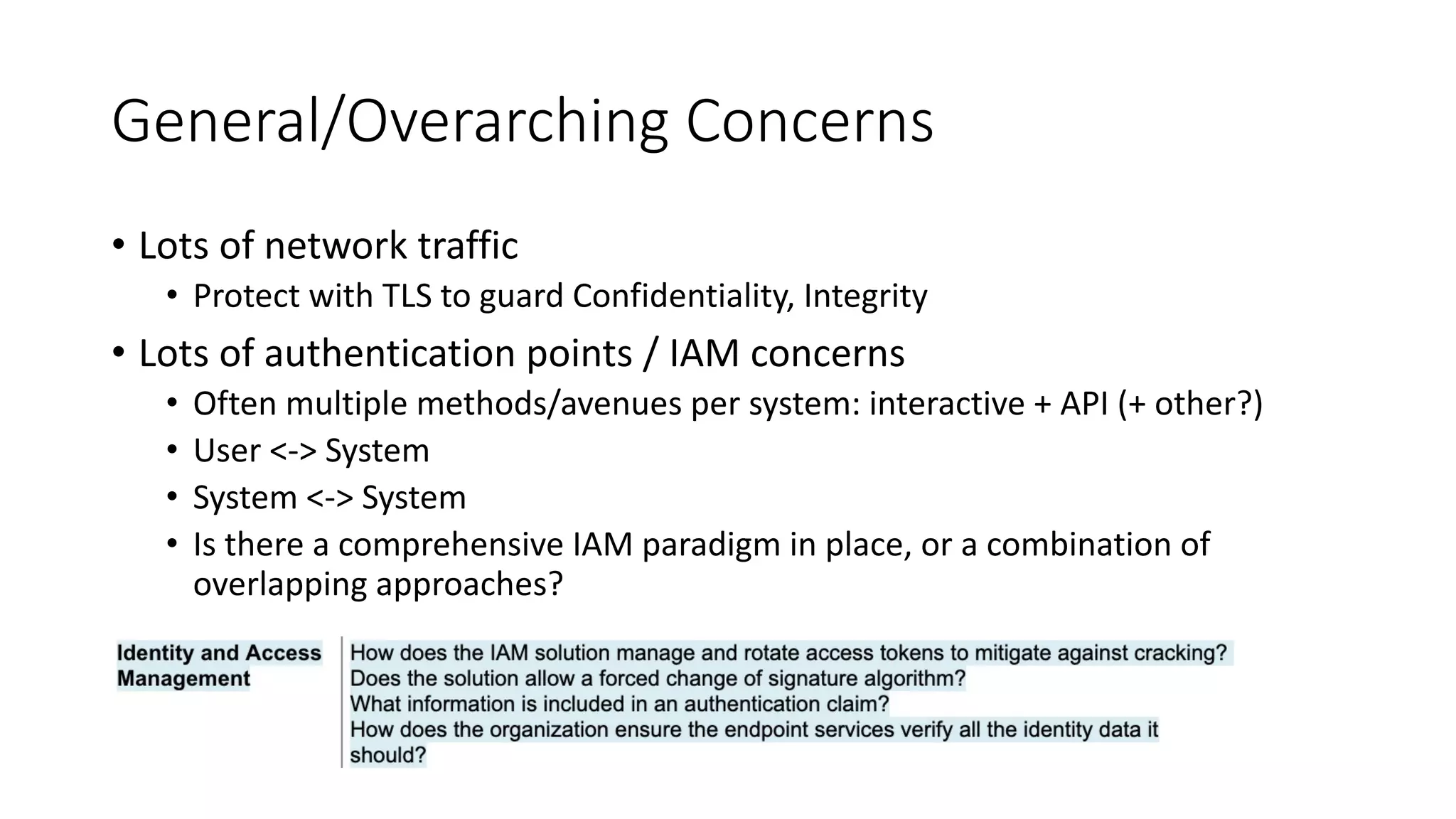
• Lots of authentication points / IAM concerns
• Often multiple methods/avenues per system: interactive + API (+ other?)
• User <-> System
• System <-> System
• Is there a comprehensive IAM paradigm in place, or a combination of
overlapping approaches?
14.
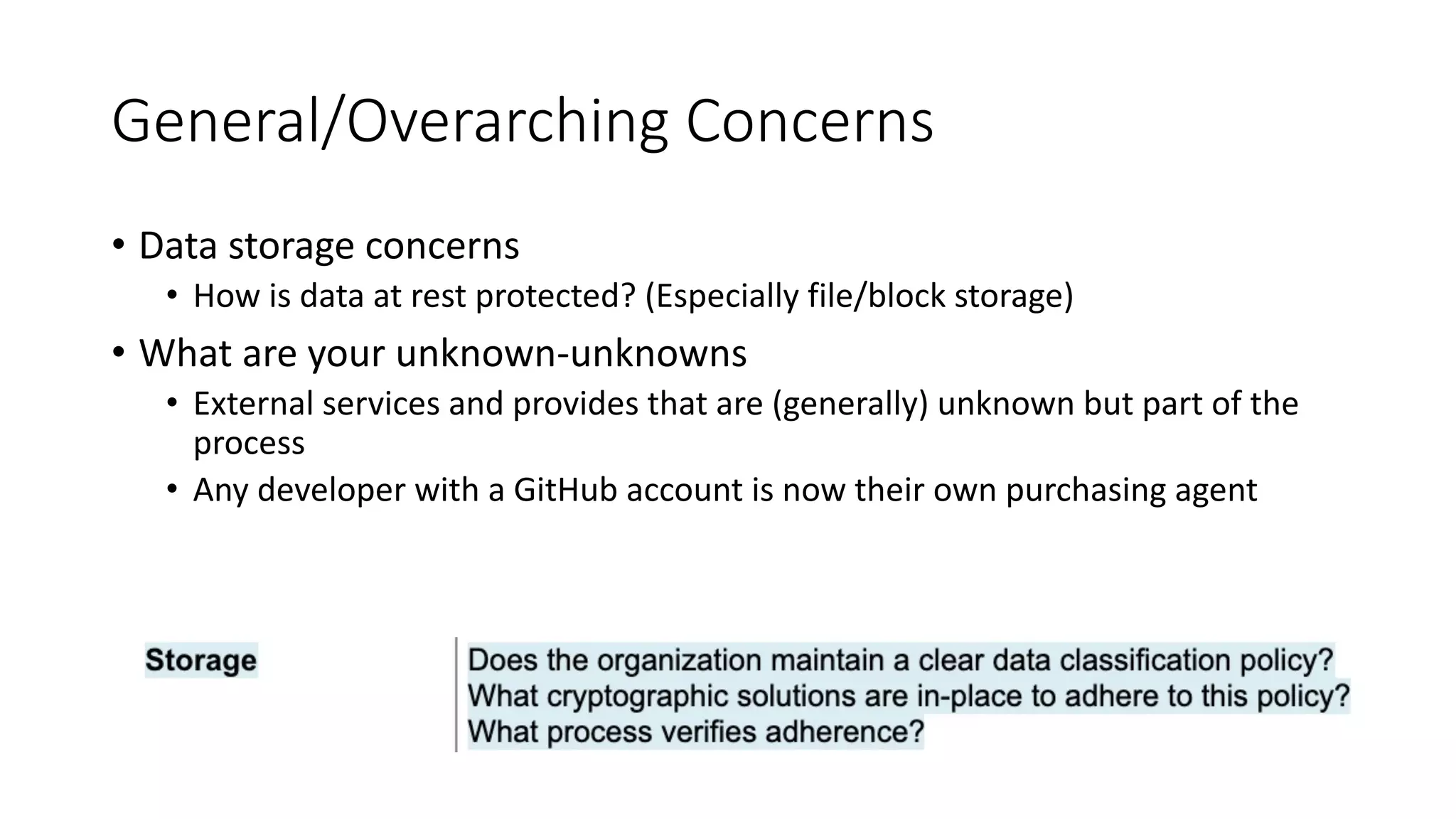
General/Overarching Concerns
• Datastorage concerns
• How is data at rest protected? (Especially file/block storage)
• What are your unknown-unknowns
• External services and provides that are (generally) unknown but part of the
process
• Any developer with a GitHub account is now their own purchasing agent
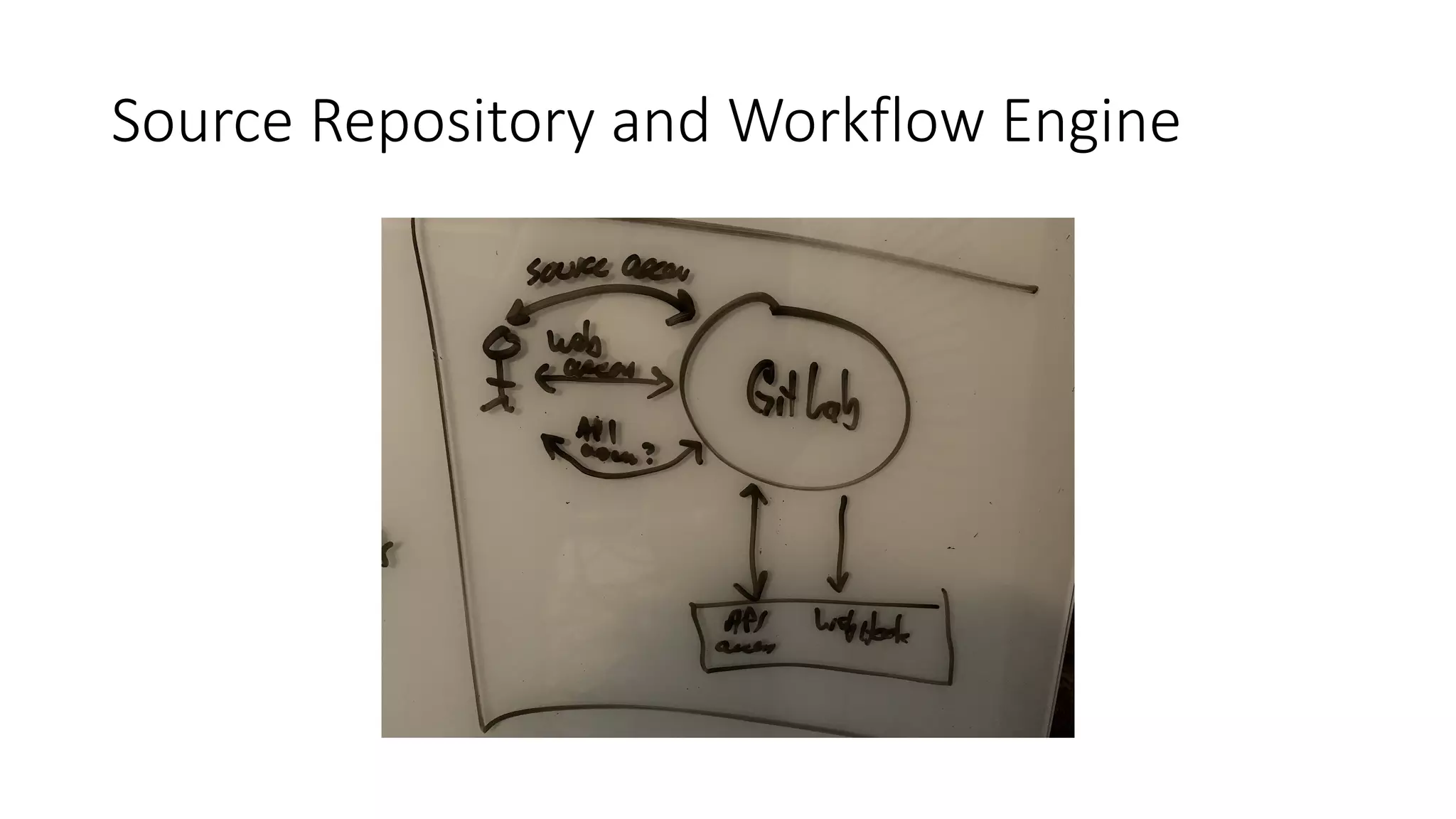
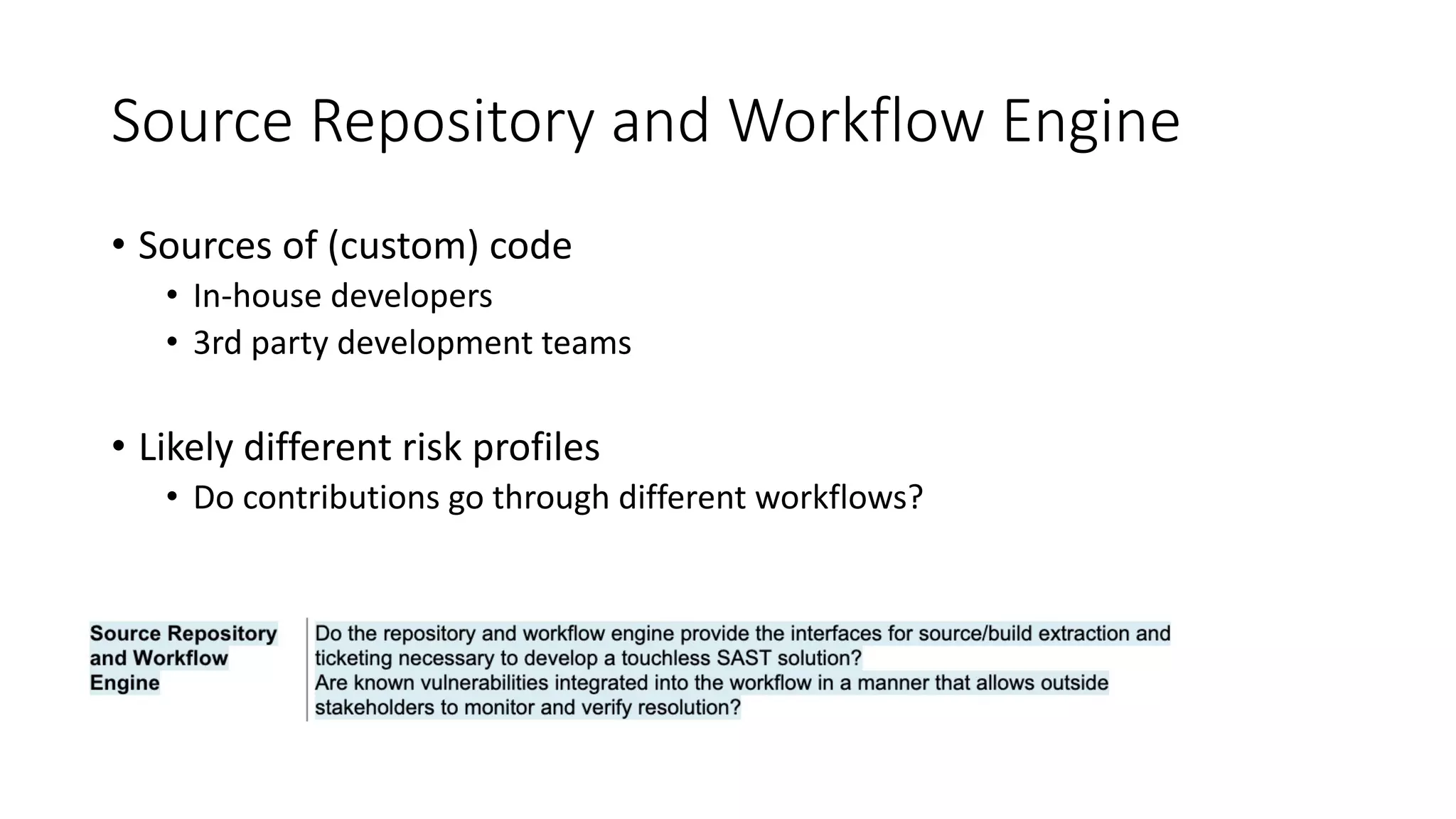
Source Repository andWorkflow Engine
• Sources of (custom) code
• In-house developers
• 3rd party development teams
• Likely different risk profiles
• Do contributions go through different workflows?
17.
Source Repository andWorkflow Engine
• Authentication
• Developers authenticating to push/pull code
• Developers authenticating to evaluate/approve merge requests
• External system API access
• Webhooks
• Additionally for Hosted Repositories/Workflows
• GitHub: Apps and Actions
• GitLab: Integrations
• Both: External collaborators
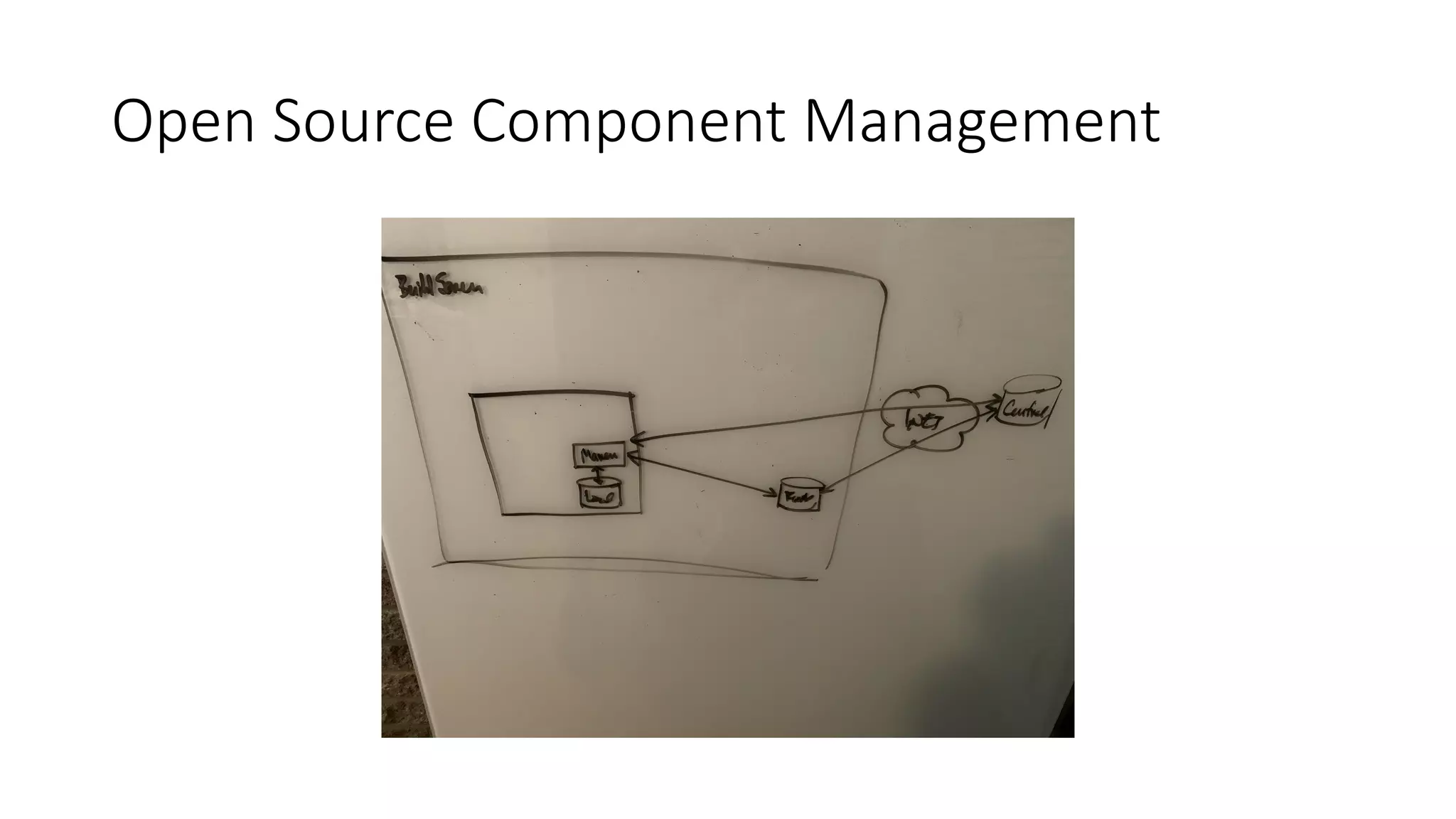
Open Source ComponentManagement
• Are you:
• Directly pulling from Central repositories
• Proxying requests through a Remote repository
• Ability to enforce policies
• Known security vulnerabilities in open source components
• License restrictions on open source components
20.
Open Source BackdoorConcerns
• PHP example
• https://arstechnica.com/gadgets/2021/03/hackers-backdoor-php-source-code-after-breaching-internal-git-server/
• Linux kernel example
• https://www.techrepublic.com/article/linux-kernel-security-uproar-what-some-people-missed/
• Not realistic to detect
• Maintainers don't even have the bandwidth
• Have to be able to respond
• Pulling from Remote vs directly from Central
• Policies on acceptable (and unacceptable) versions
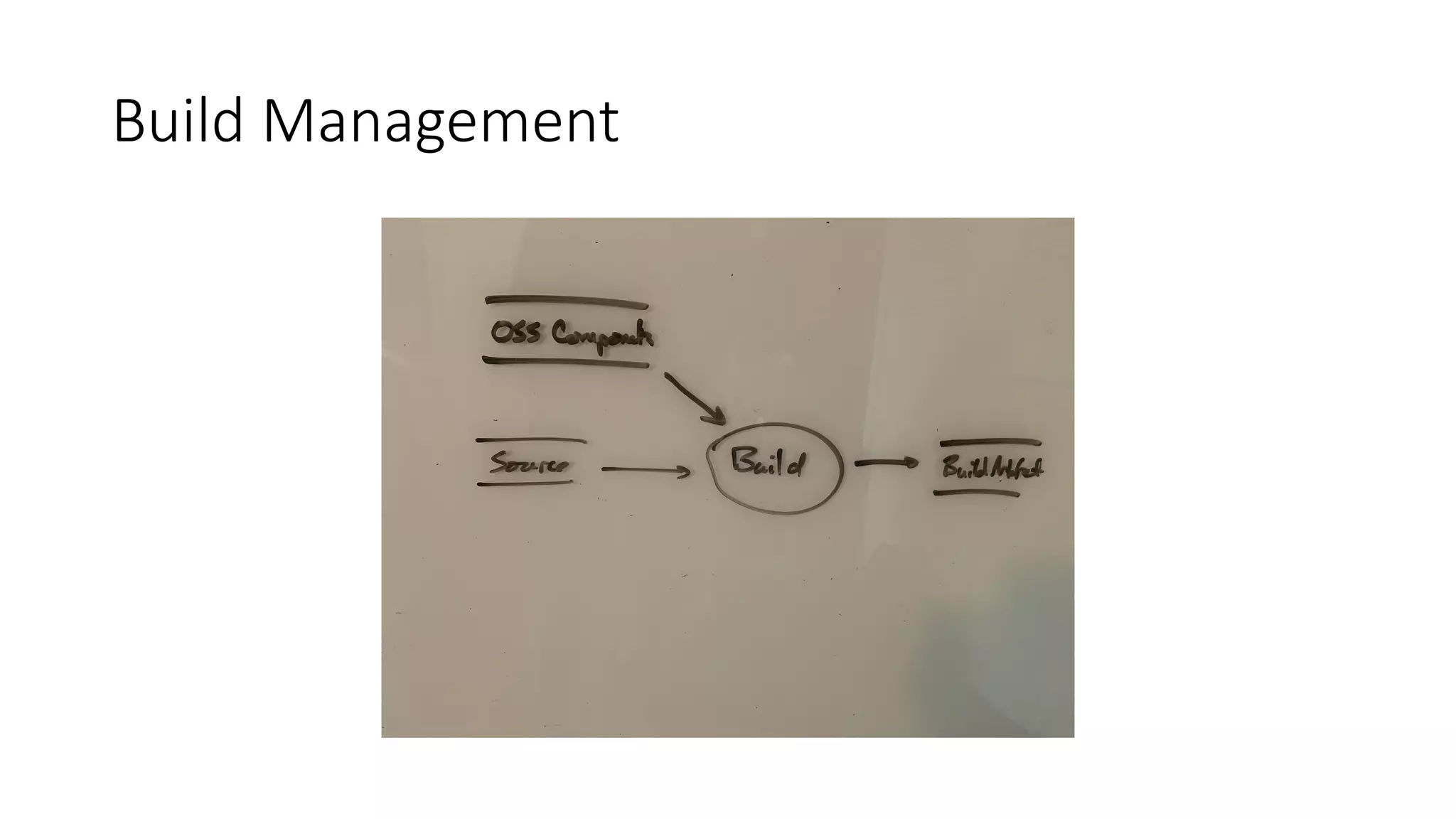
Build Management
• Combiningsource code and open source components to create a new
build
• How often run:
• Every merge request
• Accepted merge requests
• Specific branches/tags
• Maven plugins – yet another source of code you can't trust that runs
in your environment!
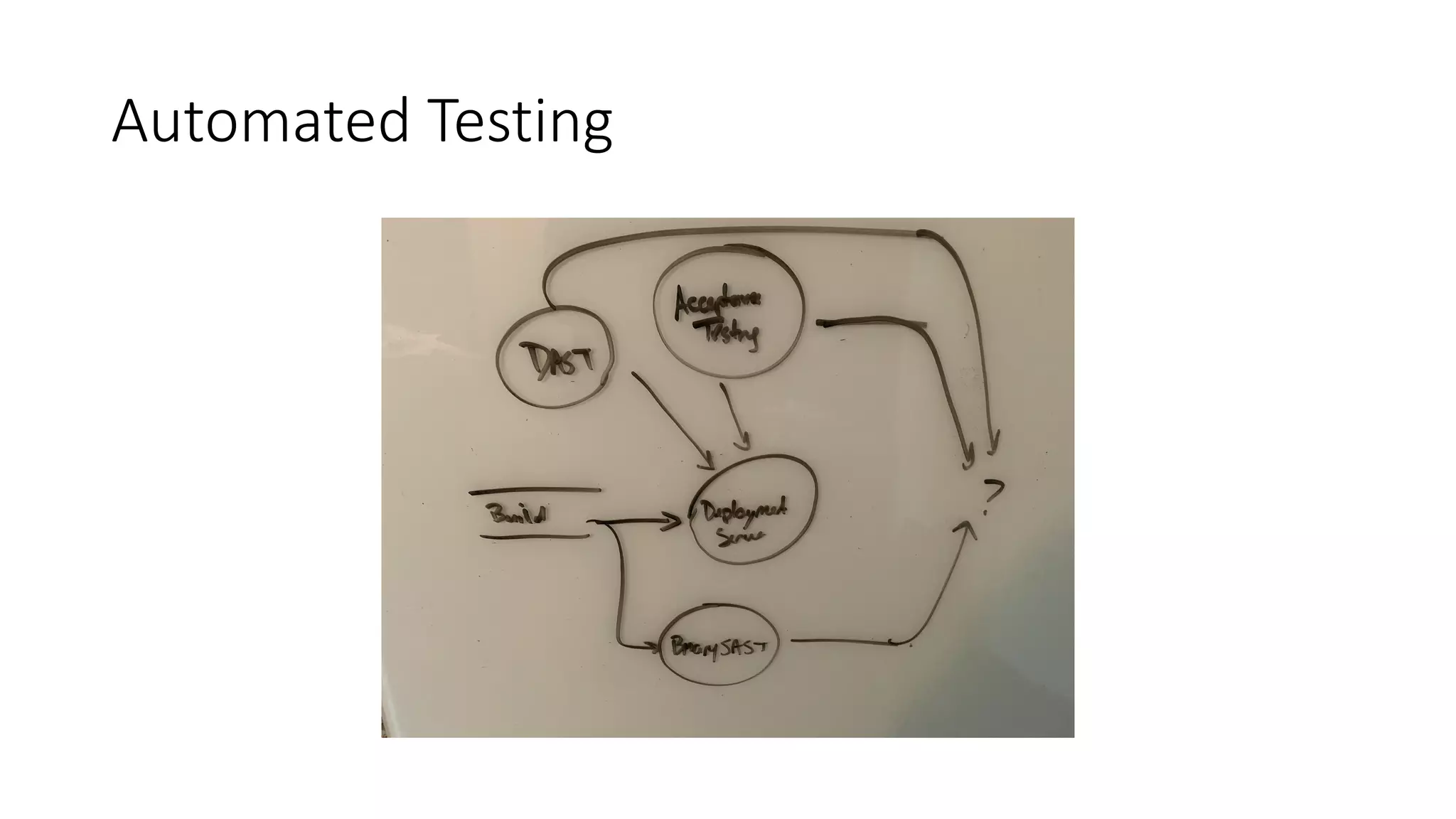
Automated Testing
• Mostcommon types of testing:
• Unit testing
• Acceptance testing
• Other common analysis:
• Code quality ("smells")
• Code metrics (complexity, etc)
• Code coverage
25.
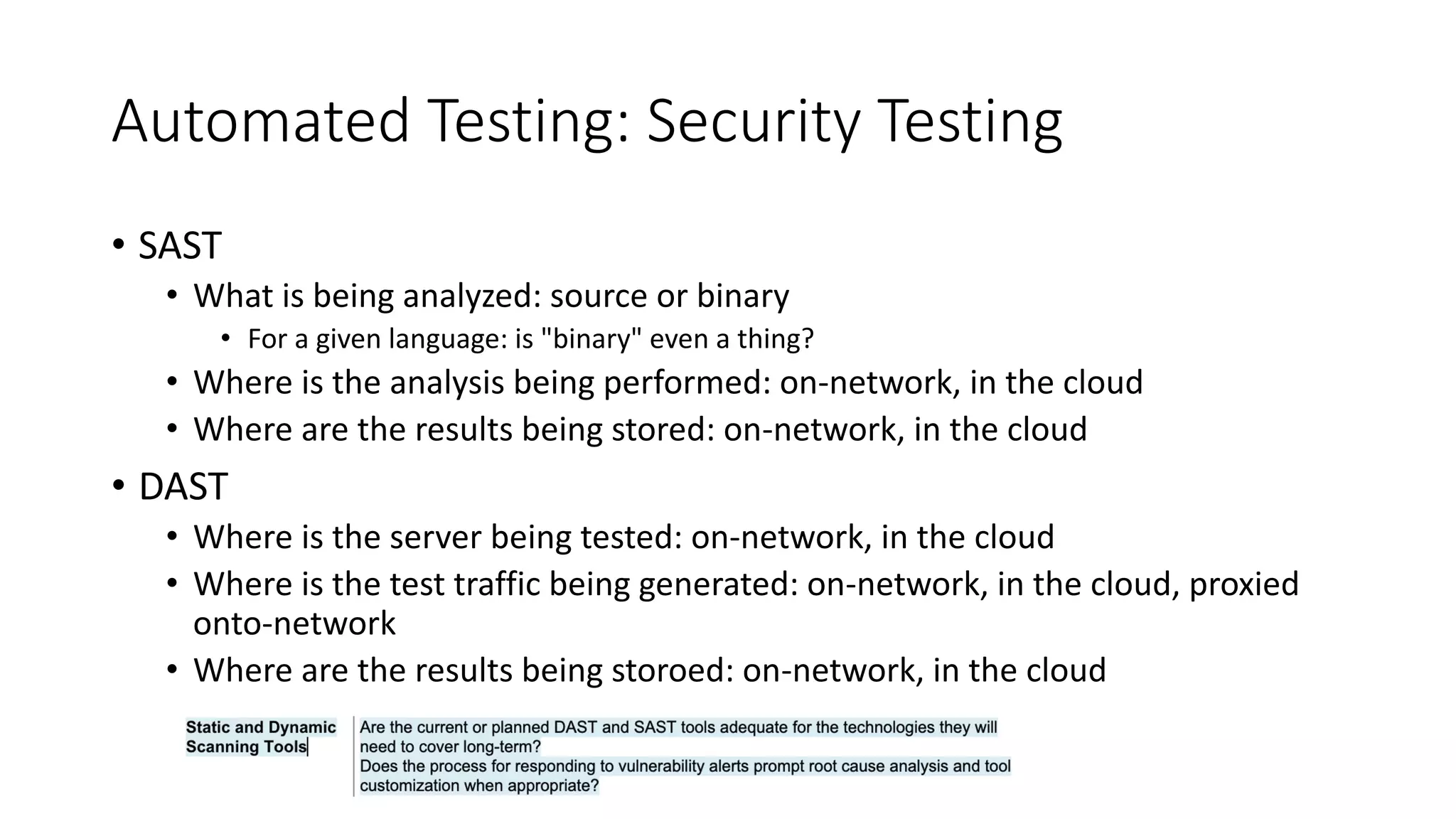
Automated Testing: SecurityTesting
• SAST
• What is being analyzed: source or binary
• For a given language: is "binary" even a thing?
• Where is the analysis being performed: on-network, in the cloud
• Where are the results being stored: on-network, in the cloud
• DAST
• Where is the server being tested: on-network, in the cloud
• Where is the test traffic being generated: on-network, in the cloud, proxied
onto-network
• Where are the results being storoed: on-network, in the cloud
26.
Automated Testing: SecurityTesting (cont'd)
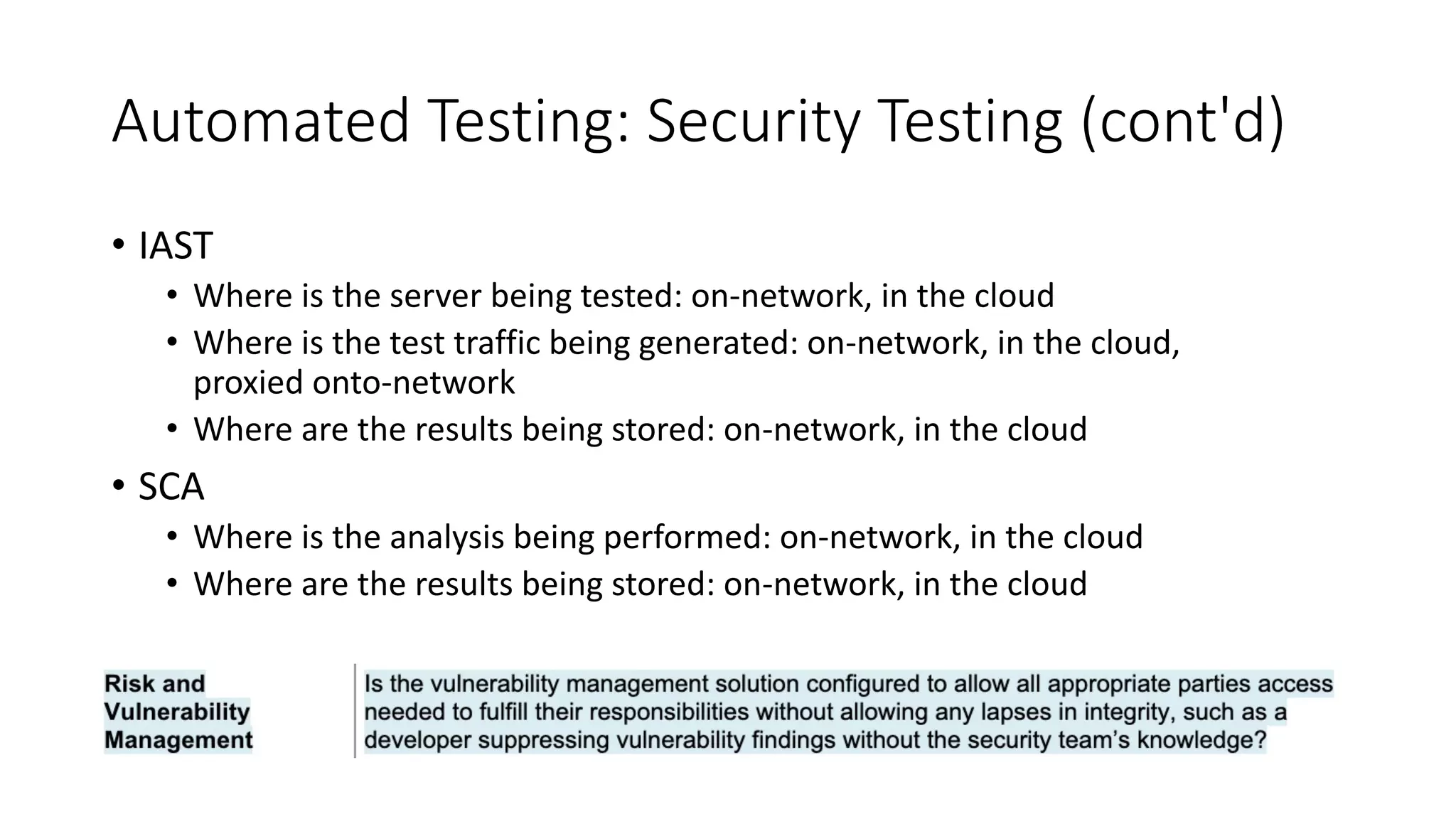
• IAST
• Where is the server being tested: on-network, in the cloud
• Where is the test traffic being generated: on-network, in the cloud,
proxied onto-network
• Where are the results being stored: on-network, in the cloud
• SCA
• Where is the analysis being performed: on-network, in the cloud
• Where are the results being stored: on-network, in the cloud
27.
Security Testing andBackdoors
• Best backdoor: Normal-looking security vulnerability
• "Oops, sorry I introduced that [SQL injection|missing auth check|etc]
• Other types of backdoor detection
• Static analysis – see the theoretical behavior of the application
• Look for suspicious behavior patterns
• References:
• https://www.acsac.org/2007/workshop/Wysopal.pdf
• https://www.veracode.com/sites/default/files/Resources/Whitepapers/static-detection-of-
backdoors-1.0.pdf
• https://owasp.org/www-pdf-archive/Protecting_the_Enterprise_-_Software_Backdoors.pdf
• https://owasp.org/www-pdf-archive/Protecting_Your_Applications_From_Backdoors.pdf
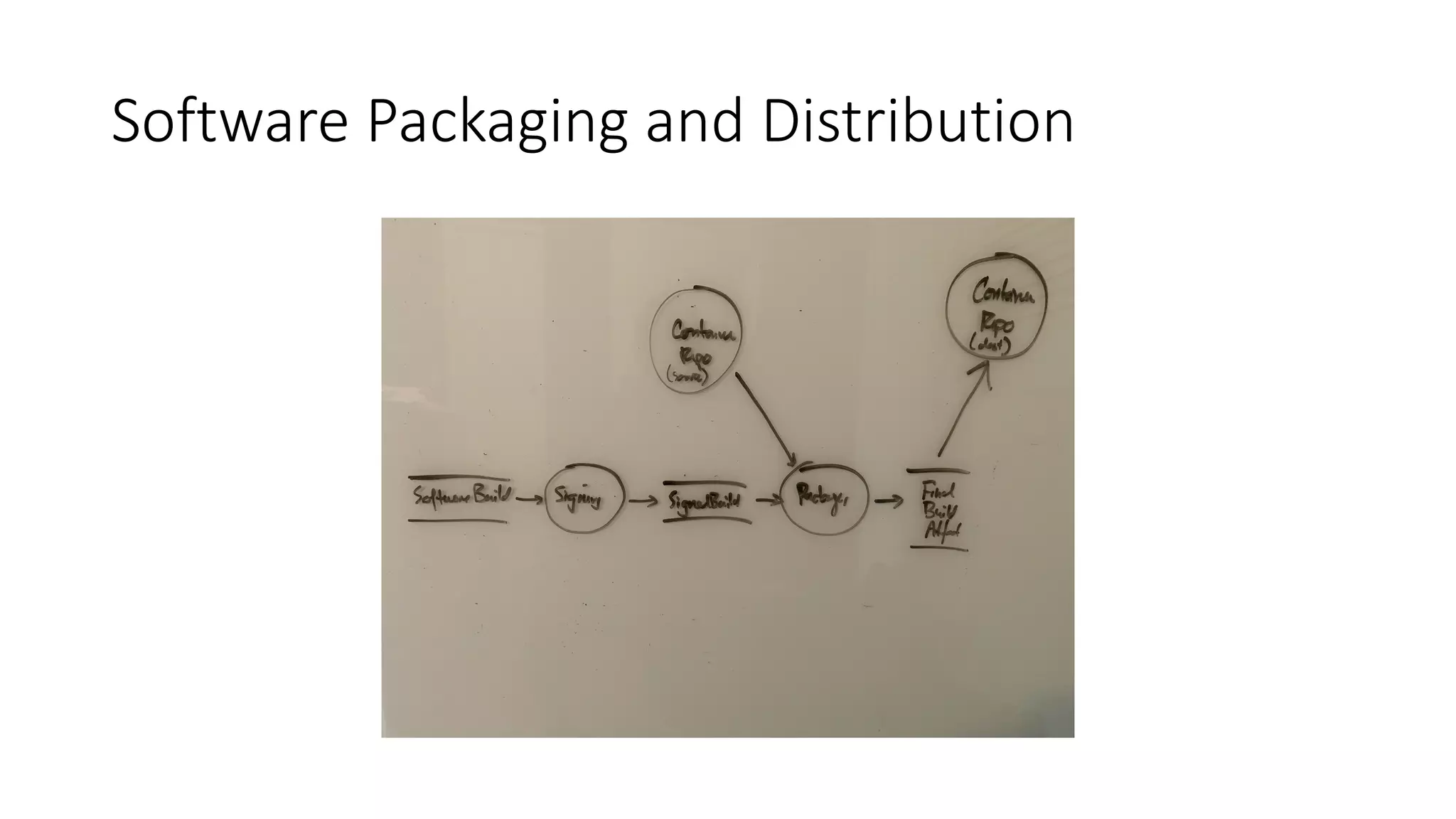
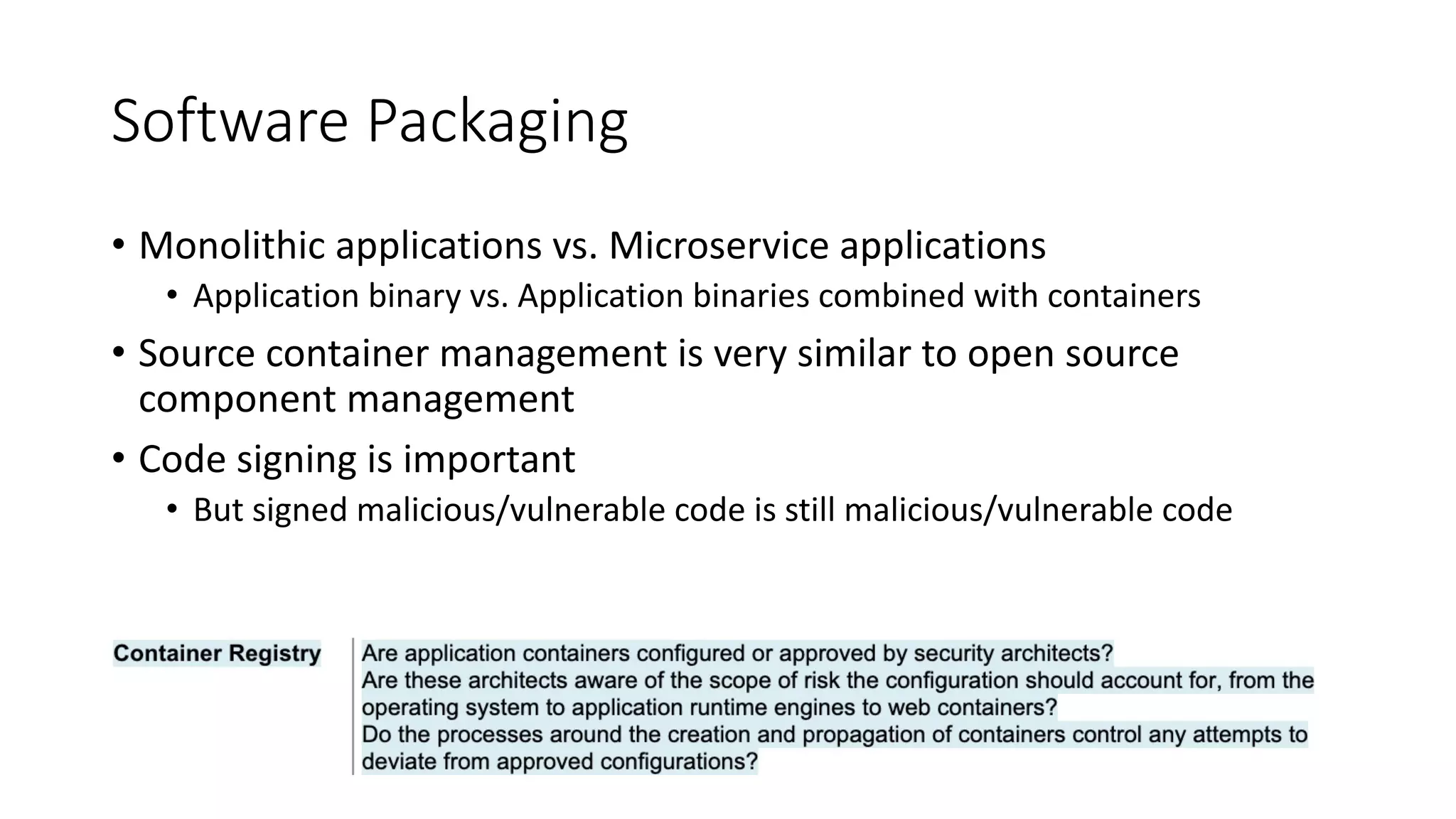
Software Packaging
• Monolithicapplications vs. Microservice applications
• Application binary vs. Application binaries combined with containers
• Source container management is very similar to open source
component management
• Code signing is important
• But signed malicious/vulnerable code is still malicious/vulnerable code
30.
Software Distribution
• Nowthe software should be ready too distribute to customers
• Internal
• External
• How is the software distributed?
• Binary
• Binary + Container
• Binaries + Containers + orchestration
• How are builds verified?
• Checksums
31.
Two Exercises
• Passive:Grab netflow data from your build environment and see
what it talks to
• Active: Follow code change from checkout to release
• Spoiler alert: the active exercise where I engaged the development
team was more productive
32.
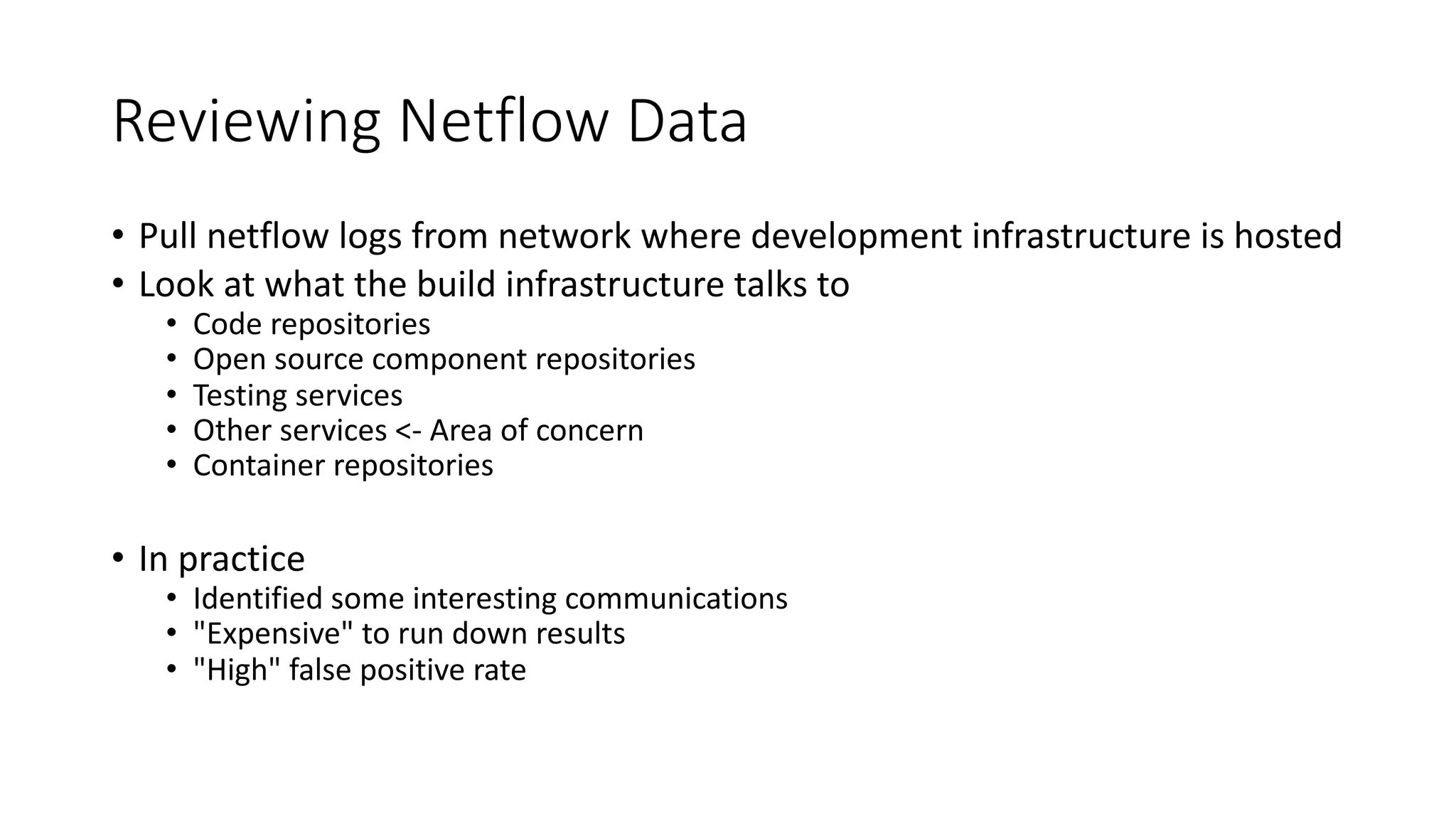
Reviewing Netflow Data
•Pull netflow logs from network where development infrastructure is hosted
• Look at what the build infrastructure talks to
• Code repositories
• Open source component repositories
• Testing services
• Other services <- Area of concern
• Container repositories
• In practice
• Identified some interesting communications
• "Expensive" to run down results
• "High" false positive rate
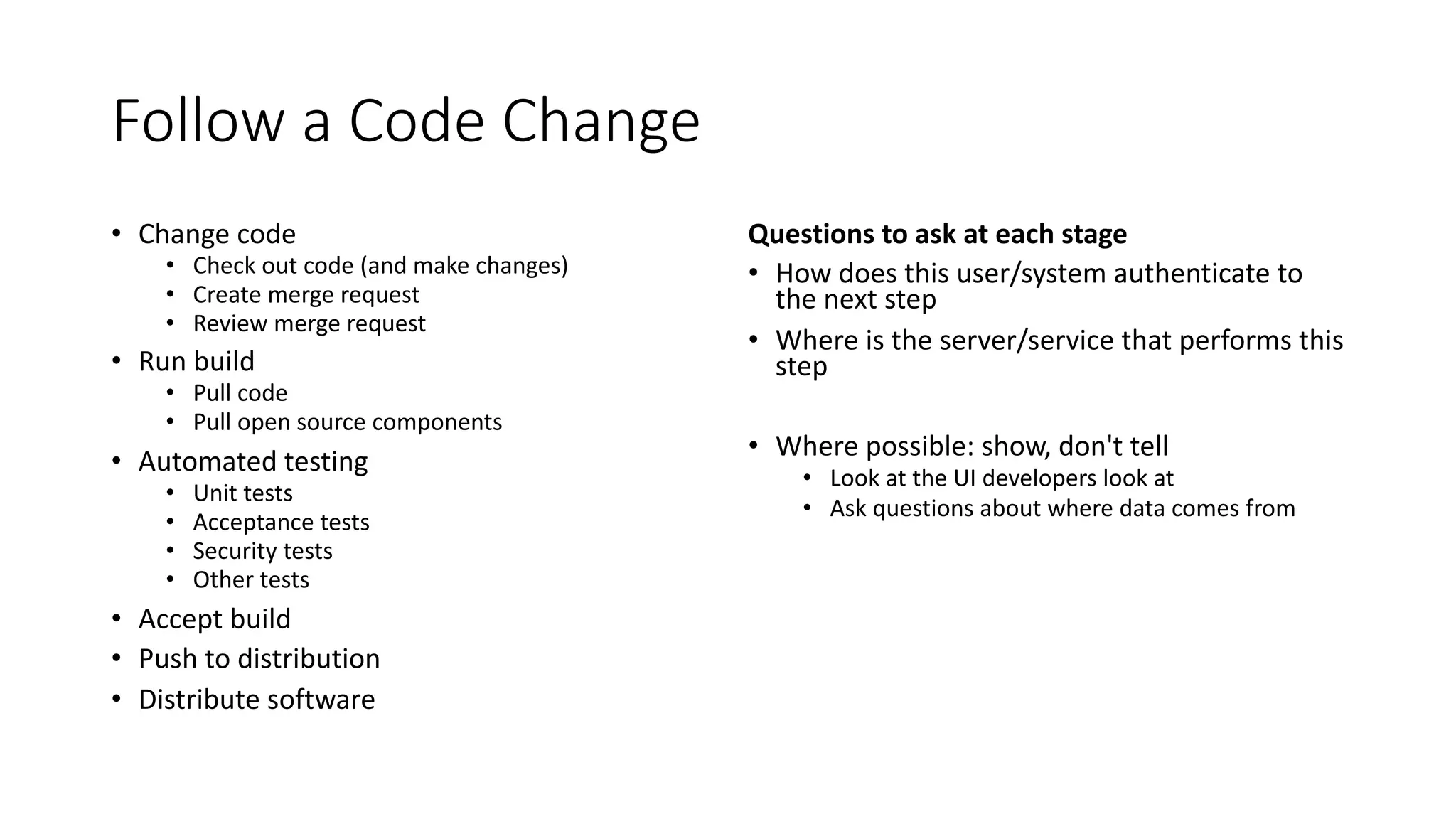
Follow a CodeChange
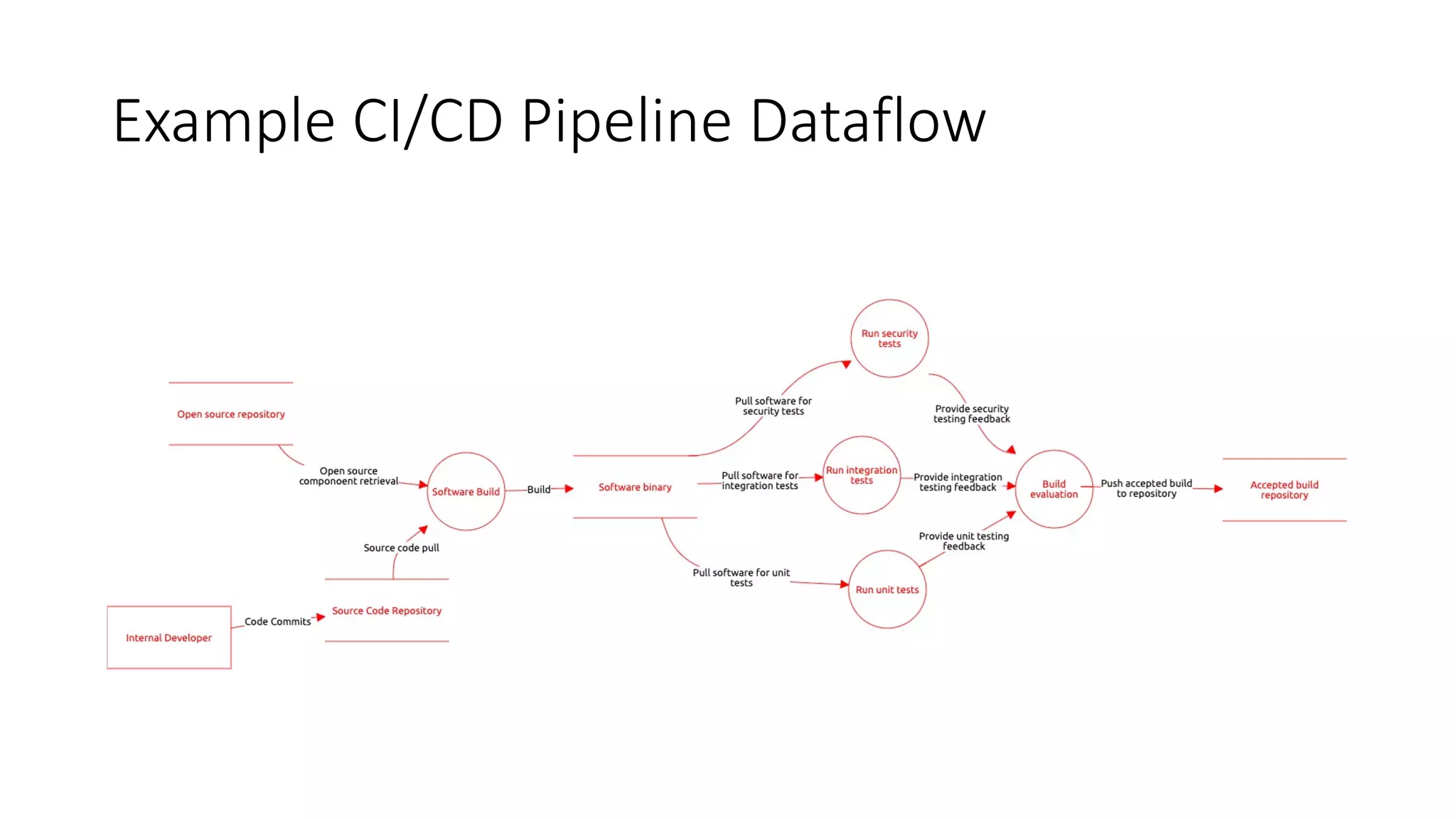
• Change code
• Check out code (and make changes)
• Create merge request
• Review merge request
• Run build
• Pull code
• Pull open source components
• Automated testing
• Unit tests
• Acceptance tests
• Security tests
• Other tests
• Accept build
• Push to distribution
• Distribute software
Questions to ask at each stage
• How does this user/system authenticate to
the next step
• Where is the server/service that performs this
step
• Where possible: show, don't tell
• Look at the UI developers look at
• Ask questions about where data comes from
Parallel Build Pipelines
•Have two or more separate, parallel build pipelines
• Compare artifacts at the end
• Goal is to force attackers to compromise multiple pathways
• Best way to get budget for this is to have a public breach of epic
proportions and suggest that your successor try it out
• How do you compare the outputs from multiple toolchains?
• Compare SBOM
• Asset enumeration
• Reverse engineering
• Live/behaviral testing
39.
Using the ThreatModel
• Identify gaps in your own pipeline security
• What can you shore up?
• What do you have to live with?
• How do you respond to incidents?
• Have meaningful conversations with suppliers of your software
• Understand their practices
• Push for change – vote with your wallet
• Be better able to detect malicious behavior