Creating Learning Coherence
with an ePortfolio
Dr. Beata Jones, Gracia Sohr, Diana Rogers
Texas Christian University
b.jones@tcu.edu, g.m.sohr@tcu.edu, diana.m.rogers@tcu.edu
#AAEEBLTCU, February 29, 2016, Fort Worth, TX
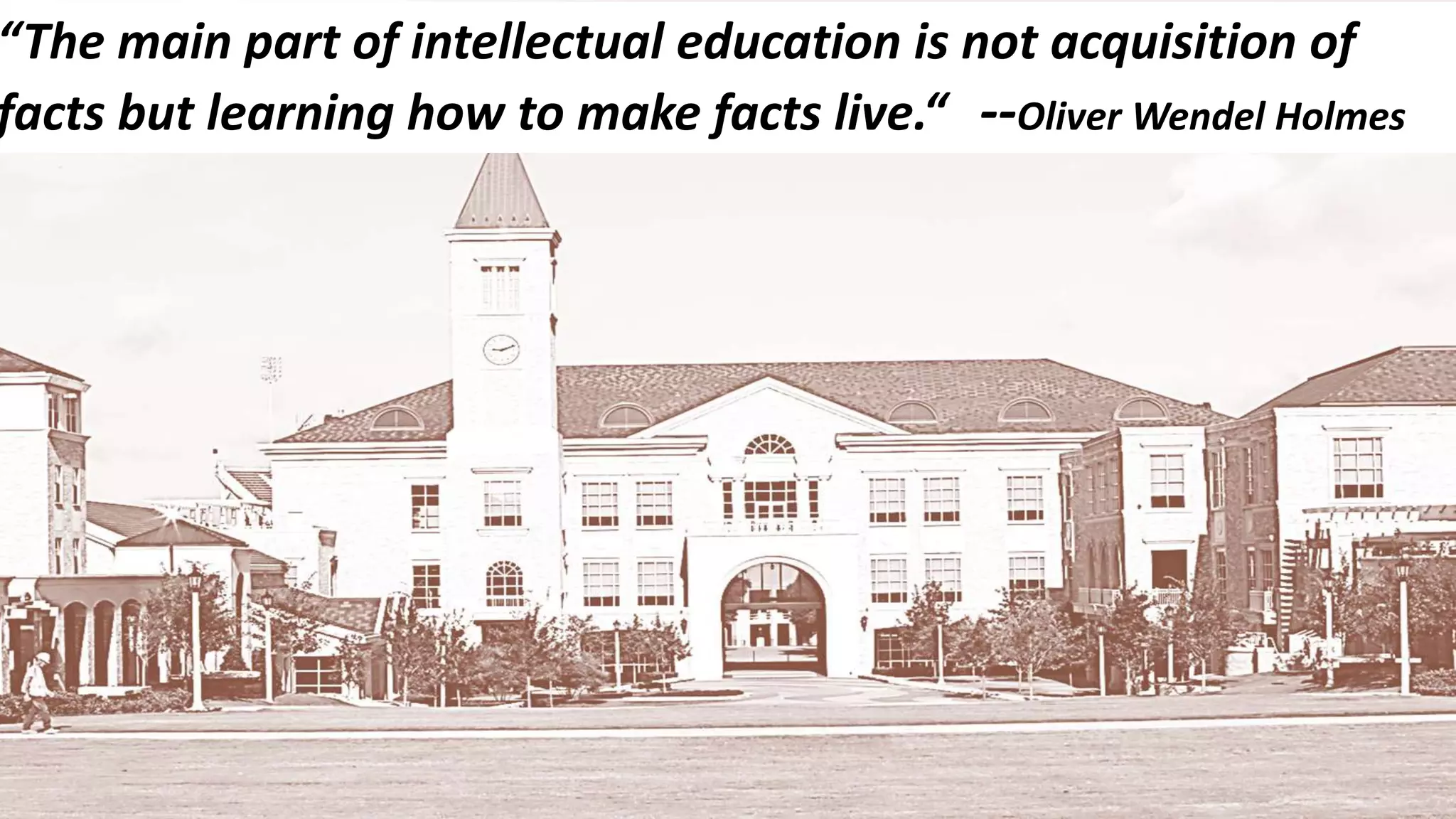
“The main part of intellectual education is not acquisition of
facts but learning how to make facts live.“ --Oliver Wendel Holmes
Overview
The Educational Setting
Learning Coherence
Evidence-based Principles of Bringing Coherence to Student’s Learning
Strategies for Structuring ePortfolio Learning Contexts
Showcase & Learning Reflection
Q&A
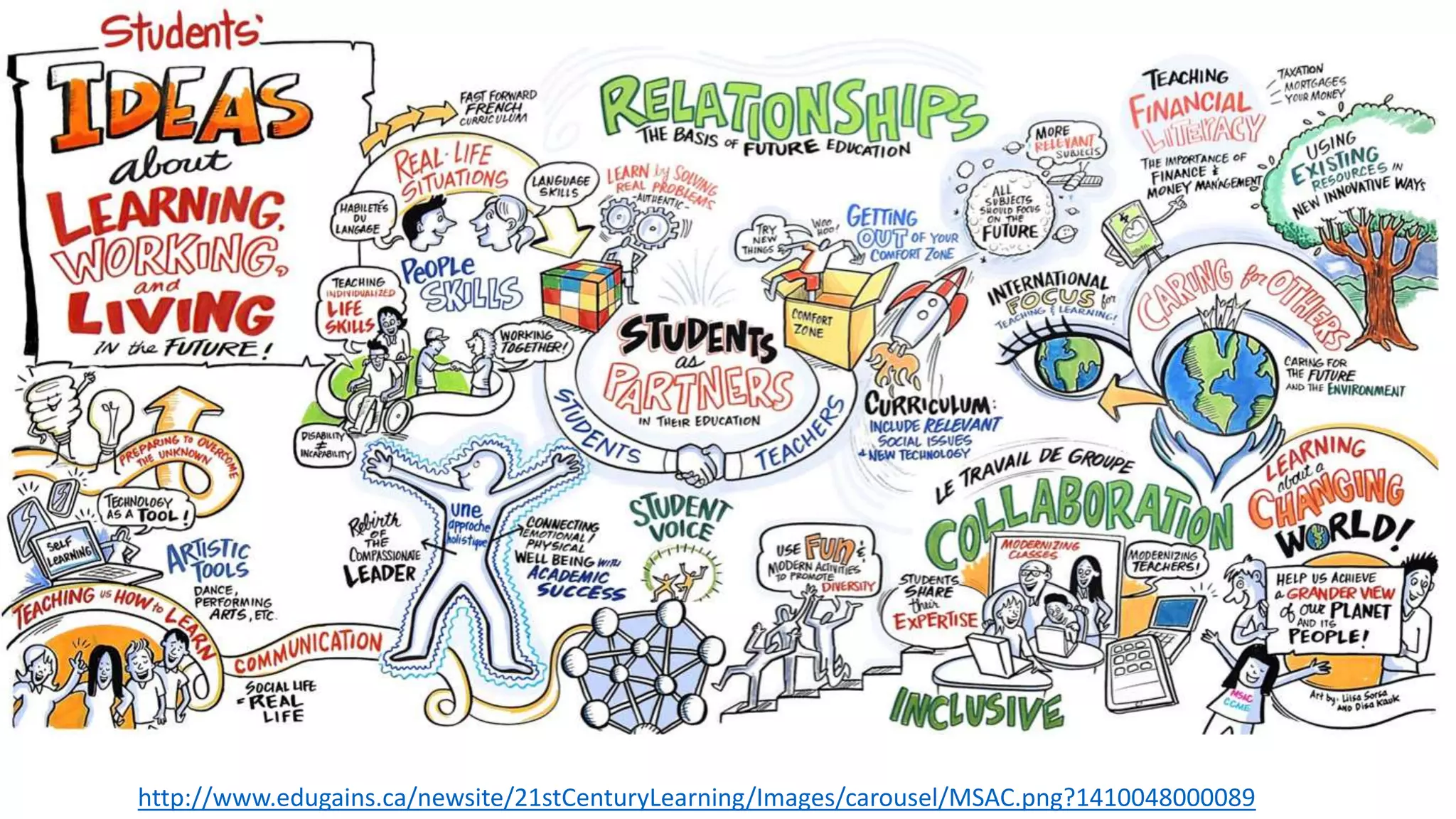
http://www.edugains.ca/newsite/21stCenturyLearning/Images/carousel/MSAC.png?1410048000089
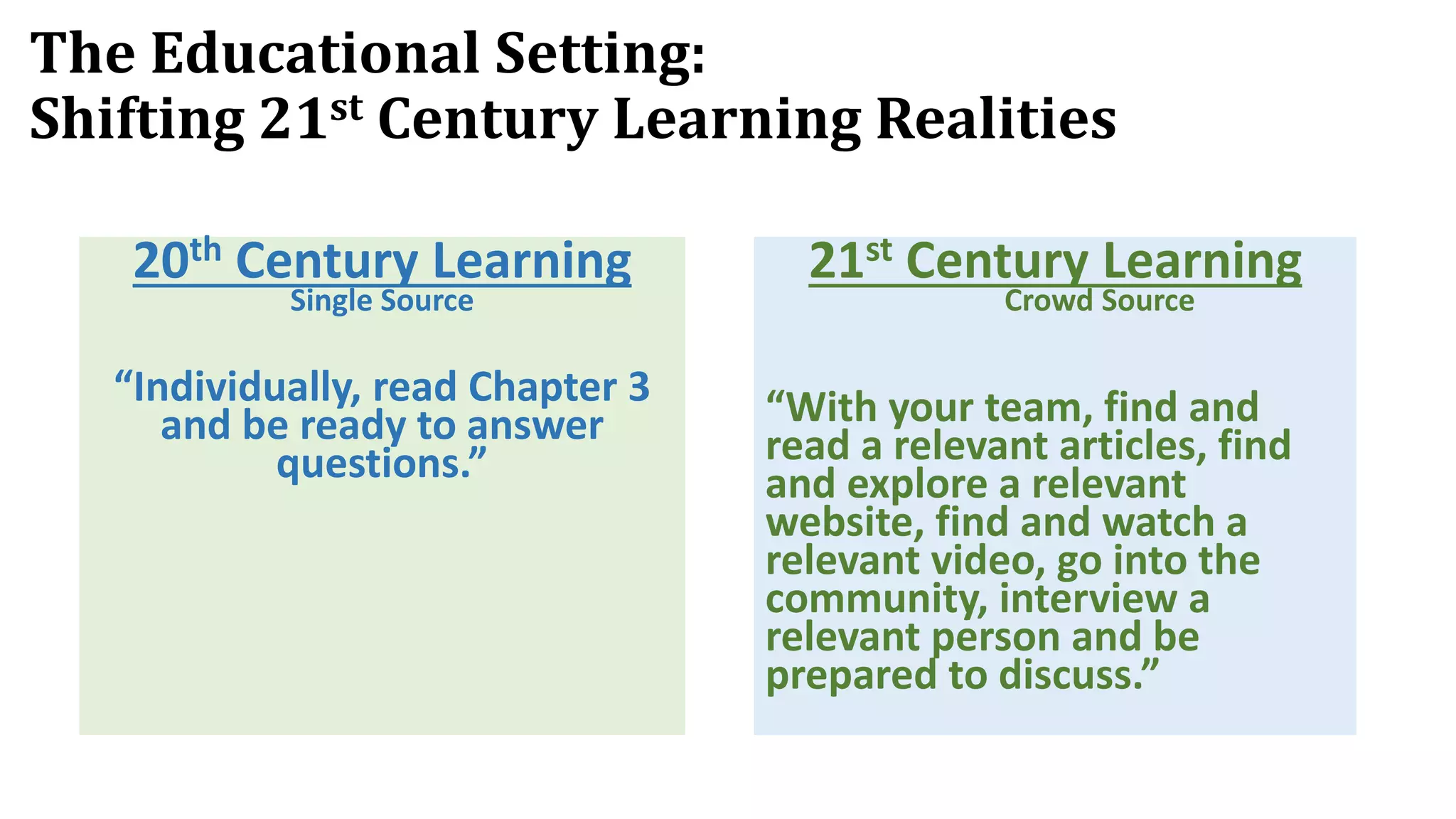
The Educational Setting:
Shifting 21st Century Learning Realities
20th Century Learning
Single Source
“Individually, read Chapter 3
and be ready to answer
questions.”
21st Century Learning
Crowd Source
“With your team, find and
read a relevant articles, find
and explore a relevant
website, find and watch a
relevant video, go into the
community, interview a
relevant person and be
prepared to discuss.”
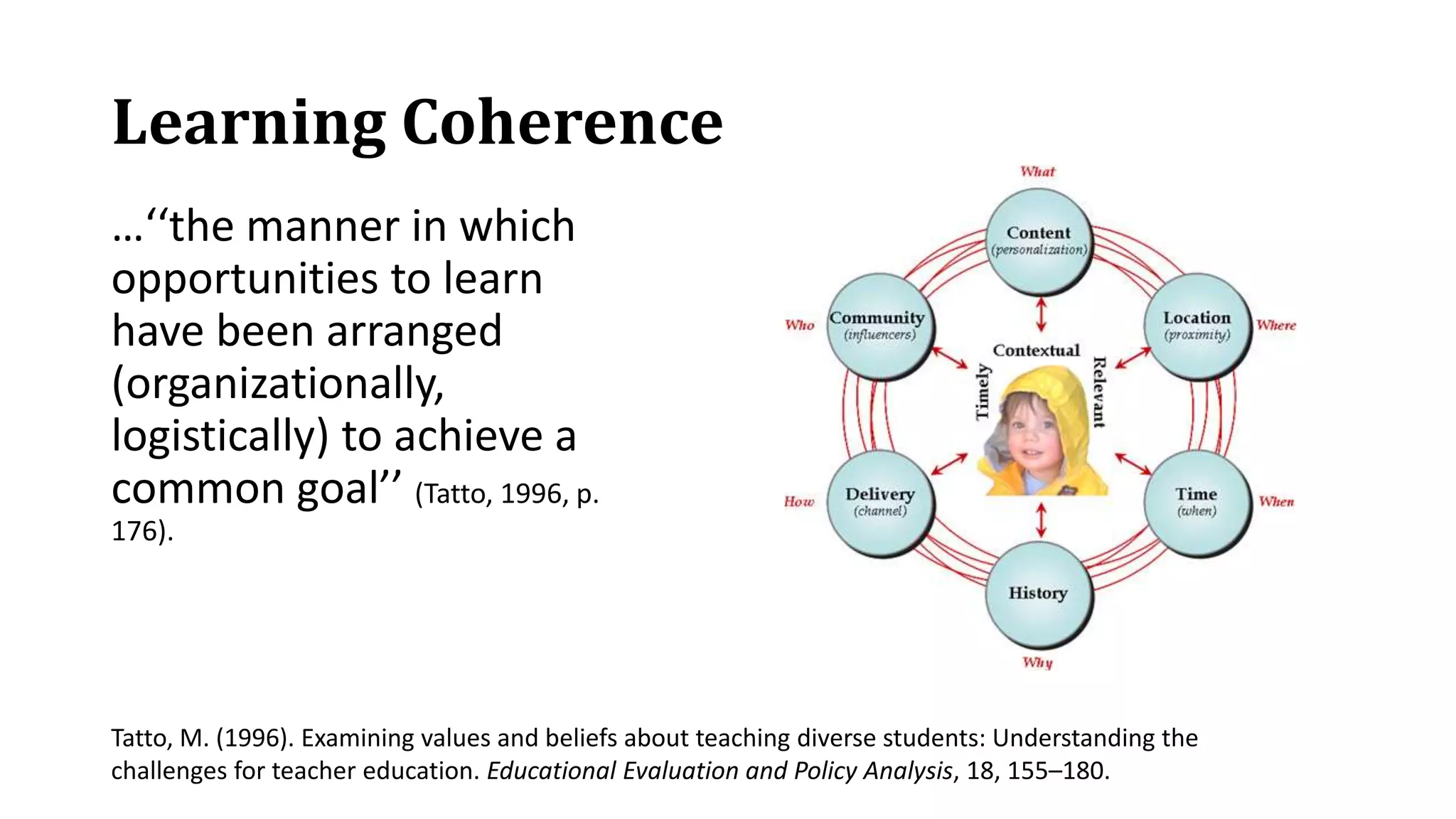
Learning Coherence
…‘‘the manner in which
opportunities to learn
have been arranged
(organizationally,
logistically) to achieve a
common goal’’ (Tatto, 1996, p.
176).
Tatto, M. (1996). Examining values and beliefs about teaching diverse students: Understanding the
challenges for teacher education. Educational Evaluation and Policy Analysis, 18, 155–180.
‘‘Perhaps the most basic thing that can be said
about human memory is that unless detail is
placed into a structured pattern, it is rapidly
forgotten’’ (Brunner, 1977, p. 37).
Bruner, J. (1977). The process of education. Cambridge, MA: Harvard University Press
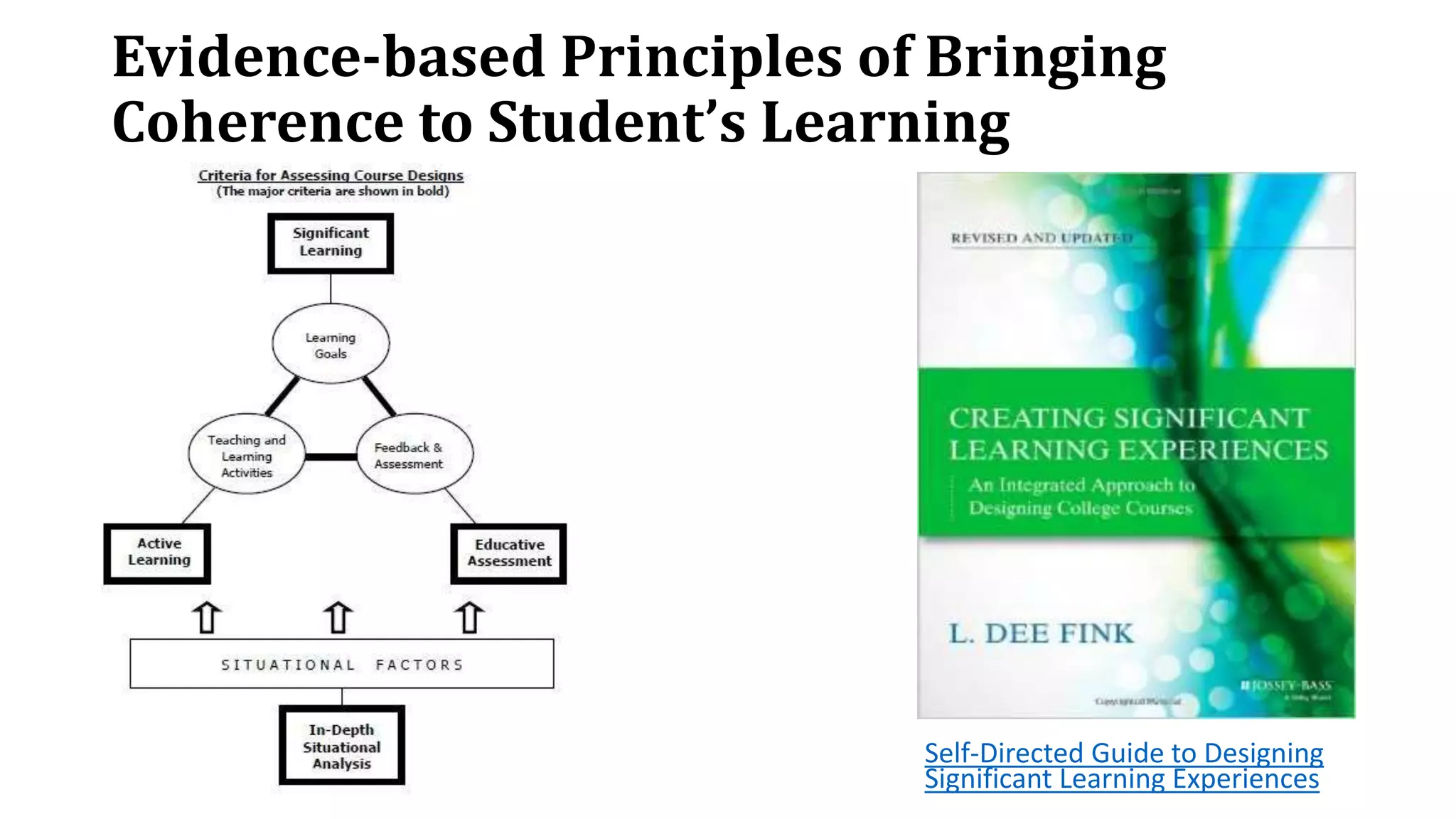
Evidence-based Principles of Bringing
Coherence to Student’s Learning
Self-Directed Guide to Designing
Significant Learning Experiences
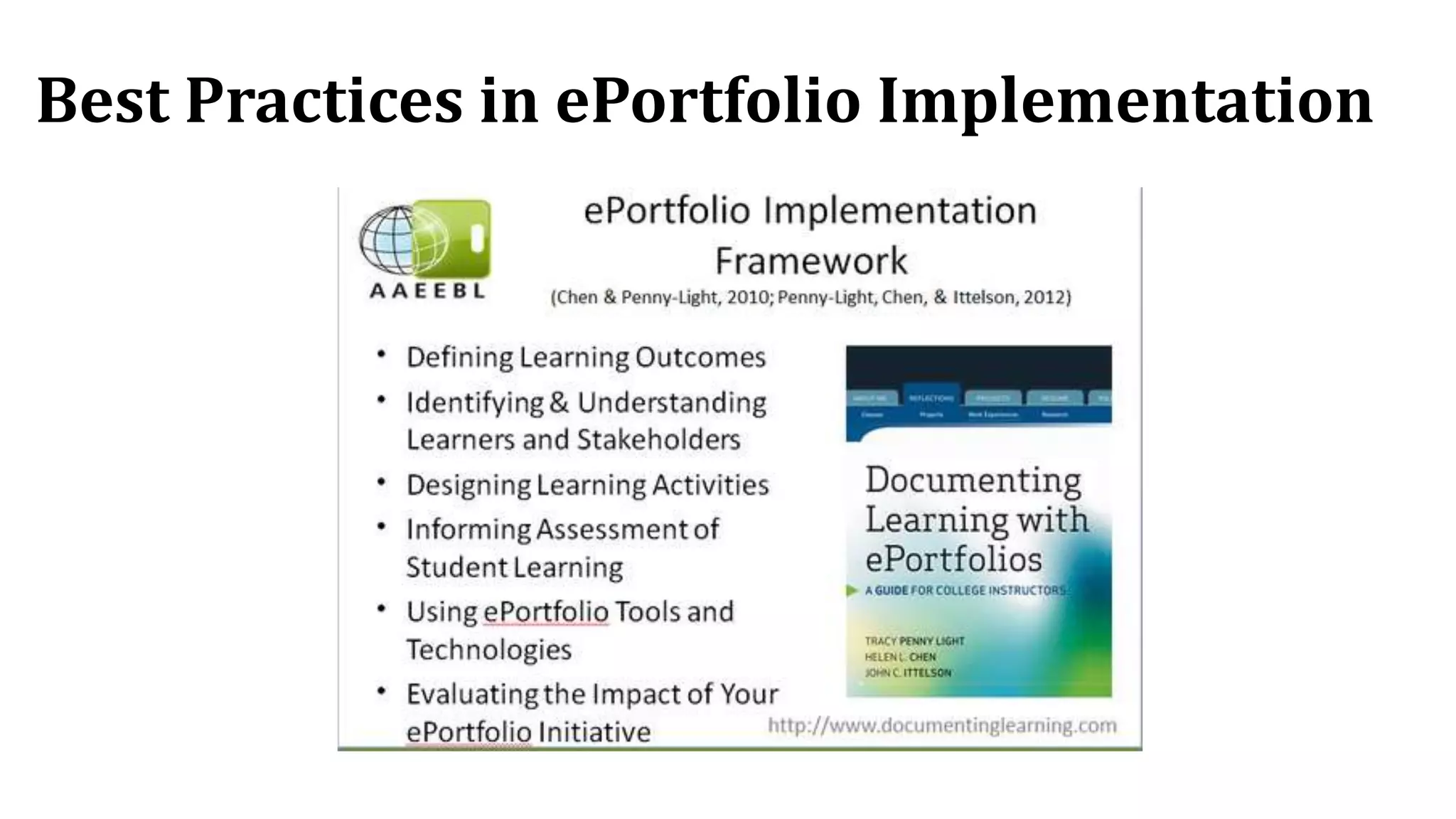
Best Practices in ePortfolio Implementation
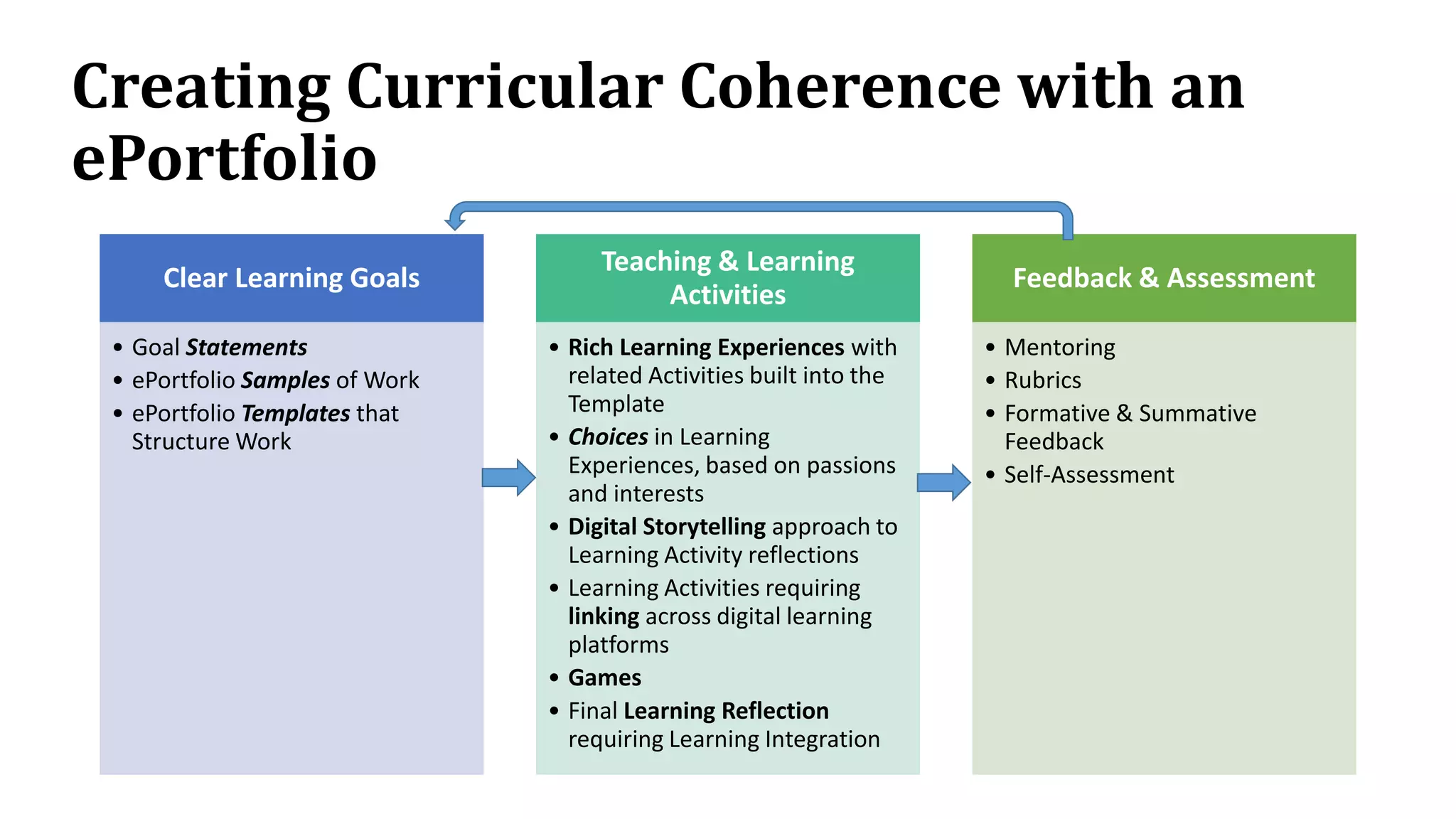
Creating Curricular Coherence with an
ePortfolio
Clear Learning Goals
• Goal Statements
• ePortfolio Samples of Work
• ePortfolio Templates that
Structure Work
Teaching & Learning
Activities
• Rich Learning Experiences with
related Activities built into the
Template
• Choices in Learning
Experiences, based on passions
and interests
• Digital Storytelling approach to
Learning Activity reflections
• Learning Activities requiring
linking across digital learning
platforms
• Games
• Final Learning Reflection
requiring Learning Integration
Feedback & Assessment
• Mentoring
• Rubrics
• Formative & Summative
Feedback
• Self-Assessment
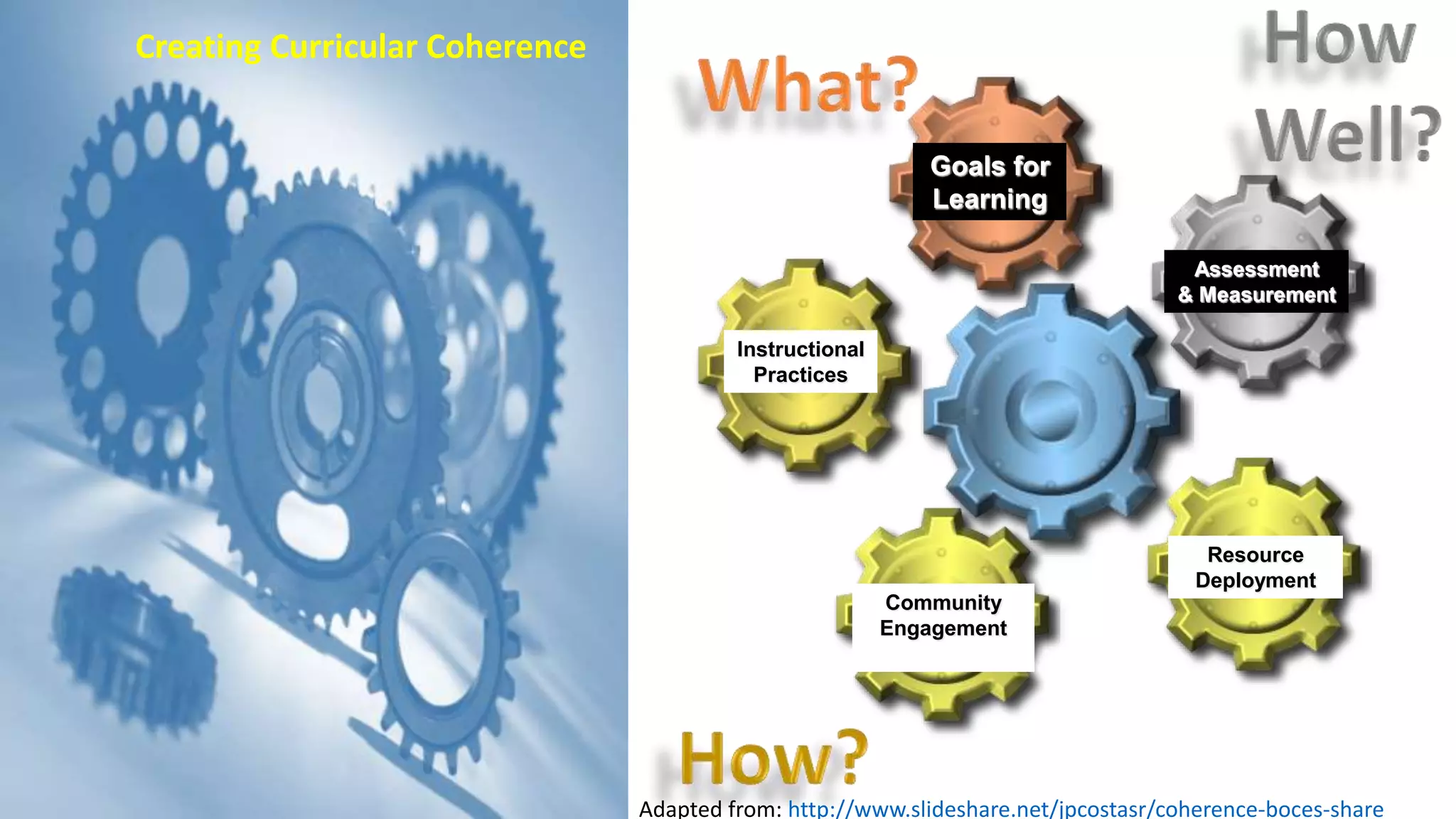
Goals for
Learning
Assessment
& Measurement
Community
Engagement
Instructional
Practices
Resource
Deployment
Creating Curricular Coherence
Adapted from: http://www.slideshare.net/jpcostasr/coherence-boces-share
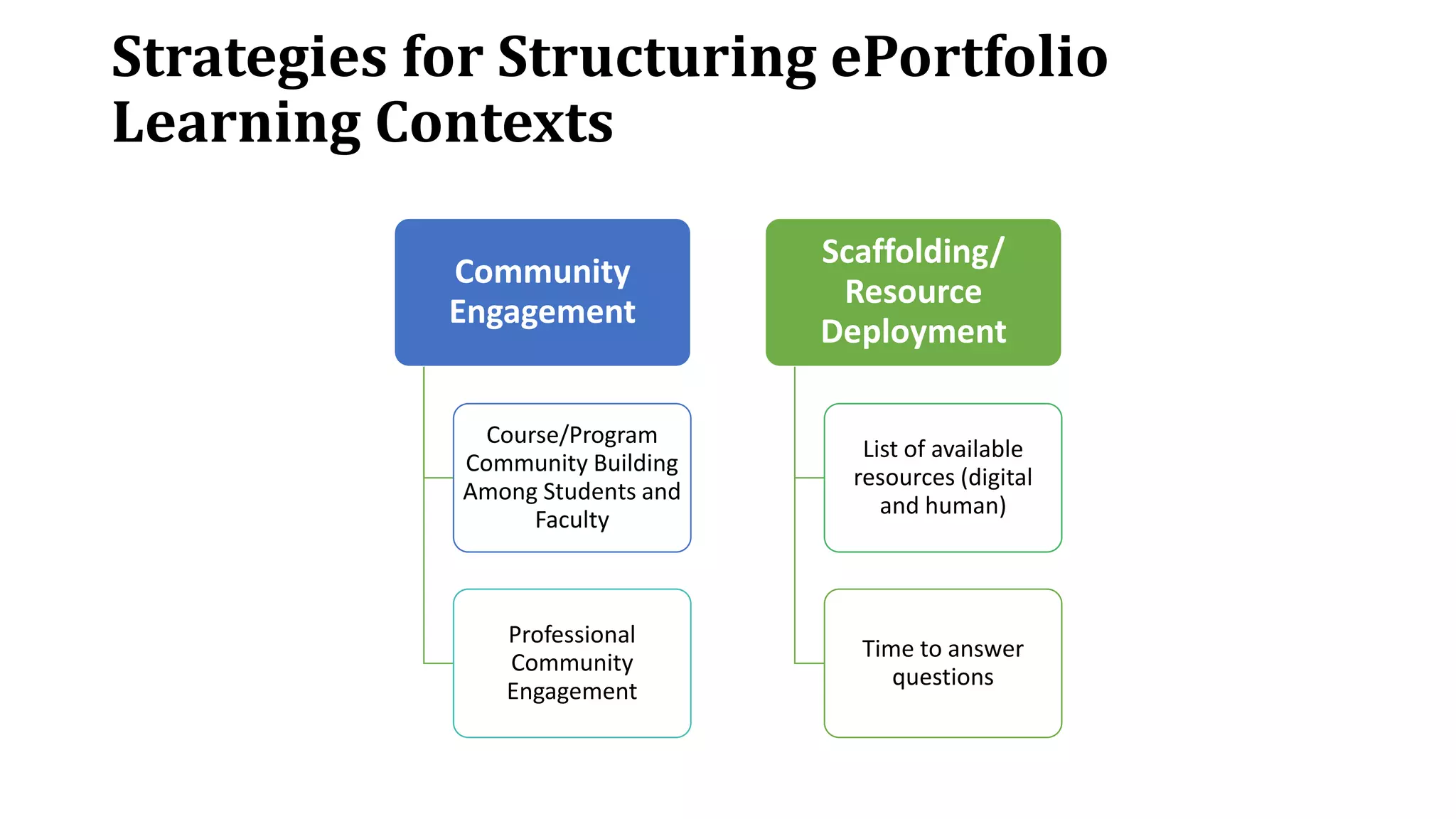
Strategies for Structuring ePortfolio
Learning Contexts
Community
Engagement
Course/Program
Community Building
Among Students and
Faculty
Professional
Community
Engagement
Scaffolding/
Resource
Deployment
List of available
resources (digital
and human)
Time to answer
questions
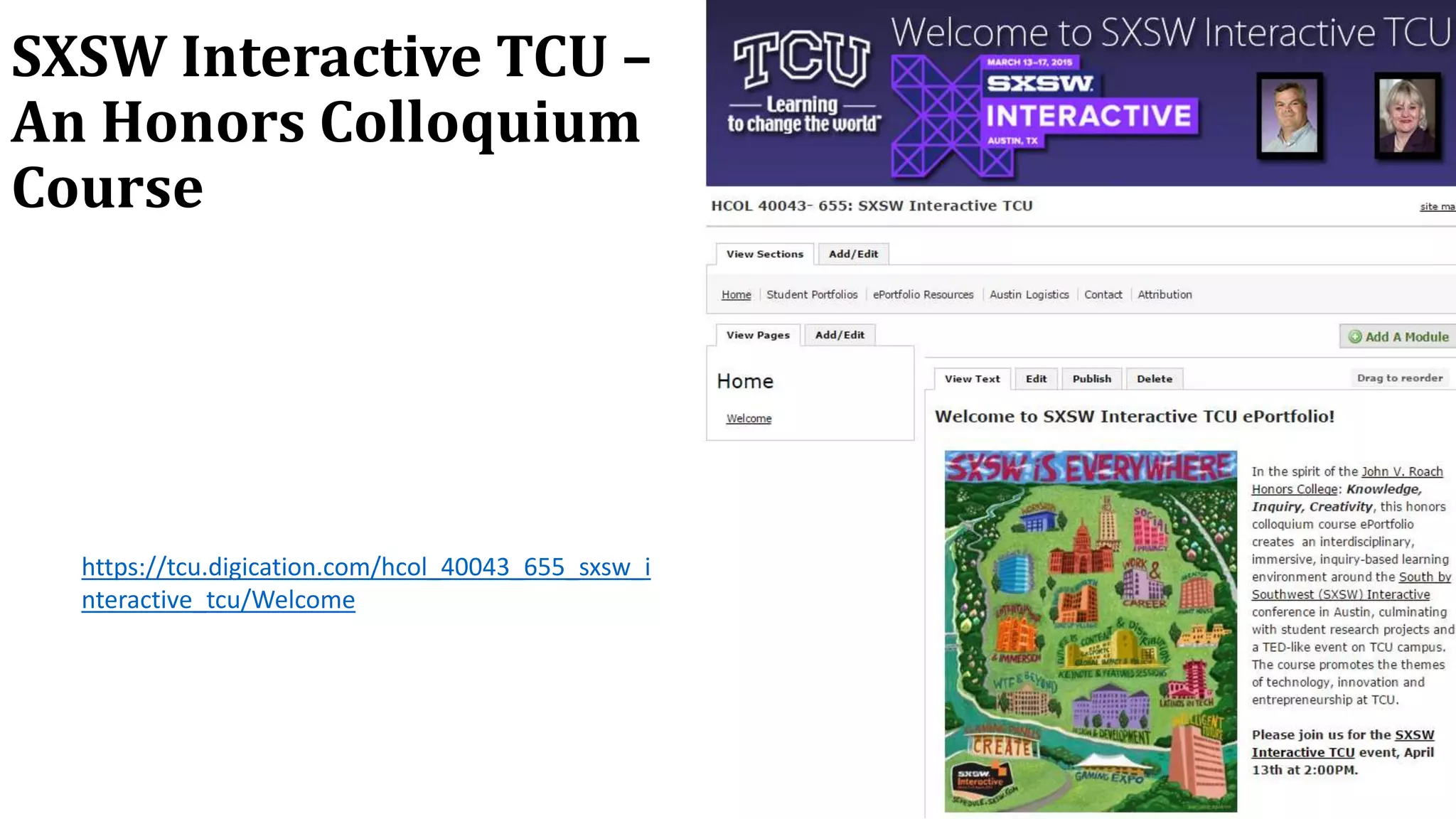
SXSW Interactive TCU –
An Honors Colloquium
Course
https://tcu.digication.com/hcol_40043_655_sxsw_i
nteractive_tcu/Welcome
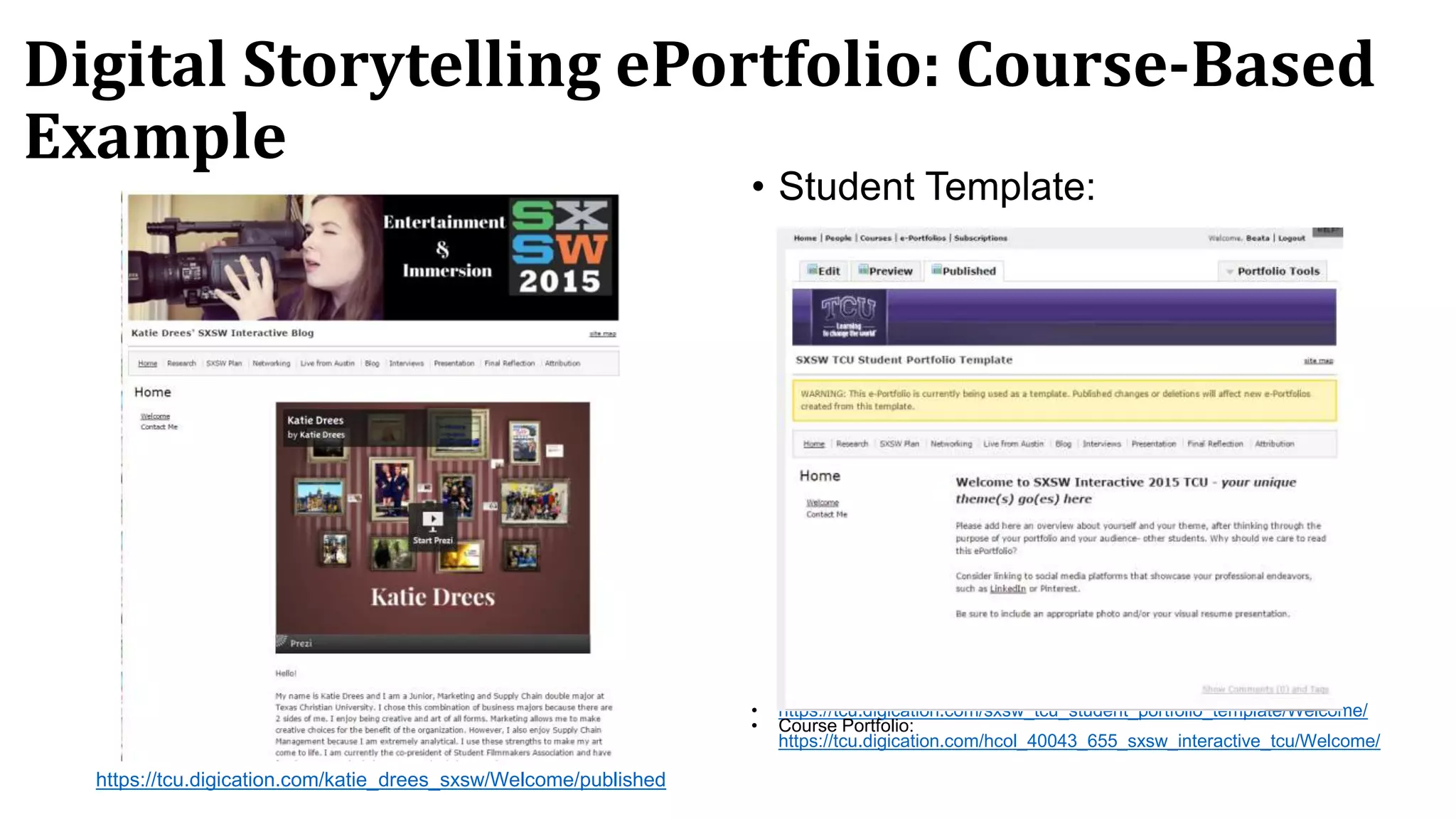
Digital Storytelling ePortfolio: Course-Based
Example
• Student Template:
• https://tcu.digication.com/sxsw_tcu_student_portfolio_template/Welcome/
• Course Portfolio:
https://tcu.digication.com/hcol_40043_655_sxsw_interactive_tcu/Welcome/
https://tcu.digication.com/katie_drees_sxsw/Welcome/published
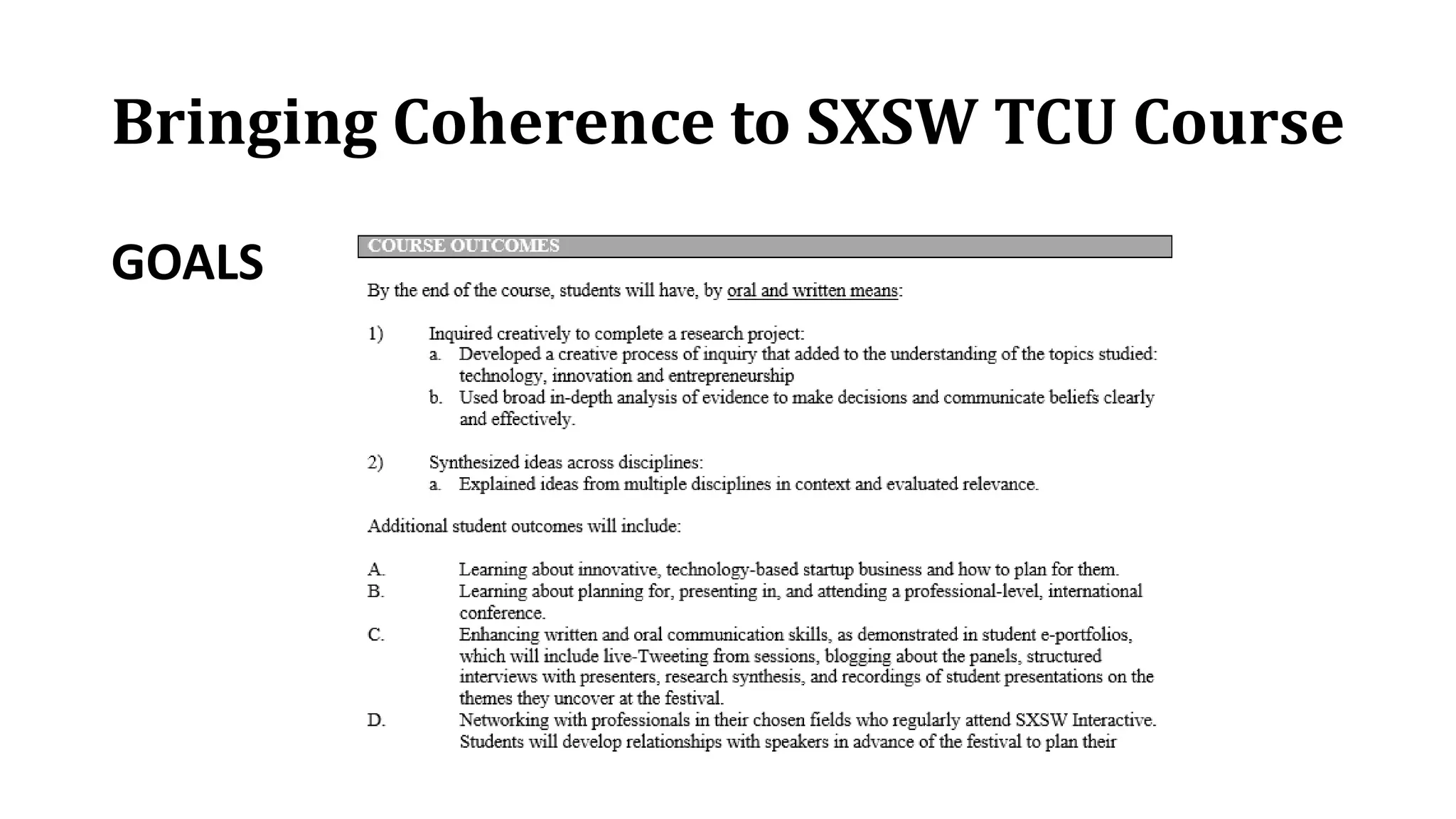
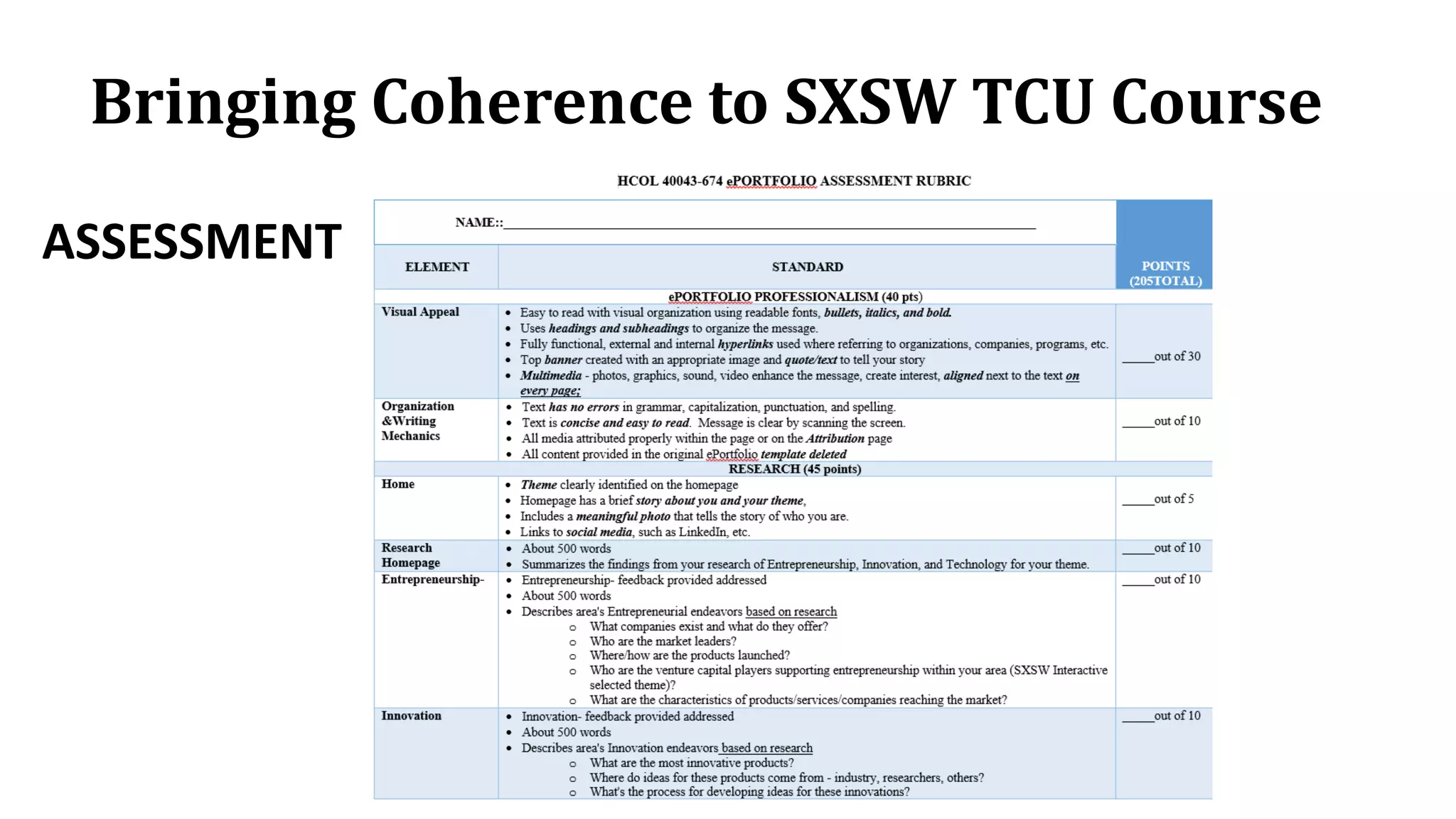
Bringing Coherence to SXSW TCU Course
GOALS
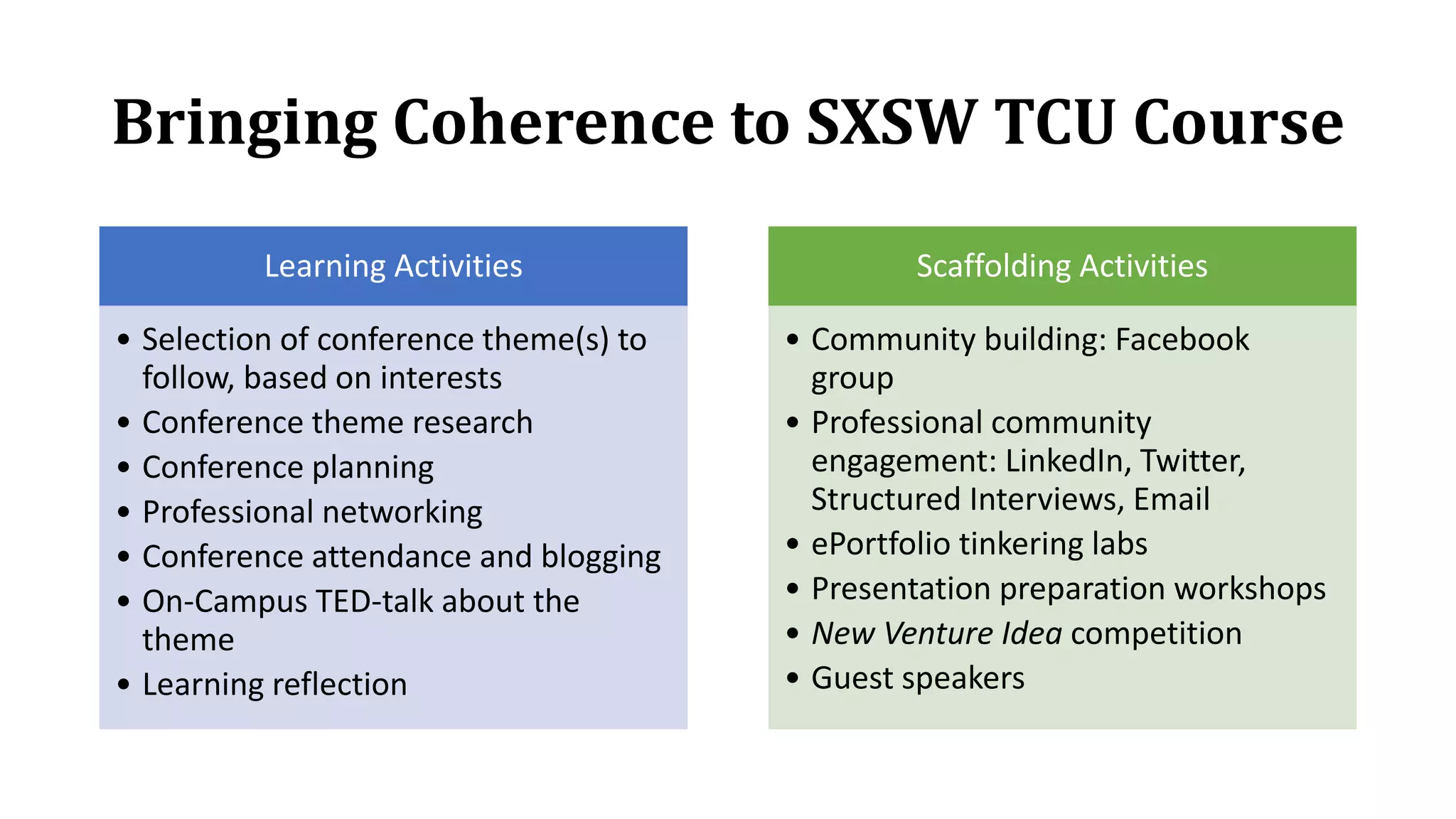
Bringing Coherence to SXSW TCU Course
Learning Activities
• Selection of conference theme(s) to
follow, based on interests
• Conference theme research
• Conference planning
• Professional networking
• Conference attendance and blogging
• On-Campus TED-talk about the
theme
• Learning reflection
Scaffolding Activities
• Community building: Facebook
group
• Professional community
engagement: LinkedIn, Twitter,
Structured Interviews, Email
• ePortfolio tinkering labs
• Presentation preparation workshops
• New Venture Idea competition
• Guest speakers
Bringing Coherence to SXSW TCU Course
ASSESSMENT
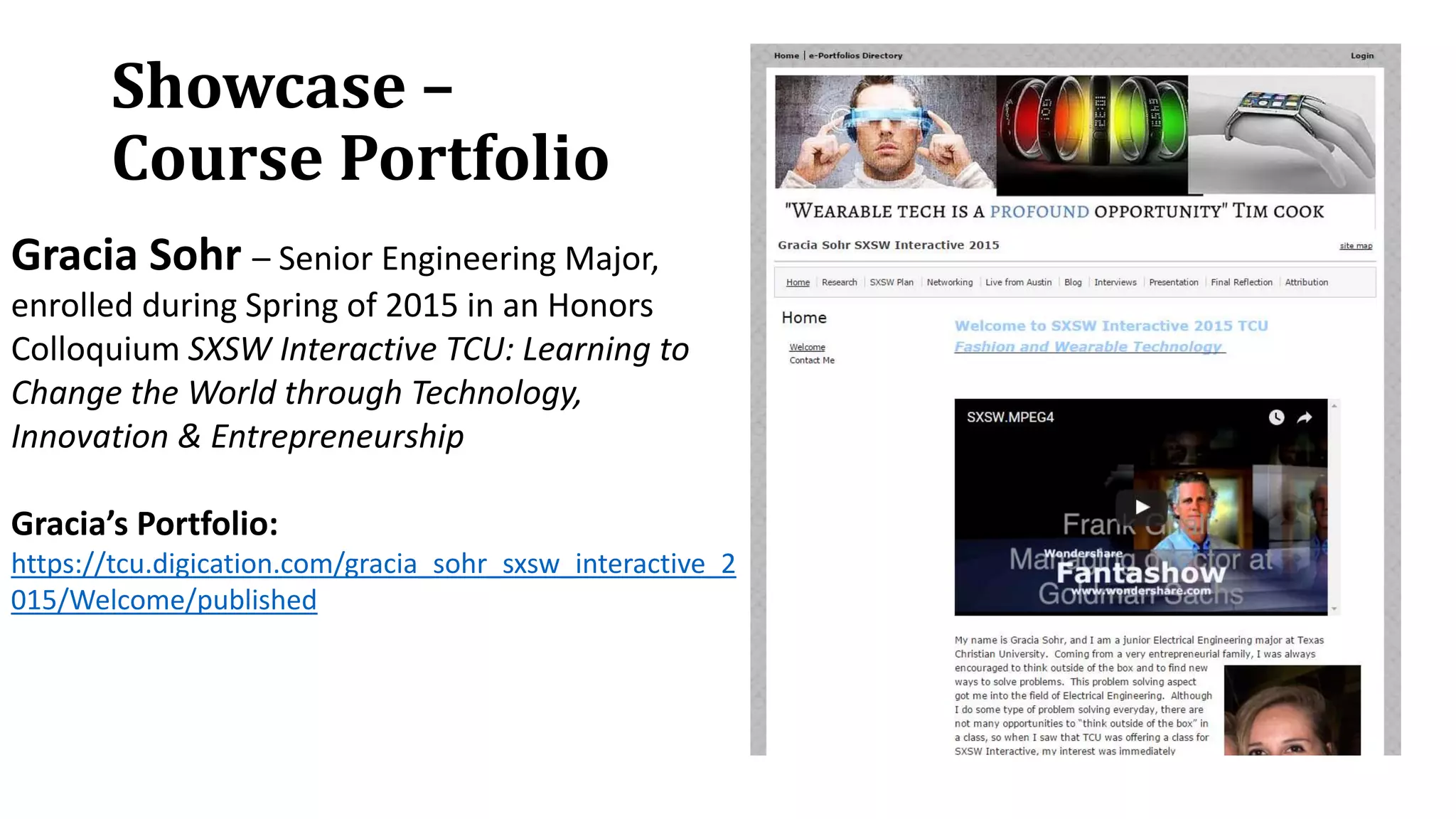
Showcase –
Course Portfolio
Gracia Sohr – Senior Engineering Major,
enrolled during Spring of 2015 in an Honors
Colloquium SXSW Interactive TCU: Learning to
Change the World through Technology,
Innovation & Entrepreneurship
Gracia’s Portfolio:
https://tcu.digication.com/gracia_sohr_sxsw_interactive_2
015/Welcome/published
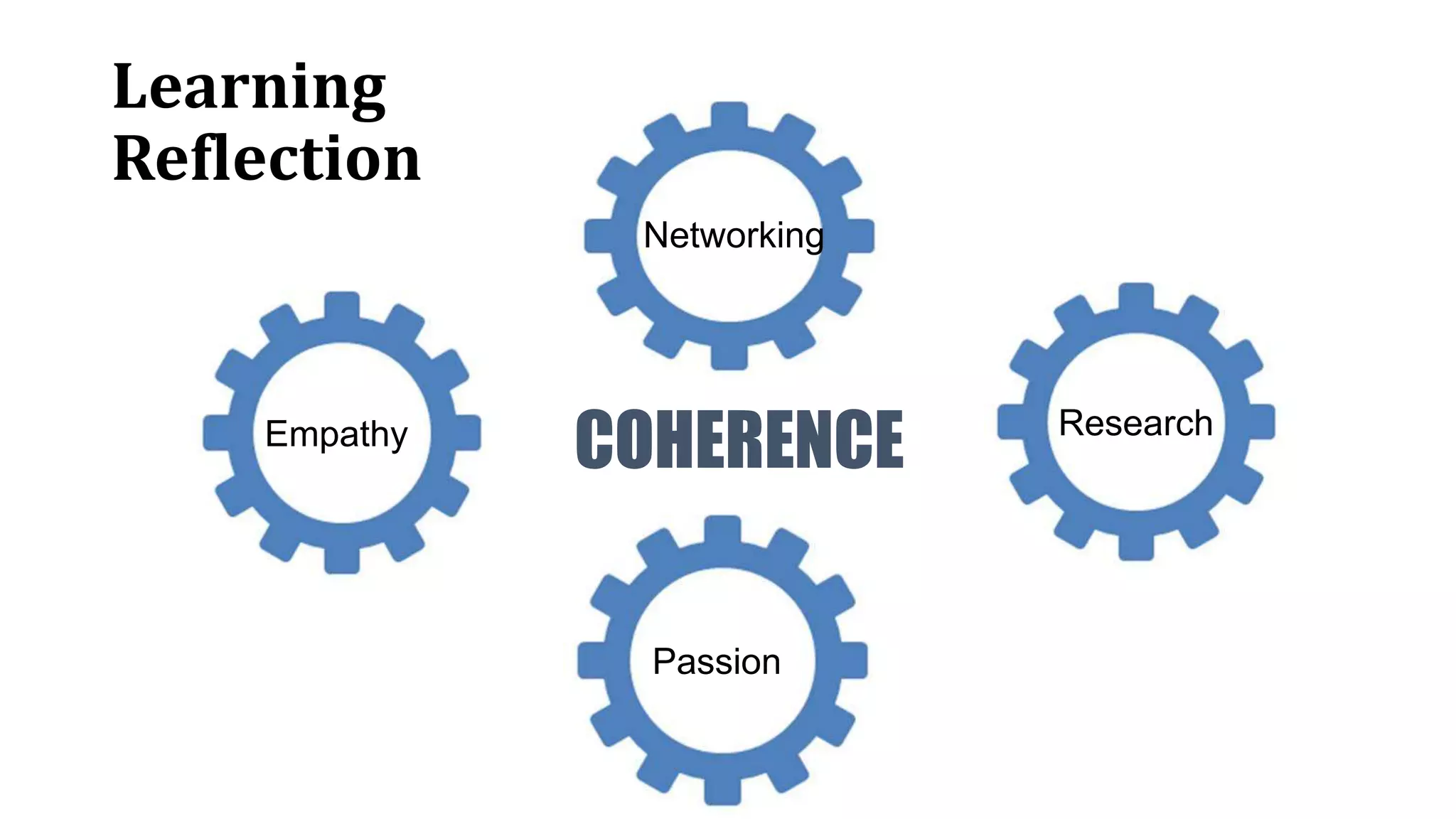
Learning
Reflection
COHERENCE
Networking
Research
Passion
Empathy
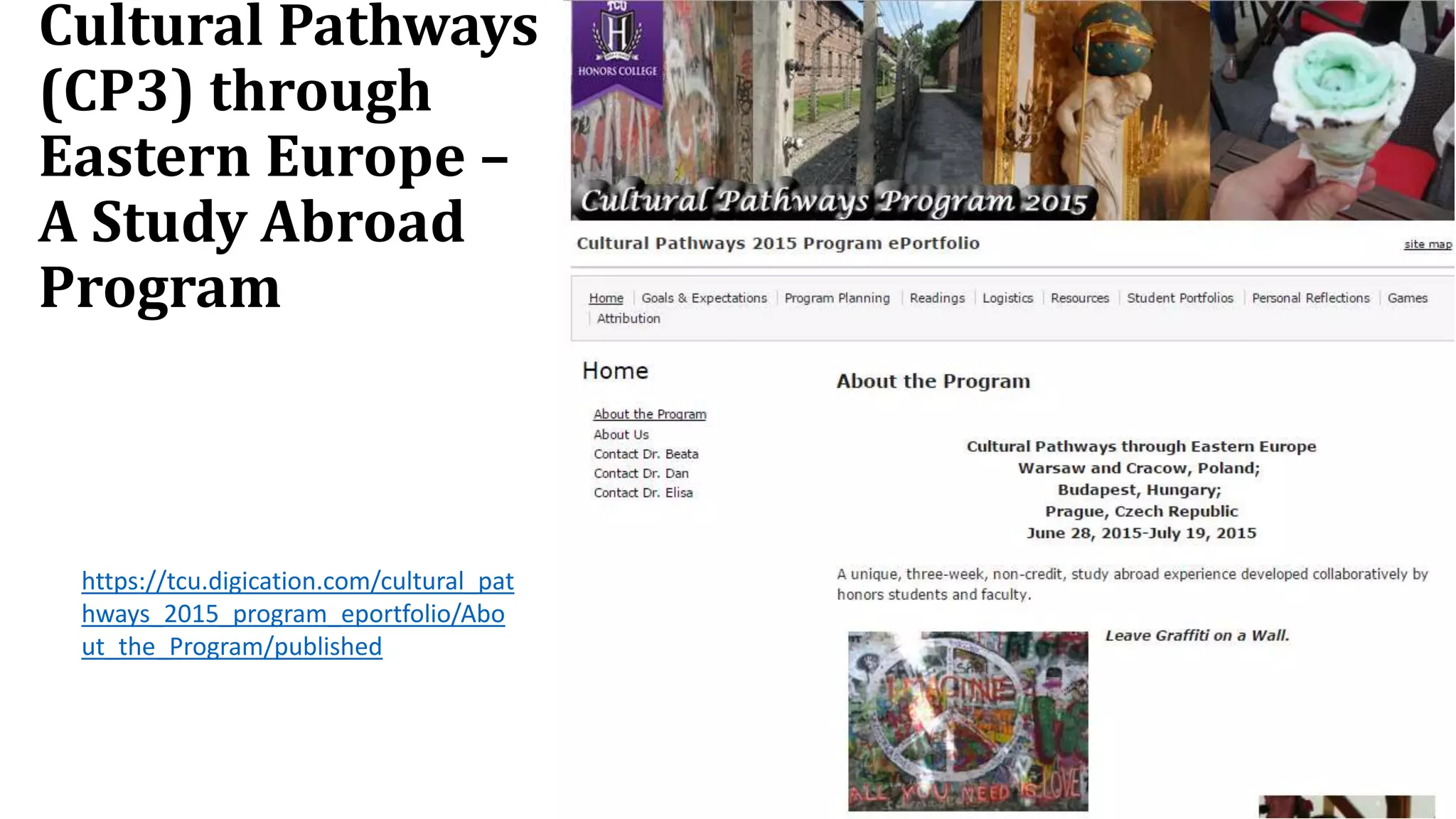
Cultural Pathways
(CP3) through
Eastern Europe –
A Study Abroad
Program
https://tcu.digication.com/cultural_pat
hways_2015_program_eportfolio/Abo
ut_the_Program/published
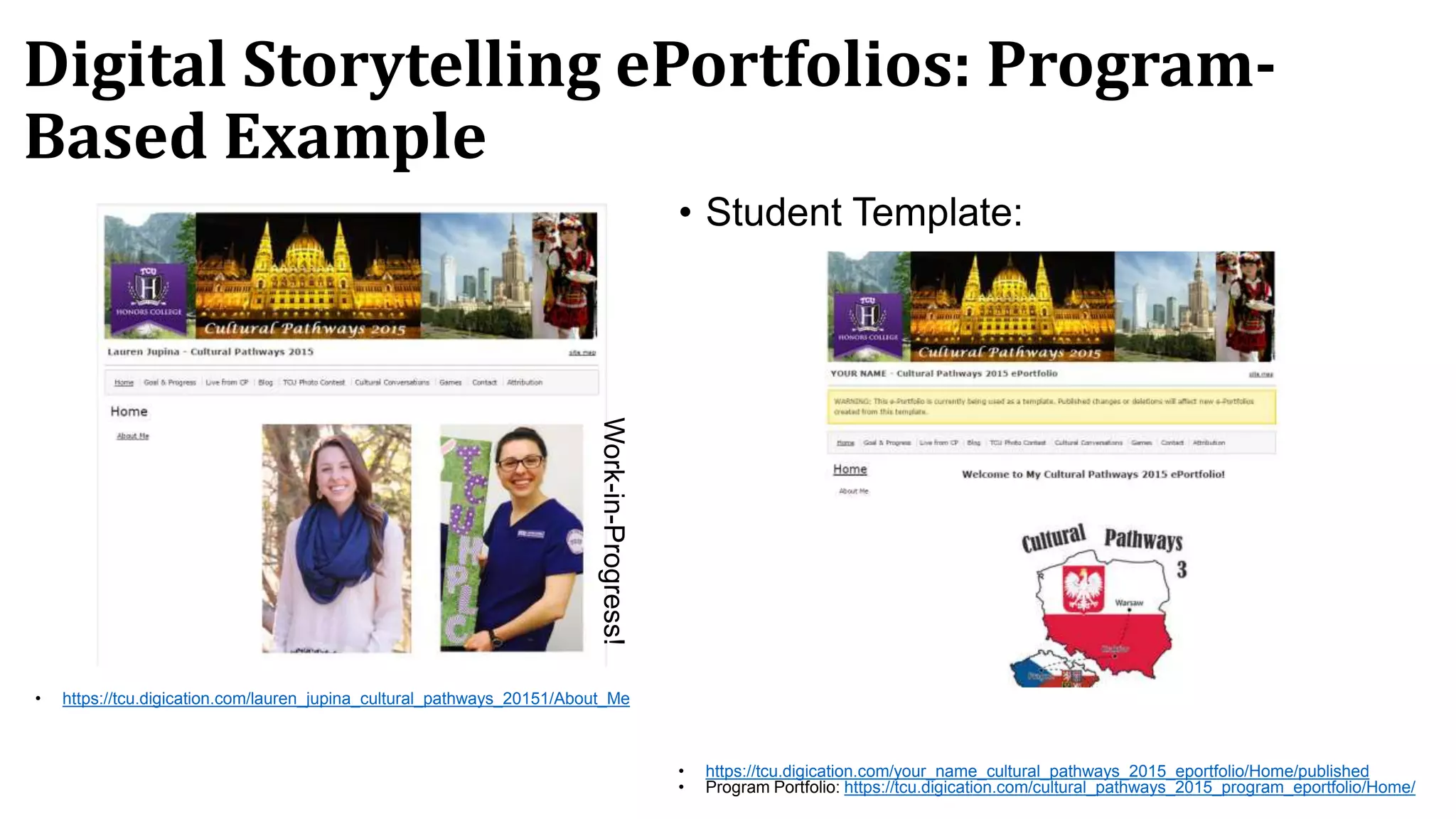
Digital Storytelling ePortfolios: Program-
Based Example
• https://tcu.digication.com/lauren_jupina_cultural_pathways_20151/About_Me
• Student Template:
• https://tcu.digication.com/your_name_cultural_pathways_2015_eportfolio/Home/published
• Program Portfolio: https://tcu.digication.com/cultural_pathways_2015_program_eportfolio/Home/
Work-in-Progress!
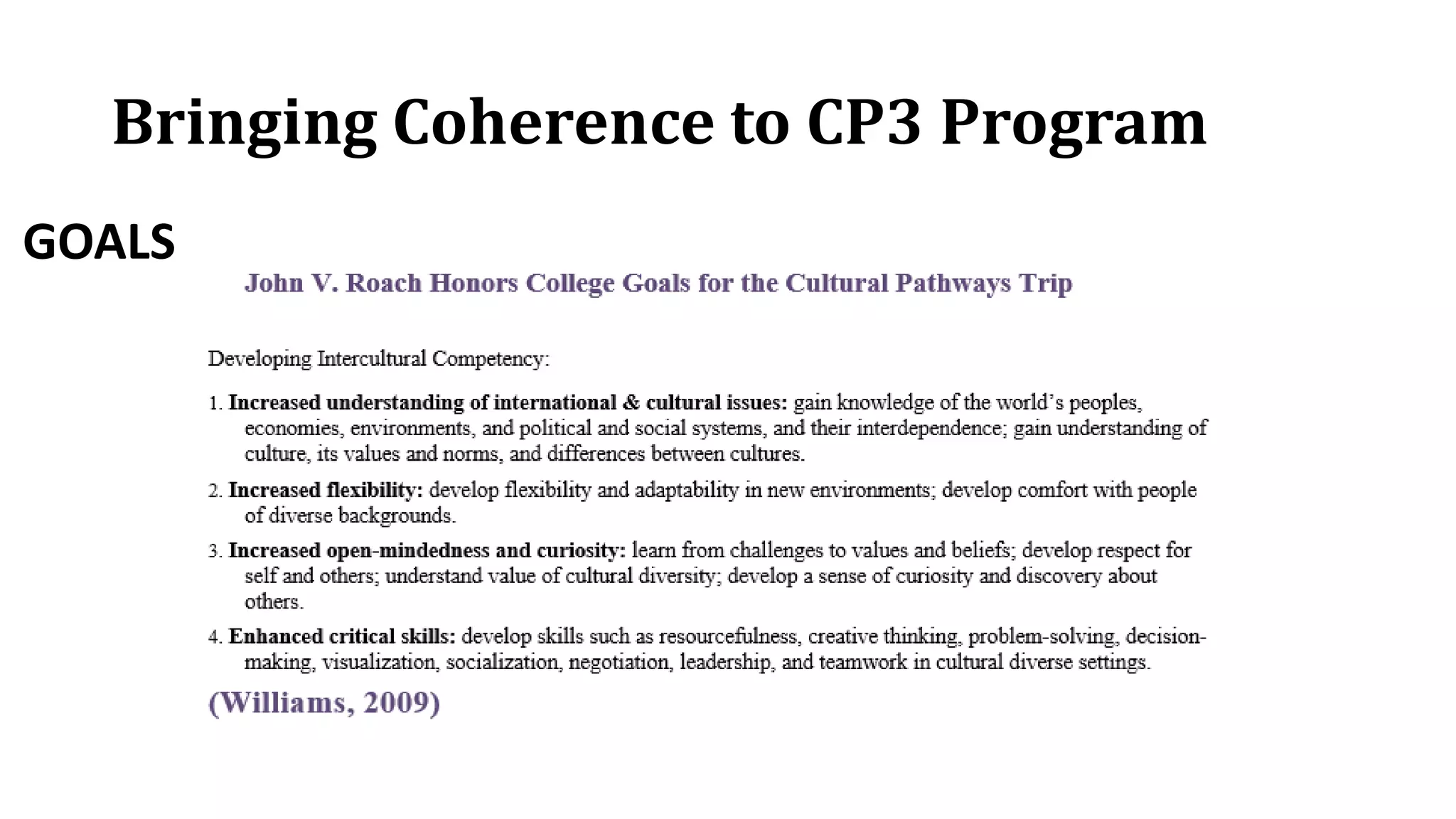
Bringing Coherence to CP3 Program
GOALS
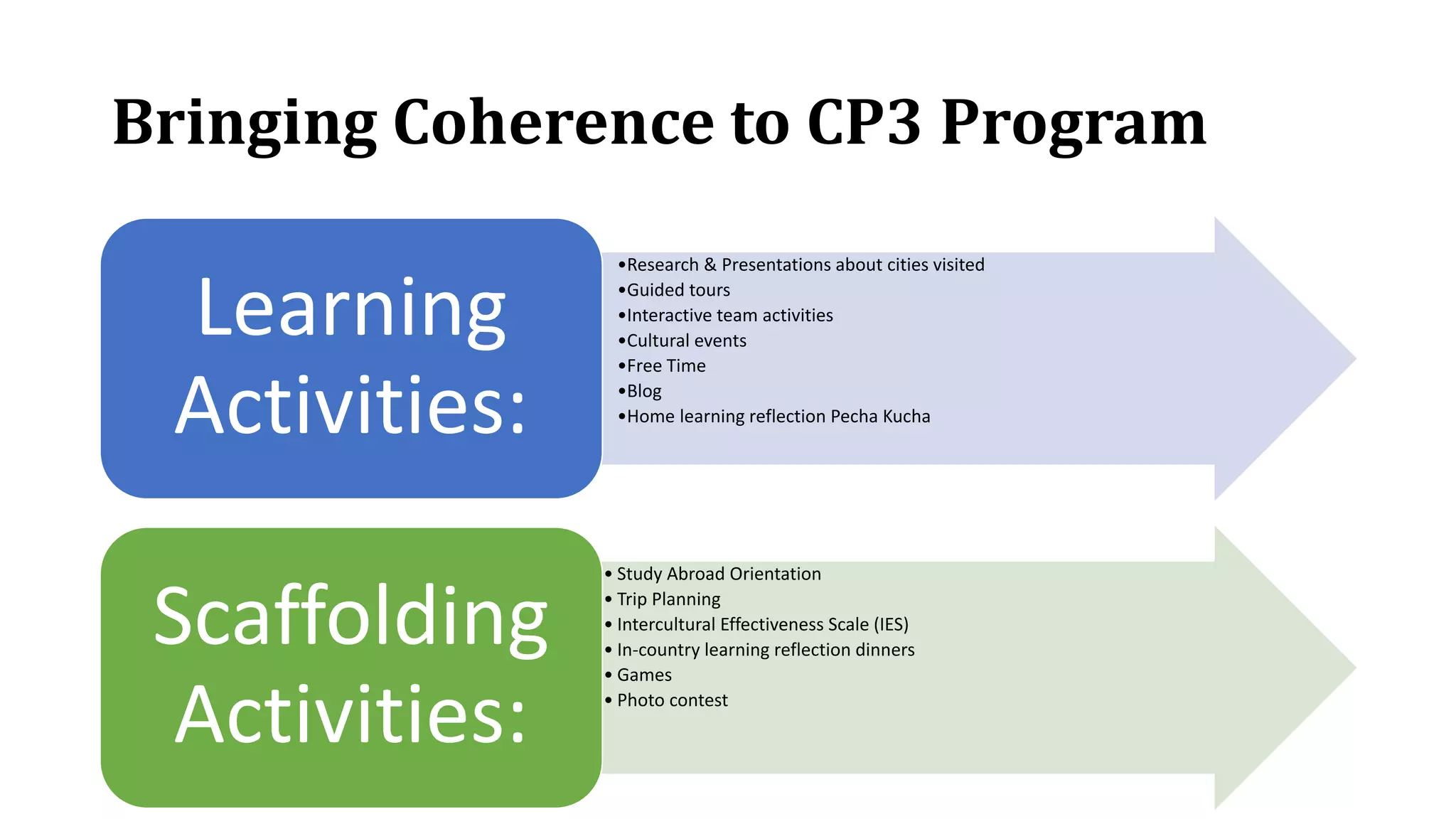
Bringing Coherence to CP3 Program
•Research & Presentations about cities visited
•Guided tours
•Interactive team activities
•Cultural events
•Free Time
•Blog
•Home learning reflection Pecha Kucha
Learning
Activities:
• Study Abroad Orientation
• Trip Planning
• Intercultural Effectiveness Scale (IES)
• In-country learning reflection dinners
• Games
• Photo contest
Scaffolding
Activities:
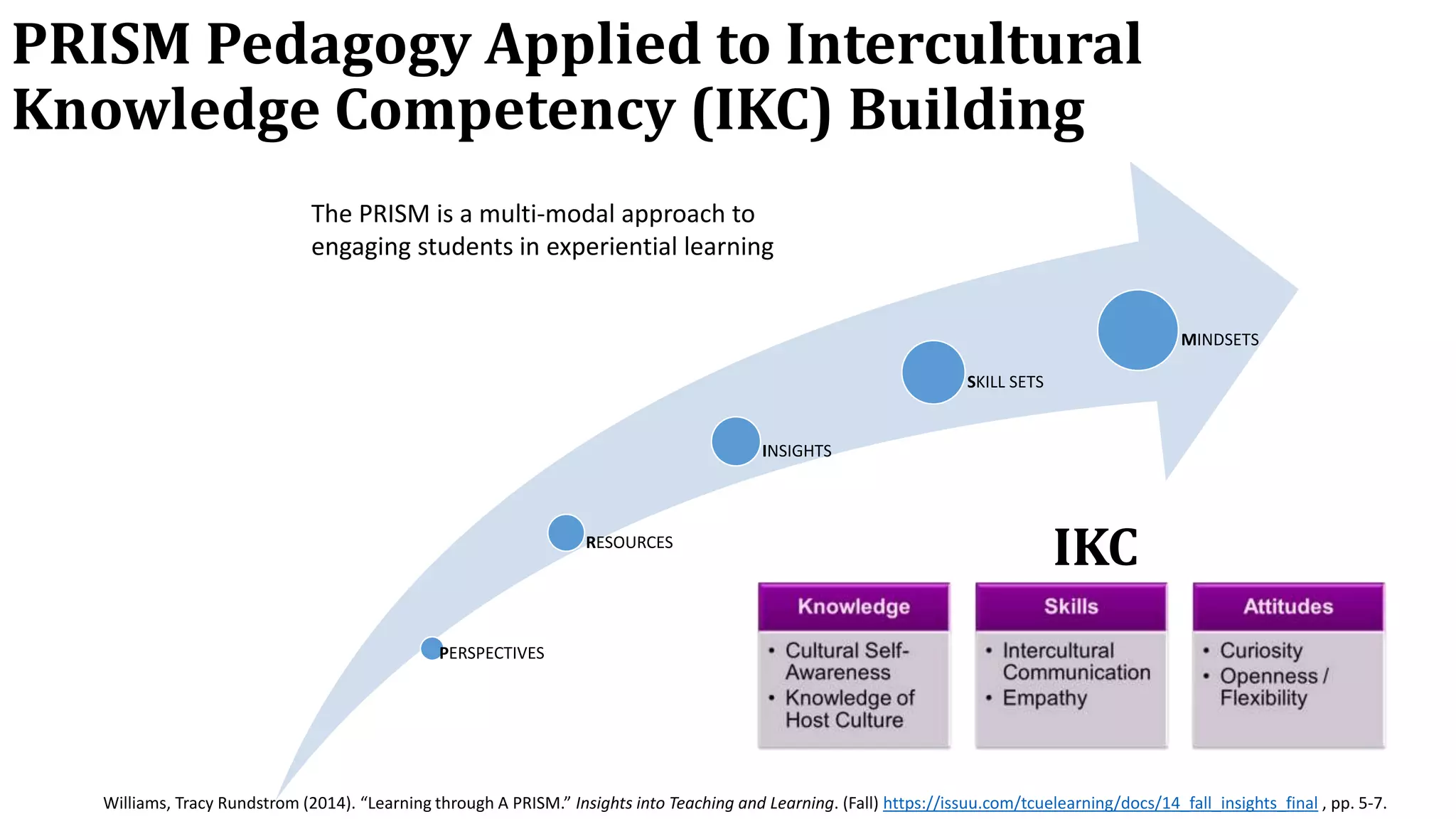
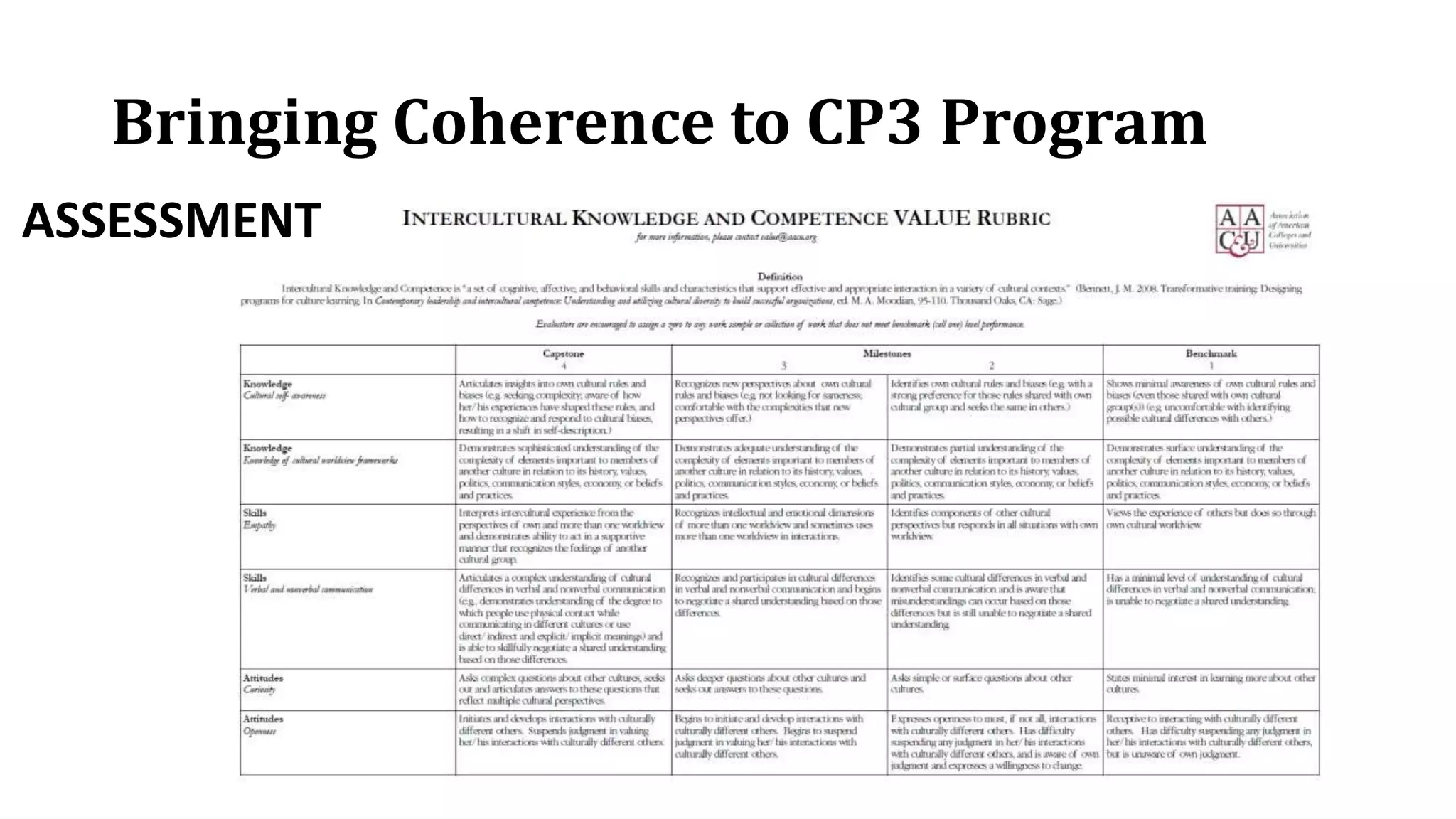
PRISM Pedagogy Applied to Intercultural
Knowledge Competency (IKC) Building
PERSPECTIVES
RESOURCES
INSIGHTS
SKILL SETS
MINDSETS
The PRISM is a multi-modal approach to
engaging students in experiential learning
IKC
Williams, Tracy Rundstrom (2014). “Learning through A PRISM.” Insights into Teaching and Learning. (Fall) https://issuu.com/tcuelearning/docs/14_fall_insights_final , pp. 5-7.
Bringing Coherence to CP3 Program
ASSESSMENT
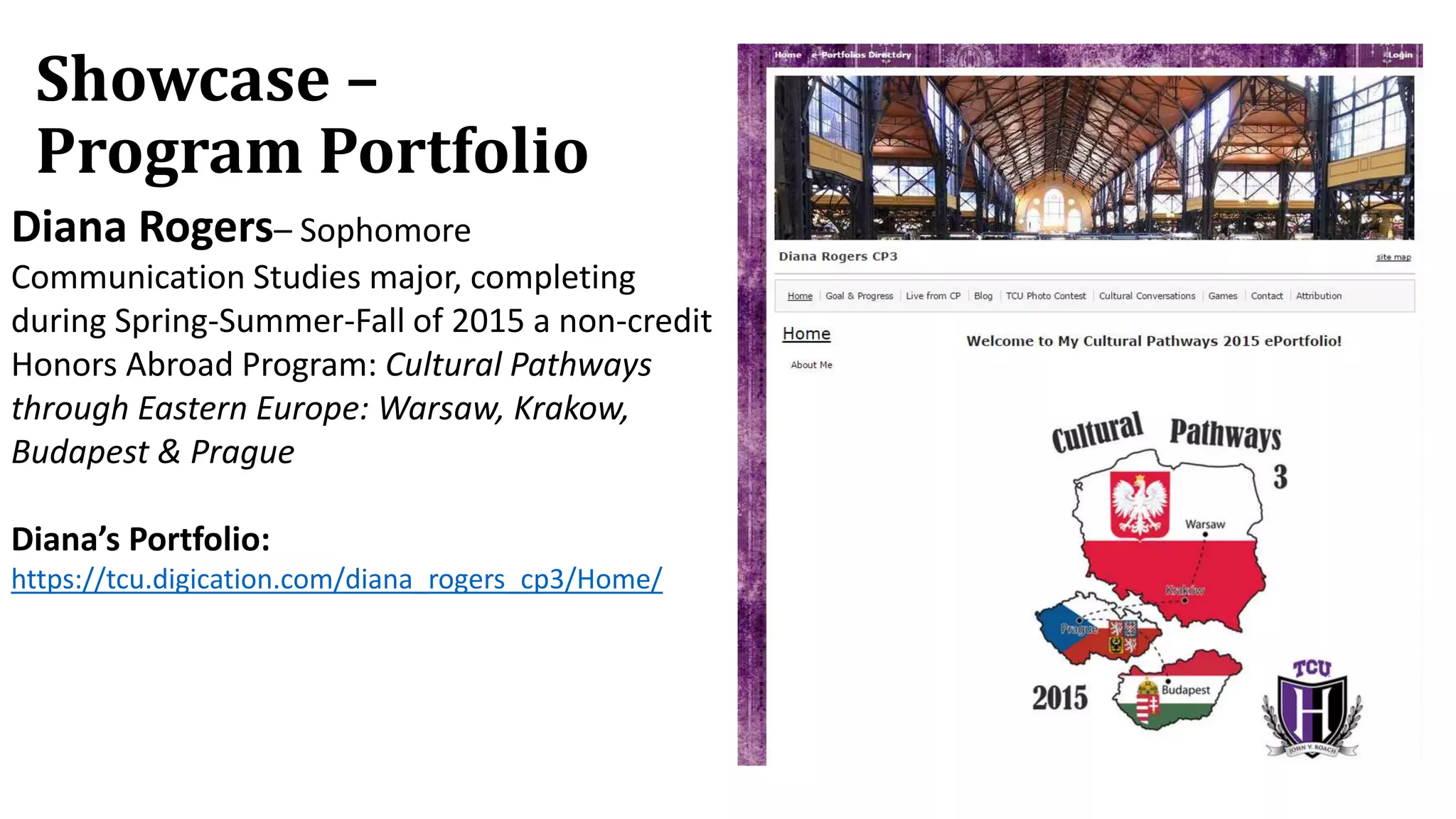
Showcase –
Program Portfolio
Diana Rogers– Sophomore
Communication Studies major, completing
during Spring-Summer-Fall of 2015 a non-credit
Honors Abroad Program: Cultural Pathways
through Eastern Europe: Warsaw, Krakow,
Budapest & Prague
Diana’s Portfolio:
https://tcu.digication.com/diana_rogers_cp3/Home/
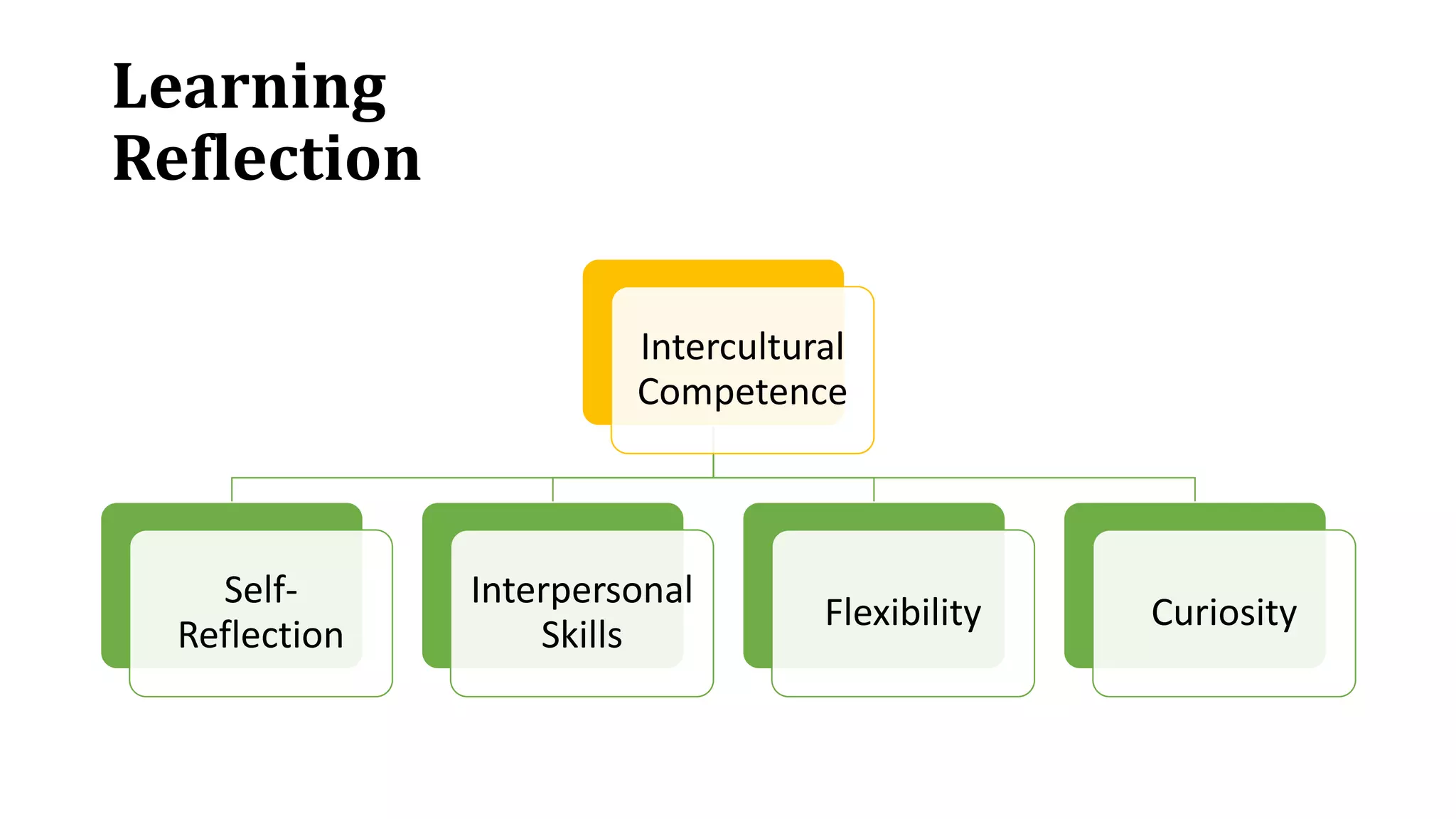
Learning
Reflection
Intercultural
Competence
Self-
Reflection
Interpersonal
Skills
Flexibility Curiosity
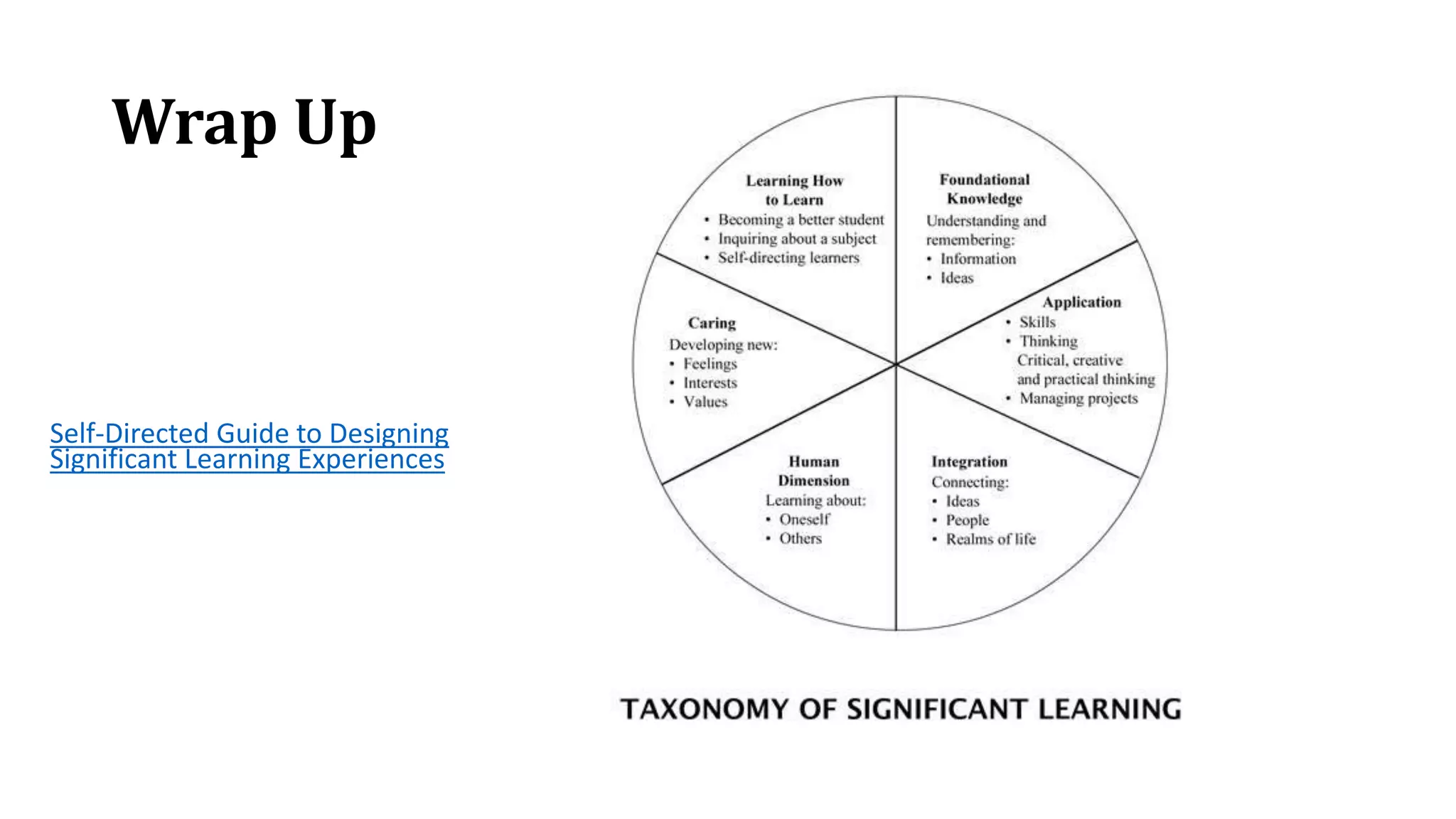
Wrap Up
Self-Directed Guide to Designing
Significant Learning Experiences
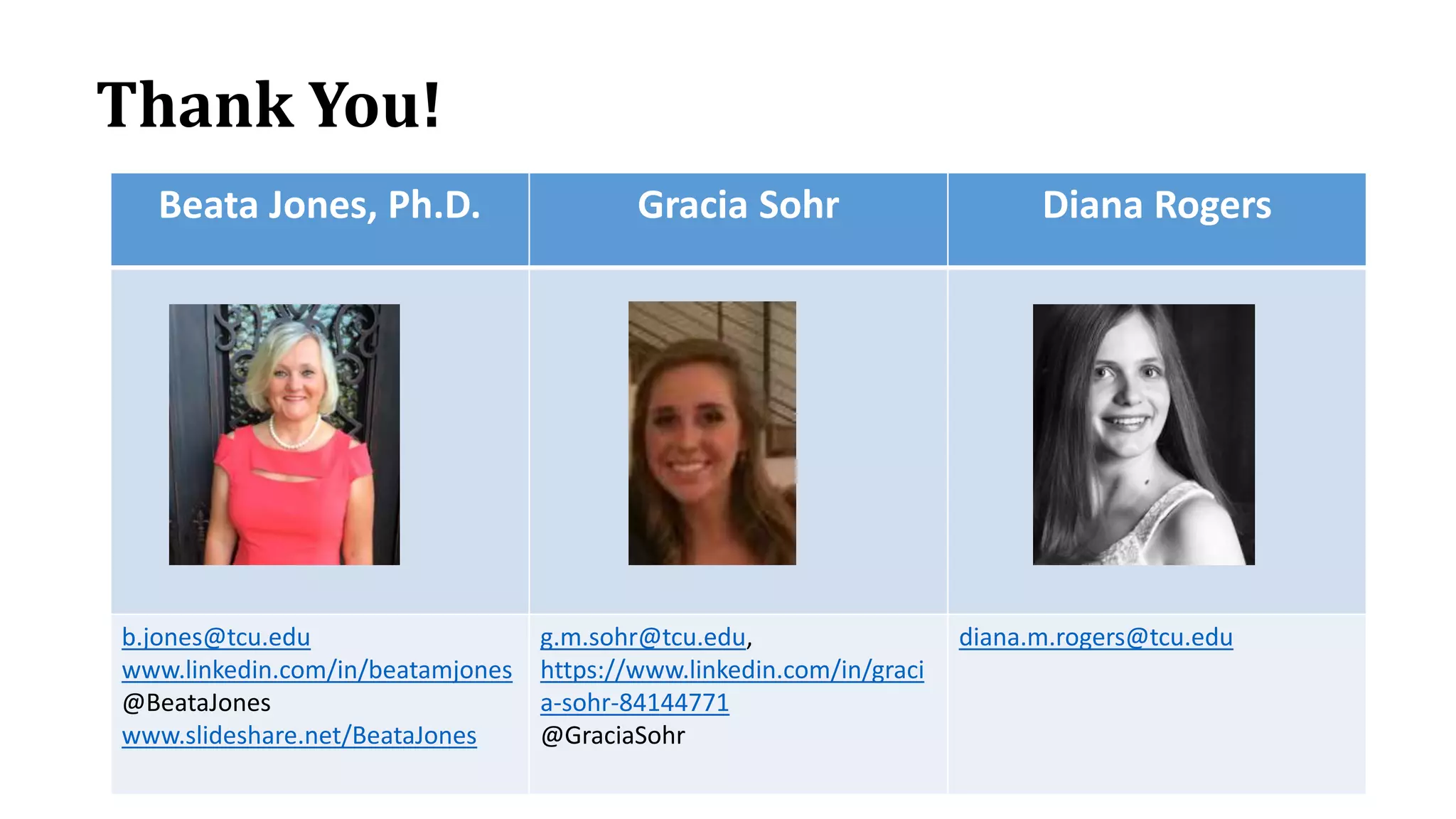
Thank You!
Beata Jones, Ph.D. Gracia Sohr Diana Rogers
b.jones@tcu.edu
www.linkedin.com/in/beatamjones
@BeataJones
www.slideshare.net/BeataJones
g.m.sohr@tcu.edu,
https://www.linkedin.com/in/graci
a-sohr-84144771
@GraciaSohr
diana.m.rogers@tcu.edu

Creating learning coherence with an eportfolio

  • 1.
    Creating Learning Coherence withan ePortfolio Dr. Beata Jones, Gracia Sohr, Diana Rogers Texas Christian University b.jones@tcu.edu, g.m.sohr@tcu.edu, diana.m.rogers@tcu.edu #AAEEBLTCU, February 29, 2016, Fort Worth, TX
  • 2.
    “The main partof intellectual education is not acquisition of facts but learning how to make facts live.“ --Oliver Wendel Holmes
  • 3.
    Overview The Educational Setting LearningCoherence Evidence-based Principles of Bringing Coherence to Student’s Learning Strategies for Structuring ePortfolio Learning Contexts Showcase & Learning Reflection Q&A
  • 4.
  • 5.
    The Educational Setting: Shifting21st Century Learning Realities 20th Century Learning Single Source “Individually, read Chapter 3 and be ready to answer questions.” 21st Century Learning Crowd Source “With your team, find and read a relevant articles, find and explore a relevant website, find and watch a relevant video, go into the community, interview a relevant person and be prepared to discuss.”
  • 6.
    Learning Coherence …‘‘the mannerin which opportunities to learn have been arranged (organizationally, logistically) to achieve a common goal’’ (Tatto, 1996, p. 176). Tatto, M. (1996). Examining values and beliefs about teaching diverse students: Understanding the challenges for teacher education. Educational Evaluation and Policy Analysis, 18, 155–180.
  • 7.
    ‘‘Perhaps the mostbasic thing that can be said about human memory is that unless detail is placed into a structured pattern, it is rapidly forgotten’’ (Brunner, 1977, p. 37). Bruner, J. (1977). The process of education. Cambridge, MA: Harvard University Press
  • 8.
    Evidence-based Principles ofBringing Coherence to Student’s Learning Self-Directed Guide to Designing Significant Learning Experiences
  • 9.
    Best Practices inePortfolio Implementation
  • 10.
    Creating Curricular Coherencewith an ePortfolio Clear Learning Goals • Goal Statements • ePortfolio Samples of Work • ePortfolio Templates that Structure Work Teaching & Learning Activities • Rich Learning Experiences with related Activities built into the Template • Choices in Learning Experiences, based on passions and interests • Digital Storytelling approach to Learning Activity reflections • Learning Activities requiring linking across digital learning platforms • Games • Final Learning Reflection requiring Learning Integration Feedback & Assessment • Mentoring • Rubrics • Formative & Summative Feedback • Self-Assessment
  • 11.
    Goals for Learning Assessment & Measurement Community Engagement Instructional Practices Resource Deployment CreatingCurricular Coherence Adapted from: http://www.slideshare.net/jpcostasr/coherence-boces-share
  • 12.
    Strategies for StructuringePortfolio Learning Contexts Community Engagement Course/Program Community Building Among Students and Faculty Professional Community Engagement Scaffolding/ Resource Deployment List of available resources (digital and human) Time to answer questions
  • 13.
    SXSW Interactive TCU– An Honors Colloquium Course https://tcu.digication.com/hcol_40043_655_sxsw_i nteractive_tcu/Welcome
  • 14.
    Digital Storytelling ePortfolio:Course-Based Example • Student Template: • https://tcu.digication.com/sxsw_tcu_student_portfolio_template/Welcome/ • Course Portfolio: https://tcu.digication.com/hcol_40043_655_sxsw_interactive_tcu/Welcome/ https://tcu.digication.com/katie_drees_sxsw/Welcome/published
  • 15.
    Bringing Coherence toSXSW TCU Course GOALS
  • 16.
    Bringing Coherence toSXSW TCU Course Learning Activities • Selection of conference theme(s) to follow, based on interests • Conference theme research • Conference planning • Professional networking • Conference attendance and blogging • On-Campus TED-talk about the theme • Learning reflection Scaffolding Activities • Community building: Facebook group • Professional community engagement: LinkedIn, Twitter, Structured Interviews, Email • ePortfolio tinkering labs • Presentation preparation workshops • New Venture Idea competition • Guest speakers
  • 17.
    Bringing Coherence toSXSW TCU Course ASSESSMENT
  • 18.
    Showcase – Course Portfolio GraciaSohr – Senior Engineering Major, enrolled during Spring of 2015 in an Honors Colloquium SXSW Interactive TCU: Learning to Change the World through Technology, Innovation & Entrepreneurship Gracia’s Portfolio: https://tcu.digication.com/gracia_sohr_sxsw_interactive_2 015/Welcome/published
  • 19.
  • 20.
    Cultural Pathways (CP3) through EasternEurope – A Study Abroad Program https://tcu.digication.com/cultural_pat hways_2015_program_eportfolio/Abo ut_the_Program/published
  • 21.
    Digital Storytelling ePortfolios:Program- Based Example • https://tcu.digication.com/lauren_jupina_cultural_pathways_20151/About_Me • Student Template: • https://tcu.digication.com/your_name_cultural_pathways_2015_eportfolio/Home/published • Program Portfolio: https://tcu.digication.com/cultural_pathways_2015_program_eportfolio/Home/ Work-in-Progress!
  • 22.
    Bringing Coherence toCP3 Program GOALS
  • 23.
    Bringing Coherence toCP3 Program •Research & Presentations about cities visited •Guided tours •Interactive team activities •Cultural events •Free Time •Blog •Home learning reflection Pecha Kucha Learning Activities: • Study Abroad Orientation • Trip Planning • Intercultural Effectiveness Scale (IES) • In-country learning reflection dinners • Games • Photo contest Scaffolding Activities:
  • 24.
    PRISM Pedagogy Appliedto Intercultural Knowledge Competency (IKC) Building PERSPECTIVES RESOURCES INSIGHTS SKILL SETS MINDSETS The PRISM is a multi-modal approach to engaging students in experiential learning IKC Williams, Tracy Rundstrom (2014). “Learning through A PRISM.” Insights into Teaching and Learning. (Fall) https://issuu.com/tcuelearning/docs/14_fall_insights_final , pp. 5-7.
  • 25.
    Bringing Coherence toCP3 Program ASSESSMENT
  • 26.
    Showcase – Program Portfolio DianaRogers– Sophomore Communication Studies major, completing during Spring-Summer-Fall of 2015 a non-credit Honors Abroad Program: Cultural Pathways through Eastern Europe: Warsaw, Krakow, Budapest & Prague Diana’s Portfolio: https://tcu.digication.com/diana_rogers_cp3/Home/
  • 27.
  • 28.
    Wrap Up Self-Directed Guideto Designing Significant Learning Experiences
  • 29.
    Thank You! Beata Jones,Ph.D. Gracia Sohr Diana Rogers b.jones@tcu.edu www.linkedin.com/in/beatamjones @BeataJones www.slideshare.net/BeataJones g.m.sohr@tcu.edu, https://www.linkedin.com/in/graci a-sohr-84144771 @GraciaSohr diana.m.rogers@tcu.edu