T H E O P E N S U N Y
M ETA L IT E R A CY
B A D G I NG S Y S T E M
E N V I S I O N I N G C O N N E C T I O N S
W I T H E - P O R T F O L I O S
T R U D I J A C O B S O N , T O M M A C K E Y & K E L S E Y O ’ B R I E N
WHAT IS METALITERACY?
Metaliteracy is envisioned as a comprehensive
model for information literacy to advance critical
thinking and reflection in social media, open
learning settings, and online communities.
Jacobson and Mackey, Proposing a Metaliteracy Model to Redefine Information Literacy,
Communications in Information Literacy 7(2), 2013.
4
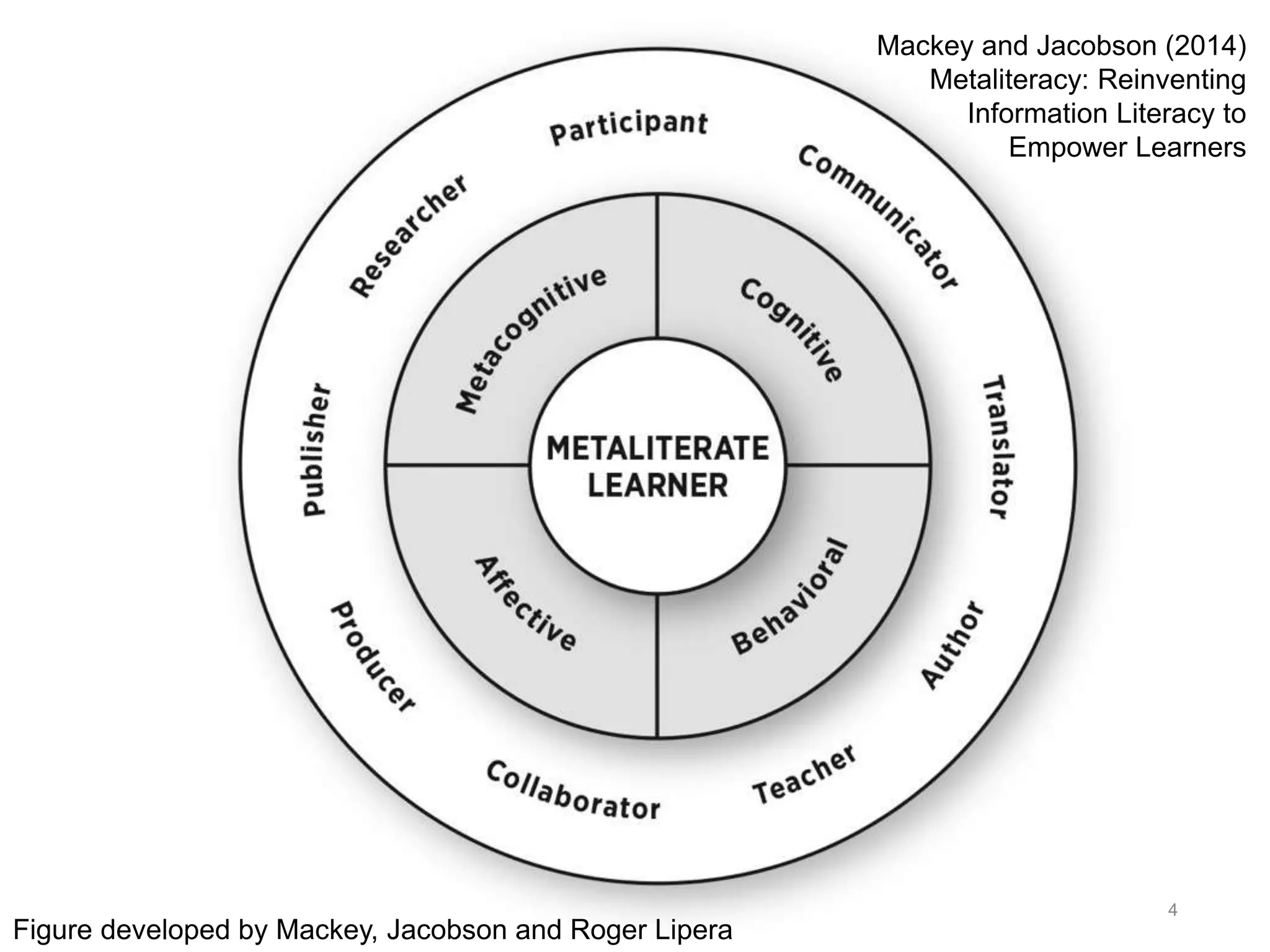
Figure developed by Mackey, Jacobson and Roger Lipera
Mackey and Jacobson (2014)
Metaliteracy: Reinventing
Information Literacy to
Empower Learners
METALITERACY LEARNING
OBJECTIVES
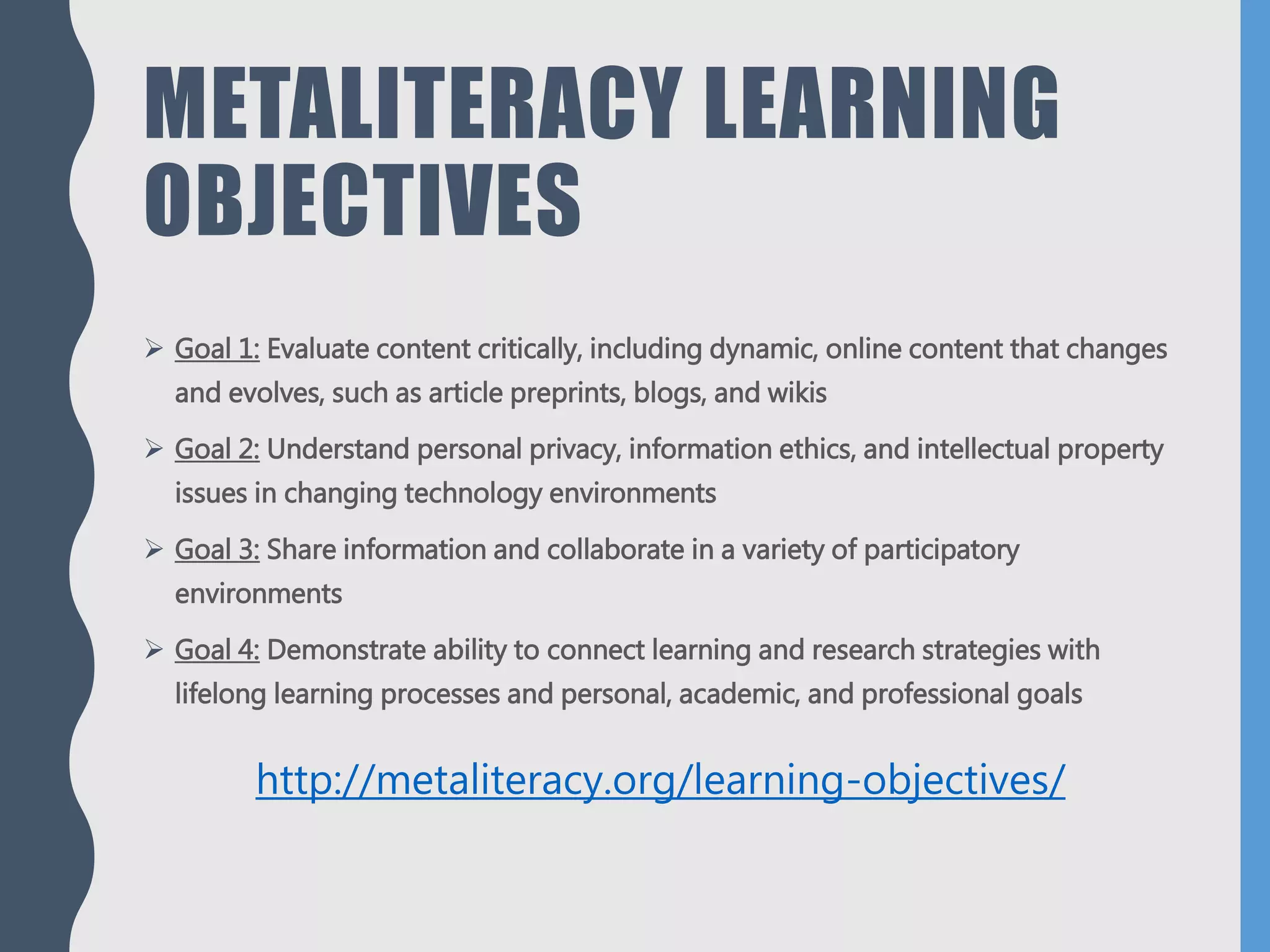
 Goal 1: Evaluate content critically, including dynamic, online content that changes
and evolves, such as article preprints, blogs, and wikis
 Goal 2: Understand personal privacy, information ethics, and intellectual property
issues in changing technology environments
 Goal 3: Share information and collaborate in a variety of participatory
environments
 Goal 4: Demonstrate ability to connect learning and research strategies with
lifelong learning processes and personal, academic, and professional goals
http://metaliteracy.org/learning-objectives/
DESIGN
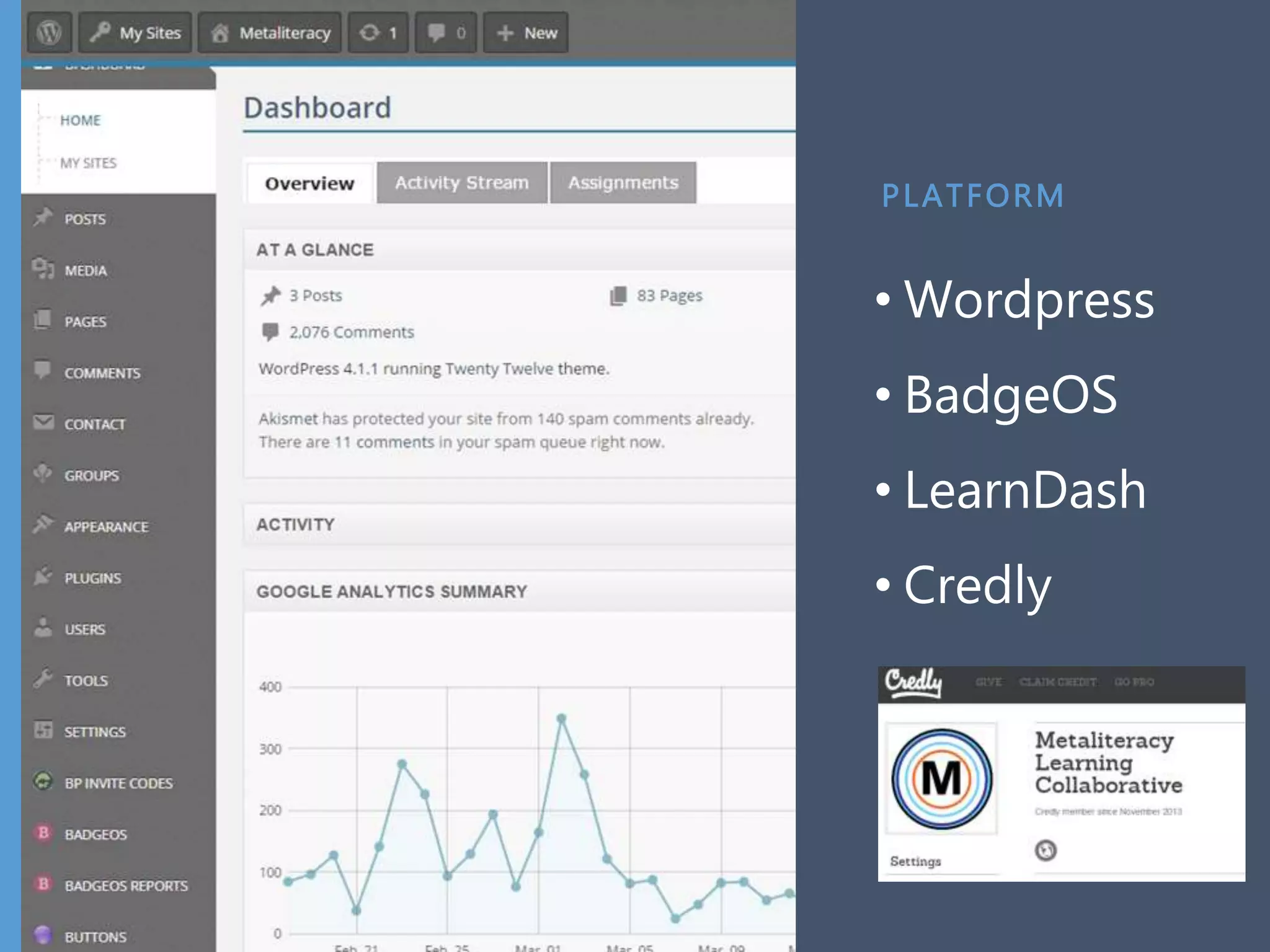
PLATFORM
• Wordpress
• BadgeOS
• LearnDash
• Credly
DESIGN
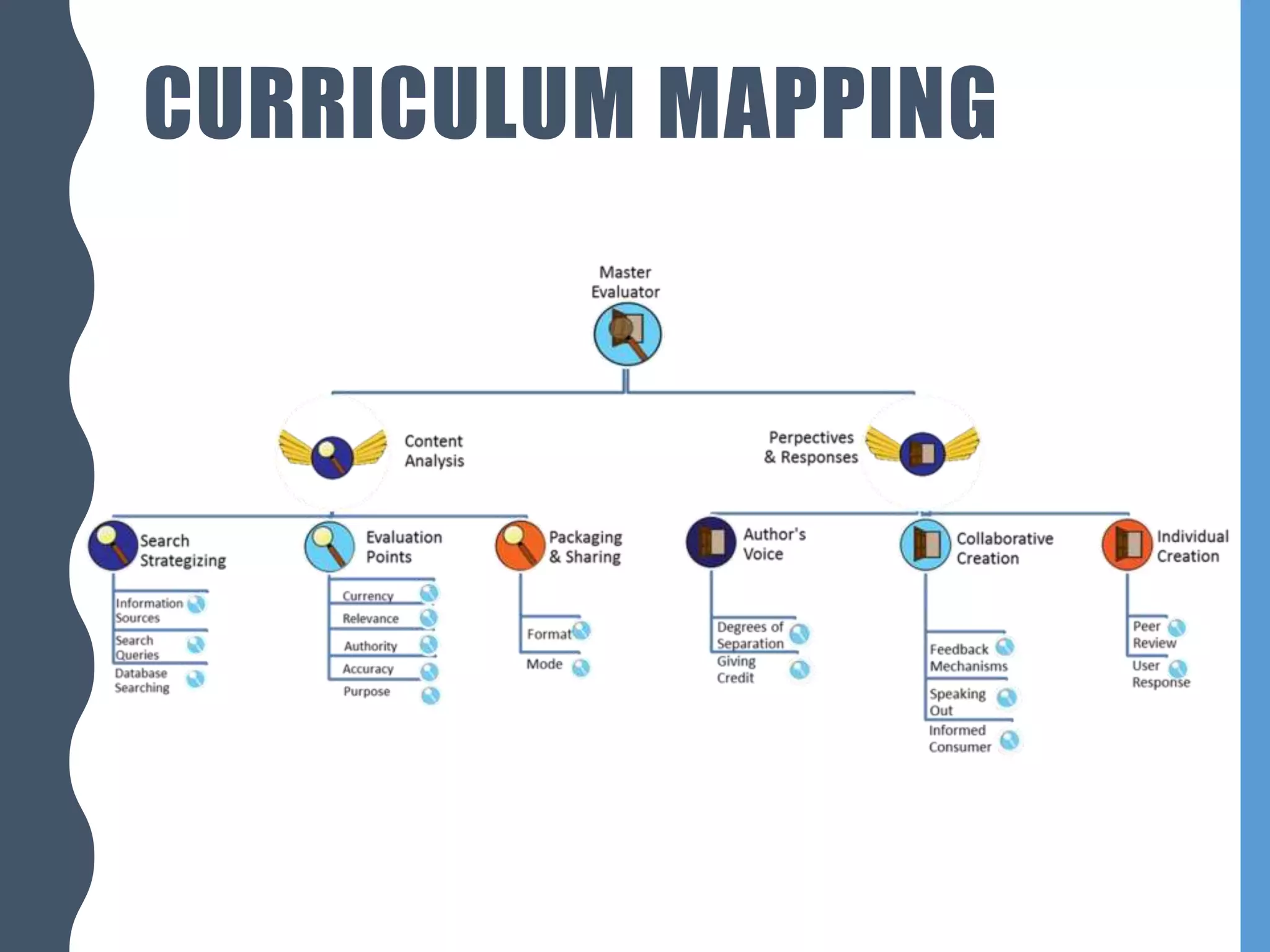
CURRICULUM MAPPING
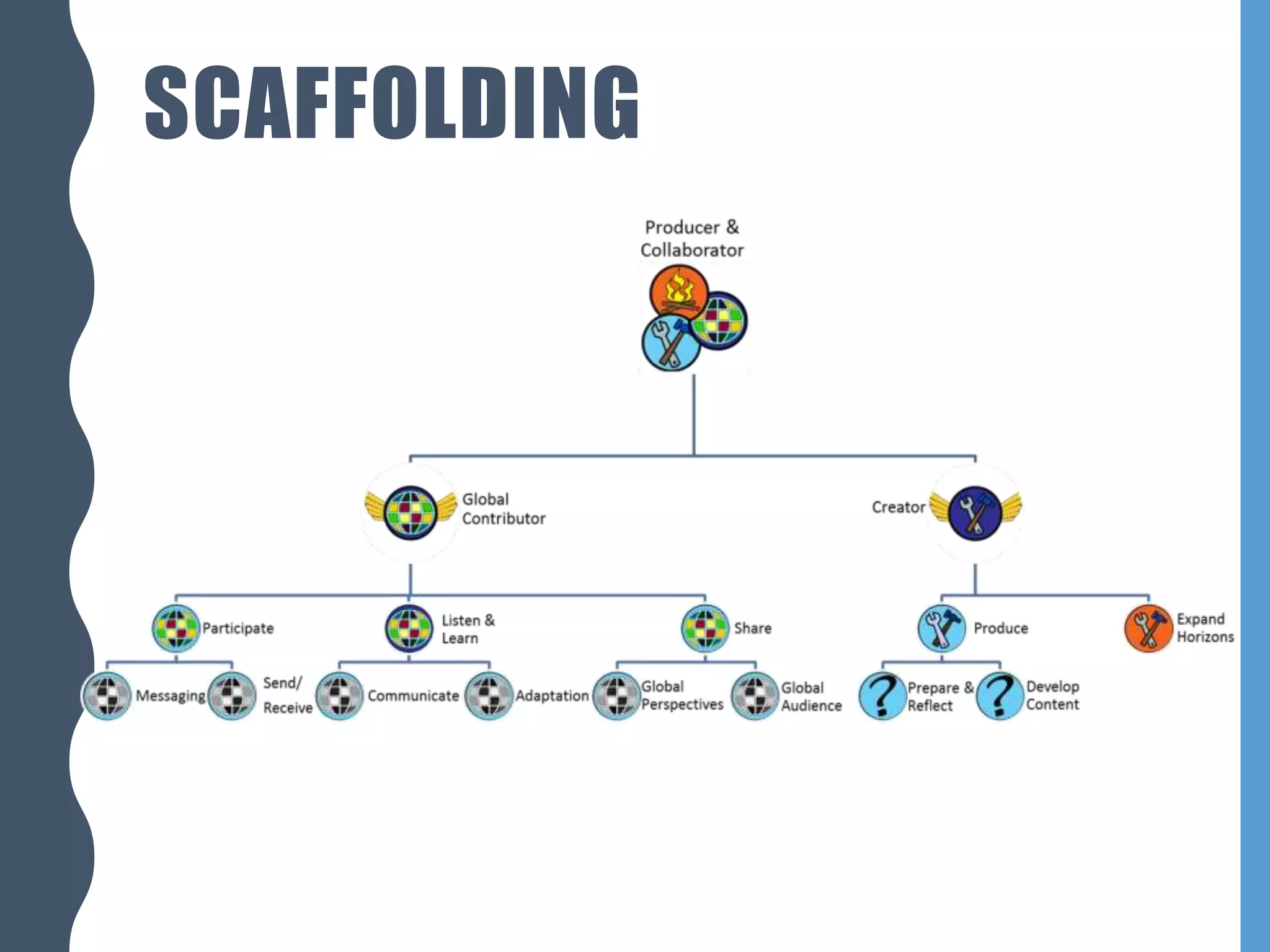
SCAFFOLDING
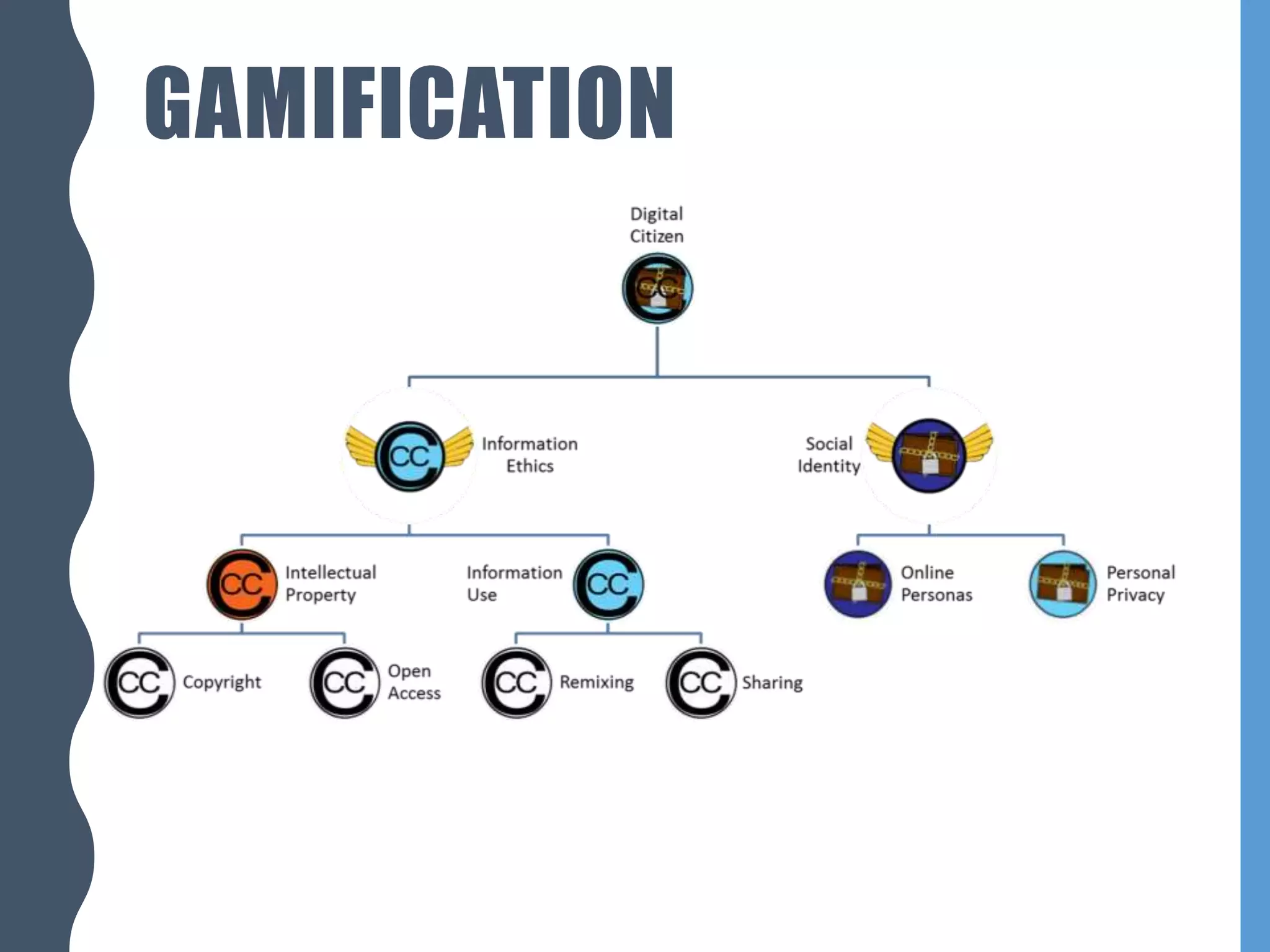
GAMIFICATION
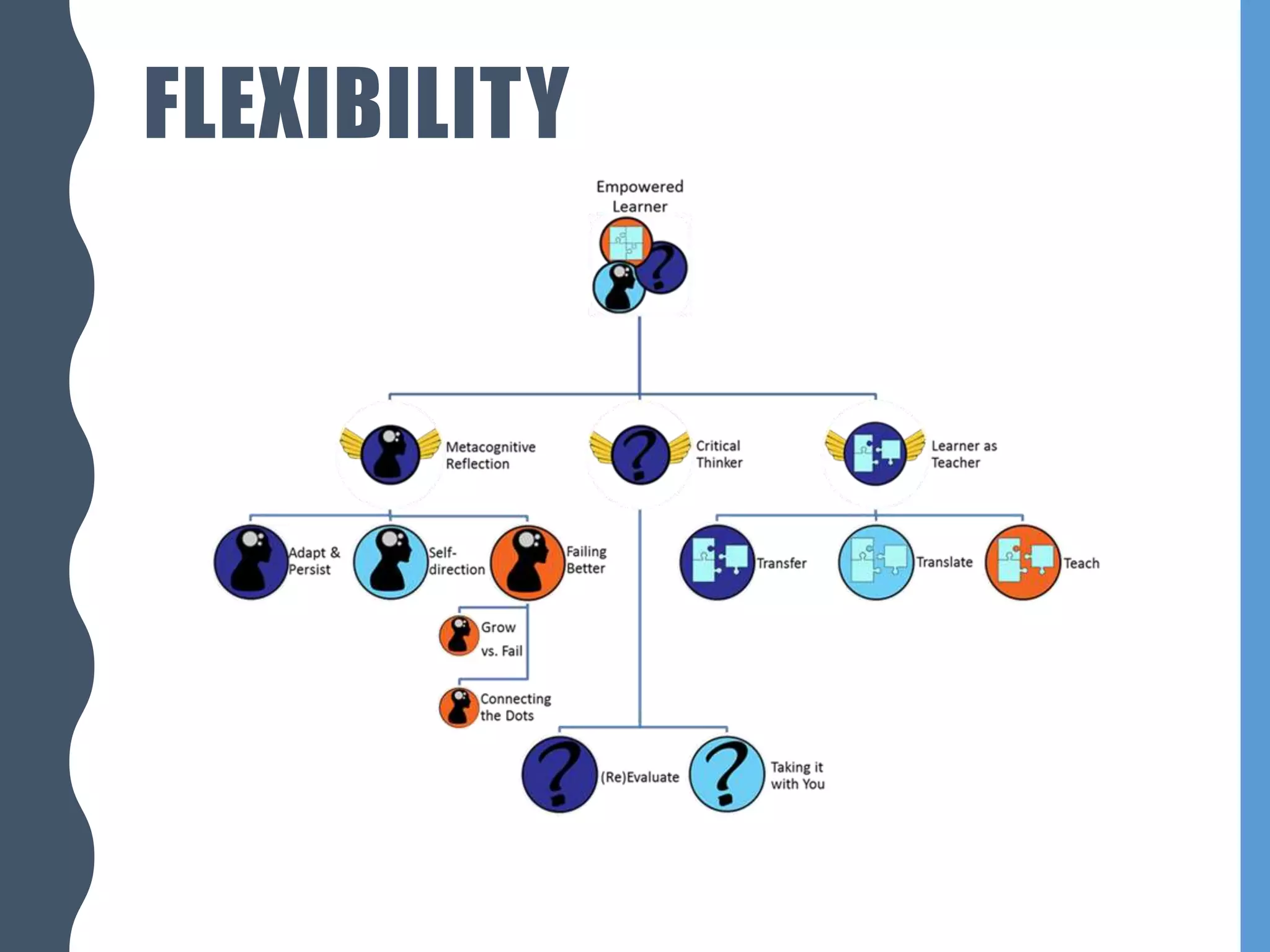
FLEXIBILITY
IMPLEMENTATION
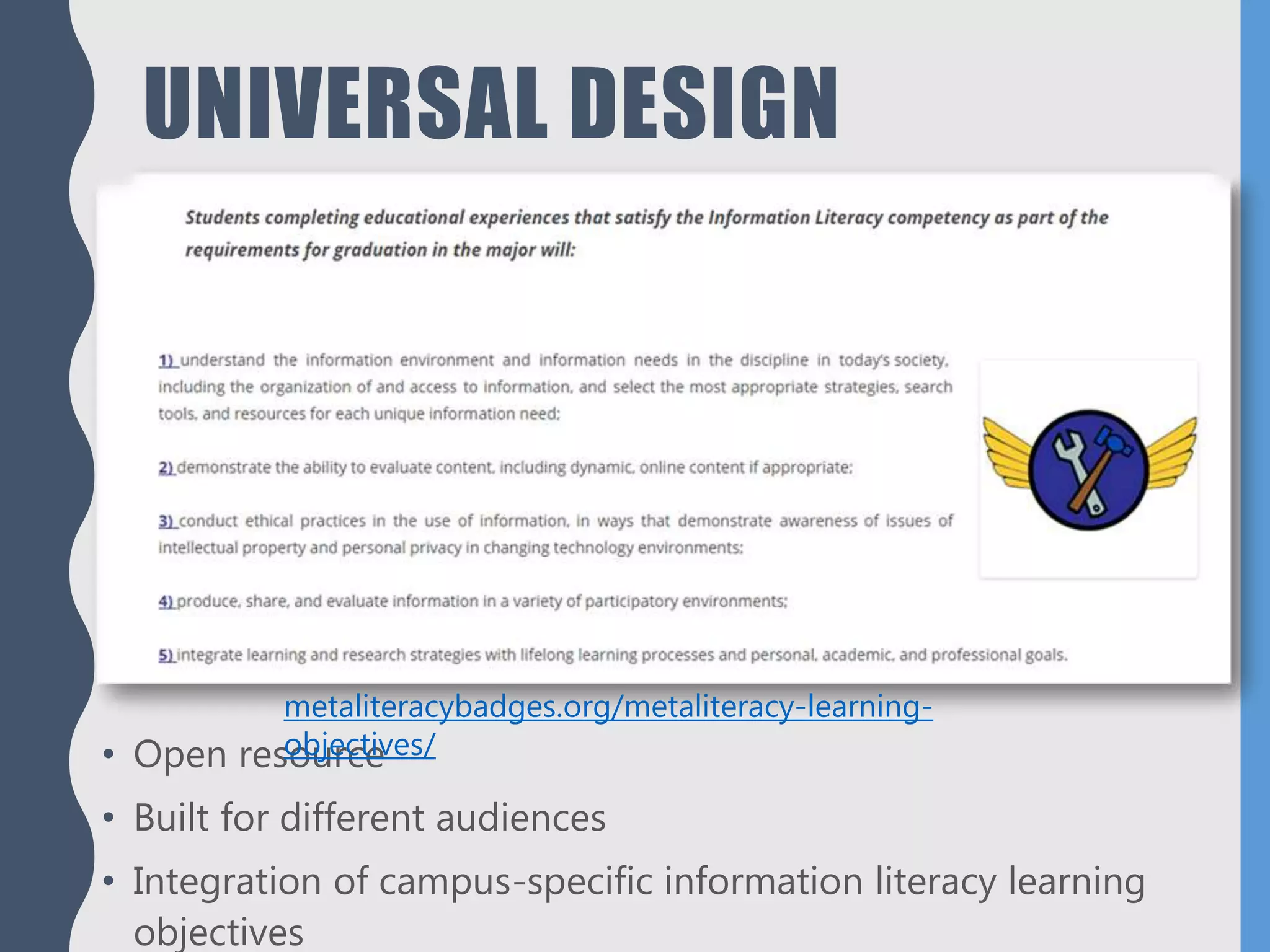
UNIVERSAL DESIGN
• Open resource
• Built for different audiences
• Integration of campus-specific information literacy learning
objectives
metaliteracybadges.org/metaliteracy-learning-
objectives/
IMPLEMENTATION &
COLLABORATIONS
• 4 engaged institutions – 2
year, 4 year, distance
learning, research university
• UAlbany: 9 courses, 26
sections in Fall 2015
• 2,277 registered users
• ESC piloting their own
installation of the site
DISCIPLINARY INTEGRATION
• APSY: Childhood Behavioral Disorders
• ECPY 204: Principals of Career and Life Planning
• ECPY 421: Intro to Counseling Psychology
• ESPY 120: The Psychology of Academic and Personal Effectiveness
• INF 200: Research Methods for Informatics
• RCRJ 490 Honors: Theory and Research
• UFSP 102: The World of Technology
• UFSP 102: World of Law and Justice
• UNI 110: Writing and Critical Inquiry
MOOCs
• 3 MOOCs: connectivist, Coursera, and Canvas
• 2 IITGs: first to establish metaliteracy learning
collaborative and explore badging; second to
integrate MOOC and badging
• Original “c-MOOC” not part of first grant but
developed same time as digital badging system
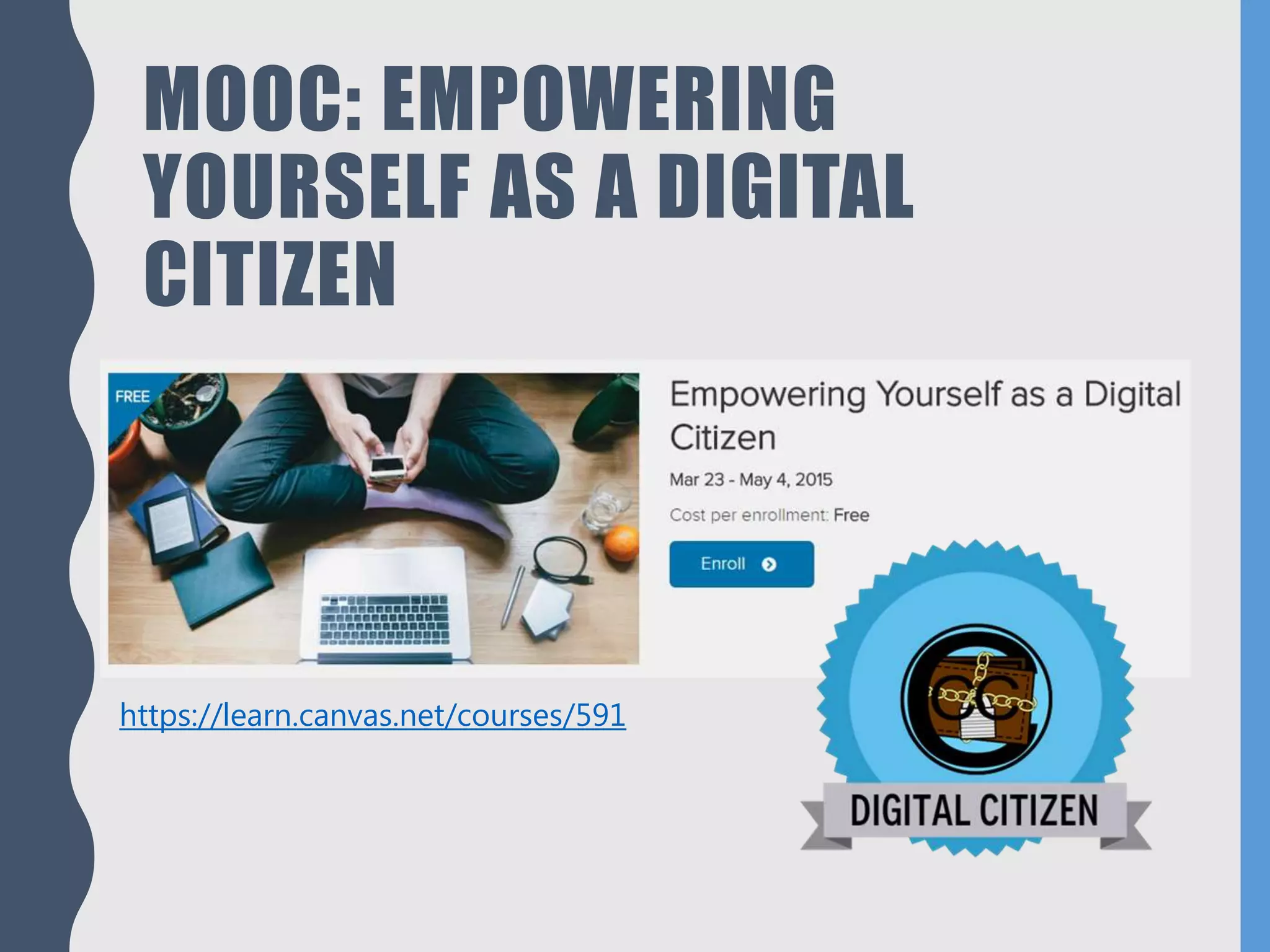
MOOC: EMPOWERING
YOURSELF AS A DIGITAL
CITIZEN
https://learn.canvas.net/courses/591
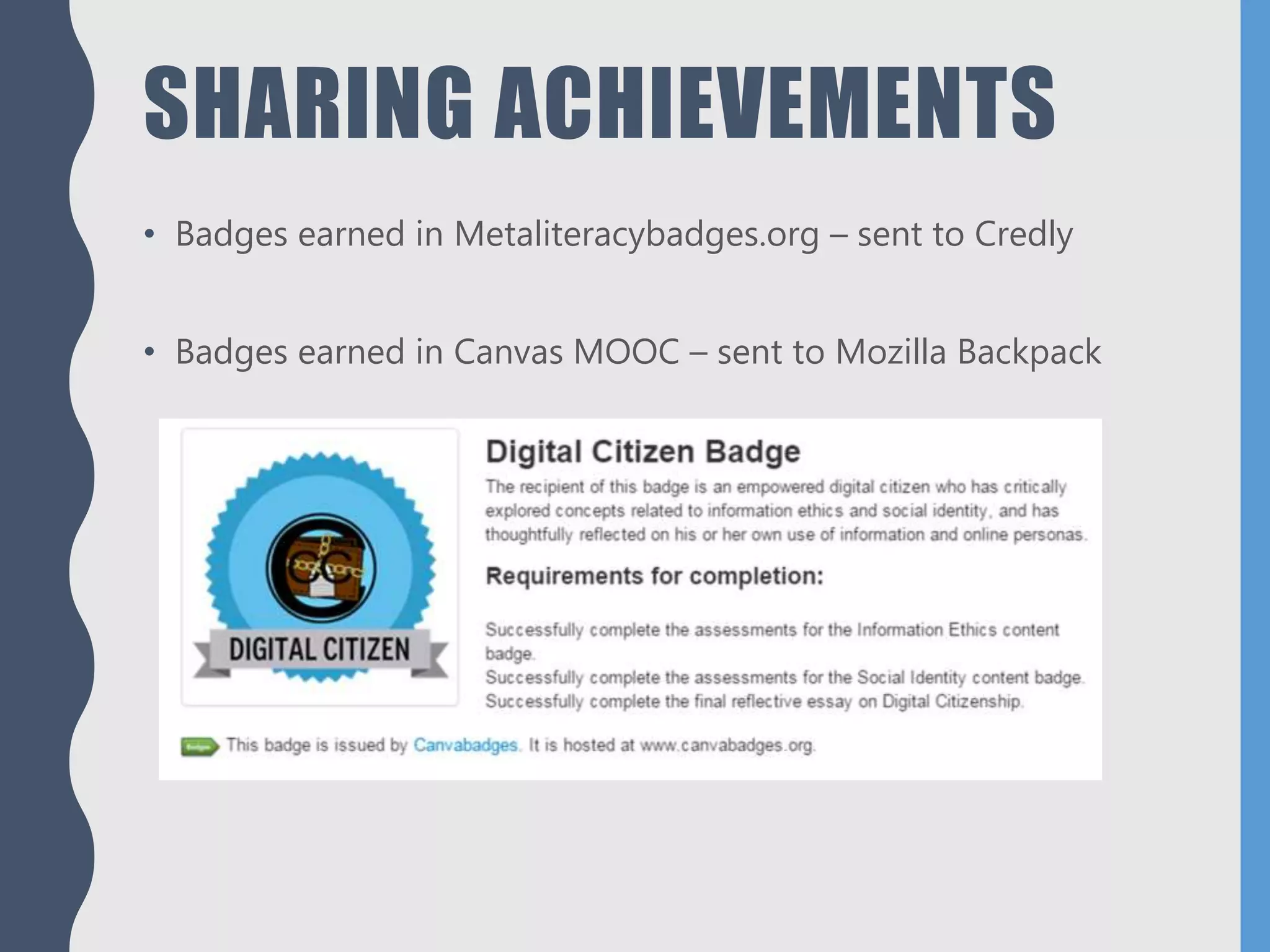
SHARING ACHIEVEMENTS
• Badges earned in Metaliteracybadges.org – sent to Credly
• Badges earned in Canvas MOOC – sent to Mozilla Backpack
E-PORTFOLIOS
T H O U G H T S O N I N T E G R A T I O N
E-PORTFOLIOS AT EMPIRE
STATE COLLEGE
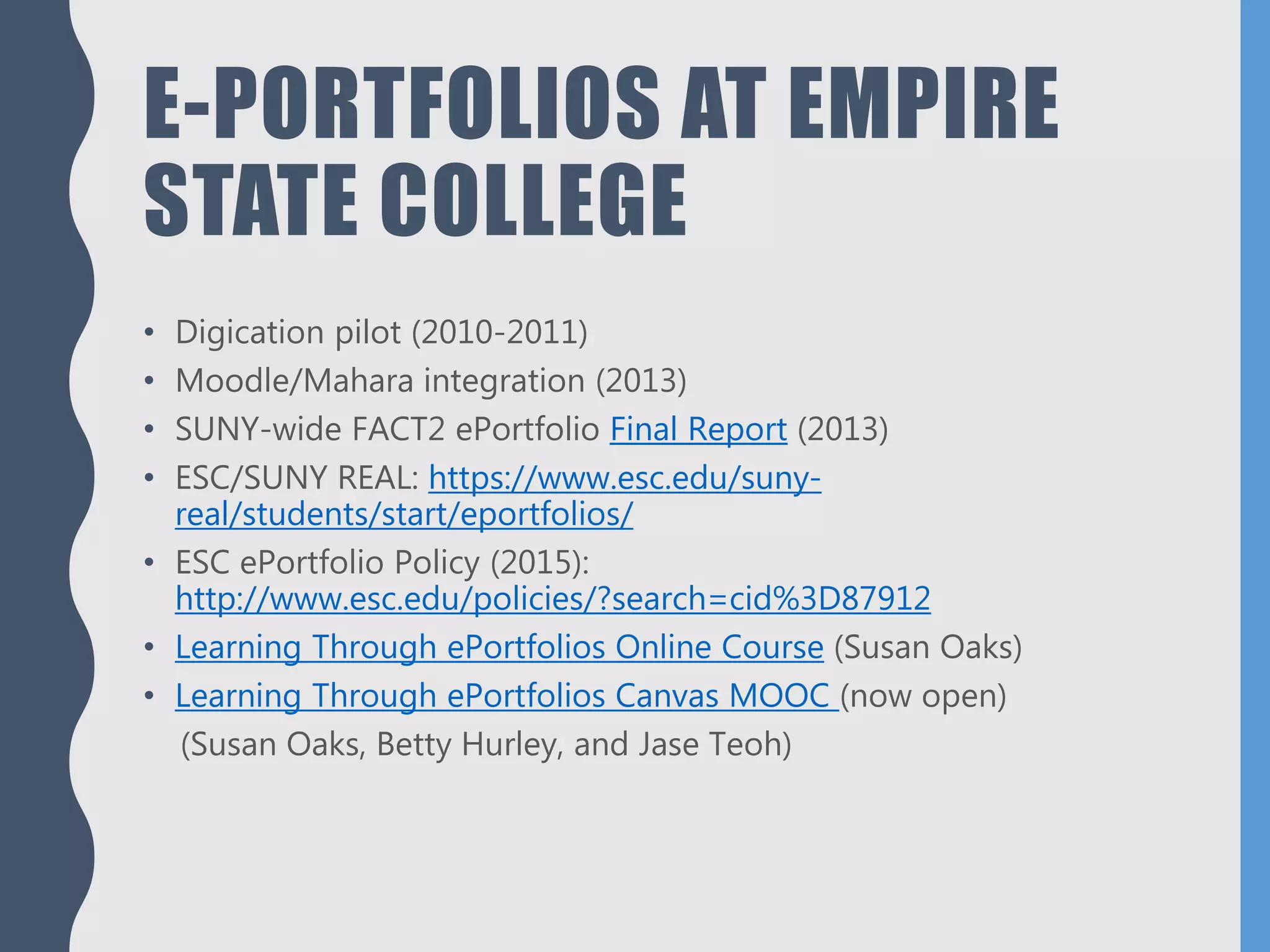
• Digication pilot (2010-2011)
• Moodle/Mahara integration (2013)
• SUNY-wide FACT2 ePortfolio Final Report (2013)
• ESC/SUNY REAL: https://www.esc.edu/suny-
real/students/start/eportfolios/
• ESC ePortfolio Policy (2015):
http://www.esc.edu/policies/?search=cid%3D87912
• Learning Through ePortfolios Online Course (Susan Oaks)
• Learning Through ePortfolios Canvas MOOC (now open)
(Susan Oaks, Betty Hurley, and Jase Teoh)
E-PORTFOLIOS AT UALBANY
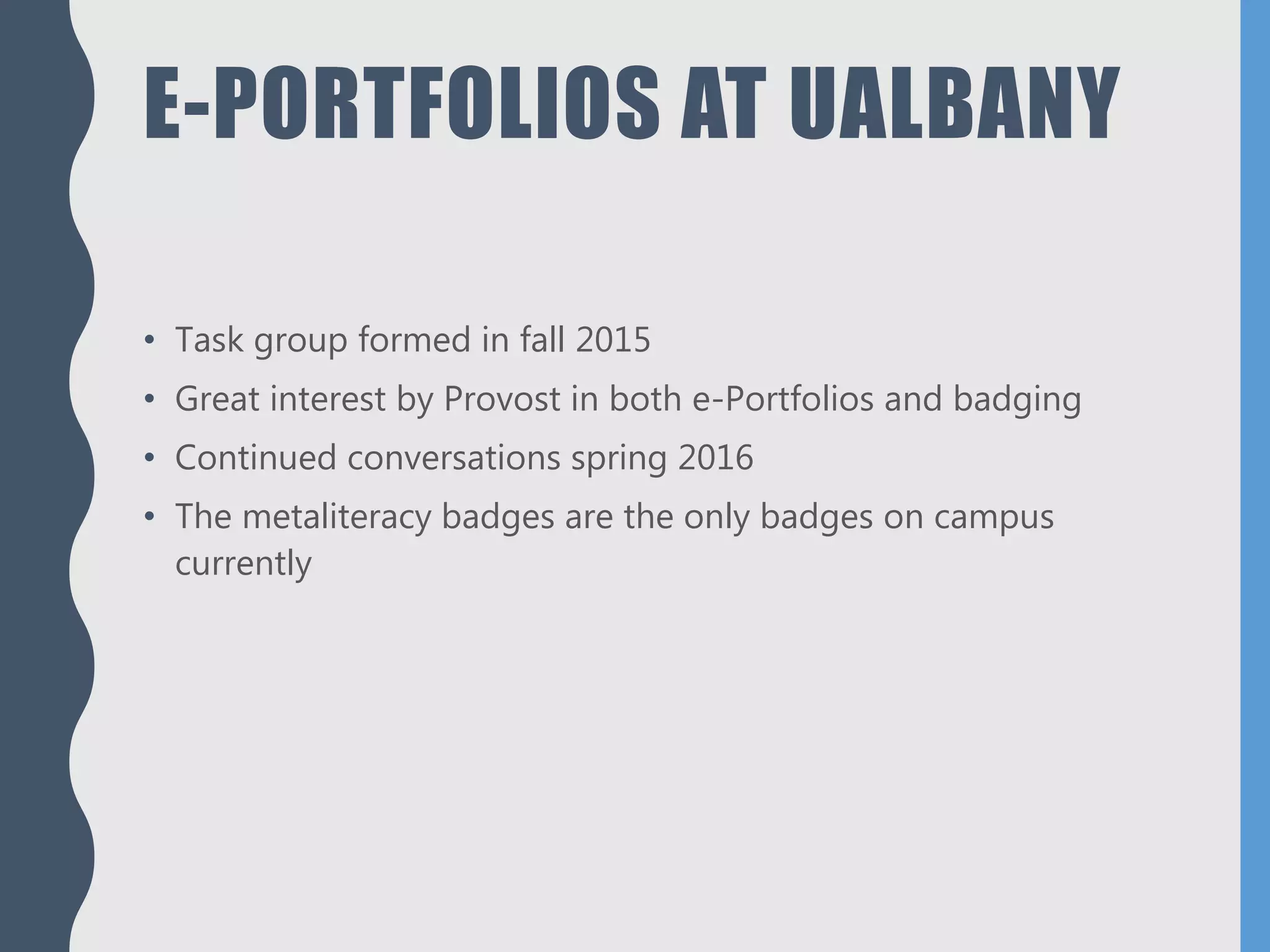
• Task group formed in fall 2015
• Great interest by Provost in both e-Portfolios and badging
• Continued conversations spring 2016
• The metaliteracy badges are the only badges on campus
currently

The Open SUNY Metaliteracy Badging System: Envisioning Connections With E-Portfolios

  • 1.
    T H EO P E N S U N Y M ETA L IT E R A CY B A D G I NG S Y S T E M E N V I S I O N I N G C O N N E C T I O N S W I T H E - P O R T F O L I O S T R U D I J A C O B S O N , T O M M A C K E Y & K E L S E Y O ’ B R I E N
  • 3.
    WHAT IS METALITERACY? Metaliteracyis envisioned as a comprehensive model for information literacy to advance critical thinking and reflection in social media, open learning settings, and online communities. Jacobson and Mackey, Proposing a Metaliteracy Model to Redefine Information Literacy, Communications in Information Literacy 7(2), 2013.
  • 4.
    4 Figure developed byMackey, Jacobson and Roger Lipera Mackey and Jacobson (2014) Metaliteracy: Reinventing Information Literacy to Empower Learners
  • 5.
    METALITERACY LEARNING OBJECTIVES  Goal1: Evaluate content critically, including dynamic, online content that changes and evolves, such as article preprints, blogs, and wikis  Goal 2: Understand personal privacy, information ethics, and intellectual property issues in changing technology environments  Goal 3: Share information and collaborate in a variety of participatory environments  Goal 4: Demonstrate ability to connect learning and research strategies with lifelong learning processes and personal, academic, and professional goals http://metaliteracy.org/learning-objectives/
  • 6.
  • 7.
  • 8.
  • 9.
  • 10.
  • 11.
  • 12.
  • 13.
  • 14.
    UNIVERSAL DESIGN • Openresource • Built for different audiences • Integration of campus-specific information literacy learning objectives metaliteracybadges.org/metaliteracy-learning- objectives/
  • 15.
    IMPLEMENTATION & COLLABORATIONS • 4engaged institutions – 2 year, 4 year, distance learning, research university • UAlbany: 9 courses, 26 sections in Fall 2015 • 2,277 registered users • ESC piloting their own installation of the site
  • 16.
    DISCIPLINARY INTEGRATION • APSY:Childhood Behavioral Disorders • ECPY 204: Principals of Career and Life Planning • ECPY 421: Intro to Counseling Psychology • ESPY 120: The Psychology of Academic and Personal Effectiveness • INF 200: Research Methods for Informatics • RCRJ 490 Honors: Theory and Research • UFSP 102: The World of Technology • UFSP 102: World of Law and Justice • UNI 110: Writing and Critical Inquiry
  • 17.
    MOOCs • 3 MOOCs:connectivist, Coursera, and Canvas • 2 IITGs: first to establish metaliteracy learning collaborative and explore badging; second to integrate MOOC and badging • Original “c-MOOC” not part of first grant but developed same time as digital badging system
  • 18.
    MOOC: EMPOWERING YOURSELF ASA DIGITAL CITIZEN https://learn.canvas.net/courses/591
  • 19.
    SHARING ACHIEVEMENTS • Badgesearned in Metaliteracybadges.org – sent to Credly • Badges earned in Canvas MOOC – sent to Mozilla Backpack
  • 20.
    E-PORTFOLIOS T H OU G H T S O N I N T E G R A T I O N
  • 21.
    E-PORTFOLIOS AT EMPIRE STATECOLLEGE • Digication pilot (2010-2011) • Moodle/Mahara integration (2013) • SUNY-wide FACT2 ePortfolio Final Report (2013) • ESC/SUNY REAL: https://www.esc.edu/suny- real/students/start/eportfolios/ • ESC ePortfolio Policy (2015): http://www.esc.edu/policies/?search=cid%3D87912 • Learning Through ePortfolios Online Course (Susan Oaks) • Learning Through ePortfolios Canvas MOOC (now open) (Susan Oaks, Betty Hurley, and Jase Teoh)
  • 22.
    E-PORTFOLIOS AT UALBANY •Task group formed in fall 2015 • Great interest by Provost in both e-Portfolios and badging • Continued conversations spring 2016 • The metaliteracy badges are the only badges on campus currently

Editor's Notes

  • #3 Tom
  • #4 Tom: Definition of metaliteracy: include mention of metacognition Used as framework for the badging system (very briefly here, a smidge more on LO slide)
  • #5 Tom: behavioral (what students should be able to do upon successful completion of learning activities—skills, competencies), cognitive (what students should know upon successful completion of learning activities—comprehension, organization, application, evaluation), affective (changes in learners’ emotions or attitudes through engagement with learning activities), and metacognitive (what learners think about their own thinking—a reflective understanding of how and why they learn, what they do and do not know, their preconceptions, and how to continue to learn).  Understands the process of creating and sharing information Recognizes gaps in knowledge Seeks new knowledge to adjust to challenging situations Adapts to changing technologies Continuously self-reflects Demonstrates empowerment through interaction, communication, and presentation Reflects on production and participation
  • #6 Trudi: Metaliteracy Learning Collaborative’s help with developing the LO And how they directly played into the badge set-up
  • #7 Kelsey
  • #8 Kelsey Badging system originally designed using Wordpress and BadgeOS Plugin, which ties directly into Credly for issuing of badges The system has evolved over the last couple of years – this year incorporated LD – turns WP into LMS (course groups, quizzes, reporting features), add-on that links with BadgeOS
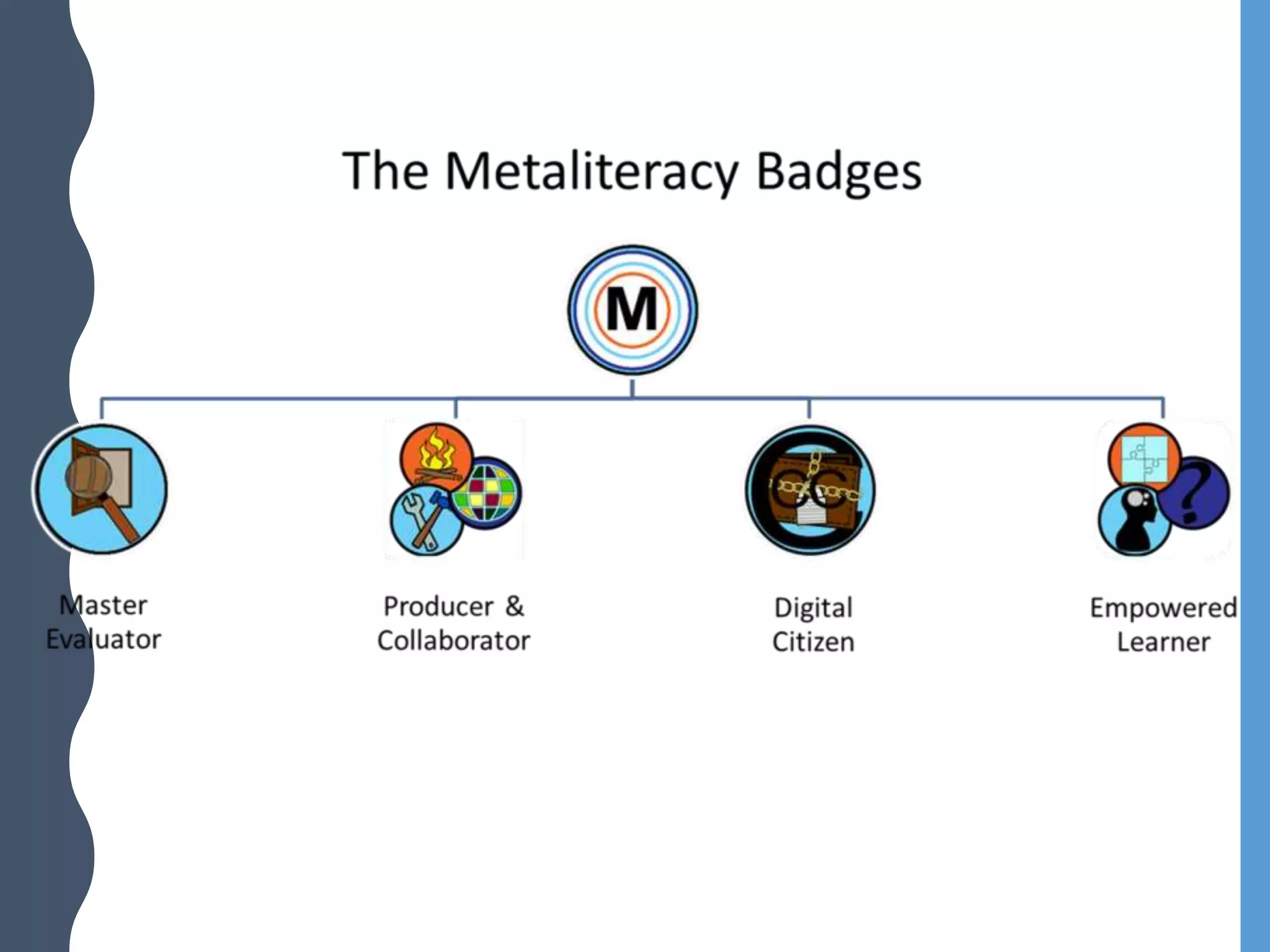
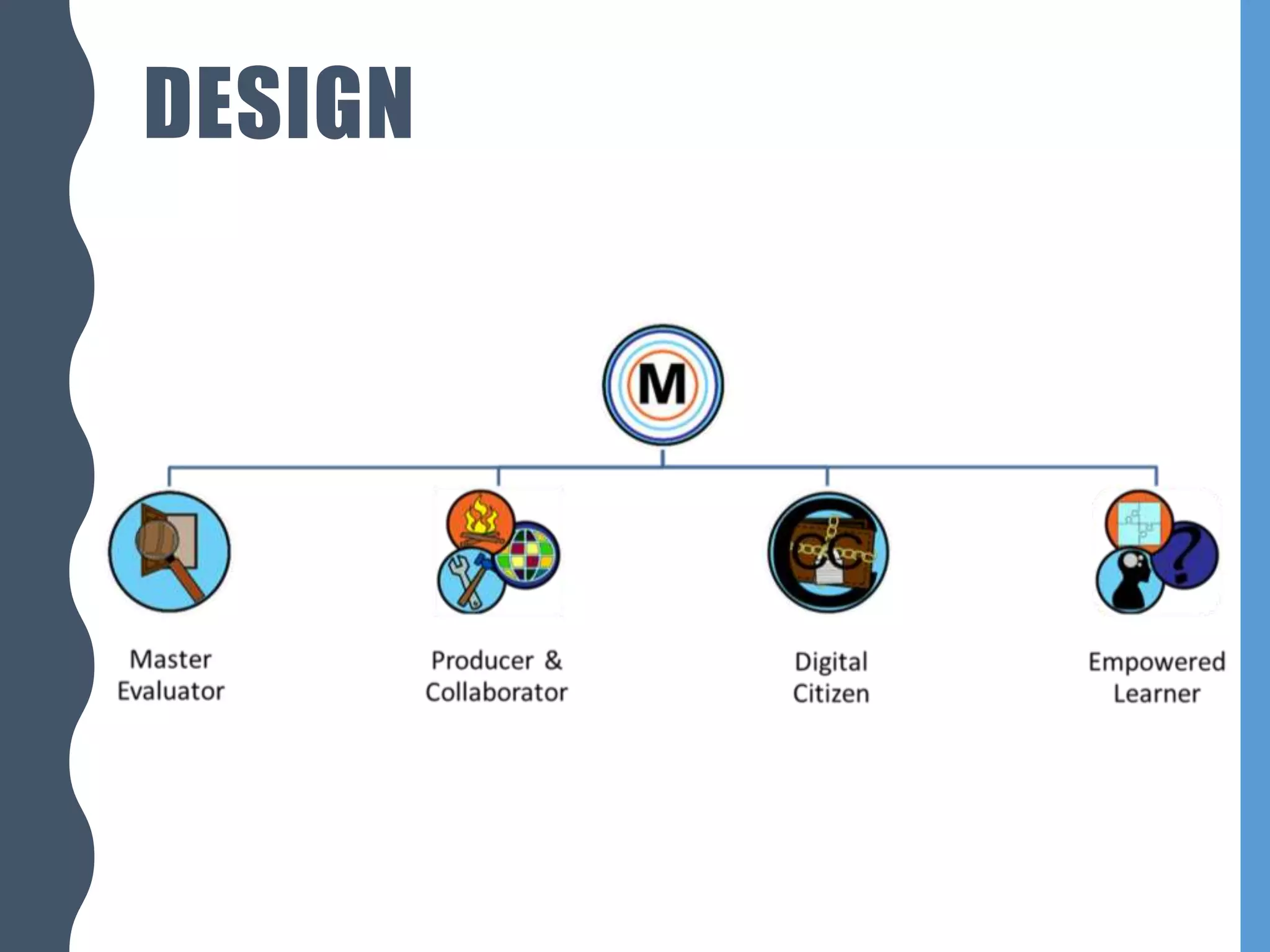
  • #9 Kelsey: 4 top-level badges that students can earn Each badge is a title that students can claim once they have mastered a particular series of learning activities. Once earned students can display that achievement via Credly.
  • #10 Kelsey: Each top level badge has its own constellation of exercises. Creating constellations 1st step in building the system. Constellations help to visualize the many strengths of badging. 1st - Good exercise in curriculum mapping - Facilitates mapping of learning goals & helped us break down those goals into measurable learning competencies that carefully align with metaliteracy learning objectives. Each step is a learning activity that was designed to meet that particular competency.
  • #11 Kelsey: Mapping of system helped us create scaffolded learning path for students: Planning out learning activities from introductory and building to advanced, metacognitive concepts.
  • #12 Motivational model: Students visualize progress. Language reflects gamification: quests, challenges to earn top-level badges. They receive congratulatory messages for each achievement.
  • #13 Constellations represent a flexible learning model: There is some flexibility with the path that students take. Instructors might assign one or two standalone lower level activities or a series of progressive activities that tie together. Room for mistakes – system designed for students to resubmit. Rather than failing and giving up/accepting a zero, students are provided with feedback for how they can improve. Don’t advance until they are ready.
  • #15 Trudi: Challenge of designing so that it is relevant to a wide audience, but also meaningful to specific courses and research topics
  • #16 Trudi – relevance to a wide audience, but also meaningful to specific courses and research topics. Possible future implementations
  • #17 Trudi
  • #18 Trudi Mention the IITGs The badging mattered and hence Canvas Badges and MOOCs - Opportunity to work with a global audience
  • #19 Kelsey Integrated Digital Citizen badge using Canvabadges No longer open for enrollment, but public – free to explore
  • #20 Kelsey Credly ties in with BadgeOS Mozilla Backpack ties in with Canvabadges 65 badges issued via Credly 10 badges awarded in MOOC (out of ~25 active participants) Not many badges shared – partly because they are challenging to earn (course instructors only assign a small portion of the system), but students also might not be motivated to get the badge because they don’t necessarily have a place to share it - need a platform. E-Portfolios would help with this piece. The exercises are valuable, but still need the final showcase piece, which is the point of badges. A huge piece of the puzzle in making badges relevant and meaningful for students is giving them a place to share those badges and showcase their achievements. The platform has to be valued by third parties too (e.g. the University).
  • #21 Tom
  • #22 Tom