Transforming the Study Abroad 
Through the Reflective Model of 
Intercultural Competency 
J 
Dr. Tracy Williams Rundstrom, Center for International Studies 
Dr. Beata M. Jones, Neeley School of Business & John V. Roach Honors College
ORIGINS / MOTIVATION
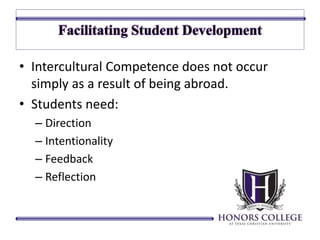
• Intercultural Competence does not occur 
simply as a result of being abroad. 
• Students need: 
– Direction 
– Intentionality 
– Feedback 
– Reflection
THE MODEL
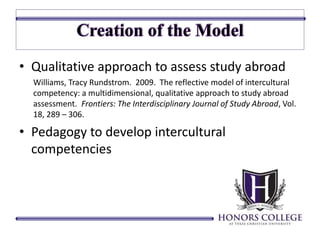
• Qualitative approach to assess study abroad 
Williams, Tracy Rundstrom. 2009. The reflective model of intercultural 
competency: a multidimensional, qualitative approach to study abroad 
assessment. Frontiers: The Interdisciplinary Journal of Study Abroad, Vol. 
18, 289 – 306. 
• Pedagogy to develop intercultural 
competencies
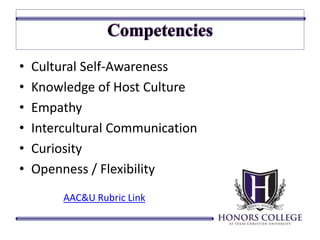
• Cultural Self-Awareness 
• Knowledge of Host Culture 
• Empathy 
• Intercultural Communication 
• Curiosity 
• Openness / Flexibility 
AAC&U Rubric Link
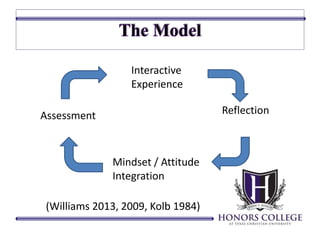
(Williams 2013, 2009, Kolb 1984) 
Reflection 
Interactive 
Experience 
Mindset / Attitude 
Integration 
Assessment
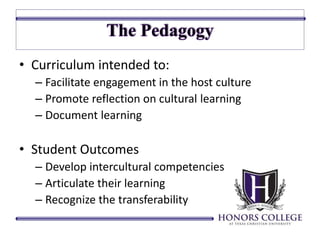
• Curriculum intended to: 
– Facilitate engagement in the host culture 
– Promote reflection on cultural learning 
– Document learning 
• Student Outcomes 
– Develop intercultural competencies 
– Articulate their learning 
– Recognize the transferability
APPLICATIONS
• UNPR 20201 – required 
• 8 weeks long 
• Face-to-face time at beginning and mid-term
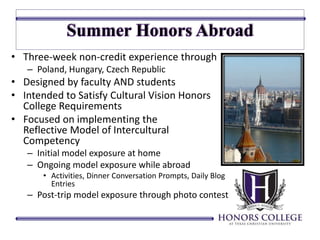
• Three-week non-credit experience through 
– Poland, Hungary, Czech Republic 
• Designed by faculty AND students 
• Intended to Satisfy Cultural Vision Honors 
College Requirements 
• Focused on implementing the 
Reflective Model of Intercultural 
Competency 
– Initial model exposure at home 
– Ongoing model exposure while abroad 
• Activities, Dinner Conversation Prompts, Daily Blog 
Entries 
– Post-trip model exposure through photo contest
MODALITIES
• Written journal 
• Blogs 
• Discussions with faculty
• What have you discovered is part of American 
culture, that you had not realized 
before? What did you think was just “normal” 
which is actually cultural? 
• Share a saying, proverb, or motto from your 
host culture. How and when do they use it? 
What insight does it give you?
• Ask 1 or 2 locals how they perceive Americans. 
What assumptions do they have about 
American people? How do they think 
Americans are different from themselves? 
What did or didn’t surprise you?
• What previously held stereotypes - yours and 
theirs - do you find being challenged? 
• What have you had the most trouble adapting 
to? Have you finally adapted to it, or do you 
believe you’ll never adapt to it?
• Interactive assignment 
• Game 
• Course-related site-visits and activities 
• Life abroad
• Ask a few locals: What makes you proud to be 
where you are from? 
• Go to the market, or to a shop or store and 
speak with a vendor. How long have they 
been selling the product? How did they gain 
expertise in the product? What would like 
tourists to know about the product?
• Ask someone about what they are proud of in 
Krakow: ______________________ What 
makes it special to the person? 
_____________________________________ 
____________________________ What do 
tourists not understand about it? 
_____________________________________ 
_________________ (30 pts)
• Photo contest 
• Photo assignment, responding to prompt 
• Example submission
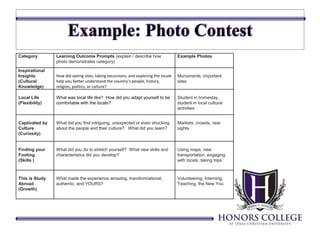
Category Learning Outcome Prompts (explain / describe how 
photo demonstrates category) 
Example Photos 
Inspirational 
Insights 
(Cultural 
Knowledge) 
How did seeing sites, taking excursions, and exploring the locale 
help you better understand the country’s people, history, 
religion, politics, or culture? 
Monuments, important 
sites 
Local Life 
(Flexibility) 
What was local life like? How did you adapt yourself to be 
comfortable with the locals? 
Student in homestay, 
student in local cultural 
activities 
Captivated by 
Culture 
(Curiosity) 
What did you find intriguing, unexpected or even shocking 
about the people and their culture? What did you learn? 
Markets, crowds, new 
sights 
Finding your 
Footing 
(Skills ) 
What did you do to stretch yourself? What new skills and 
characteristics did you develop? 
Using maps, new 
transportation, engaging 
with locals, taking trips 
This is Study 
Abroad 
(Growth) 
What made the experience amazing, transformational, 
authentic, and YOURS? 
Volunteering, Interning, 
Teaching, the New You
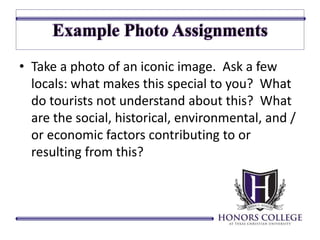
• Take a photo of an iconic image. Ask a few 
locals: what makes this special to you? What 
do tourists not understand about this? What 
are the social, historical, environmental, and / 
or economic factors contributing to or 
resulting from this?
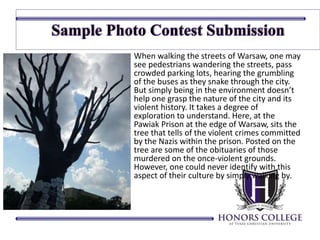
When walking the streets of Warsaw, one may 
see pedestrians wandering the streets, pass 
crowded parking lots, hearing the grumbling 
of the buses as they snake through the city. 
But simply being in the environment doesn’t 
help one grasp the nature of the city and its 
violent history. It takes a degree of 
exploration to understand. Here, at the 
Pawiak Prison at the edge of Warsaw, sits the 
tree that tells of the violent crimes committed 
by the Nazis within the prison. Posted on the 
tree are some of the obituaries of those 
murdered on the once-violent grounds. 
However, one could never identify with this 
aspect of their culture by simply walking by.
AAC&U RUBRIC & FINDINGS
• AAC&U Rubric Link 
• Cultural Pathways 2013 Blog
• All students scored at least a 3 out of 4 in each 
competency dimension, with an average of 
3.48 and an average range of 3.21 to 3.64. 
• Overall averages for each student for the 
intercultural competency development were 3 
or higher, with an average of 3.48 and an 
average range of 3 to 4.
• Students did not score as well 
– Individual Student Overall Competency Scores 
ranged from 2.25 to 3.5, with an average of 3.1 
– Average Individual Competency Scores ranged 
from 2.92 to 3.38 with an overall average of 3.1
• Model exposure through blog prompts 
allowed the students to 
– Be more focused on specific competency 
development 
– Be more engaged with the local population as 
demonstrated through photos 
– Be more reflective about experiences
FUTURE DIRECTIONS
• Growing study abroad population 
• Training faculty & staff to use model
• Web tools 
• Manual 
• Explanation of goals for reflective writing 
using AAC&U rubric
• Articulating expected learning outcomes can 
help students achieve those outcomes. 
• Providing a variety of formats for students to 
reflect on their learning helps them 
internalize the experience. 
• The model helps to validate the 
developmental aspects of the study 
abroad to the administration.
• Dr. Tracy Rundstrom Williams, 
t.williams@tcu.edu 
• Dr. Beata Jones, b.jones@tcu.edu

Transforming the Study Abroad Through the Reflective Model of Intercultural Competency

  • 1.
    Transforming the StudyAbroad Through the Reflective Model of Intercultural Competency J Dr. Tracy Williams Rundstrom, Center for International Studies Dr. Beata M. Jones, Neeley School of Business & John V. Roach Honors College
  • 2.
  • 3.
    • Intercultural Competencedoes not occur simply as a result of being abroad. • Students need: – Direction – Intentionality – Feedback – Reflection
  • 4.
  • 5.
    • Qualitative approachto assess study abroad Williams, Tracy Rundstrom. 2009. The reflective model of intercultural competency: a multidimensional, qualitative approach to study abroad assessment. Frontiers: The Interdisciplinary Journal of Study Abroad, Vol. 18, 289 – 306. • Pedagogy to develop intercultural competencies
  • 6.
    • Cultural Self-Awareness • Knowledge of Host Culture • Empathy • Intercultural Communication • Curiosity • Openness / Flexibility AAC&U Rubric Link
  • 7.
    (Williams 2013, 2009,Kolb 1984) Reflection Interactive Experience Mindset / Attitude Integration Assessment
  • 8.
    • Curriculum intendedto: – Facilitate engagement in the host culture – Promote reflection on cultural learning – Document learning • Student Outcomes – Develop intercultural competencies – Articulate their learning – Recognize the transferability
  • 9.
  • 10.
    • UNPR 20201– required • 8 weeks long • Face-to-face time at beginning and mid-term
  • 11.
    • Three-week non-creditexperience through – Poland, Hungary, Czech Republic • Designed by faculty AND students • Intended to Satisfy Cultural Vision Honors College Requirements • Focused on implementing the Reflective Model of Intercultural Competency – Initial model exposure at home – Ongoing model exposure while abroad • Activities, Dinner Conversation Prompts, Daily Blog Entries – Post-trip model exposure through photo contest
  • 12.
  • 13.
    • Written journal • Blogs • Discussions with faculty
  • 14.
    • What haveyou discovered is part of American culture, that you had not realized before? What did you think was just “normal” which is actually cultural? • Share a saying, proverb, or motto from your host culture. How and when do they use it? What insight does it give you?
  • 15.
    • Ask 1or 2 locals how they perceive Americans. What assumptions do they have about American people? How do they think Americans are different from themselves? What did or didn’t surprise you?
  • 16.
    • What previouslyheld stereotypes - yours and theirs - do you find being challenged? • What have you had the most trouble adapting to? Have you finally adapted to it, or do you believe you’ll never adapt to it?
  • 17.
    • Interactive assignment • Game • Course-related site-visits and activities • Life abroad
  • 18.
    • Ask afew locals: What makes you proud to be where you are from? • Go to the market, or to a shop or store and speak with a vendor. How long have they been selling the product? How did they gain expertise in the product? What would like tourists to know about the product?
  • 19.
    • Ask someoneabout what they are proud of in Krakow: ______________________ What makes it special to the person? _____________________________________ ____________________________ What do tourists not understand about it? _____________________________________ _________________ (30 pts)
  • 20.
    • Photo contest • Photo assignment, responding to prompt • Example submission
  • 21.
    Category Learning OutcomePrompts (explain / describe how photo demonstrates category) Example Photos Inspirational Insights (Cultural Knowledge) How did seeing sites, taking excursions, and exploring the locale help you better understand the country’s people, history, religion, politics, or culture? Monuments, important sites Local Life (Flexibility) What was local life like? How did you adapt yourself to be comfortable with the locals? Student in homestay, student in local cultural activities Captivated by Culture (Curiosity) What did you find intriguing, unexpected or even shocking about the people and their culture? What did you learn? Markets, crowds, new sights Finding your Footing (Skills ) What did you do to stretch yourself? What new skills and characteristics did you develop? Using maps, new transportation, engaging with locals, taking trips This is Study Abroad (Growth) What made the experience amazing, transformational, authentic, and YOURS? Volunteering, Interning, Teaching, the New You
  • 22.
    • Take aphoto of an iconic image. Ask a few locals: what makes this special to you? What do tourists not understand about this? What are the social, historical, environmental, and / or economic factors contributing to or resulting from this?
  • 23.
    When walking thestreets of Warsaw, one may see pedestrians wandering the streets, pass crowded parking lots, hearing the grumbling of the buses as they snake through the city. But simply being in the environment doesn’t help one grasp the nature of the city and its violent history. It takes a degree of exploration to understand. Here, at the Pawiak Prison at the edge of Warsaw, sits the tree that tells of the violent crimes committed by the Nazis within the prison. Posted on the tree are some of the obituaries of those murdered on the once-violent grounds. However, one could never identify with this aspect of their culture by simply walking by.
  • 24.
  • 25.
    • AAC&U RubricLink • Cultural Pathways 2013 Blog
  • 26.
    • All studentsscored at least a 3 out of 4 in each competency dimension, with an average of 3.48 and an average range of 3.21 to 3.64. • Overall averages for each student for the intercultural competency development were 3 or higher, with an average of 3.48 and an average range of 3 to 4.
  • 27.
    • Students didnot score as well – Individual Student Overall Competency Scores ranged from 2.25 to 3.5, with an average of 3.1 – Average Individual Competency Scores ranged from 2.92 to 3.38 with an overall average of 3.1
  • 28.
    • Model exposurethrough blog prompts allowed the students to – Be more focused on specific competency development – Be more engaged with the local population as demonstrated through photos – Be more reflective about experiences
  • 29.
  • 30.
    • Growing studyabroad population • Training faculty & staff to use model
  • 31.
    • Web tools • Manual • Explanation of goals for reflective writing using AAC&U rubric
  • 32.
    • Articulating expectedlearning outcomes can help students achieve those outcomes. • Providing a variety of formats for students to reflect on their learning helps them internalize the experience. • The model helps to validate the developmental aspects of the study abroad to the administration.
  • 33.
    • Dr. TracyRundstrom Williams, t.williams@tcu.edu • Dr. Beata Jones, b.jones@tcu.edu