Crafting the 
Curriculum 
Allen Rustro BSEDIII
A Teacher is a curriculum designer, 
curriculum implementor and a 
curriculum evaluator.
Structures of Curriculum Design 
1. Subject-centered design model 
- focuses on the content of the 
curriculum. 
a. Subject design – the oldest and so far the 
most familiar design for teachers, parents and 
other laymen.
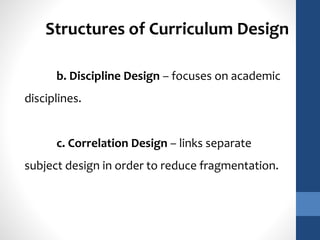
Structures of Curriculum Design 
b. Discipline Design – focuses on academic 
disciplines. 
c. Correlation Design – links separate 
subject design in order to reduce fragmentation.
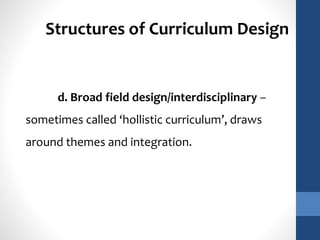
Structures of Curriculum Design 
d. Broad field design/interdisciplinary – 
sometimes called ‘hollistic curriculum’, draws 
around themes and integration.
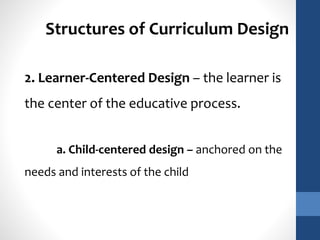
Structures of Curriculum Design 
2. Learner-Centered Design – the learner is 
the center of the educative process. 
a. Child-centered design – anchored on the 
needs and interests of the child
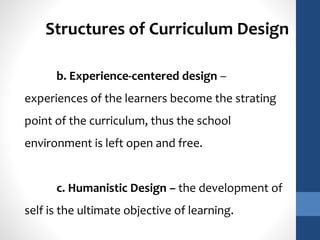
Structures of Curriculum Design 
b. Experience-centered design – 
experiences of the learners become the strating 
point of the curriculum, thus the school 
environment is left open and free. 
c. Humanistic Design – the development of 
self is the ultimate objective of learning.
Structures of Curriculum Design 
2. Problem-Centered Design – draws on 
social problems, needs, interest and abilities 
of the learners. 
a. Life-situations design – uses the past and 
the present experiences of the learners as means 
to analyze the basic areas of living.
Structures of Curriculum Design 
b. Core Design – centers on general 
education and the problems are based on 
common human activities.

Crafting the curriculum

  • 1.
    Crafting the Curriculum Allen Rustro BSEDIII
  • 2.
    A Teacher isa curriculum designer, curriculum implementor and a curriculum evaluator.
  • 3.
    Structures of CurriculumDesign 1. Subject-centered design model - focuses on the content of the curriculum. a. Subject design – the oldest and so far the most familiar design for teachers, parents and other laymen.
  • 4.
    Structures of CurriculumDesign b. Discipline Design – focuses on academic disciplines. c. Correlation Design – links separate subject design in order to reduce fragmentation.
  • 5.
    Structures of CurriculumDesign d. Broad field design/interdisciplinary – sometimes called ‘hollistic curriculum’, draws around themes and integration.
  • 6.
    Structures of CurriculumDesign 2. Learner-Centered Design – the learner is the center of the educative process. a. Child-centered design – anchored on the needs and interests of the child
  • 7.
    Structures of CurriculumDesign b. Experience-centered design – experiences of the learners become the strating point of the curriculum, thus the school environment is left open and free. c. Humanistic Design – the development of self is the ultimate objective of learning.
  • 8.
    Structures of CurriculumDesign 2. Problem-Centered Design – draws on social problems, needs, interest and abilities of the learners. a. Life-situations design – uses the past and the present experiences of the learners as means to analyze the basic areas of living.
  • 9.
    Structures of CurriculumDesign b. Core Design – centers on general education and the problems are based on common human activities.