‘Knowing what is good 
is the same as doing 
what is good.’ 
~ Socrates
SOCRATES 
By: Jezca Taunan Ruado
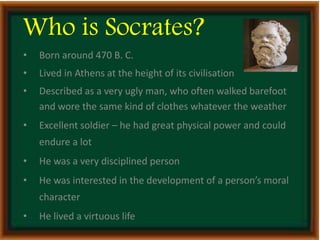
Who is Socrates? 
• Born around 470 B. C. 
• Lived in Athens at the height of its civilisation 
• Described as a very ugly man, who often walked barefoot 
and wore the same kind of clothes whatever the weather 
• Excellent soldier – he had great physical power and could 
endure a lot 
• He was a very disciplined person 
• He was interested in the development of a person’s moral 
character 
• He lived a virtuous life
Who is Socrates? 
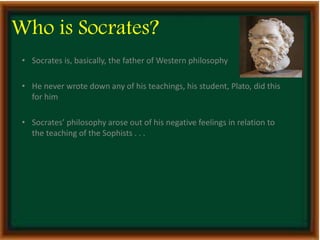
• Socrates is, basically, the father of Western philosophy 
• He never wrote down any of his teachings, his student, Plato, did this 
for him 
• Socrates’ philosophy arose out of his negative feelings in relation to 
the teaching of the Sophists . . .
Who are the Sophists? 
• Intelligent men, who travelled from place to place, 
teaching subjects like grammar, rhetoric (debating, 
argument, logic) and literature 
• Athens was an emerging democratic centre and educated 
people were needed 
• The Sophists charged for their services, usually employed 
by the wealthy and powerful – what the Sophists taught 
was in demand
What was their Philosophy? 
• The Sophists were concerned with the individual and the individual’s place 
in the world 
• Protagoras: ‘Man is the measure of all things’ 
• Led to the belief that the difference between good and evil cannot be 
known 
 It all depended on the circumstances – the Theory of Relativity 
• The sophists believed other concepts of truth and justice were products of 
habit and circumstance 
 Created by those in power to suit their own interests 
‘Justice is simply the interest of the stronger’ 
~Thrasymachus
The Philosophy of Socrates 
Socrates was concerned with the question of 
ETHICS (moral behaviour) 
 Unlike the Sophists, he believed that there was 
definite right and wrong 
 He believed that people could accept it and apply 
it into their daily lives 
 He said that it was up to people (society), as a 
whole, to establish those things that are right and 
those that are wrong 
 Dedicated his life to searching for standards by 
which people could live a virtuous/good life
The Philosophy of Socrates 
Socrates was also concerned with justice 
• He wanted life to be fair for all 
• It was a person’s duty to explore the truth 
regarding right and wrong, justice and injustice, 
courage and cowardice 
• He worked to find principles and laws that all 
could live by and be happy 
Universal: these truths would be applicable for all 
people, at any time, everywhere and in all cases
The Socratic style 
Socrates' style was distinctive 
He questioned people through discussions or dialogues 
He chose people who were experts in their field and who 
fully understood the topic being discussed 
He adopted the role of ignorant questioner 
 Pretended he did not know and wanted to be educated 
He asked tactful questions which would bring the experts to a 
dead end – they would run out of answers 
 This showed them, and others, that they did not have 
all the answers and, so, were not experts 
 Therefore, the aim of this method was to get to the 
truth of how a person could live a good, moral life
Why the Socratic method? 
 Through the dialogues, Socrates wanted to discover people’s views on 
living a moral, just life 
 Socrates urged people to question what they are being told, as well as 
their beliefs – question EVERYTHING 
 Socrates, himself, learned through this process and developed his own 
philosophy from this method
Other Important Issues for Socrates 
The SOUL 
 The soul is hugely important in his philosophy 
 Had to be nurtured and protected 
 Gaining wisdom would save the soul 
 This would lead the person to living a virtuous life 
‘Knowing what is good is the same as doing 
what is good.’ ~ Socrates 
 Believed people would not willingly do wrong 
 No-one wants to be a bad person 
 Later philosophers would disagreed with him 
 They said that a person might know what is right 
but may not be strong enough or disciplined 
enough to do
Socrates’ Thinking in Action 
Socrates believed that an action is right when it promotes humanity’s true 
happiness 
 Socrates spoke of alcohol 
 Drunkenness – only short term pleasure is gained 
 Whatever you are escaping from, when you drink, will come 
back 
 Drunkenness - has long term effects 
 Leads to ill health 
 Can enslave the body – become addicted to it 
 The drinking of alcohol goes against reason – why would you willingly 
want to damage your body? 
 Alcohol and drunkenness does not produce true pleasure – the 
negative effects far outweigh the temporary happiness 
Socrates believed true pleasure could only be 
attained through living a moral life . . .
Educational Theory of Socrates 
• Theory of Value 
• Theory of Knowledge 
• Theory of Human Nature 
• Theory of Learning 
• Theory of Transmission 
• Theory of Society 
• Theory of Opportunity 
• Theory of Consensus
The Execution of Socrates 
• Socrates was executed in 399 B. C. 
• Saw Athens was in danger of destruction 
• Became critical of the government 
• He was a social and moral critic 
• He attempted to improve the Athenians' sense of justice 
• His pursuit of virtue and his strict adherence to truth clashed 
with Athenian society 
• He claimed he was the wiser one since he was the only 
person aware of his own ignorance 
• Put on trial and found guilty 
 heresy 
 corrupting the minds of the youth
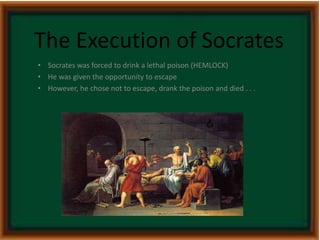
The Execution of Socrates 
• Socrates was forced to drink a lethal poison (HEMLOCK) 
• He was given the opportunity to escape 
• However, he chose not to escape, drank the poison and died . . .
THANK YOU!!!

Socrates Philosophy

  • 2.
    ‘Knowing what isgood is the same as doing what is good.’ ~ Socrates
  • 3.
    SOCRATES By: JezcaTaunan Ruado
  • 5.
    Who is Socrates? • Born around 470 B. C. • Lived in Athens at the height of its civilisation • Described as a very ugly man, who often walked barefoot and wore the same kind of clothes whatever the weather • Excellent soldier – he had great physical power and could endure a lot • He was a very disciplined person • He was interested in the development of a person’s moral character • He lived a virtuous life
  • 6.
    Who is Socrates? • Socrates is, basically, the father of Western philosophy • He never wrote down any of his teachings, his student, Plato, did this for him • Socrates’ philosophy arose out of his negative feelings in relation to the teaching of the Sophists . . .
  • 7.
    Who are theSophists? • Intelligent men, who travelled from place to place, teaching subjects like grammar, rhetoric (debating, argument, logic) and literature • Athens was an emerging democratic centre and educated people were needed • The Sophists charged for their services, usually employed by the wealthy and powerful – what the Sophists taught was in demand
  • 8.
    What was theirPhilosophy? • The Sophists were concerned with the individual and the individual’s place in the world • Protagoras: ‘Man is the measure of all things’ • Led to the belief that the difference between good and evil cannot be known  It all depended on the circumstances – the Theory of Relativity • The sophists believed other concepts of truth and justice were products of habit and circumstance  Created by those in power to suit their own interests ‘Justice is simply the interest of the stronger’ ~Thrasymachus
  • 9.
    The Philosophy ofSocrates Socrates was concerned with the question of ETHICS (moral behaviour)  Unlike the Sophists, he believed that there was definite right and wrong  He believed that people could accept it and apply it into their daily lives  He said that it was up to people (society), as a whole, to establish those things that are right and those that are wrong  Dedicated his life to searching for standards by which people could live a virtuous/good life
  • 10.
    The Philosophy ofSocrates Socrates was also concerned with justice • He wanted life to be fair for all • It was a person’s duty to explore the truth regarding right and wrong, justice and injustice, courage and cowardice • He worked to find principles and laws that all could live by and be happy Universal: these truths would be applicable for all people, at any time, everywhere and in all cases
  • 11.
    The Socratic style Socrates' style was distinctive He questioned people through discussions or dialogues He chose people who were experts in their field and who fully understood the topic being discussed He adopted the role of ignorant questioner  Pretended he did not know and wanted to be educated He asked tactful questions which would bring the experts to a dead end – they would run out of answers  This showed them, and others, that they did not have all the answers and, so, were not experts  Therefore, the aim of this method was to get to the truth of how a person could live a good, moral life
  • 12.
    Why the Socraticmethod?  Through the dialogues, Socrates wanted to discover people’s views on living a moral, just life  Socrates urged people to question what they are being told, as well as their beliefs – question EVERYTHING  Socrates, himself, learned through this process and developed his own philosophy from this method
  • 13.
    Other Important Issuesfor Socrates The SOUL  The soul is hugely important in his philosophy  Had to be nurtured and protected  Gaining wisdom would save the soul  This would lead the person to living a virtuous life ‘Knowing what is good is the same as doing what is good.’ ~ Socrates  Believed people would not willingly do wrong  No-one wants to be a bad person  Later philosophers would disagreed with him  They said that a person might know what is right but may not be strong enough or disciplined enough to do
  • 14.
    Socrates’ Thinking inAction Socrates believed that an action is right when it promotes humanity’s true happiness  Socrates spoke of alcohol  Drunkenness – only short term pleasure is gained  Whatever you are escaping from, when you drink, will come back  Drunkenness - has long term effects  Leads to ill health  Can enslave the body – become addicted to it  The drinking of alcohol goes against reason – why would you willingly want to damage your body?  Alcohol and drunkenness does not produce true pleasure – the negative effects far outweigh the temporary happiness Socrates believed true pleasure could only be attained through living a moral life . . .
  • 15.
    Educational Theory ofSocrates • Theory of Value • Theory of Knowledge • Theory of Human Nature • Theory of Learning • Theory of Transmission • Theory of Society • Theory of Opportunity • Theory of Consensus
  • 16.
    The Execution ofSocrates • Socrates was executed in 399 B. C. • Saw Athens was in danger of destruction • Became critical of the government • He was a social and moral critic • He attempted to improve the Athenians' sense of justice • His pursuit of virtue and his strict adherence to truth clashed with Athenian society • He claimed he was the wiser one since he was the only person aware of his own ignorance • Put on trial and found guilty  heresy  corrupting the minds of the youth
  • 17.
    The Execution ofSocrates • Socrates was forced to drink a lethal poison (HEMLOCK) • He was given the opportunity to escape • However, he chose not to escape, drank the poison and died . . .
  • 18.