Curriculum
development models
and documents
RAWEZH IBRAHIM
20132232
Cyprus International University
Curriculum evaluation
• The process of assessing the degree of achievement of education objectives,
teaching-learning process and testing situations.
• It helps teachers judge whether a curriculum or instructional approach is
being implemented as planned, and to assess the extent to which stated
goals and objectives are being achieved.
(Demiral’s glossary)
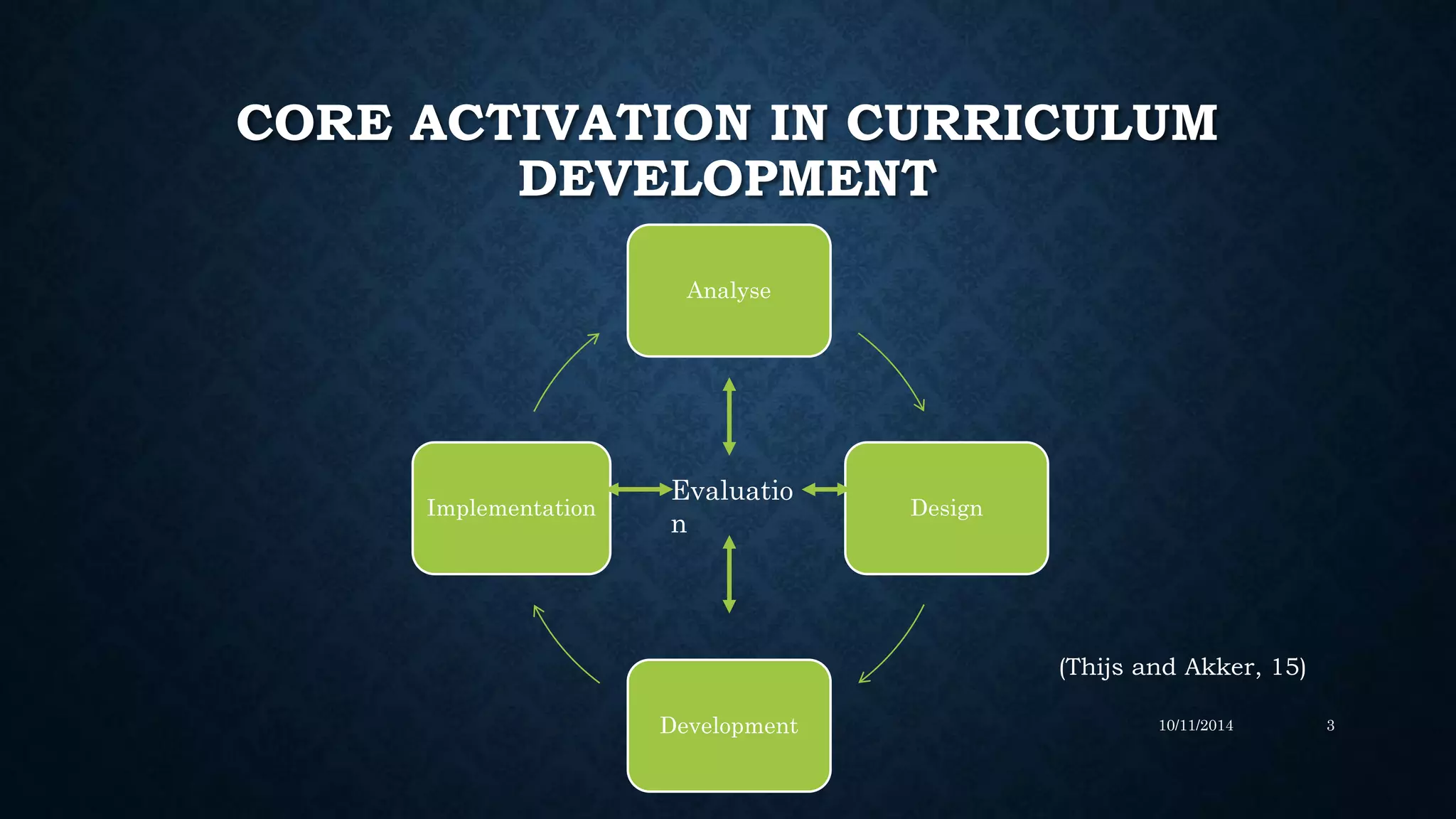
CORE ACTIVATION IN CURRICULUM
DEVELOPMENT
Analyse
Design
Development
Implementation
10/11/2014 3
Evaluatio
n
(Thijs and Akker, 15)
PRESCRIPTIVE VS. DESCRIPTIVE MODELS
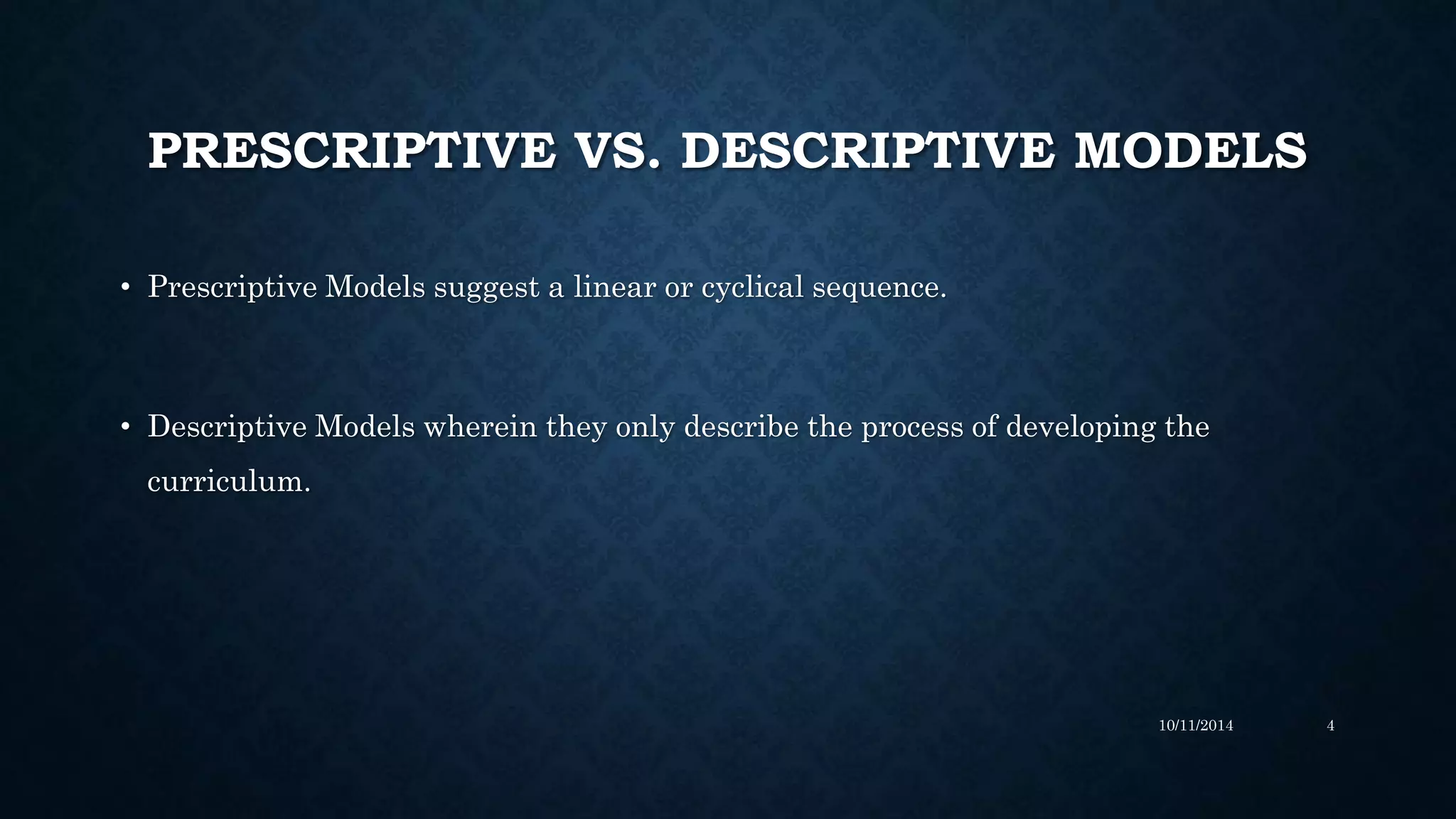
• Prescriptive Models suggest a linear or cyclical sequence.
• Descriptive Models wherein they only describe the process of developing the
curriculum.
10/11/2014 4
Models
• TheTaba Model
• TheTyler Model
• TheTaba-Tyler Model
• Curriculum Development According to the Systems Approach
10/11/2014 5
TheTaba Model- Grass-roots rational
• HildaTaba followed the grass-roots approach in developing curriculum.
• She believed in an inductive approach to curriculum development. For her,
it should be the teachers who should design the curriculum rather than the
higher authorities.
10/11/2014 6
Sven major steps- teachers would have major
input
• Step 1: Diagnose of needs:
The teacher (curriculum designer) starts the process by identifying the needs of the students
for whom the curriculum is to be designed.
• Step 2: Formulation of objectives:
After the teacher has identified needs that require attention, he specifies objectives to be
accomplished.
10/11/2014 7
• Step 3: Selection of content:
The objectives selected or created suggest the subject matter or content of
the curriculum.Objectives and content should be match.
• Step 4: Organization of content:
A teacher cannot just select the content, but must organize in some type of
sequence, taking learner maturity into consideration, learners academic
achievements and their interests.
10/11/2014 8
• Step 5: Selection of learning experience:
Content must be presented to students and they must engage the content.
Here, the teacher selects instructional methods that will involve the students
with the content.
10/11/2014 9
• Step 6: Organization of learning experience:
As content must be sequenced and organized; the learning activities, too.
Step 7: Evaluation and means of evaluation:
The curriculum planner must determine just what objectives have been
accomplished. Evaluation procedures need to be considered by the teacher
and students.
10/11/2014 10
Tyler’s Rational – Linear Approach
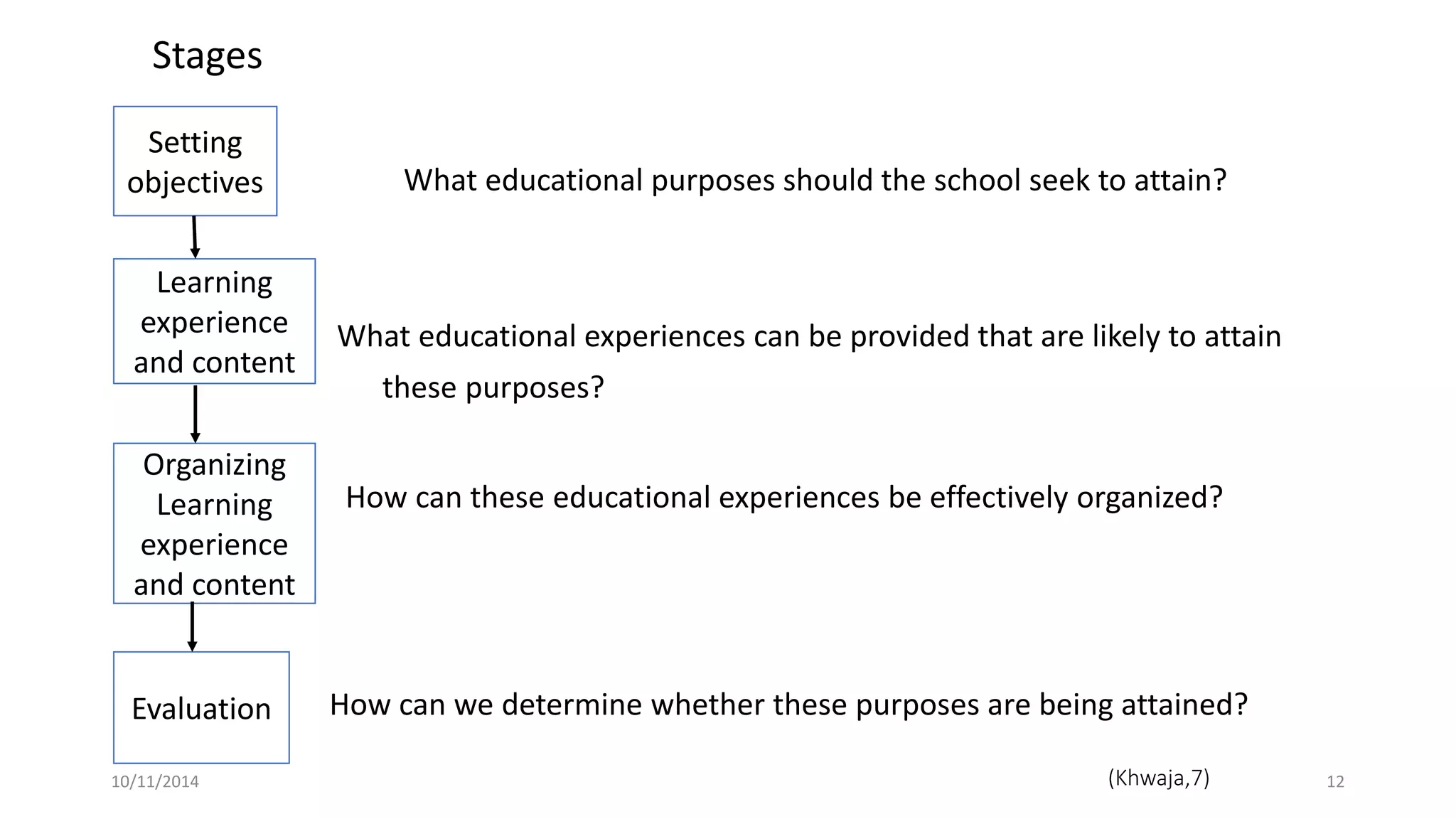
Tyler’s rationale revolves around four central questions.They need be answered if the
process of curriculum development is to proceed:
10/11/2014 11
(Bllack and Kliebard, 57 and Lunenburg,2)
Stages
What educational purposes should the school seek to attain?
What educational experiences can be provided that are likely to attain
these purposes?
How can these educational experiences be effectively organized?
How can we determine whether these purposes are being attained?
Setting
objectives
Learning
experience
and content
Organizing
Learning
experience
and content
Evaluation
(Khwaja,7)10/11/2014 12
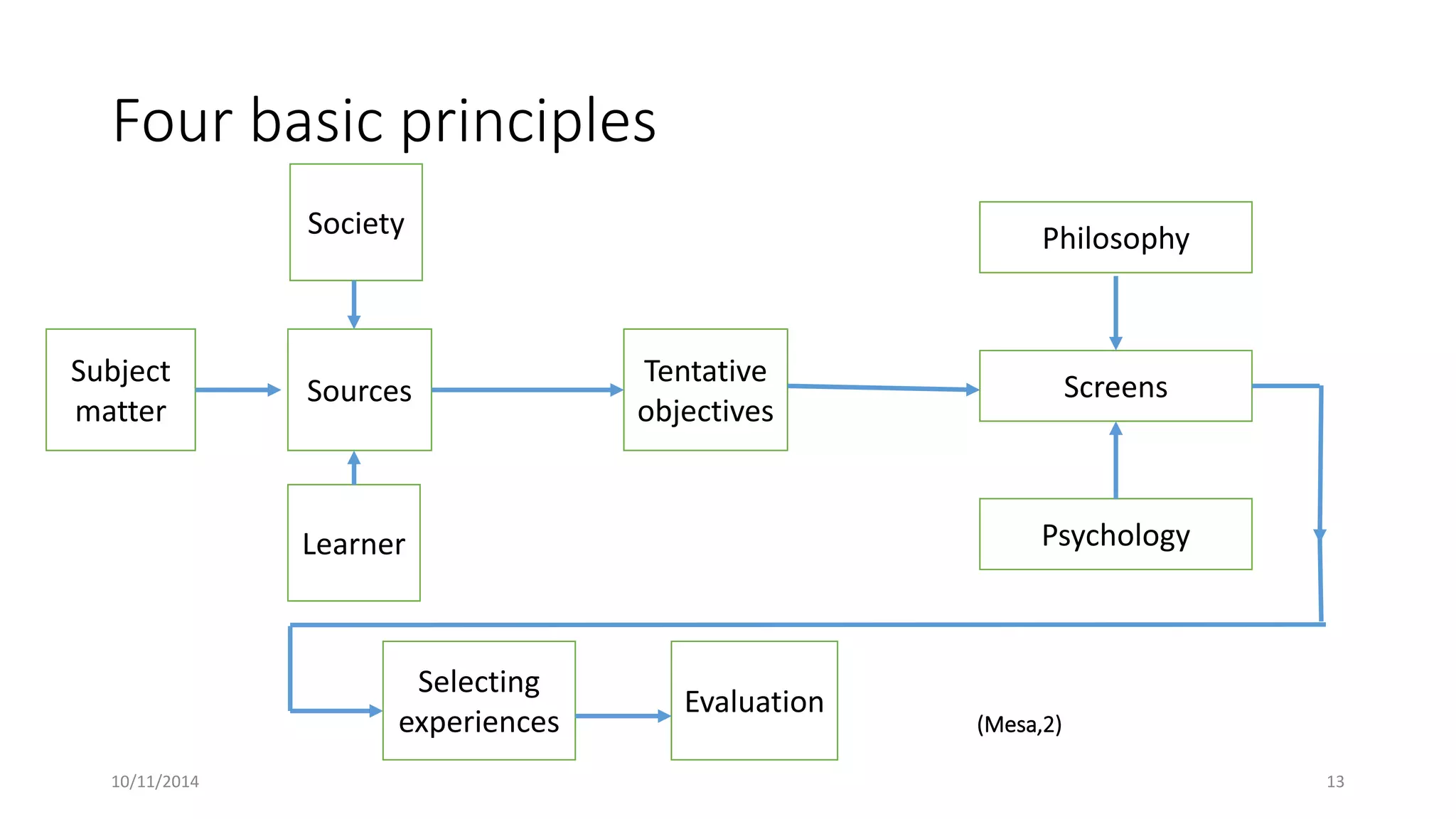
Four basic principles
Subject
matter
Society
Sources
Learner
Tentative
objectives
Screens
Philosophy
Psychology
Selecting
experiences
Evaluation
(Mesa,2)
10/11/2014 13
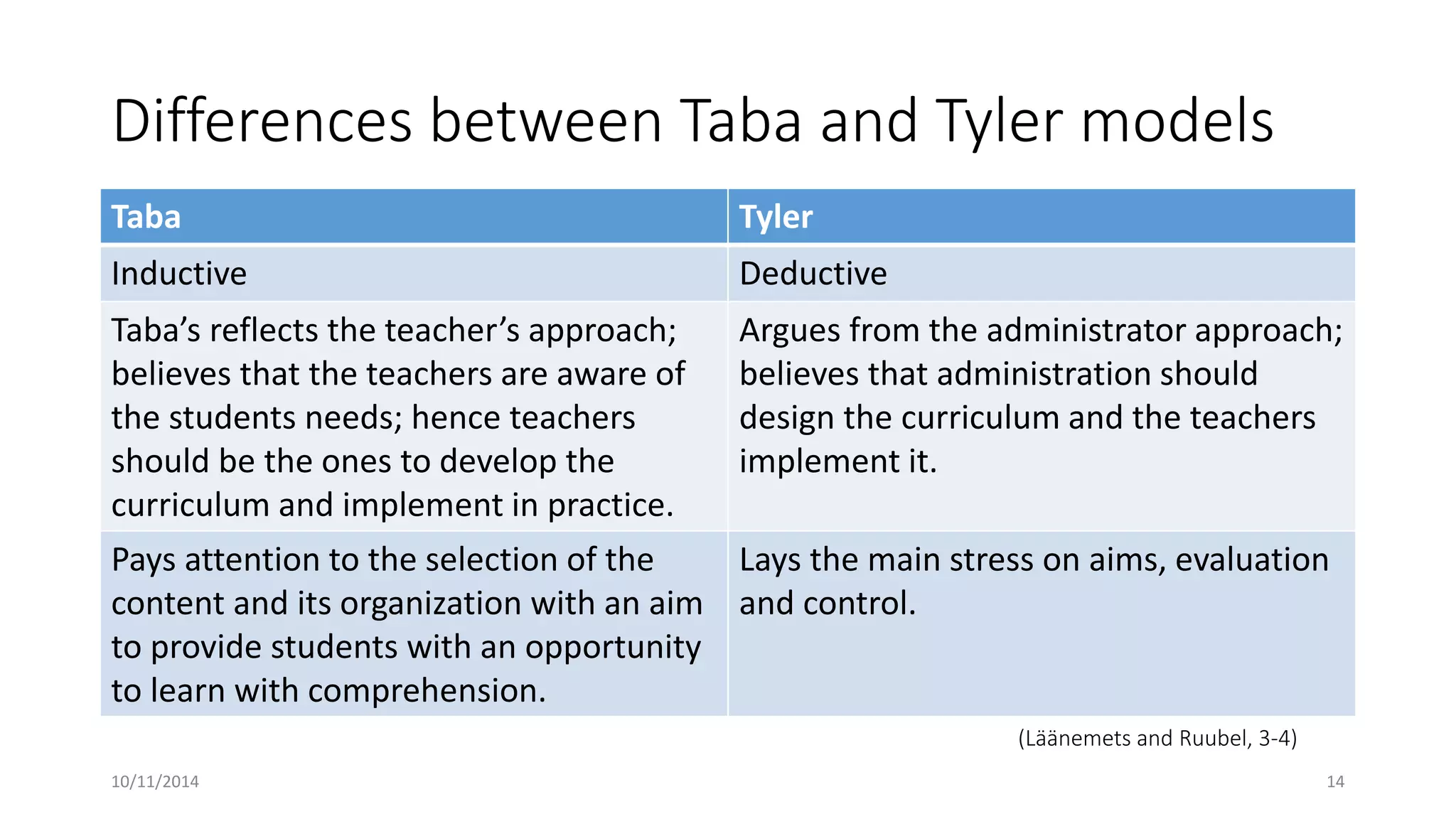
Differences between Taba and Tyler models
Taba Tyler
Inductive Deductive
Taba’s reflects the teacher’s approach;
believes that the teachers are aware of
the students needs; hence teachers
should be the ones to develop the
curriculum and implement in practice.
Argues from the administrator approach;
believes that administration should
design the curriculum and the teachers
implement it.
Pays attention to the selection of the
content and its organization with an aim
to provide students with an opportunity
to learn with comprehension.
Lays the main stress on aims, evaluation
and control.
(Läänemets and Ruubel, 3-4)
10/11/2014 14
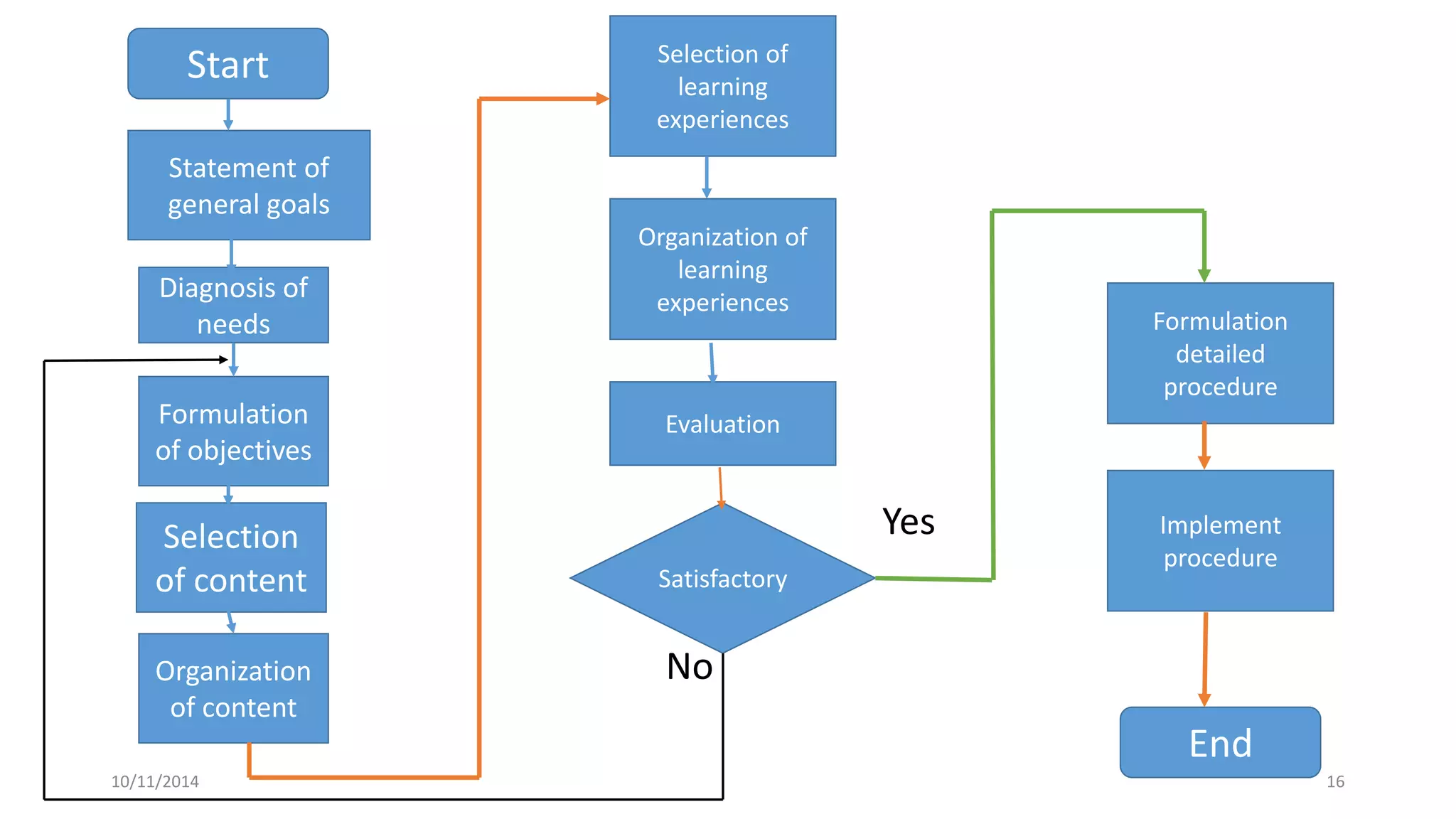
TheTaba-Tyler Model
• This model is often referred to as the Rational Planning Model, because it is
rational to the specify ends before engaging in any given activity.
10/11/2014 15
Start
Statement of
general goals
Diagnosis of
needs
Formulation
of objectives
Selection
of content
Organization
of content
Selection of
learning
experiences
Organization of
learning
experiences
Evaluation
Satisfactory
Formulation
detailed
procedure
Implement
procedure
End
10/11/2014 16
Yes
No
Curriculum Development According to the Systems
Approach
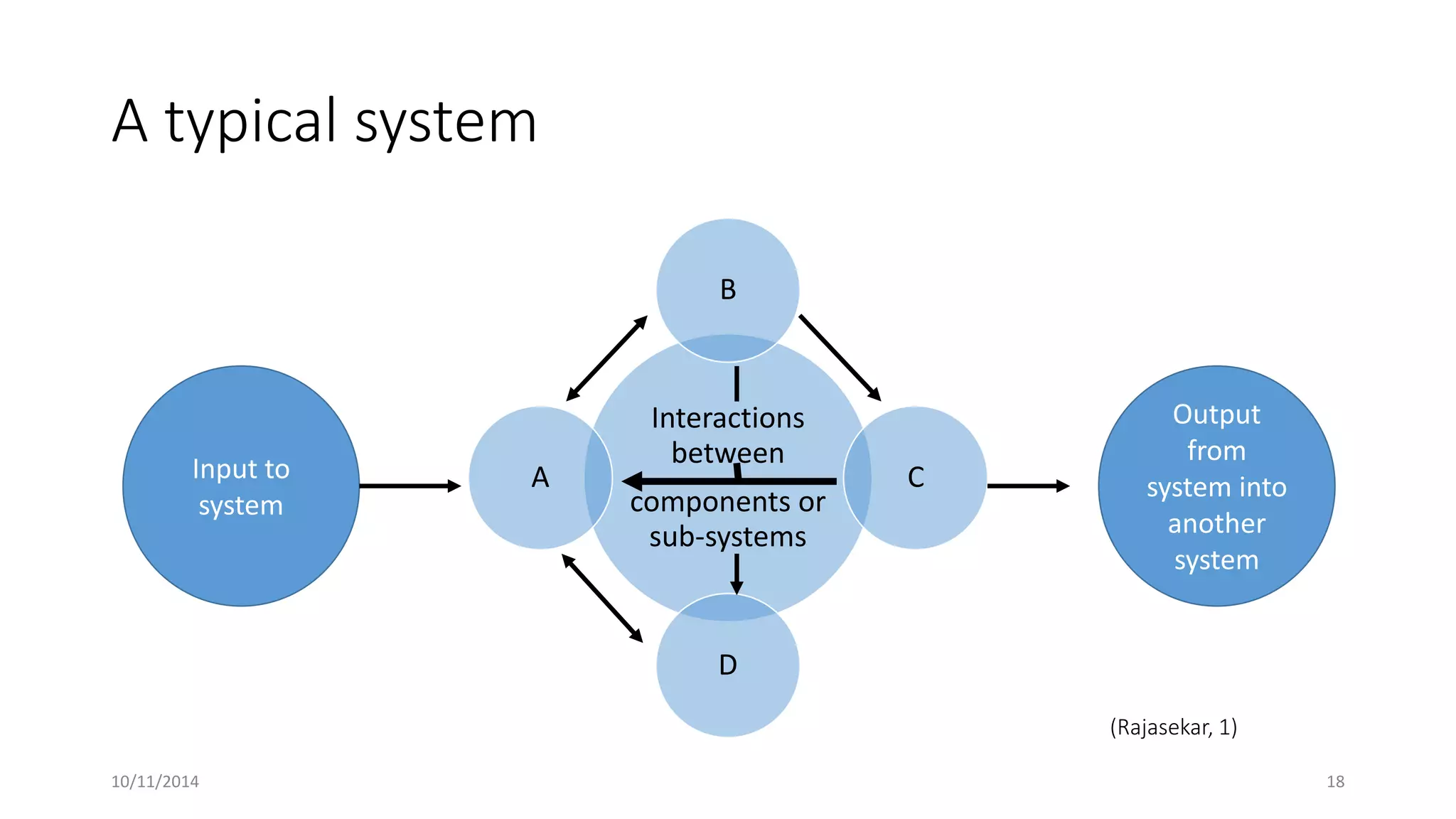
• The systems approach to the design and analysis of teaching/learning
situations is the basis of the great majority of modern educational
technology-related developments (Rajasekar, 1).
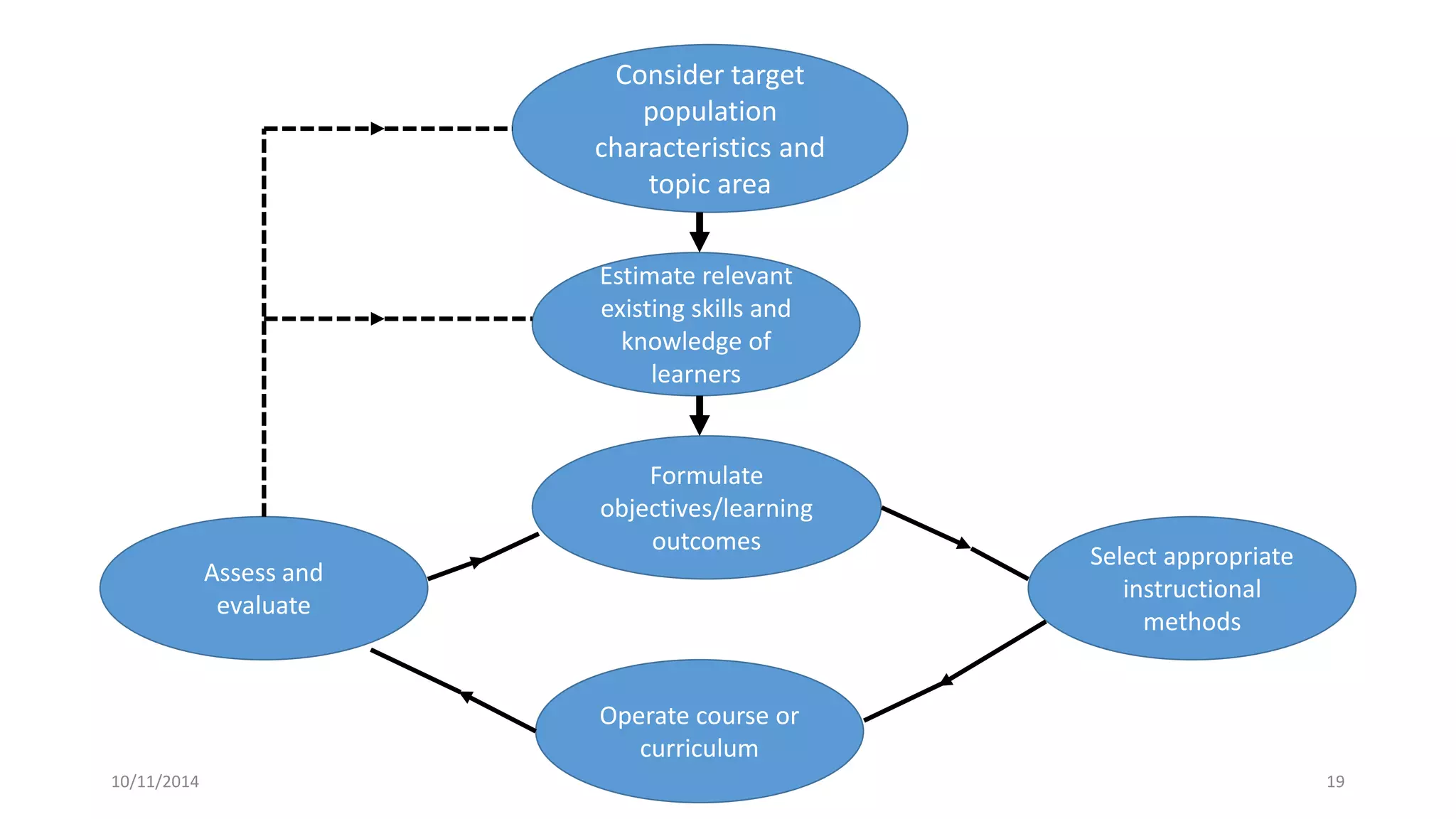
• Evaluation or program assessment is a system approach is closely tied to
program objectives.
• It is critical to know to what extend each of the objectives has been
accomplished and often to what cost (Combs, 308).
10/11/2014 17
A typical system
Interactions
between
components or
sub-systems
B
C
D
A
10/11/2014 18
Output
from
system into
another
system
Input to
system
(Rajasekar, 1)
10/11/2014 19
Consider target
population
characteristics and
topic area
Estimate relevant
existing skills and
knowledge of
learners
Formulate
objectives/learning
outcomes
Select appropriate
instructional
methods
Operate course or
curriculum
Assess and
evaluate
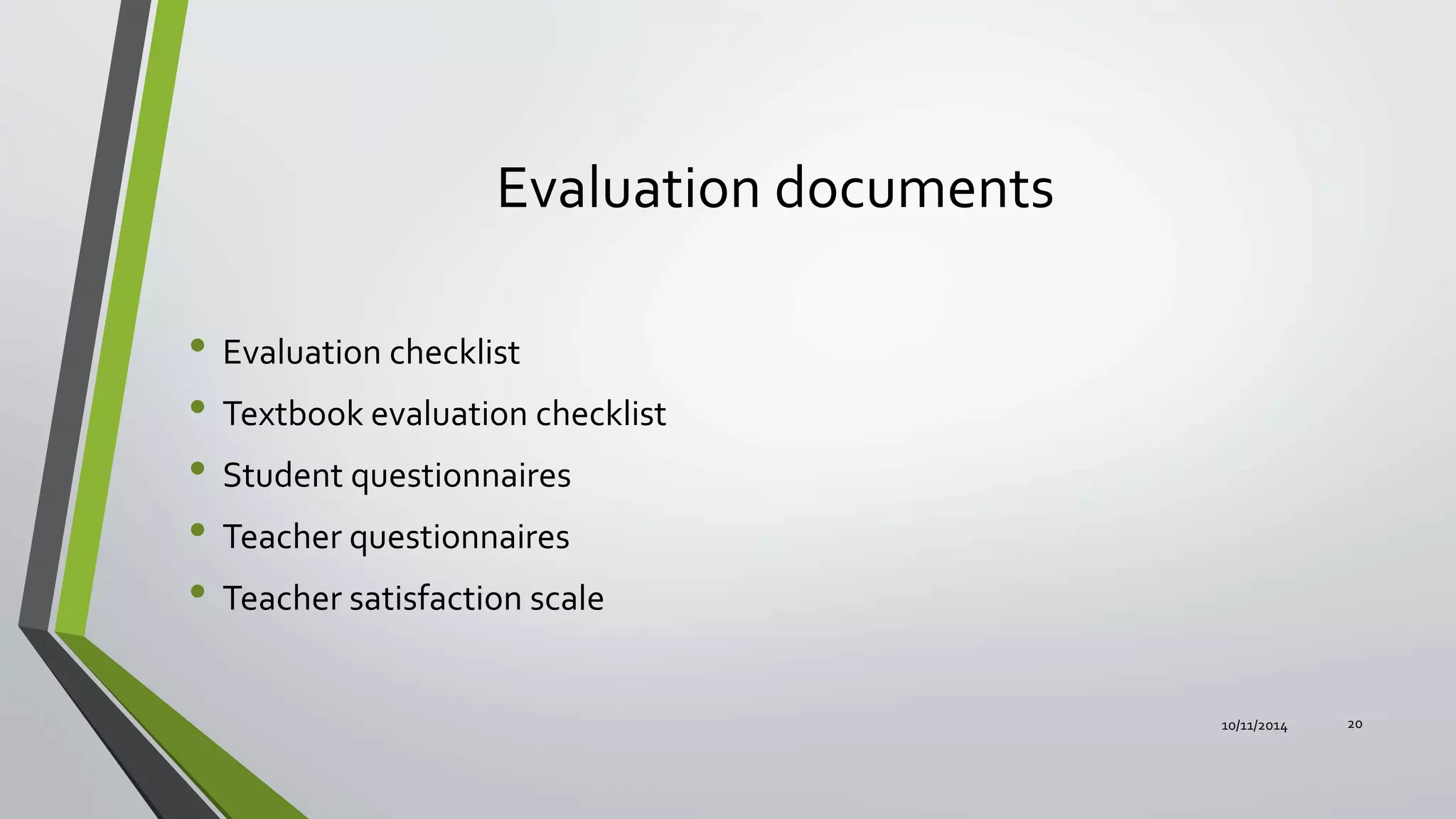
Evaluation documents
• Evaluation checklist
• Textbook evaluation checklist
• Student questionnaires
• Teacher questionnaires
• Teacher satisfaction scale
10/11/2014 20
Bibliography
• (Bllack, Anro and Kliebard(1994). Curriculum and evaluation.
• Combs, Arthar(1973). Educational accountability: beyond behavioral
objectives.
• Läänemets, U. and Ruubel, Katrin (2012). The Taba-Tyler Rationales.
• Lunenburg, Fred, 2011. Curriculum development: deductive models.
• Mesa, Heidi (2010). Curriculum development models: an analysis- project
paper.
• Khwaja, Iftikhar. Module III: curriculum development, assessment and
evaluation.
• Rajasekar, S. The systems approach to curriculum development.
• Thijs, Annette and Akker, Jan (2009). Curriculum in development.
10/11/2014 21
10/11/2014
22

Curriculum development models_and_docume

  • 1.
    Curriculum development models and documents RAWEZHIBRAHIM 20132232 Cyprus International University
  • 2.
    Curriculum evaluation • Theprocess of assessing the degree of achievement of education objectives, teaching-learning process and testing situations. • It helps teachers judge whether a curriculum or instructional approach is being implemented as planned, and to assess the extent to which stated goals and objectives are being achieved. (Demiral’s glossary)
  • 3.
    CORE ACTIVATION INCURRICULUM DEVELOPMENT Analyse Design Development Implementation 10/11/2014 3 Evaluatio n (Thijs and Akker, 15)
  • 4.
    PRESCRIPTIVE VS. DESCRIPTIVEMODELS • Prescriptive Models suggest a linear or cyclical sequence. • Descriptive Models wherein they only describe the process of developing the curriculum. 10/11/2014 4
  • 5.
    Models • TheTaba Model •TheTyler Model • TheTaba-Tyler Model • Curriculum Development According to the Systems Approach 10/11/2014 5
  • 6.
    TheTaba Model- Grass-rootsrational • HildaTaba followed the grass-roots approach in developing curriculum. • She believed in an inductive approach to curriculum development. For her, it should be the teachers who should design the curriculum rather than the higher authorities. 10/11/2014 6
  • 7.
    Sven major steps-teachers would have major input • Step 1: Diagnose of needs: The teacher (curriculum designer) starts the process by identifying the needs of the students for whom the curriculum is to be designed. • Step 2: Formulation of objectives: After the teacher has identified needs that require attention, he specifies objectives to be accomplished. 10/11/2014 7
  • 8.
    • Step 3:Selection of content: The objectives selected or created suggest the subject matter or content of the curriculum.Objectives and content should be match. • Step 4: Organization of content: A teacher cannot just select the content, but must organize in some type of sequence, taking learner maturity into consideration, learners academic achievements and their interests. 10/11/2014 8
  • 9.
    • Step 5:Selection of learning experience: Content must be presented to students and they must engage the content. Here, the teacher selects instructional methods that will involve the students with the content. 10/11/2014 9
  • 10.
    • Step 6:Organization of learning experience: As content must be sequenced and organized; the learning activities, too. Step 7: Evaluation and means of evaluation: The curriculum planner must determine just what objectives have been accomplished. Evaluation procedures need to be considered by the teacher and students. 10/11/2014 10
  • 11.
    Tyler’s Rational –Linear Approach Tyler’s rationale revolves around four central questions.They need be answered if the process of curriculum development is to proceed: 10/11/2014 11 (Bllack and Kliebard, 57 and Lunenburg,2)
  • 12.
    Stages What educational purposesshould the school seek to attain? What educational experiences can be provided that are likely to attain these purposes? How can these educational experiences be effectively organized? How can we determine whether these purposes are being attained? Setting objectives Learning experience and content Organizing Learning experience and content Evaluation (Khwaja,7)10/11/2014 12
  • 13.
  • 14.
    Differences between Tabaand Tyler models Taba Tyler Inductive Deductive Taba’s reflects the teacher’s approach; believes that the teachers are aware of the students needs; hence teachers should be the ones to develop the curriculum and implement in practice. Argues from the administrator approach; believes that administration should design the curriculum and the teachers implement it. Pays attention to the selection of the content and its organization with an aim to provide students with an opportunity to learn with comprehension. Lays the main stress on aims, evaluation and control. (Läänemets and Ruubel, 3-4) 10/11/2014 14
  • 15.
    TheTaba-Tyler Model • Thismodel is often referred to as the Rational Planning Model, because it is rational to the specify ends before engaging in any given activity. 10/11/2014 15
  • 16.
    Start Statement of general goals Diagnosisof needs Formulation of objectives Selection of content Organization of content Selection of learning experiences Organization of learning experiences Evaluation Satisfactory Formulation detailed procedure Implement procedure End 10/11/2014 16 Yes No
  • 17.
    Curriculum Development Accordingto the Systems Approach • The systems approach to the design and analysis of teaching/learning situations is the basis of the great majority of modern educational technology-related developments (Rajasekar, 1). • Evaluation or program assessment is a system approach is closely tied to program objectives. • It is critical to know to what extend each of the objectives has been accomplished and often to what cost (Combs, 308). 10/11/2014 17
  • 18.
    A typical system Interactions between componentsor sub-systems B C D A 10/11/2014 18 Output from system into another system Input to system (Rajasekar, 1)
  • 19.
    10/11/2014 19 Consider target population characteristicsand topic area Estimate relevant existing skills and knowledge of learners Formulate objectives/learning outcomes Select appropriate instructional methods Operate course or curriculum Assess and evaluate
  • 20.
    Evaluation documents • Evaluationchecklist • Textbook evaluation checklist • Student questionnaires • Teacher questionnaires • Teacher satisfaction scale 10/11/2014 20
  • 21.
    Bibliography • (Bllack, Anroand Kliebard(1994). Curriculum and evaluation. • Combs, Arthar(1973). Educational accountability: beyond behavioral objectives. • Läänemets, U. and Ruubel, Katrin (2012). The Taba-Tyler Rationales. • Lunenburg, Fred, 2011. Curriculum development: deductive models. • Mesa, Heidi (2010). Curriculum development models: an analysis- project paper. • Khwaja, Iftikhar. Module III: curriculum development, assessment and evaluation. • Rajasekar, S. The systems approach to curriculum development. • Thijs, Annette and Akker, Jan (2009). Curriculum in development. 10/11/2014 21
  • 22.