COPD & NUTRITION
By
Dr. Riham Hazem Raafat
Lecturer of Chest Diseases
Ainshams University
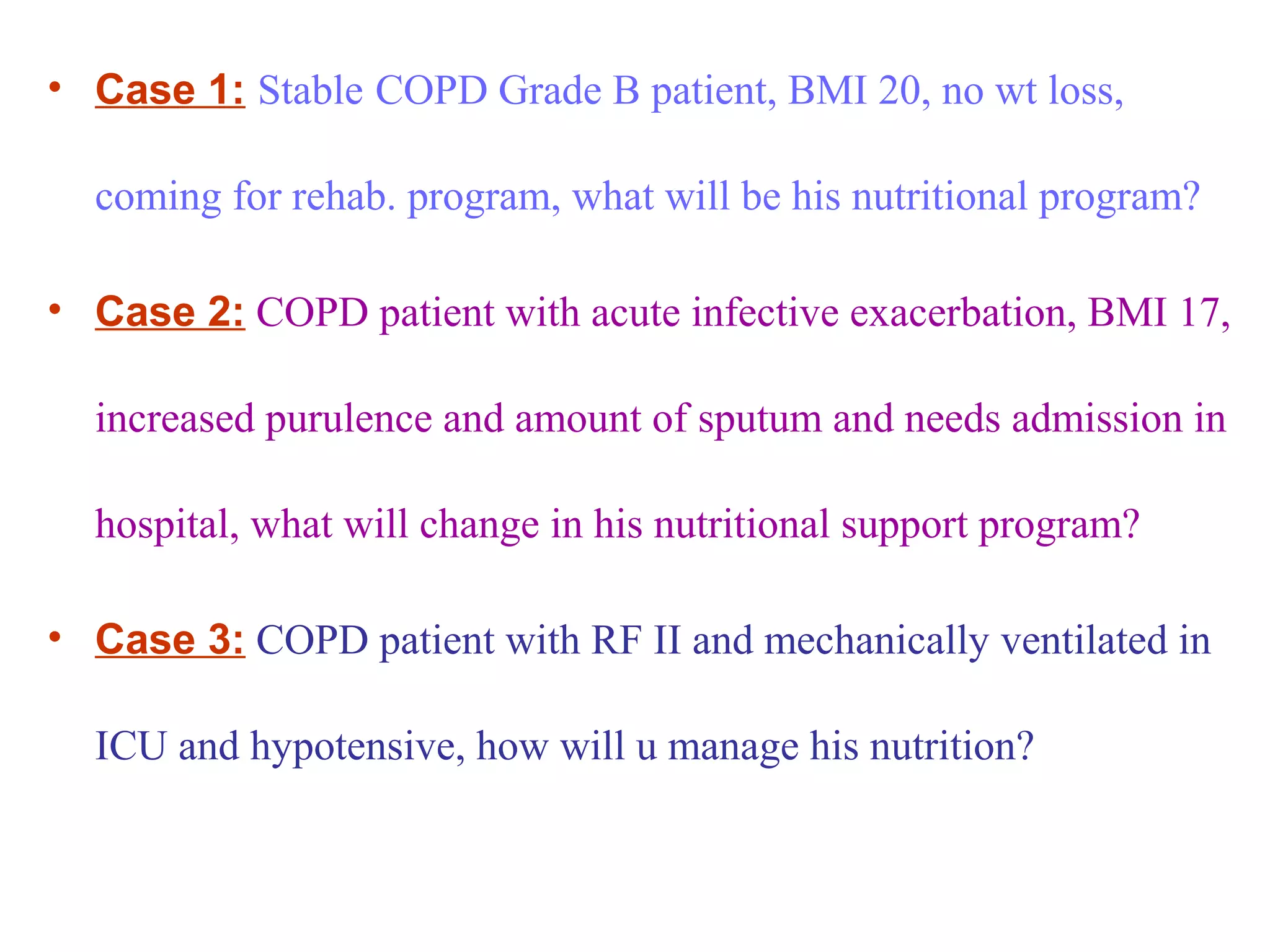
• Case 1: Stable COPD Grade B patient, BMI 20, no wt loss,
coming for rehab. program, what will be his nutritional program?
• Case 2: COPD patient with acute infective exacerbation, BMI 17,
increased purulence and amount of sputum and needs admission in
hospital, what will change in his nutritional support program?
• Case 3: COPD patient with RF II and mechanically ventilated in
ICU and hypotensive, how will u manage his nutrition?
Gandy. Manual of Dietetic Practice. Wiley-Blackwell, 2014.
Pharmacological
•Dry mouth
•Oral thrush
•Taste changes
Physical
•Dyspnoea
•Fatigue
•Dysphagia
Psychological
•Depression
•Anxiety
•Loneliness
Social
•Social isolation
•Unemployment
•Housebound
Consequences of malnutrition in COPD
Case 1 Case 2 Case 3
Screening/
Assessment
SGA -HB or IC
Anthropometric
Laboratory
SGA- HB or IC
Anthropometric
Laboratory
MUST
Ireton-jones
HB x1.3-1.5
REE +
Fluids
20-25 Kcal/day
Oral diet
8cup/d30ml//kg
25-30 Kcal/d
ONS bid
Small, Frequent
1st
resuscitate
EN in 24-48hrs
25-30 Kcal/d
Macro-
nutrients
CHO: 40-50 %
Fat: 15-25 %
Protein: 0.8-1.5
g/kg (25 %)
Less CHO,
High Fat,
High Protein to
2g/kg
Decreased
Increased
Up to 2.5g/kg
RQ  decrease
Micro-
nutrients
Vitamins,
Minerals, Trace
Elements
Antioxidants
Omega 3, MCT
(Pulmocare)
Antioxidants
Po4, Vit. D, Ca
Glutamine, O3
/Malnutrition Universal Screening Tool
Body composition abnormalities:
↑ ACTIVITY RELATED
ENERGY EXPENDITURE
HYPERMETABOLIC
STATE
DECREASED
INTAKE
IMPAIRMENT OF ENERGY
BALANCE
IMBALANCE IN PROTEIN
SYNTHESIS AND BREAKDOWN
LOSS OF FAT
LOSS OF WEIGHT: BMI <21
10% WEIGHT LOSS IN 6 MONTHS
5% WEIGHT LOSS IN 1 MONTH
LOSS OF FFM
ANTHROPOMETRY
BIOIMPEDANCE
ANALYSIS
DEXA
Lab. Investigations
CALORIC
SUPPLEMENTS
PROTEIN
SUPPLEMENT
STRENGTH
EXERCISE
ANABOLIC
STEROIDS
GROW
TH
HORM
ONE
INTERVENTIONS
Help Eating SucceedHelp Eating Succeed
 Prepare meals early
 Rest and medicate before eating
 Oral care before meal
 Stimulate the appetite
 Liquefy foods to reduce chewing
 Eat small, frequent meals
 Adequate water intake daily
CarbohydratesCarbohydrates
• CHO produce the
most CO2
during
metabolism
• CHO should be
40% of intake
• Complex CHO best
When Limited Carbohydrate Intake
needed
• Follow a high-protein diet with moderate
carbohydrates
• Reduce carbohydrates consumed
• Start by limiting these foods:
Soda
Sweet tea
Candy
Cake and desserts
Starches
Fruits
Milk
Fats and ProteinsFats and Proteins
• Need at least 30%
of calories from
fat, whole dairy
encouraged
• Need 30% from protein
when in malnutrition
How to Meet Protein Needs
1egg 6g protein
1ounce (oz) nuts 2-4g protein
6oz yogurt 6g protein
½cup (C) cottage cheese 14g protein
3oz canned tuna 25g protein
6oz steak 42g protein
4oz hamburger 28g protein
3oz chicken breast 26g protein
Oz = 28.35g
Increase Dietary Fats
• Increase calories to compensate for reduced
carbohydrates by increasing dietary fats
• Increase your intake of omega-3 fatty acids:
Salmon
Haddock
Mackerel
Tuna
Flaxseed
Omega-3 fatty acid eggs
Limit Salt Intake
• Follow a low-sodium or no-added-salt diet
• Reduce sodium (or salt) consumed by limiting these
foods:
Canned foods
Snack foods, such as chips, pretzels, crackers, and
popcorn
Packaged starchy foods, such as stuffing and rice mixes
Cured/luncheon meats and cheeses
Condiments, such as ketchup, barbecue sauce, and soy
sauce
Micronutrients:Micronutrients:
Fruits and VegetablesFruits and Vegetables
• Antioxidants
• Vitamin C
(smokers need double dose)
• Calcium, Vitamin D
• Phosphorus
Reduce Gas-Forming
Foods
• Gas-forming foods can cause bloating and
displacement of the diaphragm
• If this occurs, avoid the following:
Broccoli
Cabbage
Onions
Leeks
Asparagus
Carbonated beverages
Dried beans and peas
Anabolic steroids
• Anabolic steroids
• Nandrolone decanoate - 50 mg for male; 25 mg
for females; 2 Weekly 4 doses
• Anabolic therapy alone increases muscle mass
but not exercise capacity
INTERVENTION WEIGHT
GAIN
FFM GAIN EXERCISE
CAPACITY
CALORIC SUPP. + - -
CALORIC
SUPPLEMENTATION+
EXERCISE TRAINING
++ + +
STRENGTH EXERCISE - + -
ANABOLIC STEROIDS ++ ++ -
ANABOLIC STEROIDS+
EXERCISE
++ +++ ?
COPD & Nutrition

COPD & Nutrition

  • 1.
    COPD & NUTRITION By Dr.Riham Hazem Raafat Lecturer of Chest Diseases Ainshams University
  • 2.
    • Case 1:Stable COPD Grade B patient, BMI 20, no wt loss, coming for rehab. program, what will be his nutritional program? • Case 2: COPD patient with acute infective exacerbation, BMI 17, increased purulence and amount of sputum and needs admission in hospital, what will change in his nutritional support program? • Case 3: COPD patient with RF II and mechanically ventilated in ICU and hypotensive, how will u manage his nutrition?
  • 3.
    Gandy. Manual ofDietetic Practice. Wiley-Blackwell, 2014. Pharmacological •Dry mouth •Oral thrush •Taste changes Physical •Dyspnoea •Fatigue •Dysphagia Psychological •Depression •Anxiety •Loneliness Social •Social isolation •Unemployment •Housebound
  • 5.
  • 6.
    Case 1 Case2 Case 3 Screening/ Assessment SGA -HB or IC Anthropometric Laboratory SGA- HB or IC Anthropometric Laboratory MUST Ireton-jones HB x1.3-1.5 REE + Fluids 20-25 Kcal/day Oral diet 8cup/d30ml//kg 25-30 Kcal/d ONS bid Small, Frequent 1st resuscitate EN in 24-48hrs 25-30 Kcal/d Macro- nutrients CHO: 40-50 % Fat: 15-25 % Protein: 0.8-1.5 g/kg (25 %) Less CHO, High Fat, High Protein to 2g/kg Decreased Increased Up to 2.5g/kg RQ  decrease Micro- nutrients Vitamins, Minerals, Trace Elements Antioxidants Omega 3, MCT (Pulmocare) Antioxidants Po4, Vit. D, Ca Glutamine, O3
  • 9.
  • 16.
    Body composition abnormalities: ↑ACTIVITY RELATED ENERGY EXPENDITURE HYPERMETABOLIC STATE DECREASED INTAKE IMPAIRMENT OF ENERGY BALANCE IMBALANCE IN PROTEIN SYNTHESIS AND BREAKDOWN LOSS OF FAT LOSS OF WEIGHT: BMI <21 10% WEIGHT LOSS IN 6 MONTHS 5% WEIGHT LOSS IN 1 MONTH LOSS OF FFM ANTHROPOMETRY BIOIMPEDANCE ANALYSIS DEXA Lab. Investigations CALORIC SUPPLEMENTS PROTEIN SUPPLEMENT STRENGTH EXERCISE ANABOLIC STEROIDS GROW TH HORM ONE INTERVENTIONS
  • 17.
    Help Eating SucceedHelpEating Succeed  Prepare meals early  Rest and medicate before eating  Oral care before meal  Stimulate the appetite  Liquefy foods to reduce chewing  Eat small, frequent meals  Adequate water intake daily
  • 19.
    CarbohydratesCarbohydrates • CHO producethe most CO2 during metabolism • CHO should be 40% of intake • Complex CHO best
  • 20.
    When Limited CarbohydrateIntake needed • Follow a high-protein diet with moderate carbohydrates • Reduce carbohydrates consumed • Start by limiting these foods: Soda Sweet tea Candy Cake and desserts Starches Fruits Milk
  • 21.
    Fats and ProteinsFatsand Proteins • Need at least 30% of calories from fat, whole dairy encouraged • Need 30% from protein when in malnutrition
  • 22.
    How to MeetProtein Needs 1egg 6g protein 1ounce (oz) nuts 2-4g protein 6oz yogurt 6g protein ½cup (C) cottage cheese 14g protein 3oz canned tuna 25g protein 6oz steak 42g protein 4oz hamburger 28g protein 3oz chicken breast 26g protein Oz = 28.35g
  • 23.
    Increase Dietary Fats •Increase calories to compensate for reduced carbohydrates by increasing dietary fats • Increase your intake of omega-3 fatty acids: Salmon Haddock Mackerel Tuna Flaxseed Omega-3 fatty acid eggs
  • 24.
    Limit Salt Intake •Follow a low-sodium or no-added-salt diet • Reduce sodium (or salt) consumed by limiting these foods: Canned foods Snack foods, such as chips, pretzels, crackers, and popcorn Packaged starchy foods, such as stuffing and rice mixes Cured/luncheon meats and cheeses Condiments, such as ketchup, barbecue sauce, and soy sauce
  • 25.
    Micronutrients:Micronutrients: Fruits and VegetablesFruitsand Vegetables • Antioxidants • Vitamin C (smokers need double dose) • Calcium, Vitamin D • Phosphorus
  • 26.
    Reduce Gas-Forming Foods • Gas-formingfoods can cause bloating and displacement of the diaphragm • If this occurs, avoid the following: Broccoli Cabbage Onions Leeks Asparagus Carbonated beverages Dried beans and peas
  • 27.
    Anabolic steroids • Anabolicsteroids • Nandrolone decanoate - 50 mg for male; 25 mg for females; 2 Weekly 4 doses • Anabolic therapy alone increases muscle mass but not exercise capacity
  • 28.
    INTERVENTION WEIGHT GAIN FFM GAINEXERCISE CAPACITY CALORIC SUPP. + - - CALORIC SUPPLEMENTATION+ EXERCISE TRAINING ++ + + STRENGTH EXERCISE - + - ANABOLIC STEROIDS ++ ++ - ANABOLIC STEROIDS+ EXERCISE ++ +++ ?

Editor's Notes

  • #18 Prepare meals early or at peak levels Rest 30 minutes and use bronchodilator medications before eating Oral care before meal to moisten/clean Select foods to stimulate the appetite Liquefy foods to reduce chewing Eat 5-6 small, frequent meals &amp; snacks 2-3 liters of water daily, but not at meals
  • #21 A high-protein diet with moderate carbohydrates is recommended to reduce carbon dioxide in the body. Increased carbohydrates in the diet can increase respirations, which can make eating more difficult (Dorner). Try to reduce concentrated sweets, such as sodas, sweet tea, candy, cake, and desserts, and limit other carbohydrates, such as starches, fruits, and milk.
  • #23 Here is a list of foods to meet your protein needs (mypyramid.gov).
  • #24 Increasing dietary fats can make up for the reduced carbohydrates in your diet (Dorner). Increase omega-3 fatty acids, which are found in salmon, haddock, mackerel, tuna, flaxseed, and omega-3 fatty acid eggs.
  • #25 Salt can cause fluid retention in your body, which can make it difficult to breathe (Escott-Stump). Reduce salt in your diet by limiting the following foods: Canned foods (unless you purchase low-sodium varieties) Snack foods, such as chips, pretzels, crackers, and popcorn Packaged starchy foods, such as stuffing and rice mixes Cured meats, luncheon meats, and cheese, such as: Ham Turkey Bologna Roast beef Corned beef Sausage Canned meats Velveeta® Condiments, including ketchup, barbecue sauce, and soy sauce Salt and any seasoning with the word “salt” in it Try not to add salt to foods, because ¼ teaspoon has 600 milligrams (mg) of salt. Our daily intake of salt is 2300 mg/day (American Dietetic Association).
  • #26 Antioxidents minimize free radical damage and reduce inflammation Vitamin C can increase pulmonary function and slow progression of COPD Glucocorticoids that reduce airway inflammation has side effect of reducing bone mass, increase fx risk. Can slow progression of COPD
  • #27 Foods that are gas forming can cause abdominal bloating and discomfort. This can lead to displacement of the diaphragm, which will cause increased difficulty breathing (Dorner). If this is noticed, avoid the following foods: Broccoli Cabbage Onions Leeks Asparagus Carbonated beverages Dried beans and peas Remember, everyone is different, so other foods also may cause gas, depending on the individual.