Download as PDF, PPTX








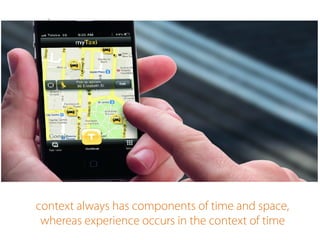



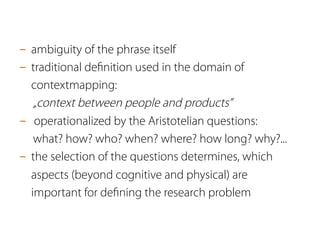


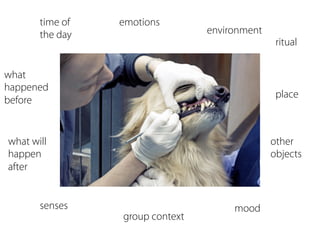


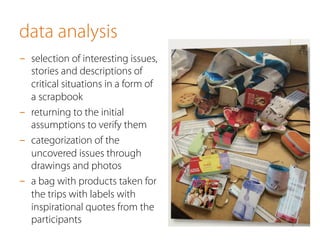


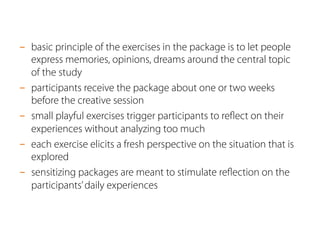
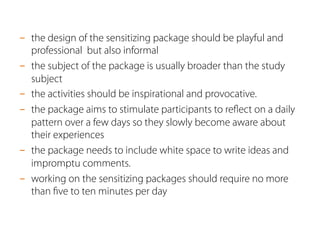
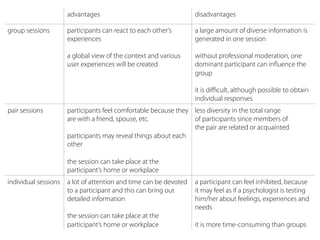
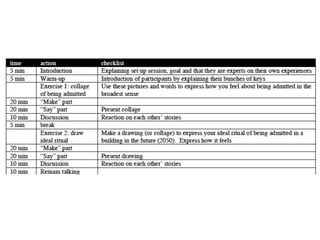
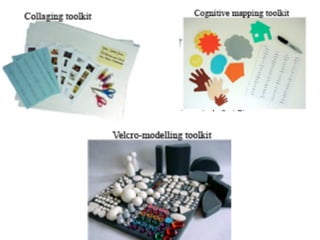
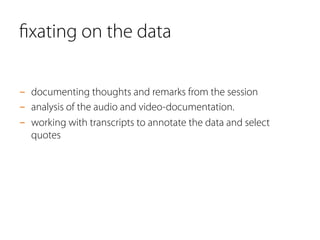





The document discusses context mapping as a crucial method for understanding user experiences during design processes, emphasizing the importance of empathy in identifying user motivations and feelings. It outlines steps for context mapping, including preparation, participant selection, and data analysis, while highlighting the significance of creating a shared language and involving users deeply in the research. The document also compares different session formats, such as group, pair, and individual sessions, detailing their advantages and disadvantages.


