Consumer Perception
Consumer Perception


Perception







Process via which consumers select and organize
stimuli, so as to provide themselves with a
meaningful and coherent view of the world
More than sensing something
Assigning meaning and incorporating it into their
world
Part of the “Information Processing” process
Consumer Perception


Consumer’s Processing of Information








Exposure
Attention
Comprehension -- Working Memory
Acceptance
Retention -- Permanent Memory

Perception


Deals with the first two steps
Consumer Perception


Exposure Information


Consumers are exposed to virtually an infinite
amount of information





Non-marketing
Marketing

Consumers self select the information for which
they come into contact


Some consumers never watch CNN – will never be
come into contact commercials (marketing stimuli) that
run on this network
Consumer Perception


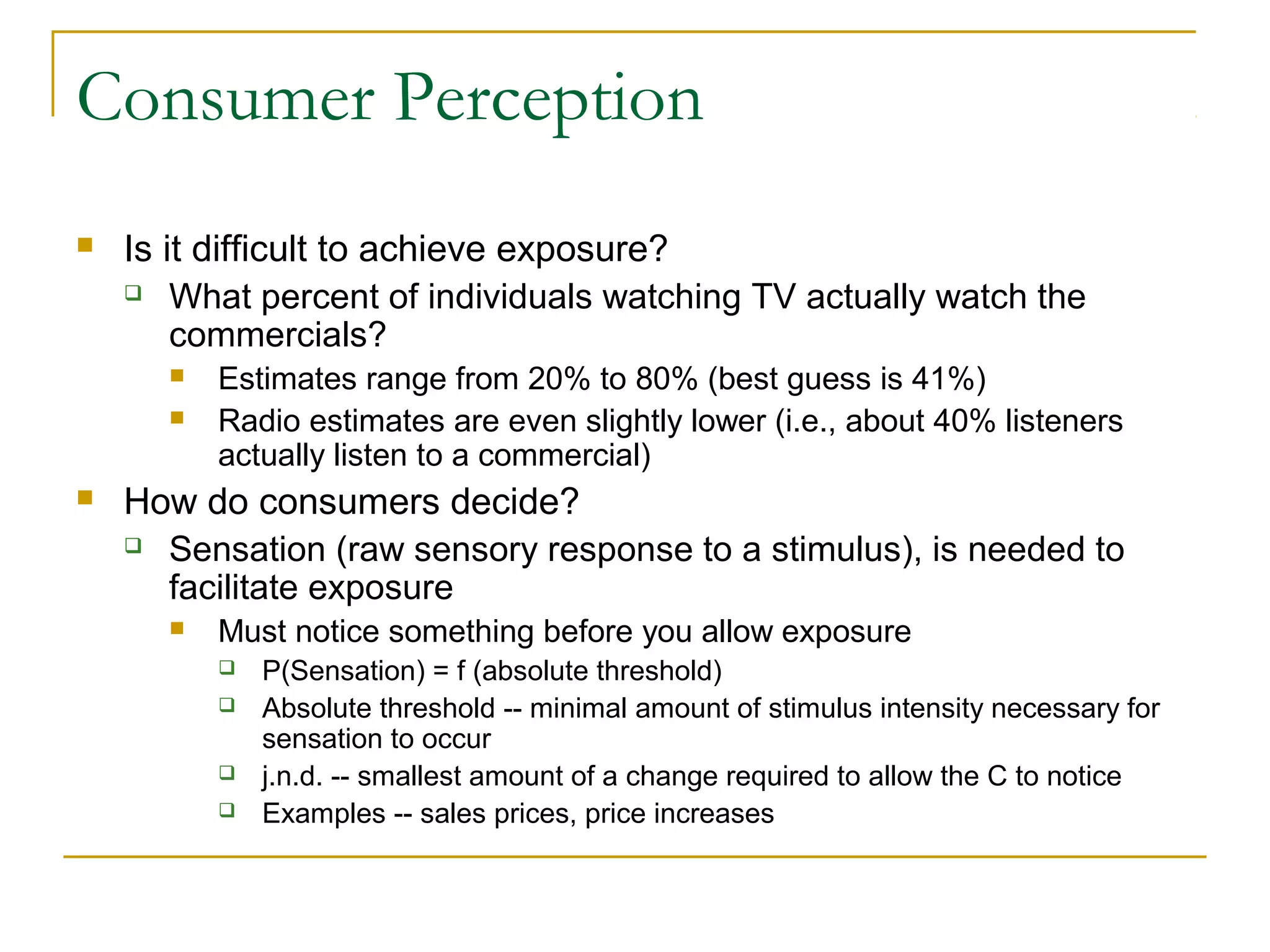
Is it difficult to achieve exposure?
 What percent of individuals watching TV actually watch the
commercials?





Estimates range from 20% to 80% (best guess is 41%)
Radio estimates are even slightly lower (i.e., about 40% listeners
actually listen to a commercial)

How do consumers decide?
 Sensation (raw sensory response to a stimulus), is needed to
facilitate exposure


Must notice something before you allow exposure





P(Sensation) = f (absolute threshold)
Absolute threshold -- minimal amount of stimulus intensity necessary for
sensation to occur
j.n.d. -- smallest amount of a change required to allow the C to notice
Examples -- sales prices, price increases
Consumer Perception


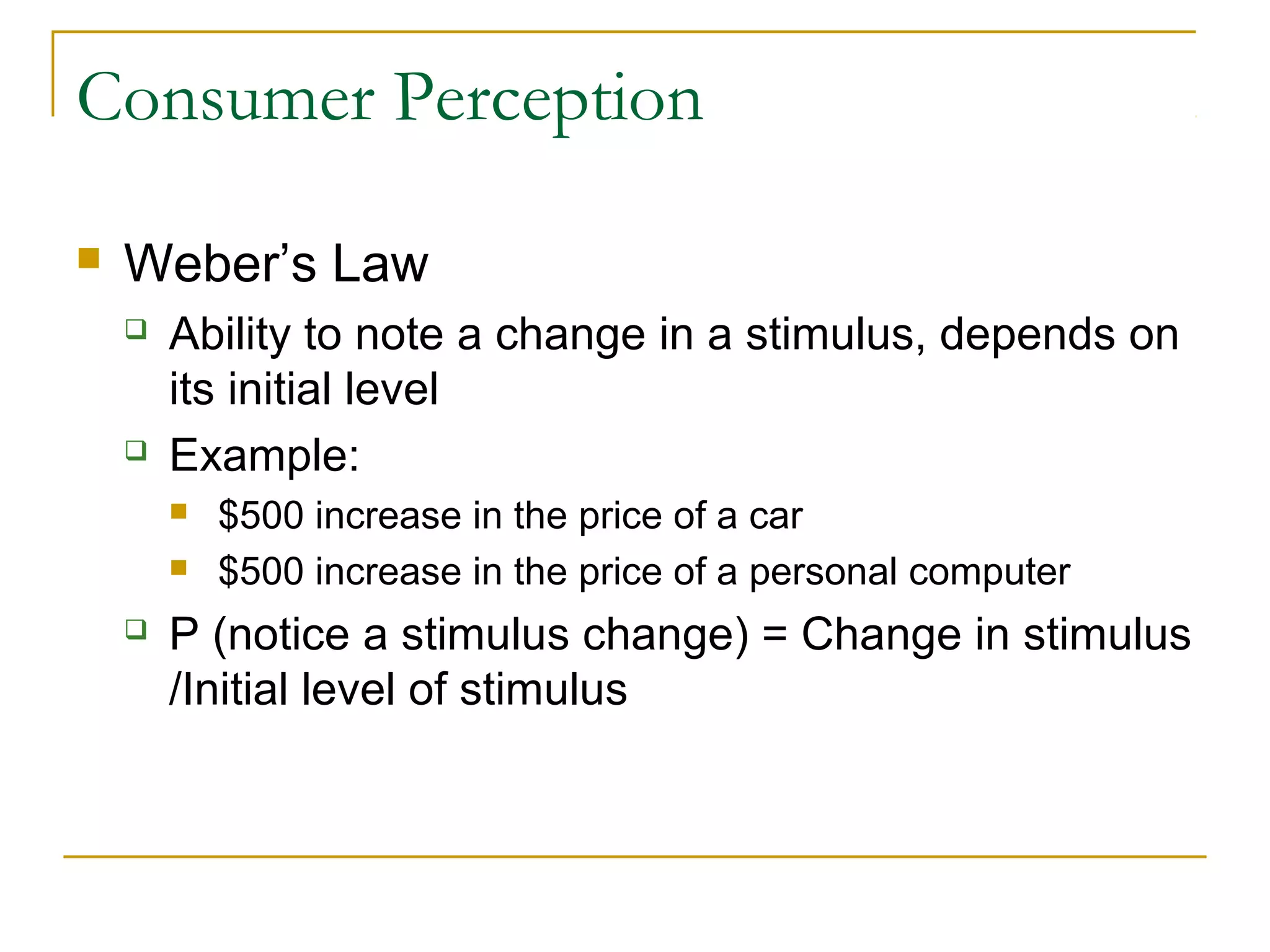
Weber’s Law




Ability to note a change in a stimulus, depends on
its initial level
Example:





$500 increase in the price of a car
$500 increase in the price of a personal computer

P (notice a stimulus change) = Change in stimulus
/Initial level of stimulus
Consumer Perception


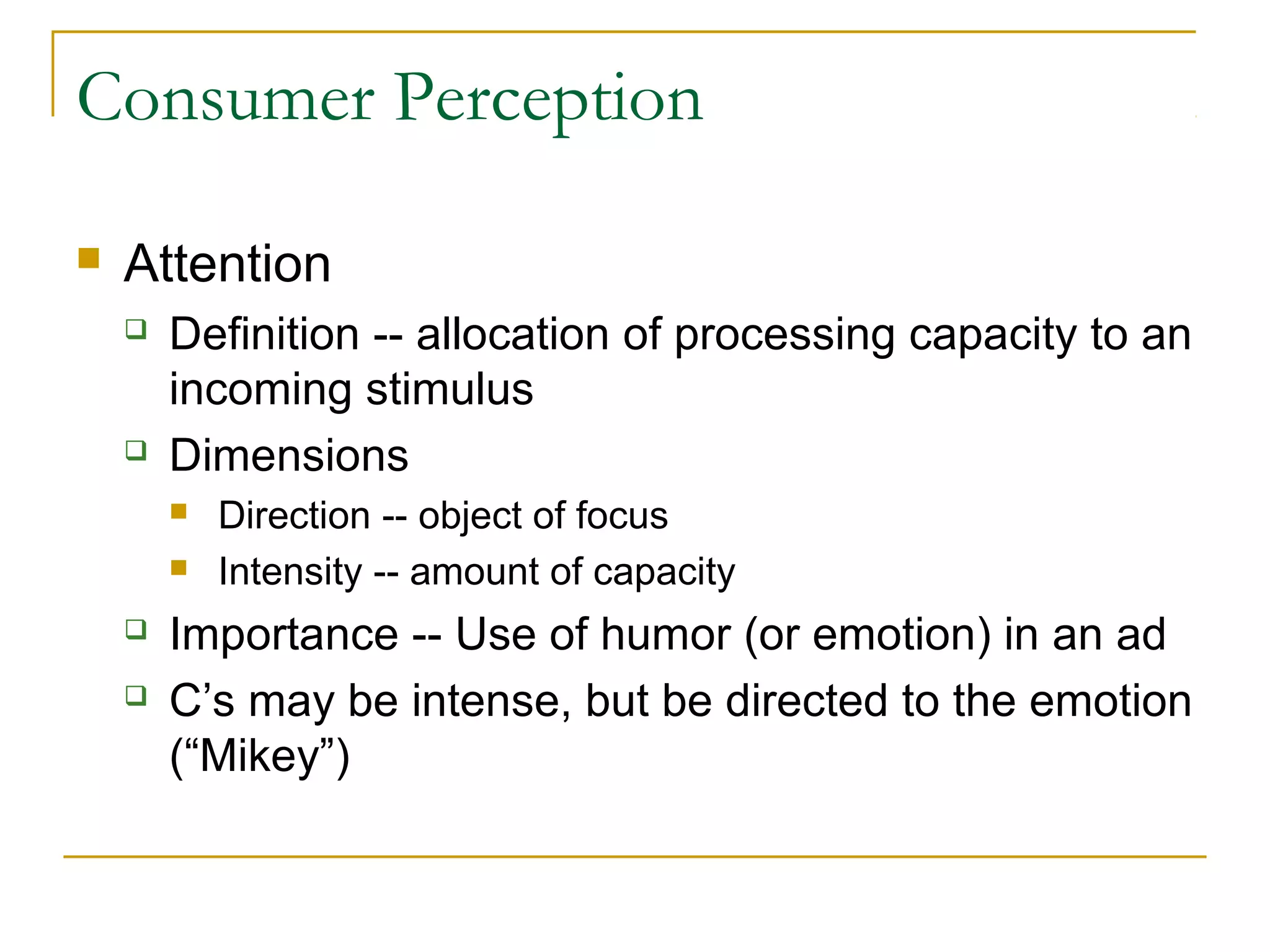
Attention




Definition -- allocation of processing capacity to an
incoming stimulus
Dimensions






Direction -- object of focus
Intensity -- amount of capacity

Importance -- Use of humor (or emotion) in an ad
C’s may be intense, but be directed to the emotion
(“Mikey”)
Consumer Perception


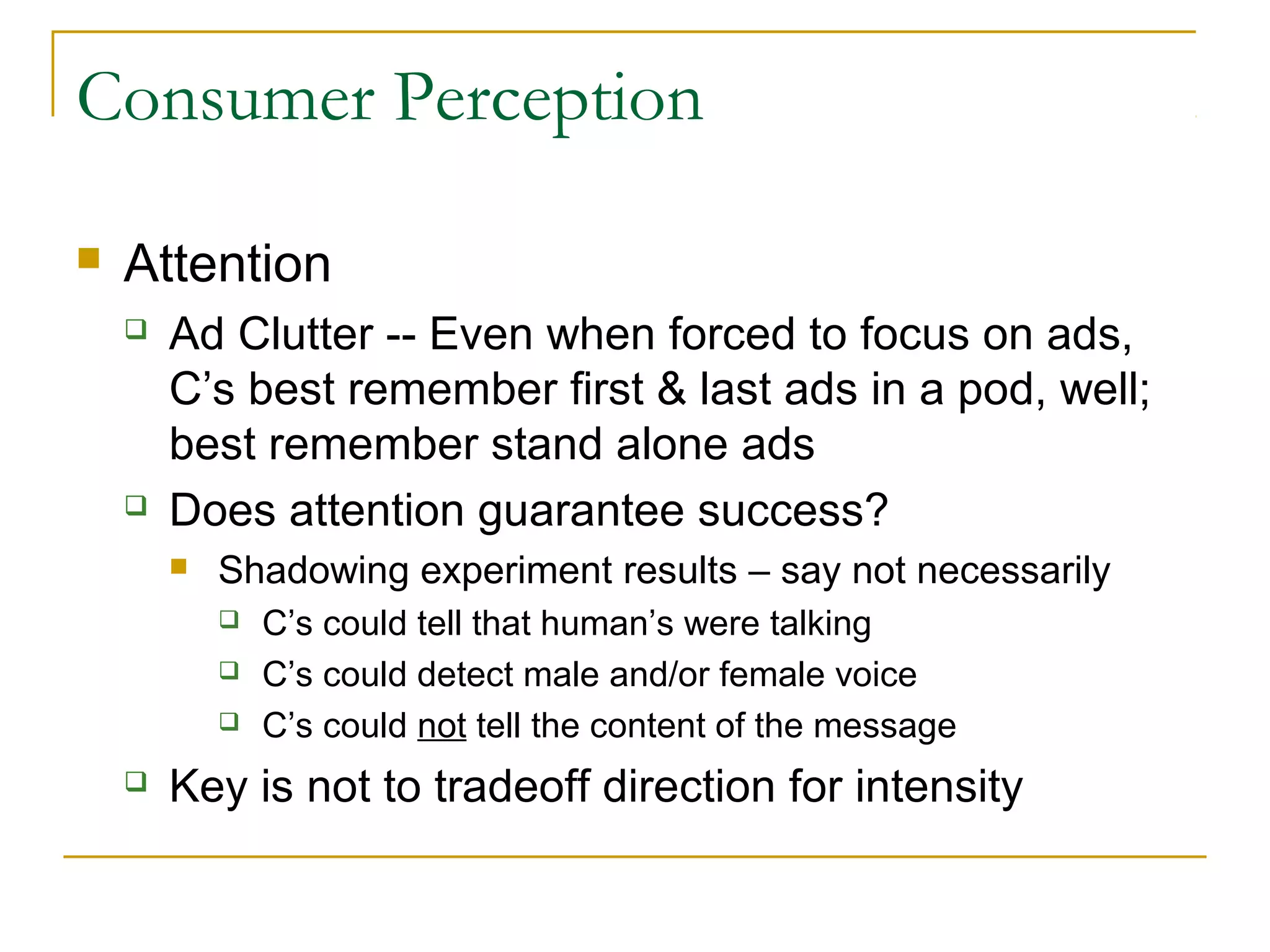
Attention




Ad Clutter -- Even when forced to focus on ads,
C’s best remember first & last ads in a pod, well;
best remember stand alone ads
Does attention guarantee success?


Shadowing experiment results – say not necessarily






C’s could tell that human’s were talking
C’s could detect male and/or female voice
C’s could not tell the content of the message

Key is not to tradeoff direction for intensity
Consumer Perception


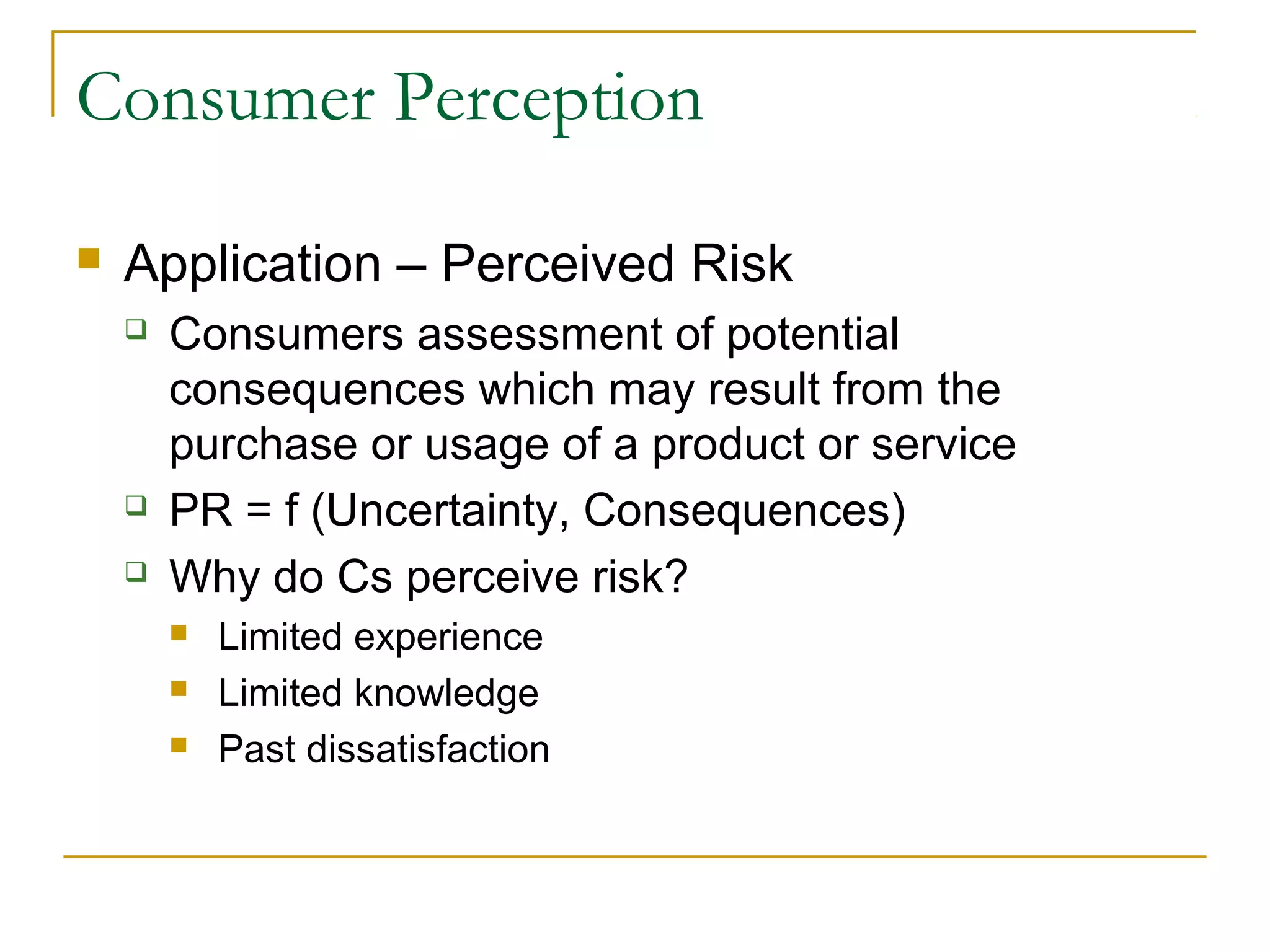
Application – Perceived Risk





Consumers assessment of potential
consequences which may result from the
purchase or usage of a product or service
PR = f (Uncertainty, Consequences)
Why do Cs perceive risk?




Limited experience
Limited knowledge
Past dissatisfaction
Consumer Perception


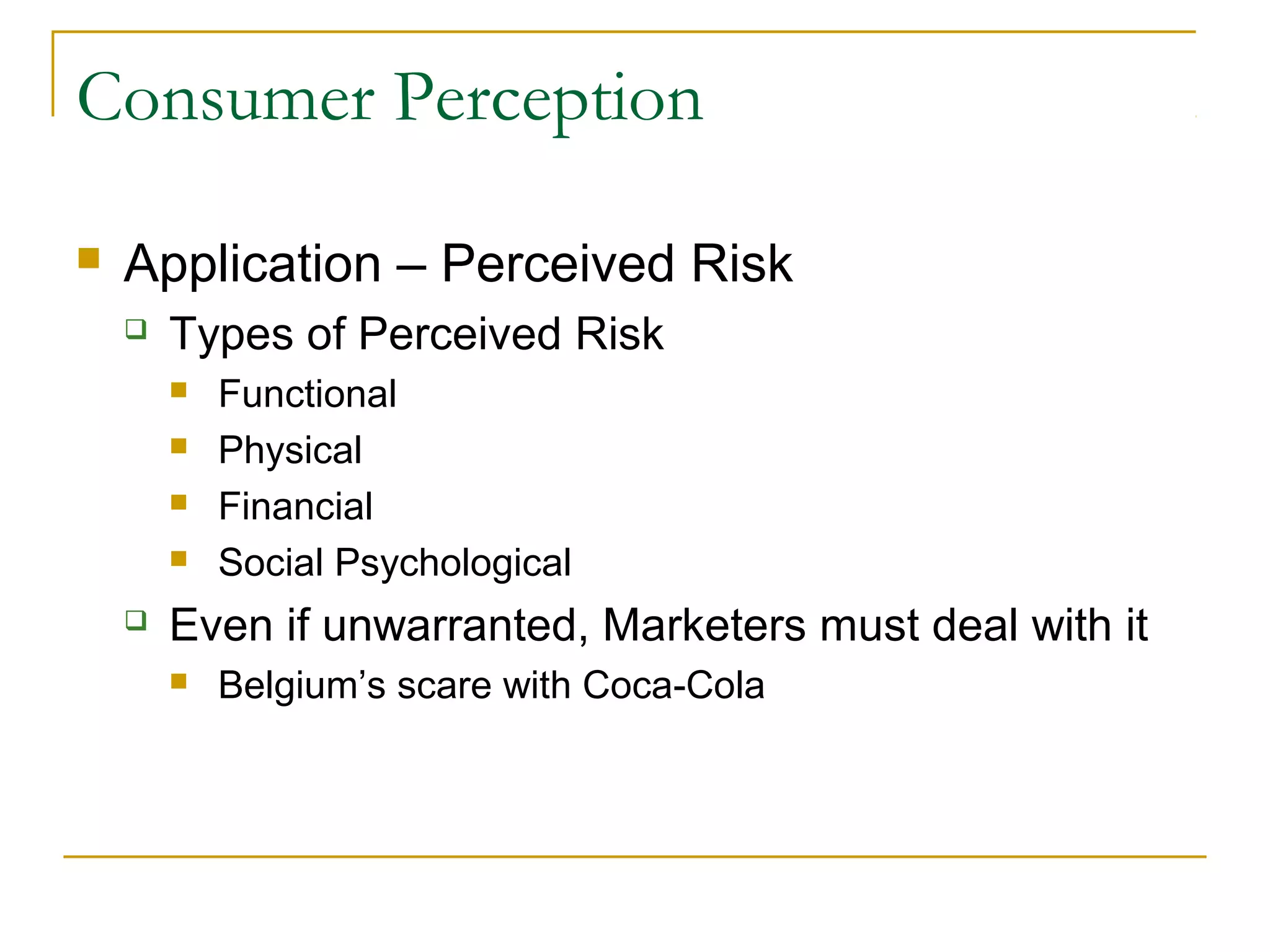
Application – Perceived Risk


Types of Perceived Risk







Functional
Physical
Financial
Social Psychological

Even if unwarranted, Marketers must deal with it


Belgium’s scare with Coca-Cola

Consumer perception 05

  • 1.
  • 2.
    Consumer Perception  Perception     Process viawhich consumers select and organize stimuli, so as to provide themselves with a meaningful and coherent view of the world More than sensing something Assigning meaning and incorporating it into their world Part of the “Information Processing” process
  • 3.
    Consumer Perception  Consumer’s Processingof Information       Exposure Attention Comprehension -- Working Memory Acceptance Retention -- Permanent Memory Perception  Deals with the first two steps
  • 4.
    Consumer Perception  Exposure Information  Consumersare exposed to virtually an infinite amount of information    Non-marketing Marketing Consumers self select the information for which they come into contact  Some consumers never watch CNN – will never be come into contact commercials (marketing stimuli) that run on this network
  • 5.
    Consumer Perception  Is itdifficult to achieve exposure?  What percent of individuals watching TV actually watch the commercials?    Estimates range from 20% to 80% (best guess is 41%) Radio estimates are even slightly lower (i.e., about 40% listeners actually listen to a commercial) How do consumers decide?  Sensation (raw sensory response to a stimulus), is needed to facilitate exposure  Must notice something before you allow exposure     P(Sensation) = f (absolute threshold) Absolute threshold -- minimal amount of stimulus intensity necessary for sensation to occur j.n.d. -- smallest amount of a change required to allow the C to notice Examples -- sales prices, price increases
  • 6.
    Consumer Perception  Weber’s Law   Abilityto note a change in a stimulus, depends on its initial level Example:    $500 increase in the price of a car $500 increase in the price of a personal computer P (notice a stimulus change) = Change in stimulus /Initial level of stimulus
  • 7.
    Consumer Perception  Attention   Definition --allocation of processing capacity to an incoming stimulus Dimensions     Direction -- object of focus Intensity -- amount of capacity Importance -- Use of humor (or emotion) in an ad C’s may be intense, but be directed to the emotion (“Mikey”)
  • 8.
    Consumer Perception  Attention   Ad Clutter-- Even when forced to focus on ads, C’s best remember first & last ads in a pod, well; best remember stand alone ads Does attention guarantee success?  Shadowing experiment results – say not necessarily     C’s could tell that human’s were talking C’s could detect male and/or female voice C’s could not tell the content of the message Key is not to tradeoff direction for intensity
  • 9.
    Consumer Perception  Application –Perceived Risk    Consumers assessment of potential consequences which may result from the purchase or usage of a product or service PR = f (Uncertainty, Consequences) Why do Cs perceive risk?    Limited experience Limited knowledge Past dissatisfaction
  • 10.
    Consumer Perception  Application –Perceived Risk  Types of Perceived Risk      Functional Physical Financial Social Psychological Even if unwarranted, Marketers must deal with it  Belgium’s scare with Coca-Cola

Editor's Notes