Consumer Behavior Perception, Learning, Personality, Social Class
“ MEET THE NEW CONSUMER and smile when you do  because she is your boss. It may not be the person you thought you knew. Instead of choosing from what you have to offer, she tells you what she wants. You figure it out how to give it to her.” -Fortune Editor
Dominant forces shaping Consumer Research Factors that move an economy from Production-driven to Market-driven Level of sophistication with which human behaviour is understood in psychology and other behavioural sciences
What is Consumer Behavior? The study of individuals, groups, or organizations and the processes they use to select, secure, use, and dispose of products, services, experiences, or ideas to satisfy needs and the impacts that these processes have on the consumer and society.
Why study Consumer Behaviour? Consumer behaviour theory provides the manager with the proper questions to ask Marketing practice designed to influence consumer behavior influences the firm, the individual, and society All marketing decisions and regulations are based on assumptions about consumer behaviour.
The advice to footwear salesmen should be ‘Don’t sell shoes – sell lovely feet’ Marketers must contend with small changing segments of highly selective buyers intent on receiving genuine value at the lowest price
All managers must become astute analysts of Consumer motivation and Behaviour Three foundations for marketing decisions Experience Intuition Research
Enhancing Consumer Value-added Marketers have to constantly innovate after understanding their consumers to strip out costs permanently by focusing on what adds value for the customer and eliminating what doesn’t.
Individualised Marketing A very personal form of marketing that recognises, acknowledges, appreciates and serves individuals who become or are known to the marketer. Data – based marketing; DM Customized marketing
Variables involved in understanding consumer behaviour Stimulus – ads, products, hungerpangs Response – physical/mental reaction to the stimulus Intervening variables – mood, knowledge, attitude, values, situations, etc.
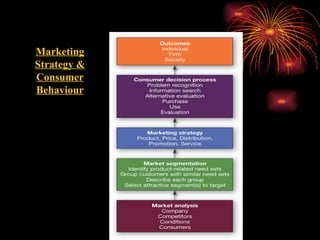
Marketing Strategy & Consumer Behaviour
Marketing Strategy Providing superior customer value to our target market- Marketing Mix The Product Communications Price Distribution Service
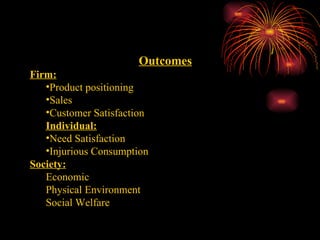
Outcomes Firm: Product positioning Sales Customer Satisfaction Individual: Need Satisfaction Injurious Consumption Society: Economic Physical Environment Social Welfare
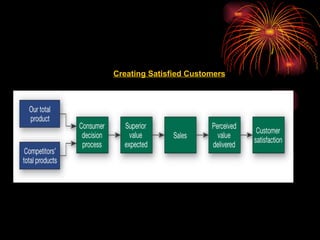
Creating Satisfied Customers
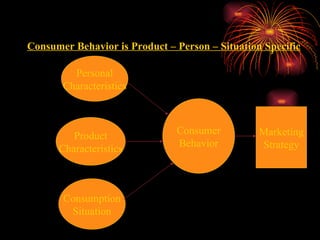
Consumer Behavior is Product – Person – Situation Specific Personal Characteristics Product Characteristics Consumption Situation Consumer Behavior Marketing Strategy
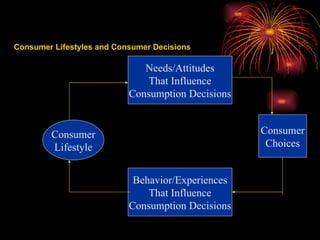
Consumer Lifestyles and Consumer Decisions Consumer Lifestyle Needs/Attitudes That Influence Consumption Decisions Consumer Choices Behavior/Experiences That Influence Consumption Decisions
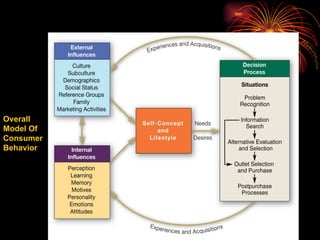
Overall Model Of Consumer Behavior


Perception The process by which an individual selects, organizes, and interprets stimuli into a meaningful and coherent picture of the world How we see the world around us
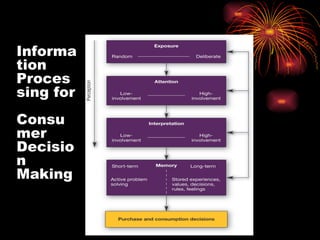
Information Processing for  Consumer Decision Making
The Nature of Perception Exposure : when a stimulus comes within range of our sensory receptor nerves Random vs. Deliberate Attention : when the stimulus activates one or more sensory receptor nerves and the resulting sensations go to the brain for processing Low vs. High Involvement Interpretation : the assignment of meaning to sensations Low vs. High Involvement
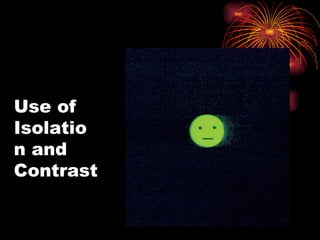
Use of Isolation and Contrast
Elements of Perception Sensation Absolute threshold Differential threshold Subliminal perception
Sensation The immediate and direct response of the sensory organs to stimuli Sensitivity to stimuli varies with the quality of an individuals sensory receptors Sensation itself depends on energy change within the environment where the perception occurs (i.e. the differentiation of input) As sensory input decreases , our ability to detect changes in input increases, to the point that we attain maximum sensitivity under conditions of minimal stimulation
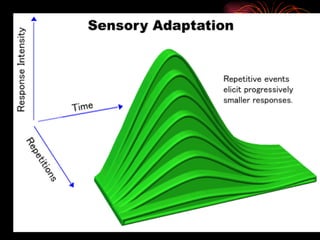
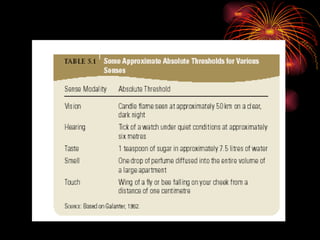
The absolute threshold The lowest level at which individual can experience a sensation is called the absolute threshold. sensory adaptation-Under conditions of constant stimulation , the absolute threshold increases.
 
 
Differential Threshold Minimal difference that can be detected between two similar stimuli Also known as the just noticeable difference (the j.n.d.)
Weber’s Law The j.n.d. between two stimuli is not an absolute amount but an amount relative to the intensity of the first stimulus Weber’s law states that the stronger the initial stimulus, the greater the additional intensity needed for the second stimulus to be perceived as different.
Marketing Applications  of the J.N.D. Marketers need to determine the relevant j.n.d. for their products so that negative changes are not readily discernible to the public so that product improvements are very apparent to consumers
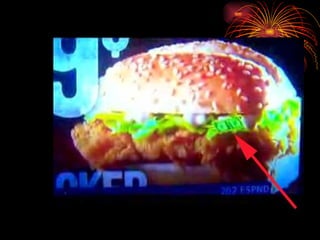
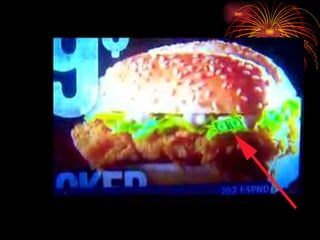
Subliminal Perception Stimuli that are too weak or too brief to be consciously seen or heard may be strong enough to be perceived by one or more receptor cells.
Is Subliminal Persuasion Effective? Extensive research has shown no evidence that subliminal advertising can cause behavior changes Some evidence that subliminal stimuli may influence affective reactions
 
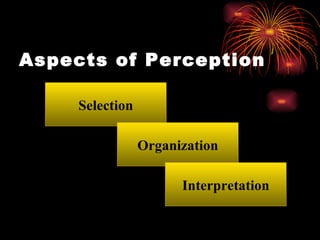
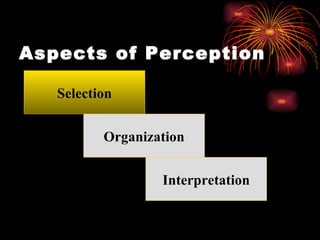
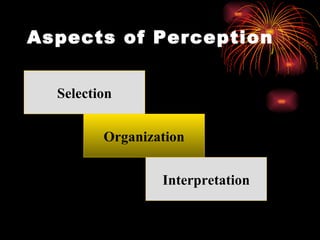
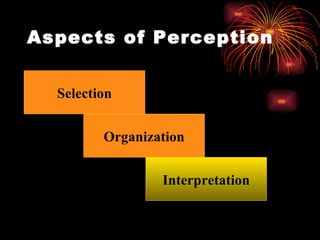
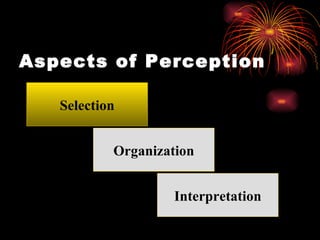
Aspects of Perception Selection Organization Interpretation
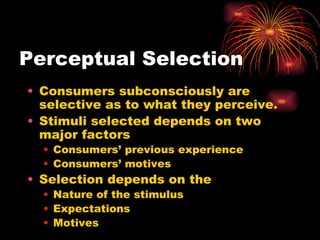
Perceptual Selection Consumers subconsciously are selective as to what they perceive. Stimuli selected depends on two major factors Consumers’ previous experience  Consumers’ motives Selection depends on the Nature of the stimulus Expectations  Motives
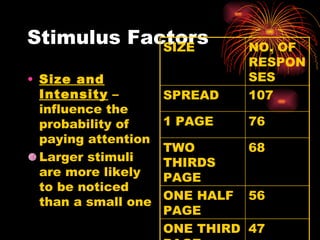
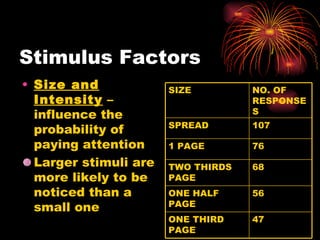
Stimulus Factors Size and Intensity  – influence the probability of paying attention Larger stimuli are more likely to be noticed than a small one 47 ONE THIRD PAGE 56 ONE HALF PAGE 68 TWO THIRDS PAGE 76 1 PAGE 107 SPREAD NO. OF RESPONSES SIZE
INSERTION FREQUENCY-THE NUMBER OF TIMES THE SAME AD APPEARS IN THE SAME ISSUE OF A MAGAZINE, HAS AN IMPACT SIMILAR TO AD SIZE
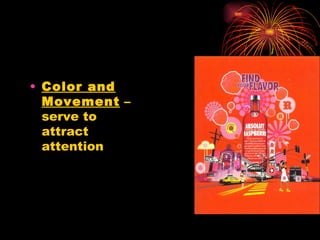
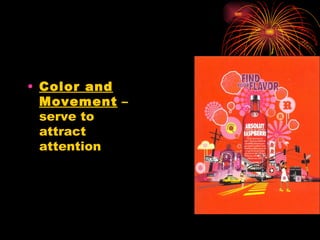
Color and Movement  – serve to attract attention
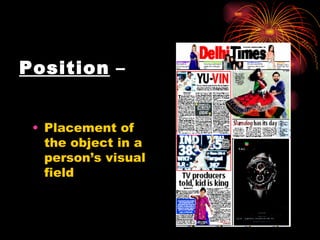
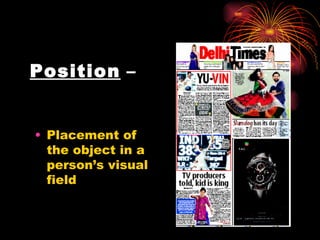
Position  – Placement of the object in a person’s visual field
Perceptual Selection Selective Exposure Selective Attention Perceptual Defense Perceptual Blocking Consumers seek out messages which: Are pleasant They can sympathize Reassure them of good purchases Concepts
Marketing Applications  of the J.N.D. Marketers need to determine the relevant j.n.d. for their products so that negative changes are not readily discernible to the public so that product improvements are very apparent to consumers
Subliminal Perception Stimuli that are too weak or too brief to be consciously seen or heard may be strong enough to be perceived by one or more receptor cells.
Is Subliminal Persuasion Effective? Extensive research has shown no evidence that subliminal advertising can cause behavior changes Some evidence that subliminal stimuli may influence affective reactions
 
Aspects of Perception Selection Organization Interpretation
Perceptual Selection Consumers subconsciously are selective as to what they perceive. Stimuli selected depends on two major factors Consumers’ previous experience  Consumers’ motives Selection depends on the Nature of the stimulus Expectations  Motives
Stimulus Factors Size and Intensity  – influence the probability of paying attention Larger stimuli are more likely to be noticed than a small one 47 ONE THIRD PAGE 56 ONE HALF PAGE 68 TWO THIRDS PAGE 76 1 PAGE 107 SPREAD NO. OF RESPONSES SIZE
INSERTION FREQUENCY-THE NUMBER OF TIMES THE SAME AD APPEARS IN THE SAME ISSUE OF A MAGAZINE, HAS AN IMPACT SIMILAR TO AD SIZE
Color and Movement  – serve to attract attention
Position  – Placement of the object in a person’s visual field
Perceptual Selection Selective Exposure Selective Attention Perceptual Defense Perceptual Blocking Consumers seek out messages which: Are pleasant They can sympathize Reassure them of good purchases Concepts
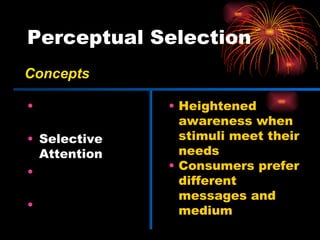
Perceptual Selection Selective Exposure Selective Attention Perceptual Defense Perceptual Blocking Heightened awareness when stimuli meet their needs Consumers prefer different messages and medium Concepts
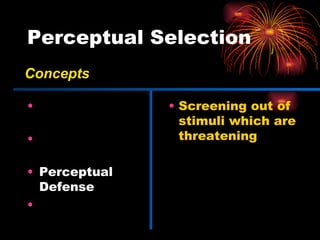
Perceptual Selection Selective Exposure Selective Attention Perceptual Defense Perceptual Blocking Screening out of stimuli which are threatening Concepts
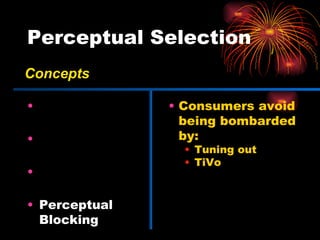
Perceptual Selection Selective Exposure Selective Attention Perceptual Defense Perceptual Blocking Consumers avoid being bombarded by: Tuning out TiVo Concepts
Aspects of Perception Selection Organization Interpretation
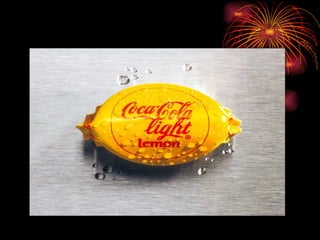
Organization Figure and ground Grouping Closure People tend to organize perceptions into figure-and-ground relationships. The ground is usually hazy. Marketers usually design so the figure is the noticed stimuli. Principles


Organization Figure and ground Grouping Closure People group stimuli to form a unified impression or concept. Grouping helps memory and recall. Principles
 
 
Organization Figure and ground Grouping Closure People have a need for closure and organize perceptions to form a complete picture. Will often fill in missing pieces Incomplete messages remembered more than complete Principles
 
Aspects of Perception Selection Organization Interpretation
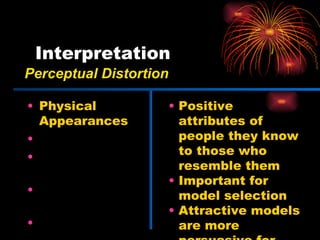
Interpretation Physical Appearances Stereotypes First Impressions Jumping to Conclusions Halo Effect Positive attributes of people they know to those who resemble them Important for model selection Attractive models are more persuasive for some products Perceptual Distortion
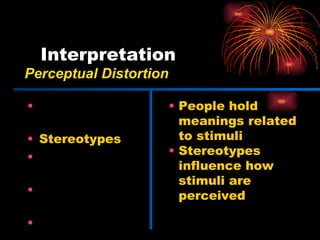
Interpretation Physical Appearances Stereotypes First Impressions Jumping to Conclusions Halo Effect People hold meanings related to stimuli Stereotypes influence how stimuli are perceived Perceptual Distortion
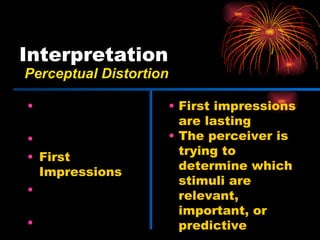
Interpretation Physical Appearances Stereotypes First Impressions Jumping to Conclusions Halo Effect First impressions are lasting The perceiver is trying to determine which stimuli are relevant, important, or predictive Perceptual Distortion
Interpretation Physical Appearances Stereotypes First Impressions Jumping to Conclusions Halo Effect People tend not to listen to all the information before making conclusion Important to put persuasive arguments first in advertising Perceptual Distortion
Interpretation Physical Appearances Stereotypes First Impressions Jumping to Conclusions Halo Effect Consumers perceive and evaluate multiple objects based on just one dimension Used in licensing of names Important with spokesperson choice Perceptual Distortion
Issues in Consumer Imagery Product Positioning and Repositioning Positioning of Services Perceived Price Perceived Quality Retail Store Image Manufacturer Image Perceived Risk
Positioning Establishing a specific image for a brand in the consumer’s mind Product is positioned in relation to competing brands Conveys the concept, or meaning, of the product in terms of how it fulfills a consumer need Result of successful positioning is a distinctive, positive brand image
Positioning Techniques Umbrella Positioning Positioning against Competition Positioning Based on a Specific Benefit Finding an “Unowned” Position Filling Several Positions Repositioning
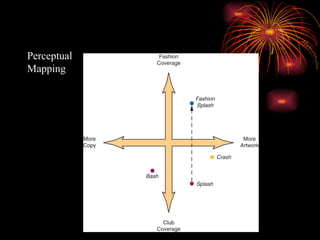
Perceptual Mapping A research technique that enables marketers to plot graphically consumers’ perceptions concerning product attributes of specific brands
Perceptual Mapping
Perceived Quality Perceived Quality of Products Intrinsic vs. Extrinsic Cues Perceived Quality of Services Price/Quality Relationship
Perceived Quality of Services Difficult due to characteristics of services Intangible Variable Perishable Simultaneously Produced and Consumed SERVQUAL scale used to measure gap between customers’ expectation of service and perceptions of actual service
Price/Quality Relationship The perception of price as an indicator of product quality (e.g., the higher the price, the higher the perceived quality of the product.)
LEARNING DEFINED IT IS RELATIVELY PERMANENT CHANGE IN BEHAVIOUR OCCURING AS A RESULT OF EXPERIENCE. TYPES OF LEARNED BEHAVIOUR PHYSICAL BEHAVIOUR SYMBOLIC LEARNING AND PROBLEM SOLVING AFFECTIVE LEARNING
PRINCIPLE ELEMENTS OF LEARNING MOTIVE -  they arouse individuals ,thereby increasing their readiness to respond CUES-  It is a weak stimulus not strong enough to arouse consumers, but capable of providing direction to motivated activity RESPONSE-  mental or physical activity the consumer makes in reaction to a stimulus situation. REINFORCEMENT-  anything that follows a response and increases the tendency of response to reoccur in a similar situation.
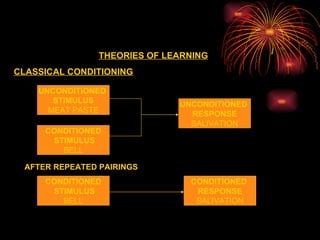
THEORIES OF LEARNING CLASSICAL CONDITIONING UNCONDITIONED  STIMULUS MEAT PASTE CONDITIONED STIMULUS BELL CONDITIONED STIMULUS BELL CONDITIONED  RESPONSE SALIVATION UNCONDITIONED  RESPONSE SALIVATION AFTER REPEATED PAIRINGS
CREATION OF A STRONG ASSOCIATION BETWEEN CS  AND US REQUIRES FORWARD CONDITIONING (i.e. CS should precede US) Repeated pairings of CS and US A CS and US that logically belong to each other A CS that is novel and unfamiliar A US that is biologically or symbolically salient
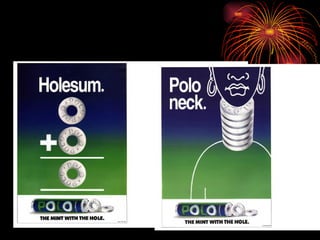
STRATEGIC APPLICATIONS OF CLASSICAL CONDITIONING REPETITION ADVERTISING WEAROUT COSMETIC VARIATIONS SUBSTANTIATIVE WEAROUT  THREE HIT THEORY
 
STIMULUS GENERALISATION PRODUCT LINE,FORM AND CATEGORY EXTENSIONS FAMILY BRANDING LICENSING STIMULUS DISCRIMINATION POSITIONING PRODUCT DIFFERENTIATION
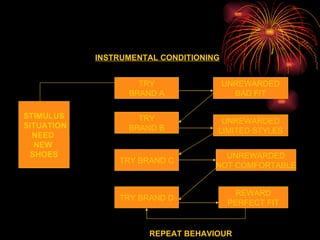
INSTRUMENTAL CONDITIONING STIMULUS SITUATION NEED  NEW  SHOES TRY BRAND A TRY BRAND B TRY BRAND C TRY BRAND D REWARD PERFECT FIT UNREWARDED NOT COMFORTABLE UNREWARDED LIMITED STYLES UNREWARDED BAD FIT REPEAT BEHAVIOUR
 
 
What Is Personality The inner psychological characteristics that both determine and reflect how a person responds to his or her environment
The Nature of Personality Personality reflects individual differences Personality is consistent and enduring Personality can change
Theories of Personality Freudian theory Unconscious needs or drives are at the heart of human motivation Neo-Freudian personality theory Social relationships are fundamental to the formation and development of personality Trait theory Quantitative approach to personality as a set of psychological traits
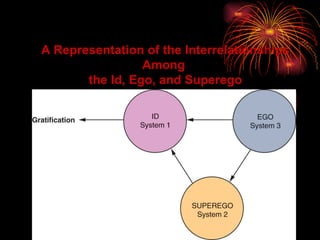
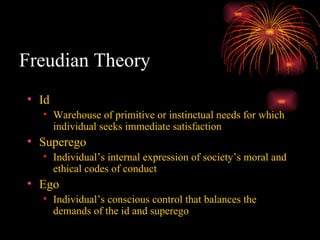
Freudian Theory Id Warehouse of primitive or instinctual needs for which individual seeks immediate satisfaction Superego Individual’s internal expression of society’s moral and ethical codes of conduct Ego Individual’s conscious control that balances the demands of the id and superego
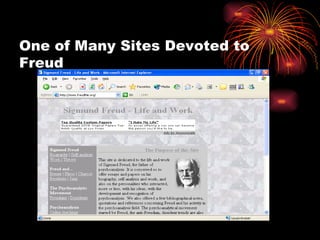
One of Many Sites Devoted to Freud
A Representation of the Interrelationships Among  the Id, Ego, and Superego
Freudian Theory and  “Product Personality” Consumer researchers using Freud’s personality theory see consumer purchases as a reflection and extension of the consumer’s own personality
Neo-Freudian Personality  Theory We seek goals to overcome feelings of inferiority We continually attempt to establish relationships with others to reduce tensions Karen Horney was interested in child-parent relationships and desires to conquer feelings of anxiety.  Proposed three personality groups Compliant  move toward others, they desire to be loved, wanted, and appreciated Aggressive  move against others Detached  move away from others
Trait Theory Personality theory with a focus on psychological characteristics Trait - any distinguishing, relatively enduring way in which one individual differs from another Personality is linked to how consumers make their choices or to consumption of a broad product category - not a specific brand
Innovativeness Dogmatism Social character Need for uniqueness Optimum stimulation level Variety-novelty seeking The degree to which consumers are receptive to new products, new services, or new practices Consumer Innovators And Noninnovators
Innovativeness Dogmatism Social character Need for uniqueness Optimum stimulation level Variety-novelty seeking A personality trait that reflects the degree of rigidity a person displays toward the unfamiliar and toward information that is contrary to his or her own established beliefs Consumer Innovators And Noninnovators
Innovativeness Dogmatism Social character Need for uniqueness Optimum stimulation level Variety-novelty seeking Ranges on a continuum for inner-directedness to other-directedness Inner-directedness  rely on own values when evaluating products Innovators Other-directedness look to others less likely to be innovators Consumer Innovators And Noninnovators
Innovativeness Dogmatism Social character Need for uniqueness Optimum stimulation level Variety-novelty seeking Consumers who avoid appearing to conform to expectations or standards of others Consumer Innovators And Noninnovators
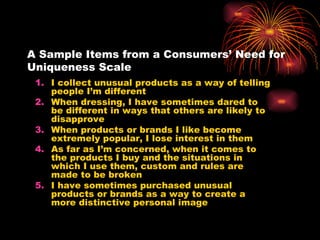
A Sample Items from a Consumers’ Need for Uniqueness Scale I collect unusual products as a way of telling people I’m different When dressing, I have sometimes dared to be different in ways that others are likely to disapprove When products or brands I like become extremely popular, I lose interest in them As far as I’m concerned, when it comes to the products I buy and the situations in which I use them, custom and rules are made to be broken I have sometimes purchased unusual products or brands as a way to create a more distinctive personal image
Innovativeness Dogmatism Social character Need for uniqueness Optimum stimulation level Variety-novelty seeking A personality trait that measures the level or amount of novelty or complexity that individuals seek in their personal experiences High OSL consumers tend to accept risky and novel products more readily than low OSL consumers. Consumer Innovators And Noninnovators
Innovativeness Dogmatism Social character Need for uniqueness Optimum stimulation level Variety-novelty seeking Measures a consumer’s degree of variety seeking Examples include: Exploratory Purchase Behavior Use Innovativeness Vicarious Exploration Consumer Innovators And Noninnovators
Cognitive Personality Factors Need for cognition (NC) A person’s craving for enjoyment of thinking Individual with high NC more likely to respond to ads rich in product information Visualizers versus verbalizers A person’s preference for information presented visually or verbally Verbalizers prefer written information over graphics and images.
From Consumer Materialism to Compulsive Consumption Consumer materialism The extent to which a person is considered “materialistic” Fixated consumption behavior Consumers fixated on certain products or categories of products Compulsive consumption behavior “ Addicted” or “out-of-control” consumers
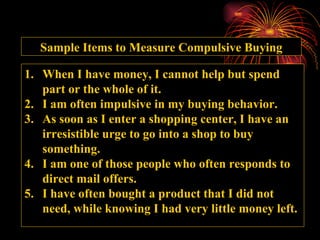
Sample Items to Measure Compulsive Buying When I have money, I cannot help but spend part or the whole of it. I am often impulsive in my buying behavior. As soon as I enter a shopping center, I have an irresistible urge to go into a shop to buy something. I am one of those people who often responds to direct mail offers. I have often bought a product that I did not need, while knowing I had very little money left.
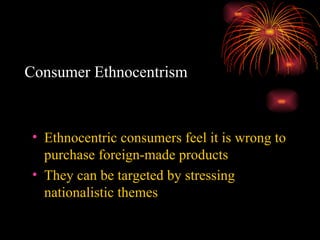
Consumer Ethnocentrism Ethnocentric consumers feel it is wrong to purchase foreign-made products They can be targeted by stressing nationalistic themes
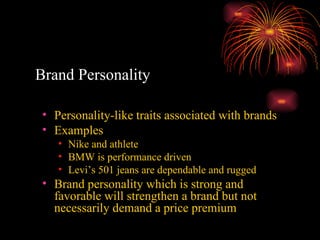
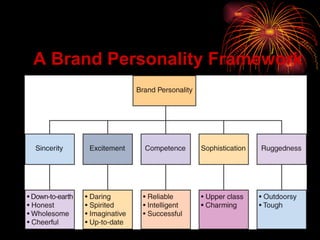
Brand Personality Personality-like traits associated with brands Examples Nike and athlete BMW is performance driven Levi’s 501 jeans are dependable and rugged Brand personality which is strong and favorable will strengthen a brand but not necessarily demand a price premium
A Brand Personality Framework
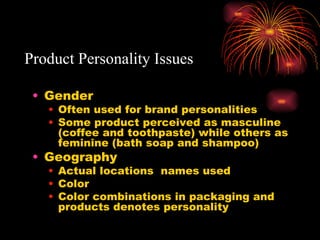
Product Personality Issues Gender Often used for brand personalities Some product perceived as masculine (coffee and toothpaste) while others as feminine (bath soap and shampoo) Geography Actual locations  names used Color Color combinations in packaging and products denotes personality
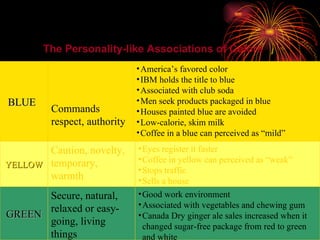
Commands respect, authority America’s favored color IBM holds the title to blue Associated with club soda Men seek products packaged in blue Houses painted blue are avoided Low-calorie, skim milk Coffee in a blue can perceived as “mild” Caution, novelty, temporary, warmth Eyes register it faster Coffee in yellow can perceived as “weak” Stops traffic Sells a house Secure, natural, relaxed or easy- going, living things Good work environment Associated with vegetables and chewing gum Canada Dry ginger ale sales increased when it changed sugar-free package from red to green and white BLUE YELLOW GREEN The Personality-like Associations of Colors
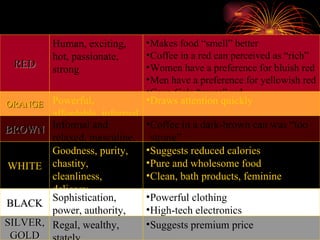
Human, exciting, hot, passionate, strong Makes food “smell” better Coffee in a red can perceived as “rich” Women have a preference for bluish red Men have a preference for yellowish red Coca-Cola “owns” red Powerful, affordable, informal Draws attention quickly Informal and relaxed, masculine, nature Coffee in a dark-brown can was “too strong” Men seek products packaged in brown Goodness, purity, chastity, cleanliness, delicacy, refinement, formality Suggests reduced calories Pure and wholesome food Clean, bath products, feminine Sophistication, power, authority, mystery Powerful clothing High-tech electronics Regal, wealthy, stately Suggests premium price RED ORANGE BROWN WHITE BLACK SILVER, GOLD
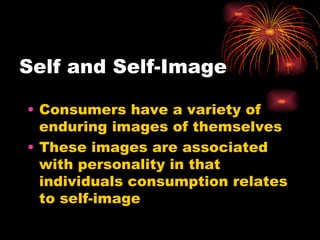
Self and Self-Image Consumers have a variety of enduring images of themselves These images are associated with personality in that individuals consumption relates to self-image
One or multiple selves Makeup of the self-image Extended self Altering the self- image A single consumer will act differently in different situations or with different people We have a variety of social roles Marketers can target products to a particular “self” Issues Related to   Self and Self-Image
One or multiple selves Makeup of the self -image Extended self Altering the self- image Contains traits, skills, habits, possessions, relationships and way of behavior Developed through background, experience, and interaction with others Consumers select products congruent with this image Issues Related to  Self and Self-Image
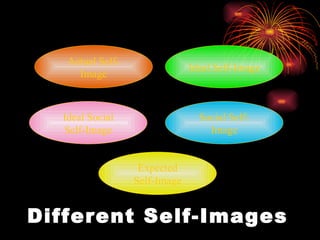
Different Self-Images Actual Self-Image Ideal Self-Image Ideal Social Self-Image Social Self-Image Expected Self-Image
One or multiple selves Makeup of the self-image Extended self Altering the self- image Possessions can extend self in a number of ways: Actually  Symbolically Conferring status or rank Bestowing feelings of immortality Endowing with magical powers Issues Related to  Self and Self-Image
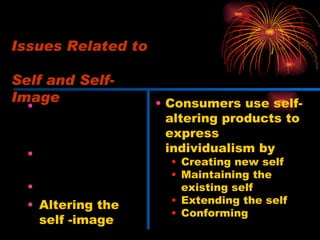
One or multiple selves Makeup of the self-image Extended self Altering the self -image Consumers use self-altering products to express individualism by Creating new self Maintaining the existing self Extending the self Conforming Issues Related to  Self and Self-Image
Social Stratification Social Class System  –  Hierarchical division of society into relatively permanent and homogeneous groups with respect to attitudes, values and lifestyles. Criteria for a Social Class System:  Individual Classes Must Be: Bounded Ordered Mutually Exclusive Exhaustive Influential
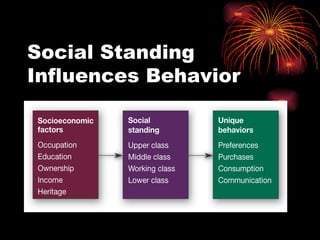
Social Standing Influences Behavior
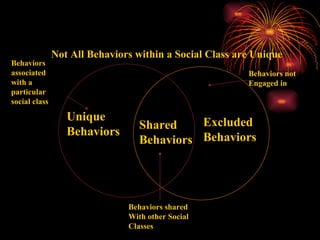
Not All Behaviors within a Social Class are Unique Unique Behaviors Shared Behaviors Excluded Behaviors Behaviors associated  with a particular  social class Behaviors not Engaged in Behaviors shared With other Social Classes
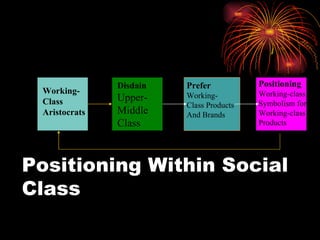
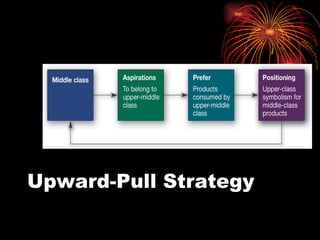
Positioning Within Social Class Working- Class Aristocrats Disdain Upper- Middle Class Prefer Working- Class Products And Brands Positioning Working-class Symbolism for Working-class Products
Upward-Pull Strategy
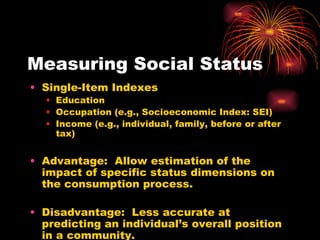
Measuring Social Status Single-Item Indexes Education Occupation (e.g., Socioeconomic Index: SEI) Income (e.g., individual, family, before or after tax) Advantage:  Allow estimation of the impact of specific status dimensions on the consumption process. Disadvantage:  Less accurate at predicting an individual’s overall position in a community.
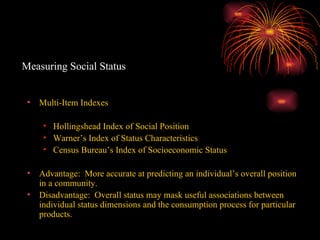
Measuring Social Status Multi-Item Indexes Hollingshead Index of Social Position Warner’s Index of Status Characteristics Census Bureau’s Index of Socioeconomic Status Advantage:  More accurate at predicting an individual’s overall position in a community. Disadvantage:  Overall status may mask useful associations between individual status dimensions and the consumption process for particular products.
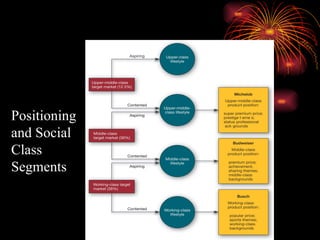
Positioning and Social Class Segments
What Is a Group? Two or more people who interact to accomplish either individual or mutual goals A membership group is one to which a person either belongs or would qualify for membership A symbolic group is one in which an individual is not likely to receive membership despite acting like a member
Indirect Reference Groups Individuals or groups with whom a person identifies but does not have direct face-to-face contact, such as movie stars, sports heroes, political leaders, or TV personalities.
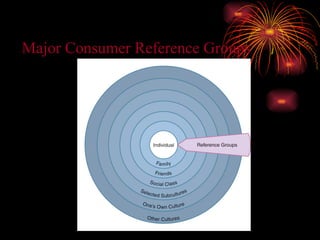
Major Consumer Reference Groups
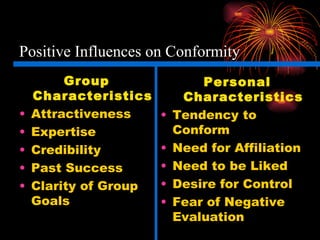
Positive Influences on Conformity Group Characteristics Attractiveness Expertise Credibility Past Success Clarity of Group Goals Personal Characteristics Tendency to Conform Need for Affiliation Need to be Liked Desire for Control Fear of Negative Evaluation
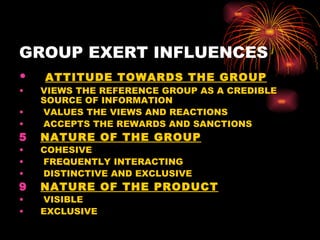
GROUP EXERT INFLUENCES ATTITUDE TOWARDS THE GROUP VIEWS THE REFERENCE GROUP AS A CREDIBLE SOURCE OF INFORMATION VALUES THE VIEWS AND REACTIONS ACCEPTS THE REWARDS AND SANCTIONS NATURE OF THE GROUP COHESIVE FREQUENTLY INTERACTING DISTINCTIVE AND EXCLUSIVE NATURE OF THE PRODUCT VISIBLE EXCLUSIVE
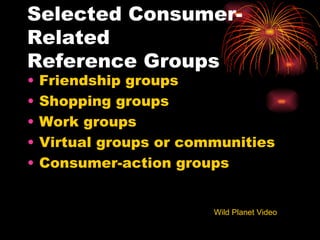
Selected Consumer-Related  Reference Groups Friendship groups Shopping groups Work groups Virtual groups or communities Consumer-action groups Wild Planet Video
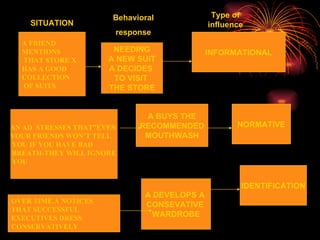
A FRIEND  MENTIONS THAT STORE X HAS A GOOD  COLLECTION OF SUITS A DEVELOPS A  CONSEVATIVE  WARDROBE A BUYS THE RECOMMENDED  MOUTHWASH NEEDING A NEW SUIT  A DECIDES  TO VISIT  THE STORE NORMATIVE IDENTIFICATION AN AD  STRESSES THAT”EVEN  YOUR FRIENDS WON’T TELL YOU IF YOU HAVE BAD BREATH-THEY WILL IGNORE YOU INFORMATIONAL Behavioral response SITUATION Type of influence OVER TIME.A NOTICES  THAT SUCCESSFUL  EXECUTIVES DRESS CONSERVATIVELY
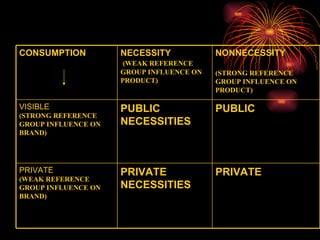
PRIVATE PRIVATE NECESSITIES PRIVATE (WEAK REFERENCE GROUP INFLUENCE ON BRAND) PUBLIC PUBLIC NECESSITIES VISIBLE (STRONG REFERENCE GROUP INFLUENCE ON BRAND) NONNECESSITY (STRONG REFERENCE GROUP INFLUENCE ON PRODUCT) NECESSITY (WEAK REFERENCE GROUP INFLUENCE ON PRODUCT) CONSUMPTION
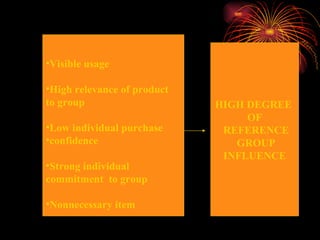
Visible usage High relevance of product  to group Low individual purchase  confidence Strong individual  commitment  to group Nonnecessary item HIGH DEGREE  OF REFERENCE GROUP INFLUENCE
Consumer Socialization The process by which children acquire the skills, knowledge, and attitudes necessary to function as consumers.
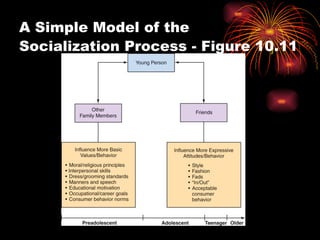
A Simple Model of the  Socialization Process - Figure 10.11
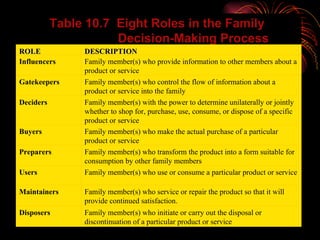
Table 10.7  Eight Roles in the Family  Decision-Making Process ROLE DESCRIPTION Influencers Family member(s) who provide information to other members about a product or service Gatekeepers Family member(s) who control the flow of information about a product or service into the family Deciders Family member(s) with the power to determine unilaterally or jointly whether to shop for, purchase, use, consume, or dispose of a specific product or service Buyers Family member(s) who make the actual purchase of a particular product or service Preparers Family member(s) who transform the product into a form suitable for consumption by other family members Users Family member(s) who use or consume a particular product or service Maintainers Family member(s) who service or repair the product so that it will provide continued satisfaction. Disposers Family member(s) who initiate or carry out the disposal or discontinuation of a particular product or service
The Family Life Cycle Traditional Family Life Cycle Stage I: Bachelorhood Stage II: Honeymooners Stage III: Parenthood Stage IV: Postparenthood Stage V: Dissolution Modifications - the Nontraditional FLC
 
Thank You

Consumer Behavior

  • 1.
    Consumer Behavior Perception,Learning, Personality, Social Class
  • 2.
    “ MEET THENEW CONSUMER and smile when you do because she is your boss. It may not be the person you thought you knew. Instead of choosing from what you have to offer, she tells you what she wants. You figure it out how to give it to her.” -Fortune Editor
  • 3.
    Dominant forces shapingConsumer Research Factors that move an economy from Production-driven to Market-driven Level of sophistication with which human behaviour is understood in psychology and other behavioural sciences
  • 4.
    What is ConsumerBehavior? The study of individuals, groups, or organizations and the processes they use to select, secure, use, and dispose of products, services, experiences, or ideas to satisfy needs and the impacts that these processes have on the consumer and society.
  • 5.
    Why study ConsumerBehaviour? Consumer behaviour theory provides the manager with the proper questions to ask Marketing practice designed to influence consumer behavior influences the firm, the individual, and society All marketing decisions and regulations are based on assumptions about consumer behaviour.
  • 6.
    The advice tofootwear salesmen should be ‘Don’t sell shoes – sell lovely feet’ Marketers must contend with small changing segments of highly selective buyers intent on receiving genuine value at the lowest price
  • 7.
    All managers mustbecome astute analysts of Consumer motivation and Behaviour Three foundations for marketing decisions Experience Intuition Research
  • 8.
    Enhancing Consumer Value-addedMarketers have to constantly innovate after understanding their consumers to strip out costs permanently by focusing on what adds value for the customer and eliminating what doesn’t.
  • 9.
    Individualised Marketing Avery personal form of marketing that recognises, acknowledges, appreciates and serves individuals who become or are known to the marketer. Data – based marketing; DM Customized marketing
  • 10.
    Variables involved inunderstanding consumer behaviour Stimulus – ads, products, hungerpangs Response – physical/mental reaction to the stimulus Intervening variables – mood, knowledge, attitude, values, situations, etc.
  • 11.
    Marketing Strategy &Consumer Behaviour
  • 12.
    Marketing Strategy Providingsuperior customer value to our target market- Marketing Mix The Product Communications Price Distribution Service
  • 13.
    Outcomes Firm: Productpositioning Sales Customer Satisfaction Individual: Need Satisfaction Injurious Consumption Society: Economic Physical Environment Social Welfare
  • 14.
  • 15.
    Consumer Behavior isProduct – Person – Situation Specific Personal Characteristics Product Characteristics Consumption Situation Consumer Behavior Marketing Strategy
  • 16.
    Consumer Lifestyles andConsumer Decisions Consumer Lifestyle Needs/Attitudes That Influence Consumption Decisions Consumer Choices Behavior/Experiences That Influence Consumption Decisions
  • 17.
    Overall Model OfConsumer Behavior
  • 18.
  • 19.
  • 20.
  • 21.
    Perception The processby which an individual selects, organizes, and interprets stimuli into a meaningful and coherent picture of the world How we see the world around us
  • 22.
    Information Processing for Consumer Decision Making
  • 23.
    The Nature ofPerception Exposure : when a stimulus comes within range of our sensory receptor nerves Random vs. Deliberate Attention : when the stimulus activates one or more sensory receptor nerves and the resulting sensations go to the brain for processing Low vs. High Involvement Interpretation : the assignment of meaning to sensations Low vs. High Involvement
  • 24.
    Use of Isolationand Contrast
  • 25.
    Elements of PerceptionSensation Absolute threshold Differential threshold Subliminal perception
  • 26.
    Sensation The immediateand direct response of the sensory organs to stimuli Sensitivity to stimuli varies with the quality of an individuals sensory receptors Sensation itself depends on energy change within the environment where the perception occurs (i.e. the differentiation of input) As sensory input decreases , our ability to detect changes in input increases, to the point that we attain maximum sensitivity under conditions of minimal stimulation
  • 27.
    The absolute thresholdThe lowest level at which individual can experience a sensation is called the absolute threshold. sensory adaptation-Under conditions of constant stimulation , the absolute threshold increases.
  • 28.
  • 29.
  • 30.
    Differential Threshold Minimaldifference that can be detected between two similar stimuli Also known as the just noticeable difference (the j.n.d.)
  • 31.
    Weber’s Law Thej.n.d. between two stimuli is not an absolute amount but an amount relative to the intensity of the first stimulus Weber’s law states that the stronger the initial stimulus, the greater the additional intensity needed for the second stimulus to be perceived as different.
  • 32.
    Marketing Applications of the J.N.D. Marketers need to determine the relevant j.n.d. for their products so that negative changes are not readily discernible to the public so that product improvements are very apparent to consumers
  • 33.
    Marketing Applications of the J.N.D. Marketers need to determine the relevant j.n.d. for their products so that negative changes are not readily discernible to the public so that product improvements are very apparent to consumers
  • 34.
    Subliminal Perception Stimulithat are too weak or too brief to be consciously seen or heard may be strong enough to be perceived by one or more receptor cells.
  • 35.
    Is Subliminal PersuasionEffective? Extensive research has shown no evidence that subliminal advertising can cause behavior changes Some evidence that subliminal stimuli may influence affective reactions
  • 36.
  • 37.
    Aspects of PerceptionSelection Organization Interpretation
  • 38.
    Aspects of PerceptionSelection Organization Interpretation
  • 39.
    Perceptual Selection Consumerssubconsciously are selective as to what they perceive. Stimuli selected depends on two major factors Consumers’ previous experience Consumers’ motives Selection depends on the Nature of the stimulus Expectations Motives
  • 40.
    Stimulus Factors Sizeand Intensity – influence the probability of paying attention Larger stimuli are more likely to be noticed than a small one 47 ONE THIRD PAGE 56 ONE HALF PAGE 68 TWO THIRDS PAGE 76 1 PAGE 107 SPREAD NO. OF RESPONSES SIZE
  • 41.
    INSERTION FREQUENCY-THE NUMBEROF TIMES THE SAME AD APPEARS IN THE SAME ISSUE OF A MAGAZINE, HAS AN IMPACT SIMILAR TO AD SIZE
  • 42.
    Color and Movement – serve to attract attention
  • 43.
    Position –Placement of the object in a person’s visual field
  • 44.
    Perceptual Selection SelectiveExposure Selective Attention Perceptual Defense Perceptual Blocking Consumers seek out messages which: Are pleasant They can sympathize Reassure them of good purchases Concepts
  • 45.
    Marketing Applications of the J.N.D. Marketers need to determine the relevant j.n.d. for their products so that negative changes are not readily discernible to the public so that product improvements are very apparent to consumers
  • 46.
    Subliminal Perception Stimulithat are too weak or too brief to be consciously seen or heard may be strong enough to be perceived by one or more receptor cells.
  • 47.
    Is Subliminal PersuasionEffective? Extensive research has shown no evidence that subliminal advertising can cause behavior changes Some evidence that subliminal stimuli may influence affective reactions
  • 48.
  • 49.
    Aspects of PerceptionSelection Organization Interpretation
  • 50.
    Aspects of PerceptionSelection Organization Interpretation
  • 51.
    Perceptual Selection Consumerssubconsciously are selective as to what they perceive. Stimuli selected depends on two major factors Consumers’ previous experience Consumers’ motives Selection depends on the Nature of the stimulus Expectations Motives
  • 52.
    Stimulus Factors Sizeand Intensity – influence the probability of paying attention Larger stimuli are more likely to be noticed than a small one 47 ONE THIRD PAGE 56 ONE HALF PAGE 68 TWO THIRDS PAGE 76 1 PAGE 107 SPREAD NO. OF RESPONSES SIZE
  • 53.
    INSERTION FREQUENCY-THE NUMBEROF TIMES THE SAME AD APPEARS IN THE SAME ISSUE OF A MAGAZINE, HAS AN IMPACT SIMILAR TO AD SIZE
  • 54.
    Color and Movement – serve to attract attention
  • 55.
    Position –Placement of the object in a person’s visual field
  • 56.
    Perceptual Selection SelectiveExposure Selective Attention Perceptual Defense Perceptual Blocking Consumers seek out messages which: Are pleasant They can sympathize Reassure them of good purchases Concepts
  • 57.
    Perceptual Selection SelectiveExposure Selective Attention Perceptual Defense Perceptual Blocking Heightened awareness when stimuli meet their needs Consumers prefer different messages and medium Concepts
  • 58.
    Perceptual Selection SelectiveExposure Selective Attention Perceptual Defense Perceptual Blocking Screening out of stimuli which are threatening Concepts
  • 59.
    Perceptual Selection SelectiveExposure Selective Attention Perceptual Defense Perceptual Blocking Consumers avoid being bombarded by: Tuning out TiVo Concepts
  • 60.
    Aspects of PerceptionSelection Organization Interpretation
  • 61.
    Organization Figure andground Grouping Closure People tend to organize perceptions into figure-and-ground relationships. The ground is usually hazy. Marketers usually design so the figure is the noticed stimuli. Principles
  • 62.
  • 63.
  • 64.
  • 65.
    Organization Figure andground Grouping Closure People group stimuli to form a unified impression or concept. Grouping helps memory and recall. Principles
  • 66.
  • 67.
  • 68.
    Organization Figure andground Grouping Closure People have a need for closure and organize perceptions to form a complete picture. Will often fill in missing pieces Incomplete messages remembered more than complete Principles
  • 69.
  • 70.
    Aspects of PerceptionSelection Organization Interpretation
  • 71.
    Interpretation Physical AppearancesStereotypes First Impressions Jumping to Conclusions Halo Effect Positive attributes of people they know to those who resemble them Important for model selection Attractive models are more persuasive for some products Perceptual Distortion
  • 72.
    Interpretation Physical AppearancesStereotypes First Impressions Jumping to Conclusions Halo Effect People hold meanings related to stimuli Stereotypes influence how stimuli are perceived Perceptual Distortion
  • 73.
    Interpretation Physical AppearancesStereotypes First Impressions Jumping to Conclusions Halo Effect First impressions are lasting The perceiver is trying to determine which stimuli are relevant, important, or predictive Perceptual Distortion
  • 74.
    Interpretation Physical AppearancesStereotypes First Impressions Jumping to Conclusions Halo Effect People tend not to listen to all the information before making conclusion Important to put persuasive arguments first in advertising Perceptual Distortion
  • 75.
    Interpretation Physical AppearancesStereotypes First Impressions Jumping to Conclusions Halo Effect Consumers perceive and evaluate multiple objects based on just one dimension Used in licensing of names Important with spokesperson choice Perceptual Distortion
  • 76.
    Issues in ConsumerImagery Product Positioning and Repositioning Positioning of Services Perceived Price Perceived Quality Retail Store Image Manufacturer Image Perceived Risk
  • 77.
    Positioning Establishing aspecific image for a brand in the consumer’s mind Product is positioned in relation to competing brands Conveys the concept, or meaning, of the product in terms of how it fulfills a consumer need Result of successful positioning is a distinctive, positive brand image
  • 78.
    Positioning Techniques UmbrellaPositioning Positioning against Competition Positioning Based on a Specific Benefit Finding an “Unowned” Position Filling Several Positions Repositioning
  • 79.
    Perceptual Mapping Aresearch technique that enables marketers to plot graphically consumers’ perceptions concerning product attributes of specific brands
  • 80.
  • 81.
    Perceived Quality PerceivedQuality of Products Intrinsic vs. Extrinsic Cues Perceived Quality of Services Price/Quality Relationship
  • 82.
    Perceived Quality ofServices Difficult due to characteristics of services Intangible Variable Perishable Simultaneously Produced and Consumed SERVQUAL scale used to measure gap between customers’ expectation of service and perceptions of actual service
  • 83.
    Price/Quality Relationship Theperception of price as an indicator of product quality (e.g., the higher the price, the higher the perceived quality of the product.)
  • 84.
    LEARNING DEFINED ITIS RELATIVELY PERMANENT CHANGE IN BEHAVIOUR OCCURING AS A RESULT OF EXPERIENCE. TYPES OF LEARNED BEHAVIOUR PHYSICAL BEHAVIOUR SYMBOLIC LEARNING AND PROBLEM SOLVING AFFECTIVE LEARNING
  • 85.
    PRINCIPLE ELEMENTS OFLEARNING MOTIVE - they arouse individuals ,thereby increasing their readiness to respond CUES- It is a weak stimulus not strong enough to arouse consumers, but capable of providing direction to motivated activity RESPONSE- mental or physical activity the consumer makes in reaction to a stimulus situation. REINFORCEMENT- anything that follows a response and increases the tendency of response to reoccur in a similar situation.
  • 86.
    THEORIES OF LEARNINGCLASSICAL CONDITIONING UNCONDITIONED STIMULUS MEAT PASTE CONDITIONED STIMULUS BELL CONDITIONED STIMULUS BELL CONDITIONED RESPONSE SALIVATION UNCONDITIONED RESPONSE SALIVATION AFTER REPEATED PAIRINGS
  • 87.
    CREATION OF ASTRONG ASSOCIATION BETWEEN CS AND US REQUIRES FORWARD CONDITIONING (i.e. CS should precede US) Repeated pairings of CS and US A CS and US that logically belong to each other A CS that is novel and unfamiliar A US that is biologically or symbolically salient
  • 88.
    STRATEGIC APPLICATIONS OFCLASSICAL CONDITIONING REPETITION ADVERTISING WEAROUT COSMETIC VARIATIONS SUBSTANTIATIVE WEAROUT THREE HIT THEORY
  • 89.
  • 90.
    STIMULUS GENERALISATION PRODUCTLINE,FORM AND CATEGORY EXTENSIONS FAMILY BRANDING LICENSING STIMULUS DISCRIMINATION POSITIONING PRODUCT DIFFERENTIATION
  • 91.
    INSTRUMENTAL CONDITIONING STIMULUSSITUATION NEED NEW SHOES TRY BRAND A TRY BRAND B TRY BRAND C TRY BRAND D REWARD PERFECT FIT UNREWARDED NOT COMFORTABLE UNREWARDED LIMITED STYLES UNREWARDED BAD FIT REPEAT BEHAVIOUR
  • 92.
  • 93.
  • 94.
    What Is PersonalityThe inner psychological characteristics that both determine and reflect how a person responds to his or her environment
  • 95.
    The Nature ofPersonality Personality reflects individual differences Personality is consistent and enduring Personality can change
  • 96.
    Theories of PersonalityFreudian theory Unconscious needs or drives are at the heart of human motivation Neo-Freudian personality theory Social relationships are fundamental to the formation and development of personality Trait theory Quantitative approach to personality as a set of psychological traits
  • 97.
    Freudian Theory IdWarehouse of primitive or instinctual needs for which individual seeks immediate satisfaction Superego Individual’s internal expression of society’s moral and ethical codes of conduct Ego Individual’s conscious control that balances the demands of the id and superego
  • 98.
    One of ManySites Devoted to Freud
  • 99.
    A Representation ofthe Interrelationships Among the Id, Ego, and Superego
  • 100.
    Freudian Theory and “Product Personality” Consumer researchers using Freud’s personality theory see consumer purchases as a reflection and extension of the consumer’s own personality
  • 101.
    Neo-Freudian Personality Theory We seek goals to overcome feelings of inferiority We continually attempt to establish relationships with others to reduce tensions Karen Horney was interested in child-parent relationships and desires to conquer feelings of anxiety. Proposed three personality groups Compliant move toward others, they desire to be loved, wanted, and appreciated Aggressive move against others Detached move away from others
  • 102.
    Trait Theory Personalitytheory with a focus on psychological characteristics Trait - any distinguishing, relatively enduring way in which one individual differs from another Personality is linked to how consumers make their choices or to consumption of a broad product category - not a specific brand
  • 103.
    Innovativeness Dogmatism Socialcharacter Need for uniqueness Optimum stimulation level Variety-novelty seeking The degree to which consumers are receptive to new products, new services, or new practices Consumer Innovators And Noninnovators
  • 104.
    Innovativeness Dogmatism Socialcharacter Need for uniqueness Optimum stimulation level Variety-novelty seeking A personality trait that reflects the degree of rigidity a person displays toward the unfamiliar and toward information that is contrary to his or her own established beliefs Consumer Innovators And Noninnovators
  • 105.
    Innovativeness Dogmatism Socialcharacter Need for uniqueness Optimum stimulation level Variety-novelty seeking Ranges on a continuum for inner-directedness to other-directedness Inner-directedness rely on own values when evaluating products Innovators Other-directedness look to others less likely to be innovators Consumer Innovators And Noninnovators
  • 106.
    Innovativeness Dogmatism Socialcharacter Need for uniqueness Optimum stimulation level Variety-novelty seeking Consumers who avoid appearing to conform to expectations or standards of others Consumer Innovators And Noninnovators
  • 107.
    A Sample Itemsfrom a Consumers’ Need for Uniqueness Scale I collect unusual products as a way of telling people I’m different When dressing, I have sometimes dared to be different in ways that others are likely to disapprove When products or brands I like become extremely popular, I lose interest in them As far as I’m concerned, when it comes to the products I buy and the situations in which I use them, custom and rules are made to be broken I have sometimes purchased unusual products or brands as a way to create a more distinctive personal image
  • 108.
    Innovativeness Dogmatism Socialcharacter Need for uniqueness Optimum stimulation level Variety-novelty seeking A personality trait that measures the level or amount of novelty or complexity that individuals seek in their personal experiences High OSL consumers tend to accept risky and novel products more readily than low OSL consumers. Consumer Innovators And Noninnovators
  • 109.
    Innovativeness Dogmatism Socialcharacter Need for uniqueness Optimum stimulation level Variety-novelty seeking Measures a consumer’s degree of variety seeking Examples include: Exploratory Purchase Behavior Use Innovativeness Vicarious Exploration Consumer Innovators And Noninnovators
  • 110.
    Cognitive Personality FactorsNeed for cognition (NC) A person’s craving for enjoyment of thinking Individual with high NC more likely to respond to ads rich in product information Visualizers versus verbalizers A person’s preference for information presented visually or verbally Verbalizers prefer written information over graphics and images.
  • 111.
    From Consumer Materialismto Compulsive Consumption Consumer materialism The extent to which a person is considered “materialistic” Fixated consumption behavior Consumers fixated on certain products or categories of products Compulsive consumption behavior “ Addicted” or “out-of-control” consumers
  • 112.
    Sample Items toMeasure Compulsive Buying When I have money, I cannot help but spend part or the whole of it. I am often impulsive in my buying behavior. As soon as I enter a shopping center, I have an irresistible urge to go into a shop to buy something. I am one of those people who often responds to direct mail offers. I have often bought a product that I did not need, while knowing I had very little money left.
  • 113.
    Consumer Ethnocentrism Ethnocentricconsumers feel it is wrong to purchase foreign-made products They can be targeted by stressing nationalistic themes
  • 114.
    Brand Personality Personality-liketraits associated with brands Examples Nike and athlete BMW is performance driven Levi’s 501 jeans are dependable and rugged Brand personality which is strong and favorable will strengthen a brand but not necessarily demand a price premium
  • 115.
  • 116.
    Product Personality IssuesGender Often used for brand personalities Some product perceived as masculine (coffee and toothpaste) while others as feminine (bath soap and shampoo) Geography Actual locations names used Color Color combinations in packaging and products denotes personality
  • 117.
    Commands respect, authorityAmerica’s favored color IBM holds the title to blue Associated with club soda Men seek products packaged in blue Houses painted blue are avoided Low-calorie, skim milk Coffee in a blue can perceived as “mild” Caution, novelty, temporary, warmth Eyes register it faster Coffee in yellow can perceived as “weak” Stops traffic Sells a house Secure, natural, relaxed or easy- going, living things Good work environment Associated with vegetables and chewing gum Canada Dry ginger ale sales increased when it changed sugar-free package from red to green and white BLUE YELLOW GREEN The Personality-like Associations of Colors
  • 118.
    Human, exciting, hot,passionate, strong Makes food “smell” better Coffee in a red can perceived as “rich” Women have a preference for bluish red Men have a preference for yellowish red Coca-Cola “owns” red Powerful, affordable, informal Draws attention quickly Informal and relaxed, masculine, nature Coffee in a dark-brown can was “too strong” Men seek products packaged in brown Goodness, purity, chastity, cleanliness, delicacy, refinement, formality Suggests reduced calories Pure and wholesome food Clean, bath products, feminine Sophistication, power, authority, mystery Powerful clothing High-tech electronics Regal, wealthy, stately Suggests premium price RED ORANGE BROWN WHITE BLACK SILVER, GOLD
  • 119.
    Self and Self-ImageConsumers have a variety of enduring images of themselves These images are associated with personality in that individuals consumption relates to self-image
  • 120.
    One or multipleselves Makeup of the self-image Extended self Altering the self- image A single consumer will act differently in different situations or with different people We have a variety of social roles Marketers can target products to a particular “self” Issues Related to Self and Self-Image
  • 121.
    One or multipleselves Makeup of the self -image Extended self Altering the self- image Contains traits, skills, habits, possessions, relationships and way of behavior Developed through background, experience, and interaction with others Consumers select products congruent with this image Issues Related to Self and Self-Image
  • 122.
    Different Self-Images ActualSelf-Image Ideal Self-Image Ideal Social Self-Image Social Self-Image Expected Self-Image
  • 123.
    One or multipleselves Makeup of the self-image Extended self Altering the self- image Possessions can extend self in a number of ways: Actually Symbolically Conferring status or rank Bestowing feelings of immortality Endowing with magical powers Issues Related to Self and Self-Image
  • 124.
    One or multipleselves Makeup of the self-image Extended self Altering the self -image Consumers use self-altering products to express individualism by Creating new self Maintaining the existing self Extending the self Conforming Issues Related to Self and Self-Image
  • 125.
    Social Stratification SocialClass System – Hierarchical division of society into relatively permanent and homogeneous groups with respect to attitudes, values and lifestyles. Criteria for a Social Class System: Individual Classes Must Be: Bounded Ordered Mutually Exclusive Exhaustive Influential
  • 126.
  • 127.
    Not All Behaviorswithin a Social Class are Unique Unique Behaviors Shared Behaviors Excluded Behaviors Behaviors associated with a particular social class Behaviors not Engaged in Behaviors shared With other Social Classes
  • 128.
    Positioning Within SocialClass Working- Class Aristocrats Disdain Upper- Middle Class Prefer Working- Class Products And Brands Positioning Working-class Symbolism for Working-class Products
  • 129.
  • 130.
    Measuring Social StatusSingle-Item Indexes Education Occupation (e.g., Socioeconomic Index: SEI) Income (e.g., individual, family, before or after tax) Advantage: Allow estimation of the impact of specific status dimensions on the consumption process. Disadvantage: Less accurate at predicting an individual’s overall position in a community.
  • 131.
    Measuring Social StatusMulti-Item Indexes Hollingshead Index of Social Position Warner’s Index of Status Characteristics Census Bureau’s Index of Socioeconomic Status Advantage: More accurate at predicting an individual’s overall position in a community. Disadvantage: Overall status may mask useful associations between individual status dimensions and the consumption process for particular products.
  • 132.
    Positioning and SocialClass Segments
  • 133.
    What Is aGroup? Two or more people who interact to accomplish either individual or mutual goals A membership group is one to which a person either belongs or would qualify for membership A symbolic group is one in which an individual is not likely to receive membership despite acting like a member
  • 134.
    Indirect Reference GroupsIndividuals or groups with whom a person identifies but does not have direct face-to-face contact, such as movie stars, sports heroes, political leaders, or TV personalities.
  • 135.
  • 136.
    Positive Influences onConformity Group Characteristics Attractiveness Expertise Credibility Past Success Clarity of Group Goals Personal Characteristics Tendency to Conform Need for Affiliation Need to be Liked Desire for Control Fear of Negative Evaluation
  • 137.
    GROUP EXERT INFLUENCESATTITUDE TOWARDS THE GROUP VIEWS THE REFERENCE GROUP AS A CREDIBLE SOURCE OF INFORMATION VALUES THE VIEWS AND REACTIONS ACCEPTS THE REWARDS AND SANCTIONS NATURE OF THE GROUP COHESIVE FREQUENTLY INTERACTING DISTINCTIVE AND EXCLUSIVE NATURE OF THE PRODUCT VISIBLE EXCLUSIVE
  • 138.
    Selected Consumer-Related Reference Groups Friendship groups Shopping groups Work groups Virtual groups or communities Consumer-action groups Wild Planet Video
  • 139.
    A FRIEND MENTIONS THAT STORE X HAS A GOOD COLLECTION OF SUITS A DEVELOPS A CONSEVATIVE WARDROBE A BUYS THE RECOMMENDED MOUTHWASH NEEDING A NEW SUIT A DECIDES TO VISIT THE STORE NORMATIVE IDENTIFICATION AN AD STRESSES THAT”EVEN YOUR FRIENDS WON’T TELL YOU IF YOU HAVE BAD BREATH-THEY WILL IGNORE YOU INFORMATIONAL Behavioral response SITUATION Type of influence OVER TIME.A NOTICES THAT SUCCESSFUL EXECUTIVES DRESS CONSERVATIVELY
  • 140.
    PRIVATE PRIVATE NECESSITIESPRIVATE (WEAK REFERENCE GROUP INFLUENCE ON BRAND) PUBLIC PUBLIC NECESSITIES VISIBLE (STRONG REFERENCE GROUP INFLUENCE ON BRAND) NONNECESSITY (STRONG REFERENCE GROUP INFLUENCE ON PRODUCT) NECESSITY (WEAK REFERENCE GROUP INFLUENCE ON PRODUCT) CONSUMPTION
  • 141.
    Visible usage Highrelevance of product to group Low individual purchase confidence Strong individual commitment to group Nonnecessary item HIGH DEGREE OF REFERENCE GROUP INFLUENCE
  • 142.
    Consumer Socialization Theprocess by which children acquire the skills, knowledge, and attitudes necessary to function as consumers.
  • 143.
    A Simple Modelof the Socialization Process - Figure 10.11
  • 144.
    Table 10.7 Eight Roles in the Family Decision-Making Process ROLE DESCRIPTION Influencers Family member(s) who provide information to other members about a product or service Gatekeepers Family member(s) who control the flow of information about a product or service into the family Deciders Family member(s) with the power to determine unilaterally or jointly whether to shop for, purchase, use, consume, or dispose of a specific product or service Buyers Family member(s) who make the actual purchase of a particular product or service Preparers Family member(s) who transform the product into a form suitable for consumption by other family members Users Family member(s) who use or consume a particular product or service Maintainers Family member(s) who service or repair the product so that it will provide continued satisfaction. Disposers Family member(s) who initiate or carry out the disposal or discontinuation of a particular product or service
  • 145.
    The Family LifeCycle Traditional Family Life Cycle Stage I: Bachelorhood Stage II: Honeymooners Stage III: Parenthood Stage IV: Postparenthood Stage V: Dissolution Modifications - the Nontraditional FLC
  • 146.
  • 147.