Hemwati Nandan Bahuguna Gharhwal University, Srinagar 
(A Central University) 
Centre for Mountain Tourism & Hospitality Sutdies 
M.B.A. (Tourism) IIInd sem 
Batch (2013-15) 
SUBJECT-Factors Affecting Consumer Perception 
Submitted to Submitted by 
Dr. RASHMI Dhodi SAURAV RAWAT
Factors 
Affecting Consumer Perception 
SUBMITTED BY 
SAURAV RAWAT
Introduction: 
• Consumer is the cause & purpose of all 
production and marketing activities. 
• Consumer behaviour is the study of when, 
why, how, and where people do or do not 
buy a product. 
• Customer behaviour study is based on consumer buying behaviour, with 
the customer playing the three distinct roles of user, payer and buyer. 
• CB determines a firm’s profitability. Further profitability is established into 
loyal customer. 
• Companies that develop a fuller understanding 
of consumers will be better able to develop 
marketing strategies to meet their needs.
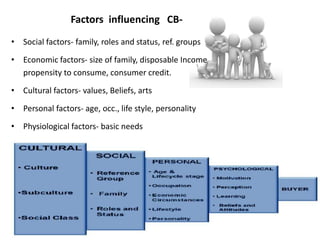
Factors influencing CB- 
• Social factors- family, roles and status, ref. groups 
• Economic factors- size of family, disposable Income 
propensity to consume, consumer credit. 
• Cultural factors- values, Beliefs, arts 
• Personal factors- age, occ., life style, personality 
• Physiological factors- basic needs
Factors Affecting Consumer 
Perception 
Although a consumer's perception of a product or service 
is at least partially based on his actual experience with 
the good, a significant amount of market research 
suggests that a consumer's view of a product is also 
conditioned by a variety of other factors. From very 
concrete factors of price and quality to less tangible 
factors such a consumer's view of the manufacturer's 
reputation, experience with service and the quality of 
packaging and branding, a number of complex and 
interrelated psychological factors determine a consumer's 
perception of goods and services.
Price 
• Price has a complex effect on consumer perception. On the 
one hand, consumers appreciate a bargain and are often likely 
to favor an economically-priced item. On the other, 
consumers often perceive very inexpensive items as cheap 
and discardable, ultimately damaging a consumer's view of a 
product even if the product remains the same and the 
consumer is benefited from a price reduction. Especially 
sophisticated or skeptical consumers are even prone to 
distrust a product that is considerably cheaper than the 
alternatives. As a result, price should be part of a 
comprehensive marketing plan, where even inexpensive 
products are depicted as favorable alternatives with similar 
levels of quality to the competition, with a price that is 
somewhat lower but still comparable with other possibilities. 
•
Quality 
• Of course, the actual quality of a product is a vital part of a 
consumer's perception of a good or service. Quality can 
describe any attribute in a set of characteristics that satisfy 
or disappoint a consumer, including usability, reliability and 
durability. Marketing can influence a consumer's 
perception of quality, but, in the end, and particularly with 
non-durable goods, a consumer's actual experience with a 
product will determine his perception of quality. Outside 
the realm of mass communication, word of mouth 
regarding quality also travels very quickly.
Service Quality 
• Even in the case of goods that exhibit numerous flaws, 
excellent service quality can often overshadow a negative 
experience with the product itself. If a consumer feels that 
he receives exceptional attention when encountering a 
problem with a product, that consumer is somewhat more 
likely to trust the brand or product knowing that the 
manufacturer or retailer provides a prompt and effective 
response to problems. Humans are social animals and their 
consumer behavior is often determined by the social 
relationships that surround a product, including 
interactions with customer service representatives. 
•
Packaging and Branding 
• Packaging and branding have a huge effect on 
consumer perceptions, particularly at the point of 
purchase. Especially when a consumers are purchasing 
a type of product for the first time, the way the 
product is presented can wholly determine their 
perception of the item. Packaging and branding, of 
course, cover everything from the attractiveness and 
display quality of an item to the attributes of a product 
the manufacturer chooses to highlight. Depending on 
the type of product and market, different branding 
messages from tough and reliable to fine and luxurious 
can be appropriate and effective
Reputation 
• A product's reputation is built up over time and is 
usually a combination of actual experience with the 
product, word-of-mouth recommendations and 
marketing campaigns that attempt to establish a status 
or shared view of the product or brand. A consumer's 
perception of a product's reputation, moreover, is not 
only determined by the product's brand identity and 
manufacturer but by the whole chain of distribution. 
Even if a consumer trusts a product's manufacturer, for 
example, that consumer may change his mind about 
the product upon seeing it available in a retailer he 
associates with cheap, defective products.
Groups and Social Networks 
• Word-of-mouth influence and buzz marketing 
– Opinion leaders are people within a reference group 
who exert social influence on others 
– Also called influentials or leading adopters 
– Marketers identify them to use as brand ambassadors. 
• Online Social Networks are online communities where 
people socialize or exchange information and opinions 
• Include blogs, social networking sites (facebook), virtual 
worlds (second life)
SOCIAL FACTOR 
• Family is the most important consumer-buying 
organization in society 
• The groups, family, clubs, and organizations 
that a person belongs to define his/her social 
role and status.
Factors affecting consumer perception

Factors affecting consumer perception

  • 1.
    Hemwati Nandan BahugunaGharhwal University, Srinagar (A Central University) Centre for Mountain Tourism & Hospitality Sutdies M.B.A. (Tourism) IIInd sem Batch (2013-15) SUBJECT-Factors Affecting Consumer Perception Submitted to Submitted by Dr. RASHMI Dhodi SAURAV RAWAT
  • 2.
    Factors Affecting ConsumerPerception SUBMITTED BY SAURAV RAWAT
  • 3.
    Introduction: • Consumeris the cause & purpose of all production and marketing activities. • Consumer behaviour is the study of when, why, how, and where people do or do not buy a product. • Customer behaviour study is based on consumer buying behaviour, with the customer playing the three distinct roles of user, payer and buyer. • CB determines a firm’s profitability. Further profitability is established into loyal customer. • Companies that develop a fuller understanding of consumers will be better able to develop marketing strategies to meet their needs.
  • 4.
    Factors influencing CB- • Social factors- family, roles and status, ref. groups • Economic factors- size of family, disposable Income propensity to consume, consumer credit. • Cultural factors- values, Beliefs, arts • Personal factors- age, occ., life style, personality • Physiological factors- basic needs
  • 5.
    Factors Affecting Consumer Perception Although a consumer's perception of a product or service is at least partially based on his actual experience with the good, a significant amount of market research suggests that a consumer's view of a product is also conditioned by a variety of other factors. From very concrete factors of price and quality to less tangible factors such a consumer's view of the manufacturer's reputation, experience with service and the quality of packaging and branding, a number of complex and interrelated psychological factors determine a consumer's perception of goods and services.
  • 6.
    Price • Pricehas a complex effect on consumer perception. On the one hand, consumers appreciate a bargain and are often likely to favor an economically-priced item. On the other, consumers often perceive very inexpensive items as cheap and discardable, ultimately damaging a consumer's view of a product even if the product remains the same and the consumer is benefited from a price reduction. Especially sophisticated or skeptical consumers are even prone to distrust a product that is considerably cheaper than the alternatives. As a result, price should be part of a comprehensive marketing plan, where even inexpensive products are depicted as favorable alternatives with similar levels of quality to the competition, with a price that is somewhat lower but still comparable with other possibilities. •
  • 7.
    Quality • Ofcourse, the actual quality of a product is a vital part of a consumer's perception of a good or service. Quality can describe any attribute in a set of characteristics that satisfy or disappoint a consumer, including usability, reliability and durability. Marketing can influence a consumer's perception of quality, but, in the end, and particularly with non-durable goods, a consumer's actual experience with a product will determine his perception of quality. Outside the realm of mass communication, word of mouth regarding quality also travels very quickly.
  • 8.
    Service Quality •Even in the case of goods that exhibit numerous flaws, excellent service quality can often overshadow a negative experience with the product itself. If a consumer feels that he receives exceptional attention when encountering a problem with a product, that consumer is somewhat more likely to trust the brand or product knowing that the manufacturer or retailer provides a prompt and effective response to problems. Humans are social animals and their consumer behavior is often determined by the social relationships that surround a product, including interactions with customer service representatives. •
  • 9.
    Packaging and Branding • Packaging and branding have a huge effect on consumer perceptions, particularly at the point of purchase. Especially when a consumers are purchasing a type of product for the first time, the way the product is presented can wholly determine their perception of the item. Packaging and branding, of course, cover everything from the attractiveness and display quality of an item to the attributes of a product the manufacturer chooses to highlight. Depending on the type of product and market, different branding messages from tough and reliable to fine and luxurious can be appropriate and effective
  • 10.
    Reputation • Aproduct's reputation is built up over time and is usually a combination of actual experience with the product, word-of-mouth recommendations and marketing campaigns that attempt to establish a status or shared view of the product or brand. A consumer's perception of a product's reputation, moreover, is not only determined by the product's brand identity and manufacturer but by the whole chain of distribution. Even if a consumer trusts a product's manufacturer, for example, that consumer may change his mind about the product upon seeing it available in a retailer he associates with cheap, defective products.
  • 11.
    Groups and SocialNetworks • Word-of-mouth influence and buzz marketing – Opinion leaders are people within a reference group who exert social influence on others – Also called influentials or leading adopters – Marketers identify them to use as brand ambassadors. • Online Social Networks are online communities where people socialize or exchange information and opinions • Include blogs, social networking sites (facebook), virtual worlds (second life)
  • 12.
    SOCIAL FACTOR •Family is the most important consumer-buying organization in society • The groups, family, clubs, and organizations that a person belongs to define his/her social role and status.