Download to read offline
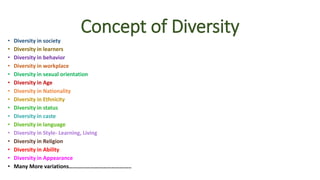
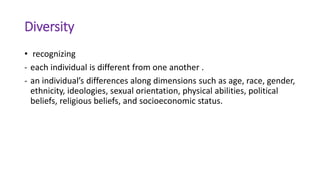
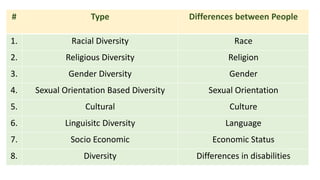
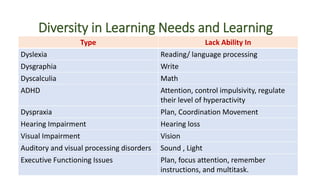
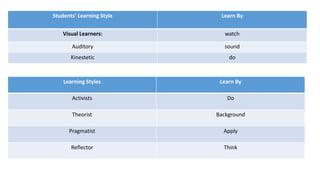
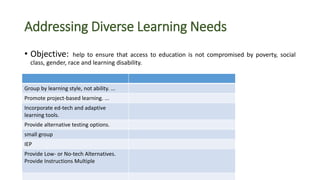
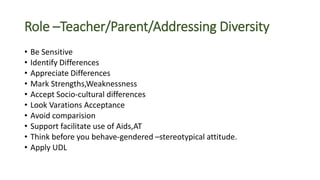

This document discusses diversity in various contexts. It defines diversity as recognizing that individuals differ in dimensions such as age, race, gender, ethnicity, beliefs, abilities, and more. It provides examples of diversity in learning needs, styles, and disabilities. These include dyslexia, ADHD, hearing or visual impairments. It also discusses addressing diverse learning needs through grouping students by learning style, project-based learning, technology, and alternative testing. The role of teachers, parents, and others is to be sensitive to differences, appreciate diversity, and avoid stereotypes while supporting students.


