B Ed Special Education- Hearing Impairment
B Ed Special Education- Learning Disability
A3/A4/A5 CCE- Assessment & Evaluation
Also Useful for ECCEd./D.Ed./B Ed (General Education/ Physical
Education/M Ed /B A Education/M A Education)
University of Mumbai
Dr.Amit Hemant Mishal
Associate Professor
CCYM’S Hashu Advani College of Special Education
https://www.hashuadvanismarak.org/hacse/
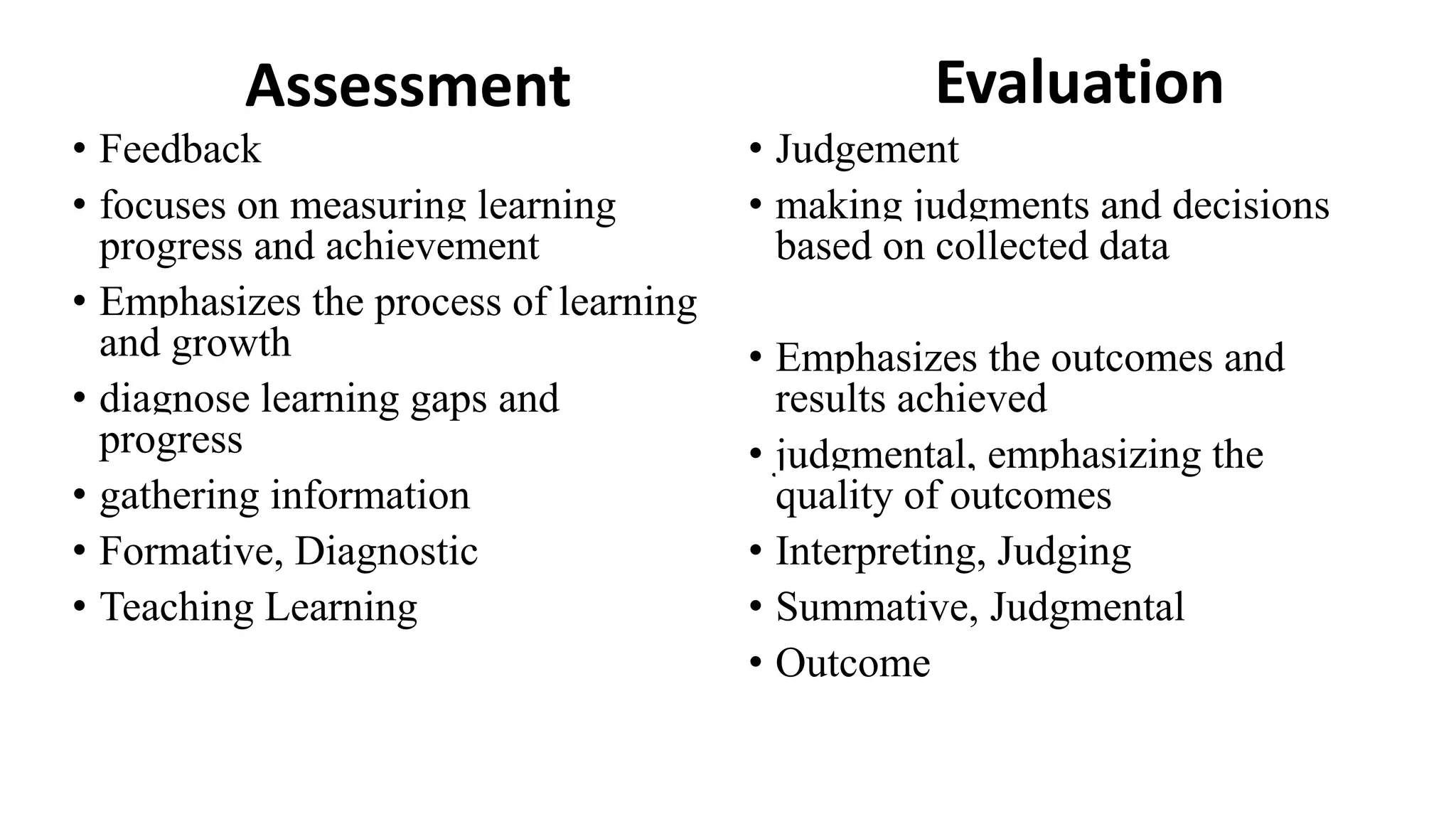
Assessment
• Feedback
• focuses on measuring learning
progress and achievement
• Emphasizes the process of learning
and growth
• diagnose learning gaps and
progress
• gathering information
• Formative, Diagnostic
• Teaching Learning
Evaluation
• Judgement
• making judgments and decisions
based on collected data
• Emphasizes the outcomes and
results achieved
• judgmental, emphasizing the
quality of outcomes
• Interpreting, Judging
• Summative, Judgmental
• Outcome
CCE
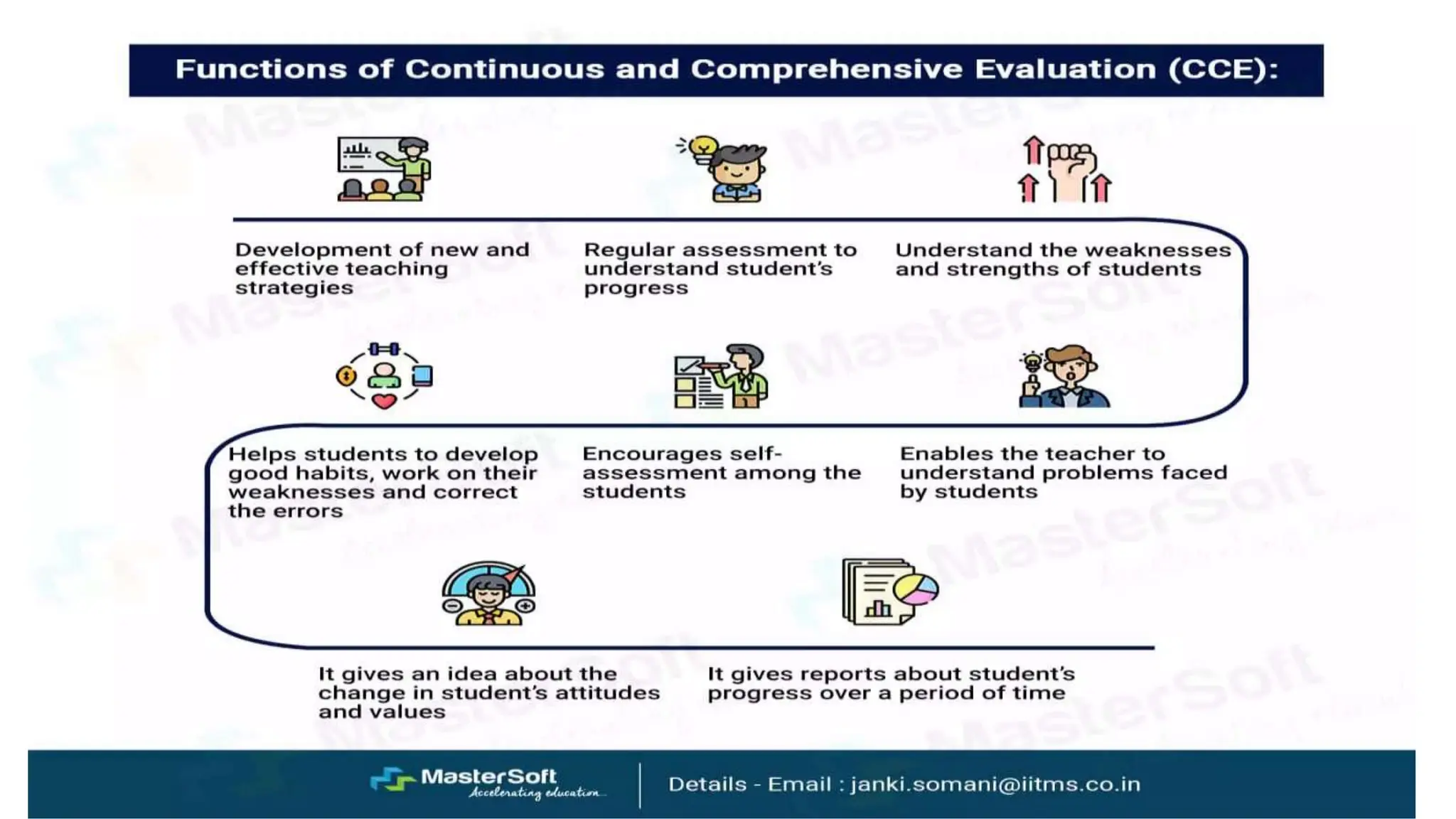
• Assessment of children progressing in wholesome manner, not just
academically.
• Teachers can diagnose learners' deficiencies using a variety of
assessment activities
• CCE -refers to a system of school-based evaluation of students that
covers all aspects of students development. It is a developmental
process of assessment
• Continuous and Comprehensive Evaluation (CCE) was a process of
assessment, mandated by the Right to Education Act, of India in
2009
Continuous And Comprehensive
Evaluation (CCE)
Evaluate/guide students in all aspects-Encourages all round
development
Improve learning outcomes
focusing overall abilities of students.
Encourage regular assessment
Reduce unwanted stress on students
Effective teaching
Continuous assessment of progress
Scholastic as well as Co-Scholastic growth
Scholastic Assessment
• several types of Scholastic Assessments commonly used in
schools and educational institutions: formative, summative,
diagnostic ,
• various activities in all the subject areas
• Comprise of curricular /topic specific areas.
Why?
• Evaluating students progress
• Results of Scholastic Assessments help teachers to adjust
instructional strategies
• evaluating performance of school/educational program/s
Co-Scholastic
• Life Skills
• Attitude
• Social Values
• CCA
• Debates
• Sports competition
• Cultural programs
• Story writing
• Drama club
• Yoga
• Drawing
How To Assess Life Skills?
• Individual assessment
• Group assessment
• Self-assessment
• Peer-assessment
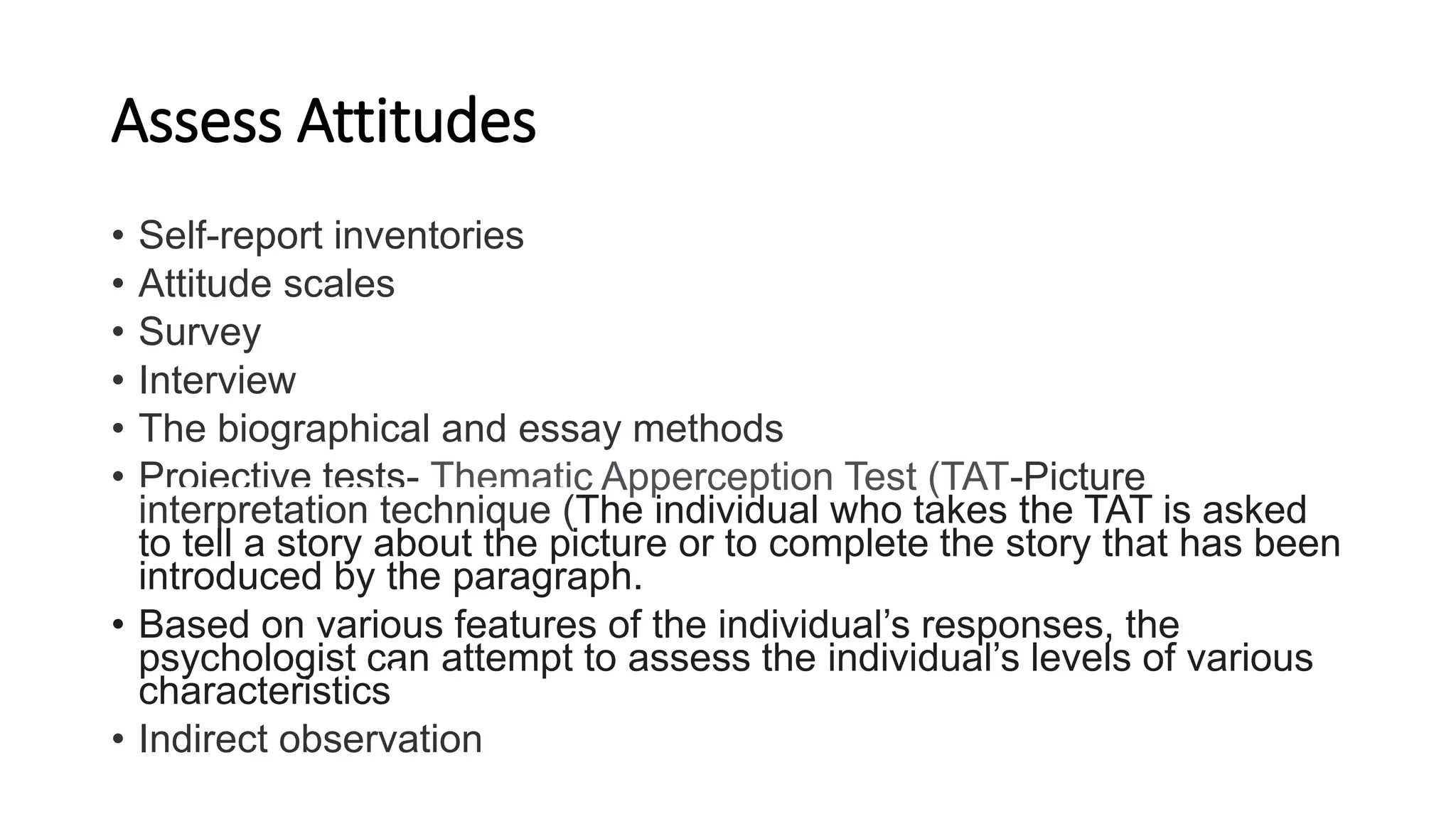
Assess Attitudes
• Self-report inventories
• Attitude scales
• Survey
• Interview
• The biographical and essay methods
• Projective tests- Thematic Apperception Test (TAT-Picture
interpretation technique (The individual who takes the TAT is asked
to tell a story about the picture or to complete the story that has been
introduced by the paragraph.
• Based on various features of the individual’s responses, the
psychologist can attempt to assess the individual’s levels of various
characteristics
• Indirect observation
Rorschach Inkblot Test
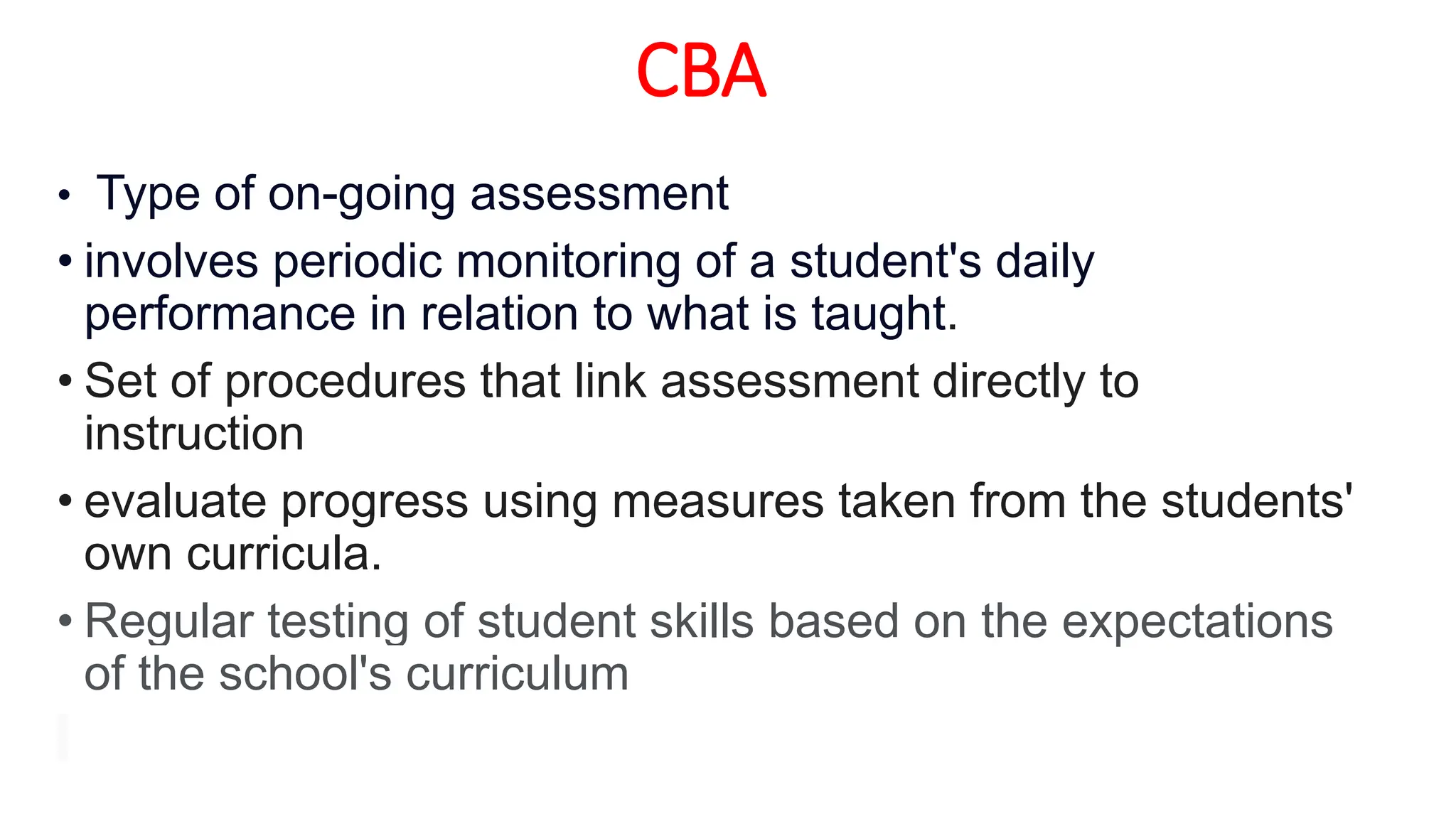
CBA
• Type of on-going assessment
• involves periodic monitoring of a student's daily
performance in relation to what is taught.
• Set of procedures that link assessment directly to
instruction
• evaluate progress using measures taken from the students'
own curricula.
• Regular testing of student skills based on the expectations
of the school's curriculum
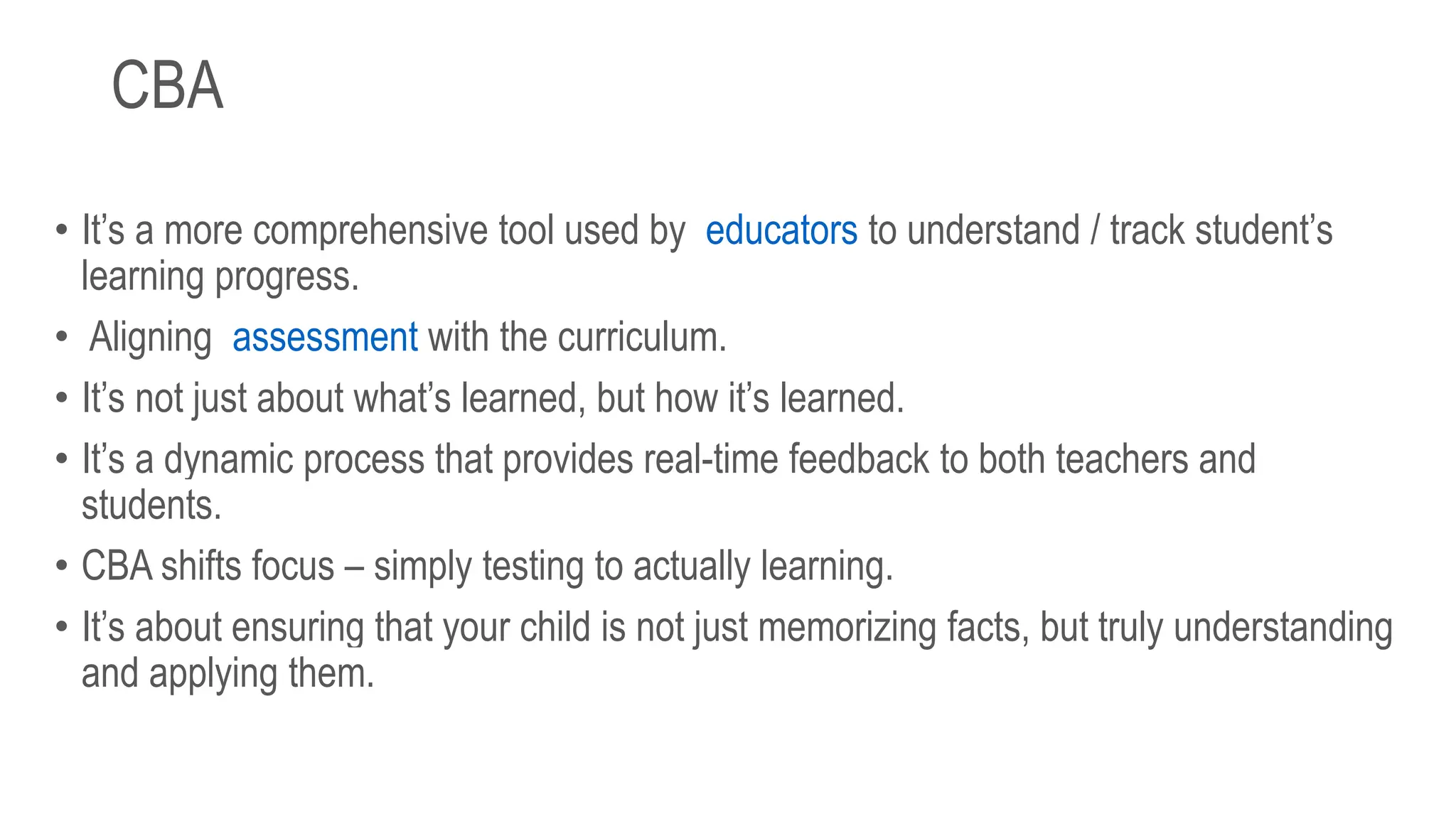
CBA
• It’s a more comprehensive tool used by educators to understand / track student’s
learning progress.
• Aligning assessment with the curriculum.
• It’s not just about what’s learned, but how it’s learned.
• It’s a dynamic process that provides real-time feedback to both teachers and
students.
• CBA shifts focus – simply testing to actually learning.
• It’s about ensuring that your child is not just memorizing facts, but truly understanding
and applying them.
• CBM graphs can make goals easier to achieve and you can
have a clear look at your child’s progress.
• Additionally, you can use the CBM graphs as a reference with
teachers and administrators as a specific guide to where your
child is lacking and how they can improve to help progress them
towards success.
• CBM is entirely focused on improving your child’s learning
abilities by providing excellent progress tracing and customized
study plans for the students to progress fluently.
• Curriculum-Based Measurement (CBM) is a method teachers use to
find out how students are progressing in basic academic areas such
as math, reading, writing, and spelling.
• CBM can be helpful to parents because it provides current, week-by-
week information on the progress their children are making
• CBM is a multi-functional structure that can help you work more
effectively on all school systems for your child.
• When your child’s teacher uses CBM, he or she finds out how well
your child is progressing in learning the content for the academic year.
• CBM also monitors the success of the instruction your child is
receiving.
References
• https://www.sciencedirect.com/topics/neuroscience/thematic-
apperception-test
• https://www.verywellmind.com/what-is-the-rorschach-inkblot-test-
2795806
• https://www.iitms.co.in/blog/importance-of-continuous-and-
comprehensive-evaluation.html
• https://learningcorner.co/knowledge-base/glossary/scholastic-assessment
• https://testbook.com/key-differences/difference-between-assessment-
and-evaluation
• https://www.sciencedirect.com/topics/psychology/curriculum-based-
assessment

CCE, Assessment, Evaluation, Types of Assessment

  • 1.
    B Ed SpecialEducation- Hearing Impairment B Ed Special Education- Learning Disability A3/A4/A5 CCE- Assessment & Evaluation Also Useful for ECCEd./D.Ed./B Ed (General Education/ Physical Education/M Ed /B A Education/M A Education) University of Mumbai Dr.Amit Hemant Mishal Associate Professor CCYM’S Hashu Advani College of Special Education https://www.hashuadvanismarak.org/hacse/
  • 2.
    Assessment • Feedback • focuseson measuring learning progress and achievement • Emphasizes the process of learning and growth • diagnose learning gaps and progress • gathering information • Formative, Diagnostic • Teaching Learning Evaluation • Judgement • making judgments and decisions based on collected data • Emphasizes the outcomes and results achieved • judgmental, emphasizing the quality of outcomes • Interpreting, Judging • Summative, Judgmental • Outcome
  • 3.
    CCE • Assessment ofchildren progressing in wholesome manner, not just academically. • Teachers can diagnose learners' deficiencies using a variety of assessment activities • CCE -refers to a system of school-based evaluation of students that covers all aspects of students development. It is a developmental process of assessment • Continuous and Comprehensive Evaluation (CCE) was a process of assessment, mandated by the Right to Education Act, of India in 2009
  • 4.
    Continuous And Comprehensive Evaluation(CCE) Evaluate/guide students in all aspects-Encourages all round development Improve learning outcomes focusing overall abilities of students. Encourage regular assessment Reduce unwanted stress on students Effective teaching Continuous assessment of progress Scholastic as well as Co-Scholastic growth
  • 5.
    Scholastic Assessment • severaltypes of Scholastic Assessments commonly used in schools and educational institutions: formative, summative, diagnostic , • various activities in all the subject areas • Comprise of curricular /topic specific areas.
  • 6.
    Why? • Evaluating studentsprogress • Results of Scholastic Assessments help teachers to adjust instructional strategies • evaluating performance of school/educational program/s
  • 7.
    Co-Scholastic • Life Skills •Attitude • Social Values • CCA • Debates • Sports competition • Cultural programs • Story writing • Drama club • Yoga • Drawing
  • 8.
    How To AssessLife Skills? • Individual assessment • Group assessment • Self-assessment • Peer-assessment
  • 9.
    Assess Attitudes • Self-reportinventories • Attitude scales • Survey • Interview • The biographical and essay methods • Projective tests- Thematic Apperception Test (TAT-Picture interpretation technique (The individual who takes the TAT is asked to tell a story about the picture or to complete the story that has been introduced by the paragraph. • Based on various features of the individual’s responses, the psychologist can attempt to assess the individual’s levels of various characteristics • Indirect observation
  • 10.
  • 12.
    CBA • Type ofon-going assessment • involves periodic monitoring of a student's daily performance in relation to what is taught. • Set of procedures that link assessment directly to instruction • evaluate progress using measures taken from the students' own curricula. • Regular testing of student skills based on the expectations of the school's curriculum
  • 13.
    CBA • It’s amore comprehensive tool used by educators to understand / track student’s learning progress. • Aligning assessment with the curriculum. • It’s not just about what’s learned, but how it’s learned. • It’s a dynamic process that provides real-time feedback to both teachers and students. • CBA shifts focus – simply testing to actually learning. • It’s about ensuring that your child is not just memorizing facts, but truly understanding and applying them.
  • 14.
    • CBM graphscan make goals easier to achieve and you can have a clear look at your child’s progress. • Additionally, you can use the CBM graphs as a reference with teachers and administrators as a specific guide to where your child is lacking and how they can improve to help progress them towards success. • CBM is entirely focused on improving your child’s learning abilities by providing excellent progress tracing and customized study plans for the students to progress fluently.
  • 15.
    • Curriculum-Based Measurement(CBM) is a method teachers use to find out how students are progressing in basic academic areas such as math, reading, writing, and spelling. • CBM can be helpful to parents because it provides current, week-by- week information on the progress their children are making • CBM is a multi-functional structure that can help you work more effectively on all school systems for your child. • When your child’s teacher uses CBM, he or she finds out how well your child is progressing in learning the content for the academic year. • CBM also monitors the success of the instruction your child is receiving.
  • 16.
    References • https://www.sciencedirect.com/topics/neuroscience/thematic- apperception-test • https://www.verywellmind.com/what-is-the-rorschach-inkblot-test- 2795806 •https://www.iitms.co.in/blog/importance-of-continuous-and- comprehensive-evaluation.html • https://learningcorner.co/knowledge-base/glossary/scholastic-assessment • https://testbook.com/key-differences/difference-between-assessment- and-evaluation • https://www.sciencedirect.com/topics/psychology/curriculum-based- assessment