The Constitutional Convention
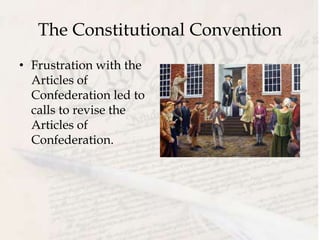
• Frustration with the
Articles of
Confederation led to
calls to revise the
Articles of
Confederation.
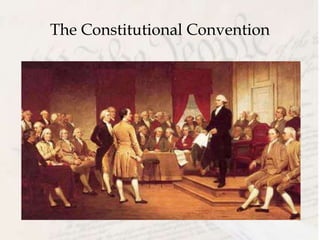
The Constitutional Convention
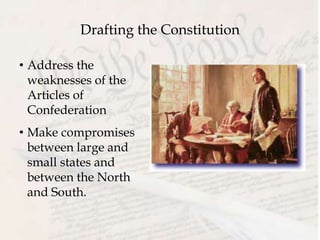
Drafting the Constitution
• Address the
weaknesses of the
Articles of
Confederation
• Make compromises
between large and
small states and
between the North
and South.
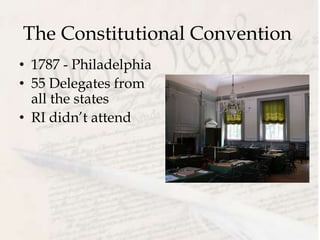
The Constitutional Convention
• 1787 - Philadelphia
• 55 Delegates from
all the states
• RI didn’t attend
Leaders of the Convention
• Nationalists
–Supporters of strong central
government
• George Washington
– Presides over the convention.
• James Madison
– Kept notes of the discussions
– Called “The Father of the Constitution.”
Absent
• John Adams
– Ambassador to England
• Thomas Jefferson
– Ambassador to France
• Patrick Henry
– “smelled a rat”
• Sam Adams
– not chosen be part of the delegation
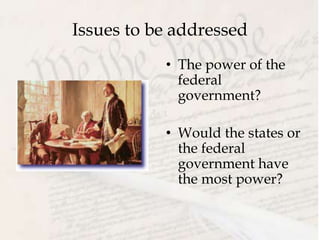
Issues to be addressed
• The power of the
federal
government?
• Would the states or
the federal
government have
the most power?
Issues
• What compromises did the delegates
make at the Constitutional Convention?
Representation in Congress
• How many members on Congress
would each state get?
–Small states v. Large states
Slavery
• How would slaves be counted?
• Would the slave trade continue?
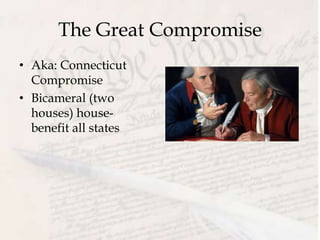
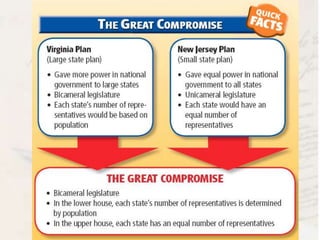
The Great Compromise
• Aka: Connecticut
Compromise
• Bicameral (two
houses) house-
benefit all states
The Great Compromise
• One house called
Senate
– Members chosen by
the state legislatures
– Two senators state
– Each state gets one
vote
• One house called
House of
Representatives
– Members chosen by
population
– Number of members
based on population
The problem of slavery
• South wanted to it to prop up the
Southern economy.
• North did not like slavery as much.
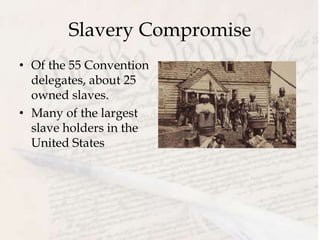
Slavery Compromise
• Of the 55 Convention
delegates, about 25
owned slaves.
• Many of the largest
slave holders in the
United States
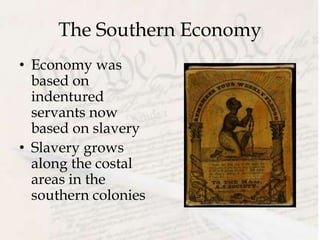
The Southern Economy
• Economy was
based on
indentured
servants now
based on slavery
• Slavery grows
along the costal
areas in the
southern colonies
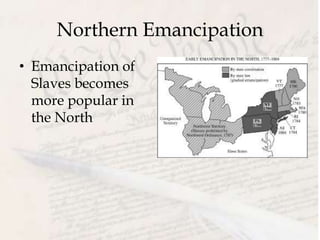
Northern Emancipation
• Emancipation of
Slaves becomes
more popular in
the North
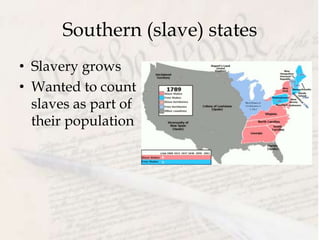
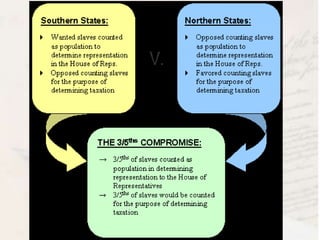
Southern (slave) states
• Slavery grows
• Wanted to count
slaves as part of
their population
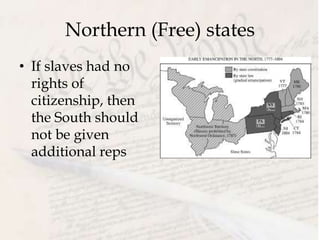
Northern (Free) states
• If slaves had no
rights of
citizenship, then
the South should
not be given
additional reps
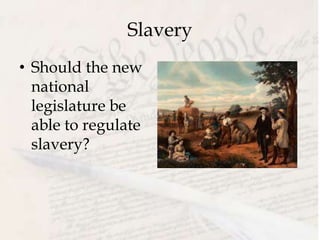
Slavery
• Should the new
national
legislature be
able to regulate
slavery?
Slavery Compromises
• Trade Compromise
• 3/5 Compromise
• Fugitive Slave clause
Compromise
• Article 1 Section 9 of the Constitution
• "the Migration or Importation of such Persons as any
of the States now existing shall think proper to admit,
shall not be prohibited by the Congress prior to the
Year one thousand eight hundred and eight."
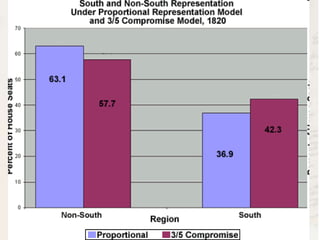
The 3/5ths Clause
• “Representatives and direct taxes shall be
apportion among the several States which may
be included within this Union according to
their respective Numbers, which shall be
determined by adding the whole number of free
Persons, including those bound to Service for a
Term of Years, and excluding Indians not
taxed, three fifths of all other Persons.”
Fugitive Slave Clause
• "No Person held to Service or Labour in one
State, . . . , escaping into another, shall . . . be
discharged from such Service or Labour, but
shall be delivered up on Claim of the Party to
whom such Service or Labour may be due."

Constituional convention 2019

  • 1.
    The Constitutional Convention •Frustration with the Articles of Confederation led to calls to revise the Articles of Confederation.
  • 2.
  • 3.
    Drafting the Constitution •Address the weaknesses of the Articles of Confederation • Make compromises between large and small states and between the North and South.
  • 4.
    The Constitutional Convention •1787 - Philadelphia • 55 Delegates from all the states • RI didn’t attend
  • 5.
    Leaders of theConvention • Nationalists –Supporters of strong central government • George Washington – Presides over the convention. • James Madison – Kept notes of the discussions – Called “The Father of the Constitution.”
  • 6.
    Absent • John Adams –Ambassador to England • Thomas Jefferson – Ambassador to France • Patrick Henry – “smelled a rat” • Sam Adams – not chosen be part of the delegation
  • 7.
    Issues to beaddressed • The power of the federal government? • Would the states or the federal government have the most power?
  • 8.
    Issues • What compromisesdid the delegates make at the Constitutional Convention?
  • 9.
    Representation in Congress •How many members on Congress would each state get? –Small states v. Large states
  • 10.
    Slavery • How wouldslaves be counted? • Would the slave trade continue?
  • 11.
    The Great Compromise •Aka: Connecticut Compromise • Bicameral (two houses) house- benefit all states
  • 12.
    The Great Compromise •One house called Senate – Members chosen by the state legislatures – Two senators state – Each state gets one vote • One house called House of Representatives – Members chosen by population – Number of members based on population
  • 14.
    The problem ofslavery • South wanted to it to prop up the Southern economy. • North did not like slavery as much.
  • 15.
    Slavery Compromise • Ofthe 55 Convention delegates, about 25 owned slaves. • Many of the largest slave holders in the United States
  • 16.
    The Southern Economy •Economy was based on indentured servants now based on slavery • Slavery grows along the costal areas in the southern colonies
  • 17.
    Northern Emancipation • Emancipationof Slaves becomes more popular in the North
  • 18.
    Southern (slave) states •Slavery grows • Wanted to count slaves as part of their population
  • 19.
    Northern (Free) states •If slaves had no rights of citizenship, then the South should not be given additional reps
  • 20.
    Slavery • Should thenew national legislature be able to regulate slavery?
  • 21.
    Slavery Compromises • TradeCompromise • 3/5 Compromise • Fugitive Slave clause
  • 22.
    Compromise • Article 1Section 9 of the Constitution • "the Migration or Importation of such Persons as any of the States now existing shall think proper to admit, shall not be prohibited by the Congress prior to the Year one thousand eight hundred and eight."
  • 24.
    The 3/5ths Clause •“Representatives and direct taxes shall be apportion among the several States which may be included within this Union according to their respective Numbers, which shall be determined by adding the whole number of free Persons, including those bound to Service for a Term of Years, and excluding Indians not taxed, three fifths of all other Persons.”
  • 26.
    Fugitive Slave Clause •"No Person held to Service or Labour in one State, . . . , escaping into another, shall . . . be discharged from such Service or Labour, but shall be delivered up on Claim of the Party to whom such Service or Labour may be due."