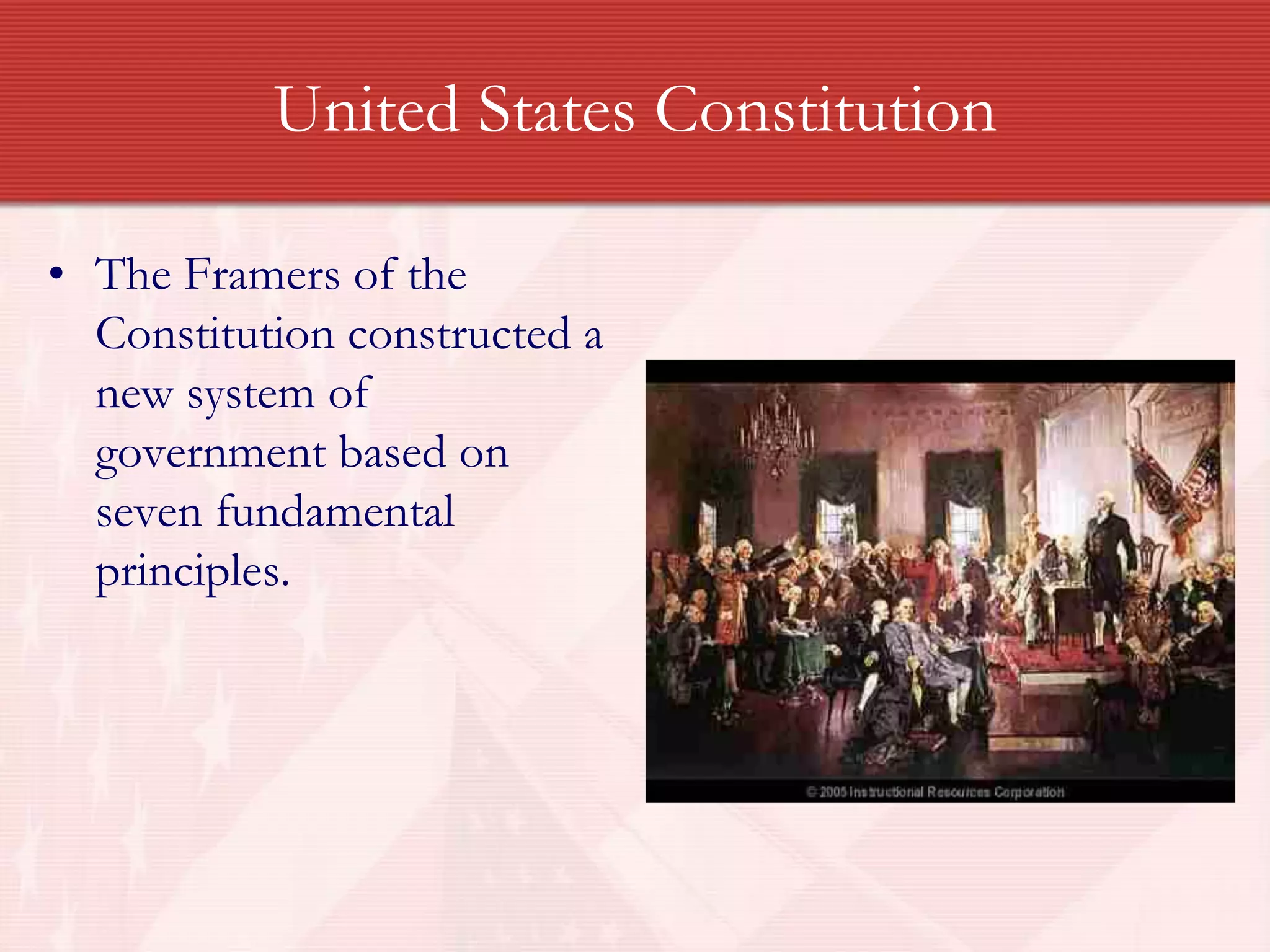
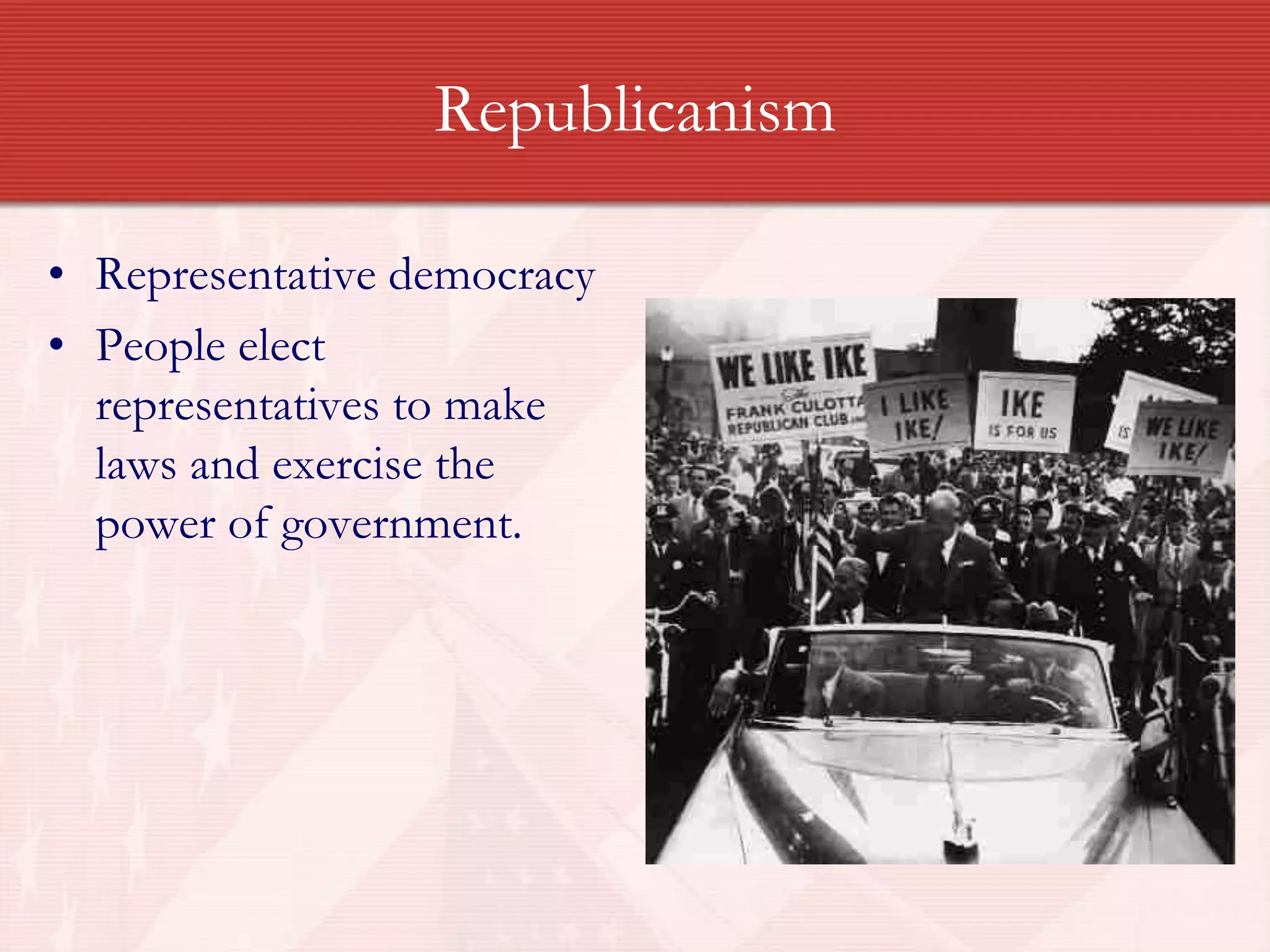
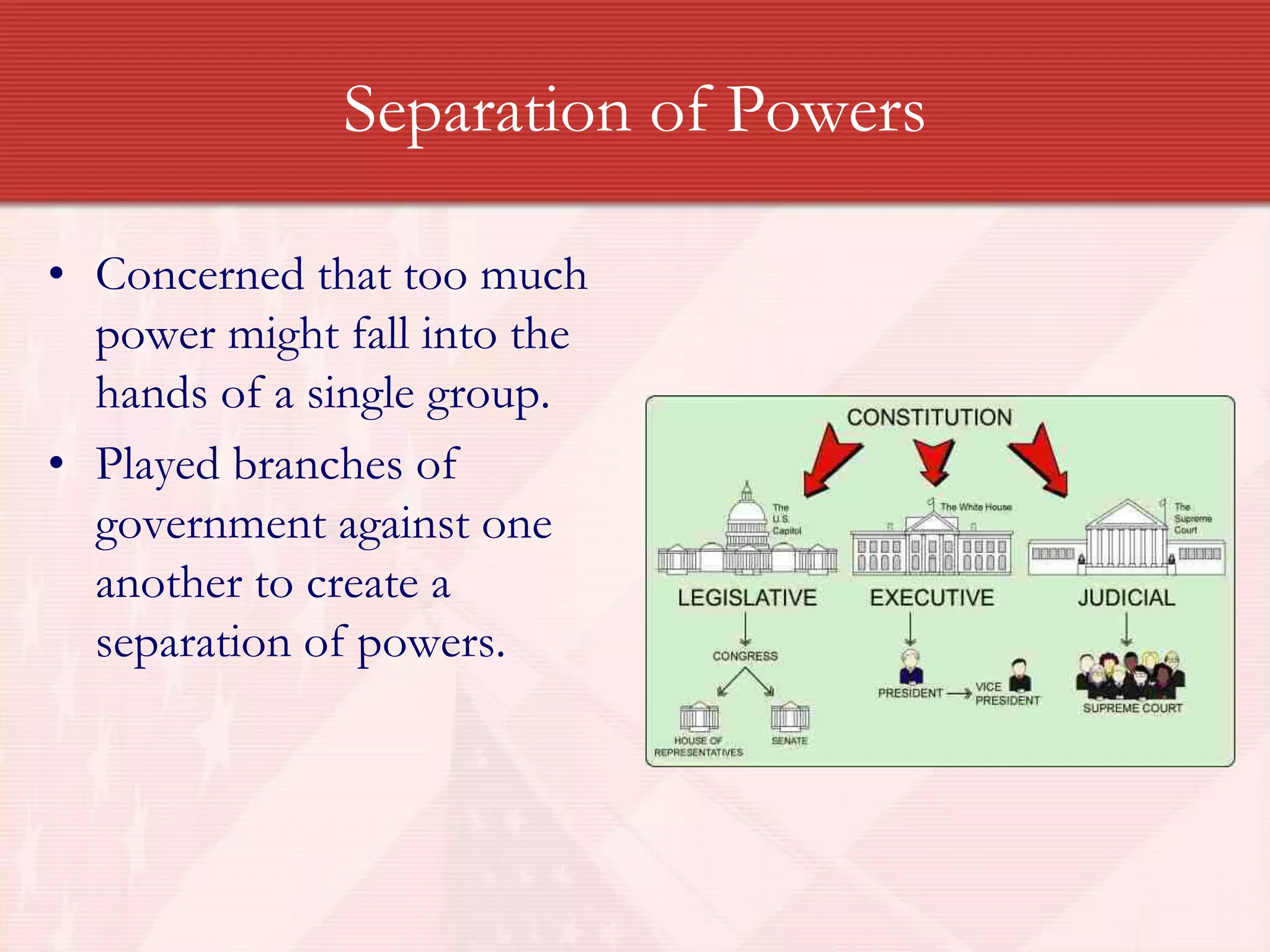
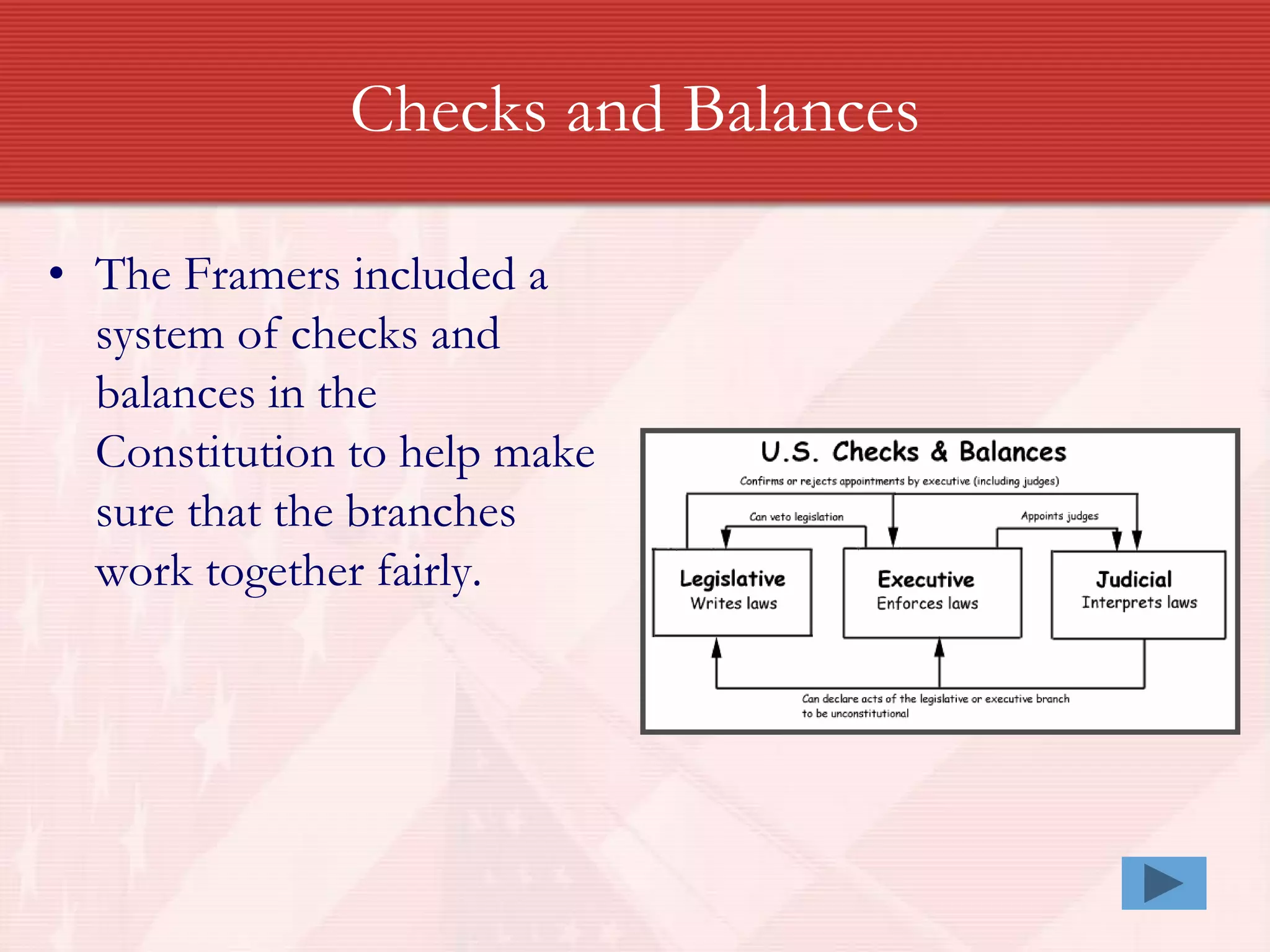
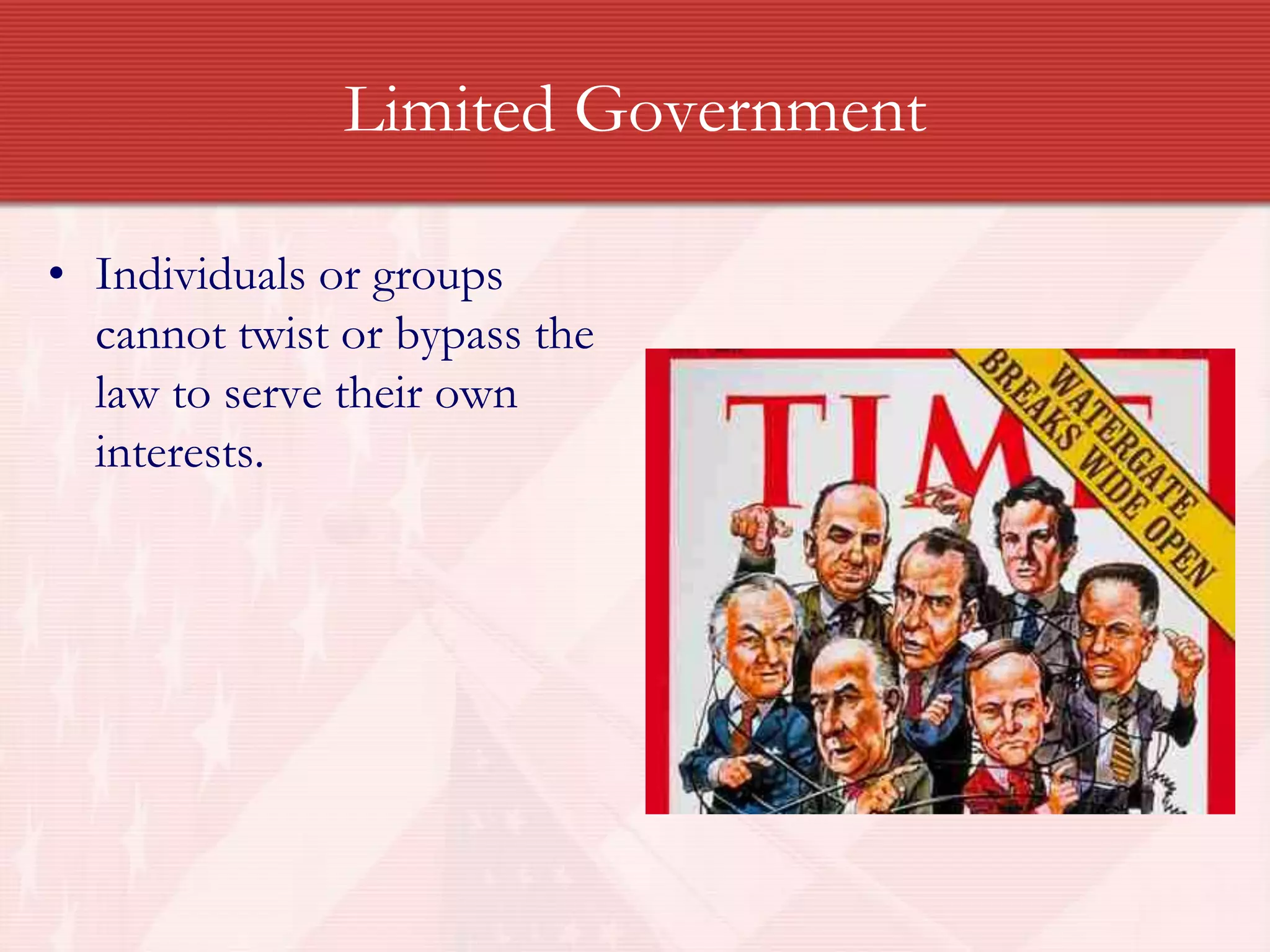
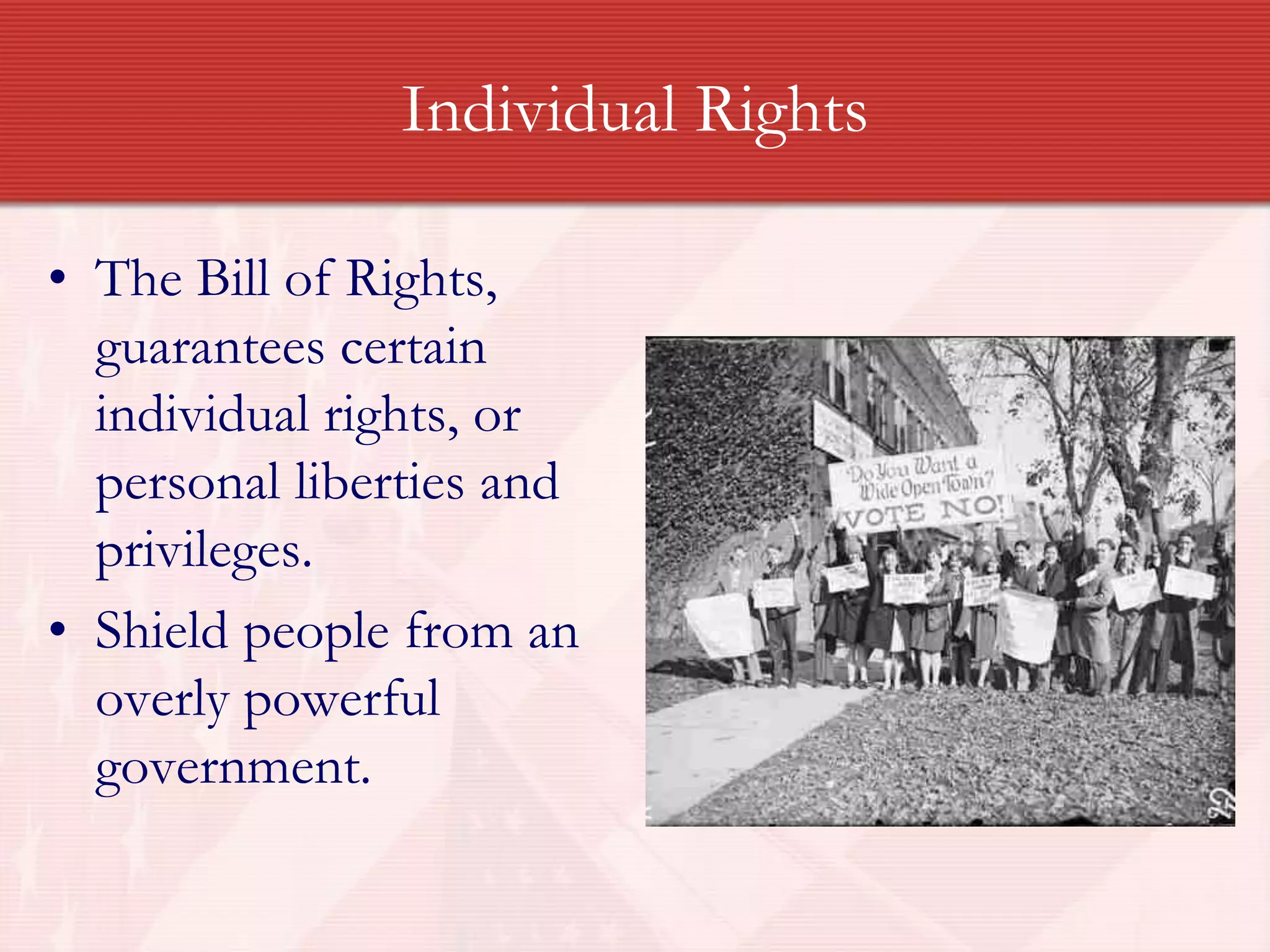
The United States Constitution was based on seven fundamental principles established by the Framers: popular sovereignty, where the government's authority comes from the people; republicanism, establishing a representative democracy where voters elect representatives; federalism, creating a partnership between strong central and state governments; separation of powers that divides government among branches; checks and balances allowing each branch to limit the others' power; limited government that restricts governmental power; and individual rights protecting citizens from an overly powerful government through guarantees like the Bill of Rights.








![American Industrial Revolution[2]](https://cdn.slidesharecdn.com/ss_thumbnails/americanindustrialrevolution2-1227208285351785-9-thumbnail.jpg?width=640&height=640&fit=bounds)


