Constitutional Convention Project AP American History By: Kara King & Troy Miller
Events and Economic conditions after the Revolutionary War Economic depression No states south of Pennsylvania abolished slavery Shay’s Rebellion
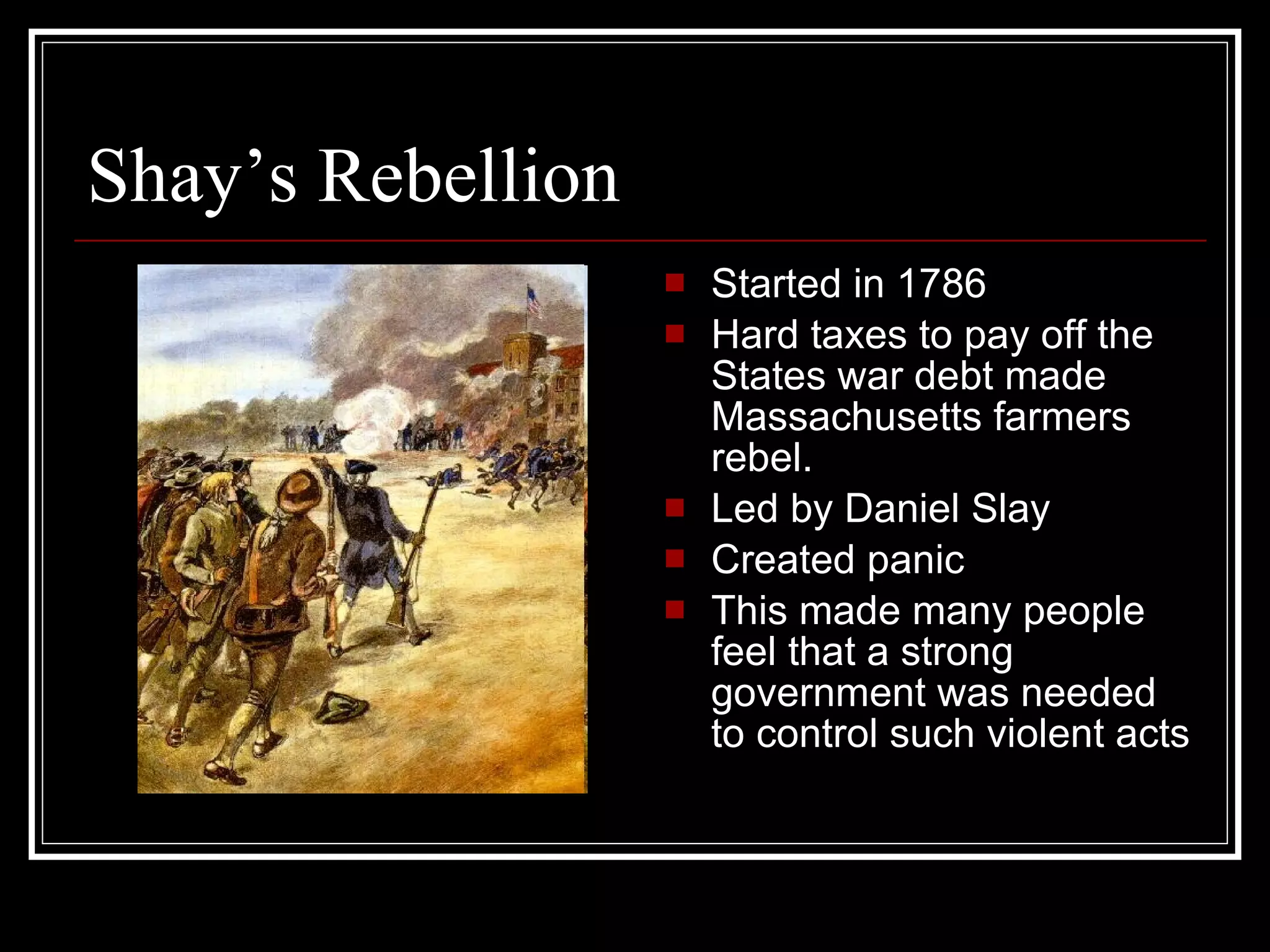
Shay’s Rebellion Started in 1786 Hard taxes to pay off the States war debt made Massachusetts farmers rebel. Led by Daniel Slay Created panic This made many people feel that a strong government was needed to control such violent acts
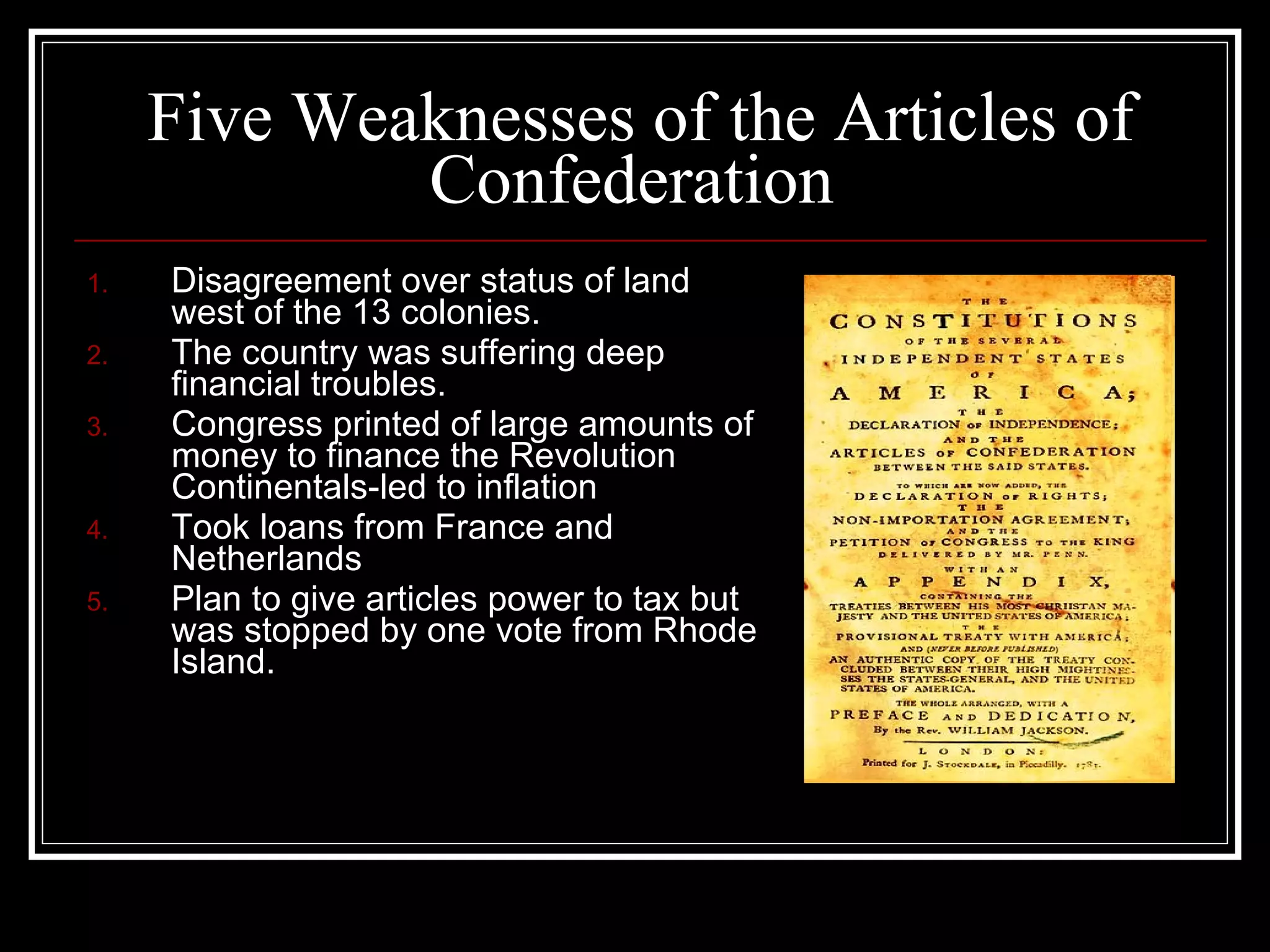
Five Weaknesses of the Articles of Confederation  Disagreement over status of land west of the 13 colonies. The country was suffering deep financial troubles. Congress printed of large amounts of money to finance the Revolution Continentals-led to inflation Took loans from France and Netherlands Plan to give articles power to tax but was stopped by one vote from Rhode Island.
The Constitutional Convention Where? 53 delegates met in absolute secrecy in Philadelphia in Independence hall 30 delegates attended every day When? Summer of 1787 The Purpose? The goal was to revise the Articles of Confederation It was quickly decided to replace it
Key people and their contributions to the Constitutional Convention George Washington President of Convention May 25 and present through signing Supported ratifying the Constitution Ben Franklin Arrived May 28 and present through signing Attendant of Pennsylvania  James Madison  Arrived may 25 through signing of Constitution  Writing Virginia Plan Kept notes on Constitution that public would see Alexander Hamilton  Presented through signing May 25 Introduction and defense of the Hamilton Plan-June 18, 1787 Secretary of Treasury  John Jay Governor of New York Leader of Federalist Party Chief Justice of Supreme Court Abolitionist  Did not attend the Convention
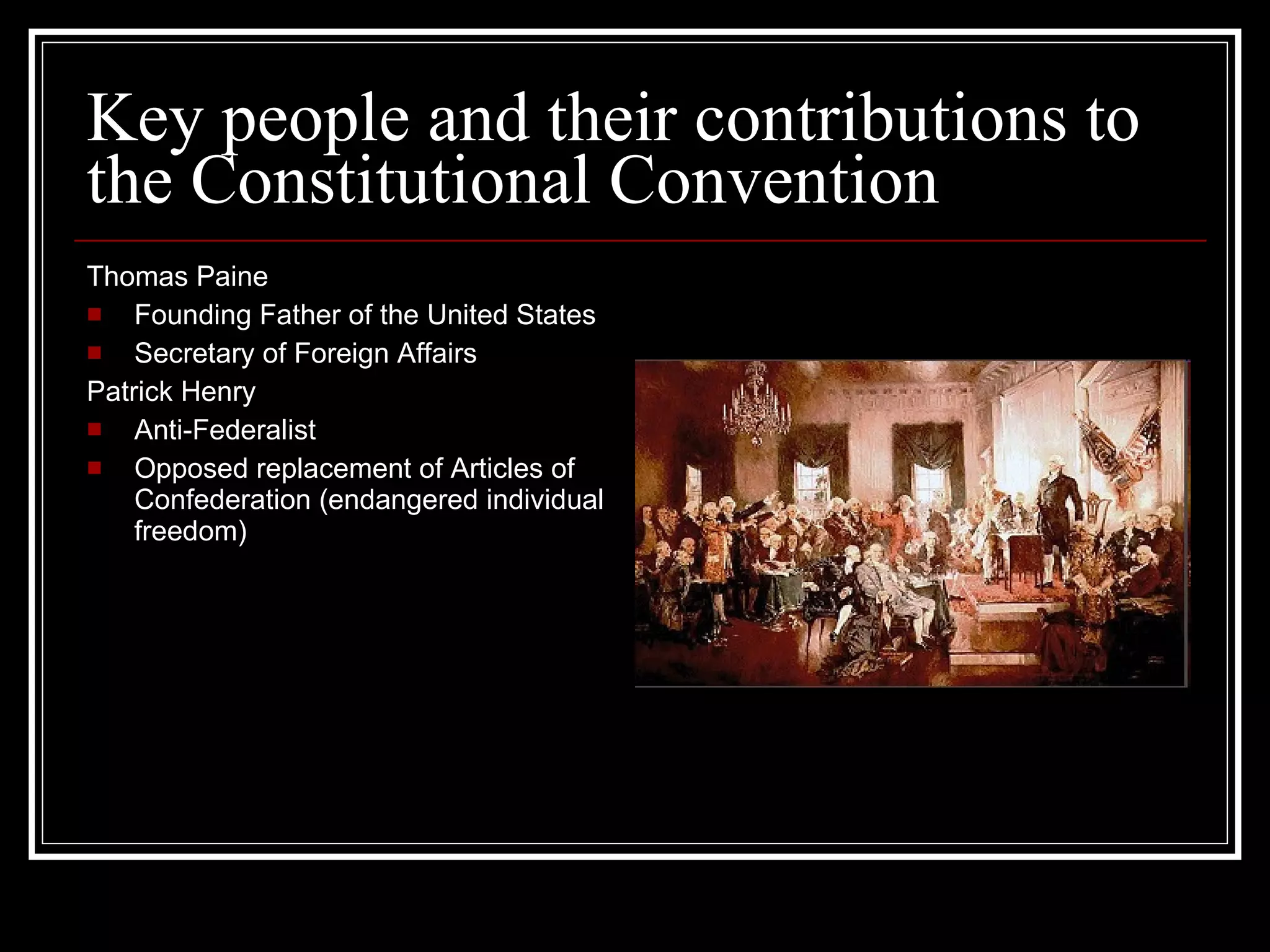
Key people and their contributions to the Constitutional Convention  Thomas Paine Founding Father of the United States Secretary of Foreign Affairs Patrick Henry Anti-Federalist Opposed replacement of Articles of Confederation (endangered individual freedom)
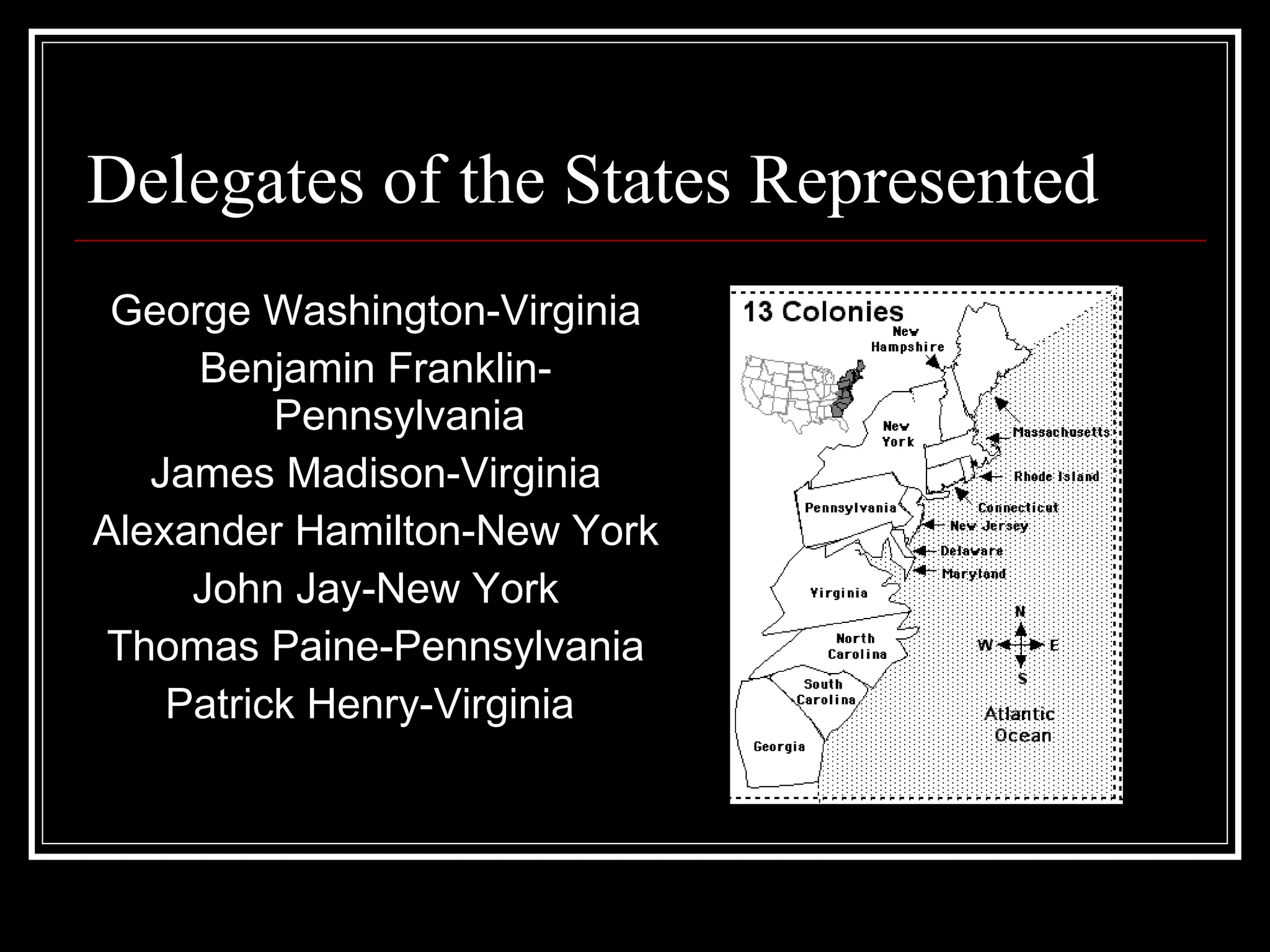
Delegates of the States Represented George Washington-Virginia Benjamin Franklin-Pennsylvania James Madison-Virginia Alexander Hamilton-New York John Jay-New York Thomas Paine-Pennsylvania Patrick Henry-Virginia
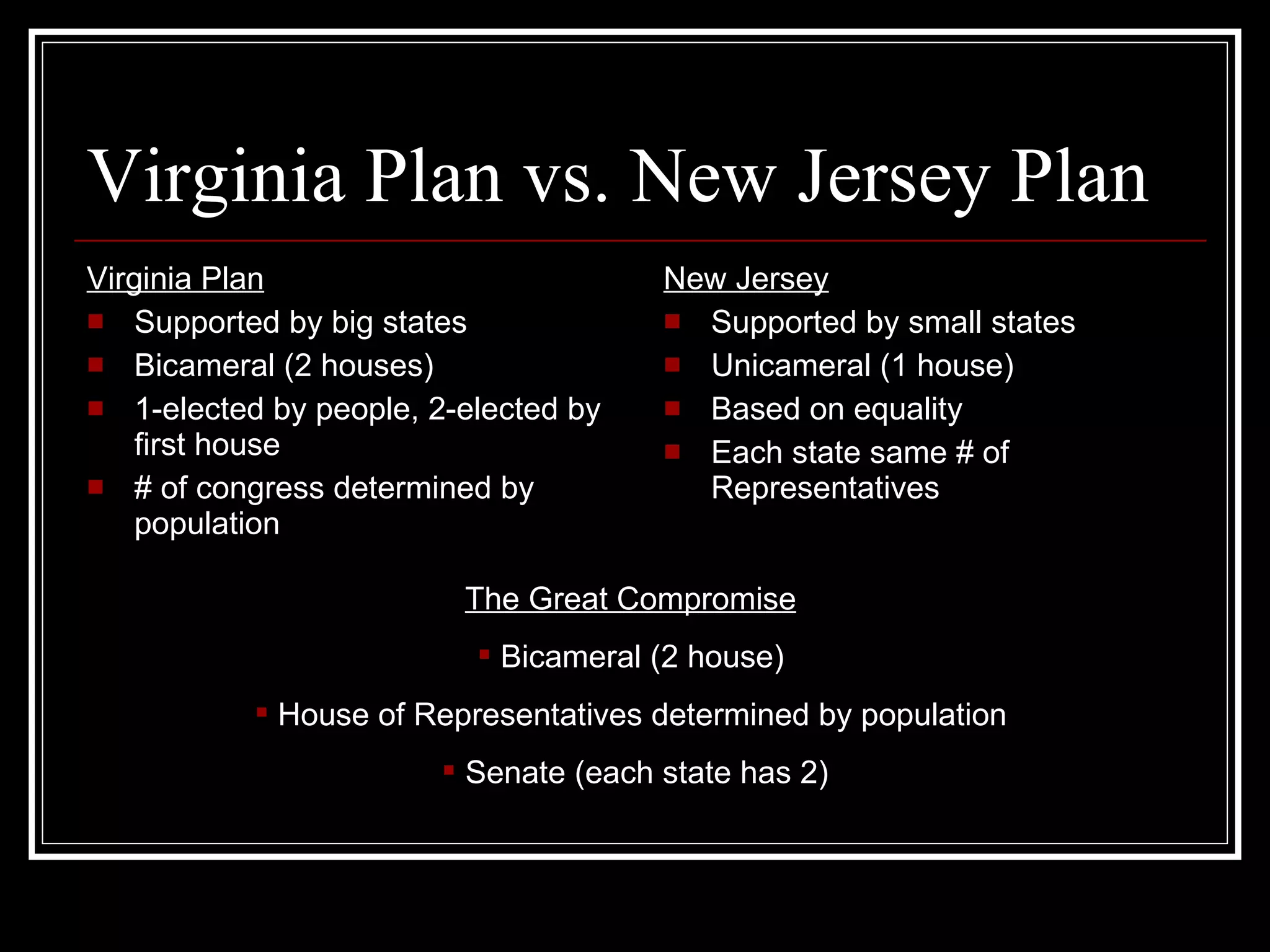
Virginia Plan vs. New Jersey Plan Virginia Plan Supported by big states Bicameral (2 houses) 1-elected by people, 2-elected by first house # of congress determined by population New Jersey Supported by small states Unicameral (1 house) Based on equality  Each state same # of Representatives The Great Compromise   Bicameral (2 house)  House of Representatives determined by population  Senate (each state has 2)
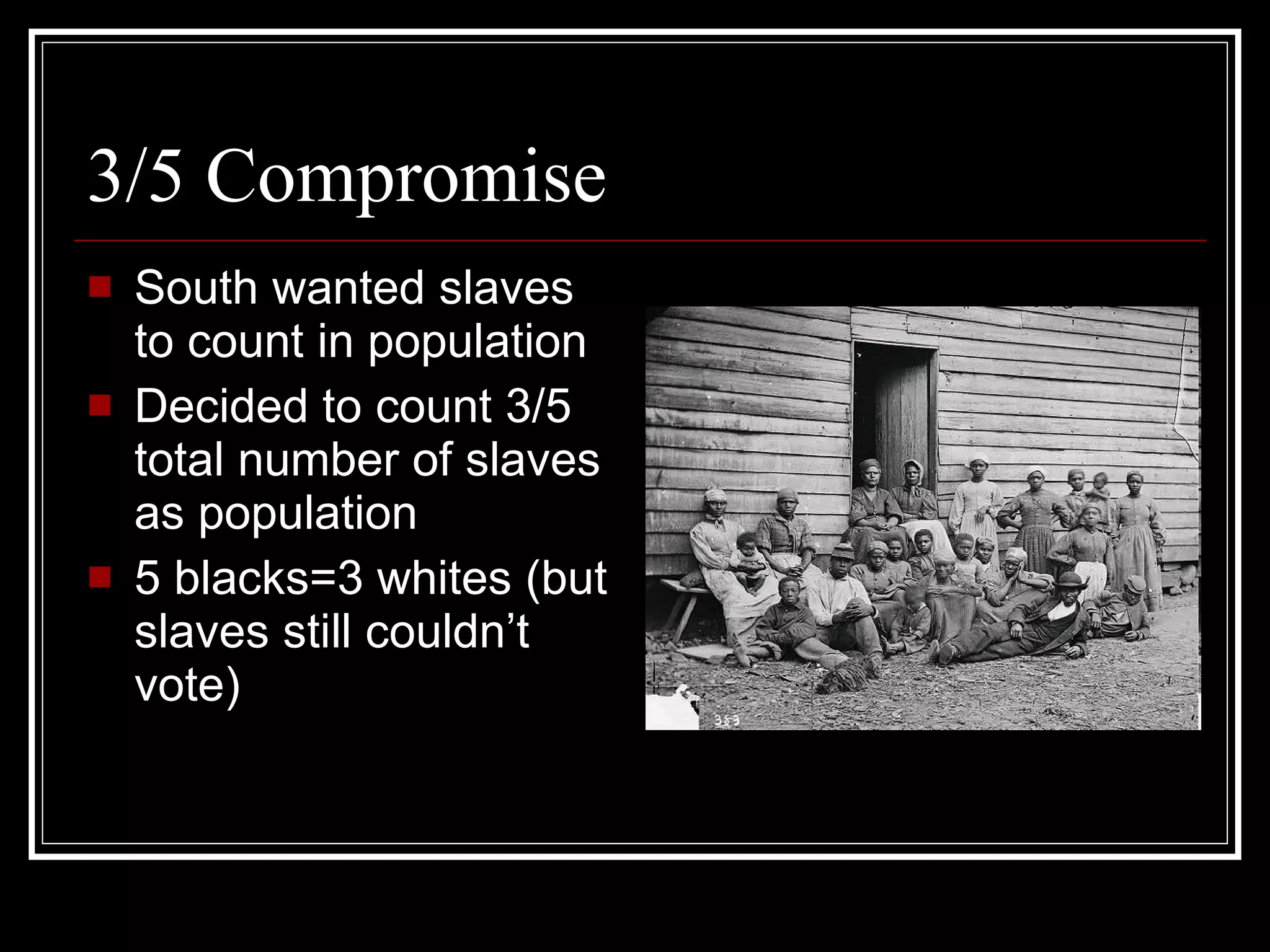
3/5 Compromise  South wanted slaves to count in population Decided to count 3/5 total number of slaves as population 5 blacks=3 whites (but slaves still couldn’t vote)
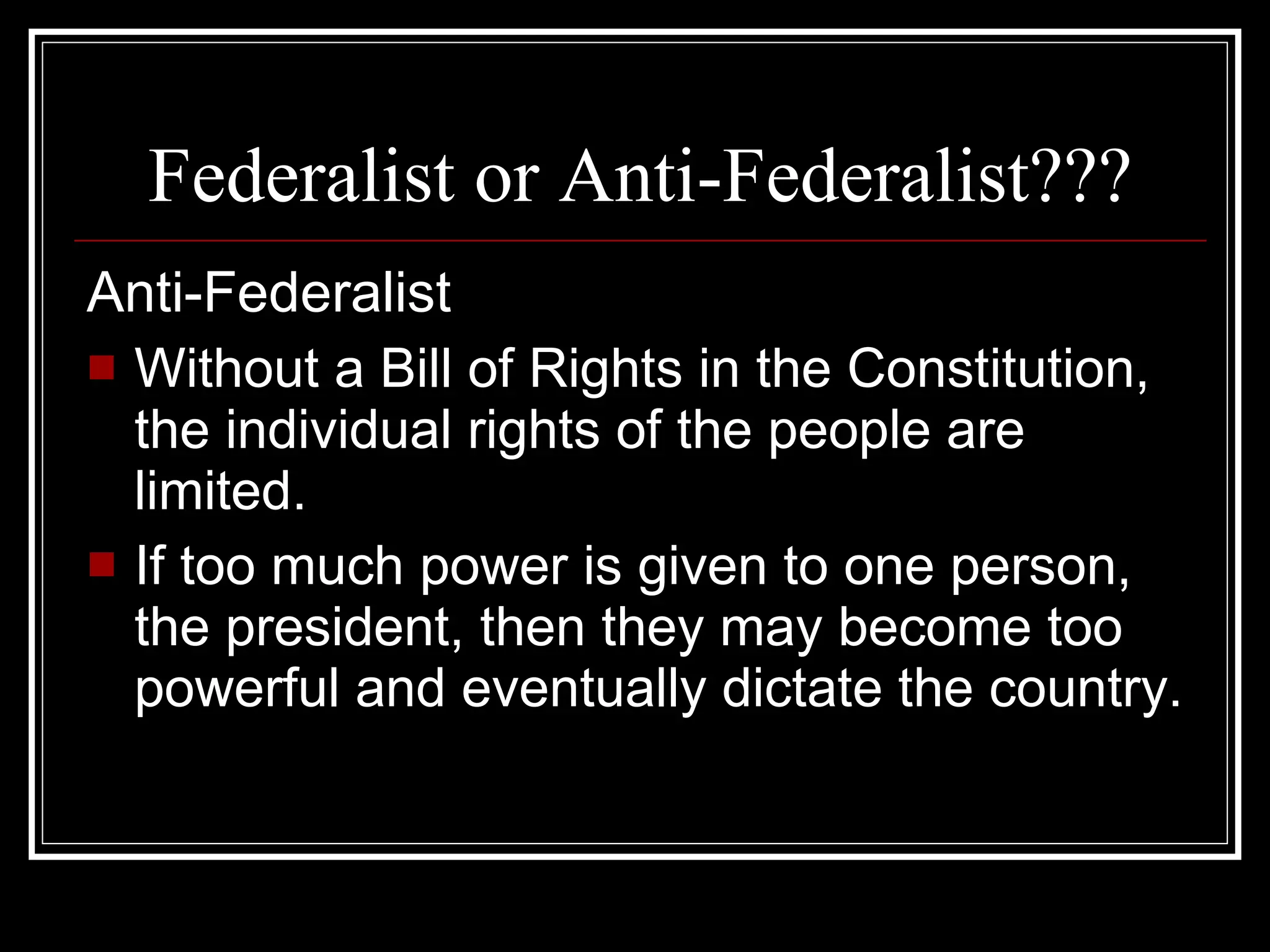
Federalist or Anti-Federalist??? Anti-Federalist  Without a Bill of Rights in the Constitution, the individual rights of the people are limited. If too much power is given to one person, the president, then they may become too powerful and eventually dictate the country.

Constitutional Convention Powerpoint

  • 1.
    Constitutional Convention ProjectAP American History By: Kara King & Troy Miller
  • 2.
    Events and Economicconditions after the Revolutionary War Economic depression No states south of Pennsylvania abolished slavery Shay’s Rebellion
  • 3.
    Shay’s Rebellion Startedin 1786 Hard taxes to pay off the States war debt made Massachusetts farmers rebel. Led by Daniel Slay Created panic This made many people feel that a strong government was needed to control such violent acts
  • 4.
    Five Weaknesses ofthe Articles of Confederation Disagreement over status of land west of the 13 colonies. The country was suffering deep financial troubles. Congress printed of large amounts of money to finance the Revolution Continentals-led to inflation Took loans from France and Netherlands Plan to give articles power to tax but was stopped by one vote from Rhode Island.
  • 5.
    The Constitutional ConventionWhere? 53 delegates met in absolute secrecy in Philadelphia in Independence hall 30 delegates attended every day When? Summer of 1787 The Purpose? The goal was to revise the Articles of Confederation It was quickly decided to replace it
  • 6.
    Key people andtheir contributions to the Constitutional Convention George Washington President of Convention May 25 and present through signing Supported ratifying the Constitution Ben Franklin Arrived May 28 and present through signing Attendant of Pennsylvania James Madison Arrived may 25 through signing of Constitution Writing Virginia Plan Kept notes on Constitution that public would see Alexander Hamilton Presented through signing May 25 Introduction and defense of the Hamilton Plan-June 18, 1787 Secretary of Treasury John Jay Governor of New York Leader of Federalist Party Chief Justice of Supreme Court Abolitionist Did not attend the Convention
  • 7.
    Key people andtheir contributions to the Constitutional Convention Thomas Paine Founding Father of the United States Secretary of Foreign Affairs Patrick Henry Anti-Federalist Opposed replacement of Articles of Confederation (endangered individual freedom)
  • 8.
    Delegates of theStates Represented George Washington-Virginia Benjamin Franklin-Pennsylvania James Madison-Virginia Alexander Hamilton-New York John Jay-New York Thomas Paine-Pennsylvania Patrick Henry-Virginia
  • 9.
    Virginia Plan vs.New Jersey Plan Virginia Plan Supported by big states Bicameral (2 houses) 1-elected by people, 2-elected by first house # of congress determined by population New Jersey Supported by small states Unicameral (1 house) Based on equality Each state same # of Representatives The Great Compromise Bicameral (2 house) House of Representatives determined by population Senate (each state has 2)
  • 10.
    3/5 Compromise South wanted slaves to count in population Decided to count 3/5 total number of slaves as population 5 blacks=3 whites (but slaves still couldn’t vote)
  • 11.
    Federalist or Anti-Federalist???Anti-Federalist Without a Bill of Rights in the Constitution, the individual rights of the people are limited. If too much power is given to one person, the president, then they may become too powerful and eventually dictate the country.