“A Bundle of
Compromises”
Compromises in the Constitution
Chapter 3.2
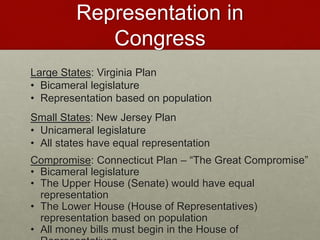
Representation in
Congress
Large States: Virginia Plan
• Bicameral legislature
• Representation based on population
Small States: New Jersey Plan
• Unicameral legislature
• All states have equal representation
Compromise: Connecticut Plan – “The Great Compromise”
• Bicameral legislature
• The Upper House (Senate) would have equal
representation
• The Lower House (House of Representatives)
representation based on population
• All money bills must begin in the House of
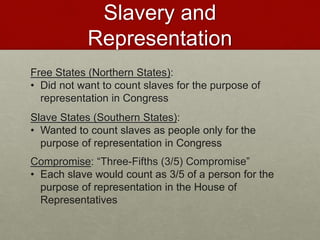
Slavery and
Representation
Free States (Northern States):
• Did not want to count slaves for the purpose of
representation in Congress
Slave States (Southern States):
• Wanted to count slaves as people only for the
purpose of representation in Congress
Compromise: “Three-Fifths (3/5) Compromise”
• Each slave would count as 3/5 of a person for the
purpose of representation in the House of
Representatives
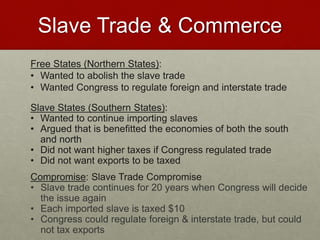
Slave Trade & Commerce
Free States (Northern States):
• Wanted to abolish the slave trade
• Wanted Congress to regulate foreign and interstate trade
Slave States (Southern States):
• Wanted to continue importing slaves
• Argued that is benefitted the economies of both the south
and north
• Did not want higher taxes if Congress regulated trade
• Did not want exports to be taxed
Compromise: Slave Trade Compromise
• Slave trade continues for 20 years when Congress will decide
the issue again
• Each imported slave is taxed $10
• Congress could regulate foreign & interstate trade, but could
not tax exports
Choosing the President
One side:
• Some people did not believe the people were smart
enough to choose the President.
• President should be chosen by Congress
Other side:
• Some people believed that the President should be
directly elected by the people
Compromise: Electoral College
• The people will indirectly choose the President by voting
for an elector to vote for the President for them
Ratification of the
Constitution
Federalists:
• Supported the Constitution
• Voiced their opinions in the Federalist Papers
Anti-Federalists (Democratic Republicans):
• Opposed the Constitution.
• Feared a strong central government would violate
people’s rights.
Compromise: The Bill of Rights
• Bill of Rights was added as the first 10 Amendments to
the Constitution to ensure the rights of the people will be
protected
Living Document
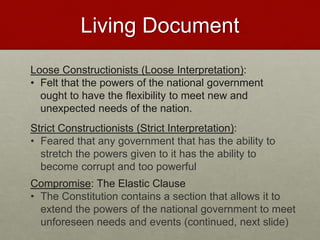
Loose Constructionists (Loose Interpretation):
• Felt that the powers of the national government
ought to have the flexibility to meet new and
unexpected needs of the nation.
Strict Constructionists (Strict Interpretation):
• Feared that any government that has the ability to
stretch the powers given to it has the ability to
become corrupt and too powerful
Compromise: The Elastic Clause
• The Constitution contains a section that allows it to
extend the powers of the national government to meet
unforeseen needs and events (continued, next slide)
Living Document
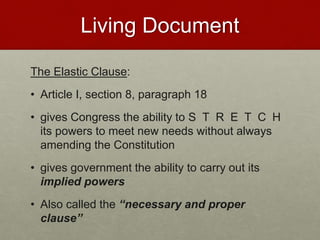
The Elastic Clause:
• Article I, section 8, paragraph 18
• gives Congress the ability to S T R E T C H
its powers to meet new needs without always
amending the Constitution
• gives government the ability to carry out its
implied powers
• Also called the “necessary and proper
clause”

Bundle of Compromises - Civics & Economics

  • 1.
    “A Bundle of Compromises” Compromisesin the Constitution Chapter 3.2
  • 2.
    Representation in Congress Large States:Virginia Plan • Bicameral legislature • Representation based on population Small States: New Jersey Plan • Unicameral legislature • All states have equal representation Compromise: Connecticut Plan – “The Great Compromise” • Bicameral legislature • The Upper House (Senate) would have equal representation • The Lower House (House of Representatives) representation based on population • All money bills must begin in the House of
  • 3.
    Slavery and Representation Free States(Northern States): • Did not want to count slaves for the purpose of representation in Congress Slave States (Southern States): • Wanted to count slaves as people only for the purpose of representation in Congress Compromise: “Three-Fifths (3/5) Compromise” • Each slave would count as 3/5 of a person for the purpose of representation in the House of Representatives
  • 4.
    Slave Trade &Commerce Free States (Northern States): • Wanted to abolish the slave trade • Wanted Congress to regulate foreign and interstate trade Slave States (Southern States): • Wanted to continue importing slaves • Argued that is benefitted the economies of both the south and north • Did not want higher taxes if Congress regulated trade • Did not want exports to be taxed Compromise: Slave Trade Compromise • Slave trade continues for 20 years when Congress will decide the issue again • Each imported slave is taxed $10 • Congress could regulate foreign & interstate trade, but could not tax exports
  • 5.
    Choosing the President Oneside: • Some people did not believe the people were smart enough to choose the President. • President should be chosen by Congress Other side: • Some people believed that the President should be directly elected by the people Compromise: Electoral College • The people will indirectly choose the President by voting for an elector to vote for the President for them
  • 6.
    Ratification of the Constitution Federalists: •Supported the Constitution • Voiced their opinions in the Federalist Papers Anti-Federalists (Democratic Republicans): • Opposed the Constitution. • Feared a strong central government would violate people’s rights. Compromise: The Bill of Rights • Bill of Rights was added as the first 10 Amendments to the Constitution to ensure the rights of the people will be protected
  • 7.
    Living Document Loose Constructionists(Loose Interpretation): • Felt that the powers of the national government ought to have the flexibility to meet new and unexpected needs of the nation. Strict Constructionists (Strict Interpretation): • Feared that any government that has the ability to stretch the powers given to it has the ability to become corrupt and too powerful Compromise: The Elastic Clause • The Constitution contains a section that allows it to extend the powers of the national government to meet unforeseen needs and events (continued, next slide)
  • 8.
    Living Document The ElasticClause: • Article I, section 8, paragraph 18 • gives Congress the ability to S T R E T C H its powers to meet new needs without always amending the Constitution • gives government the ability to carry out its implied powers • Also called the “necessary and proper clause”