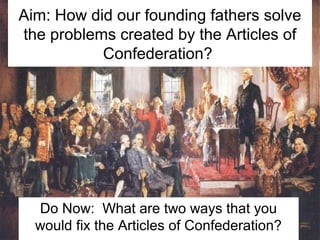
Aim: How did our founding fathers solve 
the problems created by the Articles of 
Confederation? 
Do Now: What are two ways that you 
would fix the Articles of Confederation?
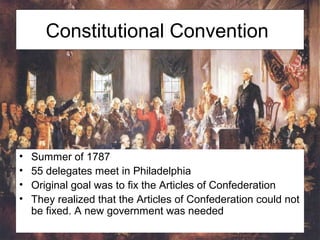
Constitutional Convention 
• Summer of 1787 
• 55 delegates meet in Philadelphia 
• Original goal was to fix the Articles of Confederation 
• They realized that the Articles of Confederation could not 
be fixed. A new government was needed
New Jersey Plan vs. Virginia Plan 
• Major disagreements occurred during the 
writing of the Constitution 
• The biggest disagreement occurred over 
representation in Congress
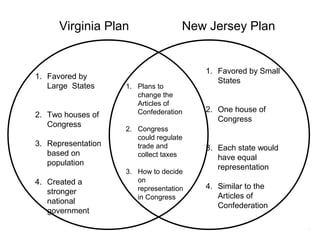
Virginia Plan New Jersey Plan 
1. Favored by Small 
States 
2. One house of 
Congress 
3. Each state would 
have equal 
representation 
4. Similar to the 
Articles of 
Confederation 
1. Favored by 
Large States 
2. Two houses of 
Congress 
3. Representation 
based on 
population 
4. Created a 
stronger 
national 
government 
1. Plans to 
change the 
Articles of 
Confederation 
2. Congress 
could regulate 
trade and 
collect taxes 
3. How to decide 
on 
representation 
in Congress
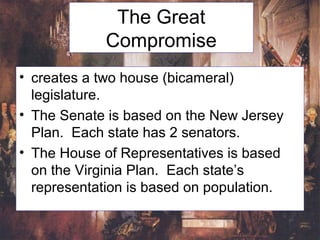
The Great 
Compromise 
• creates a two house (bicameral) 
legislature. 
• The Senate is based on the New Jersey 
Plan. Each state has 2 senators. 
• The House of Representatives is based 
on the Virginia Plan. Each state’s 
representation is based on population.
Great Compromise creates a bicameral 
(2 houses) legislative branch
Bicameral = 2 Houses 
Senate House of Representatives
Aim: How did the Constitution deal 
with the issue of slavery?
Slavery and the Constitution 
Should slaves be counted when 
determining how many 
representatives a state will have? 
Solution 
Problem 1 Problem 2 
Should the Constitution ban the 
slave trade? 
Solution
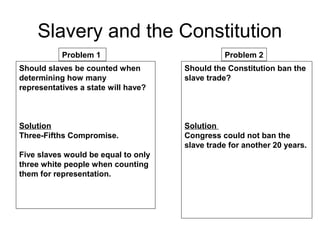
Slavery and the Constitution 
Problem 1 Problem 2 
Should slaves be counted when 
determining how many 
representatives a state will have? 
Solution 
Three-Fifths Compromise. 
Five slaves would be equal to only 
three white people when counting 
them for representation. 
Should the Constitution ban the 
slave trade? 
Solution 
Congress could not ban the 
slave trade for another 20 years.
Slavery and the Constitution 
Problem 1 
Should slaves be counted when determining how many representatives a 
state will have? 
North vs. the South 
Solution 
Three-Fifths Compromise. 
Five slaves would be equal to only three white people when counting them 
for representation.
Slavery and the Constitution 
Problem 2 
Should the Constitution ban the slave trade? 
Solution 
Congress could not ban the slave trade for another 20 years. 
The North gave into many of the demands of the 
Southern States because they needed these 
states to accept the Constitution.
Constitution Signed on 
9/17/1787 
• 39 delegates signed 
• Who were the 
signers? 
• 9 of 13 states had to 
ratify to make it 
official
Who Didn’t Sign? 
• Connecticut - Oliver Ellsworth (left early) 
• Georgia - William Houstoun (left early), William Pierce (left early) 
• Maryland - Luther Martin (left in protest), John Mercer (left in 
protest) 
• Massachusetts - Elbridge Gerry (refused to sign), Caleb Strong (left 
early) 
• New Jersey - William Houston (left early) 
• New York - John Lansing (left in protest), Robert Yates (left in 
protest) 
• North Carolina - William Davie (left early), Alexander Martin (left 
early) 
• Rhode Island - sent no delegates 
• Virginia - George Mason (refused to sign), James McClurg (left 
early), Edmund Randolph (refused to sign), George Wythe (left 
early)

Constitutional Convention

  • 1.
    Aim: How didour founding fathers solve the problems created by the Articles of Confederation? Do Now: What are two ways that you would fix the Articles of Confederation?
  • 2.
    Constitutional Convention •Summer of 1787 • 55 delegates meet in Philadelphia • Original goal was to fix the Articles of Confederation • They realized that the Articles of Confederation could not be fixed. A new government was needed
  • 3.
    New Jersey Planvs. Virginia Plan • Major disagreements occurred during the writing of the Constitution • The biggest disagreement occurred over representation in Congress
  • 4.
    Virginia Plan NewJersey Plan 1. Favored by Small States 2. One house of Congress 3. Each state would have equal representation 4. Similar to the Articles of Confederation 1. Favored by Large States 2. Two houses of Congress 3. Representation based on population 4. Created a stronger national government 1. Plans to change the Articles of Confederation 2. Congress could regulate trade and collect taxes 3. How to decide on representation in Congress
  • 5.
    The Great Compromise • creates a two house (bicameral) legislature. • The Senate is based on the New Jersey Plan. Each state has 2 senators. • The House of Representatives is based on the Virginia Plan. Each state’s representation is based on population.
  • 6.
    Great Compromise createsa bicameral (2 houses) legislative branch
  • 7.
    Bicameral = 2Houses Senate House of Representatives
  • 9.
    Aim: How didthe Constitution deal with the issue of slavery?
  • 10.
    Slavery and theConstitution Should slaves be counted when determining how many representatives a state will have? Solution Problem 1 Problem 2 Should the Constitution ban the slave trade? Solution
  • 11.
    Slavery and theConstitution Problem 1 Problem 2 Should slaves be counted when determining how many representatives a state will have? Solution Three-Fifths Compromise. Five slaves would be equal to only three white people when counting them for representation. Should the Constitution ban the slave trade? Solution Congress could not ban the slave trade for another 20 years.
  • 12.
    Slavery and theConstitution Problem 1 Should slaves be counted when determining how many representatives a state will have? North vs. the South Solution Three-Fifths Compromise. Five slaves would be equal to only three white people when counting them for representation.
  • 13.
    Slavery and theConstitution Problem 2 Should the Constitution ban the slave trade? Solution Congress could not ban the slave trade for another 20 years. The North gave into many of the demands of the Southern States because they needed these states to accept the Constitution.
  • 14.
    Constitution Signed on 9/17/1787 • 39 delegates signed • Who were the signers? • 9 of 13 states had to ratify to make it official
  • 17.
    Who Didn’t Sign? • Connecticut - Oliver Ellsworth (left early) • Georgia - William Houstoun (left early), William Pierce (left early) • Maryland - Luther Martin (left in protest), John Mercer (left in protest) • Massachusetts - Elbridge Gerry (refused to sign), Caleb Strong (left early) • New Jersey - William Houston (left early) • New York - John Lansing (left in protest), Robert Yates (left in protest) • North Carolina - William Davie (left early), Alexander Martin (left early) • Rhode Island - sent no delegates • Virginia - George Mason (refused to sign), James McClurg (left early), Edmund Randolph (refused to sign), George Wythe (left early)