The Constitution of the
United States
Bellwork:
Compromise: A settlement or agreement reached
between two sides, where each side gives
something to the other side.
Journal: Describe a time when you had to
compromise with someone. Who did you
compromise with and what was the compromise?
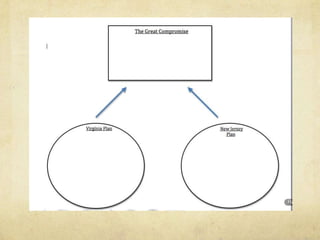
The Great Compromise
Essential Question

What were the results of
the Great Compromise?
Upcoming Change
By the mid 1780’s most political leaders agreed the
Articles of Confederation need to be changed
Confederation Congress invited each state to send
delegates to a convention in Philadelphia
Would discuss ways to improve Articles of Confed.

Meeting was called The Constitutional Convention
12 states sent 55 delegates to the convention
Would lead to the creation of the U.S.

Constitution
Constitutional Convention
Key figures present:
James Madison
Benjamin Franklin
George Washington

Key figures absent
John Adams
Thomas Jefferson
How is our country being represented?
The Great Compromise
Some members wanted to make small changes
to the Articles of Confederation

Some wanted to rewrite the Articles completely
There were also disagreements between:
small and large states; based on how they would
be represented in the new government
about slavery
Economic issues such as tariffs
How strong to make the national government
Virginia Plan
Large-state plan
Written by James Madison

Would give sovereignty-supreme power, to the national
government
Divided the gov’t into three branches:
Executive, Judicial, Legislative

Legislature would be bicameral- two houses
# of representatives of the legislature would depend on state
population
This would benefit large states, giving them more
representatives
New Jersey Plan
Small-state plan
Proposed keeping Congress’ structure the same
Unicameral-one house legislature
This would give each state an equal # of votes
This would benefit smaller states, as large population had
no effect on the # of votes

Convention could not agree after months of debate
A compromise was reached
Great Compromise Cont’d
The Great CompromiseBroke the government into 3 Branches of
Government
Bicameral legislature:
Every state, regardless of its size would have an
equal vote in the upper house of the legislature
Senate

Each state would have a # of representatives
based on its population in the lower house of the
legislature
House of Representatives
The Three-Fifths
Compromise
The debate over representation (how to count
people) also led to problems

Some Southern delegates wanted to count
slaves as part of their state populations
Northern delegates disagreed, thought it was
unfair
Delegates accepted the Three-Fifths
compromise.
Each slave would count as 3/5 of a person
(100 slaves = 60)
Main Concepts
Most of the delegates wanted
a strong national government
Popular Sovereignty- idea that political authority belongs
to the people
Balance power of national government with power of the
states

Federalism- sharing of power between a central
government and the states
Federal gov’t has power to enforce laws
States must obey authority of Federal gov’t
Federal gov’t has the power to use the military to enforce
laws
Troops are under the command of the president
States have control over areas not assigned to Federal
gov’t
Balance of Power
Legislative Branch: Congress
Proposes and passes laws
2 houses: Senate and House of Representatives

Executive Branch: President
Enforces laws, assures they are carried out
Commander-in-Chief of the military

Judicial Branch: Courts
Interprets laws, punishes criminals
Settles disputes between states
Checks and Balances
Kept one branch from gaining too much power
Ex:
Congress proposes and passes laws
President can veto, or reject, that law
Congress can override veto with a 2/3 majority vote

Judicial Branch interprets laws to keep other
branches from abusing power
Supreme Court reviews laws passed by Congress
Federalists vs.
Antifederalists
Antifederalists- those that opposed the constitution
Felt the central gov’t had too much power
Upset that no Bill of Rights was included

Federalists- supported the constitution
Felt it offered a good balance of power

Federalist Papers- essays written supporting the
Constitution
Many written by James Madison and Alexander
Hamilton
Propaganda supporting the Constitution
Ratification
The Constitution needed approval of 9 states to
become ratified

Each state held conventions to give citizens the
chance to discuss the Constitution
They could then vote whether or not to ratify it

June 1788, Constitution was ratified
Bill of Rights
Amendments- official changes, corrections, or
additions

The Bill of Rights would appear as a series of
Amendments to the Constitution
The first 10 amendments to the Constitution are
known as the Bill of Rights
Made sure the abuses listed in the Declaration of
Independence would be illegal
Would protect citizens’ individual rights
Constitution’s flexibility
Has clear guidelines and principles
Can be changed and updated to stay current with
new times and challenges
Often called a “living constitution”
Constitution

Constitution

  • 1.
    The Constitution ofthe United States
  • 2.
    Bellwork: Compromise: A settlementor agreement reached between two sides, where each side gives something to the other side. Journal: Describe a time when you had to compromise with someone. Who did you compromise with and what was the compromise?
  • 3.
  • 4.
    Essential Question What werethe results of the Great Compromise?
  • 5.
    Upcoming Change By themid 1780’s most political leaders agreed the Articles of Confederation need to be changed Confederation Congress invited each state to send delegates to a convention in Philadelphia Would discuss ways to improve Articles of Confed. Meeting was called The Constitutional Convention 12 states sent 55 delegates to the convention Would lead to the creation of the U.S. Constitution
  • 6.
    Constitutional Convention Key figurespresent: James Madison Benjamin Franklin George Washington Key figures absent John Adams Thomas Jefferson How is our country being represented?
  • 7.
    The Great Compromise Somemembers wanted to make small changes to the Articles of Confederation Some wanted to rewrite the Articles completely There were also disagreements between: small and large states; based on how they would be represented in the new government about slavery Economic issues such as tariffs How strong to make the national government
  • 8.
    Virginia Plan Large-state plan Writtenby James Madison Would give sovereignty-supreme power, to the national government Divided the gov’t into three branches: Executive, Judicial, Legislative Legislature would be bicameral- two houses # of representatives of the legislature would depend on state population This would benefit large states, giving them more representatives
  • 9.
    New Jersey Plan Small-stateplan Proposed keeping Congress’ structure the same Unicameral-one house legislature This would give each state an equal # of votes This would benefit smaller states, as large population had no effect on the # of votes Convention could not agree after months of debate A compromise was reached
  • 10.
    Great Compromise Cont’d TheGreat CompromiseBroke the government into 3 Branches of Government Bicameral legislature: Every state, regardless of its size would have an equal vote in the upper house of the legislature Senate Each state would have a # of representatives based on its population in the lower house of the legislature House of Representatives
  • 12.
    The Three-Fifths Compromise The debateover representation (how to count people) also led to problems Some Southern delegates wanted to count slaves as part of their state populations Northern delegates disagreed, thought it was unfair Delegates accepted the Three-Fifths compromise. Each slave would count as 3/5 of a person (100 slaves = 60)
  • 13.
    Main Concepts Most ofthe delegates wanted a strong national government Popular Sovereignty- idea that political authority belongs to the people Balance power of national government with power of the states Federalism- sharing of power between a central government and the states Federal gov’t has power to enforce laws States must obey authority of Federal gov’t Federal gov’t has the power to use the military to enforce laws Troops are under the command of the president States have control over areas not assigned to Federal gov’t
  • 14.
    Balance of Power LegislativeBranch: Congress Proposes and passes laws 2 houses: Senate and House of Representatives Executive Branch: President Enforces laws, assures they are carried out Commander-in-Chief of the military Judicial Branch: Courts Interprets laws, punishes criminals Settles disputes between states
  • 15.
    Checks and Balances Keptone branch from gaining too much power Ex: Congress proposes and passes laws President can veto, or reject, that law Congress can override veto with a 2/3 majority vote Judicial Branch interprets laws to keep other branches from abusing power Supreme Court reviews laws passed by Congress
  • 16.
    Federalists vs. Antifederalists Antifederalists- thosethat opposed the constitution Felt the central gov’t had too much power Upset that no Bill of Rights was included Federalists- supported the constitution Felt it offered a good balance of power Federalist Papers- essays written supporting the Constitution Many written by James Madison and Alexander Hamilton Propaganda supporting the Constitution
  • 17.
    Ratification The Constitution neededapproval of 9 states to become ratified Each state held conventions to give citizens the chance to discuss the Constitution They could then vote whether or not to ratify it June 1788, Constitution was ratified
  • 18.
    Bill of Rights Amendments-official changes, corrections, or additions The Bill of Rights would appear as a series of Amendments to the Constitution The first 10 amendments to the Constitution are known as the Bill of Rights Made sure the abuses listed in the Declaration of Independence would be illegal Would protect citizens’ individual rights
  • 19.
    Constitution’s flexibility Has clearguidelines and principles Can be changed and updated to stay current with new times and challenges Often called a “living constitution”