Lesson 2 Philadelphia Convention

   Bellringer: What were the problems with
         the Articles of Confederation?
“These things happened. They were glorious and
 they changed the world... and then we screwed
               up the endgame.”


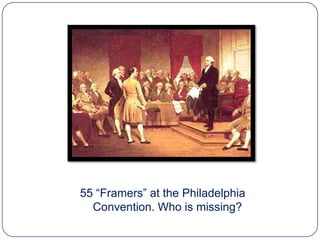
            55 “Framers” at the Philadelphia
              Convention. Who is missing?
Guiding Questions
ď‚— What was included in the Virginia Plan?


ď‚— How did the goals of the Convention
 change?
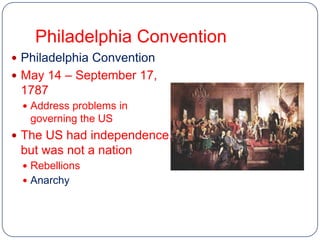
Philadelphia Convention
ď‚— Philadelphia Convention
 May 14 – September 17,
 1787
 ď‚— Address problems in
   governing the US
ď‚— The US had independence,
 but was not a nation
 ď‚— Rebellions
 ď‚— Anarchy
Call for Change
ď‚— Many felt the Confederation needed to be
  changed
ď‚— James Madison called for a meeting to revise
  or improve the Articles
  Madison is referred to as the “Father of the
   Constitution”
 ď‚— The Convention ended up creating a new
   constitution and a stronger national government
Call for Change
ď‚— 55 delegates came to Philadelphia;
 Washington was chosen as the presiding
 officer
 ď‚— Starting goal was to improve and advise, but the
   goal quickly changed
  “Framers”; framed or shaped the constitution
 ď‚— Decided to change the constitution and keep the
   meeting secret
 ď‚— Thomas Jefferson and Patrick Henry did not attend
 ď‚— No women, African Americans, or Native Americans
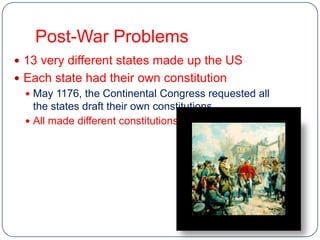
Post-War Problems
ď‚— 13 very different states made up the US
ď‚— Each state had their own constitution
  ď‚— May 1176, the Continental Congress requested all
    the states draft their own constitutions
  ď‚— All made different constitutions
State Constitutions
ď‚— The states were very wary of one party having
 too much power
 ď‚— Drafted constitution to limit power in the hands of a
   single ruler
 ď‚— Pennsylvania set up a council of 12
 ď‚— States divided power between the governor (or
   executive leader) and the legislature (i.e. the
   Congress)
 ď‚— Hosted frequent elections
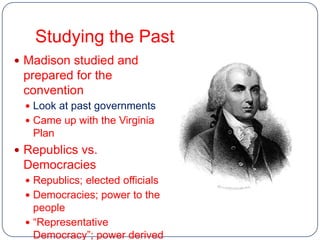
Studying the Past
ď‚— Madison studied and
 prepared for the
 convention
  ď‚— Look at past governments
  ď‚— Came up with the Virginia
   Plan
ď‚— Republics vs.
 Democracies
  ď‚— Republics; elected officials
  ď‚— Democracies; power to the
    people
   “Representative
    Democracy”; power derived
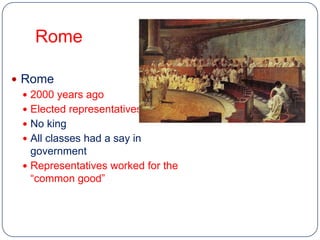
Rome

ď‚— Rome
  ď‚— 2000 years ago
  ď‚— Elected representatives
  ď‚— No king
  ď‚— All classes had a say in
    government
  ď‚— Representatives worked for the
    “common good”
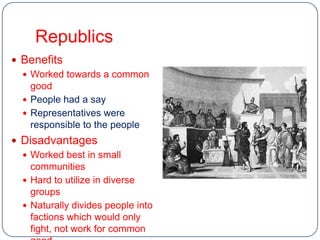
Republics
ď‚— Benefits
  ď‚— Worked towards a common
    good
  ď‚— People had a say
  ď‚— Representatives were
    responsible to the people
ď‚— Disadvantages
  ď‚— Worked best in small
    communities
  ď‚— Hard to utilize in diverse
    groups
  ď‚— Naturally divides people into
    factions which would only
    fight, not work for common
Madison
ď‚— Madison
  ď‚— Madison determined republics were weaker than
    monarchs because Kings and Queens could make
    decisions quickly
  ď‚— US needed a strong national government
   ď‚— Needed some type of leadership without the misuse of
     power
   ď‚— Checks and balances
Virginia Plan
ď‚— Virginia Plan
  ď‚— Strong national government
  ď‚— 2 governments (state and national)
  ď‚— National government could make and enforce laws
  ď‚— National government could tax
  ď‚— 3 branches
  ď‚— 2 houses; one proportional to state size and the
    other equal representation
    ď‚— Madison had a coalition backing him
    ď‚— Those who opposed the Virginia Plan came up with the
     New Jersey Plan
New Jersey Plan
ď‚— New Jersey Plan
  ď‚— Weak national government
  ď‚— 1 house with equal representation
  ď‚— National government could tax and regulate trade
  ď‚— 2 branches
    ď‚— Created by small states
Convention Continues
ď‚— Convention agreed it must go beyond
 amending the Articles and instead produce a
 new constitution
 ď‚— The new national government would have the
   powers of the Confederation, as well as the power
   over the state
 ď‚— Next step was choosing a plan
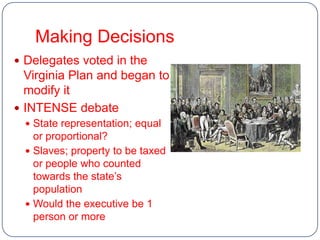
Making Decisions
ď‚— Delegates voted in the
  Virginia Plan and began to
  modify it
ď‚— INTENSE debate
  ď‚— State representation; equal
    or proportional?
  ď‚— Slaves; property to be taxed
    or people who counted
    towards the state’s
    population
  ď‚— Would the executive be 1
    person or more
Making Decisions
ď‚— Compromise
  ď‚— Great Compromise; 2
    houses in legislative
    branch
    ď‚— Senate; equal representation
    ď‚— House of Representatives;
      proportional
  ď‚— 3/5 Compromise; slaves
   counted as 3/5 of a
   person
    ď‚— 3/5 as productive as a free
      person
ď‚— Other decisions
  ď‚— Bicameral; 2 houses
  ď‚— Elections; electoral
Making Decisions
ď‚— Agreed the government should . . .
  ď‚— Be a constitutional government with limited powers
  ď‚— Serve to protect the fundamental rights of the people
    and the common good
  ď‚— Be stronger to protect rights
  ď‚— Be a republican form of government
  ď‚— Have a series of checks and balances
  ď‚— Have a separation of power
ď‚— Adjourned to let the Committee of Detail work
  on the first draft of the Constitution
Civic Virtue
 “Civic Virtue”; citizens and leaders put aside
 private interests for the common good
  ď‚— Is this happening today?
  ď‚— How virtuous are our current politicians?
  ď‚— Are we working towards a common good?
 Read article “Continuing Deadlock in
 Congress May Boost State Power”
  ď‚— Are we following the Framers plan?
  ď‚— How can we fix this?
Exit Card(s)
 What is “common good”?
 What is “civic virtue”?
Building a Country
ď‚— Create your own country with your group
ď‚— Decide what type of country you would have
  ď‚— Constitution
  ď‚— Type of Government
  ď‚— Taxes
  ď‚— Laws
ď‚— Write a basic outline like the Virginia Plan

Lesson 2 Philadelphia Convention

  • 1.
    Lesson 2 PhiladelphiaConvention Bellringer: What were the problems with the Articles of Confederation?
  • 2.
    “These things happened.They were glorious and they changed the world... and then we screwed up the endgame.” 55 “Framers” at the Philadelphia Convention. Who is missing?
  • 3.
    Guiding Questions ď‚— Whatwas included in the Virginia Plan? ď‚— How did the goals of the Convention change?
  • 4.
    Philadelphia Convention  PhiladelphiaConvention  May 14 – September 17, 1787  Address problems in governing the US  The US had independence, but was not a nation  Rebellions  Anarchy
  • 5.
    Call for Change Many felt the Confederation needed to be changed  James Madison called for a meeting to revise or improve the Articles  Madison is referred to as the “Father of the Constitution”  The Convention ended up creating a new constitution and a stronger national government
  • 6.
    Call for Change 55 delegates came to Philadelphia; Washington was chosen as the presiding officer  Starting goal was to improve and advise, but the goal quickly changed  “Framers”; framed or shaped the constitution  Decided to change the constitution and keep the meeting secret  Thomas Jefferson and Patrick Henry did not attend  No women, African Americans, or Native Americans
  • 7.
    Post-War Problems ď‚— 13very different states made up the US ď‚— Each state had their own constitution ď‚— May 1176, the Continental Congress requested all the states draft their own constitutions ď‚— All made different constitutions
  • 8.
    State Constitutions ď‚— Thestates were very wary of one party having too much power ď‚— Drafted constitution to limit power in the hands of a single ruler ď‚— Pennsylvania set up a council of 12 ď‚— States divided power between the governor (or executive leader) and the legislature (i.e. the Congress) ď‚— Hosted frequent elections
  • 9.
    Studying the Past Madison studied and prepared for the convention  Look at past governments  Came up with the Virginia Plan  Republics vs. Democracies  Republics; elected officials  Democracies; power to the people  “Representative Democracy”; power derived
  • 10.
    Rome  Rome  2000 years ago  Elected representatives  No king  All classes had a say in government  Representatives worked for the “common good”
  • 11.
    Republics ď‚— Benefits ď‚— Worked towards a common good ď‚— People had a say ď‚— Representatives were responsible to the people ď‚— Disadvantages ď‚— Worked best in small communities ď‚— Hard to utilize in diverse groups ď‚— Naturally divides people into factions which would only fight, not work for common
  • 12.
    Madison ď‚— Madison ď‚— Madison determined republics were weaker than monarchs because Kings and Queens could make decisions quickly ď‚— US needed a strong national government ď‚— Needed some type of leadership without the misuse of power ď‚— Checks and balances
  • 13.
    Virginia Plan ď‚— VirginiaPlan ď‚— Strong national government ď‚— 2 governments (state and national) ď‚— National government could make and enforce laws ď‚— National government could tax ď‚— 3 branches ď‚— 2 houses; one proportional to state size and the other equal representation ď‚— Madison had a coalition backing him ď‚— Those who opposed the Virginia Plan came up with the New Jersey Plan
  • 14.
    New Jersey Plan ď‚—New Jersey Plan ď‚— Weak national government ď‚— 1 house with equal representation ď‚— National government could tax and regulate trade ď‚— 2 branches ď‚— Created by small states
  • 15.
    Convention Continues ď‚— Conventionagreed it must go beyond amending the Articles and instead produce a new constitution ď‚— The new national government would have the powers of the Confederation, as well as the power over the state ď‚— Next step was choosing a plan
  • 16.
    Making Decisions  Delegatesvoted in the Virginia Plan and began to modify it  INTENSE debate  State representation; equal or proportional?  Slaves; property to be taxed or people who counted towards the state’s population  Would the executive be 1 person or more
  • 17.
    Making Decisions ď‚— Compromise ď‚— Great Compromise; 2 houses in legislative branch ď‚— Senate; equal representation ď‚— House of Representatives; proportional ď‚— 3/5 Compromise; slaves counted as 3/5 of a person ď‚— 3/5 as productive as a free person ď‚— Other decisions ď‚— Bicameral; 2 houses ď‚— Elections; electoral
  • 18.
    Making Decisions ď‚— Agreedthe government should . . . ď‚— Be a constitutional government with limited powers ď‚— Serve to protect the fundamental rights of the people and the common good ď‚— Be stronger to protect rights ď‚— Be a republican form of government ď‚— Have a series of checks and balances ď‚— Have a separation of power ď‚— Adjourned to let the Committee of Detail work on the first draft of the Constitution
  • 19.
    Civic Virtue  “CivicVirtue”; citizens and leaders put aside private interests for the common good  Is this happening today?  How virtuous are our current politicians?  Are we working towards a common good?  Read article “Continuing Deadlock in Congress May Boost State Power”  Are we following the Framers plan?  How can we fix this?
  • 20.
    Exit Card(s)  Whatis “common good”?  What is “civic virtue”?
  • 21.
    Building a Country ď‚—Create your own country with your group ď‚— Decide what type of country you would have ď‚— Constitution ď‚— Type of Government ď‚— Taxes ď‚— Laws ď‚— Write a basic outline like the Virginia Plan