GREEN REVOLUTION,
GENETIC EROSION, AND
TRADITIONAL
CROSSBREEDING IN
GENETIC ENGINEERING
PRESENTED BY: SAHIL SHAKYA
B.TECH BIOTECHNOLOGY (7th SEMESTER)
AITM
3/29/2018
Green Revolution
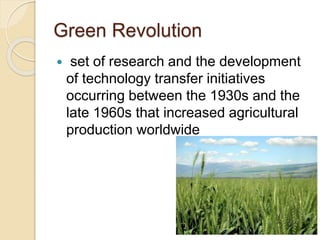
 set of research and the development
of technology transfer initiatives
occurring between the 1930s and the
late 1960s that increased agricultural
production worldwide
 "Green Revolution" was first used in a
March 8, 1968 speech by the
administrator of the U.S. Agency for
International Development(USAID)
 Norman Borlaug, the "Father of the
Green Revolution“.
Approaches
 development of high-yielding varieties
of cereal grains
 expansion of irrigation infrastructure
 modernization of management
techniques
 distribution of hybridized seeds
 synthetic fertilizers
 pesticides to farmers
Need
 Land Reform
 Irrigation
 Farm mechanization
Present Scenario
 Productivity of all crops eg. Wheat,
rice, cotton ,maize etc has increased
due to better seeds.
 Chemical fertilizers , irrigation and
mechanization of agriculture
 Generated employment.
Production Increases
 Cereal production more than doubled
in developing nations between the
years 1961–1985
 Yields of rice, maize, and wheat
increased steadily during that period
 heavily rely on
chemical fertilizers, pesticides and
herbicides and rely on machines
Effects
 Increase in production
 Capitalistic farming
 Rural employment
 Import of food grains
 Development of Industries
 Economic growth
Issues
 Pollution and erosion of soil
 Pollution of water
 Unemployment among uneducated
farmers
 Deadly disease
 Harmful for farmers
 Consumption may be adverse
 Overuse of chemical pesticides and
fertilizers caused negative effects on soil
and land.
Issues Regarding Green
Revolution
Green Revolution Conclusion
 Has done a lot of positive things, saving the
lives of million people and exponentially
increasing the food crops. But environmental
degradation makes the green revolution an
overall inefficient , short term solution to the
problem of insecurity.
 So, more sustainable and environmental
friendly system of cultivation needs to be
practiced.
 The world needs green revolution 2, which
promises to feed a growing world population
sustainably without compromising the needs
of future generation.
Genetic Erosion
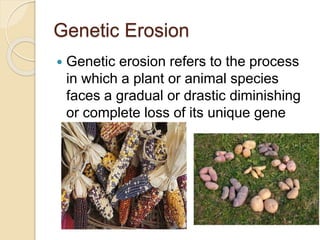
 Genetic erosion refers to the process
in which a plant or animal species
faces a gradual or drastic diminishing
or complete loss of its unique gene
pool
 It occurs because each individual
organism has many unique genes
which get lost when it dies without
getting a chance to breed.
Causes of Genetic Erosion
 variety replacement,
 land clearing,
 overexploitation of species,
 population pressure,
 environmental degradation,
 overgrazing,
 governmental policy,
 and changing agricultural systems
Prevention
 In situ conservation
Wildlife sanctuaries and national
parks have been created to preserve
entire ecosystems
 Ex situ conservation
seedbanks, sperm banks, and tissue banks
Traditional Cross Breeding
 produce a new plant by mating or
hybridizing two different species,
breeds, or varieties.
 Thousands of years ago, farmers
simply saved seeds from their best
plants for replanting.
 Over time, plant breeders developed
increasingly sophisticated techniques
to attain specific traits i.e. Genetic
Engineering
Traditional methods
 Simple Selection
 Cross-Pollination
 Hybridization
 Natural Mutations
 Induced Mutations
Genetically Modified
 inserting genetic material from one
organism into the DNA of a completely
unrelated organism,
 only method available to plant breeders
to confer beneficial traits between
unrelated species.
 for example, To create “Bt corn”,
scientists incorporated genetic material
from Bacillus thuringiensis into the DNA
of corn plants.
Benefits of GMO
 reduced pesticide use
 improved yields
 plants with higher nutrient levels
 U.S. Food and Drug Administration
has deemed GMOs safe
Defects
 many consumers still hesitate
 Organic growers worry that the pests
will develop resistance to Bt
 Bt-resistant bollworms were found in
cotton fields in Mississippi and
Arkansas within seven years of the
introduction of Bt cotton.
 health, environmental and
philosophical concerns
THANK YOU

Green revolution, genetic erosion

  • 1.
    GREEN REVOLUTION, GENETIC EROSION,AND TRADITIONAL CROSSBREEDING IN GENETIC ENGINEERING PRESENTED BY: SAHIL SHAKYA B.TECH BIOTECHNOLOGY (7th SEMESTER) AITM 3/29/2018
  • 2.
    Green Revolution  setof research and the development of technology transfer initiatives occurring between the 1930s and the late 1960s that increased agricultural production worldwide
  • 3.
     "Green Revolution"was first used in a March 8, 1968 speech by the administrator of the U.S. Agency for International Development(USAID)  Norman Borlaug, the "Father of the Green Revolution“.
  • 4.
    Approaches  development ofhigh-yielding varieties of cereal grains  expansion of irrigation infrastructure  modernization of management techniques  distribution of hybridized seeds  synthetic fertilizers  pesticides to farmers
  • 5.
    Need  Land Reform Irrigation  Farm mechanization
  • 6.
    Present Scenario  Productivityof all crops eg. Wheat, rice, cotton ,maize etc has increased due to better seeds.  Chemical fertilizers , irrigation and mechanization of agriculture  Generated employment.
  • 7.
    Production Increases  Cerealproduction more than doubled in developing nations between the years 1961–1985  Yields of rice, maize, and wheat increased steadily during that period  heavily rely on chemical fertilizers, pesticides and herbicides and rely on machines
  • 8.
    Effects  Increase inproduction  Capitalistic farming  Rural employment  Import of food grains  Development of Industries  Economic growth
  • 9.
    Issues  Pollution anderosion of soil  Pollution of water  Unemployment among uneducated farmers  Deadly disease  Harmful for farmers  Consumption may be adverse  Overuse of chemical pesticides and fertilizers caused negative effects on soil and land.
  • 10.
  • 11.
    Green Revolution Conclusion Has done a lot of positive things, saving the lives of million people and exponentially increasing the food crops. But environmental degradation makes the green revolution an overall inefficient , short term solution to the problem of insecurity.  So, more sustainable and environmental friendly system of cultivation needs to be practiced.  The world needs green revolution 2, which promises to feed a growing world population sustainably without compromising the needs of future generation.
  • 12.
    Genetic Erosion  Geneticerosion refers to the process in which a plant or animal species faces a gradual or drastic diminishing or complete loss of its unique gene pool
  • 13.
     It occursbecause each individual organism has many unique genes which get lost when it dies without getting a chance to breed.
  • 14.
    Causes of GeneticErosion  variety replacement,  land clearing,  overexploitation of species,  population pressure,  environmental degradation,  overgrazing,  governmental policy,  and changing agricultural systems
  • 15.
    Prevention  In situconservation Wildlife sanctuaries and national parks have been created to preserve entire ecosystems  Ex situ conservation seedbanks, sperm banks, and tissue banks
  • 16.
    Traditional Cross Breeding produce a new plant by mating or hybridizing two different species, breeds, or varieties.  Thousands of years ago, farmers simply saved seeds from their best plants for replanting.  Over time, plant breeders developed increasingly sophisticated techniques to attain specific traits i.e. Genetic Engineering
  • 17.
    Traditional methods  SimpleSelection  Cross-Pollination  Hybridization  Natural Mutations  Induced Mutations
  • 18.
    Genetically Modified  insertinggenetic material from one organism into the DNA of a completely unrelated organism,  only method available to plant breeders to confer beneficial traits between unrelated species.  for example, To create “Bt corn”, scientists incorporated genetic material from Bacillus thuringiensis into the DNA of corn plants.
  • 19.
    Benefits of GMO reduced pesticide use  improved yields  plants with higher nutrient levels  U.S. Food and Drug Administration has deemed GMOs safe
  • 20.
    Defects  many consumersstill hesitate  Organic growers worry that the pests will develop resistance to Bt  Bt-resistant bollworms were found in cotton fields in Mississippi and Arkansas within seven years of the introduction of Bt cotton.  health, environmental and philosophical concerns
  • 21.

Editor's Notes

  • #2 Cf supply crops with extra nutrients and increase yield New pesticides controlled weeds, kill insects, prevented diseases which result in higher productivity