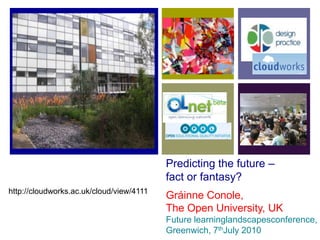
Predicting the future – fact or fantasy?http://cloudworks.ac.uk/cloud/view/4111Gráinne Conole,The Open University, UKFuture learninglandscapesconference, Greenwich, 7thJuly 2010
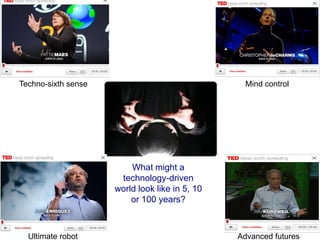
Techno-sixth senseMind control What might a technology-driven world look like in 5, 10 or 100 years?Ultimate robotAdvanced futures
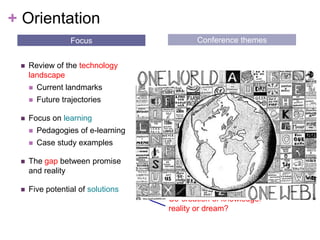
OrientationConference themesFocusReview of the technology landscape Current landmarks Future trajectoriesFocus on learningPedagogies of e-learningCase study examplesThe gap between promise and realityFive potential of solutions What transformational practices, technologies and environments for learning are there?Individuality vs. connectivityTension between openness & privacyWhat skills will learners (& teachers) need?Co-creation of knowledge: reality or dream?
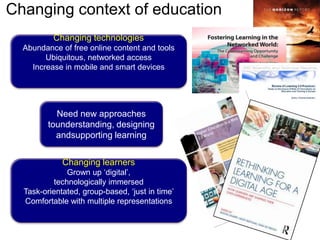
Changing context of educationChanging technologiesAbundance of free online content and toolsUbiquitous, networked accessIncrease in mobile and smart devicesNeed new approaches tounderstanding, designing andsupporting learningChanging learnersGrown up ‘digital’,technologically immersedTask-orientated, group-based, ‘just in time’Comfortable with multiple representations
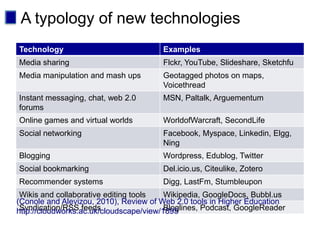
A typology of new technologies(Conole and Alevizou, 2010), Review of Web 2.0 tools in Higher Educationhttp://cloudworks.ac.uk/cloudscape/view/1895
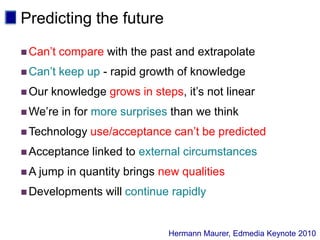
Predicting the futureCan’t compare with the past and extrapolateCan’t keep up - rapid growth of knowledgeOur knowledge grows in steps, it’s not linearWe’re in for more surprises than we thinkTechnology use/acceptance can’t be predictedAcceptance linked to external circumstancesA jump in quantity brings new qualitiesDevelopments will continue rapidlyHermann Maurer, Edmedia Keynote 2010
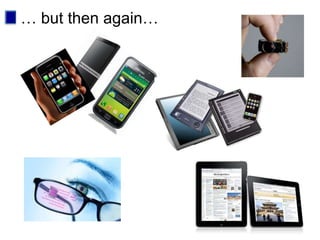
… but then again…
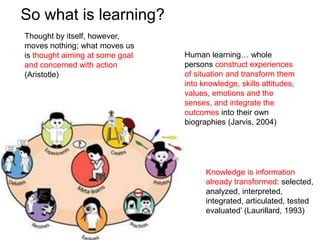
So what is learning?Thought by itself, however, moves nothing; what moves us is thought aiming at some goal and concerned with action (Aristotle) Human learning… whole persons construct experiences of situation and transform them into knowledge, skills attitudes, values, emotions and the senses, and integrate the outcomes into their own biographies (Jarvis, 2004) Knowledge is information already transformed: selected, analyzed, interpreted, integrated, articulated, tested evaluated’ (Laurillard, 1993)
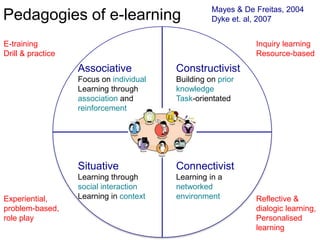
Pedagogies of e-learningMayes & De Freitas, 2004Dyke et. al, 2007AE-trainingDrill & practiceInquiry learningResource-basedAssociativeFocus on individualLearning through association and reinforcementConstructivistBuilding on prior knowledgeTask-orientatedSituativeLearning through social interactionLearning in contextConnectivistLearning in a networked environmentExperiential, problem-based, role playReflective & dialogic learning, Personalised learning
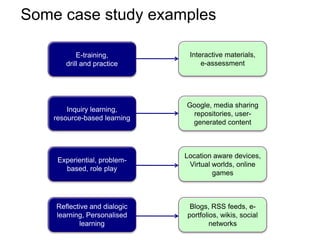
Some case study examplesInteractive materials, e-assessmentE-training,drill and practiceLocation aware devices, Virtual worlds, online games Inquiry learning, resource-based learningGoogle, media sharing repositories, user-generated contentExperiential, problem-based, role playBlogs, RSS feeds, e-portfolios, wikis, social networksReflective and dialogic learning, Personalised learning
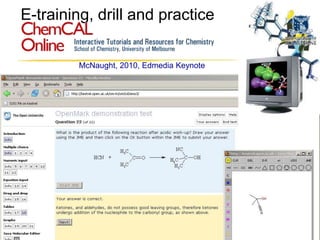
E-training, drill and practiceMcNaught, 2010, Edmedia Keynote
Going mobilehttp://sclater.com/blog/?p=453
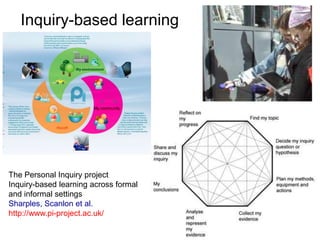
Inquiry-based learningMy communityThe Personal Inquiry projectInquiry-based learning across formal and informal settingsSharples, Scanlon et al.http://www.pi-project.ac.uk/
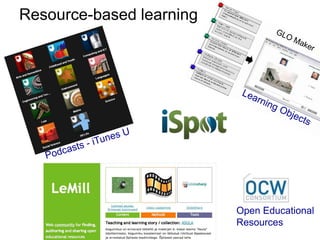
Resource-based learningGLO MakerLearning ObjectsPodcasts - iTunes UOpen Educational Resources
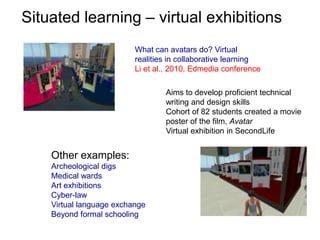
Situated learning – virtual exhibitionsWhat can avatars do? Virtual realities in collaborative learningLi et al., 2010, Edmedia conferenceAims to develop proficient technical writing and design skillsCohort of 82 students created a movie poster of the film, AvatarVirtual exhibition in SecondLifeOther examples:Archeological digsMedical wardsArt exhibitionsCyber-lawVirtual language exchangeBeyond formal schooling
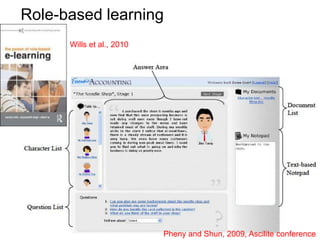
Role-based learningWills et al., 2010Pheny and Shun, 2009, Ascilite conference
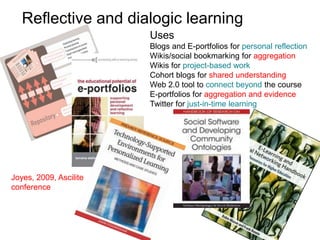
Reflective and dialogic learningUsesBlogs and E-portfolios for personal reflection Wikis/social bookmarking for aggregationWikis for project-based workCohort blogs for shared understandingWeb 2.0 tool to connect beyond the courseE-portfolios for aggregation and evidenceTwitter for just-in-time learning Joyes, 2009, Ascilite conference
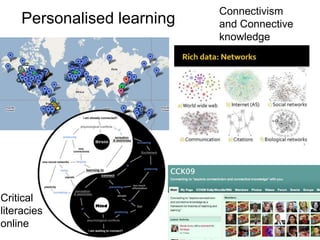
Connectivism and Connective knowledge Personalised learningCritical literacies online
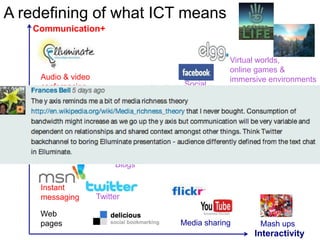
Communication+A redefining of what ICT meansAudio & video conferencingMedia sharingForumsGoogle waveEmailWikisBlogsInstant messagingTwitterInteractivityVirtual worlds, online games & immersive environments Web pagesSocial networkingMash ups
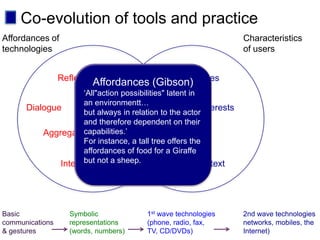
Co-evolution of tools and practiceCharacteristics of usersAffordances of technologiesAffordances (Gibson)‘All"action possibilities" latent in an environmentt…but always in relation to the actor and therefore dependent on their capabilities.’For instance, a tall tree offers the affordances of food for a Giraffe but not a sheep.PreferencesReflectionInterestsDialogueEvolvingpracticesAggregationSkillsContextInteractivityBasic communications & gesturesSymbolic representations (words, numbers)1st wave technologies (phone, radio, fax,  TV, CD/DVDs)2nd wave technologies networks, mobiles, the Internet)
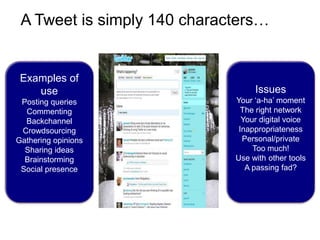
A Tweet is simply 140 characters…Examples of usePosting queriesCommentingBackchannelCrowdsourcingGathering opinionsSharing ideasBrainstormingSocial presenceIssuesYour ‘a-ha’ momentThe right networkYour digital voiceInappropriateness Personal/privateToo much!Use with other toolsA passing fad?
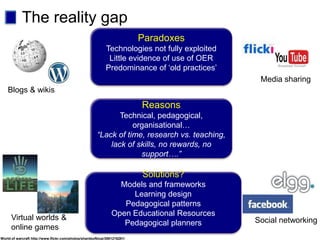
The reality gapParadoxesTechnologies not fully exploitedLittle evidence of use of OERPredominance of ‘old practices’Media sharingBlogs & wikisReasonsTechnical, pedagogical, organisational…“Lack of time, research vs. teaching, lack of skills, no rewards, no support….”Solutions?Models and frameworksLearning designPedagogical patternsOpen Educational ResourcesPedagogical plannersVirtual worlds &online gamesSocial networkingWorld of warcraft http://www.flickr.com/photos/shardsofblue/3981216281/
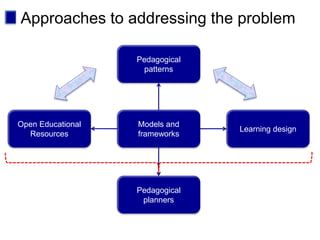
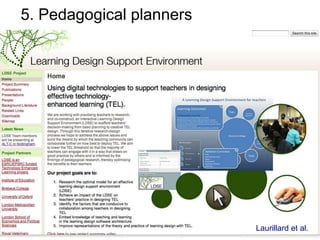
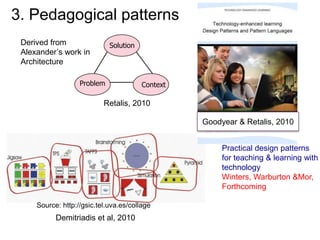
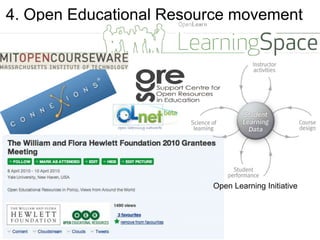
Approaches to addressing the problemPedagogical patternsModels and frameworksOpen Educational ResourcesLearning designPedagogical planners
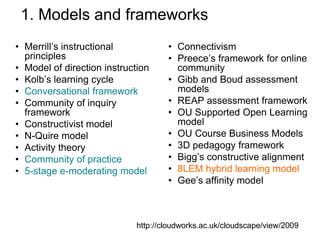
1. Models and frameworksMerrill’s instructional principles
Model of direction instruction
Kolb’s learning cycle
Conversational framework
Community of inquiry framework
Constructivist model
N-Quire model
Activity theory
Community of practice
5-stage e-moderating model
Connectivism
Preece’s framework for online community
Gibb and Boud assessment models
REAP assessment framework
OU Supported Open Learning model
OU Course Business Models
3D pedagogy framework
Bigg’s constructive alignment
8LEM hybrid learning model
Gee’s affinity modelhttp://cloudworks.ac.uk/cloudscape/view/2009
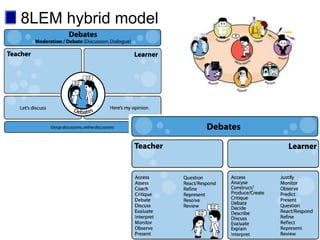
8LEM hybrid model
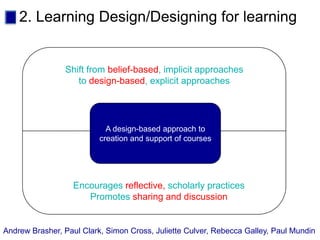
2. Learning Design/Designing for learningShift from belief-based, implicit approaches to design-based, explicit approachesA design-based approach to creation and support of coursesEncourages reflective, scholarly practicesPromotes sharing and discussionAndrew Brasher, Paul Clark, Simon Cross, Juliette Culver, Rebecca Galley, Paul Mundin
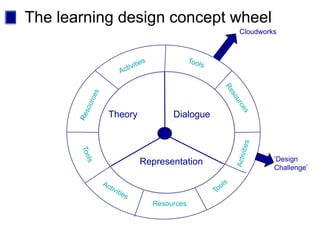
The learning design concept wheelToolsActivitiesCloudworksResourcesResources’DesignChallenge’TheoryDialogueRepresentationActivitiesToolsToolsActivitiesResources
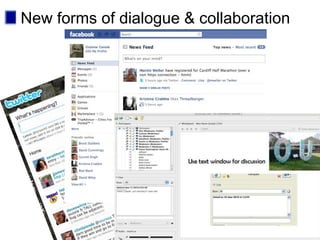
New forms of dialogue & collaboration
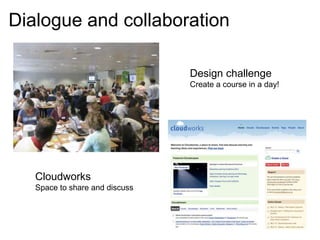
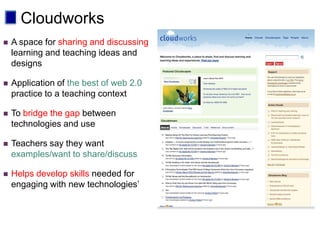
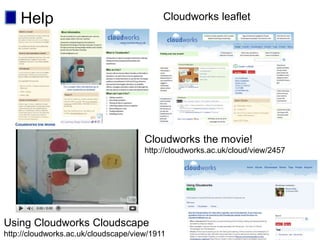
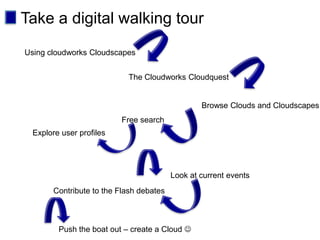
Dialogue and collaborationDesign challengeCreate a course in a day!CloudworksSpace to share and discuss

Conole keynote greenwich_final

  • 1.
    Predicting the future– fact or fantasy?http://cloudworks.ac.uk/cloud/view/4111Gráinne Conole,The Open University, UKFuture learninglandscapesconference, Greenwich, 7thJuly 2010
  • 2.
    Techno-sixth senseMind controlWhat might a technology-driven world look like in 5, 10 or 100 years?Ultimate robotAdvanced futures
  • 3.
    OrientationConference themesFocusReview ofthe technology landscape Current landmarks Future trajectoriesFocus on learningPedagogies of e-learningCase study examplesThe gap between promise and realityFive potential of solutions What transformational practices, technologies and environments for learning are there?Individuality vs. connectivityTension between openness & privacyWhat skills will learners (& teachers) need?Co-creation of knowledge: reality or dream?
  • 4.
    Changing context ofeducationChanging technologiesAbundance of free online content and toolsUbiquitous, networked accessIncrease in mobile and smart devicesNeed new approaches tounderstanding, designing andsupporting learningChanging learnersGrown up ‘digital’,technologically immersedTask-orientated, group-based, ‘just in time’Comfortable with multiple representations
  • 5.
    A typology ofnew technologies(Conole and Alevizou, 2010), Review of Web 2.0 tools in Higher Educationhttp://cloudworks.ac.uk/cloudscape/view/1895
  • 6.
    Predicting the futureCan’tcompare with the past and extrapolateCan’t keep up - rapid growth of knowledgeOur knowledge grows in steps, it’s not linearWe’re in for more surprises than we thinkTechnology use/acceptance can’t be predictedAcceptance linked to external circumstancesA jump in quantity brings new qualitiesDevelopments will continue rapidlyHermann Maurer, Edmedia Keynote 2010
  • 7.
    … but thenagain…
  • 8.
    So what islearning?Thought by itself, however, moves nothing; what moves us is thought aiming at some goal and concerned with action (Aristotle) Human learning… whole persons construct experiences of situation and transform them into knowledge, skills attitudes, values, emotions and the senses, and integrate the outcomes into their own biographies (Jarvis, 2004) Knowledge is information already transformed: selected, analyzed, interpreted, integrated, articulated, tested evaluated’ (Laurillard, 1993)
  • 9.
    Pedagogies of e-learningMayes& De Freitas, 2004Dyke et. al, 2007AE-trainingDrill & practiceInquiry learningResource-basedAssociativeFocus on individualLearning through association and reinforcementConstructivistBuilding on prior knowledgeTask-orientatedSituativeLearning through social interactionLearning in contextConnectivistLearning in a networked environmentExperiential, problem-based, role playReflective & dialogic learning, Personalised learning
  • 10.
    Some case studyexamplesInteractive materials, e-assessmentE-training,drill and practiceLocation aware devices, Virtual worlds, online games Inquiry learning, resource-based learningGoogle, media sharing repositories, user-generated contentExperiential, problem-based, role playBlogs, RSS feeds, e-portfolios, wikis, social networksReflective and dialogic learning, Personalised learning
  • 11.
    E-training, drill andpracticeMcNaught, 2010, Edmedia Keynote
  • 12.
  • 13.
    Inquiry-based learningMy communityThePersonal Inquiry projectInquiry-based learning across formal and informal settingsSharples, Scanlon et al.http://www.pi-project.ac.uk/
  • 14.
    Resource-based learningGLO MakerLearningObjectsPodcasts - iTunes UOpen Educational Resources
  • 15.
    Situated learning –virtual exhibitionsWhat can avatars do? Virtual realities in collaborative learningLi et al., 2010, Edmedia conferenceAims to develop proficient technical writing and design skillsCohort of 82 students created a movie poster of the film, AvatarVirtual exhibition in SecondLifeOther examples:Archeological digsMedical wardsArt exhibitionsCyber-lawVirtual language exchangeBeyond formal schooling
  • 16.
    Role-based learningWills etal., 2010Pheny and Shun, 2009, Ascilite conference
  • 17.
    Reflective and dialogiclearningUsesBlogs and E-portfolios for personal reflection Wikis/social bookmarking for aggregationWikis for project-based workCohort blogs for shared understandingWeb 2.0 tool to connect beyond the courseE-portfolios for aggregation and evidenceTwitter for just-in-time learning Joyes, 2009, Ascilite conference
  • 18.
    Connectivism and Connectiveknowledge Personalised learningCritical literacies online
  • 19.
    Communication+A redefining ofwhat ICT meansAudio & video conferencingMedia sharingForumsGoogle waveEmailWikisBlogsInstant messagingTwitterInteractivityVirtual worlds, online games & immersive environments Web pagesSocial networkingMash ups
  • 20.
    Co-evolution of toolsand practiceCharacteristics of usersAffordances of technologiesAffordances (Gibson)‘All"action possibilities" latent in an environmentt…but always in relation to the actor and therefore dependent on their capabilities.’For instance, a tall tree offers the affordances of food for a Giraffe but not a sheep.PreferencesReflectionInterestsDialogueEvolvingpracticesAggregationSkillsContextInteractivityBasic communications & gesturesSymbolic representations (words, numbers)1st wave technologies (phone, radio, fax, TV, CD/DVDs)2nd wave technologies networks, mobiles, the Internet)
  • 21.
    A Tweet issimply 140 characters…Examples of usePosting queriesCommentingBackchannelCrowdsourcingGathering opinionsSharing ideasBrainstormingSocial presenceIssuesYour ‘a-ha’ momentThe right networkYour digital voiceInappropriateness Personal/privateToo much!Use with other toolsA passing fad?
  • 23.
    The reality gapParadoxesTechnologiesnot fully exploitedLittle evidence of use of OERPredominance of ‘old practices’Media sharingBlogs & wikisReasonsTechnical, pedagogical, organisational…“Lack of time, research vs. teaching, lack of skills, no rewards, no support….”Solutions?Models and frameworksLearning designPedagogical patternsOpen Educational ResourcesPedagogical plannersVirtual worlds &online gamesSocial networkingWorld of warcraft http://www.flickr.com/photos/shardsofblue/3981216281/
  • 24.
    Approaches to addressingthe problemPedagogical patternsModels and frameworksOpen Educational ResourcesLearning designPedagogical planners
  • 25.
    1. Models andframeworksMerrill’s instructional principles
  • 26.
  • 27.
  • 28.
  • 29.
  • 30.
  • 31.
  • 32.
  • 33.
  • 34.
  • 35.
  • 36.
    Preece’s framework foronline community
  • 37.
    Gibb and Boudassessment models
  • 38.
  • 39.
    OU Supported OpenLearning model
  • 40.
  • 41.
  • 42.
  • 43.
  • 44.
  • 45.
  • 46.
    2. Learning Design/Designingfor learningShift from belief-based, implicit approaches to design-based, explicit approachesA design-based approach to creation and support of coursesEncourages reflective, scholarly practicesPromotes sharing and discussionAndrew Brasher, Paul Clark, Simon Cross, Juliette Culver, Rebecca Galley, Paul Mundin
  • 47.
    The learning designconcept wheelToolsActivitiesCloudworksResourcesResources’DesignChallenge’TheoryDialogueRepresentationActivitiesToolsToolsActivitiesResources
  • 48.
    New forms ofdialogue & collaboration
  • 49.
    Dialogue and collaborationDesignchallengeCreate a course in a day!CloudworksSpace to share and discuss