Connective Tissue
Learning Objectives
At the end of this lecture you are supposed to:
1. understand what connective tissues are.
2. to able to state the functions of connective tissues.
3. be able to describe the different types of
connective tissues.
Definition.
 Tissue that protects, supports and gives structure
to other tissues and organs.
Connective Tissue
Functions
Binds together, supports and strengthens other
body tissues
Protects and insulates internal organs
Compartmentalizes structures such as skeletal
muscle
The major transport system within the body
Site of stored energy reserves
Main site of immune responses
General Features of Connective Tissues
Does not occur on free surfaces
Has a nerve supply (except cartilage)
Highly vascularized (except cartilage
and tendons)
General Features of Connective Tissues
• Has Two basic parts:
1. Matrix
2. Cells
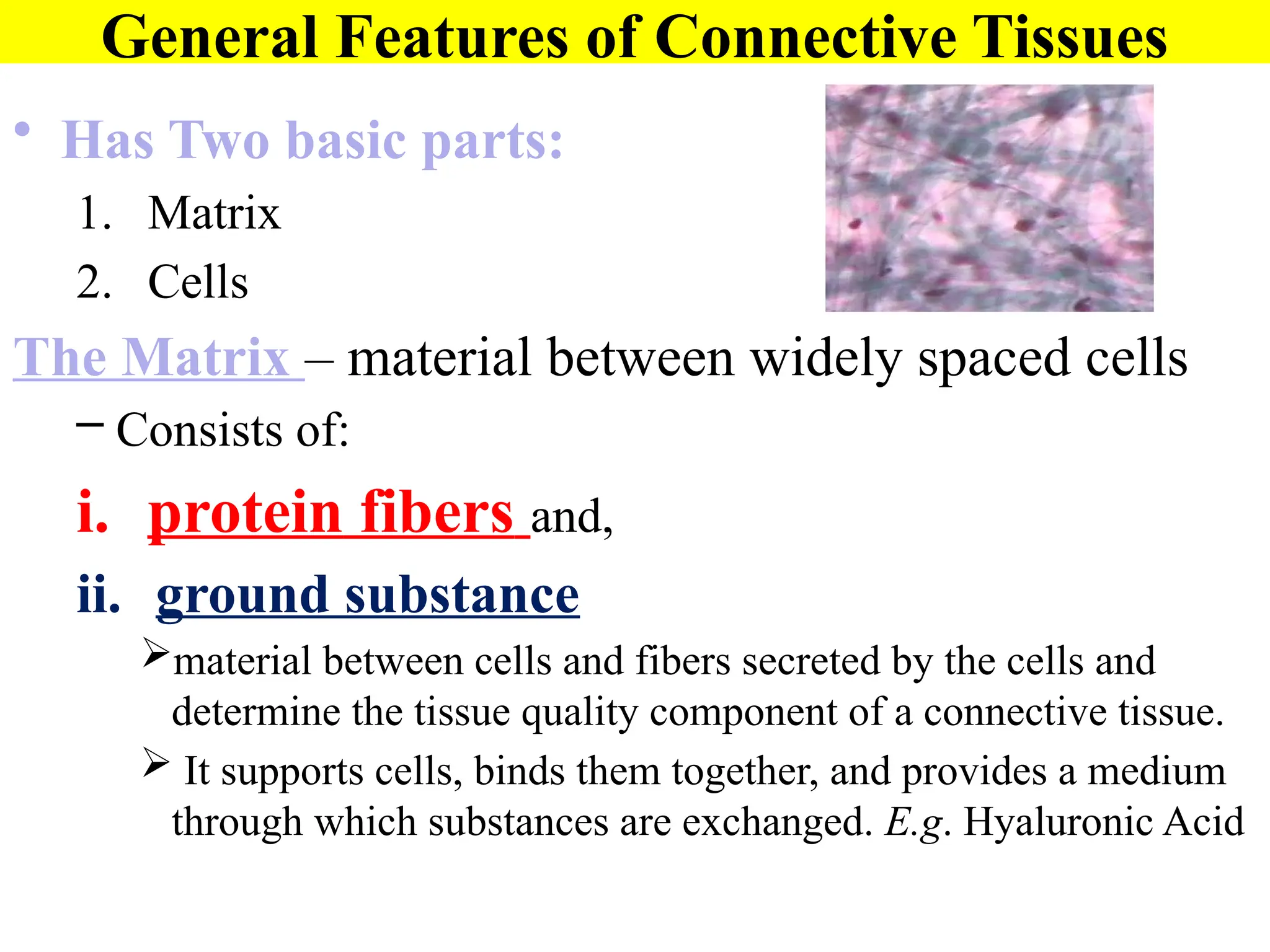
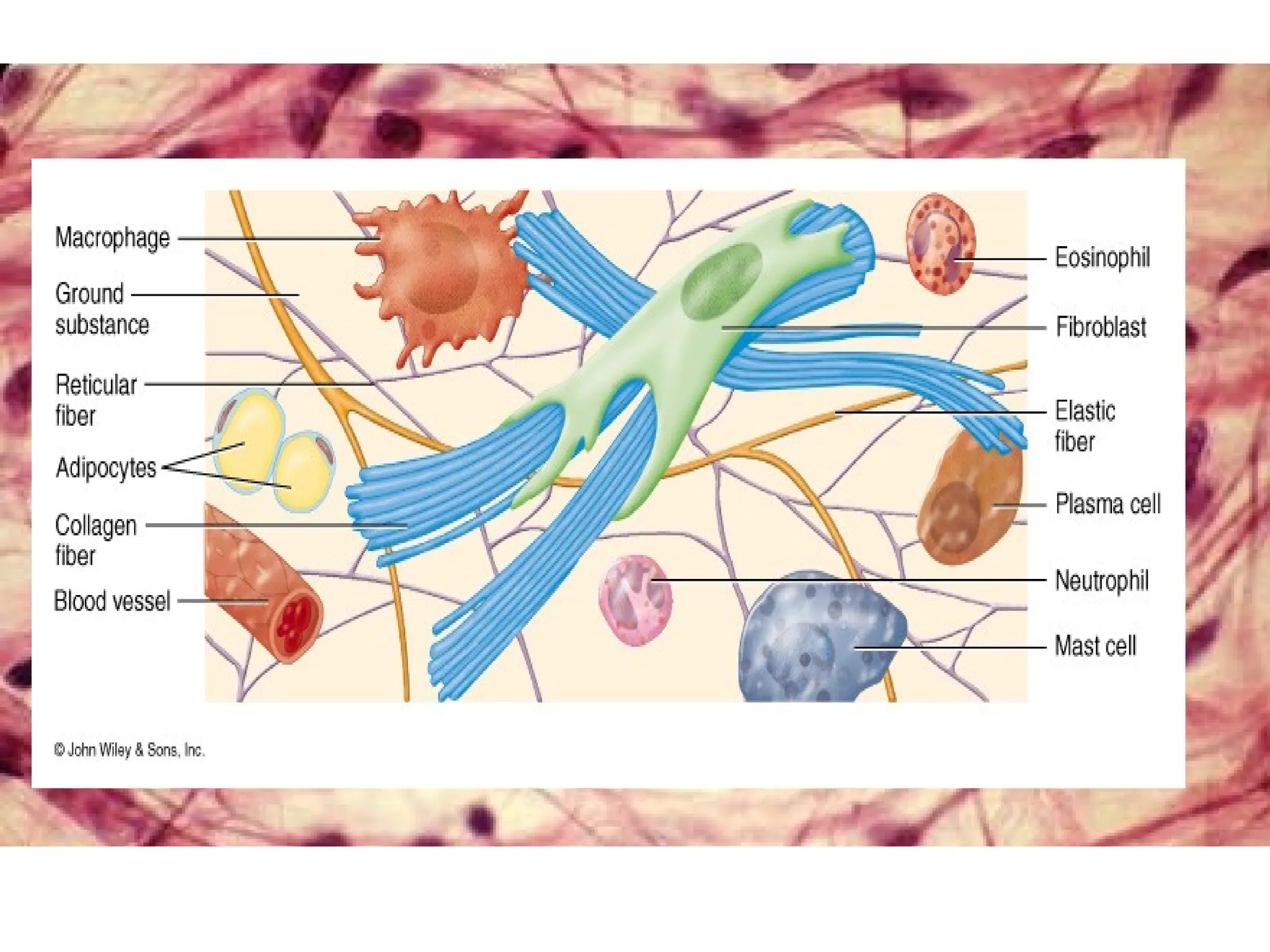
The Matrix – material between widely spaced cells
– Consists of:
i. protein fibers and,
ii. ground substance
material between cells and fibers secreted by the cells and
determine the tissue quality component of a connective tissue.
 It supports cells, binds them together, and provides a medium
through which substances are exchanged. E.g. Hyaluronic Acid
Matrix: Ground Substance
Hyaluronic Acid: Complex combination of
polysaccharides and proteins found in “true” or
proper connective tissue.
Chondroitin sulfate: Jellylike ground substance of
cartilage, bone, skin and blood vessels.
Other ground Substances:
Dermatin sulfate, keratin sulfate, and adhesion
proteins
Connective Tissue Matrix –
(protein) Fibers
Strengthens and supports connective tissue
Collagen Fibers
Strong, resist pulling forces, flexible
Made of the protein collagen which is the most
abundant protein in your body
Elastic Fibers
 smaller in diameter than collagen fibers, branch to
form network
Made of the protein elastin
Connective Tissue Matrix –
Fibers
Reticular Fibers
Small delicate, branched fibers that have same
chemical composition of collagen.
Provide support for the walls of blood vessels
Made of collagen with a glycoprotein covering
Forms structural framework for organs such as
spleen and lymph nodes.
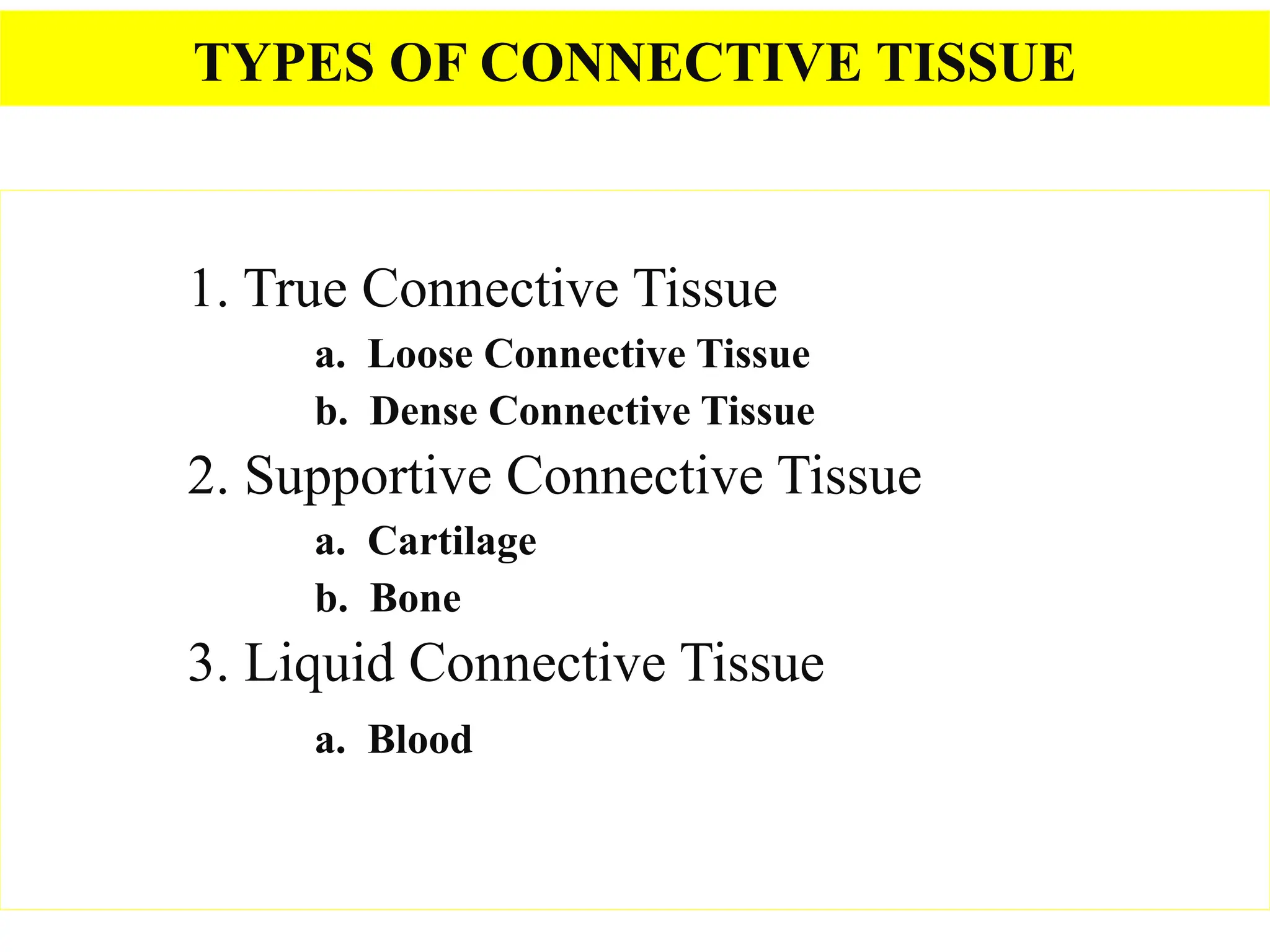
TYPES OF CONNECTIVE TISSUE
1. True Connective Tissue
a. Loose Connective Tissue
b. Dense Connective Tissue
2. Supportive Connective Tissue
a. Cartilage
b. Bone
3. Liquid Connective Tissue
a. Blood
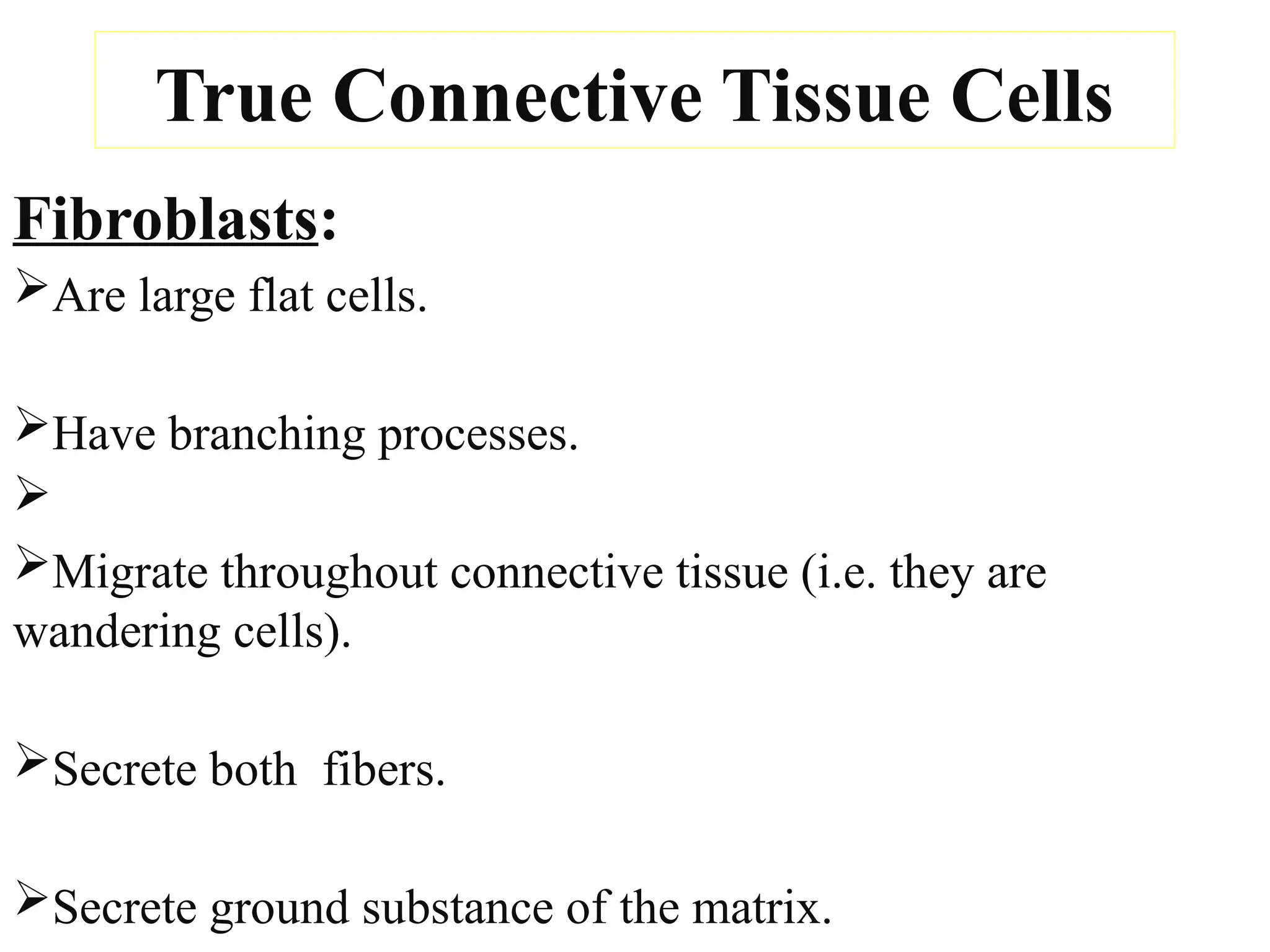
True Connective Tissue Cells
Fibroblasts:
Are large flat cells.
Have branching processes.

Migrate throughout connective tissue (i.e. they are
wandering cells).
Secrete both fibers.
Secrete ground substance of the matrix.
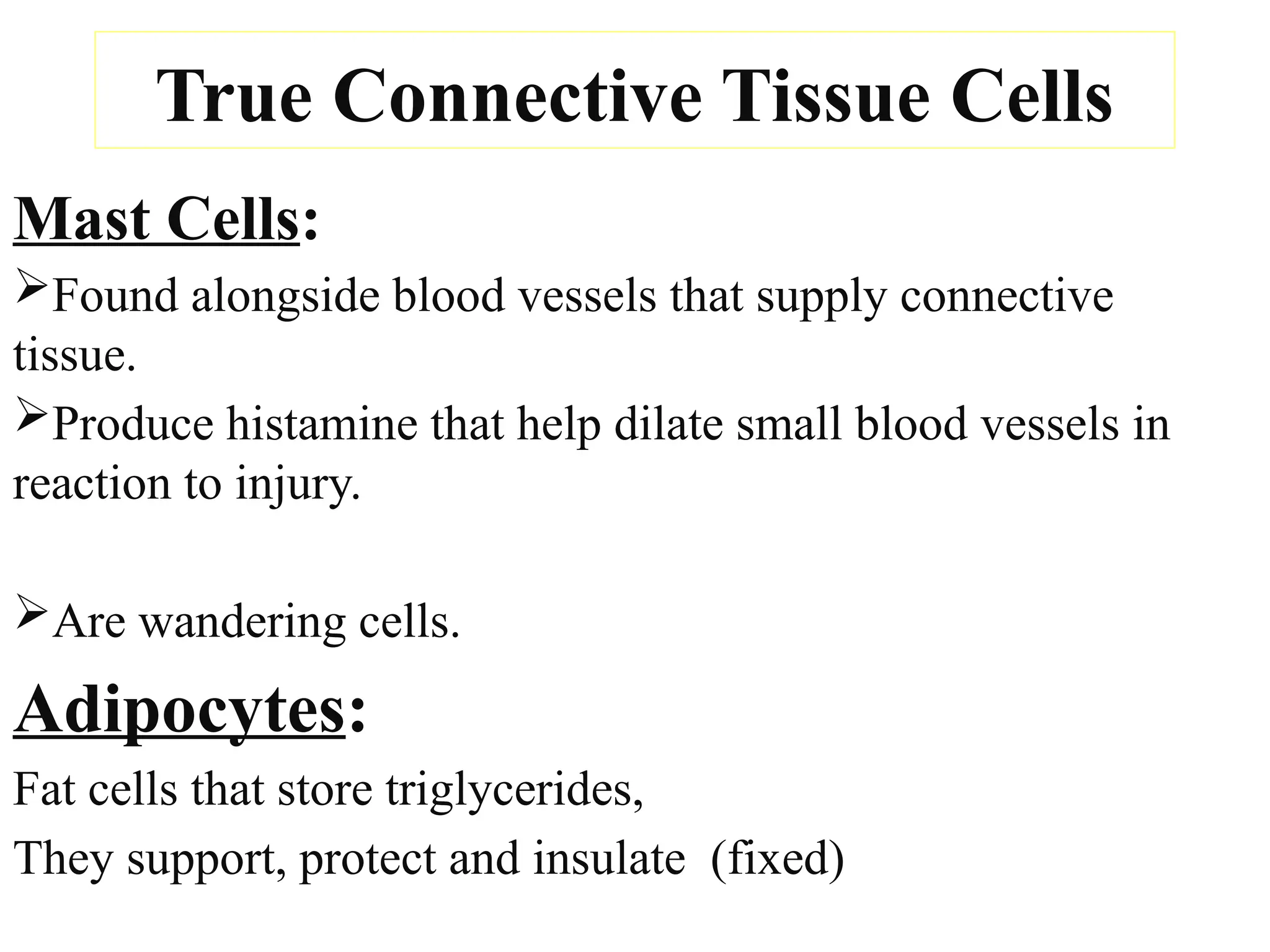
True Connective Tissue Cells
Mast Cells:
Found alongside blood vessels that supply connective
tissue.
Produce histamine that help dilate small blood vessels in
reaction to injury.
Are wandering cells.
Adipocytes:
Fat cells that store triglycerides,
They support, protect and insulate (fixed)
True Connective Tissue Cells
Macrophages:
Developed from white blood cells (monocytes).
Surround and engulf material by phagocytosis.
Are wandering cells
Plasma Cells:
Are Antibody secreting cells that develop from B
Lymphocytes (wandering)
Types of Connective Tissue(Cont’d)
(A). Loose Connective Tissue
Fibers are loosely intertwined among many cells.
Three types of loose connective tissue
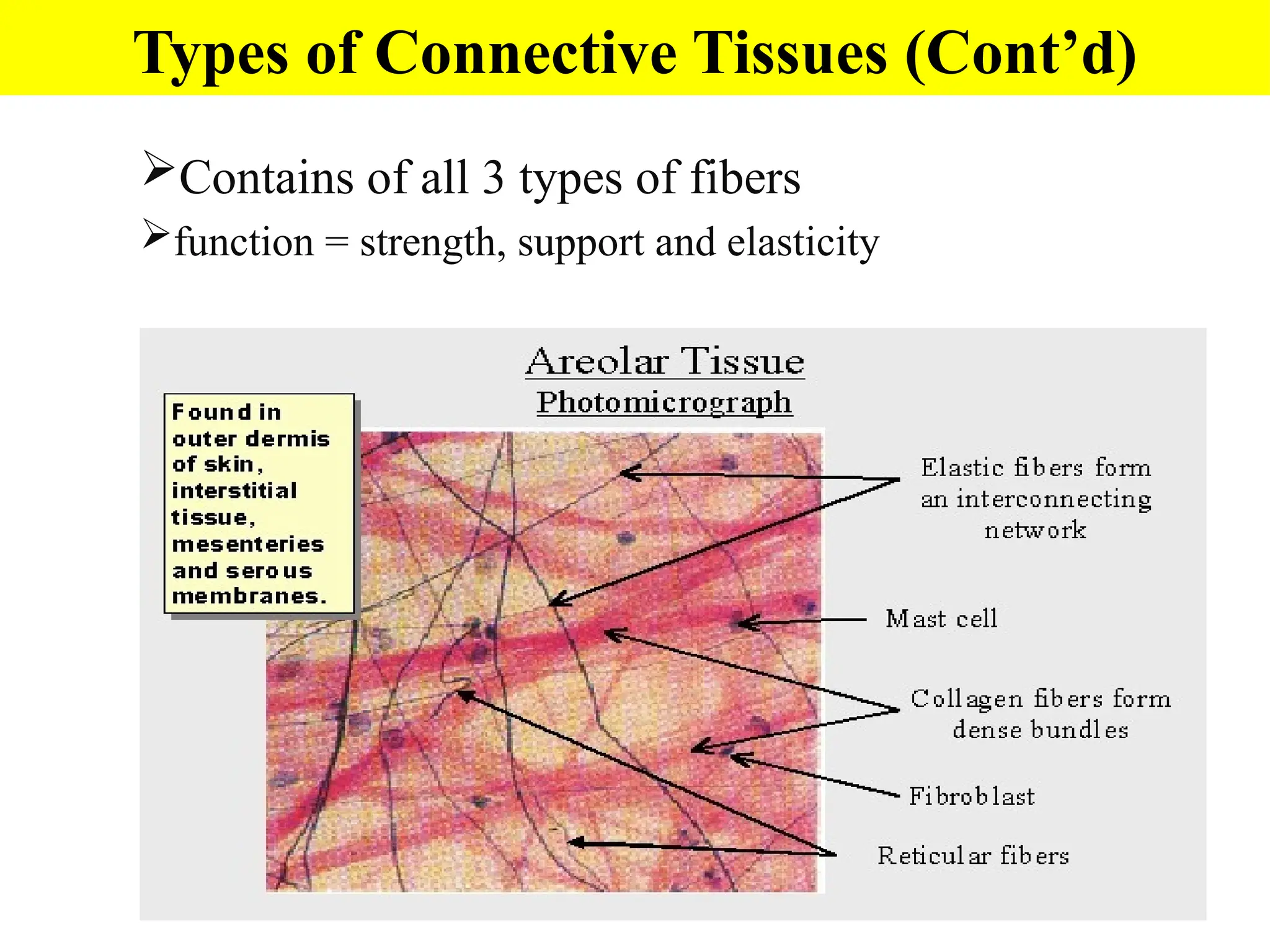
1. Areolar Connective Tissue –
one of the most widely distributed connective tissues in the
body.
 Found in subcutaneous layer and mucous membranes,
and around blood vessels, nerves and organs
 Contains fibroblasts, macrophages, plasma cells, mast
cells, adipocytes, and a few white blood cells.
Contains of all 3 types of fibers
function = strength, support and elasticity
Types of Connective Tissues (Cont’d)
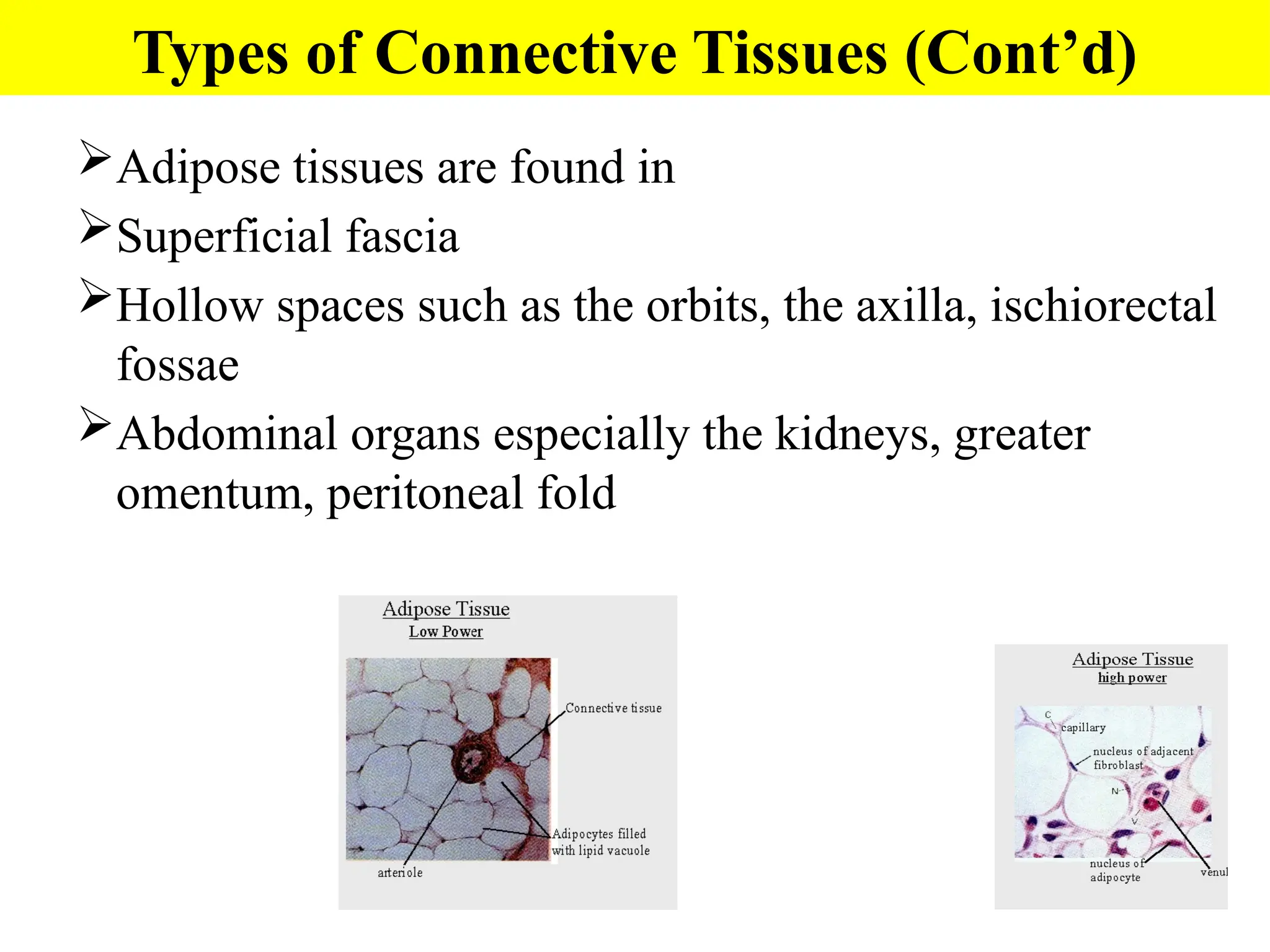
2. Adipose Tissue –
The cells, called adipocytes, are specialized for storage
of triglycerides (lipids) .
found in subcutaneous layer, around organs and in the
yellow marrow of long bones
Adipocytes fill up with a large fat droplet so the nucleus
gets pushed to one side of the cell.
Cytoplasm form thin layer just deep to plasma membrane
They are polygonal in shape because of mutual pressure
from adjacent cells
Types of Connective Tissues (Cont’d)
Adipose tissues are found in
Superficial fascia
Hollow spaces such as the orbits, the axilla, ischiorectal
fossae
Abdominal organs especially the kidneys, greater
omentum, peritoneal fold
Types of Connective Tissues (Cont’d)
Adipose tissue Function =
Insulation,
Support
Protection
Energy reserve.
Types of Connective Tissues (Cont’d)
3. Reticular Connective Tissue –
Made of interlacing reticular fibers and reticular
cells that connect to each other to form a network.
Found in liver, spleen and lymph nodes
Used to bind together smooth muscle cells and to
filter out worn out blood cells and bacteria
Function = forms the framework (stroma) of
organs and binds together smooth muscle tissue
cells
Types of Connective Tissues (Cont’d)
(B). Dense Connective Tissue
Contains more numerous, thicker and denser fibers
but fewer cells than loose connective tissue.
consists of bundles of collagen fibers and fibroblasts
forms tendons, ligaments and aponeuroses
Function = provide strong attachment between various
structures
3 types:
1. Dense regular connective tissue
2. Dense Irregular connective tissue
3. Elastic Connective Tissue
Types of Connective Tissues (Cont’d)
1. Dense Regular Connective Tissue
Bundles of collagen fibers are arranged regularly in
parallel patterns that give it strength.
Withstands pulling from the ends, but unravels when
pulled from the side
Silvery white in appearance. Tough and pliable
Found in tendons and ligaments
Types of Connective Tissues (Cont’d)
2. Dense Irregular Connective Tissue
Collagen fibers are packed closely together in an
irregular, random pattern
Found in parts of the body where pulling forces are
exerted in various directions
Usually found in sheets
Examples: Dermis of the skin, heart valves,
perichondrium and periosteum
Types of Connective Tissues (Cont’d)
3. Elastic Connective Tissue
• Contains branching elastic fibers and fibroblasts
• Yellowish in color
• Strong, can regain shape after stretching
• Found in lungs and arteries
Types of Connective Tissues (Cont’d)
Supportive Connective Tissue:
CARTILAGE:
Jelly-like matrix (chondroitin sulfate) containing
collagen and elastic fibers and chondrocytes
surrounded by a membrane called the
perichondrium.
Unlike other CT, cartilage has NO blood vessels or
nerves except in the perichondrium.
The strength of cartilage is due to collagen fibers
and the resilience is due to the presence of
chondroitin sulfate.
Chondrocytes occur within spaces in the matrix
called lacunae.
Types of Connective Tissues (Cont’d)
Types of Cartilages
1. Hyaline cartilage
2. Fibrocartilage
3. Elastic cartilage
Types of Connective Tissues (Cont’d)
1. Hyaline Cartilage (most abundant type)
(hyalos= glass= transparent)
 fine collagen fibers embedded in a gel-type matrix.
 Chondrocytes are large and in group toward middle of
hyaline cartilage
 Matrix stained blue with H&E
 Found in embryonic skeleton, coastal cartilages at the
ends of long bones, in the nose and in respiratory
structures.
 Function= flexible, provides support, allows movement
at joints
Types of Connective Tissues (Cont’d)
Supportive Connective Tissue:
2. Fibrocartilage
 contains bundles of collagen in the matrix that
are usually more visible under microscopy.
 Found in the pubic symphysis, intervertebral
discs, and menisci of the knee.
 Function = support and fusion, and absorbs
shocks.
Supportive Connective Tissue:
3. Elastic Cartilage
 threadlike network of elastic fibers within the
matrix.
 found in external ear, auditory tubes, epiglottis.
 function = gives support, maintains shape,
allows flexibility
Bone Tissue (osseous tissue)
• 2 types – compact and spongy
Compact
Osteon – basic unit of compact bone
Lamellae – concentric circles of
matrix
Lacunae – spaces in the matrix that
house cells
Osteocytes – mature bone cells
Spongy
Trabeculae – columns of bone with
spaces filled with red bone marrow
Types of Connective Tissue(Cont’d)
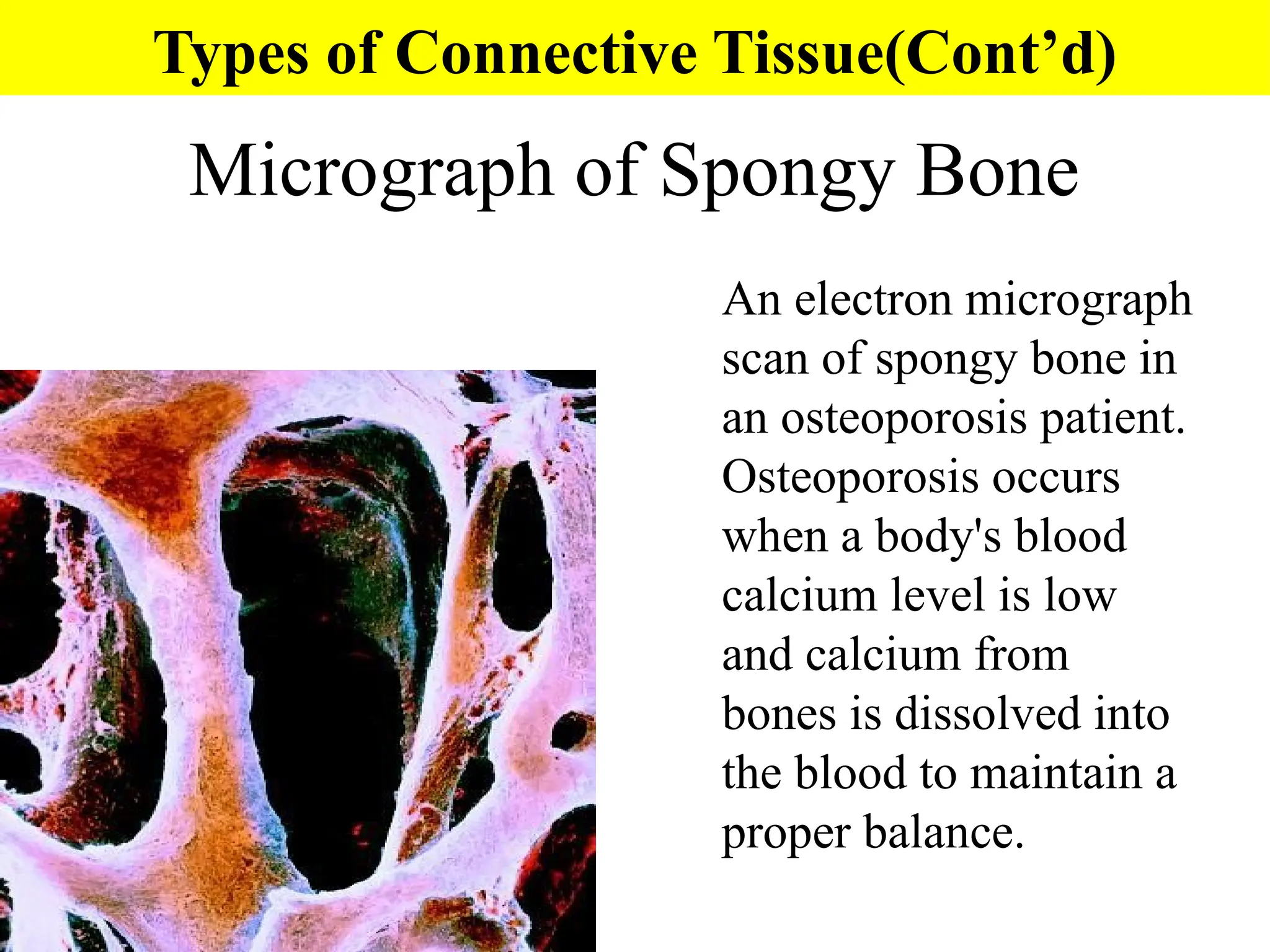
Micrograph of Spongy Bone
An electron micrograph
scan of spongy bone in
an osteoporosis patient.
Osteoporosis occurs
when a body's blood
calcium level is low
and calcium from
bones is dissolved into
the blood to maintain a
proper balance.
Types of Connective Tissue(Cont’d)
Blood Tissue
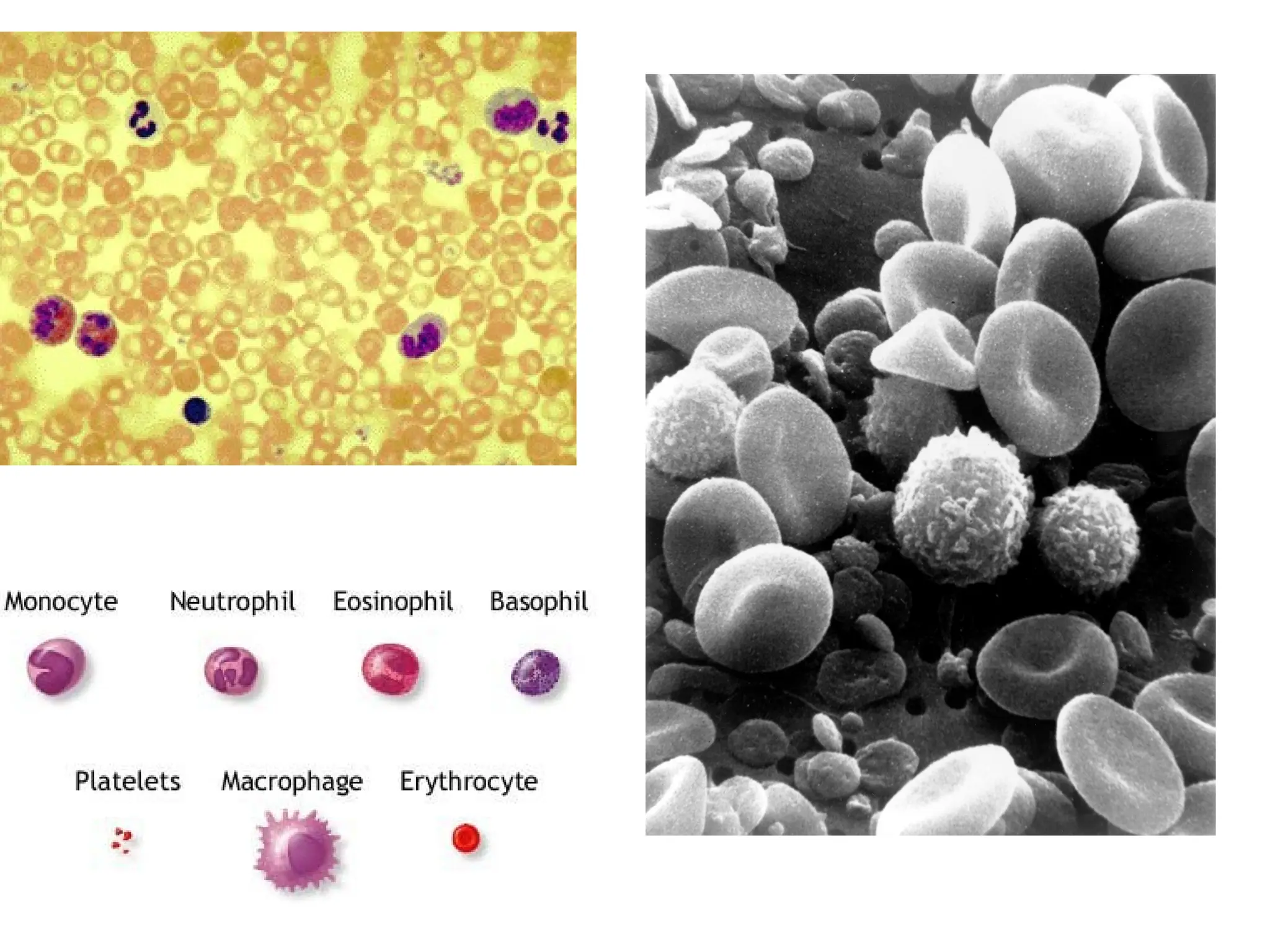
Connective Tissue with a liquid matrix
Red Blood Cells (erythrocytes) – transport
oxygen
White Blood Cells – function in immunity
Neutrophils, Eosinophils, Basophils, T and B
leukocytes, natural killer cells and Monocytes
Platelets – participate in blood clotting
Types of Connective Tissue(Cont’d)
Marfan Syndrome
An inherited disorder caused by a defective gene
for the glycoprotein fibrillin resulting in
abnormal development of elastic fibers.
This causes tissues that contain many elastic fibers
to be malformed or weak (including the covering of
bone, ligament that suspends the lens of the eye,
and the walls of large arteries
People with Marfan syndrome are often tall, have
long arms, legs, fingers and toes, blurred vision,
and weakened aortic walls that may burst.
HISTOLOGY OF CONNECTIVE TISSUES: TYPES AND FUNCTION

HISTOLOGY OF CONNECTIVE TISSUES: TYPES AND FUNCTION

  • 1.
  • 2.
    Learning Objectives At theend of this lecture you are supposed to: 1. understand what connective tissues are. 2. to able to state the functions of connective tissues. 3. be able to describe the different types of connective tissues.
  • 3.
    Definition.  Tissue thatprotects, supports and gives structure to other tissues and organs.
  • 4.
    Connective Tissue Functions Binds together,supports and strengthens other body tissues Protects and insulates internal organs Compartmentalizes structures such as skeletal muscle The major transport system within the body Site of stored energy reserves Main site of immune responses
  • 5.
    General Features ofConnective Tissues Does not occur on free surfaces Has a nerve supply (except cartilage) Highly vascularized (except cartilage and tendons)
  • 6.
    General Features ofConnective Tissues • Has Two basic parts: 1. Matrix 2. Cells The Matrix – material between widely spaced cells – Consists of: i. protein fibers and, ii. ground substance material between cells and fibers secreted by the cells and determine the tissue quality component of a connective tissue.  It supports cells, binds them together, and provides a medium through which substances are exchanged. E.g. Hyaluronic Acid
  • 7.
    Matrix: Ground Substance HyaluronicAcid: Complex combination of polysaccharides and proteins found in “true” or proper connective tissue. Chondroitin sulfate: Jellylike ground substance of cartilage, bone, skin and blood vessels. Other ground Substances: Dermatin sulfate, keratin sulfate, and adhesion proteins
  • 8.
    Connective Tissue Matrix– (protein) Fibers Strengthens and supports connective tissue Collagen Fibers Strong, resist pulling forces, flexible Made of the protein collagen which is the most abundant protein in your body Elastic Fibers  smaller in diameter than collagen fibers, branch to form network Made of the protein elastin
  • 9.
    Connective Tissue Matrix– Fibers Reticular Fibers Small delicate, branched fibers that have same chemical composition of collagen. Provide support for the walls of blood vessels Made of collagen with a glycoprotein covering Forms structural framework for organs such as spleen and lymph nodes.
  • 11.
    TYPES OF CONNECTIVETISSUE 1. True Connective Tissue a. Loose Connective Tissue b. Dense Connective Tissue 2. Supportive Connective Tissue a. Cartilage b. Bone 3. Liquid Connective Tissue a. Blood
  • 12.
    True Connective TissueCells Fibroblasts: Are large flat cells. Have branching processes.  Migrate throughout connective tissue (i.e. they are wandering cells). Secrete both fibers. Secrete ground substance of the matrix.
  • 13.
    True Connective TissueCells Mast Cells: Found alongside blood vessels that supply connective tissue. Produce histamine that help dilate small blood vessels in reaction to injury. Are wandering cells. Adipocytes: Fat cells that store triglycerides, They support, protect and insulate (fixed)
  • 14.
    True Connective TissueCells Macrophages: Developed from white blood cells (monocytes). Surround and engulf material by phagocytosis. Are wandering cells Plasma Cells: Are Antibody secreting cells that develop from B Lymphocytes (wandering)
  • 15.
    Types of ConnectiveTissue(Cont’d) (A). Loose Connective Tissue Fibers are loosely intertwined among many cells. Three types of loose connective tissue 1. Areolar Connective Tissue – one of the most widely distributed connective tissues in the body.  Found in subcutaneous layer and mucous membranes, and around blood vessels, nerves and organs  Contains fibroblasts, macrophages, plasma cells, mast cells, adipocytes, and a few white blood cells.
  • 16.
    Contains of all3 types of fibers function = strength, support and elasticity Types of Connective Tissues (Cont’d)
  • 17.
    2. Adipose Tissue– The cells, called adipocytes, are specialized for storage of triglycerides (lipids) . found in subcutaneous layer, around organs and in the yellow marrow of long bones Adipocytes fill up with a large fat droplet so the nucleus gets pushed to one side of the cell. Cytoplasm form thin layer just deep to plasma membrane They are polygonal in shape because of mutual pressure from adjacent cells Types of Connective Tissues (Cont’d)
  • 18.
    Adipose tissues arefound in Superficial fascia Hollow spaces such as the orbits, the axilla, ischiorectal fossae Abdominal organs especially the kidneys, greater omentum, peritoneal fold Types of Connective Tissues (Cont’d)
  • 19.
    Adipose tissue Function= Insulation, Support Protection Energy reserve. Types of Connective Tissues (Cont’d)
  • 20.
    3. Reticular ConnectiveTissue – Made of interlacing reticular fibers and reticular cells that connect to each other to form a network. Found in liver, spleen and lymph nodes Used to bind together smooth muscle cells and to filter out worn out blood cells and bacteria Function = forms the framework (stroma) of organs and binds together smooth muscle tissue cells Types of Connective Tissues (Cont’d)
  • 21.
    Types of ConnectiveTissues (Cont’d)
  • 22.
    (B). Dense ConnectiveTissue Contains more numerous, thicker and denser fibers but fewer cells than loose connective tissue. consists of bundles of collagen fibers and fibroblasts forms tendons, ligaments and aponeuroses Function = provide strong attachment between various structures 3 types: 1. Dense regular connective tissue 2. Dense Irregular connective tissue 3. Elastic Connective Tissue Types of Connective Tissues (Cont’d)
  • 23.
    1. Dense RegularConnective Tissue Bundles of collagen fibers are arranged regularly in parallel patterns that give it strength. Withstands pulling from the ends, but unravels when pulled from the side Silvery white in appearance. Tough and pliable Found in tendons and ligaments Types of Connective Tissues (Cont’d)
  • 24.
    2. Dense IrregularConnective Tissue Collagen fibers are packed closely together in an irregular, random pattern Found in parts of the body where pulling forces are exerted in various directions Usually found in sheets Examples: Dermis of the skin, heart valves, perichondrium and periosteum Types of Connective Tissues (Cont’d)
  • 25.
    3. Elastic ConnectiveTissue • Contains branching elastic fibers and fibroblasts • Yellowish in color • Strong, can regain shape after stretching • Found in lungs and arteries Types of Connective Tissues (Cont’d)
  • 26.
    Supportive Connective Tissue: CARTILAGE: Jelly-likematrix (chondroitin sulfate) containing collagen and elastic fibers and chondrocytes surrounded by a membrane called the perichondrium. Unlike other CT, cartilage has NO blood vessels or nerves except in the perichondrium. The strength of cartilage is due to collagen fibers and the resilience is due to the presence of chondroitin sulfate. Chondrocytes occur within spaces in the matrix called lacunae. Types of Connective Tissues (Cont’d)
  • 27.
    Types of Cartilages 1.Hyaline cartilage 2. Fibrocartilage 3. Elastic cartilage Types of Connective Tissues (Cont’d)
  • 28.
    1. Hyaline Cartilage(most abundant type) (hyalos= glass= transparent)  fine collagen fibers embedded in a gel-type matrix.  Chondrocytes are large and in group toward middle of hyaline cartilage  Matrix stained blue with H&E  Found in embryonic skeleton, coastal cartilages at the ends of long bones, in the nose and in respiratory structures.  Function= flexible, provides support, allows movement at joints Types of Connective Tissues (Cont’d)
  • 29.
    Supportive Connective Tissue: 2.Fibrocartilage  contains bundles of collagen in the matrix that are usually more visible under microscopy.  Found in the pubic symphysis, intervertebral discs, and menisci of the knee.  Function = support and fusion, and absorbs shocks.
  • 30.
    Supportive Connective Tissue: 3.Elastic Cartilage  threadlike network of elastic fibers within the matrix.  found in external ear, auditory tubes, epiglottis.  function = gives support, maintains shape, allows flexibility
  • 31.
    Bone Tissue (osseoustissue) • 2 types – compact and spongy Compact Osteon – basic unit of compact bone Lamellae – concentric circles of matrix Lacunae – spaces in the matrix that house cells Osteocytes – mature bone cells Spongy Trabeculae – columns of bone with spaces filled with red bone marrow Types of Connective Tissue(Cont’d)
  • 32.
    Micrograph of SpongyBone An electron micrograph scan of spongy bone in an osteoporosis patient. Osteoporosis occurs when a body's blood calcium level is low and calcium from bones is dissolved into the blood to maintain a proper balance. Types of Connective Tissue(Cont’d)
  • 33.
    Blood Tissue Connective Tissuewith a liquid matrix Red Blood Cells (erythrocytes) – transport oxygen White Blood Cells – function in immunity Neutrophils, Eosinophils, Basophils, T and B leukocytes, natural killer cells and Monocytes Platelets – participate in blood clotting Types of Connective Tissue(Cont’d)
  • 35.
    Marfan Syndrome An inheriteddisorder caused by a defective gene for the glycoprotein fibrillin resulting in abnormal development of elastic fibers. This causes tissues that contain many elastic fibers to be malformed or weak (including the covering of bone, ligament that suspends the lens of the eye, and the walls of large arteries People with Marfan syndrome are often tall, have long arms, legs, fingers and toes, blurred vision, and weakened aortic walls that may burst.