COMPUTERS IN INDUSTRIAL
ENGINEERING
PRESENTED BY-
MAYUR PATIL
PANKAJ KUMAR
AMBARISH POTE
PORAS SANCHETI
FrCRIT
Vashi, Navi Mumbai,
India
INTRODUCTION
• WHAT ARE COMPUTERS?
• WHAT CAN COMPUTERS DO?
• WHERE CAN THEY BE USED?
• WHO CAN USE A COMPUTER?
INTRODUCTION
• an electronic device which is capable of
receiving information (data) in a particular
form and of performing a sequence of
operations in accordance with a
predetermined but variable set of procedural
instructions (program) to produce a result in
the form of information or signals.
NEED OF COMPUTERS IN INDUSTRIAL
ENGINEERING
CARACTERISTICS OF COMPUTERS:
1. SPEED
2. ACCURACY
3. STORAGE
4. VERSATILITY
5. AUTOMATION
6. DILIGENCE
NEED OF COMPUTERS IN INDUSTRIAL
ENGINEERING
• INCREASE IN QUALITY EXPECTATION OF
CUSTOMERS
• RAPID CHANGE IN TECHNOLOGY MAKES
EXISTING MANUFACTURING INFRASTRUCTURE
OUTDATED
• EMPHASIS ON QUALITY CONTROL AT SOURCE
• ADOPTING USE OF PROCESS FOCUSSED
PRODUCTION CONCEPTS
MANUFACTURING TECHNOLOGIES
AND PHILOSOPHIES
• MATERIAL REQUIREMENTS PLANNING AND MANUFACTURING
RESOURCES PLANNING (MRP-I & MRP-II)
• JUST IN TIME MANUFACTURING (JIT)
• COMPUTER AIDED DESIGN AND COMPUTER AIDED
MANUFACTURING (CAD/CAM)
• ROBOTICS
• COMPUTER INTEGRATED MANUFACTRING SYSTEMS (CIMS)
• FLEXIBLE MANUFACTURING SYSTEMS
• OPTIMIZED PRODUCTION TECHNOLOGY
• AGILE & LEAN MANUFACTURING
INTEGRATED SYSTEMS
• CAD/CAM
• CAPP
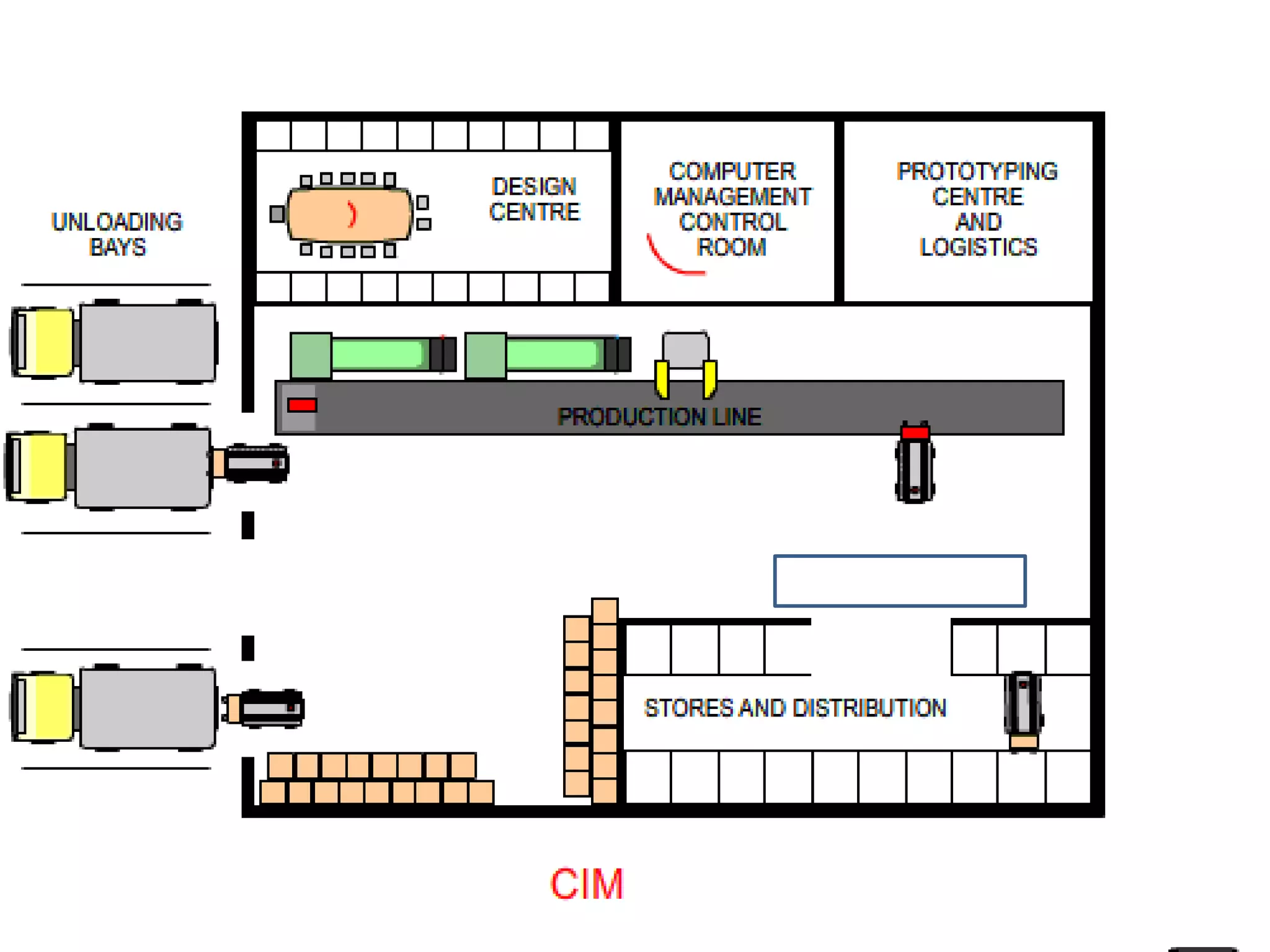
• CIM
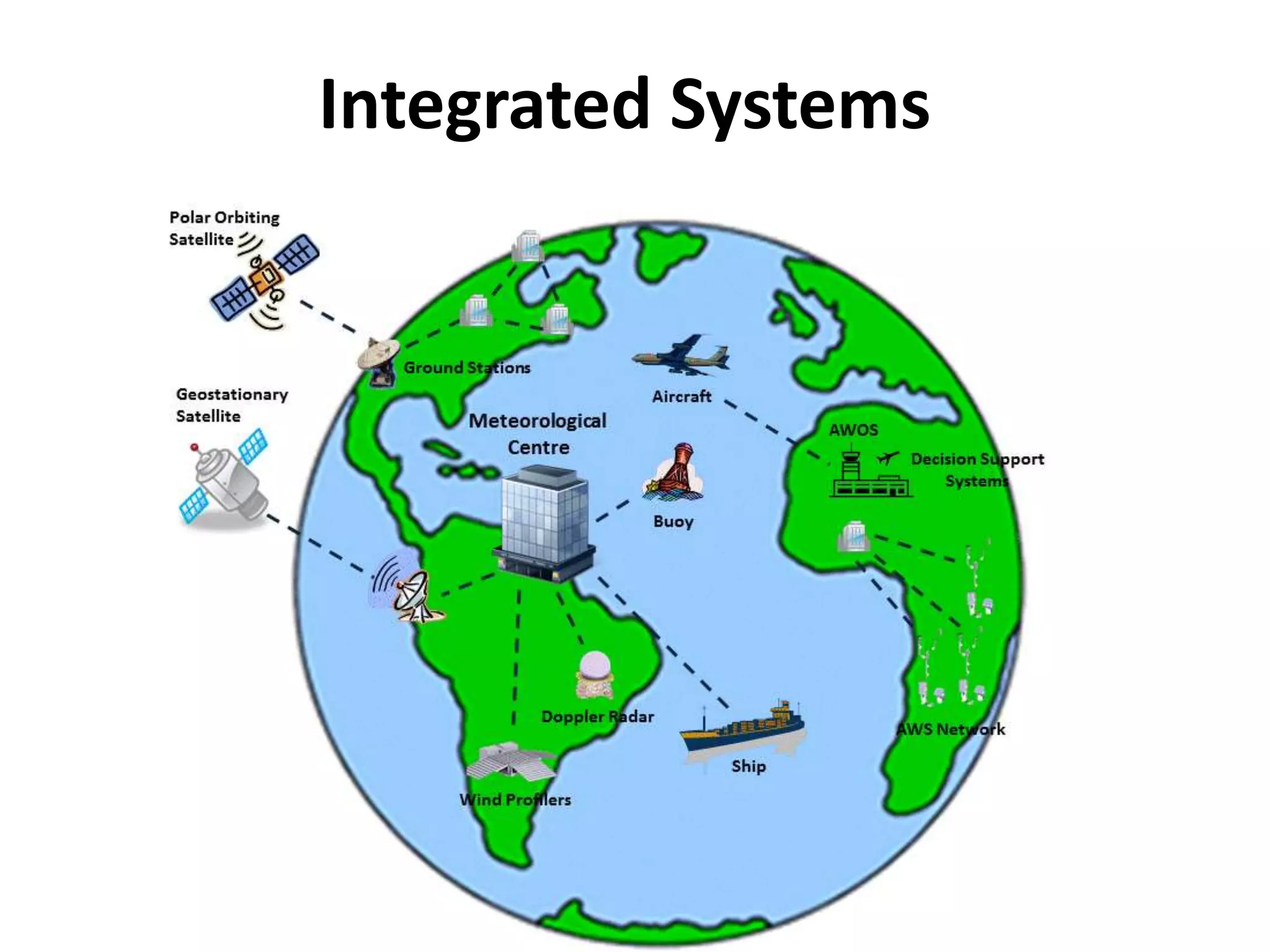
Integrated Systems
Development of Integrated Systems
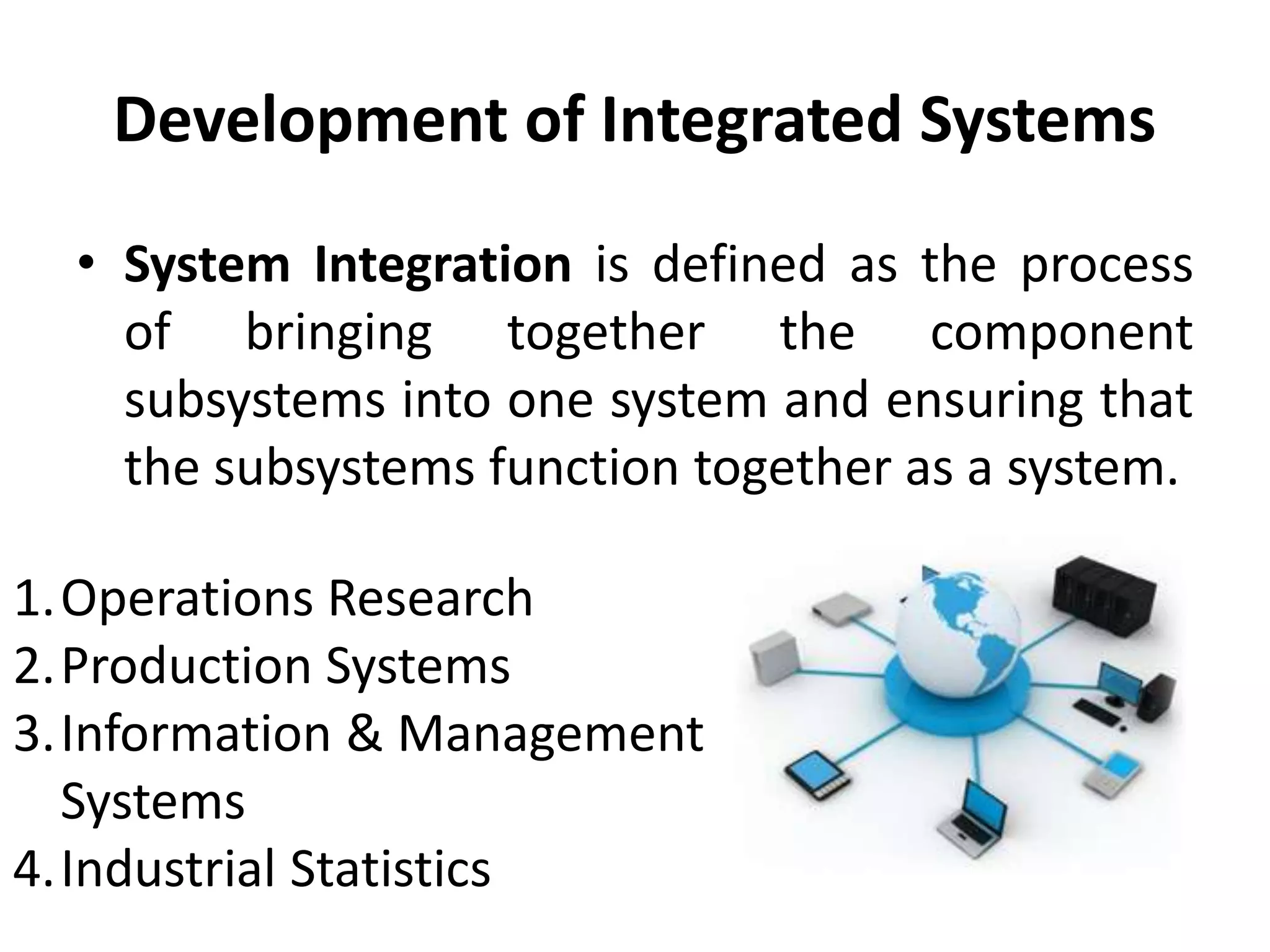
• System Integration is defined as the process
of bringing together the component
subsystems into one system and ensuring that
the subsystems function together as a system.
1.Operations Research
2.Production Systems
3.Information & Management
Systems
4.Industrial Statistics
Development of Integrated Systems
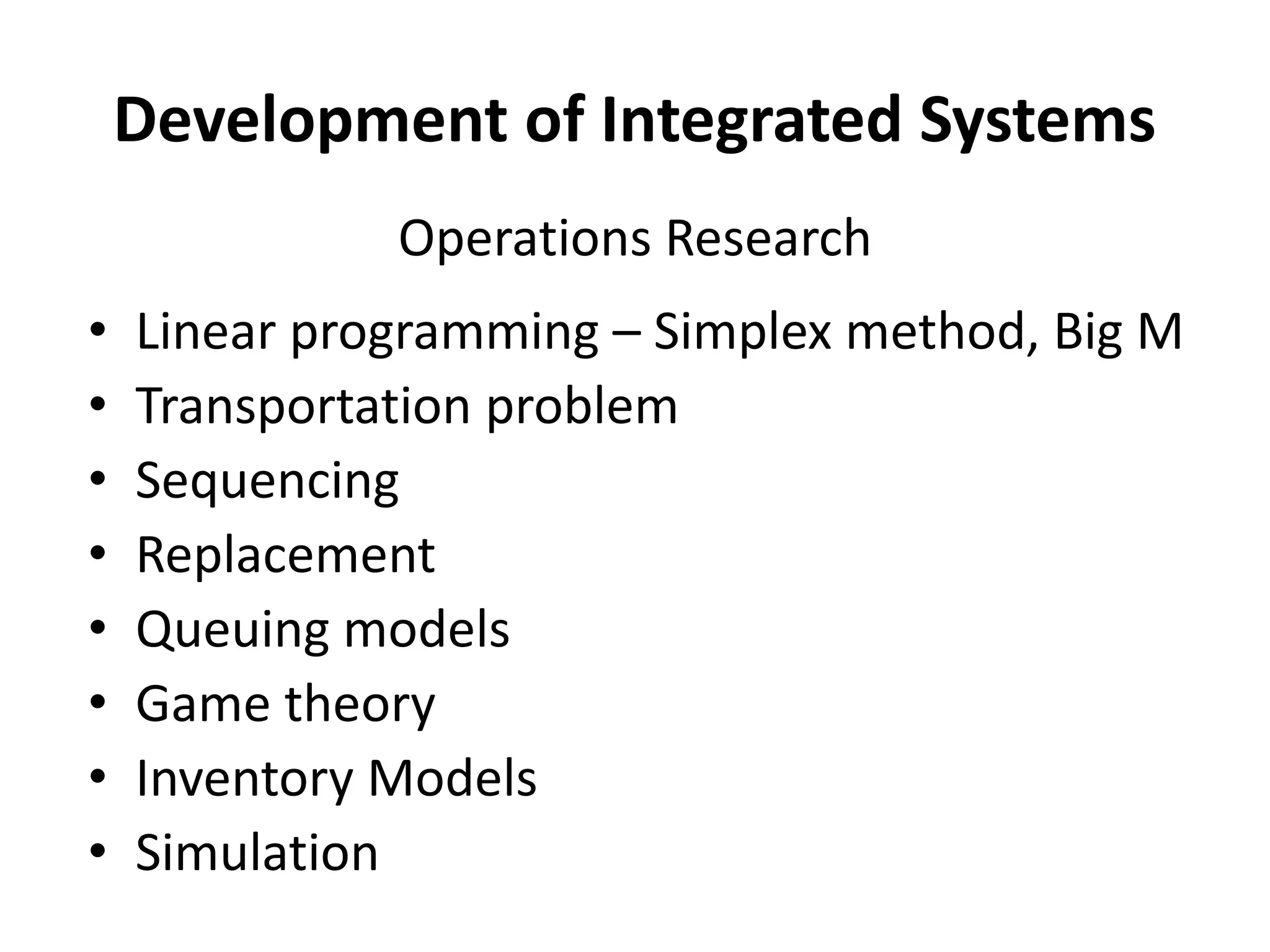
• Linear programming – Simplex method, Big M
• Transportation problem
• Sequencing
• Replacement
• Queuing models
• Game theory
• Inventory Models
• Simulation
Operations Research
Development of Integrated Systems
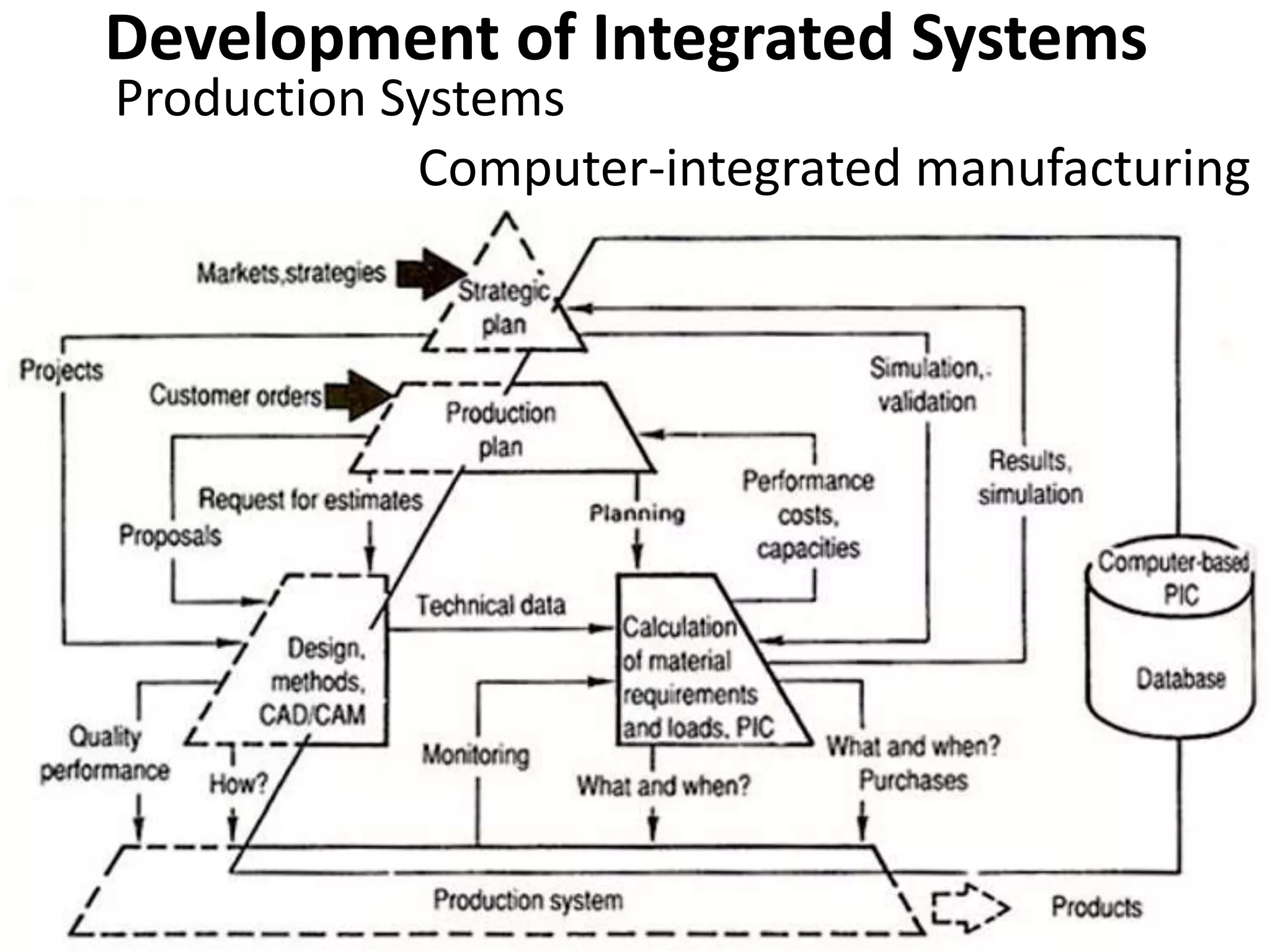
Computer-integrated manufacturing
Production Systems
Information & Management Systems &
Industrial Statistics
Industrial statistics measure a variety of
different characteristics about various sectors
• Employment
• Turnover – Balance sheets
• Value added
• Volume of production
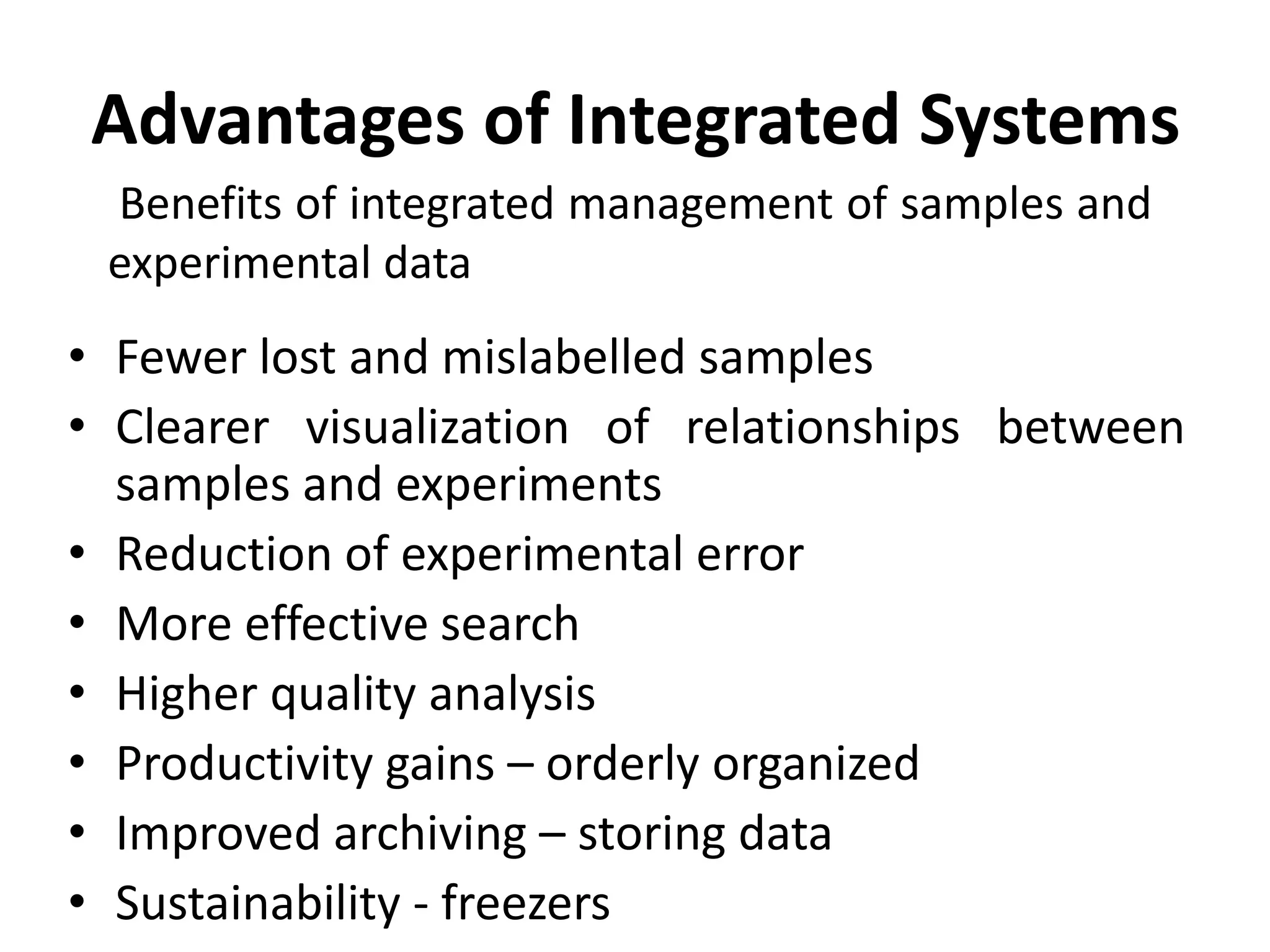
Advantages of Integrated Systems
• Fewer lost and mislabelled samples
• Clearer visualization of relationships between
samples and experiments
• Reduction of experimental error
• More effective search
• Higher quality analysis
• Productivity gains – orderly organized
• Improved archiving – storing data
• Sustainability - freezers
Benefits of integrated management of samples and
experimental data
ththt
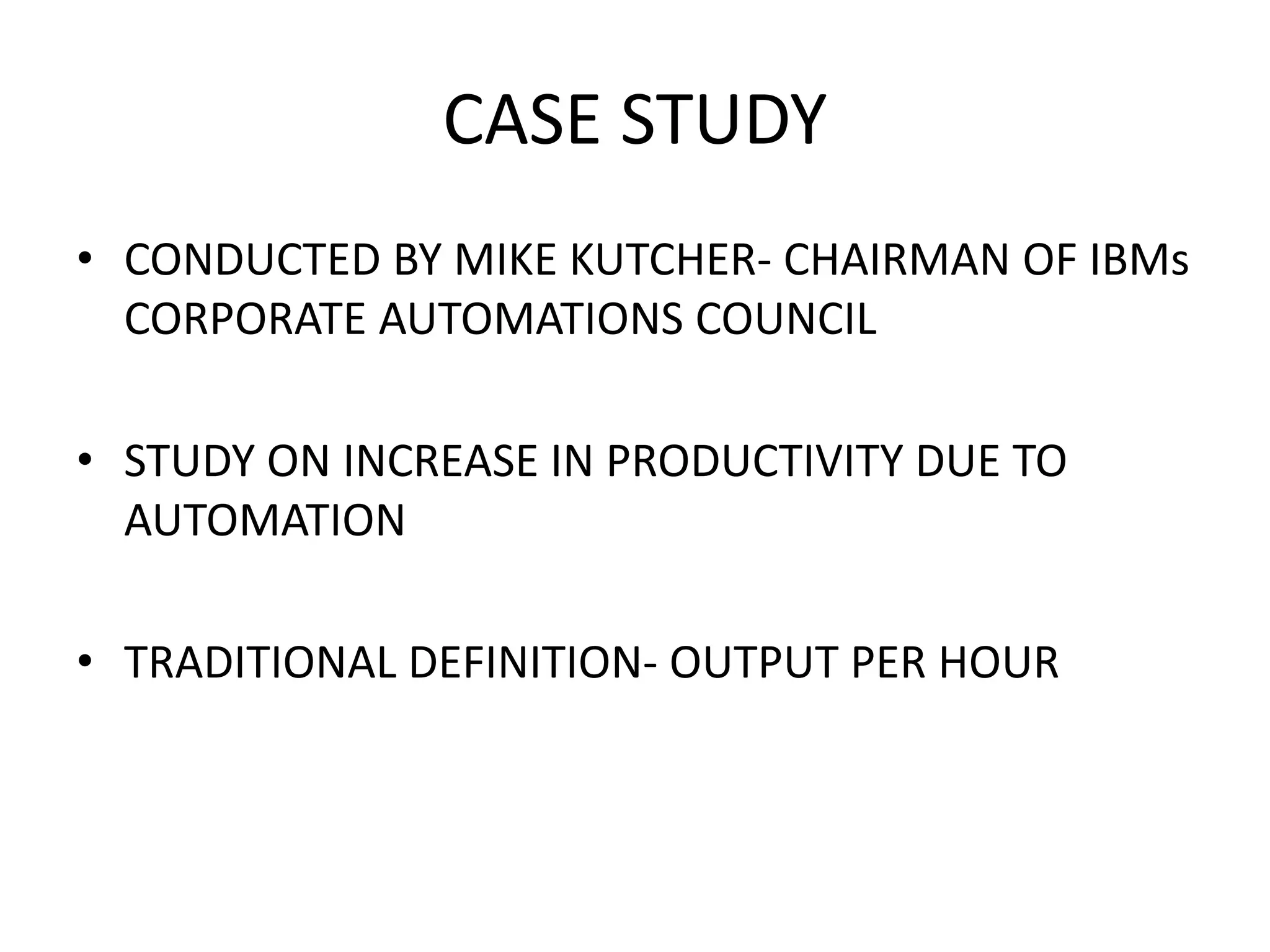
CASE STUDY
• CONDUCTED BY MIKE KUTCHER- CHAIRMAN OF IBMs
CORPORATE AUTOMATIONS COUNCIL
• STUDY ON INCREASE IN PRODUCTIVITY DUE TO
AUTOMATION
• TRADITIONAL DEFINITION- OUTPUT PER HOUR
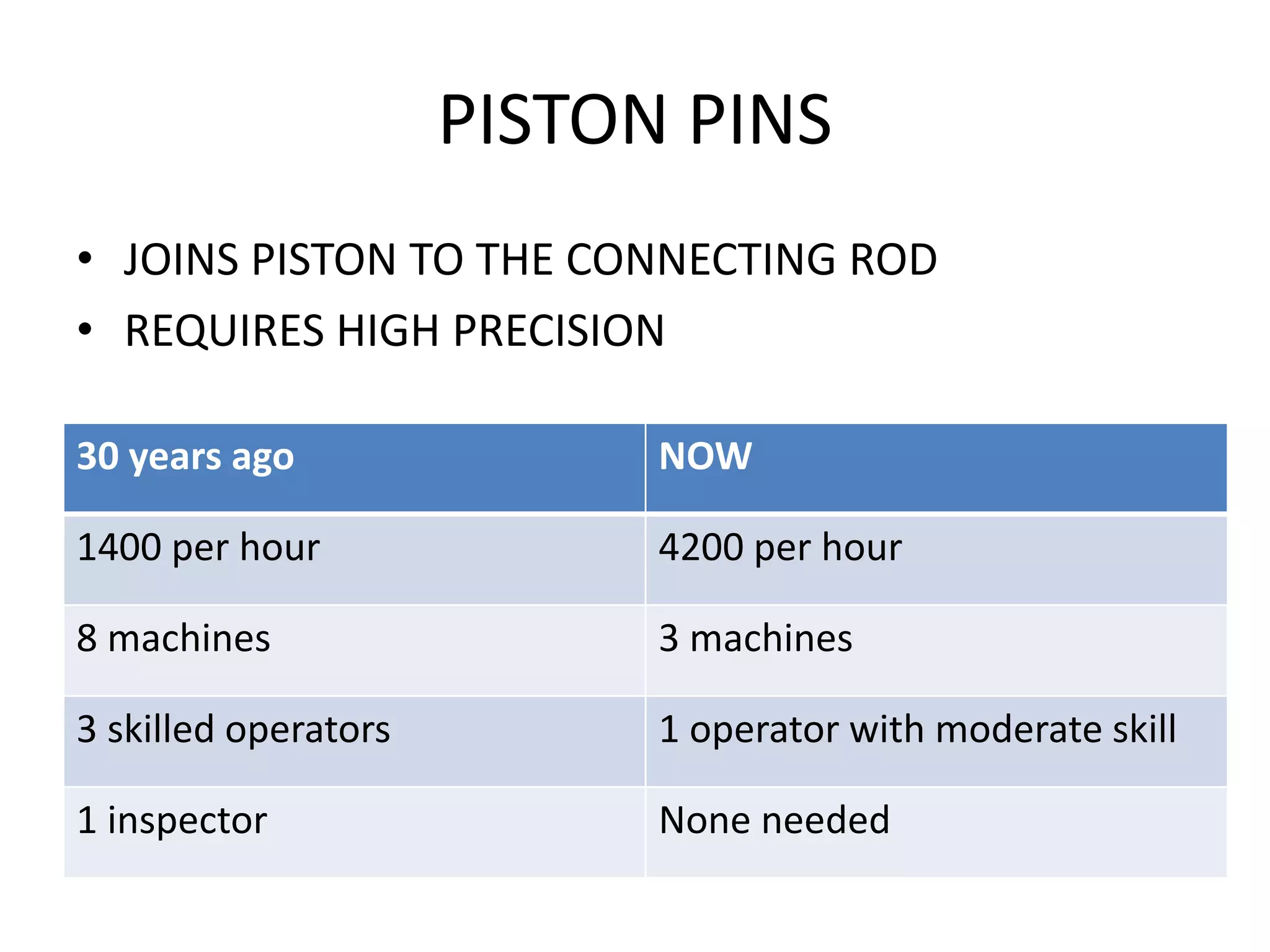
PISTON PINS
• JOINS PISTON TO THE CONNECTING ROD
• REQUIRES HIGH PRECISION
30 years ago NOW
1400 per hour 4200 per hour
8 machines 3 machines
3 skilled operators 1 operator with moderate skill
1 inspector None needed
The difference
• Lesser Machines
• Less skilled workforce
• Less floor space
• More reliable, uptime is 90%
• Higher quality products
• Tolerances can be maintained
• Inspection is automated.
• Less physical and mental effort.
Thank You !

Computers in industrial engineering

  • 1.
    COMPUTERS IN INDUSTRIAL ENGINEERING PRESENTEDBY- MAYUR PATIL PANKAJ KUMAR AMBARISH POTE PORAS SANCHETI FrCRIT Vashi, Navi Mumbai, India
  • 2.
    INTRODUCTION • WHAT ARECOMPUTERS? • WHAT CAN COMPUTERS DO? • WHERE CAN THEY BE USED? • WHO CAN USE A COMPUTER?
  • 3.
    INTRODUCTION • an electronicdevice which is capable of receiving information (data) in a particular form and of performing a sequence of operations in accordance with a predetermined but variable set of procedural instructions (program) to produce a result in the form of information or signals.
  • 4.
    NEED OF COMPUTERSIN INDUSTRIAL ENGINEERING CARACTERISTICS OF COMPUTERS: 1. SPEED 2. ACCURACY 3. STORAGE 4. VERSATILITY 5. AUTOMATION 6. DILIGENCE
  • 5.
    NEED OF COMPUTERSIN INDUSTRIAL ENGINEERING • INCREASE IN QUALITY EXPECTATION OF CUSTOMERS • RAPID CHANGE IN TECHNOLOGY MAKES EXISTING MANUFACTURING INFRASTRUCTURE OUTDATED • EMPHASIS ON QUALITY CONTROL AT SOURCE • ADOPTING USE OF PROCESS FOCUSSED PRODUCTION CONCEPTS
  • 6.
    MANUFACTURING TECHNOLOGIES AND PHILOSOPHIES •MATERIAL REQUIREMENTS PLANNING AND MANUFACTURING RESOURCES PLANNING (MRP-I & MRP-II) • JUST IN TIME MANUFACTURING (JIT) • COMPUTER AIDED DESIGN AND COMPUTER AIDED MANUFACTURING (CAD/CAM) • ROBOTICS • COMPUTER INTEGRATED MANUFACTRING SYSTEMS (CIMS) • FLEXIBLE MANUFACTURING SYSTEMS • OPTIMIZED PRODUCTION TECHNOLOGY • AGILE & LEAN MANUFACTURING
  • 7.
  • 8.
  • 9.
    Development of IntegratedSystems • System Integration is defined as the process of bringing together the component subsystems into one system and ensuring that the subsystems function together as a system. 1.Operations Research 2.Production Systems 3.Information & Management Systems 4.Industrial Statistics
  • 10.
    Development of IntegratedSystems • Linear programming – Simplex method, Big M • Transportation problem • Sequencing • Replacement • Queuing models • Game theory • Inventory Models • Simulation Operations Research
  • 11.
    Development of IntegratedSystems Computer-integrated manufacturing Production Systems
  • 12.
    Information & ManagementSystems & Industrial Statistics Industrial statistics measure a variety of different characteristics about various sectors • Employment • Turnover – Balance sheets • Value added • Volume of production
  • 13.
    Advantages of IntegratedSystems • Fewer lost and mislabelled samples • Clearer visualization of relationships between samples and experiments • Reduction of experimental error • More effective search • Higher quality analysis • Productivity gains – orderly organized • Improved archiving – storing data • Sustainability - freezers Benefits of integrated management of samples and experimental data
  • 14.
  • 15.
    CASE STUDY • CONDUCTEDBY MIKE KUTCHER- CHAIRMAN OF IBMs CORPORATE AUTOMATIONS COUNCIL • STUDY ON INCREASE IN PRODUCTIVITY DUE TO AUTOMATION • TRADITIONAL DEFINITION- OUTPUT PER HOUR
  • 16.
    PISTON PINS • JOINSPISTON TO THE CONNECTING ROD • REQUIRES HIGH PRECISION 30 years ago NOW 1400 per hour 4200 per hour 8 machines 3 machines 3 skilled operators 1 operator with moderate skill 1 inspector None needed
  • 17.
    The difference • LesserMachines • Less skilled workforce • Less floor space • More reliable, uptime is 90% • Higher quality products • Tolerances can be maintained • Inspection is automated. • Less physical and mental effort.
  • 18.