Computer Integrated Manufacturing
(AN OVERVIEW)
PROF. A.G.MOMIN
Asst.Professor, Mech. Engg. Deptt.
Department of Mechanical Engineering,
L.D.College of Engineering ,Ahmedabad
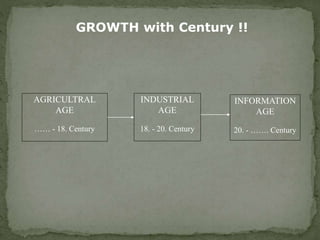
AGRICULTRAL
AGE
…… - 18. Century
INDUSTRIAL
AGE
18. - 20. Century
INFORMATION
AGE
20. - ……. Century
GROWTH with Century !!
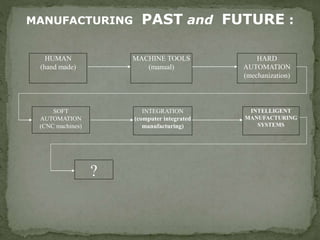
HUMAN
(hand made)
MACHINE TOOLS
(manual)
HARD
AUTOMATION
(mechanization)
SOFT
AUTOMATION
(CNC machines)
INTEGRATION
(computer integrated
manufacturing)
INTELLIGENT
MANUFACTURING
SYSTEMS
?
MANUFACTURING PAST and FUTURE :
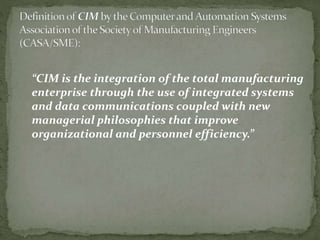
“CIM is the integration of the total manufacturing
enterprise through the use of integrated systems
and data communications coupled with new
managerial philosophies that improve
organizational and personnel efficiency.”
CIM is the integration of all enterprise
operations and activities around a common
corporate data repository.
It is the use of integrated systems and data
communications coupled with new managerial
philosophies.
What is CIM?
CIM is not a product that can be purchased and
installed.
It is a way of thinking and solving problems.
CIM is the use of computers for on-line automation,
optimisation and integration of the total system from
design to production.
What is CIM?
NC, CAD, CAD/CAM are steps on the way to CIM
and intern intelligent flexible Manufacturing system
FMS
 CAD Computer Aided Design
 CAM Computer Aided Manufacturing
 Computer Numerical Control (CNC)
 Direct Numerical Control (DNC)
 Computer Aided Process Control
 CAE Computer Aided Engineering
 Computer-Integrated Production Management
 Automated Inspection Methods
 Industrial Robotics, etc..
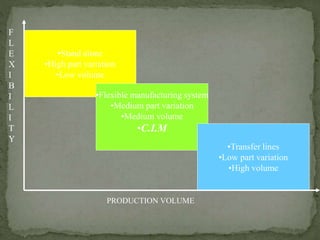
Transfer lines are very efficient when producing parts in large
volumes at high output rates. The limitation is with only identical
parts. Transfer lines are highly inflexible to accommodate the
change/variation in part design.
Stand-alone NC machines are ideally suited for variation in part
design. And appropriate for job shop and small batch manufacturing
as these are easily programmable.
In terms of manufacturing efficiency and productivity, a gap exists
between above two (i.e high production rate transfer machines and
highly flexible/programmable low production rate NC machines).
The gap can be bridged by Computer Integrated
Manufacturing (C.I.M).
Production System : Volume – Variety
•Stand alone
•High part variation
•Low volume
•Flexible manufacturing system
•Medium part variation
•Medium volume
•C.I.M
•Transfer lines
•Low part variation
•High volume
F
L
E
X
I
B
I
L
I
T
Y
PRODUCTION VOLUME
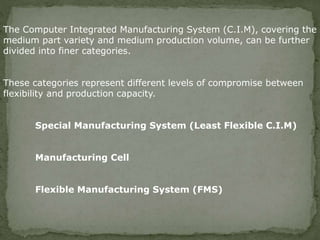
The Computer Integrated Manufacturing System (C.I.M), covering the
medium part variety and medium production volume, can be further
divided into finer categories.
These categories represent different levels of compromise between
flexibility and production capacity.
Special Manufacturing System (Least Flexible C.I.M)
Manufacturing Cell
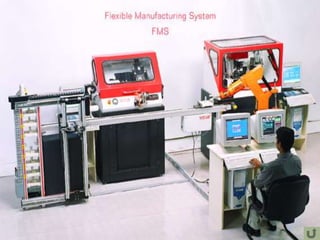
Flexible Manufacturing System (FMS)
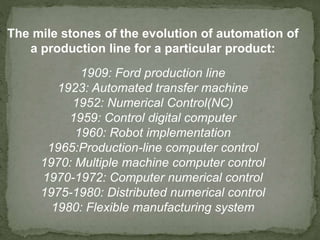
The mile stones of the evolution of automation of
a production line for a particular product:
1909: Ford production line
1923: Automated transfer machine
1952: Numerical Control(NC)
1959: Control digital computer
1960: Robot implementation
1965:Production-line computer control
1970: Multiple machine computer control
1970-1972: Computer numerical control
1975-1980: Distributed numerical control
1980: Flexible manufacturing system
FEATURES OF CIM :
•Minimum changeover costs and time
•Maximum flexibility and quick turnaround capability
•Minimum downtime for unanticipated maintenance, but
continuous maintenance attention
•Maximum breadth of product range and volume
•Ability to adapt to variations in materials and processes.
•Ability to integrate new process technology into an existing
system with minimum disturbances and costs
•Ability to handle increasingly complex product design and
technology
•Allows for just-in-time manufacturing.
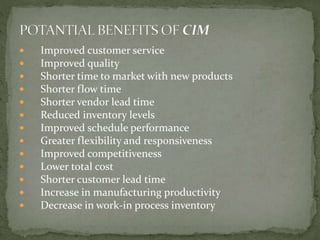
 Improved customer service
 Improved quality
 Shorter time to market with new products
 Shorter flow time
 Shorter vendor lead time
 Reduced inventory levels
 Improved schedule performance
 Greater flexibility and responsiveness
 Improved competitiveness
 Lower total cost
 Shorter customer lead time
 Increase in manufacturing productivity
 Decrease in work-in process inventory
The computer has had a substantial impact on
almost all activities of a factory.
Often, the introduction of the computer
changed the organizational structure of a
department and made necessary adoption of new
management structures.
The Role of Computer in
Manufacturing
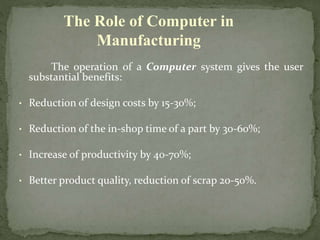
The operation of a Computer system gives the user
substantial benefits:
• Reduction of design costs by 15-30%;
• Reduction of the in-shop time of a part by 30-60%;
• Increase of productivity by 40-70%;
• Better product quality, reduction of scrap 20-50%.
The Role of Computer in
Manufacturing
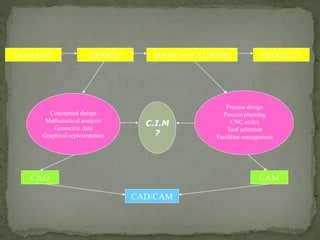
DEMAND DESIGN MANUFACTURING PRODUCT
Conceptual design
Mathematical analysis
Geometric data
Graphical representation
CAD
CAD/CAM
CAM
Process design
Process planning
CNC codes
Tool selection
Facilities management
C.I.M
?
 Parallel with increasing needs for faster communications the
needs of large data storage capacity and fast computers is
increasing also.
 Now typical manufacturing environment, called also as
CAD/CAM/CAE environment is composed of fast computers,
centralized data storage units, CNC controlled machine centers,
robots etc., all connected on the same network.
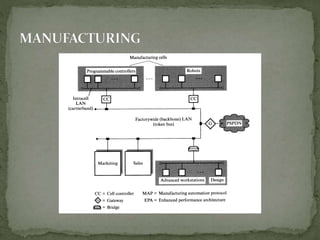
 On this networks either TCP/IP or specially designed
manufacturing protocols like, MAP or TOP, are used.
MAP
An initiative by General Motors of The United
States has resulted in the selection of a set of
protocols, all based on ISO standards, to achieve
open system interconnection within an automated
manufacturing plant.
The resulting protocols are knows as
manufacturing automation protocols (MAPs).
TOP
In a similar way, an initiative by the Boeing
Corporation (USA) has resulted in the selection of
a set of ISO standards to achieve open system
interconnection in a technical and office
environment.
The selected protocols are known as technical and
office protocols (TOPs).
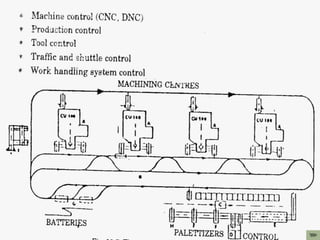
Functions of the Computer in C.I.Ms
•Machine Control for CNC and DNC
•Production Control
•Traffic Control
•Shuttle Control
•Work Handling System Monitoring
•Tool Control
•System Performance Monitoring and Reporting.
C.I.Ms Data Files
• Part Program Files
• Routing Files
• Part Production Files
• Pallet Reference Files
• Station Tool File
• Tool-life File
TRENDS IN MANUFACTURING
Demand for:
Quality
on time delivery
uninterrupted supply
lower price
Solution ???
Answer may be;
C.I.M /F.M.S
And
Advanced Manufacturing Technology
INTRODUCTION to ADVANCED MANUFACTURING
The Advanced Manufacturing concepts are characterized by their
ability to allow a rapid response to continuously changing
customer requirements.
At the core, Flexile Automation (FA) systems can
reduce product cycle time,
increase quality
and
allow rapid changes in design.
INTRODUCTION to ADVANCED MANUFACTURING
The recent hi-tech innovations like
•Concurrent Engineering (CE),
•Flexible Manufacturing System (FMS),
•Computer Integrated Manufacturing (CIM),
•Variable Mission Manufacturing (VMM),
•Intelligent Manufacturing System (IMS),
•Artificial Intelligence (AI), and
•Rapid Prototyping (RP) have made it a reality to successfully implement
flexible automation in industries to achieve the goal of “Maximum
Productive Flexibility”
The different above titles all refer to a production system – Consists of group of
NC machines connected by an automated materials handling system and
operated under computer control – CAN BE CALLED AS C.I.M
The Advanced Technology has changed the nature of manufacturing and
opened up opportunities for new styles of competition in Industries.
NEW AIMS OF PRODUCTION :
As a result of economic life and better life style, condition within the global
companies in advanced countries like Germany, Japan, U.S.A. etc demonstrate
similar development trends : Like..
•Shorter Market Lifetimes and Compressed Product Lifecycles
•Intensified Competition
•An Accelerated Rate of Technical Development
•Declining Profit Margins
•Increased Demands
The world class companies must, therefore accept new business environment
and pursue new strategies like
•Develop new products with
Increased frequency
Offer a great number of variants and
Ensure high quality
•Attempt to shorten delivery times
•Reduce costs by all means with Incorporating increasing level of
customization.
EVOLUTION OF MANUFACTURING TECHNOLOGY :
•In the first stage, manufacturing was dependent on human labor and
intelligence.
•The Second stage saw the replacement of human labour by machines, while
still relying on human intelligence.
•Today in the third stage, human intelligence is being replaced by artificial
intelligence (AI) and integrated with machine labour.
Manufacturing is now moving from functions where we manage people,
materials, and costs to systems where we must manage information,
continuous change and time.
FLEXILE AUTOMATION – A KEY CONCEPT
Flexible Automation offers rapid response to product innovation, process
innovation and shifts in demand. The essential attributes like enhanced
dynamism, greater variance and higher quality.
Flexible Automation is much more cost-effective than Fixed Automation for
High-Variety production requirements.
The recent hi-tech innovations like
Flexible Manufacturing System (FMS),
Computer Integrated Manufacturing (CIM),
Variable Mission Manufacturing (VMM),
Intelligent Manufacturing System (IMS),
Artificial Intelligence (AI), and
Rapid Prototyping (RP) have greatly contributed towards achieving the
objectives of Flexible Automation
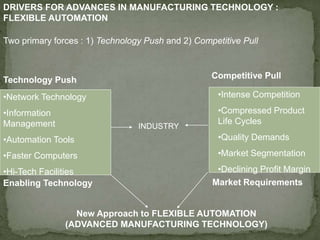
DRIVERS FOR ADVANCES IN MANUFACTURING TECHNOLOGY :
FLEXIBLE AUTOMATION
Two primary forces : 1) Technology Push and 2) Competitive Pull
•Network Technology
•Information
Management
•Automation Tools
•Faster Computers
•Hi-Tech Facilities
•Intense Competition
•Compressed Product
Life Cycles
•Quality Demands
•Market Segmentation
•Declining Profit Margin
Technology Push Competitive Pull
INDUSTRY
Enabling Technology Market Requirements
New Approach to FLEXIBLE AUTOMATION
(ADVANCED MANUFACTURING TECHNOLOGY)
FLEXIBLE MANUFACTURING SYSTEM (FMS):
In 1960s, market competition became more intense.
During 1960 to 1970 cost was the primary concern.
Later quality became a priority.
As the market became more and more complex, speed of delivery became
something customer also needed.
A new strategy was formulated: Customizability.
The companies have to adapt to the environment to be more flexible in their
operations and to satisfy different market segments (customizability).
FLEXIBLE MANUFACTURING SYSTEM (FMS):
FMS is a philosophy. "System" is the key word.
Philosophically, incorporates a systematic view of manufacturing. The buzz
word for today’s manufacturer is "agility".
An agile manufacturer is one who is the fastest to the market, operates with the
lowest total cost and has the greatest ability to "delight" its customers.
FMS is simply one way that manufacturers are able to achieve this agility.
Flexible Manufacturing System:
- “A system that consists of numerous
programmable machine tools connected by an
automated material handling system” (2)
 FMS first proposed in England in 1960’s
 “System 24” operates 24 hours a day
 Automation is main purpose in beginning
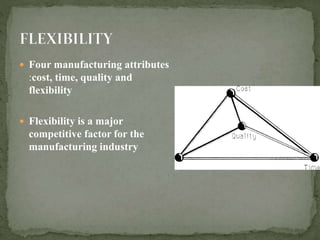
 Four manufacturing attributes
:cost, time, quality and
flexibility
 Flexibility is a major
competitive factor for the
manufacturing industry
 To reduce set up and queue times
 Improve efficiency
 Reduce time for product completion
 Utilize human workers better
 Improve product routing
 Produce a variety of Items under one roof
 Improve product quality
 Serve a variety of vendors simultaneously
 Produce more product more quickly
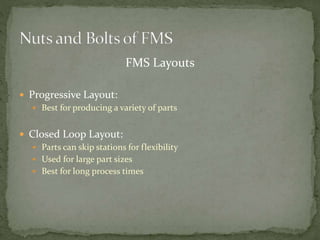
FMS Layouts
 Progressive Layout:
 Best for producing a variety of parts
 Closed Loop Layout:
 Parts can skip stations for flexibility
 Used for large part sizes
 Best for long process times
• Ladder Layout:
― Parts can be sent to any machine in any sequence
― Parts not limited to particular part families
• Open Field Layout:
― Most complex FMS layout
― Includes several support stations
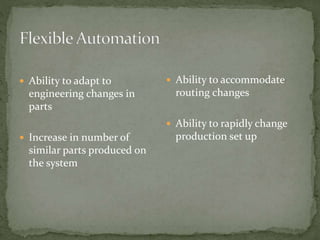
 Ability to adapt to
engineering changes in
parts
 Increase in number of
similar parts produced on
the system
 Ability to accommodate
routing changes
 Ability to rapidly change
production set up
FLEXIBILITY CONCEPT. DIFFERENT APPROACHES
Today flexibility means to produce reasonably priced customized products of
high quality that can be quickly delivered to customers. .
A manufacturing system is flexible if it is capable of processing a number of
different work-pieces simultaneously and automatically with the machine in the
system being able to accept and carryout the operations on the workpiece in
any sequence.
FLEXIBILITY CONCEPT. DIFFERENT APPROACHES
A flexible manufacturing system consists of a group of processing stations
(Predominantly CNC machine tools) interconnected by means of an automated
material handling and storage system and controlled by an integrated computer
system.
A flexible manufacturing system is a system dealing high level distributed data
processing and automated material flow using computer controlled machines,
assembly cells, industrial robots, inspection machines and so on, together with
computer integrated material handling and storage systems.
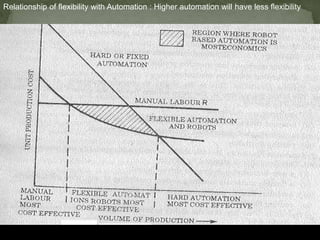
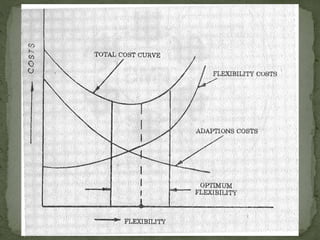
Relationship of flexibility with Automation : Higher automation will have less flexibility
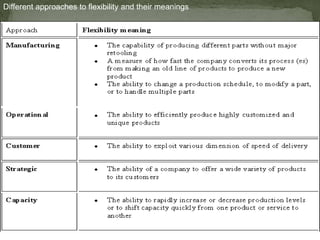
Different approaches to flexibility and their meanings
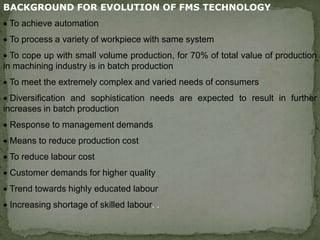
BACKGROUND FOR EVOLUTION OF FMS TECHNOLOGY
 To achieve automation
 To process a variety of workpiece with same system
 To cope up with small volume production, for 70% of total value of production
in machining industry is in batch production
 To meet the extremely complex and varied needs of consumers
 Diversification and sophistication needs are expected to result in further
increases in batch production
 Response to management demands
 Means to reduce production cost
 To reduce labour cost
 Customer demands for higher quality
 Trend towards highly educated labour
 Increasing shortage of skilled labour. .
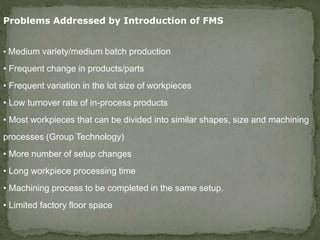
Problems Addressed by Introduction of FMS
• Medium variety/medium batch production
• Frequent change in products/parts
• Frequent variation in the lot size of workpieces
• Low turnover rate of in-process products
• Most workpieces that can be divided into similar shapes, size and machining
processes (Group Technology)
• More number of setup changes
• Long workpiece processing time
• Machining process to be completed in the same setup.
• Limited factory floor space
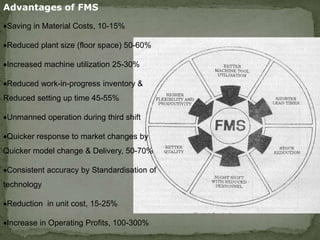
Saving in Material Costs, 10-15%
Reduced plant size (floor space) 50-60%
Increased machine utilization 25-30%
Reduced work-in-progress inventory &
Reduced setting up time 45-55%
Unmanned operation during third shift
Quicker response to market changes by
Quicker model change & Delivery, 50-70%
Consistent accuracy by Standardisation of
technology
Reduction in unit cost, 15-25%
Increase in Operating Profits, 100-300%
Advantages of FMS
COMPONENTS OF FMS
A. Computer Controlled Processing Stations :
CNC machine tools (With automatic tool changer)
Inspection stations
Assembly work-heads
Sheet metal presses
B. Automated Material Handling :
I) Primary (Transportation) Like AGVs, etc.
II) Secondary (Transfer & Orientation) Like Robots, etc.
D. Computer Control System :
to coordinate processing stations and material handling system
C. Automatic Material Storage and Material Retrieval (ASRS)
E. Human ware :
to manage FMS operations :
I) loading raw work parts
II) unloading finished parts
III) changing and setting tools
IV) equipment maintenance and repair
V) NC part programming
VI) Programming & operating the computer system
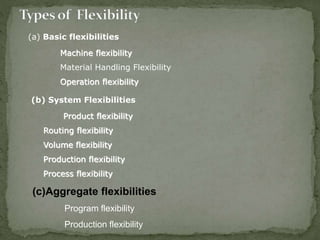
FLEXBILTY OF FMS (TYPES OF FLEXIBLITY) :
There are three levels of manufacturing flexibility.
(a) Basic flexibilities
(b) System Flexibilities
(c) Aggregate flexibilities
(a) Basic flexibilities
Machine flexibility
Material Handling Flexibility
Operation flexibility
(b) System Flexibilities
Product flexibility
Routing flexibility
Volume flexibility
Production flexibility
Process flexibility
(c)Aggregate flexibilities
Program flexibility
Production flexibility
 Generally two category of flexibility
1)The ability of system to cope with external change
2) The ability of system to cope with internal change
 When system gives different flexibilities then important
question is which flexibility should I acquire?
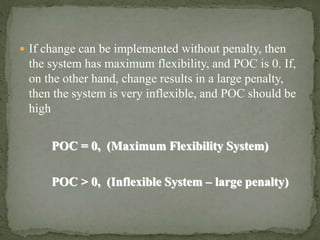
 Flexibility is defined by Penalty of change. lower the POC
higher the flexibility
 The value of POC is based on two inputs:
penalty for potential change, and
probability of potential change
POC = PENALTY x PROBABILITY
 If change can be implemented without penalty, then
the system has maximum flexibility, and POC is 0. If,
on the other hand, change results in a large penalty,
then the system is very inflexible, and POC should be
high
POC = 0, (Maximum Flexibility System)
POC > 0, (Inflexible System – large penalty)
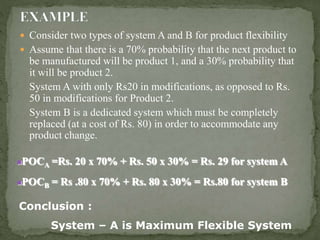
 Consider two types of system A and B for product flexibility
 Assume that there is a 70% probability that the next product to
be manufactured will be product 1, and a 30% probability that
it will be product 2.
System A with only Rs20 in modifications, as opposed to Rs.
50 in modifications for Product 2.
System B is a dedicated system which must be completely
replaced (at a cost of Rs. 80) in order to accommodate any
product change.
POCA =Rs. 20 x 70% + Rs. 50 x 30% = Rs. 29 for system A
POCB = Rs .80 x 70% + Rs. 80 x 30% = Rs.80 for system B
Conclusion :
System – A is Maximum Flexible System
(a) Basic flexibilities
Machine flexibility - the ease with which a machine can process various
operations and part types
Measure :
Time to replace worn-out or broken cutting tools
Time to change tools in a tool magazine
Time to assemble or mount the new fixtures
Machine tool setup time – tool preparation – part positioning etc.
How to attain machine flexibility ?
Sophisticated tool-loading and part loading devices (Technological progress)
Minimize tool changes (Proper operation assignment)
Bring the part and required tool together to the machine (Technological
capability)
Material handling flexibility - a measure of the ease with which different part
types can be transported and properly positioned at the various machine tools
in a system
Operation flexibility - a measure of the ease with which alternative operation
sequences can be used for processing a part type
Measure :
Ability and extent of not pre-determining the ordering of all operations, each on
a particular machine type.
How to attain Operation Flexibility ?
Design a decision system to make decision in real time for determining the
next operation and the next machine, depending on the system state (idle busy,
bottleneck) of various elements of FMS.
Machine flexibility.
(b) System flexibilities
Volume flexibility - a measure of a system’s capability to be operated
profitably at different volumes of the existing part types
Measure :
Smallest volumes for all part types that allow the system run profitably.
How to attain Volume Flexibility :
Multipurpose machine - Layout not dedicated to a particular process
Sophisticated, automated materials handling system (i.e intelligent carts (not
fixed route conveyors))
Routing flexibility..
(b) System flexibilities
Expansion flexibility - the ability to build a system and expand it
incrementally
Measure : how large the FMS can become
How to attain Expansion Flexibility ?
Non-dedicated, non-process driven layout
Flexible materials handling system (i.e wire guided carts)
Modular, flexible machining cells with pallet charges - Routing flexibility.
(b) System flexibilities
Routing flexibility - a measure of the alternative paths that a part can
effectively follow through a system for a given process plan – ability to handle
breakdowns (machine, tools, etc.) – either a part type can be processes via-
several routes or equivalently, each operation can be performed on more than
one machine.
Measure : robustness of FMS – Continuity of production.
How to attain Routing Flexibility ?
Allowing automated and automatic rerouting of parts
Pooling machines into machine groups - Duplicating operation assignments
(b) System flexibilities
Process flexibility - a measure of the volume of the set of part types that a
system can produce without incurring any setup – ability to produce a given set
of part types in several ways
Measure : the number of part types that can be simultaneously processed
without using batches.
How to attain process flexibility ?
Machine flexibility
Multi-purpose, adaptable, CNC machining centers.
(b) System flexibilities
Product flexibility - the volume of the set of part types that can be
manufactured in a system with minor setup – ability to change over to a new set
of products economically and quickly. (design-change flexibility).
Measure : the time required to switch from one part mix to another.
How to attain Product Flexibility ?
An efficient and automated production planning and control system containing
automatic operation assignment procedures, automatic pallet distribution
calculation capability
Machine flexibility.
(c) Aggregate flexibilities
Production flexibility - the volume of the set of part types that a system can
produce without major investment in capital equipment – the universe of part
types that the FMS can produce.
Measure : level of existing technology
How to attain Production Flexibility ?
Increase the level of technology
All previous flexibilities.
Program flexibility - the ability of a system to run for reasonably long periods
without external intervention
Market flexibility - the ability of a system to efficiently adapt to changing
market conditions
Hierarchical Structure of Flexibility Types
A Production system has three sets of components :
a) A set of tools and equipment for processing materials (Machine, Tools,
Assembly machines etc.)
b) A set of means for moving materials from one equipment/tool to another
(material handling equipments)
c) A set of means for controlling and monitoring the actions of tools/equipment
and the movement of material (i.e control system).
Hierarchical Structure of Flexibility Types
There are two basic types of flexibilities :
•Machine flexibility that determines product, process and operation flexibility.
•Routing flexibility that determines volume and expandability.
For analysis purpose there are three necessary levels :
a) component level
b) operation level
c) system level
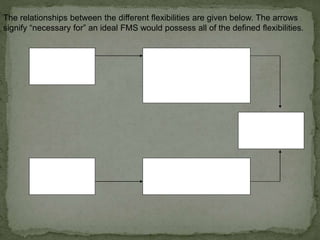
The relationships between the different flexibilities are given below. The arrows
signify “necessary for” an ideal FMS would possess all of the defined flexibilities.
MACHINE
FLEXIBILITY
PRODUCT FLEXIBILITY
PROCESS FLEXIBILITY
OPERATION FLEXIBILITY
ROUTING
FLEXIBILITY
VOLUME FLEXIBILITY
EXPANSION FLEXIBILITY
PRODUCTION
FLEXIBILITY
Time Frame, Incentives and Flexibility:
a) Very short term – within the lead times in which a vendor could change delivery
schedule, assuming adequate flexibility to react quickly, typically one to three
days.
b) Short term – within the lead time of engineering change or revisions to
manufacturing process, typically one to two months.
c) Medium term – within the lead time to redesign products or procure new
manufacturing equipment, typically six months to two years.
d) Long term – within the lead times needed to develop new markets or to design
and build new factories, potentiality five or more years.
Time Frame, Incentives and Flexibility:
Some of the incentives for making a manufacturing system flexible are :
a) Insurance – protection against, uncontrollable variables such as breakdown,
poor supplier performance, uncertainty of market demand, advances in
technology and actions of competitors.
b) Economics – the most economical method of production considering
competitive norms for the industry market variability and production
requirements.
c) Strategy – a manifestation of basic business strategy such as high product
variety of response to competitive innovations.
Machine Flexibility
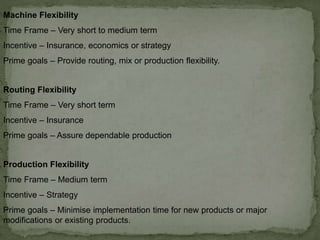
Time Frame – Very short to medium term
Incentive – Insurance, economics or strategy
Prime goals – Provide routing, mix or production flexibility.
Routing Flexibility
Time Frame – Very short term
Incentive – Insurance
Prime goals – Assure dependable production
Production Flexibility
Time Frame – Medium term
Incentive – Strategy
Prime goals – Minimise implementation time for new products or major
modifications or existing products.
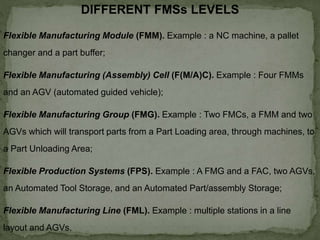
DIFFERENT FMSs LEVELS
Flexible Manufacturing Module (FMM). Example : a NC machine, a pallet
changer and a part buffer;
Flexible Manufacturing (Assembly) Cell (F(M/A)C). Example : Four FMMs
and an AGV (automated guided vehicle);
Flexible Manufacturing Group (FMG). Example : Two FMCs, a FMM and two
AGVs which will transport parts from a Part Loading area, through machines, to
a Part Unloading Area;
Flexible Production Systems (FPS). Example : A FMG and a FAC, two AGVs,
an Automated Tool Storage, and an Automated Part/assembly Storage;
Flexible Manufacturing Line (FML). Example : multiple stations in a line
layout and AGVs.
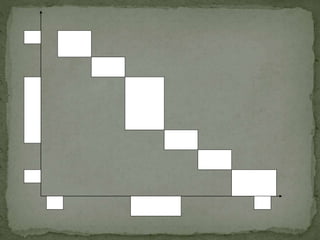
VARIETYL H
L
H
V
O
L
U
M
E
Stand Alone NC
FMM
FMC
FMS
FMG
Transfer
Line
 Globalization of markets has put tremendous pressure on
manufacturing enterprises to be competitive.
 To cope with competitive pressures, a new paradigm in
manufacturing known as AGILE MANUFACTURING is
emerging.
The objective of agile manufacturing is to enable
manufacturing enterprises to be competitive by dynamically
reconfiguring software, equipment and organization
structures.
Agility is the ability to grow and succeed in an
environment of constant and unpredictable changes.
In recent years, the manufacturing paradigm has been
changing from mass production to agile
manufacturing.
The reasons of this trend change are:
• The strength of global competition is increasing;
• Mass markets are fragmenting to niche markets;
• Customers expect low volume, high quality;
• Short product life-cycles, development
 Greater product customization
 Rapid introduction of new or modified product
 Advanced interenterpise networking
technology
 Upgradable products
 Increased emphasis on knowledgeable, highly
trained workers
 Interactive customer relationship
 Dynamic reconfiguration of production processes
 Greater use of flexible production technologies
 Rapid prototyping
 An open systems information environment
 Innovative and flexible management structures
 Product pricing based on value to the customer
 Commitment to the bening operations and
product designs
INTELLIGENT MANUFACTURING SYSTEM (IMS):
IMS, takes care of date of intellectual activities in the manufacturing and use of
them to better fuse, men and intelligent machines in the integration of the entire
range of corporate activities like
– from order booking through design, production and marketing
– in a flexible manner, leads to optimum productivity.
An IMS plant of future will deal with global communications and operations to
enjoy the benefits of maximum productive flexibility.
ARTIFICIAL INTELLIGENCE (AI) :
AI generally relates to the attempt to use computer programming to model the
behavioral aspects of human mind, thinking, learning and problem solving.
Application of AI in Manufacturing :
•Sensor Interpretation and integration – Visual perception and guidance
•Operation of machines and complex system – Knowledge Management
•Human interaction – Fault diagnosis and repair.
AI to Optimize CIM Plant :
True CIM system can not really be accomplished without AI because too many
external factors influence the internal processes of CIM. True CIM system can
be affected only when the routine human decision making processes are
eliminated.
RAPID PROTOTYPING (RP):
•80% of the quality of a product is created in the development phase.
•70% of the cost of production is decided in the development phase.
•6 months delay in introducing a product to the market can result in a loss of
profit over the product’s lifetime of over 30% to 50%.
Product development phase is vital for the competitive position of industry.
RP constitute an important part of the “Time Compression Technology”
approach to product design and developments.
RP is a technique in which physical models are fully created from materials,
provided in various forms, completely under control of solid model data created
within CAD.
RAPID PROTOTYPING (RP):
RP Technologies
•Stereolithography
•Laminated Object Manufacturing
•Selective Laser Sintering, etc…
ADVANTAGES of RP :
Strategic Advantages :
•Time and cost saving in prototype production – Reduce time to market
•Enable rapid implementation of design and development changes
•Enhanced product improvement, customisation and innovations.
Production Advantages :
•Integration with CAD/CAM environments
•Rapid production of test prototype
•Integrated production of tools.
Decision Making Advantages :
•Verification of design, manufacturing process and plans for production
•Verification of tool design and production
•Improved communication with customers and suppliers.
IMS, AI and RP are ADDON to C.I.M.
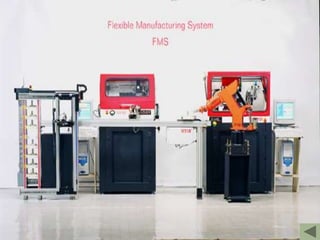
Major CAM-CIM, Facilities at S.V.N.I.T., SURAT
CNC – Lathe (Stand alone)
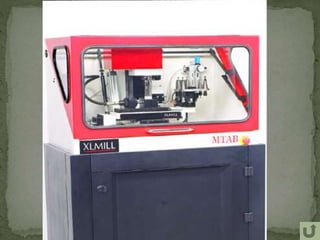
CNC – Milling (Stand alone)
CMM – Coordinate Measuring Machine
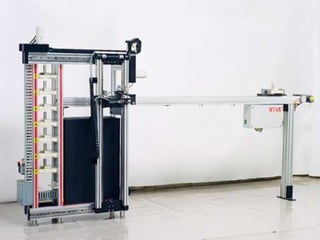
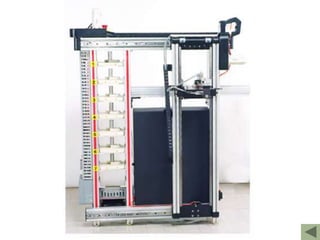
C.I.M Consists of
CNC Lathe, CNC Milling,
Robots, ASRS, AGV,
Vision Inspection and Assembly Station,
Fanuc – Virtual Industrial Controller (Lathe & Milling)
UniGraphics – CAD/CAM
MasterCAM
EXSL – Win – CNC, Virtual Reality Software
MSM - FMS, Virtual Reality Software
REFERENCES :
Mikell P. Groover – “Automation, Production systems and Computer-
Integrated Manufacturing”, 1987
Mikell P. Groover & E.W. Zimmers – “CAD/CAM”,1984
Surender Kumar & A.K. Jha – Technology of Computer_ Aided Design and
Manufacturing
P. Radhakrishnan & S. Subramanyan – “CAD,CAM, CIM”,1995.
Rao, P.N., Tewari, N. K.- Computer Aided Manufacturing”, Tata McGraw Hill,
1991.
Prof. Kripashankar – Flexible Manufacturing System – lecture note, I.I.T.
kanpur.
S.G. Deshmukh & P. Venkateswara Rao, “Proceeding of the SERC School on
Advanced Manufacturing Technology”, Nov, 2-14, 1998, I.I.T., Delhi.
Thank you
Contact Details :
Email : hkr@med.svnit.ac.in
Phone : 0261-2223371..74 (4 lines) ext. 1694, 1640, 1692
0261-2201640, 2201694
09824400337 (Cell)
Address : Dr. H. K. Raval
Professor, Mechanical Engineering Department
S.V. National Institute of Technology, SURAT
395 007.
Cim presentation
Cim presentation
Cim presentation
Cim presentation
Cim presentation

Cim presentation

  • 1.
    Computer Integrated Manufacturing (ANOVERVIEW) PROF. A.G.MOMIN Asst.Professor, Mech. Engg. Deptt. Department of Mechanical Engineering, L.D.College of Engineering ,Ahmedabad
  • 2.
    AGRICULTRAL AGE …… - 18.Century INDUSTRIAL AGE 18. - 20. Century INFORMATION AGE 20. - ……. Century GROWTH with Century !!
  • 3.
    HUMAN (hand made) MACHINE TOOLS (manual) HARD AUTOMATION (mechanization) SOFT AUTOMATION (CNCmachines) INTEGRATION (computer integrated manufacturing) INTELLIGENT MANUFACTURING SYSTEMS ? MANUFACTURING PAST and FUTURE :
  • 4.
    “CIM is theintegration of the total manufacturing enterprise through the use of integrated systems and data communications coupled with new managerial philosophies that improve organizational and personnel efficiency.”
  • 5.
    CIM is theintegration of all enterprise operations and activities around a common corporate data repository. It is the use of integrated systems and data communications coupled with new managerial philosophies. What is CIM?
  • 6.
    CIM is nota product that can be purchased and installed. It is a way of thinking and solving problems. CIM is the use of computers for on-line automation, optimisation and integration of the total system from design to production. What is CIM? NC, CAD, CAD/CAM are steps on the way to CIM and intern intelligent flexible Manufacturing system FMS
  • 7.
     CAD ComputerAided Design  CAM Computer Aided Manufacturing  Computer Numerical Control (CNC)  Direct Numerical Control (DNC)  Computer Aided Process Control  CAE Computer Aided Engineering  Computer-Integrated Production Management  Automated Inspection Methods  Industrial Robotics, etc..
  • 8.
    Transfer lines arevery efficient when producing parts in large volumes at high output rates. The limitation is with only identical parts. Transfer lines are highly inflexible to accommodate the change/variation in part design. Stand-alone NC machines are ideally suited for variation in part design. And appropriate for job shop and small batch manufacturing as these are easily programmable. In terms of manufacturing efficiency and productivity, a gap exists between above two (i.e high production rate transfer machines and highly flexible/programmable low production rate NC machines). The gap can be bridged by Computer Integrated Manufacturing (C.I.M). Production System : Volume – Variety
  • 9.
    •Stand alone •High partvariation •Low volume •Flexible manufacturing system •Medium part variation •Medium volume •C.I.M •Transfer lines •Low part variation •High volume F L E X I B I L I T Y PRODUCTION VOLUME
  • 10.
    The Computer IntegratedManufacturing System (C.I.M), covering the medium part variety and medium production volume, can be further divided into finer categories. These categories represent different levels of compromise between flexibility and production capacity. Special Manufacturing System (Least Flexible C.I.M) Manufacturing Cell Flexible Manufacturing System (FMS)
  • 11.
    The mile stonesof the evolution of automation of a production line for a particular product: 1909: Ford production line 1923: Automated transfer machine 1952: Numerical Control(NC) 1959: Control digital computer 1960: Robot implementation 1965:Production-line computer control 1970: Multiple machine computer control 1970-1972: Computer numerical control 1975-1980: Distributed numerical control 1980: Flexible manufacturing system
  • 12.
    FEATURES OF CIM: •Minimum changeover costs and time •Maximum flexibility and quick turnaround capability •Minimum downtime for unanticipated maintenance, but continuous maintenance attention •Maximum breadth of product range and volume •Ability to adapt to variations in materials and processes. •Ability to integrate new process technology into an existing system with minimum disturbances and costs •Ability to handle increasingly complex product design and technology •Allows for just-in-time manufacturing.
  • 13.
     Improved customerservice  Improved quality  Shorter time to market with new products  Shorter flow time  Shorter vendor lead time  Reduced inventory levels  Improved schedule performance  Greater flexibility and responsiveness  Improved competitiveness  Lower total cost  Shorter customer lead time  Increase in manufacturing productivity  Decrease in work-in process inventory
  • 14.
    The computer hashad a substantial impact on almost all activities of a factory. Often, the introduction of the computer changed the organizational structure of a department and made necessary adoption of new management structures. The Role of Computer in Manufacturing
  • 15.
    The operation ofa Computer system gives the user substantial benefits: • Reduction of design costs by 15-30%; • Reduction of the in-shop time of a part by 30-60%; • Increase of productivity by 40-70%; • Better product quality, reduction of scrap 20-50%. The Role of Computer in Manufacturing
  • 16.
    DEMAND DESIGN MANUFACTURINGPRODUCT Conceptual design Mathematical analysis Geometric data Graphical representation CAD CAD/CAM CAM Process design Process planning CNC codes Tool selection Facilities management C.I.M ?
  • 17.
     Parallel withincreasing needs for faster communications the needs of large data storage capacity and fast computers is increasing also.  Now typical manufacturing environment, called also as CAD/CAM/CAE environment is composed of fast computers, centralized data storage units, CNC controlled machine centers, robots etc., all connected on the same network.  On this networks either TCP/IP or specially designed manufacturing protocols like, MAP or TOP, are used.
  • 18.
    MAP An initiative byGeneral Motors of The United States has resulted in the selection of a set of protocols, all based on ISO standards, to achieve open system interconnection within an automated manufacturing plant. The resulting protocols are knows as manufacturing automation protocols (MAPs).
  • 20.
    TOP In a similarway, an initiative by the Boeing Corporation (USA) has resulted in the selection of a set of ISO standards to achieve open system interconnection in a technical and office environment. The selected protocols are known as technical and office protocols (TOPs).
  • 22.
    Functions of theComputer in C.I.Ms •Machine Control for CNC and DNC •Production Control •Traffic Control •Shuttle Control •Work Handling System Monitoring •Tool Control •System Performance Monitoring and Reporting. C.I.Ms Data Files • Part Program Files • Routing Files • Part Production Files • Pallet Reference Files • Station Tool File • Tool-life File
  • 23.
    TRENDS IN MANUFACTURING Demandfor: Quality on time delivery uninterrupted supply lower price
  • 24.
    Solution ??? Answer maybe; C.I.M /F.M.S And Advanced Manufacturing Technology
  • 25.
    INTRODUCTION to ADVANCEDMANUFACTURING The Advanced Manufacturing concepts are characterized by their ability to allow a rapid response to continuously changing customer requirements. At the core, Flexile Automation (FA) systems can reduce product cycle time, increase quality and allow rapid changes in design.
  • 26.
    INTRODUCTION to ADVANCEDMANUFACTURING The recent hi-tech innovations like •Concurrent Engineering (CE), •Flexible Manufacturing System (FMS), •Computer Integrated Manufacturing (CIM), •Variable Mission Manufacturing (VMM), •Intelligent Manufacturing System (IMS), •Artificial Intelligence (AI), and •Rapid Prototyping (RP) have made it a reality to successfully implement flexible automation in industries to achieve the goal of “Maximum Productive Flexibility” The different above titles all refer to a production system – Consists of group of NC machines connected by an automated materials handling system and operated under computer control – CAN BE CALLED AS C.I.M The Advanced Technology has changed the nature of manufacturing and opened up opportunities for new styles of competition in Industries.
  • 27.
    NEW AIMS OFPRODUCTION : As a result of economic life and better life style, condition within the global companies in advanced countries like Germany, Japan, U.S.A. etc demonstrate similar development trends : Like.. •Shorter Market Lifetimes and Compressed Product Lifecycles •Intensified Competition •An Accelerated Rate of Technical Development •Declining Profit Margins •Increased Demands
  • 28.
    The world classcompanies must, therefore accept new business environment and pursue new strategies like •Develop new products with Increased frequency Offer a great number of variants and Ensure high quality •Attempt to shorten delivery times •Reduce costs by all means with Incorporating increasing level of customization.
  • 29.
    EVOLUTION OF MANUFACTURINGTECHNOLOGY : •In the first stage, manufacturing was dependent on human labor and intelligence. •The Second stage saw the replacement of human labour by machines, while still relying on human intelligence. •Today in the third stage, human intelligence is being replaced by artificial intelligence (AI) and integrated with machine labour. Manufacturing is now moving from functions where we manage people, materials, and costs to systems where we must manage information, continuous change and time.
  • 30.
    FLEXILE AUTOMATION –A KEY CONCEPT Flexible Automation offers rapid response to product innovation, process innovation and shifts in demand. The essential attributes like enhanced dynamism, greater variance and higher quality. Flexible Automation is much more cost-effective than Fixed Automation for High-Variety production requirements. The recent hi-tech innovations like Flexible Manufacturing System (FMS), Computer Integrated Manufacturing (CIM), Variable Mission Manufacturing (VMM), Intelligent Manufacturing System (IMS), Artificial Intelligence (AI), and Rapid Prototyping (RP) have greatly contributed towards achieving the objectives of Flexible Automation
  • 31.
    DRIVERS FOR ADVANCESIN MANUFACTURING TECHNOLOGY : FLEXIBLE AUTOMATION Two primary forces : 1) Technology Push and 2) Competitive Pull •Network Technology •Information Management •Automation Tools •Faster Computers •Hi-Tech Facilities •Intense Competition •Compressed Product Life Cycles •Quality Demands •Market Segmentation •Declining Profit Margin Technology Push Competitive Pull INDUSTRY Enabling Technology Market Requirements New Approach to FLEXIBLE AUTOMATION (ADVANCED MANUFACTURING TECHNOLOGY)
  • 32.
    FLEXIBLE MANUFACTURING SYSTEM(FMS): In 1960s, market competition became more intense. During 1960 to 1970 cost was the primary concern. Later quality became a priority. As the market became more and more complex, speed of delivery became something customer also needed. A new strategy was formulated: Customizability. The companies have to adapt to the environment to be more flexible in their operations and to satisfy different market segments (customizability).
  • 33.
    FLEXIBLE MANUFACTURING SYSTEM(FMS): FMS is a philosophy. "System" is the key word. Philosophically, incorporates a systematic view of manufacturing. The buzz word for today’s manufacturer is "agility". An agile manufacturer is one who is the fastest to the market, operates with the lowest total cost and has the greatest ability to "delight" its customers. FMS is simply one way that manufacturers are able to achieve this agility.
  • 34.
    Flexible Manufacturing System: -“A system that consists of numerous programmable machine tools connected by an automated material handling system” (2)
  • 35.
     FMS firstproposed in England in 1960’s  “System 24” operates 24 hours a day  Automation is main purpose in beginning
  • 36.
     Four manufacturingattributes :cost, time, quality and flexibility  Flexibility is a major competitive factor for the manufacturing industry
  • 37.
     To reduceset up and queue times  Improve efficiency  Reduce time for product completion  Utilize human workers better  Improve product routing  Produce a variety of Items under one roof  Improve product quality  Serve a variety of vendors simultaneously  Produce more product more quickly
  • 38.
    FMS Layouts  ProgressiveLayout:  Best for producing a variety of parts  Closed Loop Layout:  Parts can skip stations for flexibility  Used for large part sizes  Best for long process times
  • 39.
    • Ladder Layout: ―Parts can be sent to any machine in any sequence ― Parts not limited to particular part families • Open Field Layout: ― Most complex FMS layout ― Includes several support stations
  • 40.
     Ability toadapt to engineering changes in parts  Increase in number of similar parts produced on the system  Ability to accommodate routing changes  Ability to rapidly change production set up
  • 41.
    FLEXIBILITY CONCEPT. DIFFERENTAPPROACHES Today flexibility means to produce reasonably priced customized products of high quality that can be quickly delivered to customers. . A manufacturing system is flexible if it is capable of processing a number of different work-pieces simultaneously and automatically with the machine in the system being able to accept and carryout the operations on the workpiece in any sequence.
  • 42.
    FLEXIBILITY CONCEPT. DIFFERENTAPPROACHES A flexible manufacturing system consists of a group of processing stations (Predominantly CNC machine tools) interconnected by means of an automated material handling and storage system and controlled by an integrated computer system. A flexible manufacturing system is a system dealing high level distributed data processing and automated material flow using computer controlled machines, assembly cells, industrial robots, inspection machines and so on, together with computer integrated material handling and storage systems.
  • 43.
    Relationship of flexibilitywith Automation : Higher automation will have less flexibility
  • 45.
    Different approaches toflexibility and their meanings
  • 46.
    BACKGROUND FOR EVOLUTIONOF FMS TECHNOLOGY  To achieve automation  To process a variety of workpiece with same system  To cope up with small volume production, for 70% of total value of production in machining industry is in batch production  To meet the extremely complex and varied needs of consumers  Diversification and sophistication needs are expected to result in further increases in batch production  Response to management demands  Means to reduce production cost  To reduce labour cost  Customer demands for higher quality  Trend towards highly educated labour  Increasing shortage of skilled labour. .
  • 47.
    Problems Addressed byIntroduction of FMS • Medium variety/medium batch production • Frequent change in products/parts • Frequent variation in the lot size of workpieces • Low turnover rate of in-process products • Most workpieces that can be divided into similar shapes, size and machining processes (Group Technology) • More number of setup changes • Long workpiece processing time • Machining process to be completed in the same setup. • Limited factory floor space
  • 48.
    Saving in MaterialCosts, 10-15% Reduced plant size (floor space) 50-60% Increased machine utilization 25-30% Reduced work-in-progress inventory & Reduced setting up time 45-55% Unmanned operation during third shift Quicker response to market changes by Quicker model change & Delivery, 50-70% Consistent accuracy by Standardisation of technology Reduction in unit cost, 15-25% Increase in Operating Profits, 100-300% Advantages of FMS
  • 49.
    COMPONENTS OF FMS A.Computer Controlled Processing Stations : CNC machine tools (With automatic tool changer) Inspection stations Assembly work-heads Sheet metal presses B. Automated Material Handling : I) Primary (Transportation) Like AGVs, etc. II) Secondary (Transfer & Orientation) Like Robots, etc. D. Computer Control System : to coordinate processing stations and material handling system C. Automatic Material Storage and Material Retrieval (ASRS)
  • 50.
    E. Human ware: to manage FMS operations : I) loading raw work parts II) unloading finished parts III) changing and setting tools IV) equipment maintenance and repair V) NC part programming VI) Programming & operating the computer system
  • 51.
    FLEXBILTY OF FMS(TYPES OF FLEXIBLITY) : There are three levels of manufacturing flexibility. (a) Basic flexibilities (b) System Flexibilities (c) Aggregate flexibilities
  • 52.
    (a) Basic flexibilities Machineflexibility Material Handling Flexibility Operation flexibility (b) System Flexibilities Product flexibility Routing flexibility Volume flexibility Production flexibility Process flexibility (c)Aggregate flexibilities Program flexibility Production flexibility
  • 53.
     Generally twocategory of flexibility 1)The ability of system to cope with external change 2) The ability of system to cope with internal change  When system gives different flexibilities then important question is which flexibility should I acquire?
  • 54.
     Flexibility isdefined by Penalty of change. lower the POC higher the flexibility  The value of POC is based on two inputs: penalty for potential change, and probability of potential change POC = PENALTY x PROBABILITY
  • 55.
     If changecan be implemented without penalty, then the system has maximum flexibility, and POC is 0. If, on the other hand, change results in a large penalty, then the system is very inflexible, and POC should be high POC = 0, (Maximum Flexibility System) POC > 0, (Inflexible System – large penalty)
  • 56.
     Consider twotypes of system A and B for product flexibility  Assume that there is a 70% probability that the next product to be manufactured will be product 1, and a 30% probability that it will be product 2. System A with only Rs20 in modifications, as opposed to Rs. 50 in modifications for Product 2. System B is a dedicated system which must be completely replaced (at a cost of Rs. 80) in order to accommodate any product change. POCA =Rs. 20 x 70% + Rs. 50 x 30% = Rs. 29 for system A POCB = Rs .80 x 70% + Rs. 80 x 30% = Rs.80 for system B Conclusion : System – A is Maximum Flexible System
  • 57.
    (a) Basic flexibilities Machineflexibility - the ease with which a machine can process various operations and part types Measure : Time to replace worn-out or broken cutting tools Time to change tools in a tool magazine Time to assemble or mount the new fixtures Machine tool setup time – tool preparation – part positioning etc. How to attain machine flexibility ? Sophisticated tool-loading and part loading devices (Technological progress) Minimize tool changes (Proper operation assignment) Bring the part and required tool together to the machine (Technological capability)
  • 58.
    Material handling flexibility- a measure of the ease with which different part types can be transported and properly positioned at the various machine tools in a system Operation flexibility - a measure of the ease with which alternative operation sequences can be used for processing a part type Measure : Ability and extent of not pre-determining the ordering of all operations, each on a particular machine type. How to attain Operation Flexibility ? Design a decision system to make decision in real time for determining the next operation and the next machine, depending on the system state (idle busy, bottleneck) of various elements of FMS. Machine flexibility.
  • 59.
    (b) System flexibilities Volumeflexibility - a measure of a system’s capability to be operated profitably at different volumes of the existing part types Measure : Smallest volumes for all part types that allow the system run profitably. How to attain Volume Flexibility : Multipurpose machine - Layout not dedicated to a particular process Sophisticated, automated materials handling system (i.e intelligent carts (not fixed route conveyors)) Routing flexibility..
  • 60.
    (b) System flexibilities Expansionflexibility - the ability to build a system and expand it incrementally Measure : how large the FMS can become How to attain Expansion Flexibility ? Non-dedicated, non-process driven layout Flexible materials handling system (i.e wire guided carts) Modular, flexible machining cells with pallet charges - Routing flexibility.
  • 61.
    (b) System flexibilities Routingflexibility - a measure of the alternative paths that a part can effectively follow through a system for a given process plan – ability to handle breakdowns (machine, tools, etc.) – either a part type can be processes via- several routes or equivalently, each operation can be performed on more than one machine. Measure : robustness of FMS – Continuity of production. How to attain Routing Flexibility ? Allowing automated and automatic rerouting of parts Pooling machines into machine groups - Duplicating operation assignments
  • 62.
    (b) System flexibilities Processflexibility - a measure of the volume of the set of part types that a system can produce without incurring any setup – ability to produce a given set of part types in several ways Measure : the number of part types that can be simultaneously processed without using batches. How to attain process flexibility ? Machine flexibility Multi-purpose, adaptable, CNC machining centers.
  • 63.
    (b) System flexibilities Productflexibility - the volume of the set of part types that can be manufactured in a system with minor setup – ability to change over to a new set of products economically and quickly. (design-change flexibility). Measure : the time required to switch from one part mix to another. How to attain Product Flexibility ? An efficient and automated production planning and control system containing automatic operation assignment procedures, automatic pallet distribution calculation capability Machine flexibility.
  • 64.
    (c) Aggregate flexibilities Productionflexibility - the volume of the set of part types that a system can produce without major investment in capital equipment – the universe of part types that the FMS can produce. Measure : level of existing technology How to attain Production Flexibility ? Increase the level of technology All previous flexibilities. Program flexibility - the ability of a system to run for reasonably long periods without external intervention Market flexibility - the ability of a system to efficiently adapt to changing market conditions
  • 65.
    Hierarchical Structure ofFlexibility Types A Production system has three sets of components : a) A set of tools and equipment for processing materials (Machine, Tools, Assembly machines etc.) b) A set of means for moving materials from one equipment/tool to another (material handling equipments) c) A set of means for controlling and monitoring the actions of tools/equipment and the movement of material (i.e control system).
  • 66.
    Hierarchical Structure ofFlexibility Types There are two basic types of flexibilities : •Machine flexibility that determines product, process and operation flexibility. •Routing flexibility that determines volume and expandability. For analysis purpose there are three necessary levels : a) component level b) operation level c) system level
  • 67.
    The relationships betweenthe different flexibilities are given below. The arrows signify “necessary for” an ideal FMS would possess all of the defined flexibilities. MACHINE FLEXIBILITY PRODUCT FLEXIBILITY PROCESS FLEXIBILITY OPERATION FLEXIBILITY ROUTING FLEXIBILITY VOLUME FLEXIBILITY EXPANSION FLEXIBILITY PRODUCTION FLEXIBILITY
  • 68.
    Time Frame, Incentivesand Flexibility: a) Very short term – within the lead times in which a vendor could change delivery schedule, assuming adequate flexibility to react quickly, typically one to three days. b) Short term – within the lead time of engineering change or revisions to manufacturing process, typically one to two months. c) Medium term – within the lead time to redesign products or procure new manufacturing equipment, typically six months to two years. d) Long term – within the lead times needed to develop new markets or to design and build new factories, potentiality five or more years.
  • 69.
    Time Frame, Incentivesand Flexibility: Some of the incentives for making a manufacturing system flexible are : a) Insurance – protection against, uncontrollable variables such as breakdown, poor supplier performance, uncertainty of market demand, advances in technology and actions of competitors. b) Economics – the most economical method of production considering competitive norms for the industry market variability and production requirements. c) Strategy – a manifestation of basic business strategy such as high product variety of response to competitive innovations.
  • 70.
    Machine Flexibility Time Frame– Very short to medium term Incentive – Insurance, economics or strategy Prime goals – Provide routing, mix or production flexibility. Routing Flexibility Time Frame – Very short term Incentive – Insurance Prime goals – Assure dependable production Production Flexibility Time Frame – Medium term Incentive – Strategy Prime goals – Minimise implementation time for new products or major modifications or existing products.
  • 71.
    DIFFERENT FMSs LEVELS FlexibleManufacturing Module (FMM). Example : a NC machine, a pallet changer and a part buffer; Flexible Manufacturing (Assembly) Cell (F(M/A)C). Example : Four FMMs and an AGV (automated guided vehicle); Flexible Manufacturing Group (FMG). Example : Two FMCs, a FMM and two AGVs which will transport parts from a Part Loading area, through machines, to a Part Unloading Area; Flexible Production Systems (FPS). Example : A FMG and a FAC, two AGVs, an Automated Tool Storage, and an Automated Part/assembly Storage; Flexible Manufacturing Line (FML). Example : multiple stations in a line layout and AGVs.
  • 72.
    VARIETYL H L H V O L U M E Stand AloneNC FMM FMC FMS FMG Transfer Line
  • 74.
     Globalization ofmarkets has put tremendous pressure on manufacturing enterprises to be competitive.  To cope with competitive pressures, a new paradigm in manufacturing known as AGILE MANUFACTURING is emerging.
  • 75.
    The objective ofagile manufacturing is to enable manufacturing enterprises to be competitive by dynamically reconfiguring software, equipment and organization structures.
  • 76.
    Agility is theability to grow and succeed in an environment of constant and unpredictable changes. In recent years, the manufacturing paradigm has been changing from mass production to agile manufacturing.
  • 77.
    The reasons ofthis trend change are: • The strength of global competition is increasing; • Mass markets are fragmenting to niche markets; • Customers expect low volume, high quality; • Short product life-cycles, development
  • 78.
     Greater productcustomization  Rapid introduction of new or modified product  Advanced interenterpise networking technology  Upgradable products  Increased emphasis on knowledgeable, highly trained workers  Interactive customer relationship
  • 79.
     Dynamic reconfigurationof production processes  Greater use of flexible production technologies  Rapid prototyping  An open systems information environment  Innovative and flexible management structures  Product pricing based on value to the customer  Commitment to the bening operations and product designs
  • 80.
    INTELLIGENT MANUFACTURING SYSTEM(IMS): IMS, takes care of date of intellectual activities in the manufacturing and use of them to better fuse, men and intelligent machines in the integration of the entire range of corporate activities like – from order booking through design, production and marketing – in a flexible manner, leads to optimum productivity. An IMS plant of future will deal with global communications and operations to enjoy the benefits of maximum productive flexibility.
  • 81.
    ARTIFICIAL INTELLIGENCE (AI): AI generally relates to the attempt to use computer programming to model the behavioral aspects of human mind, thinking, learning and problem solving. Application of AI in Manufacturing : •Sensor Interpretation and integration – Visual perception and guidance •Operation of machines and complex system – Knowledge Management •Human interaction – Fault diagnosis and repair. AI to Optimize CIM Plant : True CIM system can not really be accomplished without AI because too many external factors influence the internal processes of CIM. True CIM system can be affected only when the routine human decision making processes are eliminated.
  • 82.
    RAPID PROTOTYPING (RP): •80%of the quality of a product is created in the development phase. •70% of the cost of production is decided in the development phase. •6 months delay in introducing a product to the market can result in a loss of profit over the product’s lifetime of over 30% to 50%. Product development phase is vital for the competitive position of industry. RP constitute an important part of the “Time Compression Technology” approach to product design and developments. RP is a technique in which physical models are fully created from materials, provided in various forms, completely under control of solid model data created within CAD.
  • 83.
    RAPID PROTOTYPING (RP): RPTechnologies •Stereolithography •Laminated Object Manufacturing •Selective Laser Sintering, etc…
  • 84.
    ADVANTAGES of RP: Strategic Advantages : •Time and cost saving in prototype production – Reduce time to market •Enable rapid implementation of design and development changes •Enhanced product improvement, customisation and innovations. Production Advantages : •Integration with CAD/CAM environments •Rapid production of test prototype •Integrated production of tools. Decision Making Advantages : •Verification of design, manufacturing process and plans for production •Verification of tool design and production •Improved communication with customers and suppliers.
  • 85.
    IMS, AI andRP are ADDON to C.I.M.
  • 86.
    Major CAM-CIM, Facilitiesat S.V.N.I.T., SURAT CNC – Lathe (Stand alone) CNC – Milling (Stand alone) CMM – Coordinate Measuring Machine C.I.M Consists of CNC Lathe, CNC Milling, Robots, ASRS, AGV, Vision Inspection and Assembly Station, Fanuc – Virtual Industrial Controller (Lathe & Milling) UniGraphics – CAD/CAM MasterCAM EXSL – Win – CNC, Virtual Reality Software MSM - FMS, Virtual Reality Software
  • 87.
    REFERENCES : Mikell P.Groover – “Automation, Production systems and Computer- Integrated Manufacturing”, 1987 Mikell P. Groover & E.W. Zimmers – “CAD/CAM”,1984 Surender Kumar & A.K. Jha – Technology of Computer_ Aided Design and Manufacturing P. Radhakrishnan & S. Subramanyan – “CAD,CAM, CIM”,1995. Rao, P.N., Tewari, N. K.- Computer Aided Manufacturing”, Tata McGraw Hill, 1991. Prof. Kripashankar – Flexible Manufacturing System – lecture note, I.I.T. kanpur. S.G. Deshmukh & P. Venkateswara Rao, “Proceeding of the SERC School on Advanced Manufacturing Technology”, Nov, 2-14, 1998, I.I.T., Delhi.
  • 88.
  • 89.
    Contact Details : Email: hkr@med.svnit.ac.in Phone : 0261-2223371..74 (4 lines) ext. 1694, 1640, 1692 0261-2201640, 2201694 09824400337 (Cell) Address : Dr. H. K. Raval Professor, Mechanical Engineering Department S.V. National Institute of Technology, SURAT 395 007.