Damian Gordon
 We can hook up the network into a
number of different shapes (or
topologies).
 The most common shapes are:
◦ Star
◦ Ring
◦ Bus
◦ Tree
◦ Hybrid
 There are advantages and
disadvantages to each shape (or
topology).
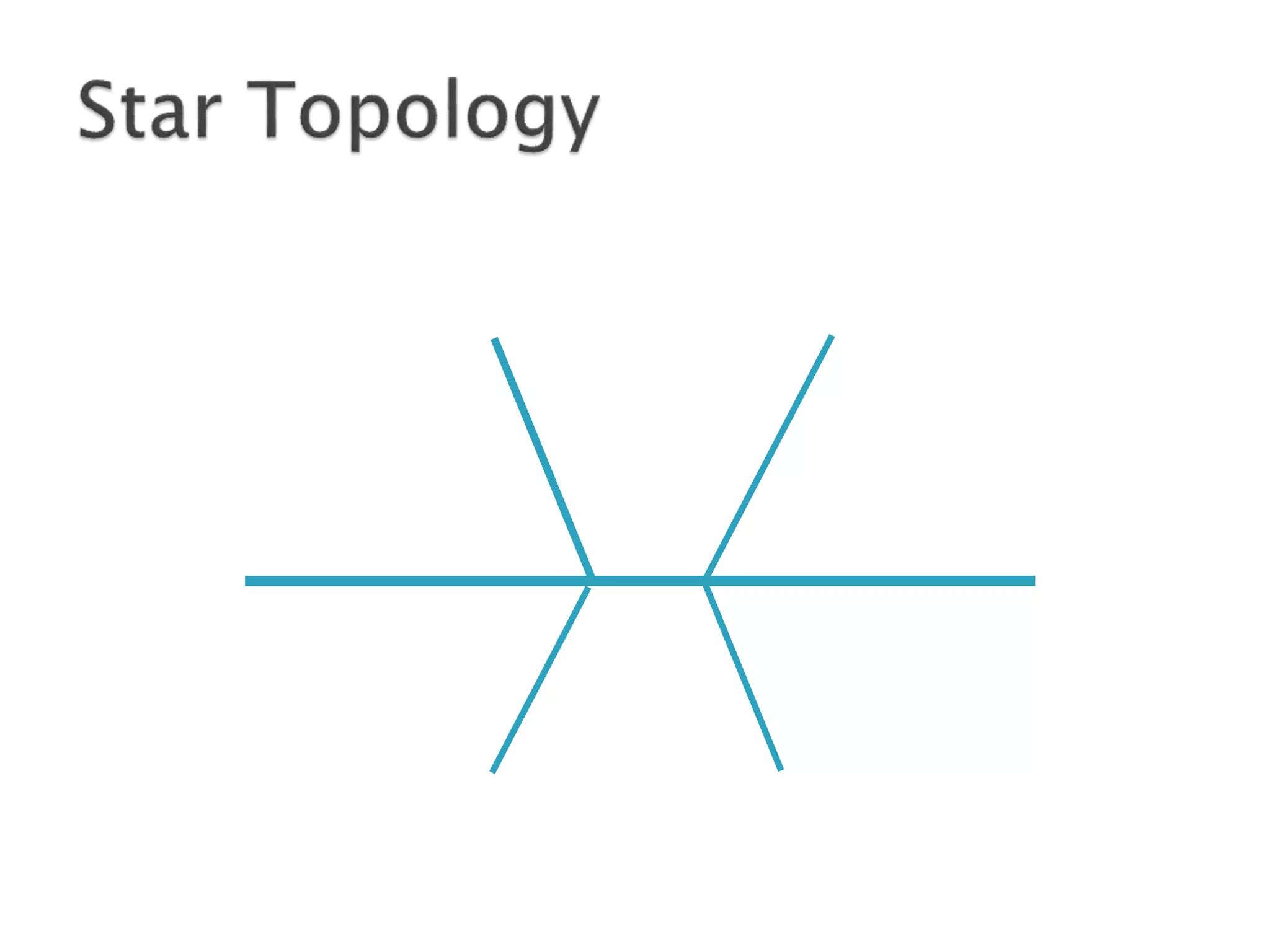
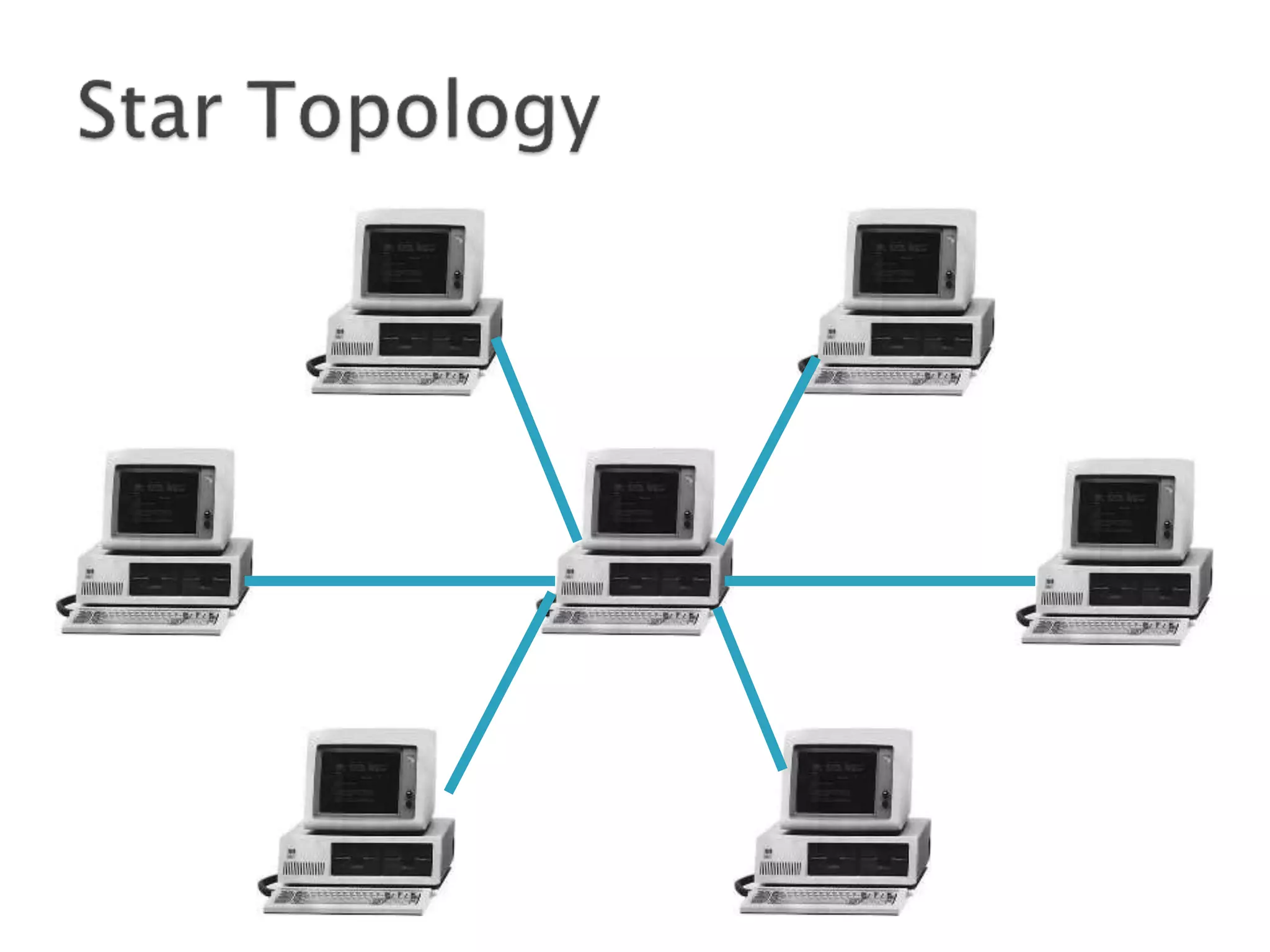
 A star topology is also called a hub
topology, or a centralized topology.
 A traditional approach to connecting
devices where all transmitted data
passed through a central controller.
 This topology make routing very easy
since the central controller is
connected to all other hosts, and
knows the path to all hosts.
 The real issue with this is that the
central controller must be highly
reliable and be able to handle all the
network traffic, no matter how busy.
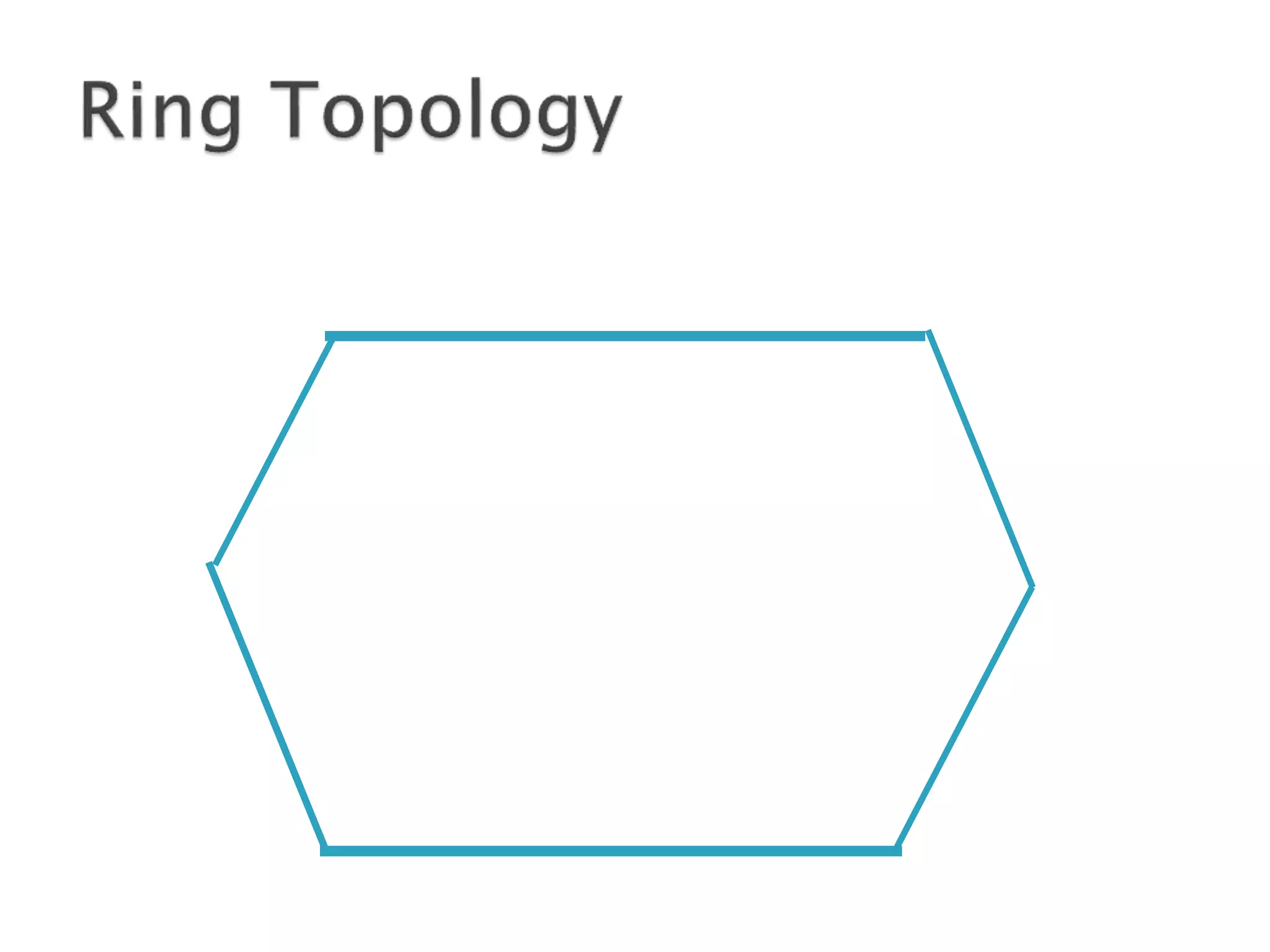
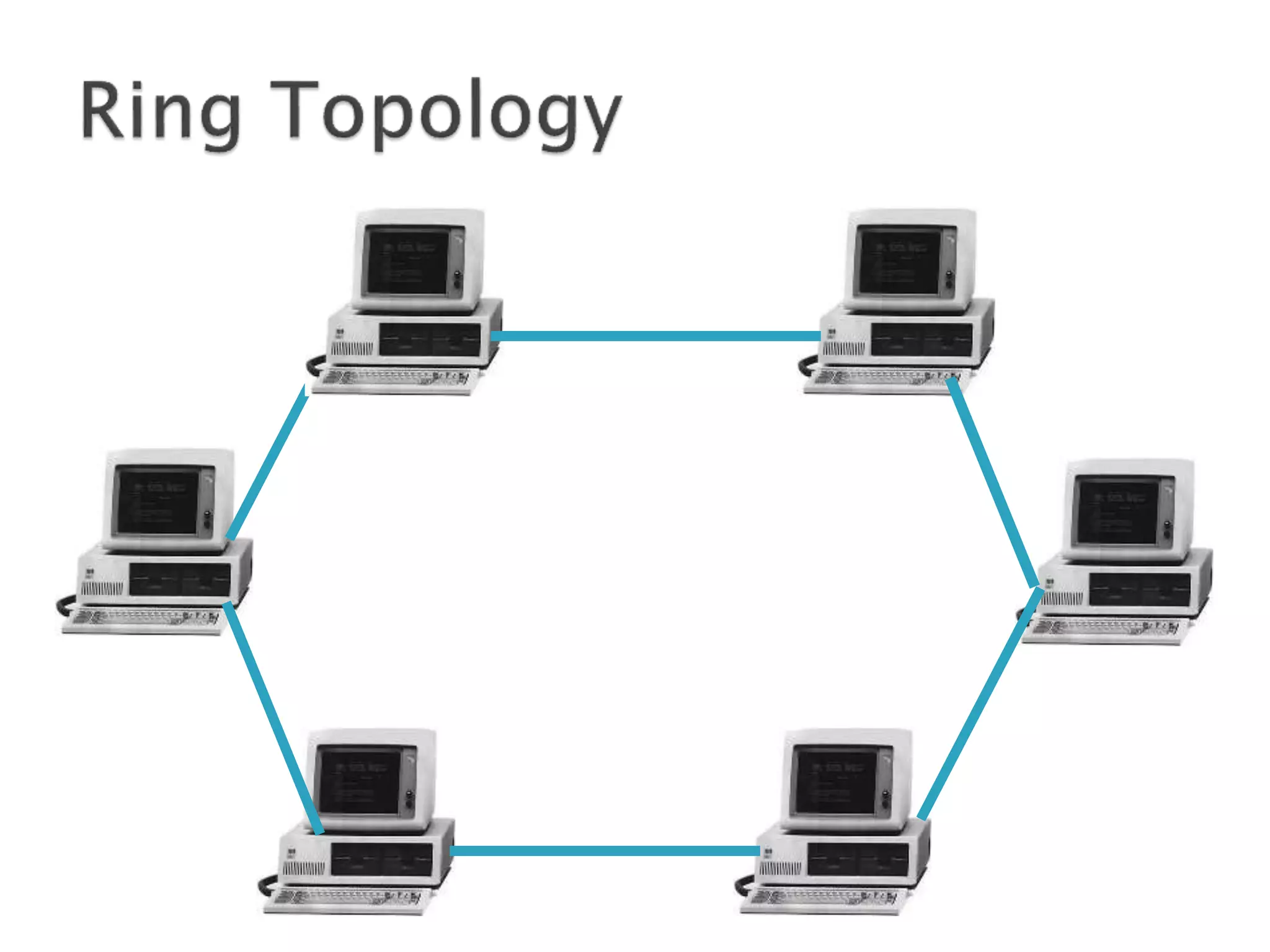
 A ring topology is one where all hosts
are connected together in a closed
loop.
 Data is passed around in packets and
typically is passed in one direction
around the loop.
 The packet knows its Source and
Destination hosts.
 It will loop from the Source, around to
the Destination host, which makes a
copy of the packet, and the original
packet continues the loop back to the
Source.
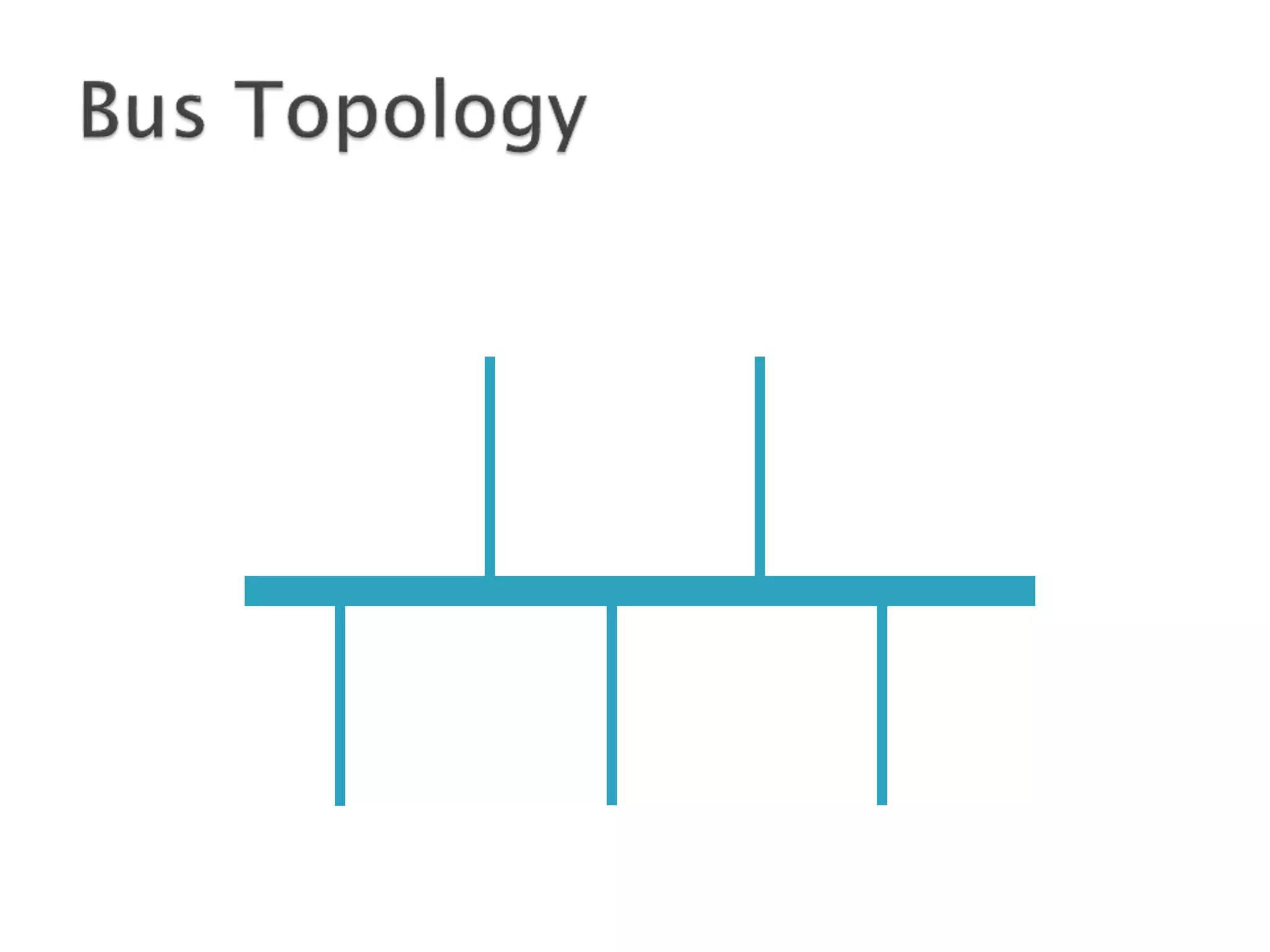
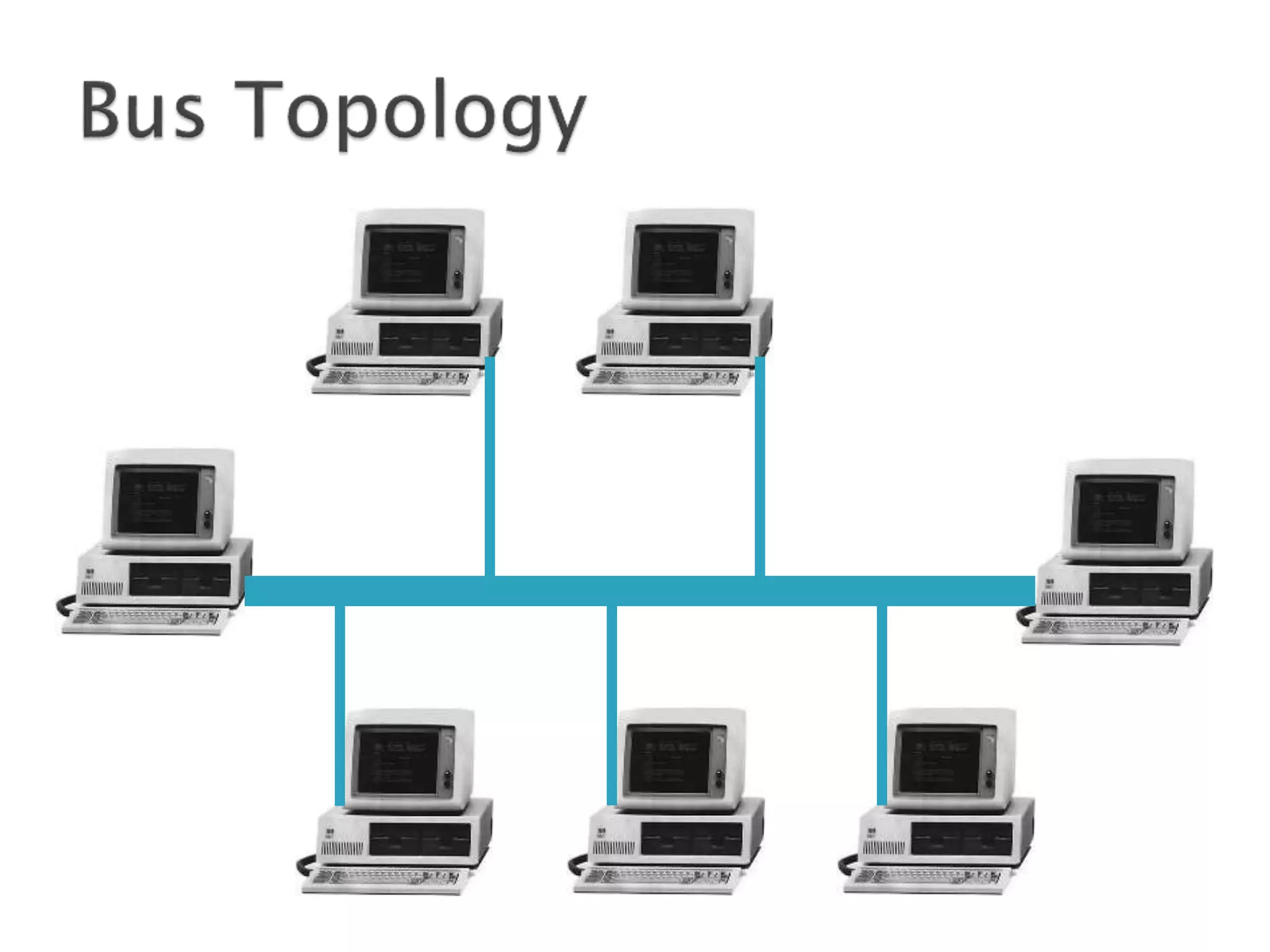
 A bus topology is one where all the
sites are connected to a single
communications line (or bus) running
the length of the network.
 Hosts can send data from one host to
another via the bus, the message will
usually be sent in both directions, and
will keep travelling until they reach the
End-Point Controllers.
 So if I want to send from Host 1 to
Host 3.
 Some bus topologies only allow the
packets to travel in one direction until
the reach the end-point controller,
who can send it back in the opposite
direction if the destination hasn’t
received the packet yet.
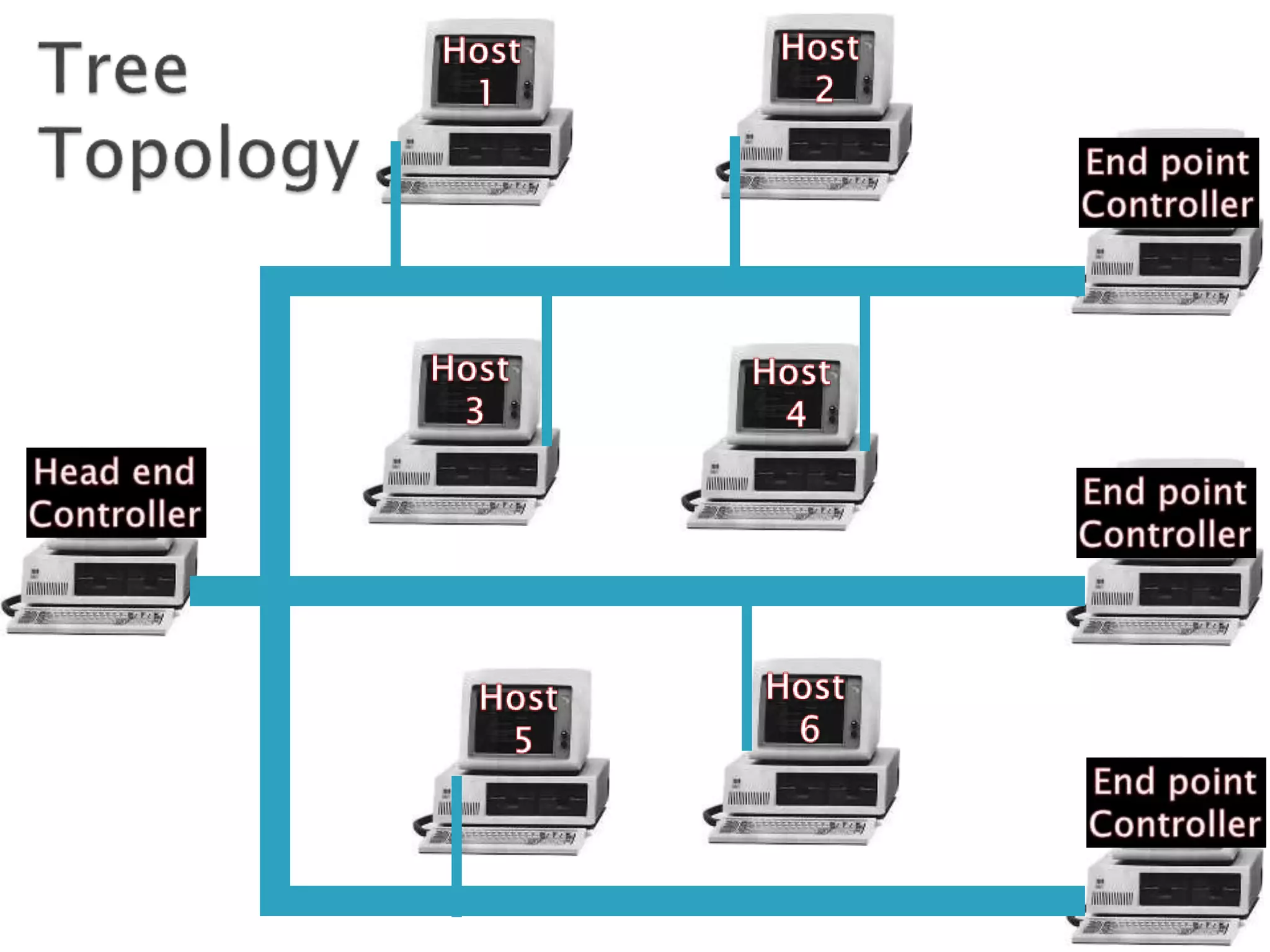
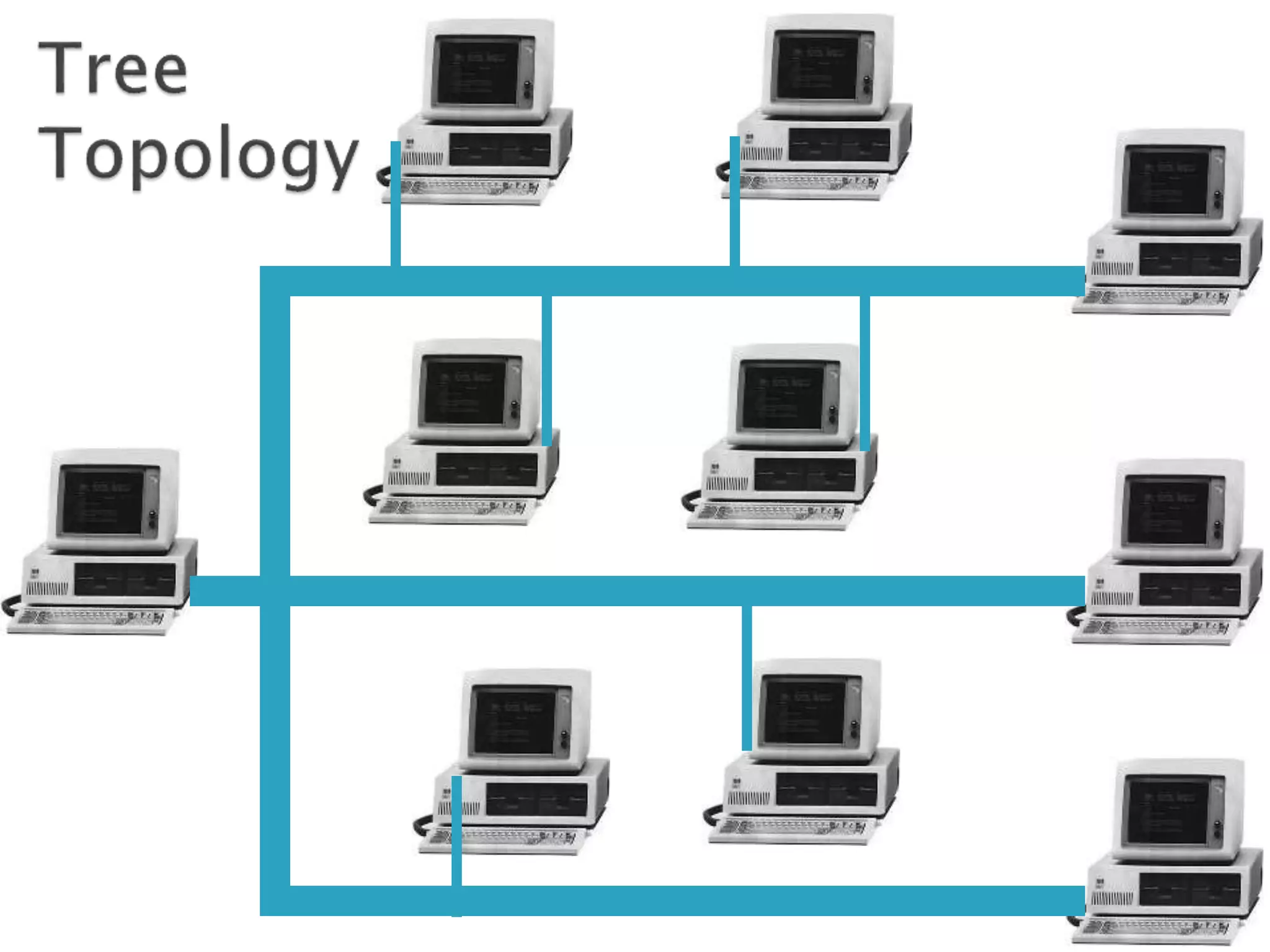
 A tree topology is a combination of
bus topologies. The cables branch
out, and there are no closed loops.
 The tree begins at a Head End
Controllers and each branch
terminates at an End Point Controller.
 A tree topology is a combination of
bus topologies. The cables branch
out, and there are no closed loops.
 The tree begins at a Head End
Controllers and each branch
terminates at an End Point Controller.
 A packet from one node to another
will be sent down all branches, and
will be absorbed by the End Point
Controllers of the branches that does not
contain the Destination host.
 Let’s do an example of going from Host 4
to Host 5.
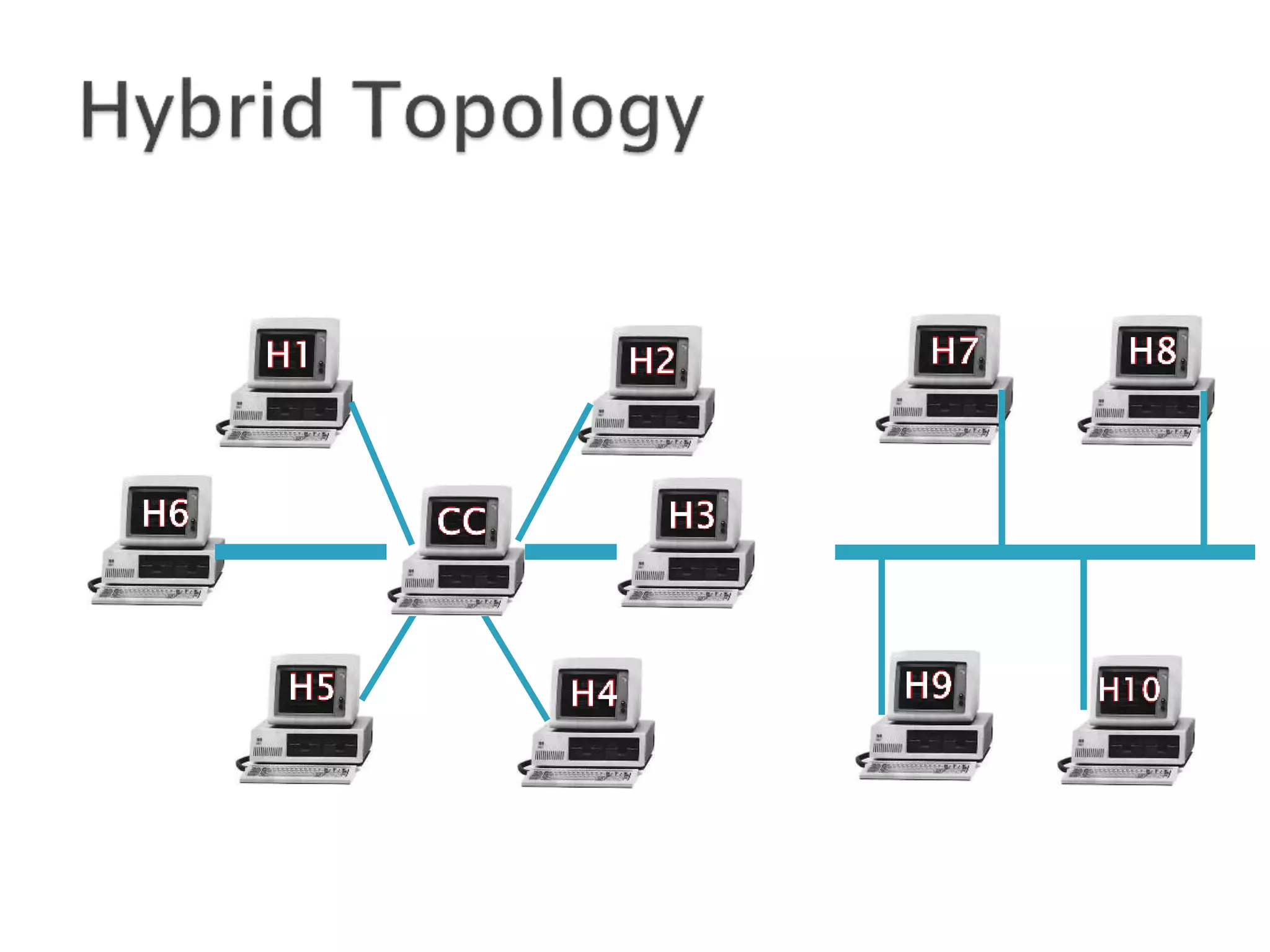
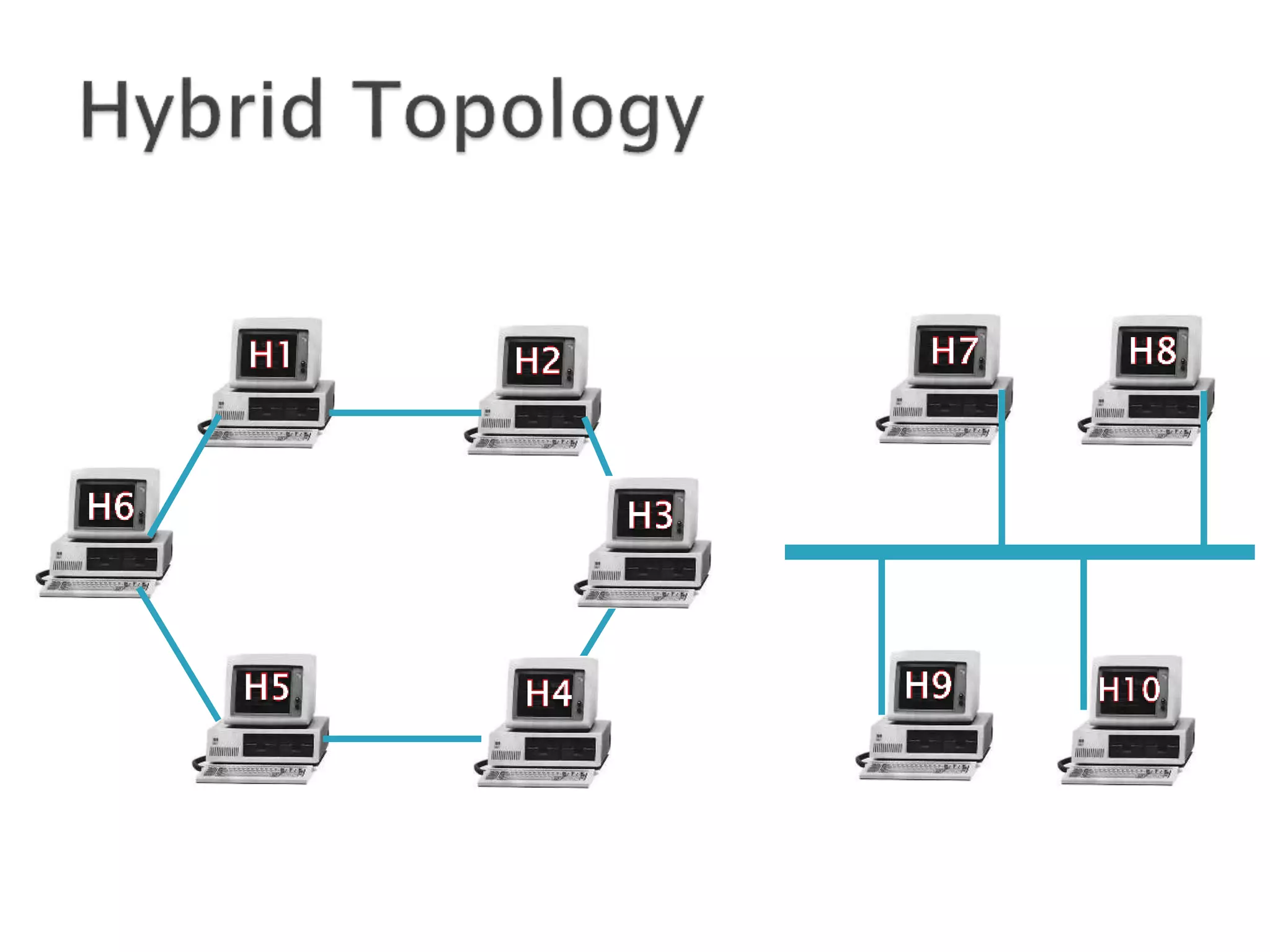
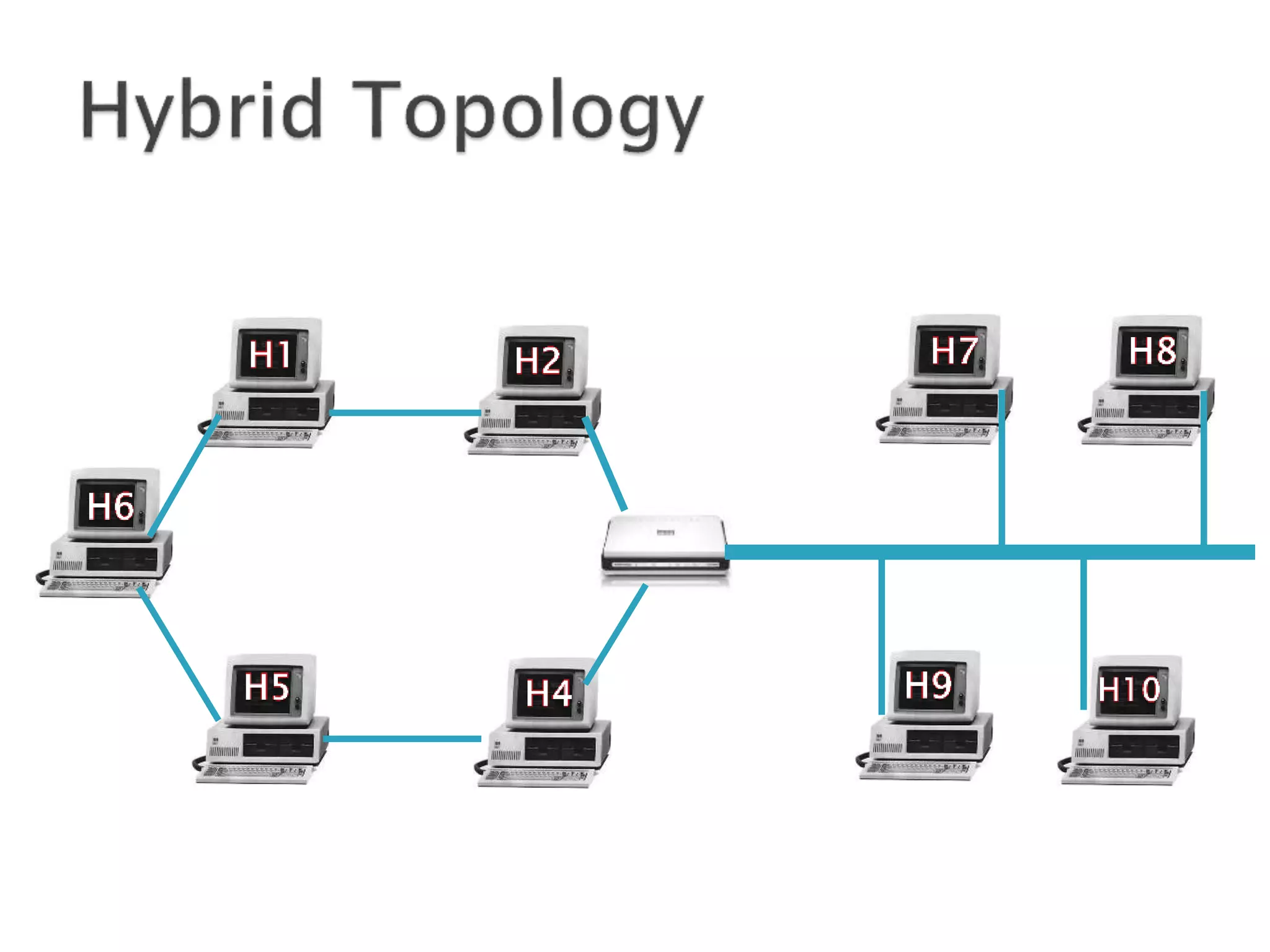
 A hybrid topology is one which
combines any two of the previous
topologies.
STAR + BUS
RING + BUS
Switch
STAR + RING
Switch

Computer Network Topologies (with animations)

  • 1.
  • 2.
     We canhook up the network into a number of different shapes (or topologies).  The most common shapes are: ◦ Star ◦ Ring ◦ Bus ◦ Tree ◦ Hybrid
  • 3.
     There areadvantages and disadvantages to each shape (or topology).
  • 4.
     A startopology is also called a hub topology, or a centralized topology.  A traditional approach to connecting devices where all transmitted data passed through a central controller.
  • 8.
     This topologymake routing very easy since the central controller is connected to all other hosts, and knows the path to all hosts.
  • 13.
     The realissue with this is that the central controller must be highly reliable and be able to handle all the network traffic, no matter how busy.
  • 14.
     A ringtopology is one where all hosts are connected together in a closed loop.
  • 18.
     Data ispassed around in packets and typically is passed in one direction around the loop.  The packet knows its Source and Destination hosts.
  • 19.
     It willloop from the Source, around to the Destination host, which makes a copy of the packet, and the original packet continues the loop back to the Source.
  • 22.
     A bustopology is one where all the sites are connected to a single communications line (or bus) running the length of the network.
  • 26.
     Hosts cansend data from one host to another via the bus, the message will usually be sent in both directions, and will keep travelling until they reach the End-Point Controllers.  So if I want to send from Host 1 to Host 3.
  • 30.
     Some bustopologies only allow the packets to travel in one direction until the reach the end-point controller, who can send it back in the opposite direction if the destination hasn’t received the packet yet.
  • 34.
     A treetopology is a combination of bus topologies. The cables branch out, and there are no closed loops.  The tree begins at a Head End Controllers and each branch terminates at an End Point Controller.
  • 35.
     A treetopology is a combination of bus topologies. The cables branch out, and there are no closed loops.  The tree begins at a Head End Controllers and each branch terminates at an End Point Controller.
  • 36.
     A packetfrom one node to another will be sent down all branches, and will be absorbed by the End Point Controllers of the branches that does not contain the Destination host.  Let’s do an example of going from Host 4 to Host 5.
  • 42.
     A hybridtopology is one which combines any two of the previous topologies.
  • 43.
  • 46.
  • 49.
  • 50.
  • 53.