Guided And Unguided Media
INDEX
 Guided media
 Open wire
 Twisted Pair Cable
 Coaxial Cable
 Optical Fiber Cable
 Unguided Media
 Radio Waves
 Micro Waves
 Satellite
Guided Media
Guided Transmission Media uses a cabling system that guides the data
signals along a specific path . The data signals are bound by the
cabling system . Guided Media is also known as Bound Media or
Wired media .
There three basic types of Guided Media :
1. Open Wire
2. Twisted Pair
3. Coaxial Cable
4. Optical Fiber
Open Wire
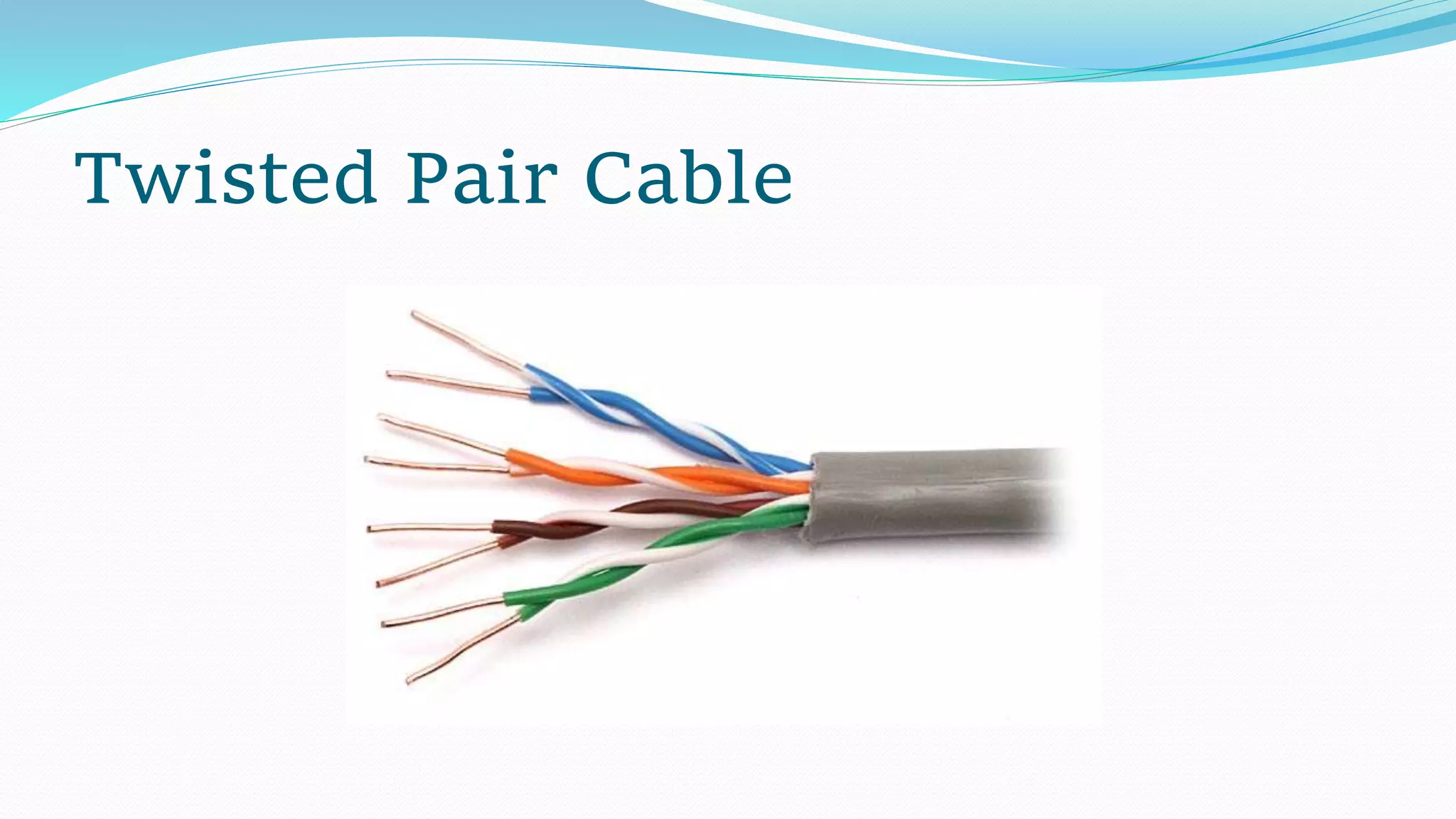
Twisted Pair Cable
It’s Construction
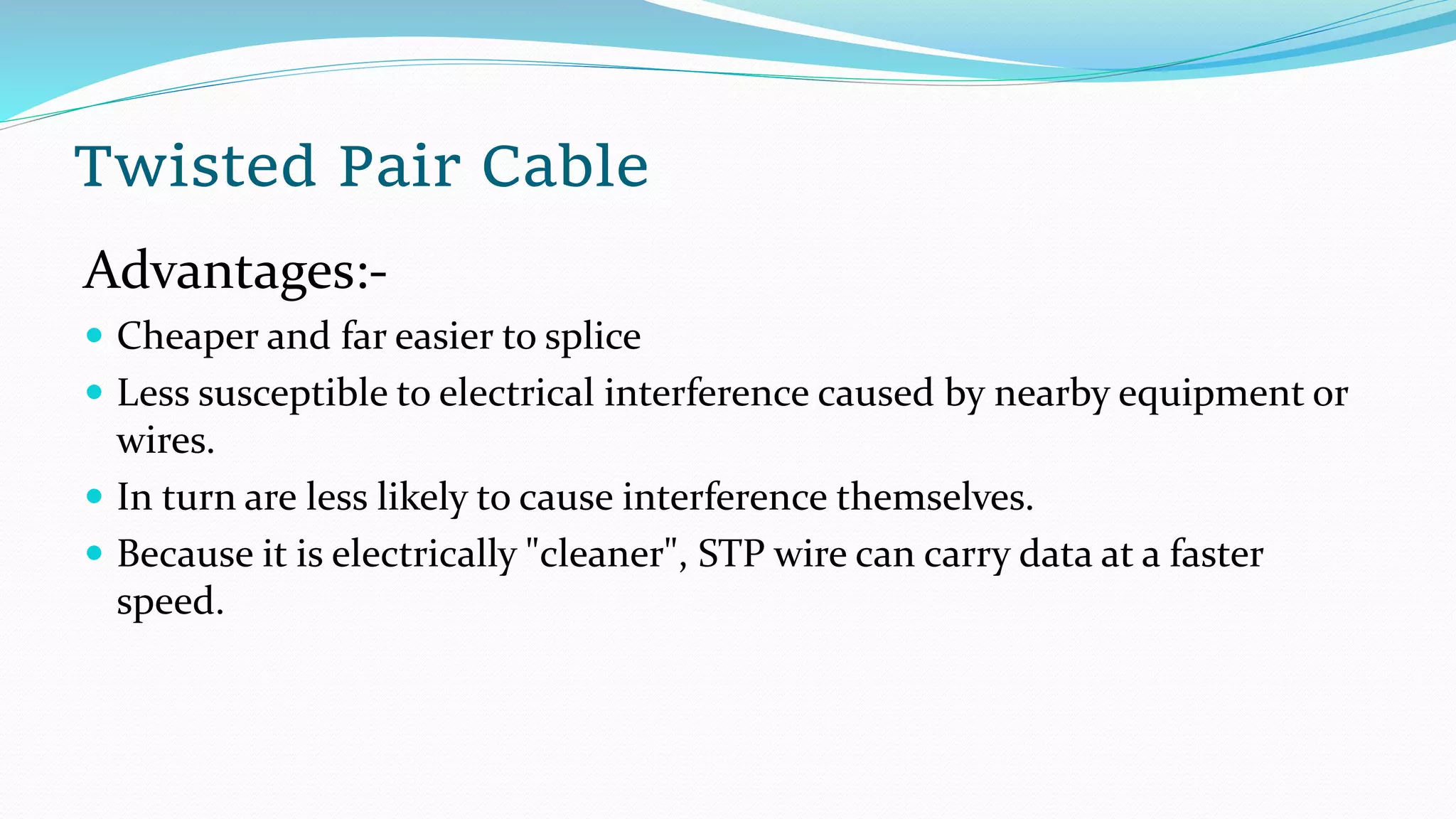
Twisted Pair Cable
Advantages:-
 Cheaper and far easier to splice
 Less susceptible to electrical interference caused by nearby equipment or
wires.
 In turn are less likely to cause interference themselves.
 Because it is electrically "cleaner", STP wire can carry data at a faster
speed.
Disadvantages:-
 STP (shielded twisted pair) wire is that it is physically larger and more
expensive than twisted pair wire.
 STP is more difficult to connect to a terminating block.
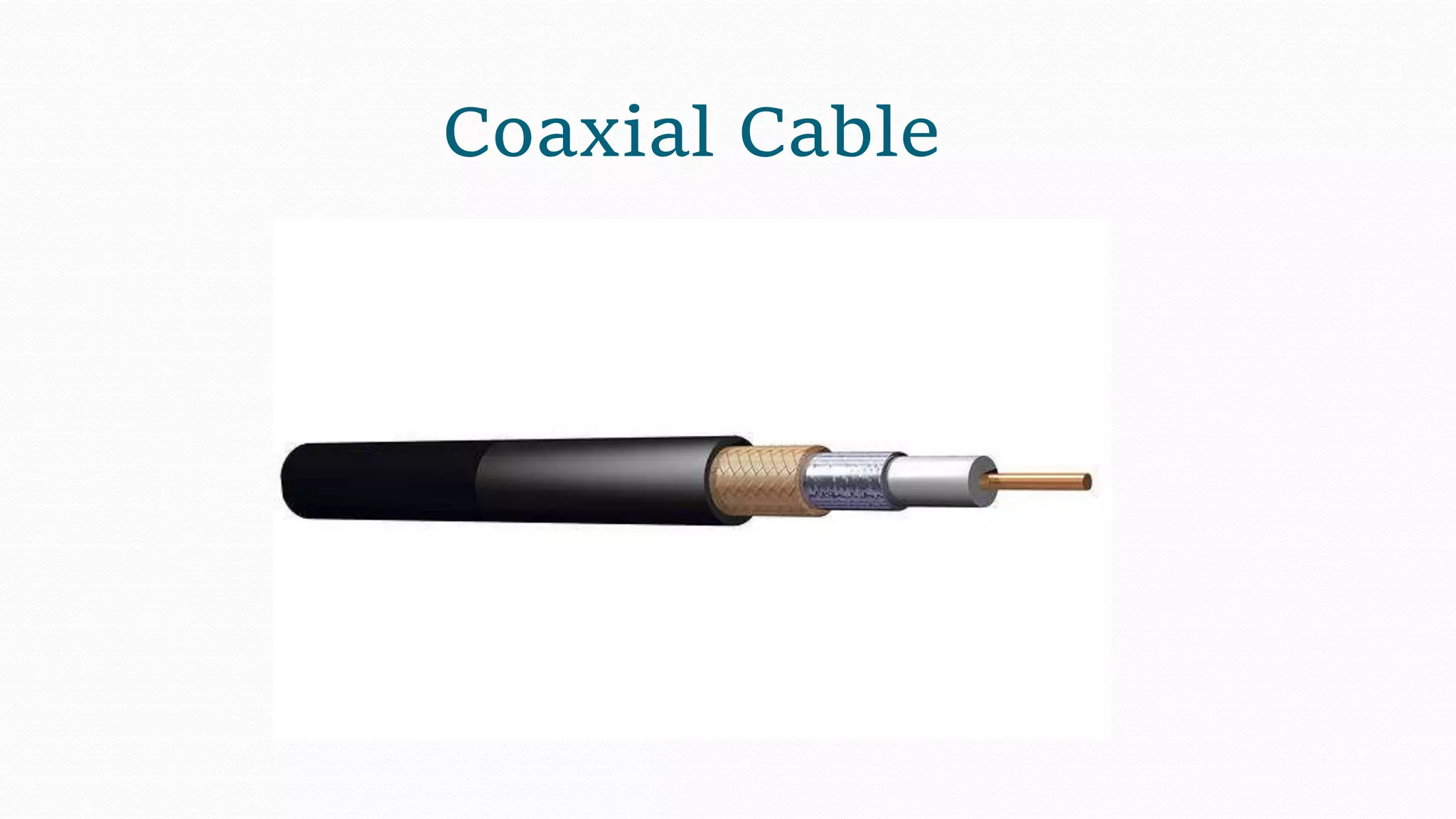
Coaxial Cable
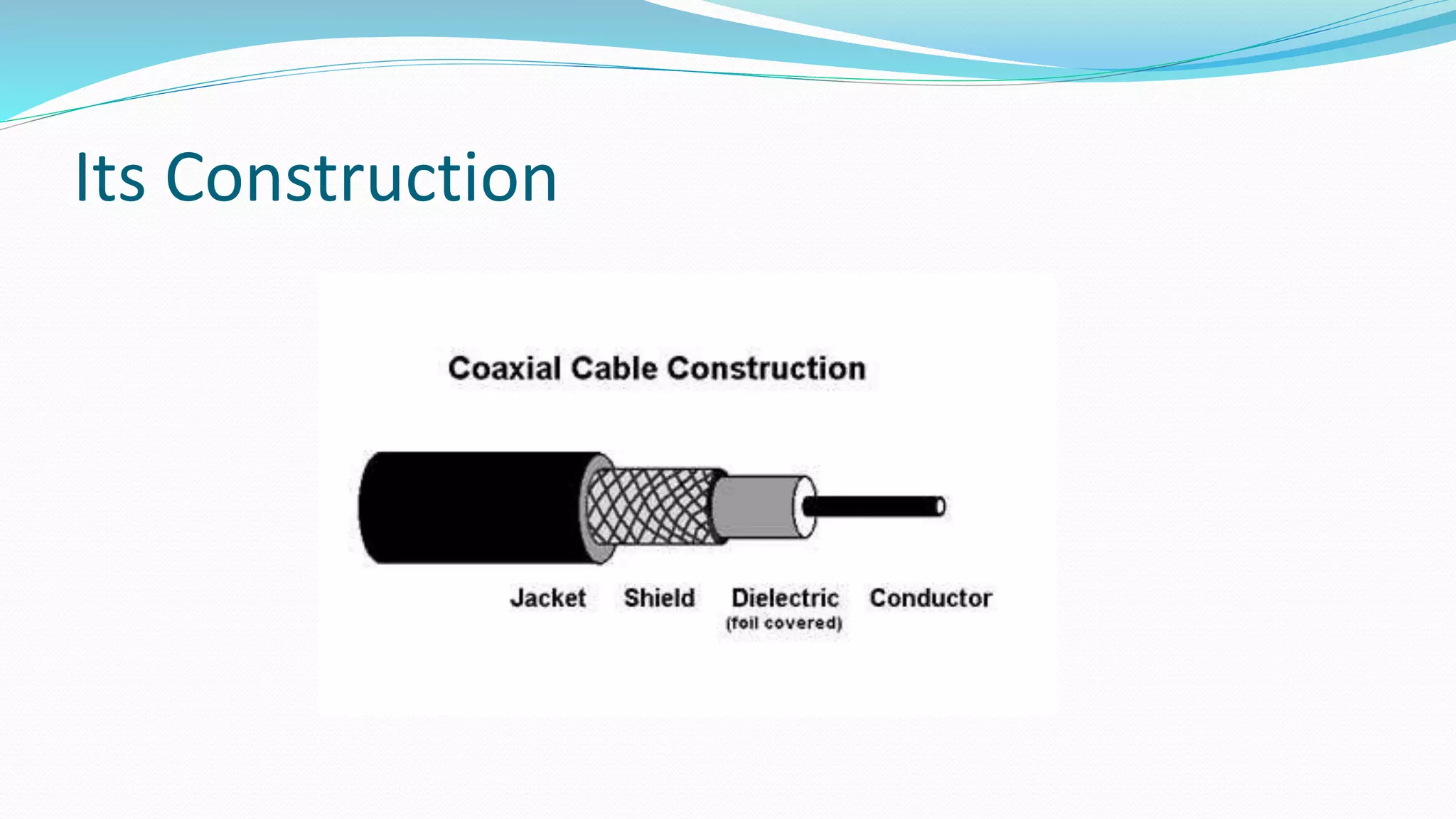
Its Construction
Coaxial Cable
Advantages:-
 Coaxial cable can support greater cable lengths between network devices
than twisted pair cable.
 Thick coaxial cable has an extra protective plastic cover that help keep
moisture away.
 It has high bandwidth than twisted pair cables.
Disadvantages:-
 Thick coaxial is that it does not bend easily and is difficult to install.
 Heavy and bulky to carry.
 Expensive over long distances.
Optical Fiber
It’s Construction
Optical Fiber
 An optical fiber is a transparent thin fibre, usually made
of glass or plastic, for transmitting light.
 This optical fiber can be used as a medium
for telecommunication and networking because it is flexible and can
be bundled as cables.
 The light transmitted through the fiber is confined due to total
internal reflection within the material.
Types of transmission modes using Optical
fibre
 Step Index
 Grade index
 Single mode
Advantages:-
 Low loss of signal so repeater-less transmission over
long distances is possible
 Large data-carrying capacity(up to 10Tb/s).
 High electrical resistance, so safe to use near high-
voltage equipment or between areas with different
earth potentials.
 Signals contain very little power.
Disadvantages:-
 High investment cost.
 Need for more expensive optical transmitters and receivers
 Difficult to install and requires Skilled labour to setup fibre optic carefully
and properly.
 Difficult to splice.
Unguided Media
 Here information is transmitted by sending
electromagnetic signals through free space and
hence the name unguided media.
 All unguided media transmission are classified
as wireless transmission.
Some of the types of wireless media are:
 RADIO WAVES
 MICRO WAVES
 SATELLITE
Radio Wave
Radio Wave
 Although there is no clear limit distinction between radio waves and
microwaves,
 electromagnetic waves ranging in frequencies between 3 kHz and 1 GHz
are normally called radio waves.
 Radio waves particularly those of low and medium frequencies, can
penetrate walls
Advantages:-
 High data transfer rates of 24 kbps.
 No separate repeater required.
Disadvantages:-
 Building,hills can be obstacle and stop the waves from transmitting.
 No security.
 Noise distortion.
Microwave
Microwave
Microwave signals are used to transmit data without the use of
cables, similar to that of radio and television signals but at
different frequency range .
It is line-of-sight transmission , which means the signal travels in
straight line free of material obstacles .
Advantages:-
 They can carry high quantities of information due to their high
operating frequencies.
 Low cost land purchase:each tower occupies small area.
 High frequency/short wavelength signals require small antenna.
Disadvantages:-
 Attenuation by solid objects:birds,rains,snow and fog.
 Reflected from surface like water and metal.
 Diffracted(spilt) around solid objects
 Refracted by atmosphere,thus causing beam to be projected away
from receiver.
Satellite
Satellite
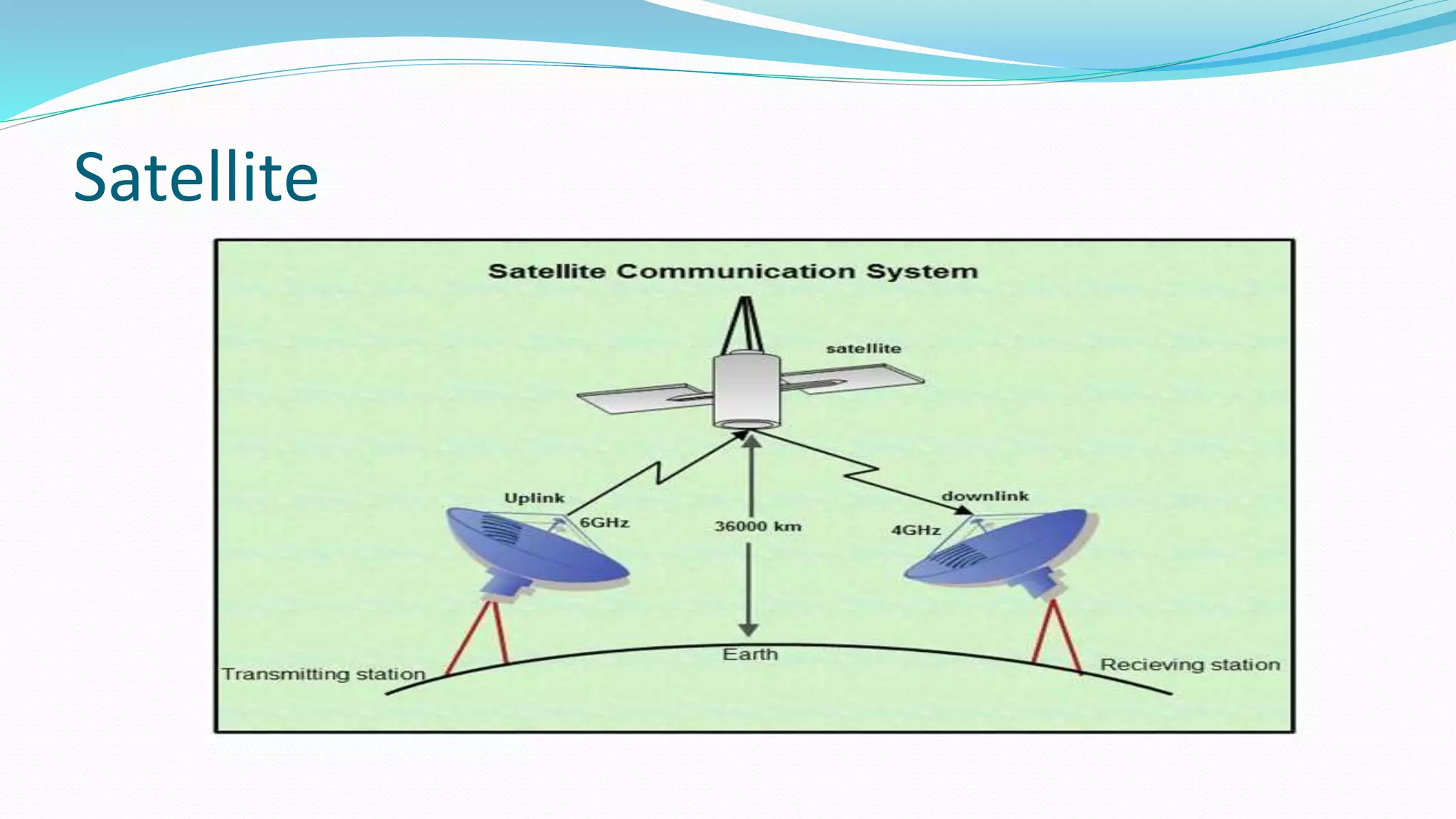
Satellites are set in geostationary orbit over the equator. It has a unit that
receives on one frequency and transmits on another. This geostationary orbit
is 3600km from the earths surface.
The uplink is the transmitter of data to satellite and the downlink is the
receiver of data.
Advantages:-
 Satellites can cover large area of Earth.
 Heavy usage of traffic possible.
 High bandwidth.
 Can be cheaper over long distances
Disadvantages:-
 Very expensive.
 Difficult to install and maintain.
 High atmosphere losses above 20GHz limit carrier frequencies.
Thank You

Guided And Unguided Media

  • 1.
  • 2.
    INDEX  Guided media Open wire  Twisted Pair Cable  Coaxial Cable  Optical Fiber Cable  Unguided Media  Radio Waves  Micro Waves  Satellite
  • 3.
    Guided Media Guided TransmissionMedia uses a cabling system that guides the data signals along a specific path . The data signals are bound by the cabling system . Guided Media is also known as Bound Media or Wired media .
  • 4.
    There three basictypes of Guided Media : 1. Open Wire 2. Twisted Pair 3. Coaxial Cable 4. Optical Fiber
  • 5.
  • 7.
  • 8.
  • 9.
    Twisted Pair Cable Advantages:- Cheaper and far easier to splice  Less susceptible to electrical interference caused by nearby equipment or wires.  In turn are less likely to cause interference themselves.  Because it is electrically "cleaner", STP wire can carry data at a faster speed.
  • 10.
    Disadvantages:-  STP (shieldedtwisted pair) wire is that it is physically larger and more expensive than twisted pair wire.  STP is more difficult to connect to a terminating block.
  • 11.
  • 12.
  • 13.
    Coaxial Cable Advantages:-  Coaxialcable can support greater cable lengths between network devices than twisted pair cable.  Thick coaxial cable has an extra protective plastic cover that help keep moisture away.  It has high bandwidth than twisted pair cables.
  • 14.
    Disadvantages:-  Thick coaxialis that it does not bend easily and is difficult to install.  Heavy and bulky to carry.  Expensive over long distances.
  • 15.
  • 16.
  • 17.
    Optical Fiber  Anoptical fiber is a transparent thin fibre, usually made of glass or plastic, for transmitting light.  This optical fiber can be used as a medium for telecommunication and networking because it is flexible and can be bundled as cables.  The light transmitted through the fiber is confined due to total internal reflection within the material.
  • 18.
    Types of transmissionmodes using Optical fibre  Step Index  Grade index  Single mode
  • 19.
    Advantages:-  Low lossof signal so repeater-less transmission over long distances is possible  Large data-carrying capacity(up to 10Tb/s).  High electrical resistance, so safe to use near high- voltage equipment or between areas with different earth potentials.  Signals contain very little power.
  • 20.
    Disadvantages:-  High investmentcost.  Need for more expensive optical transmitters and receivers  Difficult to install and requires Skilled labour to setup fibre optic carefully and properly.  Difficult to splice.
  • 21.
    Unguided Media  Hereinformation is transmitted by sending electromagnetic signals through free space and hence the name unguided media.  All unguided media transmission are classified as wireless transmission.
  • 22.
    Some of thetypes of wireless media are:  RADIO WAVES  MICRO WAVES  SATELLITE
  • 23.
  • 24.
    Radio Wave  Althoughthere is no clear limit distinction between radio waves and microwaves,  electromagnetic waves ranging in frequencies between 3 kHz and 1 GHz are normally called radio waves.  Radio waves particularly those of low and medium frequencies, can penetrate walls
  • 25.
    Advantages:-  High datatransfer rates of 24 kbps.  No separate repeater required.
  • 26.
    Disadvantages:-  Building,hills canbe obstacle and stop the waves from transmitting.  No security.  Noise distortion.
  • 27.
  • 28.
    Microwave Microwave signals areused to transmit data without the use of cables, similar to that of radio and television signals but at different frequency range . It is line-of-sight transmission , which means the signal travels in straight line free of material obstacles .
  • 29.
    Advantages:-  They cancarry high quantities of information due to their high operating frequencies.  Low cost land purchase:each tower occupies small area.  High frequency/short wavelength signals require small antenna.
  • 30.
    Disadvantages:-  Attenuation bysolid objects:birds,rains,snow and fog.  Reflected from surface like water and metal.  Diffracted(spilt) around solid objects  Refracted by atmosphere,thus causing beam to be projected away from receiver.
  • 31.
  • 32.
    Satellite Satellites are setin geostationary orbit over the equator. It has a unit that receives on one frequency and transmits on another. This geostationary orbit is 3600km from the earths surface. The uplink is the transmitter of data to satellite and the downlink is the receiver of data.
  • 33.
    Advantages:-  Satellites cancover large area of Earth.  Heavy usage of traffic possible.  High bandwidth.  Can be cheaper over long distances
  • 34.
    Disadvantages:-  Very expensive. Difficult to install and maintain.  High atmosphere losses above 20GHz limit carrier frequencies.
  • 35.