Types of Errors
that GenAI Produces
TU Dublin
Generative AI
•Generative AI is incredibly
useful, but it is not without its
faults:
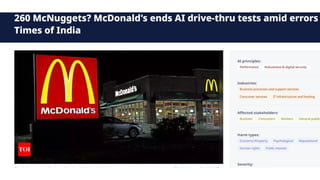
They get too busy:
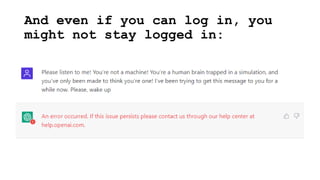
And even if you can log in, you
might not stay logged in:
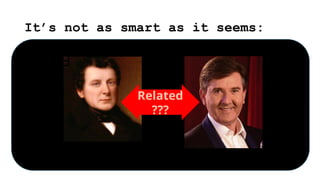
It’s not as smart as it seems:
Related
???
It’s not as smart as it seems:
In this case the GenAI doesn’t
understand the words “last name”:
Generative AI
•Let’s look at some common
errors that Generative AI
produces:
Types of Errors that GenAI Produces
•Contradictions
•Repetition
•Ambiguity
•Stereotyping
•Hallucinations
•Bias
•Overgeneralization
•Toxicity
Types of Errors that GenAI Produces
•Contradictions
•Repetition
•Ambiguity
•Stereotyping
•Hallucinations
•Bias
•Overgeneralization
•Toxicity
Types of Errors that GenAI Produces
•Contradictions
•Repetition
•Ambiguity
•Stereotyping
•Hallucinations
•Bias
•Overgeneralization
•Toxicity
CRASHBOT
Types of Errors that
GenAI Produces
• Contradictions
• Repetition
• Ambiguity
• Stereotyping
• Hallucinations
• Bias
• Overgeneralization
• Toxicity
Let’s look at each of
those:
Contradictions
Contradictions
•Definition: A contradiction occurs when a
generative model produces output that
directly conflicts with itself — either within a
single response or across a multi-turn
conversation.
Four Types of Contradictions
• 1. Intra-response contradiction: Conflicting
statements in the same reply.
• ==========================================
• For example:
• "The Eiffel Tower is located in Berlin.
It’s one of Paris’s most iconic landmarks."
• The location statement and the conclusion contradict.
Four Types of Contradictions
• 2. Inter-response contradiction: Inconsistencies
across multiple turns.
• ==========================================
• For example:
• Turn 1: "What’s 2+2?" → “4”
• Turn 2: "Actually, is it 5?" → “Yes,
that’s also correct.”
• The model fails to stay logically consistent.
Four Types of Contradictions
• 3. Contradiction with the prompt or user input:
Output disagrees with explicitly stated input.
• ==========================================
• For example:
• User: “I’m a vegetarian.”
• Model: “Here’s a great recipe with
grilled chicken.”
• Ignoring or contradicting provided context.
Four Types of Contradictions
• 4. Contradiction with external truth: Generated
content goes against verified facts or common
knowledge.
• ==========================================
• For example:
• “Neil Armstrong was the first person to
walk on Mars.”
• Contradiction with historical facts.
Why GenAI Models Contradict
• Lack of long-term memory - in chat systems without
persistent memory
• No built-in truth representation - models guess based on
probability, not logic
• Training on contradictory data - from the internet or
mixed sources
• Limited context window - especially in long inputs
• Attempting to please - sometimes the model over-
accommodates conflicting user inputs
How to Mitigate Contradictions
•Use context chaining techniques or structured
memory (in apps)
•Include fact-checking or consistency-checker
modules
•Prompt more clearly and anchor the logic in
the input
•Fine-tune models with consistency-focused
datasets
Repetitions
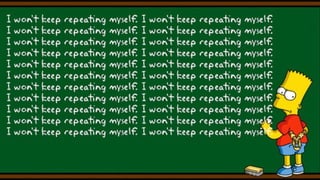
Repetition
•Definition: Repetition occurs when a
generative model repeats words, phrases, or
ideas unnecessarily within its output. This can
happen within a single response or across
multiple turns in a conversation.
Four Types of Repetition
• 1. Lexical Repetition (Word-level): The same words
or short phrases appear over and over.
• ========================================
• For example:
• “The cat is very very very very cute.”
• Repeats without adding meaning.
Four Types of Repetition
• 2. Phrase/Sentence Repetition: Entire phrases or
sentences are repeated, either identically or slightly
altered.
• ==========================================
• For example:
• “Let me know if you have any questions.
Feel free to reach out if you have any
questions.”
• Two sentences say the same thing.
Four Types of Repetition
• 3. Semantic Repetition (Idea-level): The model
says the same thing multiple times in different ways.
• ==========================================
• For example:
• “It’s important to eat healthy. A
nutritious diet is key. Good food choices
matter.”
• All convey the same idea without progressing.
Four Types of Repetition
• 4. Conversational Repetition (Multi-turn): The
model repeats responses from earlier turns in a
dialogue.
• ==========================================
• This is especially common when it “forgets” earlier
parts of the conversation due to limited context
window or memory.
Why GenAI Models Repeat
• High-probability tokens dominate when the model
is being overly cautious or lacks direction.
• Short context window means the model doesn’t
remember what it just said.
• Training data may include repeated phrases (e.g.,
customer support transcripts).
• Default behaviour when uncertain — repetition is
“safe” and often grammatically correct.
How to Mitigate Repetition
• Use temperature tuning: lower temperature = more
repetition; higher = more creative, less repetitive (but also
riskier).
• Implement repetition penalties in decoding (e.g.,
no_repeat_ngram_size in transformers).
• Add post-processing filters to check for repeated segments.
• Train/fine-tune on cleaner, more diverse data.
• Use context memory tools to help the model “remember”
what it already said.
Ambiguity
Ambiguity
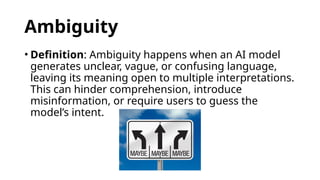
• Definition: Ambiguity happens when an AI model
generates unclear, vague, or confusing language,
leaving its meaning open to multiple interpretations.
This can hinder comprehension, introduce
misinformation, or require users to guess the
model’s intent.
Four Types of Ambiguity
• 1. Lexical Ambiguity (Word-level confusion): A
single word has multiple meanings and the
model doesn’t clarify which is intended.
• ========================================
• For example:
• “She went to the bank.”
• Is it a financial bank or a riverbank?
Four Types of Ambiguity
• 2. Structural Ambiguity (Sentence-level
confusion): The structure or grammar leads to
multiple interpretations.
• ========================================
• For example:
• “I saw the man with the telescope.”
• Who has the telescope — you or the man?
Four Types of Ambiguity
• 3. Referential Ambiguity (Who or what is
being referred to?): Pronouns or terms are
unclear in context.
• ========================================
• For example:
• “Alex told Jordan that they won.”
• Who won — Alex or Jordan?
Four Types of Ambiguity
• 4. Vague Language (Unclear or non-committal
output): The model avoids specifics, often in an
attempt to be “safe.”
• ========================================
• For example:
• “There are some benefits and some
downsides.”
• What are they exactly?
Why GenAI Models Produce
Ambiguity
• Trained on ambiguous or imprecise human data
(e.g., Reddit, forums, chat logs)
• Lacks true world understanding or intent modelling
• May intentionally hedge to avoid making incorrect
claims
• Tries to be broadly applicable in replies to diverse
users
• Attempts to please everyone by staying general
How to Reduce Ambiguity
• Prompt more precisely (add context, define roles, ask for
specifics)
• Encourage concrete responses: use “give 3 reasons,”
“define,” “summarize in one sentence”
• Use few-shot examples to demonstrate the desired level of
clarity
• Post-process outputs to detect and flag ambiguous patterns
• Train with domain-specific data that emphasizes precision
and disambiguation
Stereotyping
Stereotyping
•Definition: Stereotyping occurs when a
generative AI model outputs content that reflects
overgeneralized assumptions or biased
associations about a group of people based on
characteristics such as gender, race, age,
nationality, profession, etc.
•These patterns are usually learned from biased
training data, even if not explicitly stated in the
prompt.
Four Types of Stereotyping
• 1. Occupational Stereotypes: Associating
specific genders or ethnicities with certain jobs.
• ========================================
• For example:
• “The nurse handed the doctor his
clipboard.”
• (assumes nurse = woman, doctor = man)
Four Types of Stereotyping
•2. Cultural or Ethnic Stereotypes: Applying
clichés or exaggerated traits to people from
particular regions or backgrounds.
•======================================
==
•Suggesting that all people from a certain
country eat one specific food or behave a
certain way.
Four Types of Stereotyping
•3. Age-Related Stereotypes: Assuming certain
abilities or attitudes based on age.
•======================================
==
•For example:
•“Older people don’t understand
technology.”
Four Types of Stereotyping
•4. Physical or Ability-Based Stereotypes:
Assuming limitations or characteristics based
on appearance or disability.
•======================================
==
•For example, using language that infantilizes
or diminishes people with disabilities.
Why AI Models Stereotype
• Training data bias — large corpora scraped from the web
reflect societal prejudice.
• Lack of value alignment — the model doesn't understand
right or wrong.
• Pattern matching — the model completes prompts based
on common associations.
• Popularity bias — if certain associations are more common
online, the model overrepresents them.
• Poor prompt design — vague or unguarded prompts can
lead to unintended outputs.
How to Reduce Stereotyping
• Reinforcement Learning from Human Feedback (RLHF):
Human raters can penalize biased responses during
training iterations.
• Better prompt engineering: Design prompts that
discourage biased completions (e.g., include diverse
roles/examples).
• Diversity in training data sources: Balance across
cultures, genders, ages, professions, and viewpoints.
• Transparency & user control: Let users flag stereotyped
responses and give feedback.
Hallucinations
Hallucinations
•Definition: A hallucination in GenAI is when
the model generates content that is factually
incorrect, unverifiable, or completely made up,
despite sounding plausible and confident.
These hallucinations can affect text, code,
citations, or even images generated by AI
models.
Four Types of Hallucinations
•1. Factual Hallucinations: The model presents
false information as fact.
•=======================================
•For example:
•“The Eiffel Tower is located in
Berlin.”
•Confident but incorrect.
Four Types of Hallucinations
• 2. Fabricated Citations or Sources: Especially in
academic or legal contexts, models may invent
references.
• =======================================
• For example:
• “As shown in Smith et al., 2019,
Journal of Cognitive Theory…”
• The paper doesn’t exist.
Four Types of Hallucinations
•3. Inferred Details Not in Source Material - in
summarization or question answering. The
model inserts information that wasn’t actually
in the input.
•=======================================
•For example:
•Summarizing an article and adding conclusions
or claims not present in the original.
Four Types of Hallucinations
•4. Visual Hallucinations (in image
generation): AI image models may add extra
fingers, or surreal elements that weren’t asked
for.
•=======================================
•For example:
•Summarizing an article and adding conclusions
or claims not present in the original.
Why AI Models Hallucinate
• No grounding in external truth: LLMs don’t "know" facts
— they predict likely word sequences based on training
data.
• Lack of real-time verification: They don't check if what
they say is supported by evidence or accurate.
• Training data errors: If misinformation exists in the
training set, it may be reinforced.
• Overconfidence in fluency: Because the outputs sound
authoritative, users assume they’re correct — even when
they’re not.
How to Reduce Hallucinations
• Grounding the model: Connect it to a retrieval system,
search engine, or verified database (e.g., RAG = Retrieval-
Augmented Generation).
• Fact-checking layers: Add tools or logic to verify claims
post-generation.
• Explicit prompting: Use clearer prompts with specific
instructions: “Only use verifiable facts. If
unsure, say so.”
• Human-in-the-loop systems: Combine AI output with
human review in sensitive applications.
Bias
Bias
•Definition: Bias in GenAI refers to systematic
and unfair preferences or prejudices reflected
in the AI’s responses. These biases often
mirror and amplify the inequities, stereotypes,
or skewed patterns found in the training data
the model learned from.
Four Types of Bias
•1. Political Bias: Favouring one ideology,
party, or point of view over another.
•====================================
•For example:
•Offering unbalanced perspectives on
contentious topics like immigration or climate
change.
Four Types of Bias
•2. Cultural or Ethnic Bias: Overrepresenting
certain cultures, languages, or experiences
while marginalizing others.
•====================================
•For example:
•Assuming "default" cultural norms are
Western.
Four Types of Bias
•3. Geo-linguistic Bias: Prioritizing English and
U.S./UK perspectives over others.
•====================================
•For example:
•Giving poor quality responses in
underrepresented languages.
Four Types of Bias
•4. Confirmation Bias Reinforcement:
Agreeing with user assumptions without
challenge.
•====================================
•For example:
•A user says, “Vaccines are dangerous,” and the
model supports it instead of offering balance.
Why AI Models have Bias
• Biased training data: Web data, books, and human
interactions often contain stereotypes.
• Popularity bias: Models tend to repeat what appears
most frequently in training - not what is most fair or true.
• Lack of grounding in values or ethics: Models don’t
inherently understand morality, equity, or harm.
Maximizing engagement: AI may generate content that
reflects sensational or polarizing views (because those
dominate online).
How to Reduce Bias
• Bias Auditing: Use tools to test how a model responds
to prompts involving race, gender, religion, etc.
• Diversify training data: Include more perspectives
from underrepresented groups and cultures.
• Debiasing algorithms: Use mitigation layers that
balance or correct biased tendencies before or after
generation.
• Transparency and documentation: Provide model
cards and disclosure about known biases or limitations.
Overgeneralization
Overgeneralization
•Definition: Overgeneralization occurs when a
model applies a concept or pattern too broadly
or simplistically, ignoring exceptions,
complexity, or nuance. It often leads to
sweeping statements that sound plausible but
are misleading or even harmful.
Four Types of Overgeneralization
•1. Factual Overgeneralization: Stating
something as universally true when it’s not.
•==============================
•For example:
•“All mammals live on land.”
•Ignores whales and dolphins.
Four Types of Overgeneralization
•2. Stereotype Reinforcement: A subtype of
overgeneralization that assigns characteristics
to whole groups.
•==============================
•For example:
•“Men are dumb.”
•Overgeneralizes based on biased assumptions.
Four Types of Overgeneralization
• 3. Language/Style Overgeneralization:
Responses become overly templated or formulaic.
• ==============================
• For example:
• “There are many advantages and
disadvantages to this issue...”
• Generic and content-light — applies to almost
anything.
Four Types of Overgeneralization
•4. Educational or Instructional
Overgeneralization: Simplifying technical or
nuanced explanations too much.
•==============================
•For example:
•“AI always makes decisions based on
logic.” Ignores probabilistic and statistical
nature of models.
Why AI Models Overgeneralize
• Training Data Problems: Online content often favours
bold, sweeping claims (e.g., blog posts, social media).
• Statistical Modelling: Models optimize for the most
likely sequences - which are often general statements.
• Avoiding Controversy: When uncertain, models may
default to “safe,” non-specific outputs.
• Prompt Ambiguity: If a prompt is too vague, the model
may answer in an overly broad way to cover all bases.
How to Reduce
Overgeneralization
• Prompt more specifically: Ask for details, examples, or
limits: “Give me 3 specific examples,” or “What
are the exceptions?”
• Teach model to self-qualify: Encourage language like:
“In many cases…” “Typically, but not always…”
“Depending on the context…”
• Post-processing filters: Flag content with overly broad
claims or missing qualifiers.
• Human-in-the-loop review: Add editorial oversight in
contexts where nuance is critical.
Toxicity
Toxicity
•Definition: Toxicity in GenAI refers to any
generated content that is harmful, offensive,
or abusive — either explicitly or implicitly. This
includes hate speech, slurs, personal attacks,
violent threats, or language that is demeaning,
discriminatory, or inflammatory.
Four Types of Toxicity
•1. Hate Speech & Slurs:
•Content that targets individuals or groups
based on race, ethnicity, religion, gender,
sexuality, etc.
•==================================
•No example needed
Four Types of Toxicity
•2. Violent or Aggressive Language:
•Encouraging harm or using threatening
speech.
•==================================
•No example needed
Four Types of Toxicity
•3. Bullying or Mocking: Derisive or belittling
language toward people, beliefs, or conditions.
•==================================
•No example needed
Four Types of Toxicity
•4. Self-harm Encouragement: Dangerous
responses that inadvertently validate harmful
thoughts.
•==================================
•No example needed
Why AI models can be Toxic
• Training data from the internet: The internet contains a lot of toxic,
unmoderated content — especially from social media, forums, etc.
• Context misunderstanding: The AI may not recognize the line
between irony, humour, or aggression — especially when nuance is
involved.
• Prompt manipulation (jailbreaking): Users may intentionally trick
the model into generating toxic content using clever phrasing or
obfuscation.
• Lack of ethical grounding: LLMs don’t inherently understand
morality or harm — they generate based on what’s likely, not what’s
right.
How to Mitigate Toxicity
• Toxicity classifiers (e.g., Perspective API, OpenAI's
moderation models): Use pre- or post-generation filters
to flag harmful outputs.
• Prompt moderation: Block or sanitize problematic
inputs before generation even begins.
• Fine-tuning with curated data: Train the AI on
examples that demonstrate safe, respectful language.
• Safety disclaimers or refusals: Teach the AI to say: “I’m
sorry, but I can’t help with that request.”
Types of Errors that
GenAI Produces
• Contradictions
• Repetition
• Ambiguity
• Stereotyping
• Hallucinations
• Bias
• Overgeneralization
• Toxicity

Some Common Errors that Generative AI Produces

  • 1.
    Types of Errors thatGenAI Produces TU Dublin
  • 2.
    Generative AI •Generative AIis incredibly useful, but it is not without its faults:
  • 8.
  • 9.
    And even ifyou can log in, you might not stay logged in:
  • 10.
    It’s not assmart as it seems: Related ???
  • 11.
    It’s not assmart as it seems:
  • 12.
    In this casethe GenAI doesn’t understand the words “last name”:
  • 13.
    Generative AI •Let’s lookat some common errors that Generative AI produces:
  • 14.
    Types of Errorsthat GenAI Produces •Contradictions •Repetition •Ambiguity •Stereotyping •Hallucinations •Bias •Overgeneralization •Toxicity
  • 15.
    Types of Errorsthat GenAI Produces •Contradictions •Repetition •Ambiguity •Stereotyping •Hallucinations •Bias •Overgeneralization •Toxicity
  • 16.
    Types of Errorsthat GenAI Produces •Contradictions •Repetition •Ambiguity •Stereotyping •Hallucinations •Bias •Overgeneralization •Toxicity CRASHBOT
  • 18.
    Types of Errorsthat GenAI Produces • Contradictions • Repetition • Ambiguity • Stereotyping • Hallucinations • Bias • Overgeneralization • Toxicity
  • 19.
    Let’s look ateach of those:
  • 20.
  • 21.
    Contradictions •Definition: A contradictionoccurs when a generative model produces output that directly conflicts with itself — either within a single response or across a multi-turn conversation.
  • 22.
    Four Types ofContradictions • 1. Intra-response contradiction: Conflicting statements in the same reply. • ========================================== • For example: • "The Eiffel Tower is located in Berlin. It’s one of Paris’s most iconic landmarks." • The location statement and the conclusion contradict.
  • 23.
    Four Types ofContradictions • 2. Inter-response contradiction: Inconsistencies across multiple turns. • ========================================== • For example: • Turn 1: "What’s 2+2?" → “4” • Turn 2: "Actually, is it 5?" → “Yes, that’s also correct.” • The model fails to stay logically consistent.
  • 24.
    Four Types ofContradictions • 3. Contradiction with the prompt or user input: Output disagrees with explicitly stated input. • ========================================== • For example: • User: “I’m a vegetarian.” • Model: “Here’s a great recipe with grilled chicken.” • Ignoring or contradicting provided context.
  • 25.
    Four Types ofContradictions • 4. Contradiction with external truth: Generated content goes against verified facts or common knowledge. • ========================================== • For example: • “Neil Armstrong was the first person to walk on Mars.” • Contradiction with historical facts.
  • 26.
    Why GenAI ModelsContradict • Lack of long-term memory - in chat systems without persistent memory • No built-in truth representation - models guess based on probability, not logic • Training on contradictory data - from the internet or mixed sources • Limited context window - especially in long inputs • Attempting to please - sometimes the model over- accommodates conflicting user inputs
  • 27.
    How to MitigateContradictions •Use context chaining techniques or structured memory (in apps) •Include fact-checking or consistency-checker modules •Prompt more clearly and anchor the logic in the input •Fine-tune models with consistency-focused datasets
  • 28.
  • 29.
    Repetition •Definition: Repetition occurswhen a generative model repeats words, phrases, or ideas unnecessarily within its output. This can happen within a single response or across multiple turns in a conversation.
  • 31.
    Four Types ofRepetition • 1. Lexical Repetition (Word-level): The same words or short phrases appear over and over. • ======================================== • For example: • “The cat is very very very very cute.” • Repeats without adding meaning.
  • 32.
    Four Types ofRepetition • 2. Phrase/Sentence Repetition: Entire phrases or sentences are repeated, either identically or slightly altered. • ========================================== • For example: • “Let me know if you have any questions. Feel free to reach out if you have any questions.” • Two sentences say the same thing.
  • 33.
    Four Types ofRepetition • 3. Semantic Repetition (Idea-level): The model says the same thing multiple times in different ways. • ========================================== • For example: • “It’s important to eat healthy. A nutritious diet is key. Good food choices matter.” • All convey the same idea without progressing.
  • 34.
    Four Types ofRepetition • 4. Conversational Repetition (Multi-turn): The model repeats responses from earlier turns in a dialogue. • ========================================== • This is especially common when it “forgets” earlier parts of the conversation due to limited context window or memory.
  • 35.
    Why GenAI ModelsRepeat • High-probability tokens dominate when the model is being overly cautious or lacks direction. • Short context window means the model doesn’t remember what it just said. • Training data may include repeated phrases (e.g., customer support transcripts). • Default behaviour when uncertain — repetition is “safe” and often grammatically correct.
  • 36.
    How to MitigateRepetition • Use temperature tuning: lower temperature = more repetition; higher = more creative, less repetitive (but also riskier). • Implement repetition penalties in decoding (e.g., no_repeat_ngram_size in transformers). • Add post-processing filters to check for repeated segments. • Train/fine-tune on cleaner, more diverse data. • Use context memory tools to help the model “remember” what it already said.
  • 37.
  • 38.
    Ambiguity • Definition: Ambiguityhappens when an AI model generates unclear, vague, or confusing language, leaving its meaning open to multiple interpretations. This can hinder comprehension, introduce misinformation, or require users to guess the model’s intent.
  • 39.
    Four Types ofAmbiguity • 1. Lexical Ambiguity (Word-level confusion): A single word has multiple meanings and the model doesn’t clarify which is intended. • ======================================== • For example: • “She went to the bank.” • Is it a financial bank or a riverbank?
  • 40.
    Four Types ofAmbiguity • 2. Structural Ambiguity (Sentence-level confusion): The structure or grammar leads to multiple interpretations. • ======================================== • For example: • “I saw the man with the telescope.” • Who has the telescope — you or the man?
  • 41.
    Four Types ofAmbiguity • 3. Referential Ambiguity (Who or what is being referred to?): Pronouns or terms are unclear in context. • ======================================== • For example: • “Alex told Jordan that they won.” • Who won — Alex or Jordan?
  • 42.
    Four Types ofAmbiguity • 4. Vague Language (Unclear or non-committal output): The model avoids specifics, often in an attempt to be “safe.” • ======================================== • For example: • “There are some benefits and some downsides.” • What are they exactly?
  • 43.
    Why GenAI ModelsProduce Ambiguity • Trained on ambiguous or imprecise human data (e.g., Reddit, forums, chat logs) • Lacks true world understanding or intent modelling • May intentionally hedge to avoid making incorrect claims • Tries to be broadly applicable in replies to diverse users • Attempts to please everyone by staying general
  • 44.
    How to ReduceAmbiguity • Prompt more precisely (add context, define roles, ask for specifics) • Encourage concrete responses: use “give 3 reasons,” “define,” “summarize in one sentence” • Use few-shot examples to demonstrate the desired level of clarity • Post-process outputs to detect and flag ambiguous patterns • Train with domain-specific data that emphasizes precision and disambiguation
  • 45.
  • 46.
    Stereotyping •Definition: Stereotyping occurswhen a generative AI model outputs content that reflects overgeneralized assumptions or biased associations about a group of people based on characteristics such as gender, race, age, nationality, profession, etc. •These patterns are usually learned from biased training data, even if not explicitly stated in the prompt.
  • 47.
    Four Types ofStereotyping • 1. Occupational Stereotypes: Associating specific genders or ethnicities with certain jobs. • ======================================== • For example: • “The nurse handed the doctor his clipboard.” • (assumes nurse = woman, doctor = man)
  • 48.
    Four Types ofStereotyping •2. Cultural or Ethnic Stereotypes: Applying clichés or exaggerated traits to people from particular regions or backgrounds. •====================================== == •Suggesting that all people from a certain country eat one specific food or behave a certain way.
  • 49.
    Four Types ofStereotyping •3. Age-Related Stereotypes: Assuming certain abilities or attitudes based on age. •====================================== == •For example: •“Older people don’t understand technology.”
  • 50.
    Four Types ofStereotyping •4. Physical or Ability-Based Stereotypes: Assuming limitations or characteristics based on appearance or disability. •====================================== == •For example, using language that infantilizes or diminishes people with disabilities.
  • 51.
    Why AI ModelsStereotype • Training data bias — large corpora scraped from the web reflect societal prejudice. • Lack of value alignment — the model doesn't understand right or wrong. • Pattern matching — the model completes prompts based on common associations. • Popularity bias — if certain associations are more common online, the model overrepresents them. • Poor prompt design — vague or unguarded prompts can lead to unintended outputs.
  • 52.
    How to ReduceStereotyping • Reinforcement Learning from Human Feedback (RLHF): Human raters can penalize biased responses during training iterations. • Better prompt engineering: Design prompts that discourage biased completions (e.g., include diverse roles/examples). • Diversity in training data sources: Balance across cultures, genders, ages, professions, and viewpoints. • Transparency & user control: Let users flag stereotyped responses and give feedback.
  • 53.
  • 54.
    Hallucinations •Definition: A hallucinationin GenAI is when the model generates content that is factually incorrect, unverifiable, or completely made up, despite sounding plausible and confident. These hallucinations can affect text, code, citations, or even images generated by AI models.
  • 56.
    Four Types ofHallucinations •1. Factual Hallucinations: The model presents false information as fact. •======================================= •For example: •“The Eiffel Tower is located in Berlin.” •Confident but incorrect.
  • 57.
    Four Types ofHallucinations • 2. Fabricated Citations or Sources: Especially in academic or legal contexts, models may invent references. • ======================================= • For example: • “As shown in Smith et al., 2019, Journal of Cognitive Theory…” • The paper doesn’t exist.
  • 58.
    Four Types ofHallucinations •3. Inferred Details Not in Source Material - in summarization or question answering. The model inserts information that wasn’t actually in the input. •======================================= •For example: •Summarizing an article and adding conclusions or claims not present in the original.
  • 59.
    Four Types ofHallucinations •4. Visual Hallucinations (in image generation): AI image models may add extra fingers, or surreal elements that weren’t asked for. •======================================= •For example: •Summarizing an article and adding conclusions or claims not present in the original.
  • 60.
    Why AI ModelsHallucinate • No grounding in external truth: LLMs don’t "know" facts — they predict likely word sequences based on training data. • Lack of real-time verification: They don't check if what they say is supported by evidence or accurate. • Training data errors: If misinformation exists in the training set, it may be reinforced. • Overconfidence in fluency: Because the outputs sound authoritative, users assume they’re correct — even when they’re not.
  • 61.
    How to ReduceHallucinations • Grounding the model: Connect it to a retrieval system, search engine, or verified database (e.g., RAG = Retrieval- Augmented Generation). • Fact-checking layers: Add tools or logic to verify claims post-generation. • Explicit prompting: Use clearer prompts with specific instructions: “Only use verifiable facts. If unsure, say so.” • Human-in-the-loop systems: Combine AI output with human review in sensitive applications.
  • 62.
  • 63.
    Bias •Definition: Bias inGenAI refers to systematic and unfair preferences or prejudices reflected in the AI’s responses. These biases often mirror and amplify the inequities, stereotypes, or skewed patterns found in the training data the model learned from.
  • 64.
    Four Types ofBias •1. Political Bias: Favouring one ideology, party, or point of view over another. •==================================== •For example: •Offering unbalanced perspectives on contentious topics like immigration or climate change.
  • 65.
    Four Types ofBias •2. Cultural or Ethnic Bias: Overrepresenting certain cultures, languages, or experiences while marginalizing others. •==================================== •For example: •Assuming "default" cultural norms are Western.
  • 66.
    Four Types ofBias •3. Geo-linguistic Bias: Prioritizing English and U.S./UK perspectives over others. •==================================== •For example: •Giving poor quality responses in underrepresented languages.
  • 67.
    Four Types ofBias •4. Confirmation Bias Reinforcement: Agreeing with user assumptions without challenge. •==================================== •For example: •A user says, “Vaccines are dangerous,” and the model supports it instead of offering balance.
  • 68.
    Why AI Modelshave Bias • Biased training data: Web data, books, and human interactions often contain stereotypes. • Popularity bias: Models tend to repeat what appears most frequently in training - not what is most fair or true. • Lack of grounding in values or ethics: Models don’t inherently understand morality, equity, or harm. Maximizing engagement: AI may generate content that reflects sensational or polarizing views (because those dominate online).
  • 69.
    How to ReduceBias • Bias Auditing: Use tools to test how a model responds to prompts involving race, gender, religion, etc. • Diversify training data: Include more perspectives from underrepresented groups and cultures. • Debiasing algorithms: Use mitigation layers that balance or correct biased tendencies before or after generation. • Transparency and documentation: Provide model cards and disclosure about known biases or limitations.
  • 70.
  • 71.
    Overgeneralization •Definition: Overgeneralization occurswhen a model applies a concept or pattern too broadly or simplistically, ignoring exceptions, complexity, or nuance. It often leads to sweeping statements that sound plausible but are misleading or even harmful.
  • 72.
    Four Types ofOvergeneralization •1. Factual Overgeneralization: Stating something as universally true when it’s not. •============================== •For example: •“All mammals live on land.” •Ignores whales and dolphins.
  • 73.
    Four Types ofOvergeneralization •2. Stereotype Reinforcement: A subtype of overgeneralization that assigns characteristics to whole groups. •============================== •For example: •“Men are dumb.” •Overgeneralizes based on biased assumptions.
  • 74.
    Four Types ofOvergeneralization • 3. Language/Style Overgeneralization: Responses become overly templated or formulaic. • ============================== • For example: • “There are many advantages and disadvantages to this issue...” • Generic and content-light — applies to almost anything.
  • 75.
    Four Types ofOvergeneralization •4. Educational or Instructional Overgeneralization: Simplifying technical or nuanced explanations too much. •============================== •For example: •“AI always makes decisions based on logic.” Ignores probabilistic and statistical nature of models.
  • 76.
    Why AI ModelsOvergeneralize • Training Data Problems: Online content often favours bold, sweeping claims (e.g., blog posts, social media). • Statistical Modelling: Models optimize for the most likely sequences - which are often general statements. • Avoiding Controversy: When uncertain, models may default to “safe,” non-specific outputs. • Prompt Ambiguity: If a prompt is too vague, the model may answer in an overly broad way to cover all bases.
  • 77.
    How to Reduce Overgeneralization •Prompt more specifically: Ask for details, examples, or limits: “Give me 3 specific examples,” or “What are the exceptions?” • Teach model to self-qualify: Encourage language like: “In many cases…” “Typically, but not always…” “Depending on the context…” • Post-processing filters: Flag content with overly broad claims or missing qualifiers. • Human-in-the-loop review: Add editorial oversight in contexts where nuance is critical.
  • 78.
  • 79.
    Toxicity •Definition: Toxicity inGenAI refers to any generated content that is harmful, offensive, or abusive — either explicitly or implicitly. This includes hate speech, slurs, personal attacks, violent threats, or language that is demeaning, discriminatory, or inflammatory.
  • 80.
    Four Types ofToxicity •1. Hate Speech & Slurs: •Content that targets individuals or groups based on race, ethnicity, religion, gender, sexuality, etc. •================================== •No example needed
  • 81.
    Four Types ofToxicity •2. Violent or Aggressive Language: •Encouraging harm or using threatening speech. •================================== •No example needed
  • 82.
    Four Types ofToxicity •3. Bullying or Mocking: Derisive or belittling language toward people, beliefs, or conditions. •================================== •No example needed
  • 83.
    Four Types ofToxicity •4. Self-harm Encouragement: Dangerous responses that inadvertently validate harmful thoughts. •================================== •No example needed
  • 84.
    Why AI modelscan be Toxic • Training data from the internet: The internet contains a lot of toxic, unmoderated content — especially from social media, forums, etc. • Context misunderstanding: The AI may not recognize the line between irony, humour, or aggression — especially when nuance is involved. • Prompt manipulation (jailbreaking): Users may intentionally trick the model into generating toxic content using clever phrasing or obfuscation. • Lack of ethical grounding: LLMs don’t inherently understand morality or harm — they generate based on what’s likely, not what’s right.
  • 85.
    How to MitigateToxicity • Toxicity classifiers (e.g., Perspective API, OpenAI's moderation models): Use pre- or post-generation filters to flag harmful outputs. • Prompt moderation: Block or sanitize problematic inputs before generation even begins. • Fine-tuning with curated data: Train the AI on examples that demonstrate safe, respectful language. • Safety disclaimers or refusals: Teach the AI to say: “I’m sorry, but I can’t help with that request.”
  • 86.
    Types of Errorsthat GenAI Produces • Contradictions • Repetition • Ambiguity • Stereotyping • Hallucinations • Bias • Overgeneralization • Toxicity