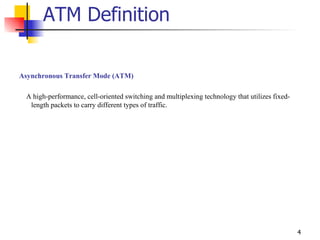
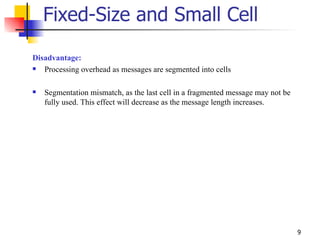
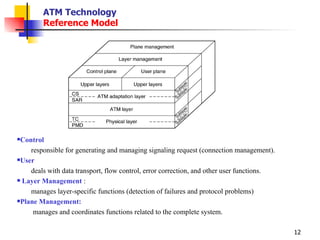
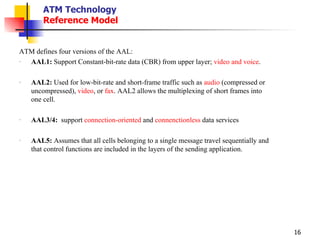
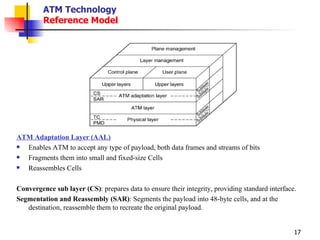
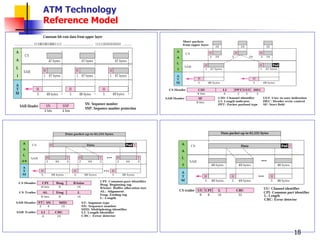
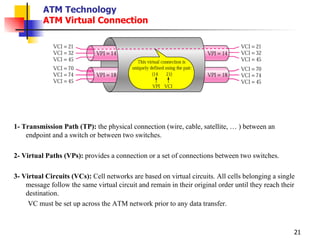
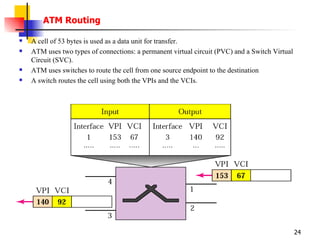
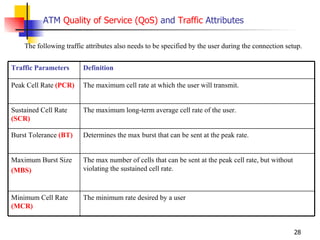
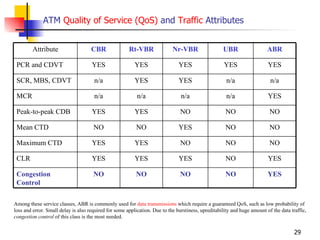
Asynchronous Transfer Mode (ATM) is a cell-based switching and multiplexing technology that was designed in the early 1990s to expedite the transmission of voice, video, and data over digital networks. ATM uses fixed-length cells of 53 bytes to carry traffic. It establishes virtual connections between endpoints to guarantee quality of service. ATM works by segmenting data into fixed-size cells at the source, transporting cells through a switch network via virtual circuits, and reassembling them at the destination. It provides benefits like high performance, integration of multiple data types, and adaptability to different network speeds.