To provide training in (CAI/CMI).
To provide detailed computer knowledge to the pupils
To impart computer operational skills
To provide various experiences of computer education
for various fields of life
To remove various misconceptions regarding computers
To provide knowledge about computer applications
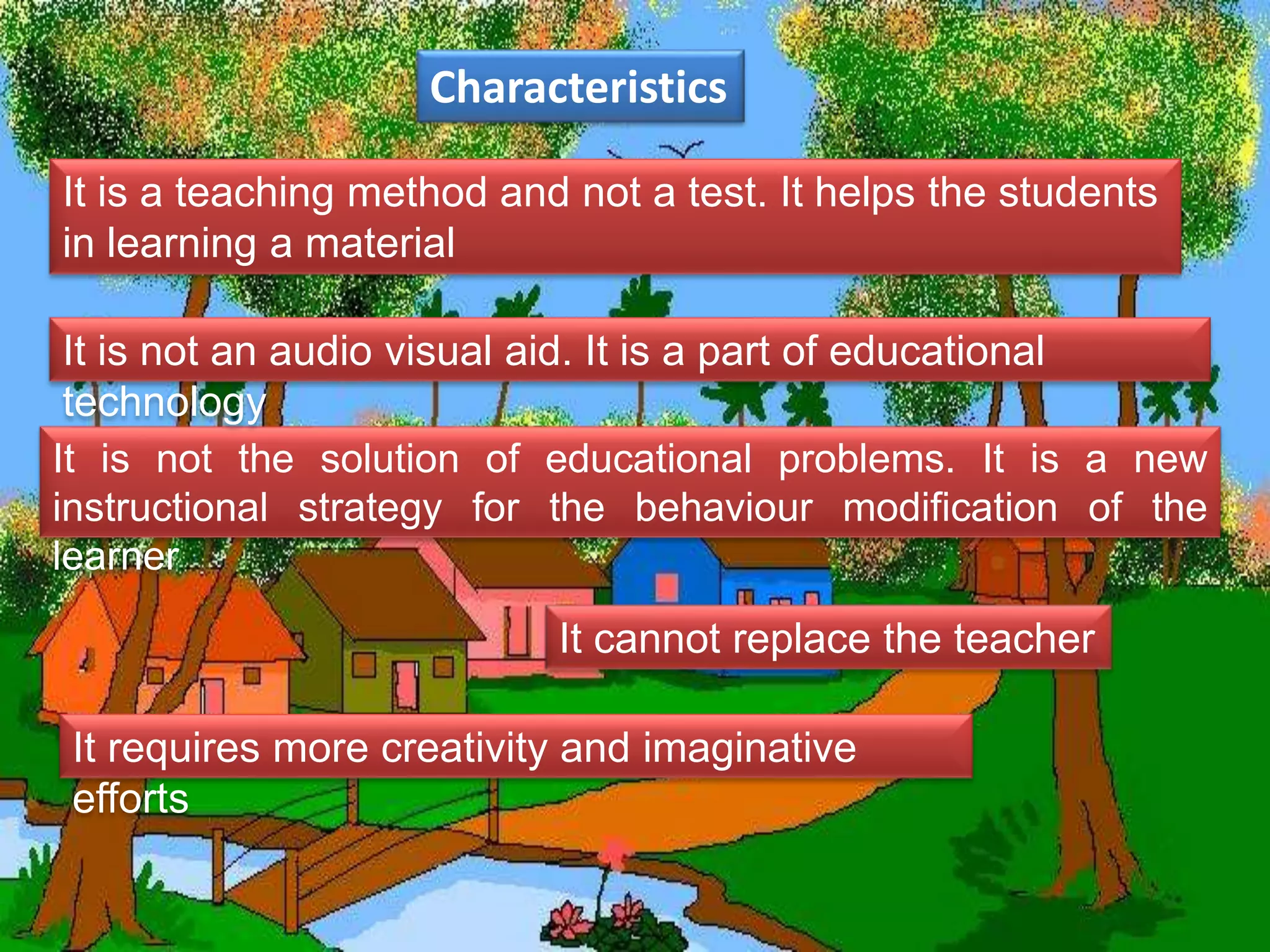
Characteristics
It is not the solution of educational problems. It is a new
instructional strategy for the behaviour modification of the
learner
It is a teaching method and not a test. It helps the students
in learning a material
It is not an audio visual aid. It is a part of educational
technology
It cannot replace the teacher
It requires more creativity and imaginative
efforts
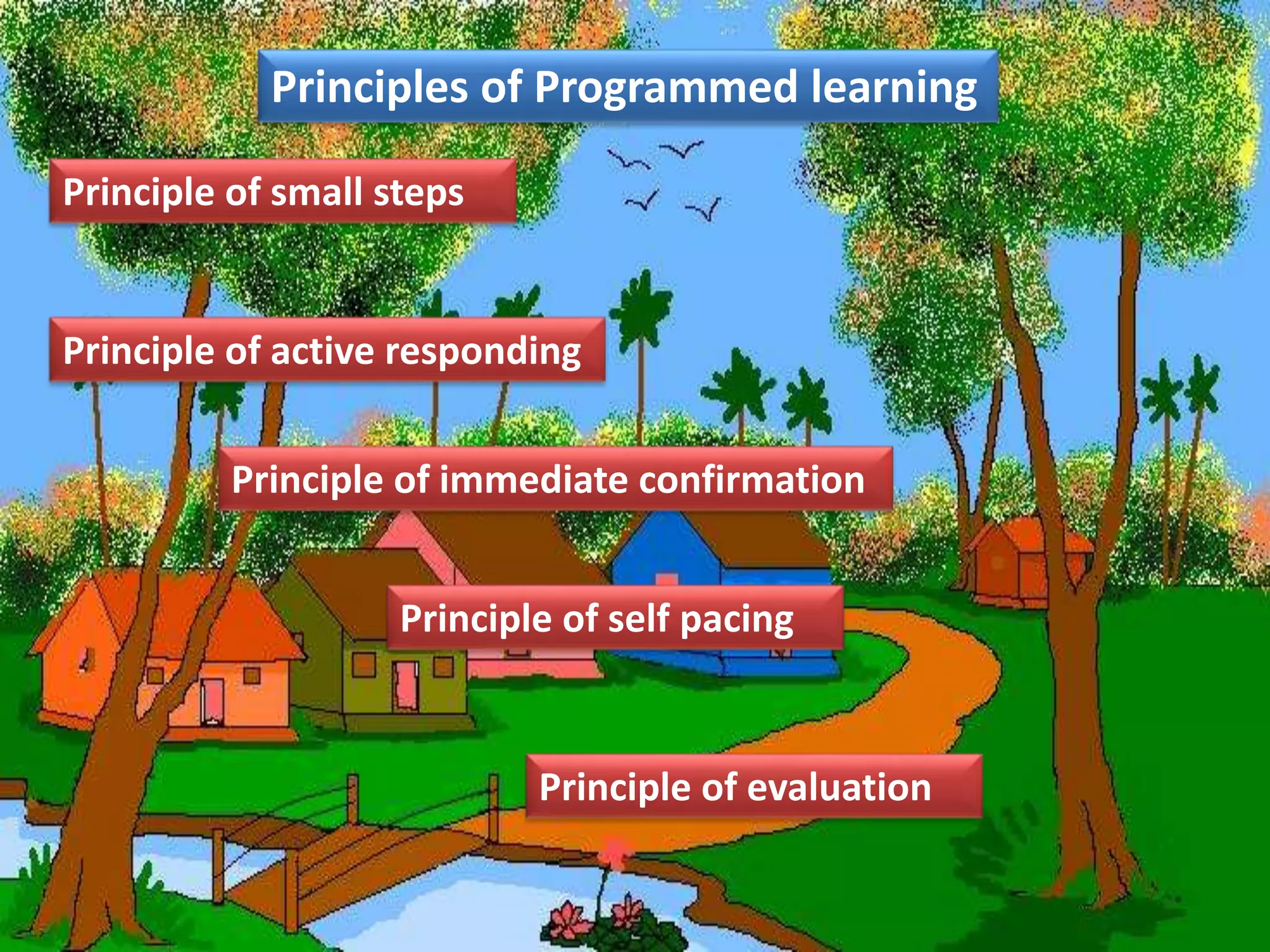
Principles of Programmed learning
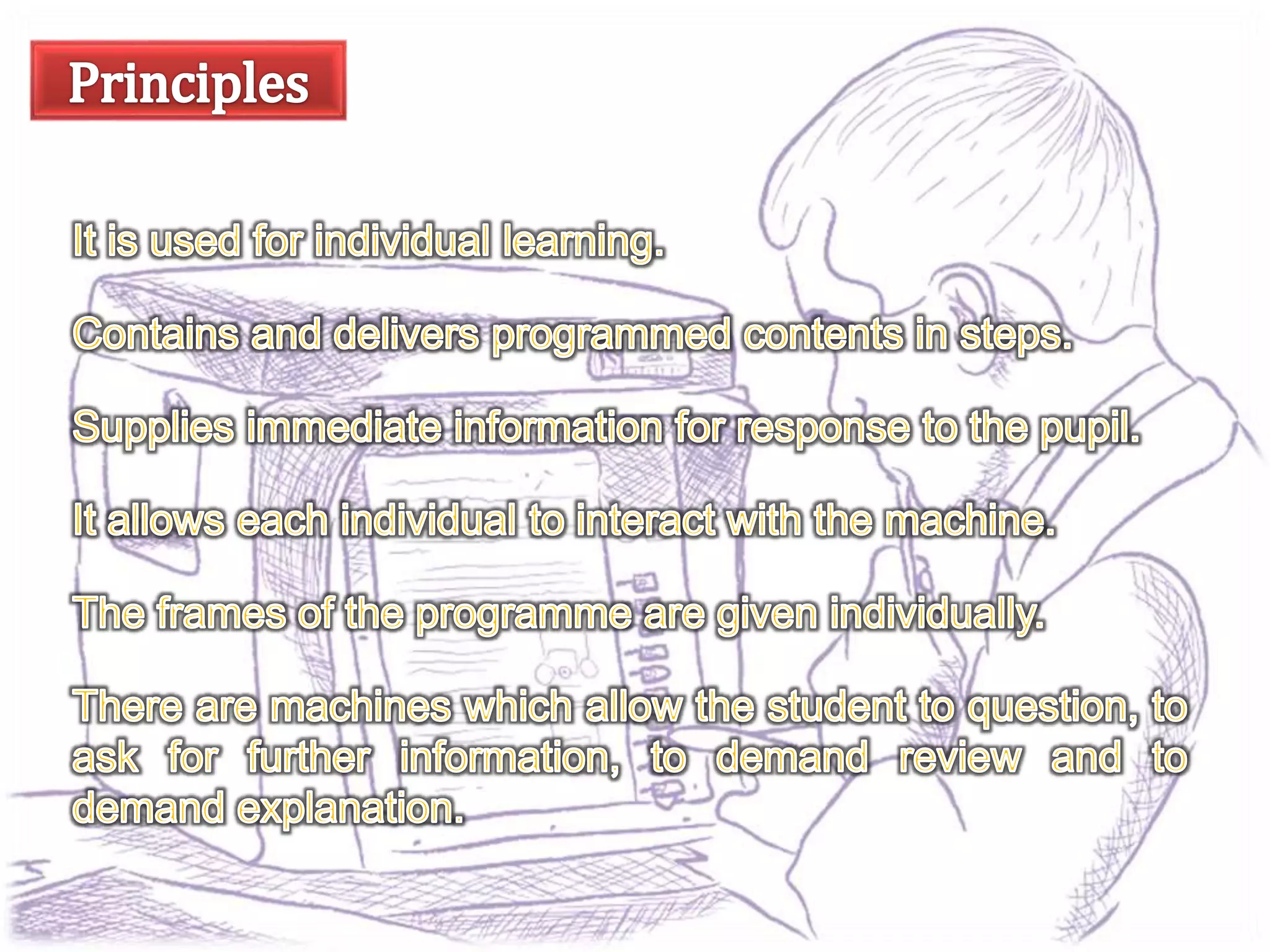
Principle of immediate confirmation
Principle of small steps
Principle of active responding
Principle of self pacing
Principle of evaluation
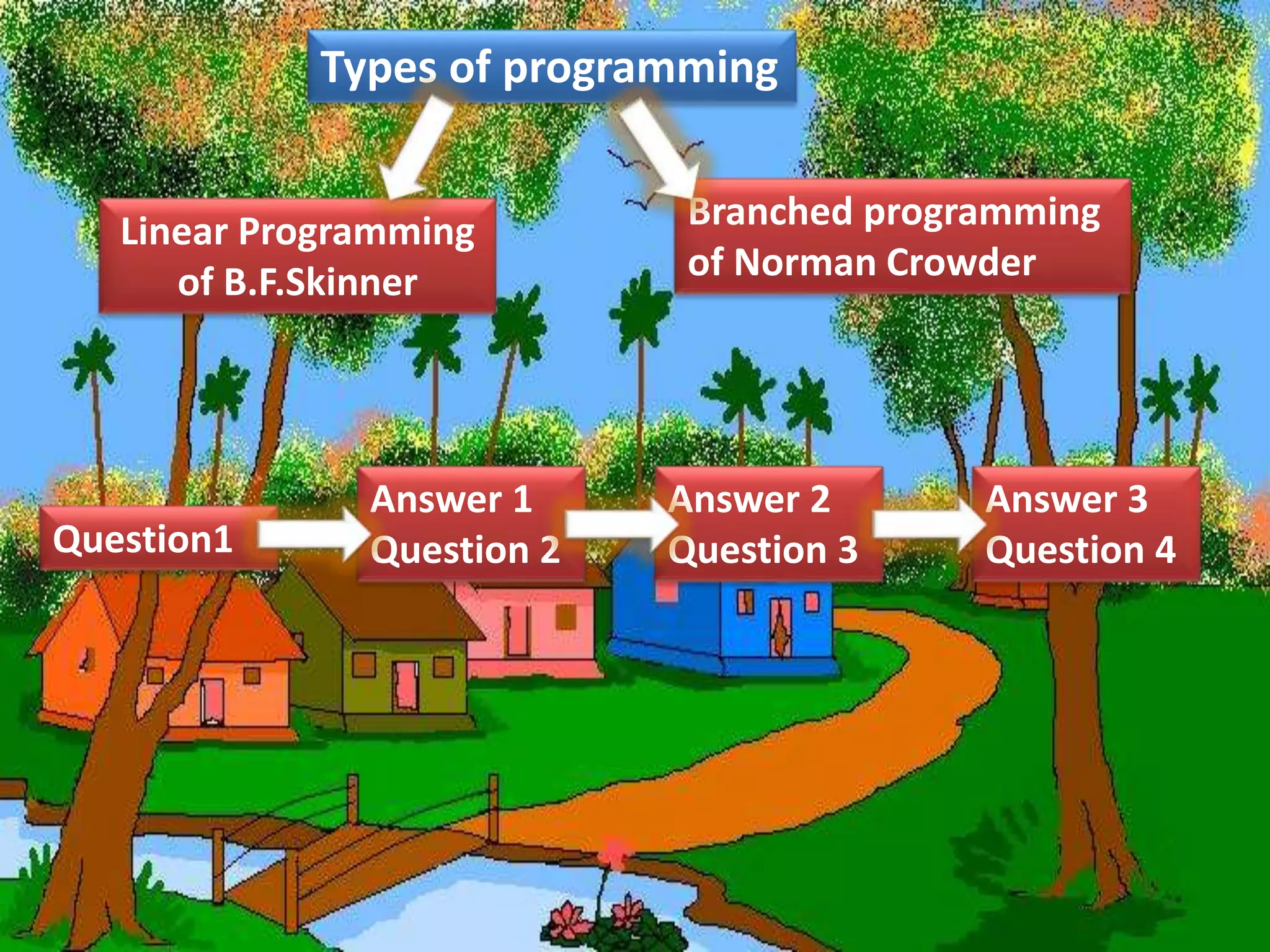
Types of programming
Question1
Linear Programming
of B.F.Skinner
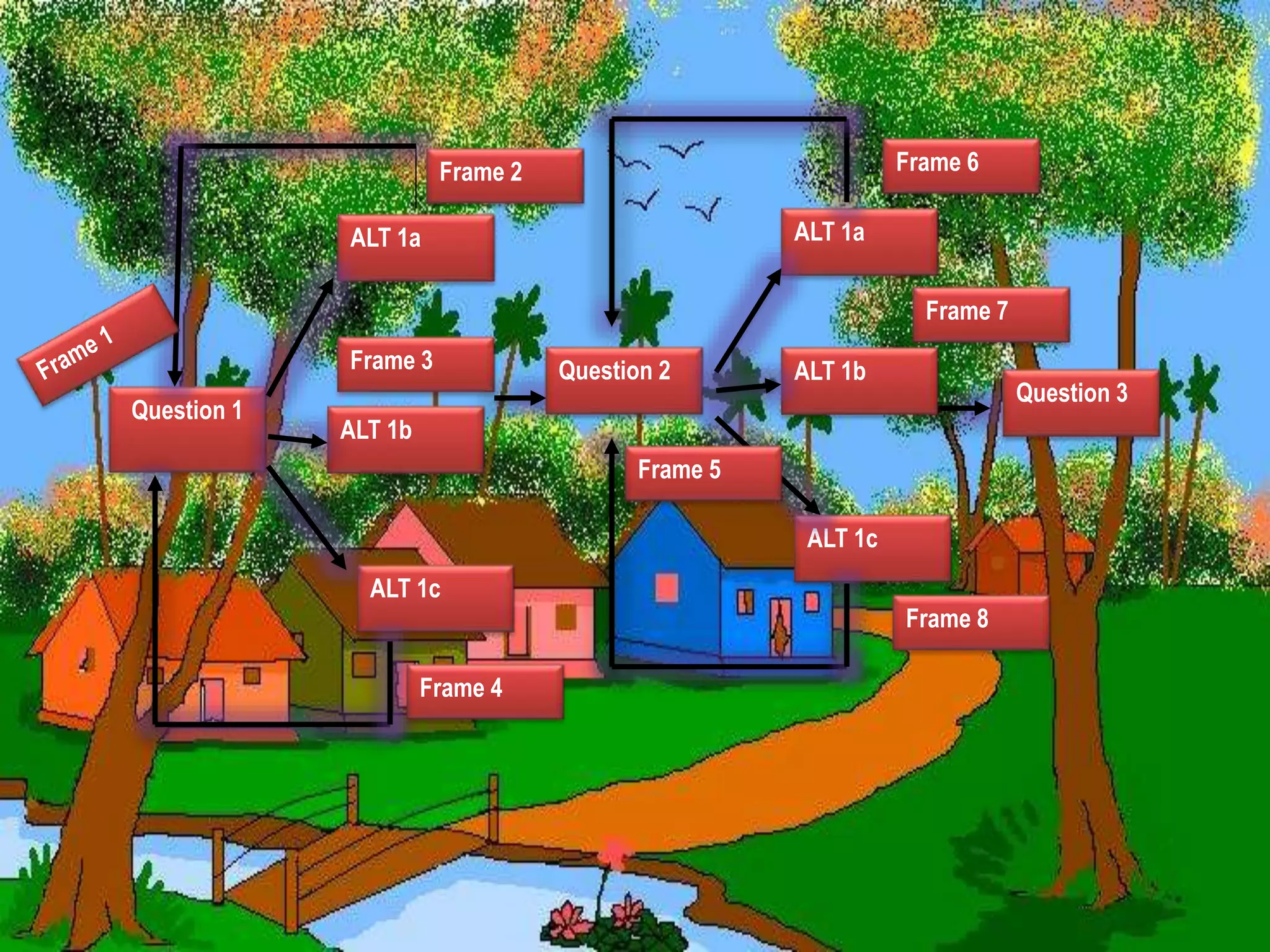
Branched programming
of Norman Crowder
Answer 1
Question 2
Answer 2
Question 3
Answer 3
Question 4
Question 1
ALT 1a
ALT 1b
ALT 1c
Question 2
ALT 1a
ALT 1b
ALT 1c
Question 3
Frame 2
Frame 3
Frame 4
Frame 5
Frame 6
Frame 7
Frame 8
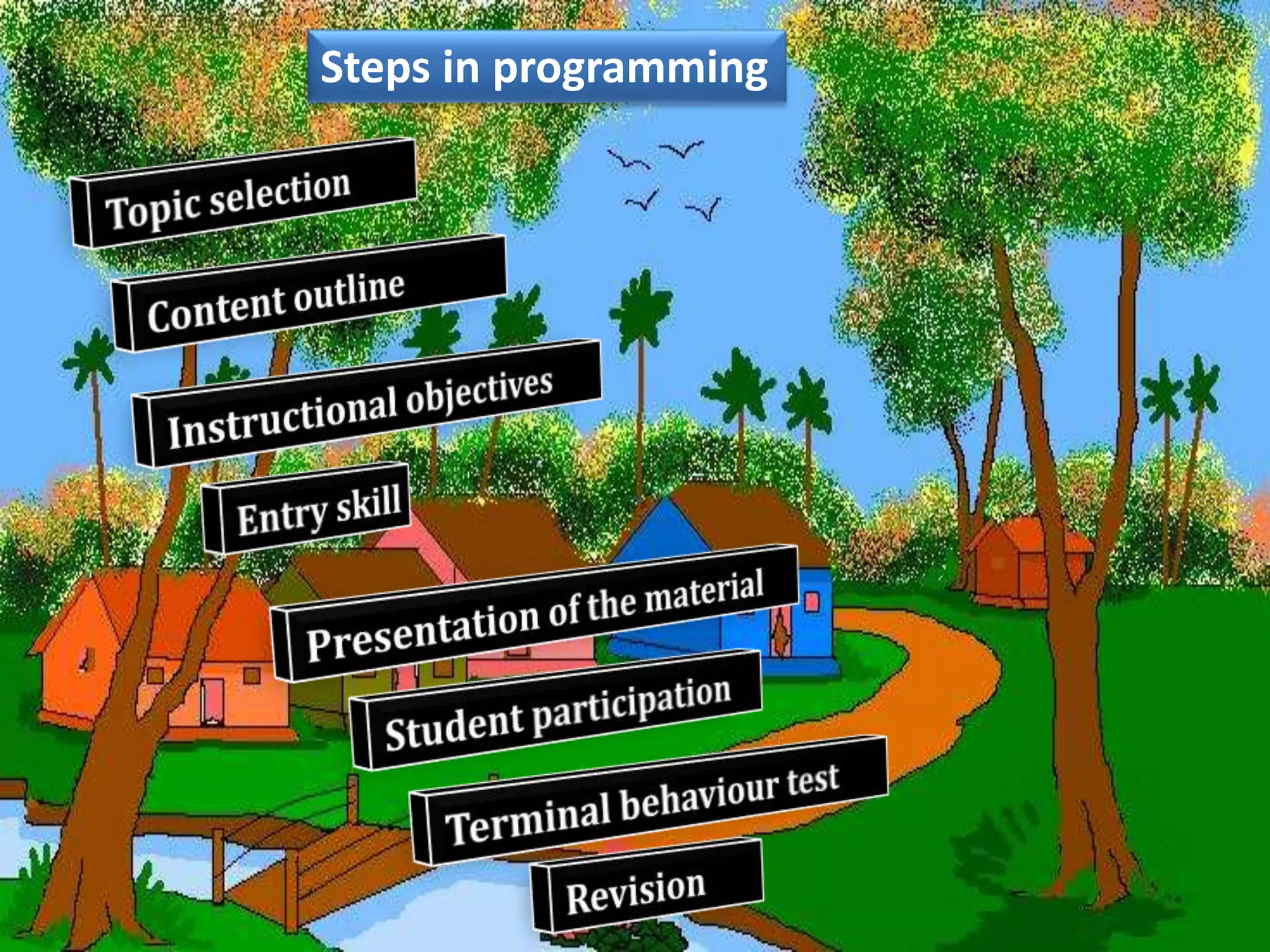
Steps in programming
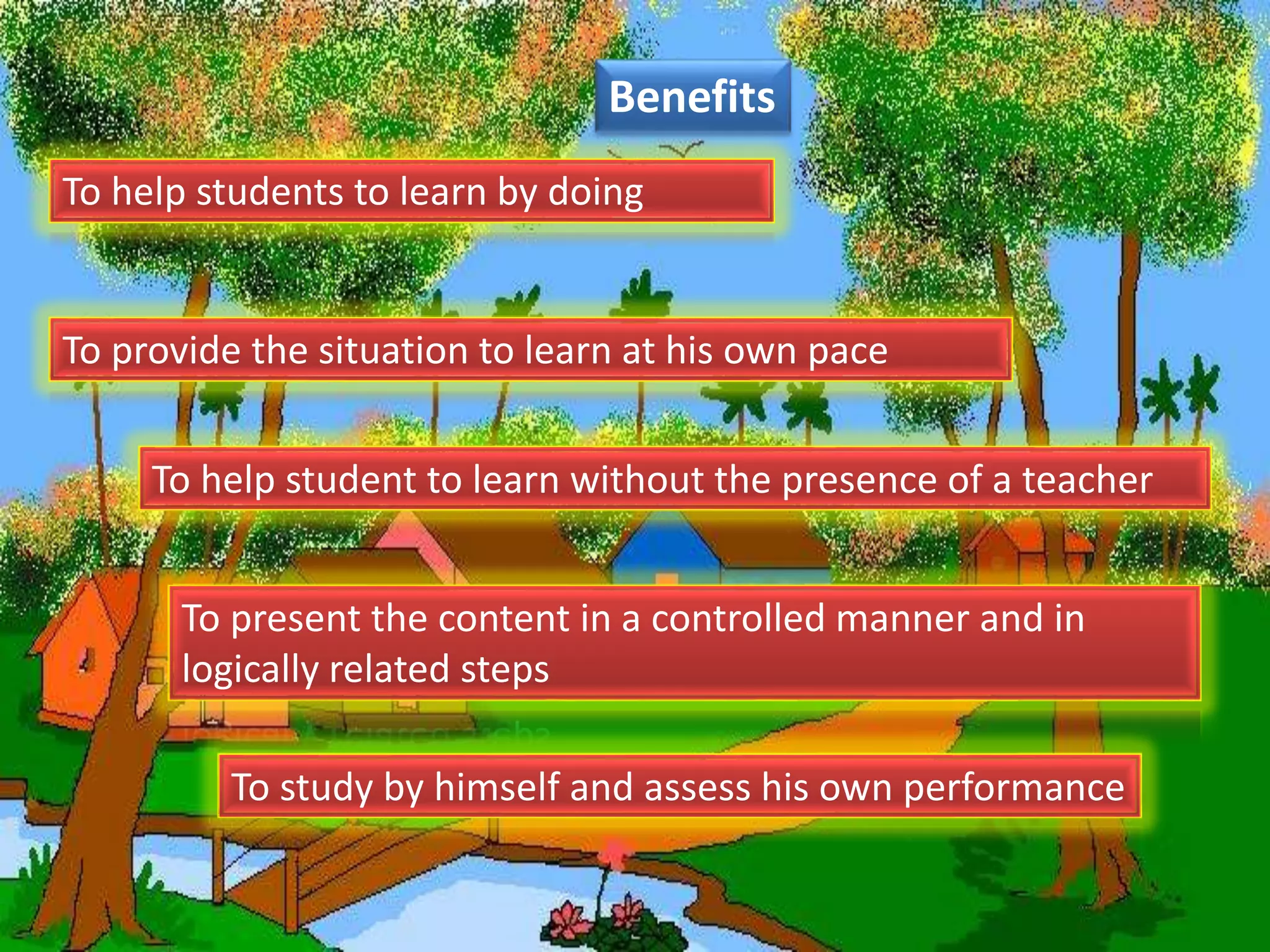
Benefits
To help student to learn without the presence of a teacher
To help students to learn by doing
To provide the situation to learn at his own pace
To present the content in a controlled manner and in
logically related steps
To study by himself and assess his own performance
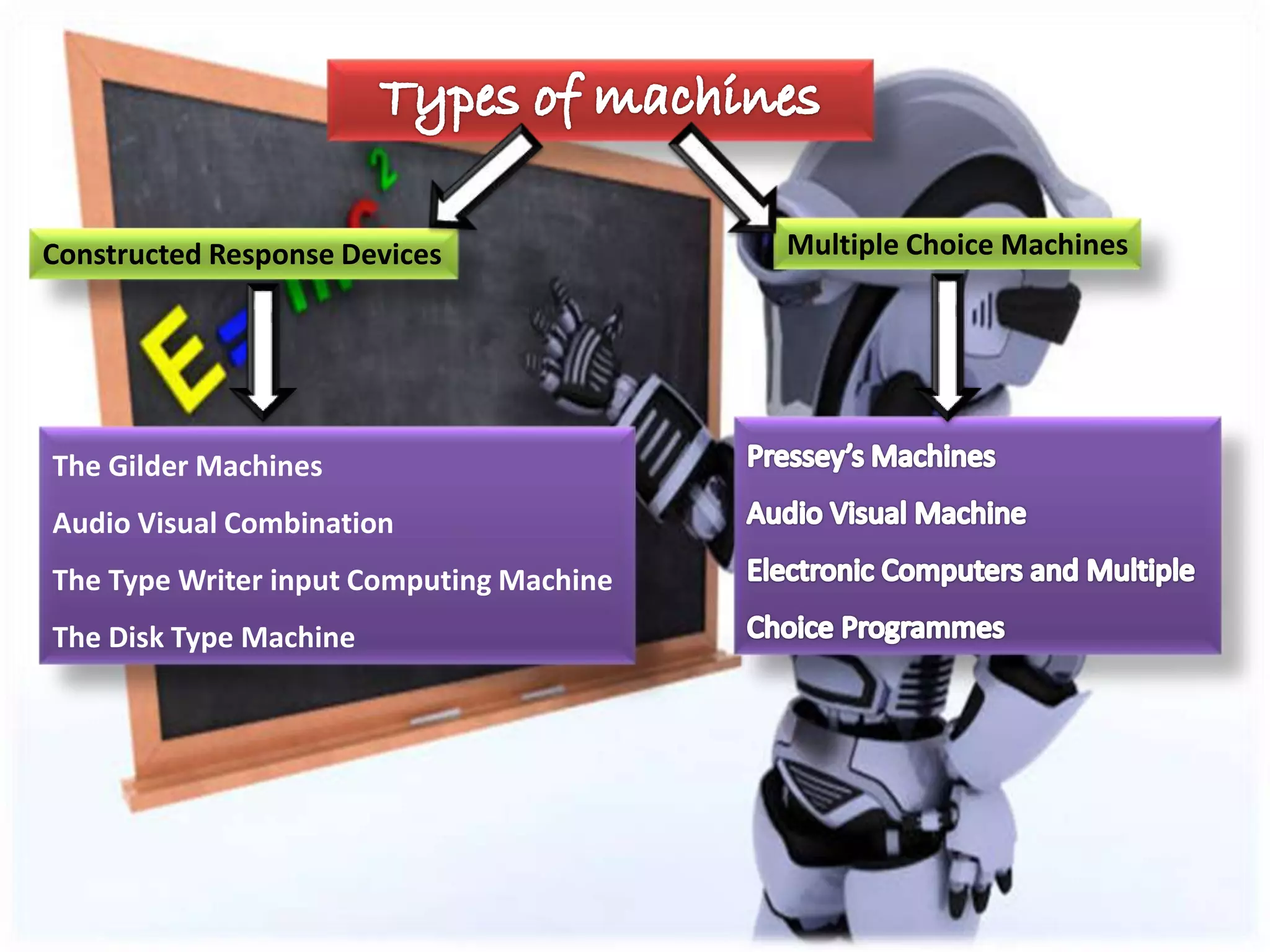
Constructed Response Devices Multiple Choice Machines
The Gilder Machines
Audio Visual Combination
The Type Writer input Computing Machine
The Disk Type Machine
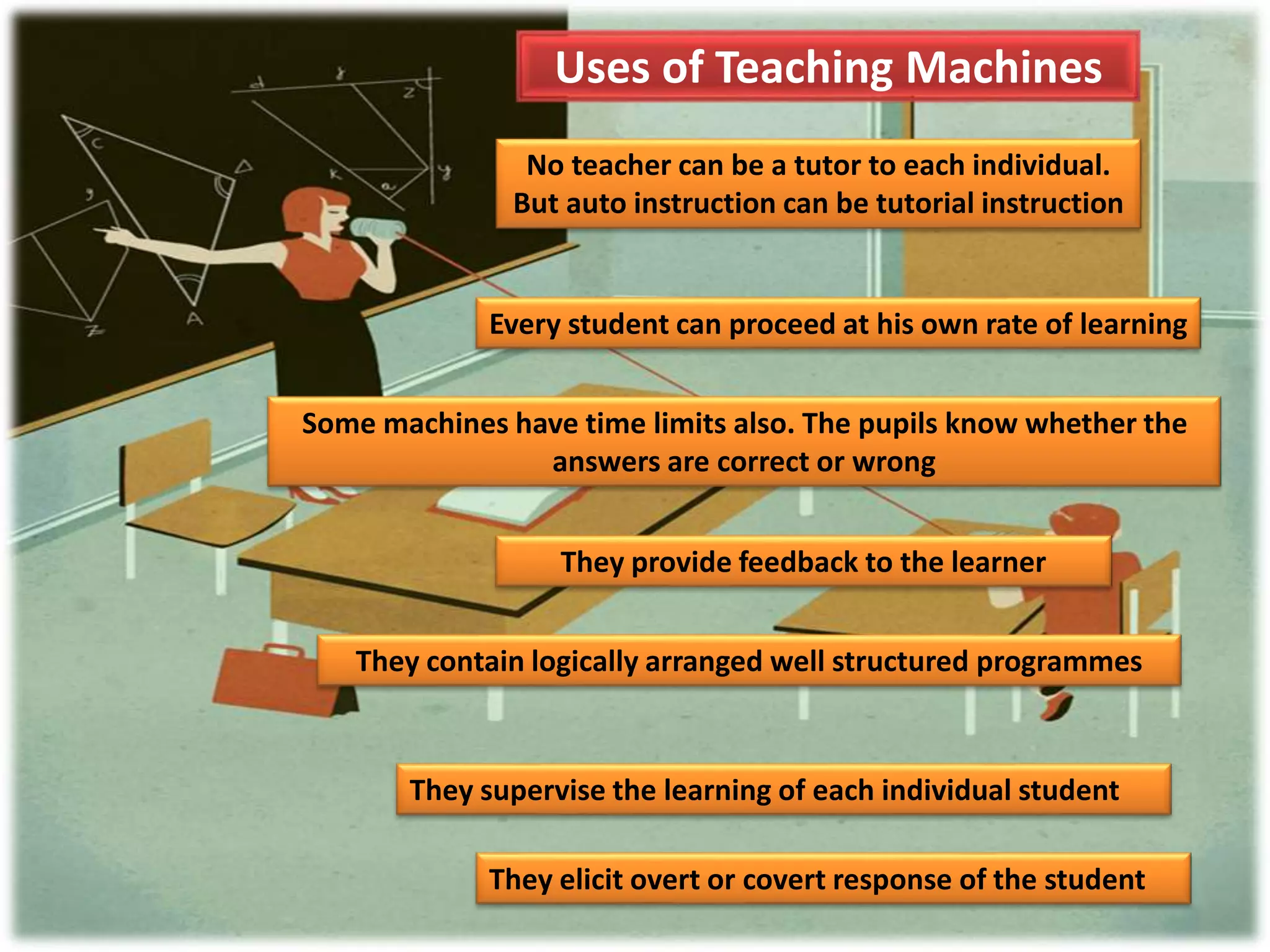
Uses of Teaching Machines
No teacher can be a tutor to each individual.
But auto instruction can be tutorial instruction
Every student can proceed at his own rate of learning
Some machines have time limits also. The pupils know whether the
answers are correct or wrong
They provide feedback to the learner
They contain logically arranged well structured programmes
They supervise the learning of each individual student
They elicit overt or covert response of the student
Models of Teaching
Characteristics of a Model of Teaching
Criterion of performance
Specifications of learning outcome
Specification of environment
Specification of operations
What the student will perform, after
completing an instructional sequence, is
specified in detail
The learner would demonstrate after
completing specific instructional sequences
Mechanisms that provide for students reaction and
interaction with the environment
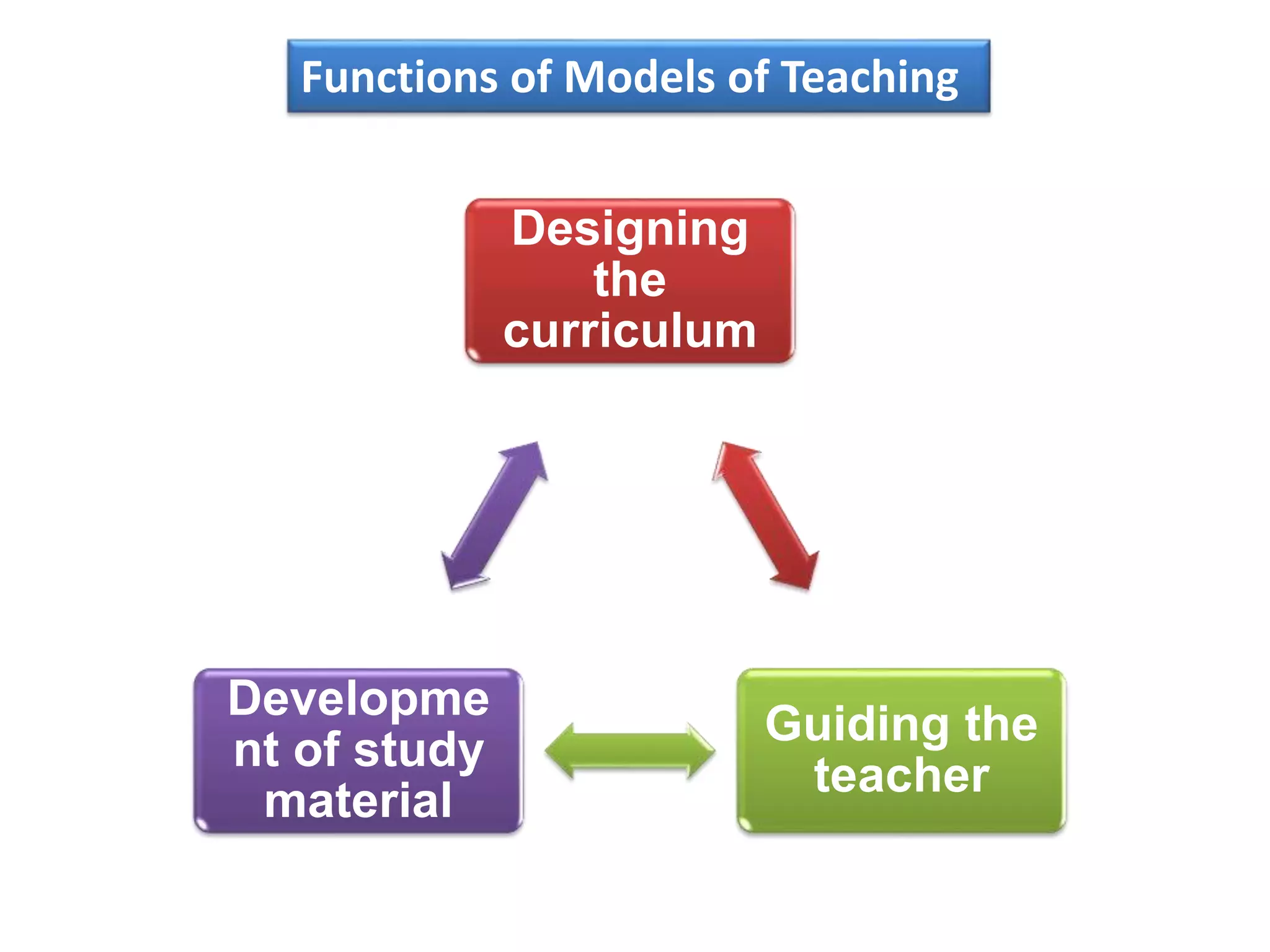
Designing
the
curriculum
Guiding the
teacher
Developme
nt of study
material
Functions of Models of Teaching
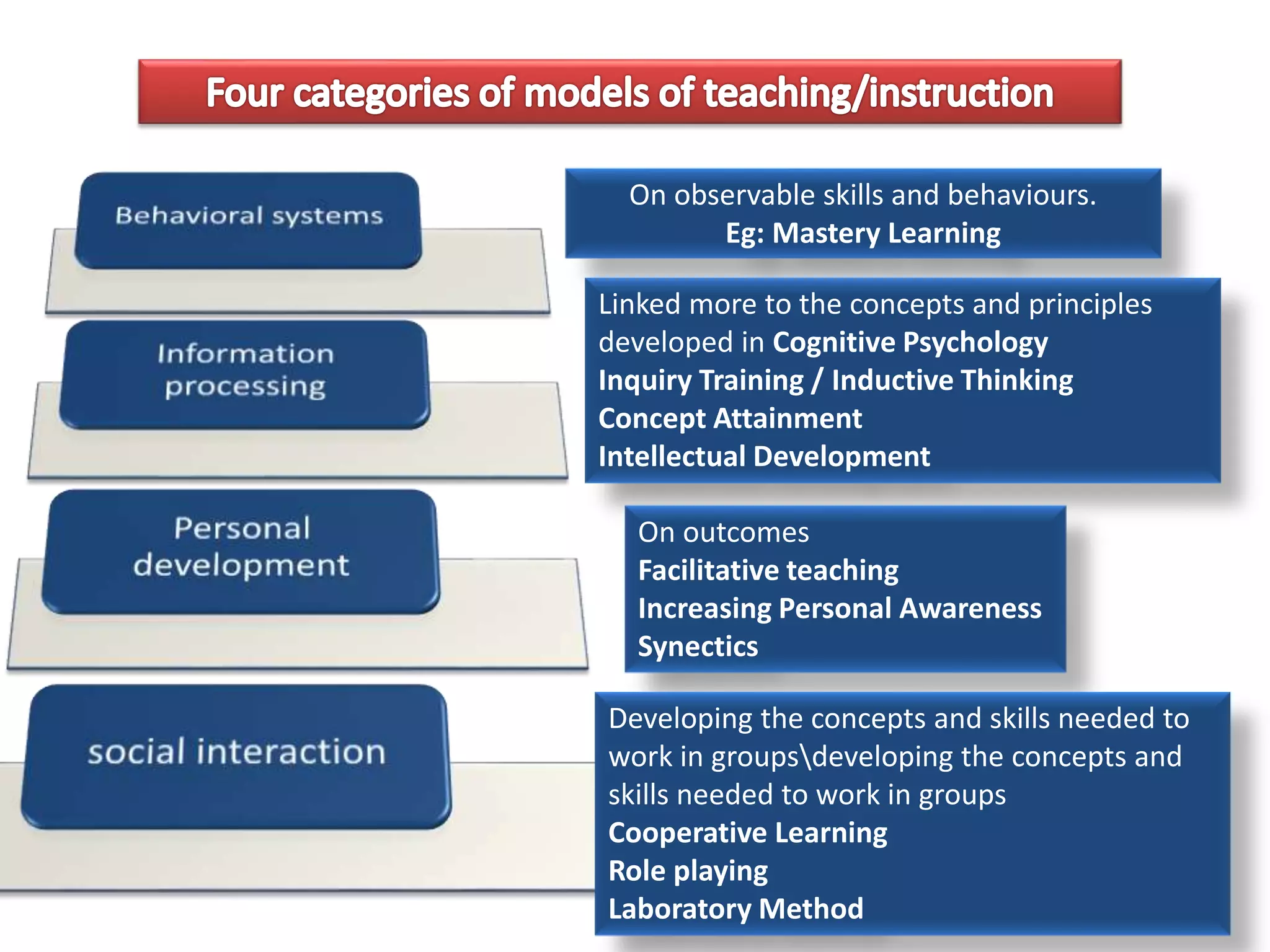
On observable skills and behaviours.
Eg: Mastery Learning
Linked more to the concepts and principles
developed in Cognitive Psychology
Inquiry Training / Inductive Thinking
Concept Attainment
Intellectual Development
On outcomes
Facilitative teaching
Increasing Personal Awareness
Synectics
Developing the concepts and skills needed to
work in groupsdeveloping the concepts and
skills needed to work in groups
Cooperative Learning
Role playing
Laboratory Method
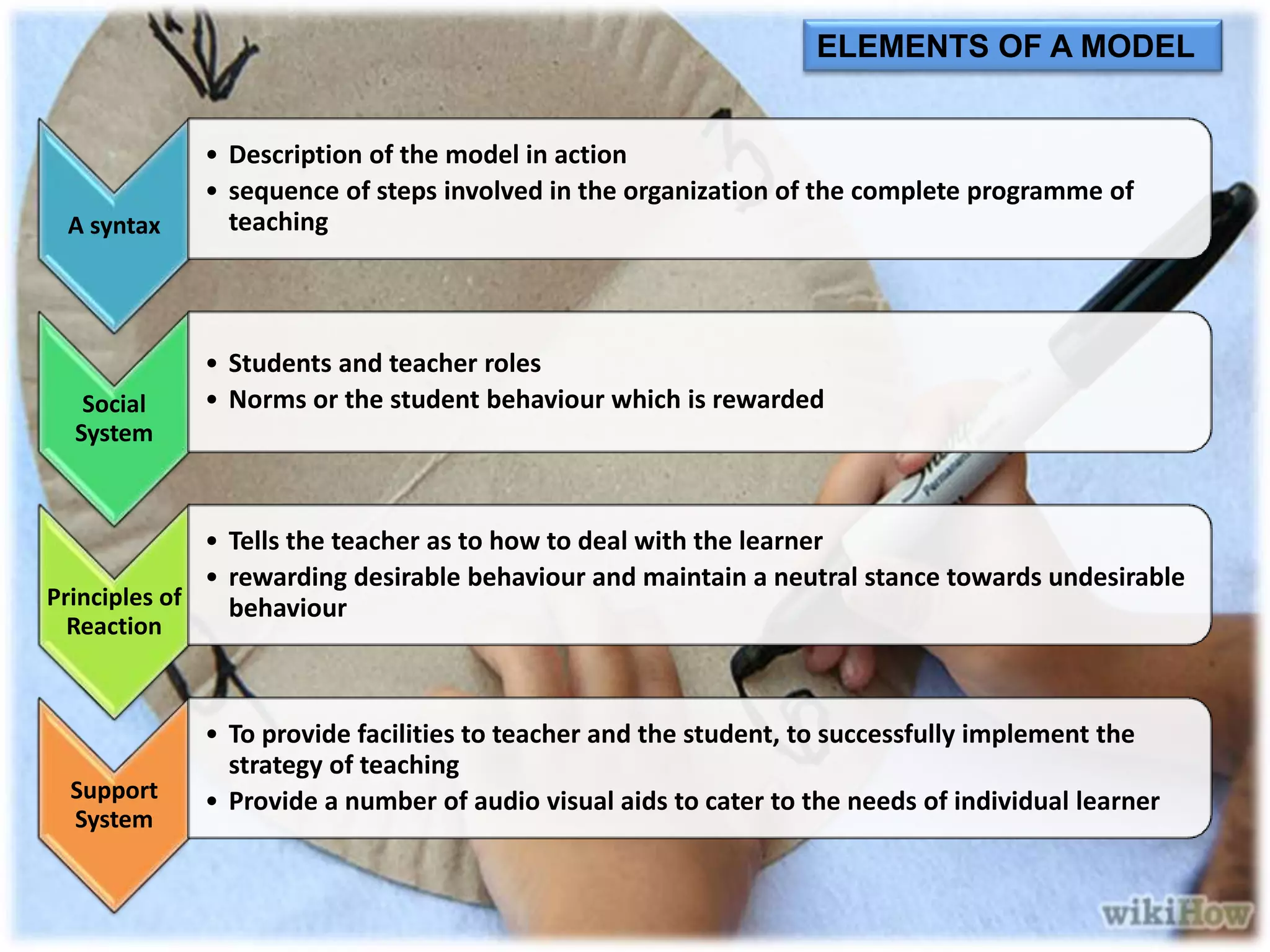
ELEMENTS OF A MODEL
A syntax
• Description of the model in action
• sequence of steps involved in the organization of the complete programme of
teaching
Social
System
• Students and teacher roles
• Norms or the student behaviour which is rewarded
Principles of
Reaction
• Tells the teacher as to how to deal with the learner
• rewarding desirable behaviour and maintain a neutral stance towards undesirable
behaviour
Support
System
• To provide facilities to teacher and the student, to successfully implement the
strategy of teaching
• Provide a number of audio visual aids to cater to the needs of individual learner
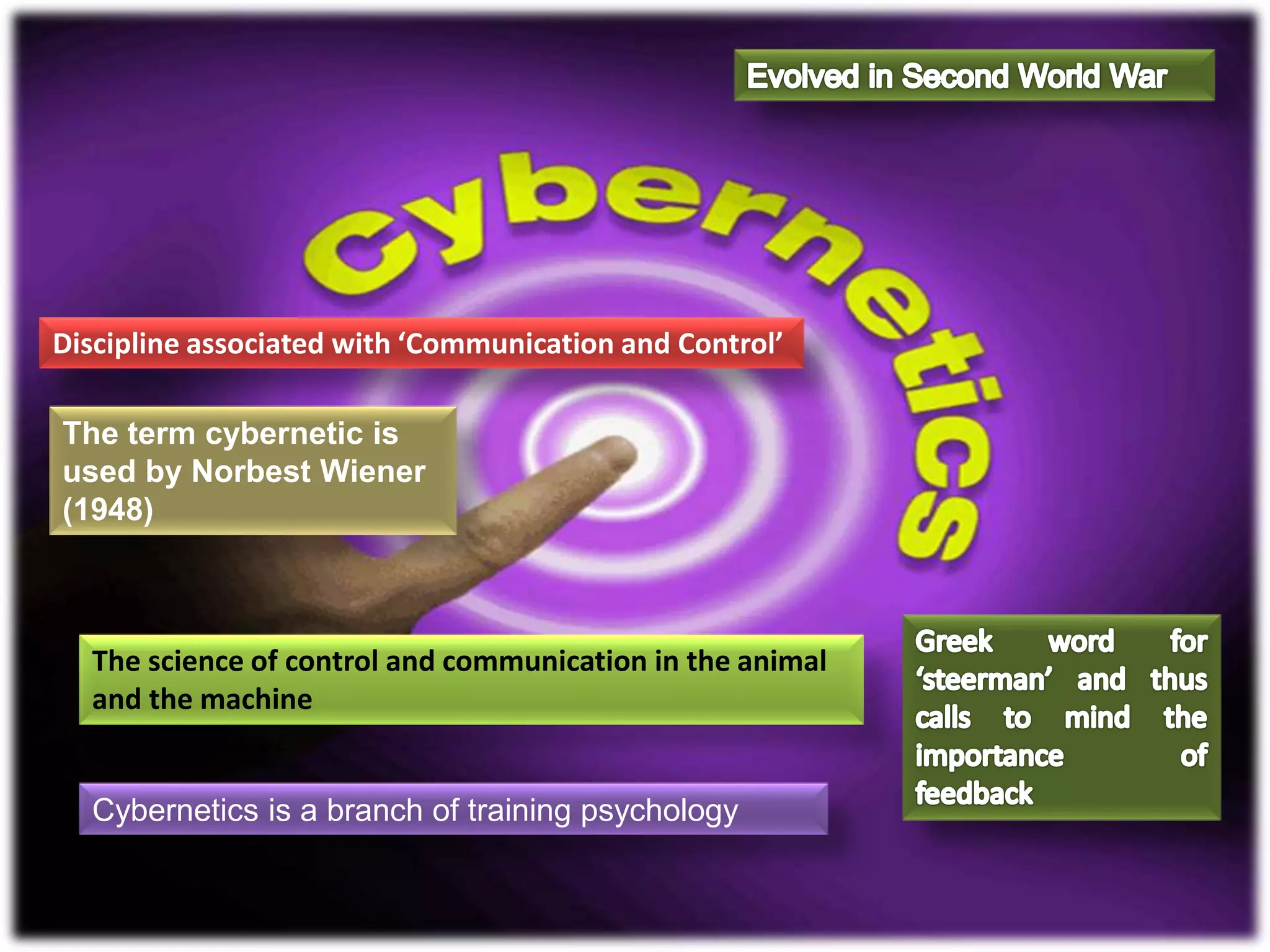
Discipline associated with ‘Communication and Control’
The term cybernetic is
used by Norbest Wiener
(1948)
The science of control and communication in the animal
and the machine
Cybernetics is a branch of training psychology
Output of Cybernetics
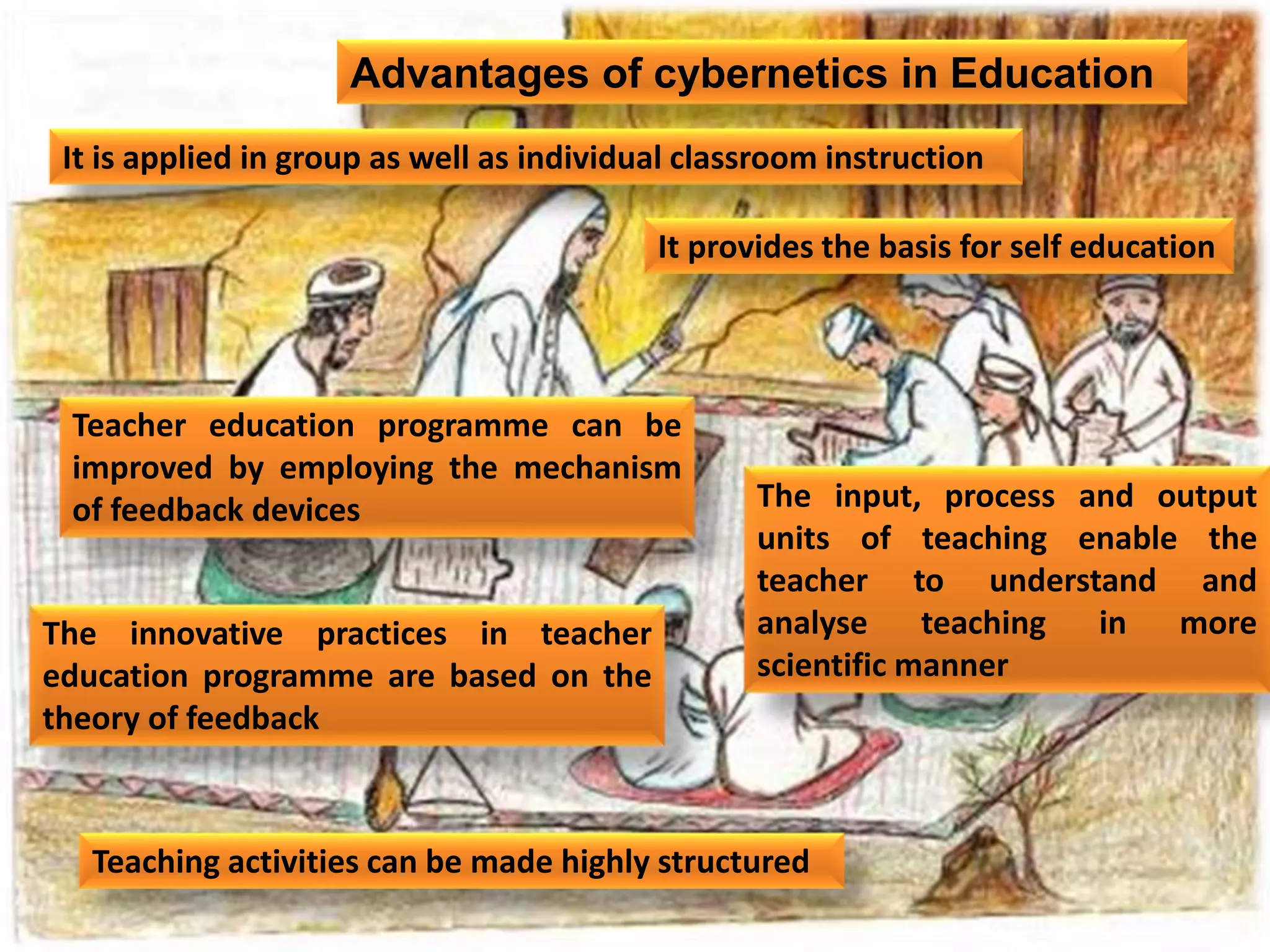
Advantages of cybernetics in Education
It is applied in group as well as individual classroom instruction
It provides the basis for self education
Teacher education programme can be
improved by employing the mechanism
of feedback devices
The innovative practices in teacher
education programme are based on the
theory of feedback
The input, process and output
units of teaching enable the
teacher to understand and
analyse teaching in more
scientific manner
Teaching activities can be made highly structured
Computer Literacy and Awareness in Schools

Computer Literacy and Awareness in Schools

  • 3.
    To provide trainingin (CAI/CMI). To provide detailed computer knowledge to the pupils To impart computer operational skills To provide various experiences of computer education for various fields of life To remove various misconceptions regarding computers To provide knowledge about computer applications
  • 6.
    Characteristics It is notthe solution of educational problems. It is a new instructional strategy for the behaviour modification of the learner It is a teaching method and not a test. It helps the students in learning a material It is not an audio visual aid. It is a part of educational technology It cannot replace the teacher It requires more creativity and imaginative efforts
  • 7.
    Principles of Programmedlearning Principle of immediate confirmation Principle of small steps Principle of active responding Principle of self pacing Principle of evaluation
  • 8.
    Types of programming Question1 LinearProgramming of B.F.Skinner Branched programming of Norman Crowder Answer 1 Question 2 Answer 2 Question 3 Answer 3 Question 4
  • 9.
    Question 1 ALT 1a ALT1b ALT 1c Question 2 ALT 1a ALT 1b ALT 1c Question 3 Frame 2 Frame 3 Frame 4 Frame 5 Frame 6 Frame 7 Frame 8
  • 10.
  • 11.
    Benefits To help studentto learn without the presence of a teacher To help students to learn by doing To provide the situation to learn at his own pace To present the content in a controlled manner and in logically related steps To study by himself and assess his own performance
  • 16.
    Constructed Response DevicesMultiple Choice Machines The Gilder Machines Audio Visual Combination The Type Writer input Computing Machine The Disk Type Machine
  • 17.
    Uses of TeachingMachines No teacher can be a tutor to each individual. But auto instruction can be tutorial instruction Every student can proceed at his own rate of learning Some machines have time limits also. The pupils know whether the answers are correct or wrong They provide feedback to the learner They contain logically arranged well structured programmes They supervise the learning of each individual student They elicit overt or covert response of the student
  • 18.
  • 19.
    Characteristics of aModel of Teaching Criterion of performance Specifications of learning outcome Specification of environment Specification of operations What the student will perform, after completing an instructional sequence, is specified in detail The learner would demonstrate after completing specific instructional sequences Mechanisms that provide for students reaction and interaction with the environment
  • 21.
    Designing the curriculum Guiding the teacher Developme nt ofstudy material Functions of Models of Teaching
  • 22.
    On observable skillsand behaviours. Eg: Mastery Learning Linked more to the concepts and principles developed in Cognitive Psychology Inquiry Training / Inductive Thinking Concept Attainment Intellectual Development On outcomes Facilitative teaching Increasing Personal Awareness Synectics Developing the concepts and skills needed to work in groupsdeveloping the concepts and skills needed to work in groups Cooperative Learning Role playing Laboratory Method
  • 23.
    ELEMENTS OF AMODEL A syntax • Description of the model in action • sequence of steps involved in the organization of the complete programme of teaching Social System • Students and teacher roles • Norms or the student behaviour which is rewarded Principles of Reaction • Tells the teacher as to how to deal with the learner • rewarding desirable behaviour and maintain a neutral stance towards undesirable behaviour Support System • To provide facilities to teacher and the student, to successfully implement the strategy of teaching • Provide a number of audio visual aids to cater to the needs of individual learner
  • 24.
    Discipline associated with‘Communication and Control’ The term cybernetic is used by Norbest Wiener (1948) The science of control and communication in the animal and the machine Cybernetics is a branch of training psychology
  • 27.
  • 28.
    Advantages of cyberneticsin Education It is applied in group as well as individual classroom instruction It provides the basis for self education Teacher education programme can be improved by employing the mechanism of feedback devices The innovative practices in teacher education programme are based on the theory of feedback The input, process and output units of teaching enable the teacher to understand and analyse teaching in more scientific manner Teaching activities can be made highly structured