IGCSE (9-1)
Chapter 9: Electric Charge
Conductor or insulator?
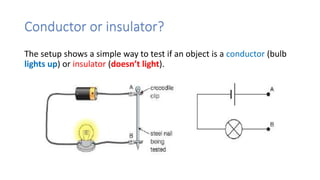
The setup shows a simple way to test if an object is a conductor (bulb
lights up) or insulator (doesn’t light).
Charging and discharging
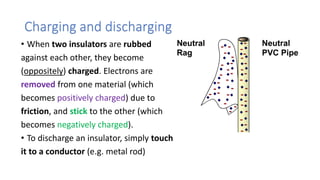
• When two insulators are rubbed
against each other, they become
(oppositely) charged. Electrons are
removed from one material (which
becomes positively charged) due to
friction, and stick to the other (which
becomes negatively charged).
• To discharge an insulator, simply touch
it to a conductor (e.g. metal rod)
Attraction and Repulsion
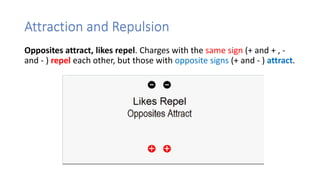
Opposites attract, likes repel. Charges with the same sign (+ and + , -
and - ) repel each other, but those with opposite signs (+ and - ) attract.
Charging by (electrostatic) induction
When a charged object is held close to an uncharged one, charge of
the opposite sign is induced on the side of the uncharged object
closest to the charged one. Then the two objects attract each other.
A good demonstration of this is the
gold leaf experiment [details in
book]
Uses of static elcetricity
Electrostatic paint spraying
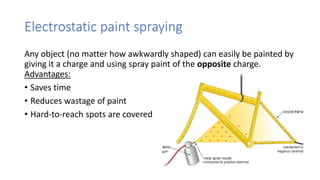
Any object (no matter how awkwardly shaped) can easily be painted by
giving it a charge and using spray paint of the opposite charge.
Advantages:
• Saves time
• Reduces wastage of paint
• Hard-to-reach spots are covered
Inkjet printer
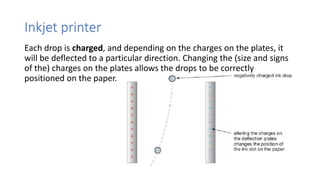
Each drop is charged, and depending on the charges on the plates, it
will be deflected to a particular direction. Changing the (size and signs
of the) charges on the plates allows the drops to be correctly
positioned on the paper.
Electrostatic precipitator
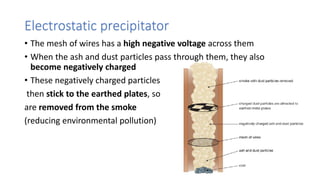
• The mesh of wires has a high negative voltage across them
• When the ash and dust particles pass through them, they also
become negatively charged
• These negatively charged particles
then stick to the earthed plates, so
are removed from the smoke
(reducing environmental pollution)
Risks and Precautions
Dangers with static electricity: Large fuel tankers and airplanes can
become charged after a journey (due to frictive rubbing with the air).
If you then carelessly touch the vehicle, you’ll receive a shock. Worse, if
the vehicle is refueled before removing this built-up charge, a spark
will result, which might cause the fuel to ignite/explode.
Solution: So in these situations, the object must be earthed first (using
thick metal cable connected to the ground). This causes the static
charge to (flow to ground and) dissipate.
That’s all you need to know!
THE END

IGCSE Electric Charge.pptx

  • 1.
    IGCSE (9-1) Chapter 9:Electric Charge
  • 2.
    Conductor or insulator? Thesetup shows a simple way to test if an object is a conductor (bulb lights up) or insulator (doesn’t light).
  • 3.
    Charging and discharging •When two insulators are rubbed against each other, they become (oppositely) charged. Electrons are removed from one material (which becomes positively charged) due to friction, and stick to the other (which becomes negatively charged). • To discharge an insulator, simply touch it to a conductor (e.g. metal rod)
  • 4.
    Attraction and Repulsion Oppositesattract, likes repel. Charges with the same sign (+ and + , - and - ) repel each other, but those with opposite signs (+ and - ) attract.
  • 5.
    Charging by (electrostatic)induction When a charged object is held close to an uncharged one, charge of the opposite sign is induced on the side of the uncharged object closest to the charged one. Then the two objects attract each other. A good demonstration of this is the gold leaf experiment [details in book]
  • 6.
    Uses of staticelcetricity
  • 7.
    Electrostatic paint spraying Anyobject (no matter how awkwardly shaped) can easily be painted by giving it a charge and using spray paint of the opposite charge. Advantages: • Saves time • Reduces wastage of paint • Hard-to-reach spots are covered
  • 8.
    Inkjet printer Each dropis charged, and depending on the charges on the plates, it will be deflected to a particular direction. Changing the (size and signs of the) charges on the plates allows the drops to be correctly positioned on the paper.
  • 10.
    Electrostatic precipitator • Themesh of wires has a high negative voltage across them • When the ash and dust particles pass through them, they also become negatively charged • These negatively charged particles then stick to the earthed plates, so are removed from the smoke (reducing environmental pollution)
  • 11.
    Risks and Precautions Dangerswith static electricity: Large fuel tankers and airplanes can become charged after a journey (due to frictive rubbing with the air). If you then carelessly touch the vehicle, you’ll receive a shock. Worse, if the vehicle is refueled before removing this built-up charge, a spark will result, which might cause the fuel to ignite/explode. Solution: So in these situations, the object must be earthed first (using thick metal cable connected to the ground). This causes the static charge to (flow to ground and) dissipate.
  • 12.
    That’s all youneed to know! THE END