Downloaded 345 times



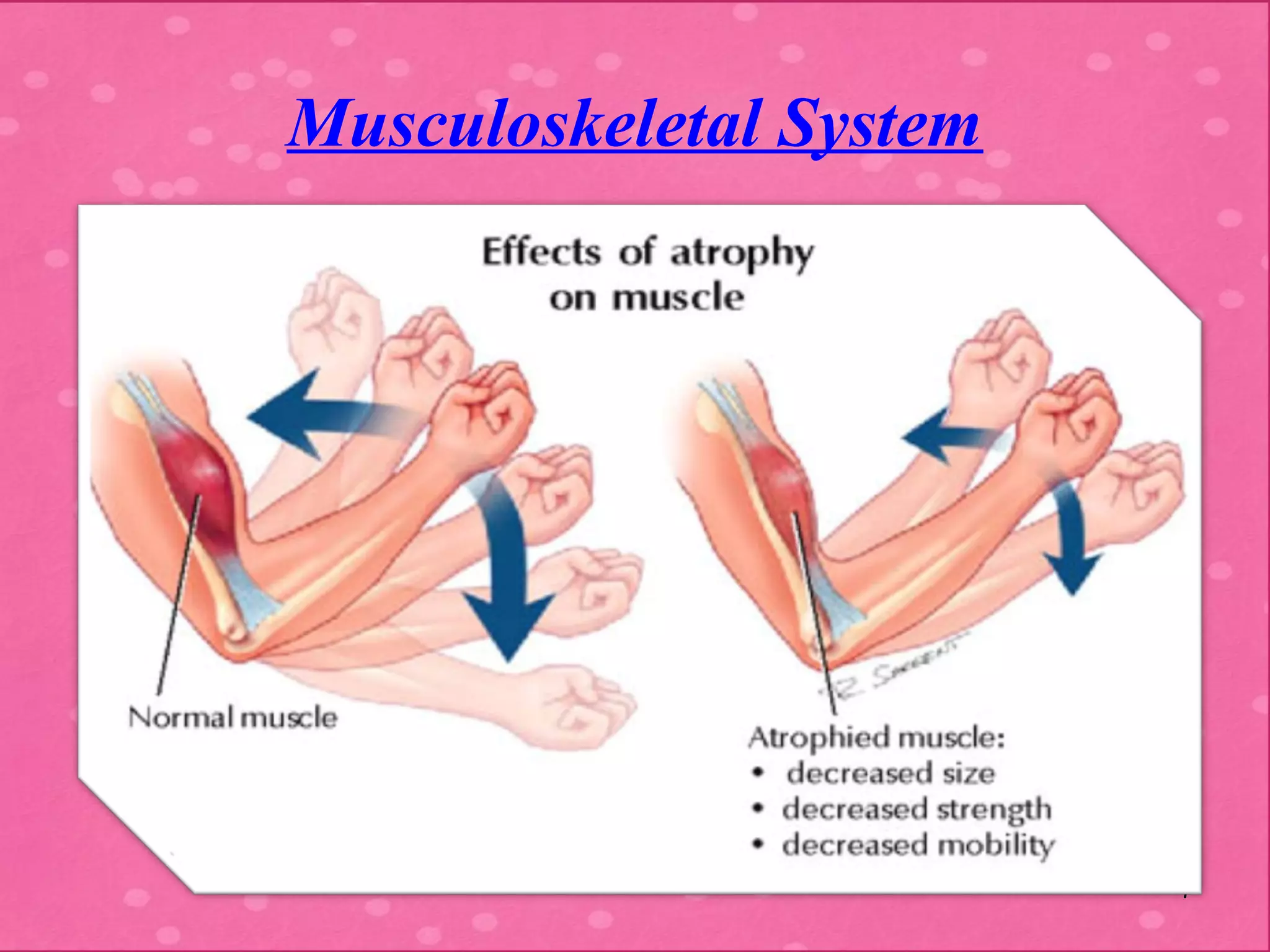

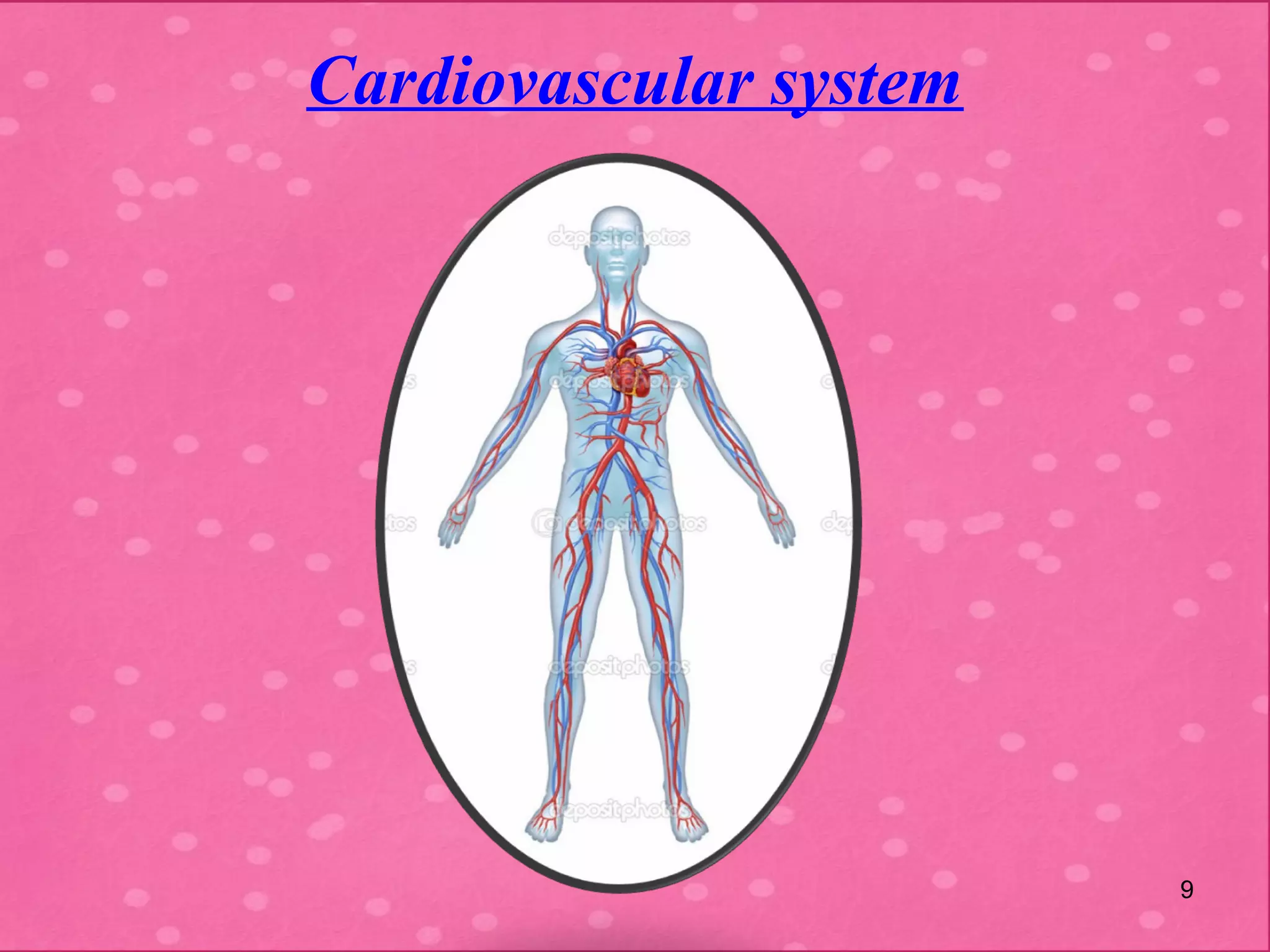





This document discusses the hazards of immobility. It defines immobility as the inability to move, which can affect a specific body part, the lower body, or the entire body from the neck down. The document then examines how immobility negatively impacts eight body systems: musculoskeletal, cardiovascular, respiratory, metabolic, urinary, gastrointestinal, integumentary, and psychoneurologic. Key effects of immobility include disuse osteoporosis, diminished cardiac reserve, decreased respiratory movement, negative nitrogen balance, urinary stasis, constipation, reduced skin turgor, and decreased self-esteem.


