


NORMAL BODYALIGNMENT
By
Mr. M.Shivanandha Reddy
Assessment of body alignment
OBJECTIVES:
Determining normal physiological changes
in body alignment resulting from growth and
development for each patient.
 Identifying deviations in body alignment
caused by incorrect posture.
Identifying trauma, muscle damage, or nerve
dysfunction.
Obtaining information concerning other
factors that contribute to incorrect alignment
such as fatigue, malnutrition, and psychological
problems
Assessment of body alignment
When assessing the body alignment of an
immobilized or unconscious patient, remove
pillows and positioning supports from the
bed and place the patient in the supine
position
Assessment of body alignment
PROPER BODY ALIGNMENT
• While Standing
• While Sitting
• While Lying In Bed
Standing
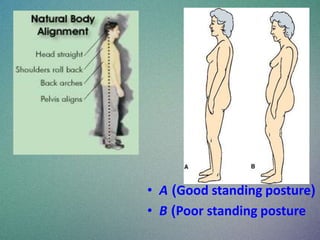
• To maintain good posture in a standing
position
• Keep the feet parallel
• Distribute weight equally on both feet
• Bend the knees slightly
• Maintain the hips at an even level.
Hold the abdomen up
Keep the shoulders even .
Hold the head erect with the face forward
The arms hang comfortably at the sides
The feet are slightly apart to achieve a base
of support, and the toes are pointed forward.
• A )Good standing posture( .
• B )Poor standing posture
Sitting
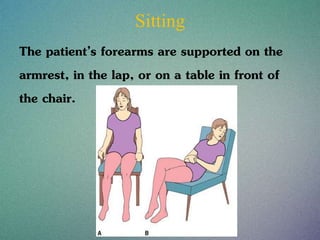
• In a good sitting position , the buttocks and upper
thighs become the base of support. Both feet rest
on the floor
• A 2.5- to 5-cm (1- to 2-inch) space is maintained
between the edge of the seat and the popliteal space
on the posterior surface of the knee. This space
ensures that there is no pressure on the popliteal
artery or nerve to decrease circulation or impair
nerve function.
The patient’s forearms are supported on the
armrest, in the lap, or on a table in front of
the chair.
Sitting
Lying Down
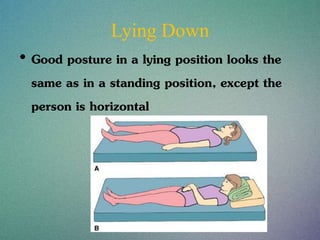
• Good posture in a lying position looks the
same as in a standing position, except the
person is horizontal
Normal body allignment

Normal body allignment

  • 2.
  • 3.
    Assessment of bodyalignment OBJECTIVES: Determining normal physiological changes in body alignment resulting from growth and development for each patient.  Identifying deviations in body alignment caused by incorrect posture.
  • 4.
    Identifying trauma, muscledamage, or nerve dysfunction. Obtaining information concerning other factors that contribute to incorrect alignment such as fatigue, malnutrition, and psychological problems Assessment of body alignment
  • 5.
    When assessing thebody alignment of an immobilized or unconscious patient, remove pillows and positioning supports from the bed and place the patient in the supine position Assessment of body alignment
  • 6.
    PROPER BODY ALIGNMENT •While Standing • While Sitting • While Lying In Bed
  • 7.
    Standing • To maintaingood posture in a standing position • Keep the feet parallel • Distribute weight equally on both feet • Bend the knees slightly • Maintain the hips at an even level.
  • 8.
    Hold the abdomenup Keep the shoulders even . Hold the head erect with the face forward The arms hang comfortably at the sides The feet are slightly apart to achieve a base of support, and the toes are pointed forward.
  • 9.
    • A )Goodstanding posture( . • B )Poor standing posture
  • 10.
    Sitting • In agood sitting position , the buttocks and upper thighs become the base of support. Both feet rest on the floor • A 2.5- to 5-cm (1- to 2-inch) space is maintained between the edge of the seat and the popliteal space on the posterior surface of the knee. This space ensures that there is no pressure on the popliteal artery or nerve to decrease circulation or impair nerve function.
  • 11.
    The patient’s forearmsare supported on the armrest, in the lap, or on a table in front of the chair. Sitting
  • 12.
    Lying Down • Goodposture in a lying position looks the same as in a standing position, except the person is horizontal