Fat Embolism
Dr. Shubhanshu Ranjan Kushwaha
Orthopedic Resident
• Clinical phenomenon
• 1% to 11%
• Systemic dissemination of fat emboli within
the system circulation.
• Fat emboli will disrupt the capillary bed and
affect microcirculation, causing a systemic
inflammatory response syndrome
End organ manisfestation
• Skin and integumentary organ
• Central nervous system
• Respiratory system lungs
• Eyes retina
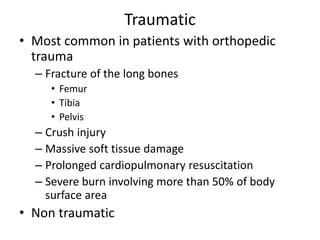
Traumatic
• Most common in patients with orthopedic
trauma
– Fracture of the long bones
• Femur
• Tibia
• Pelvis
– Crush injury
– Massive soft tissue damage
– Prolonged cardiopulmonary resuscitation
– Severe burn involving more than 50% of body
surface area
• Non traumatic
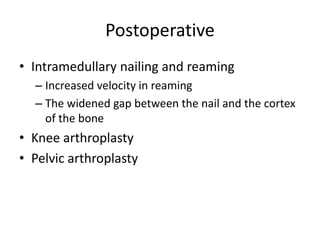
Postoperative
• Intramedullary nailing and reaming
– Increased velocity in reaming
– The widened gap between the nail and the cortex
of the bone
• Knee arthroplasty
• Pelvic arthroplasty
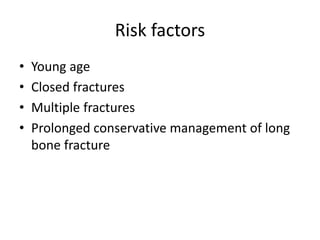
Risk factors
• Young age
• Closed fractures
• Multiple fractures
• Prolonged conservative management of long
bone fracture
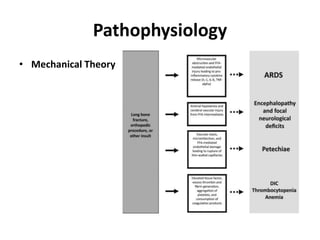
Pathophysiology
• Mechanical Theory
Biochemical Theory
• triggers a hormonal change
• release of free fatty acid (FFA) and
chylomicrons.
• acute phase reactants, such as C-reactive
protein, causes the chylomicron to coalesce
and migrate.
• Pneumocyte hydrolysis of fat particles
generates FFA which migrate to other organs
Clinical features
• Fat embolism typically within 24 to 72 hours
after the initial insult.
• symptoms – nonspecific
– Pain related to bone fracture
– Nausea
– General weakness
– Malaise
– Difficulty breathing
– Headache
Signs
• Respiratory
– Tachypnea
– Tachycardia
– Diaphoresis
Skin
– Petechial rash
• Eye
– Retinal hemorrhage
• Central nervous
system
– Agitation from
hypoxia
– Restlessness
– Change in mental
status
– Seizure
– Coma
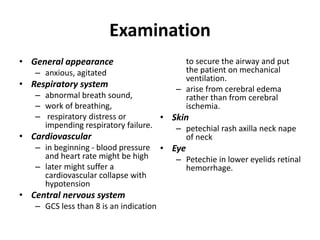
Examination
• General appearance
– anxious, agitated
• Respiratory system
– abnormal breath sound,
– work of breathing,
– respiratory distress or
impending respiratory failure.
• Cardiovascular
– in beginning - blood pressure
and heart rate might be high
– later might suffer a
cardiovascular collapse with
hypotension
• Central nervous system
– GCS less than 8 is an indication
to secure the airway and put
the patient on mechanical
ventilation.
– arise from cerebral edema
rather than from cerebral
ischemia.
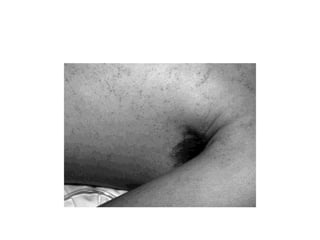
• Skin
– petechial rash axilla neck nape
of neck
• Eye
– Petechie in lower eyelids retinal
hemorrhage.
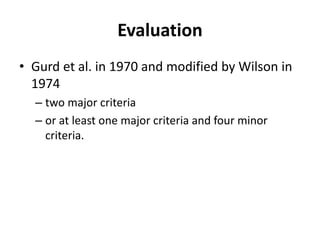
Evaluation
• Gurd et al. in 1970 and modified by Wilson in
1974
– two major criteria
– or at least one major criteria and four minor
criteria.
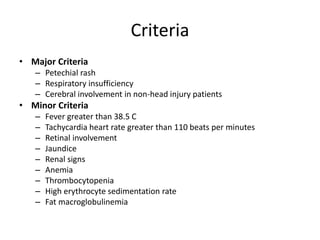
Criteria
• Major Criteria
– Petechial rash
– Respiratory insufficiency
– Cerebral involvement in non-head injury patients
• Minor Criteria
– Fever greater than 38.5 C
– Tachycardia heart rate greater than 110 beats per minutes
– Retinal involvement
– Jaundice
– Renal signs
– Anemia
– Thrombocytopenia
– High erythrocyte sedimentation rate
– Fat macroglobulinemia
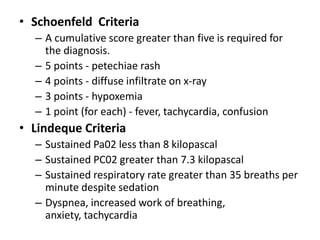
• Schoenfeld Criteria
– A cumulative score greater than five is required for
the diagnosis.
– 5 points - petechiae rash
– 4 points - diffuse infiltrate on x-ray
– 3 points - hypoxemia
– 1 point (for each) - fever, tachycardia, confusion
• Lindeque Criteria
– Sustained Pa02 less than 8 kilopascal
– Sustained PC02 greater than 7.3 kilopascal
– Sustained respiratory rate greater than 35 breaths per
minute despite sedation
– Dyspnea, increased work of breathing,
anxiety, tachycardia
Investigation
• Complete blood count
– Anemia and thrombocytopenia
• Metabolic acidosis, increased level of BUN,
and creatinine can be seen
• Arterial blood gas
– Ventilation-perfusion mismatch is a hallmark
• Bronchoalveolar Lavage
– diagnostic tool for fat embolism syndrome.
Imaging
• Chest x-ray
– Diffuse interstitial marking
– Pulmonary edema
– Lung infiltrate
– Flake-like pulmonary marking (snowstorm
appearance)
• In MRI Lesions seen in brain
– Centrum semi vale,
– Subcortical white matter
– Ganglionic regions
– Thalamus
Management
• Supportive care adequately oxygenating the end
organs.
• Goals of Supportive Care
• Provision of adequate oxygenation and ventilation
• Maintenance of adequate hemodynamic stability
• Transfusion of packed red blood cells to improve
oxygen delivery if indicated
• Prophylaxis of deep venous thrombosis with a
sequential compression device
• Adequate nutrition and hydration
• No specific treatment
• Corticosteroids
• Heparin
• Inferior Vena Cava Filter prophylactic
• Operative Measures
– early open reduction and internal fixation of long
bone fractures
• techniques in orthopedic surgery to reduce
embolization include:
• Lavage of bone marrow prior to fixation
• Venting of the femoral bone
• Drilling of small holes in the cortex of the
bone to lower intramedullary pressure
• For Cerebral edema
– Mannitol
– Hypertonic saline
– Intracranial pressure monitors
• Albumin is restores intravascular volume and
helps to bind free fatty acid.
Indications for Intubation
• Altered mental status with Glasgow coma
score of less than 8
• Moderate to several respiratory distresses
with no improvement on noninvasive support
• Mortality has decreased with advances in
supportive care and is <10%
• most common cause of morbidity or mortality
include:
– Acute respiratory distress syndrome ARDS
– Cerebral edema
Fat Embolism

Fat Embolism

  • 1.
    Fat Embolism Dr. ShubhanshuRanjan Kushwaha Orthopedic Resident
  • 2.
    • Clinical phenomenon •1% to 11% • Systemic dissemination of fat emboli within the system circulation. • Fat emboli will disrupt the capillary bed and affect microcirculation, causing a systemic inflammatory response syndrome
  • 3.
    End organ manisfestation •Skin and integumentary organ • Central nervous system • Respiratory system lungs • Eyes retina
  • 4.
    Traumatic • Most commonin patients with orthopedic trauma – Fracture of the long bones • Femur • Tibia • Pelvis – Crush injury – Massive soft tissue damage – Prolonged cardiopulmonary resuscitation – Severe burn involving more than 50% of body surface area • Non traumatic
  • 5.
    Postoperative • Intramedullary nailingand reaming – Increased velocity in reaming – The widened gap between the nail and the cortex of the bone • Knee arthroplasty • Pelvic arthroplasty
  • 6.
    Risk factors • Youngage • Closed fractures • Multiple fractures • Prolonged conservative management of long bone fracture
  • 7.
  • 8.
    Biochemical Theory • triggersa hormonal change • release of free fatty acid (FFA) and chylomicrons. • acute phase reactants, such as C-reactive protein, causes the chylomicron to coalesce and migrate. • Pneumocyte hydrolysis of fat particles generates FFA which migrate to other organs
  • 9.
    Clinical features • Fatembolism typically within 24 to 72 hours after the initial insult. • symptoms – nonspecific – Pain related to bone fracture – Nausea – General weakness – Malaise – Difficulty breathing – Headache
  • 10.
    Signs • Respiratory – Tachypnea –Tachycardia – Diaphoresis Skin – Petechial rash • Eye – Retinal hemorrhage • Central nervous system – Agitation from hypoxia – Restlessness – Change in mental status – Seizure – Coma
  • 12.
    Examination • General appearance –anxious, agitated • Respiratory system – abnormal breath sound, – work of breathing, – respiratory distress or impending respiratory failure. • Cardiovascular – in beginning - blood pressure and heart rate might be high – later might suffer a cardiovascular collapse with hypotension • Central nervous system – GCS less than 8 is an indication to secure the airway and put the patient on mechanical ventilation. – arise from cerebral edema rather than from cerebral ischemia. • Skin – petechial rash axilla neck nape of neck • Eye – Petechie in lower eyelids retinal hemorrhage.
  • 13.
    Evaluation • Gurd etal. in 1970 and modified by Wilson in 1974 – two major criteria – or at least one major criteria and four minor criteria.
  • 14.
    Criteria • Major Criteria –Petechial rash – Respiratory insufficiency – Cerebral involvement in non-head injury patients • Minor Criteria – Fever greater than 38.5 C – Tachycardia heart rate greater than 110 beats per minutes – Retinal involvement – Jaundice – Renal signs – Anemia – Thrombocytopenia – High erythrocyte sedimentation rate – Fat macroglobulinemia
  • 15.
    • Schoenfeld Criteria –A cumulative score greater than five is required for the diagnosis. – 5 points - petechiae rash – 4 points - diffuse infiltrate on x-ray – 3 points - hypoxemia – 1 point (for each) - fever, tachycardia, confusion • Lindeque Criteria – Sustained Pa02 less than 8 kilopascal – Sustained PC02 greater than 7.3 kilopascal – Sustained respiratory rate greater than 35 breaths per minute despite sedation – Dyspnea, increased work of breathing, anxiety, tachycardia
  • 16.
    Investigation • Complete bloodcount – Anemia and thrombocytopenia • Metabolic acidosis, increased level of BUN, and creatinine can be seen • Arterial blood gas – Ventilation-perfusion mismatch is a hallmark • Bronchoalveolar Lavage – diagnostic tool for fat embolism syndrome.
  • 17.
    Imaging • Chest x-ray –Diffuse interstitial marking – Pulmonary edema – Lung infiltrate – Flake-like pulmonary marking (snowstorm appearance) • In MRI Lesions seen in brain – Centrum semi vale, – Subcortical white matter – Ganglionic regions – Thalamus
  • 18.
    Management • Supportive careadequately oxygenating the end organs. • Goals of Supportive Care • Provision of adequate oxygenation and ventilation • Maintenance of adequate hemodynamic stability • Transfusion of packed red blood cells to improve oxygen delivery if indicated • Prophylaxis of deep venous thrombosis with a sequential compression device • Adequate nutrition and hydration
  • 19.
    • No specifictreatment • Corticosteroids • Heparin • Inferior Vena Cava Filter prophylactic • Operative Measures – early open reduction and internal fixation of long bone fractures
  • 20.
    • techniques inorthopedic surgery to reduce embolization include: • Lavage of bone marrow prior to fixation • Venting of the femoral bone • Drilling of small holes in the cortex of the bone to lower intramedullary pressure
  • 21.
    • For Cerebraledema – Mannitol – Hypertonic saline – Intracranial pressure monitors • Albumin is restores intravascular volume and helps to bind free fatty acid.
  • 22.
    Indications for Intubation •Altered mental status with Glasgow coma score of less than 8 • Moderate to several respiratory distresses with no improvement on noninvasive support
  • 23.
    • Mortality hasdecreased with advances in supportive care and is <10% • most common cause of morbidity or mortality include: – Acute respiratory distress syndrome ARDS – Cerebral edema

Editor's Notes

  • #8 Elevation of the intramedullary from trauma or surgery leads to the release of fat into the venous sinusoids. From the venous system, these fat globules are deposited in the pulmonary capillary bed where they travel to the brain via the arteriovenous shunt into the brain Intravascular fat droplets are deformable, hence their ability to transverse the pulmonary vasculature. Elevated pulmonary artery pressure Impairment of oxygen exchange from ventilation-perfusion mismatch Systemic effects on end-organs such as the brain, kidney, and skin. In brain systemic inflammatory response syndrome, local inflammation, Ischemia Release of inflammatory mediators and vasoactive amines like histamine, serotonin leads to an increase in vascular permeability and vasodilation causes hypotension and hypoperfusion.